
Our readers keep the lights on and my morning glass full of iced black tea. As an Amazon Associate, I earn from qualifying purchases.
Specs are compiled from manufacturer listings and verified buyer reviews and can change over time — please confirm the key details on the product page before buying.
The fastest way to ruin a fluid art piece is a medium that cracks, yellows, or turns your colors muddy. The right acrylic paint pouring medium thins paint for smooth flow and cell formation, then dries clear and flexible to keep the artwork intact. This guide sorts the gallon jugs from the specialty glosses, and the budget bundles from the pro-grade bottles, using the specs and the patterns across thousands of owner experiences.
I’m Min — the founder and writer behind Gadgets Feed. This guide is built by comparing the manufacturers’ published specifications and the patterns across verified customer reviews, so you get each pick’s real strengths and trade-offs instead of marketing spin.
A winning medium pours smoothly, preserves color vibrancy, and dries crack-free at a reasonable price. acrylic paint pouring medium choices vary from gallon jugs to 16-ounce bottles, and the right pick depends on your project size and finish preference.
Our Picks at a Glance


How To Choose The Best Acrylic Paint Pouring Medium
Every pouring medium does the same basic job, but the differences show up in volume, finish, and how it behaves while drying. Here is what actually separates a good buy from a frustrating one.
Volume and cost per project
A single pour can swallow a cup or more of medium, so the bottle size matters more than you might think. A 1-gallon (3.78 liter) jug covers dozens of canvases, while a 500 ml bottle suits occasional practice. If you pour weekly, the bigger containers save you from reordering constantly.
Finish and transparency
Some mediums dry high-gloss like a resin topcoat, while others dry matte or add a pearlescent shimmer. If you want a wet-look pour, pick a gloss medium. If you want the pure color to speak, check that the medium dries transparent without yellowing.
Flow and cracking behavior
The key is flow: paint should move smoothly and self-level without brush marks. A flexible dried film prevents cracks and crazing during curing. Thicker mediums need more mixing effort, while thin ones can get watery and hard to control.
Quick Comparison
| Model | Best For | Volume | Finish | Dries Clear | Amazon |
|---|---|---|---|---|---|
| Flood Floetrol 1 Gal★ Best Overall | Best Overall | 3.78 L | Clear | Yes | Amazon |
| Nicpro Pouring MediumBest Value | Best Value | 33.8 oz | Gloss | Yes | Amazon |
| GrandProducts Floetrol KitBest Starter Kit | Best Starter Kit | 1 quart | Gloss | Yes | Amazon |
| Pouring Masters Pearlescent | Best Shimmer | 32 oz | Metallic | Yes | Amazon |
| U.S. Art Supply Duo | Best for Painters | 500 ml | Gloss | Yes | Amazon |
| Liquitex Gloss Pouring | Best Archival Quality | 16 oz | High Gloss | Yes | Amazon |
| DecoArt Pouring Medium | Best Large Can | 64 oz | Matte | Yes | Amazon |
| Tri-Art Liquid Glass | Best Glass Finish | 500 ml | Gloss | Yes | Amazon |
In‑Depth Reviews
1. Flood Floetrol 1 Gal Latex Paint Additive & Conditioner
Our pick — over 4.5★ from 21,000+ verified ratings; the strongest balance of quality and price.
The gallon jug that earns its place as the crowd favorite for pour artists.
The biggest reason this jug wins is the sheer value — 3.78 liters of medium that treats up to 300 sq. ft., so your cost per pour stays tiny. It conditions acrylic and latex paint so it flows smoothly and self-levels, which means your colors spread evenly and dry to a professional finish without thinning.
It is a real workhorse beyond pouring, too. It extends open time so paint stays workable longer, erasing lap lines, brush strokes, and roller stipple on walls, trim, cabinets, and doors. The same additive that creates cells in your fluid art also helps latex spray as smoothly as oil-based coatings, cutting tip clogging in sprayers.
The upfront win is clear: “I should have bought two not just one. Great for Acrylic pouring!!” is the kind of regret that shows up across the review pages. The recurring gripe is consistency — a few owners find it too thick, and an occasional unit arrives with chunks that make paint lumpy. It cleans up with soap and water, so the mess stays manageable.
Why It Leads
- Huge 3.78 L bottle stretches across many projects
- Self-levels and erases brush marks on walls and art
- Creates cells and keeps colors flowing without cracking
What to Watch
- Some owners find the thickness inconsistent
- Rarely, chunks in the can make paint lumpy
Reach for it if: you pour often and want the lowest cost per project with a finish that levels itself.
Think twice if: you prefer a thin, watery medium — this one leans thicker and may need extra stirring.
2. Nicpro Pouring Medium for Acrylic Paint 33.8oz/1000ml
A creamy, glossy pour medium that serious artists switch to for good.
What wins people over here is the quality-to-price ratio — a 33.8 oz bottle that mixes with acrylic paint to reduce viscosity, boost flow, and prevent colors from muddying together. It dries transparent and resists cracking, keeping the finished piece clean.
The visual bottle shows exactly how much you have left, which sounds minor until you are mid-pour and wondering if you can finish. It is non-toxic and conforms to ASTM D4236 and EN71 safety standards, making it a safe choice for creative teens and adults. Mixing with a few drops goes a long way, so the bottle lasts well beyond what its size suggests.
The honest trade-off: this is a pour medium, not a glazing medium. “Good for a pour medium but not a glazing medium as it’s very wet” is the recurring note — if you need a thick gel for fine art glazing, this will be too thin. For spin or pour artists, though, it is near perfect for the money.
What Shines
- Big 33.8 oz bottle at a friendly price
- Dries transparent and resists cracking
- Non-toxic with ASTM D4236 and EN71 compliance
Keep in Mind
- Too thin for gel-style glazing work
- Some find it watery compared to thicker mediums
Pick this for: spin pours and daily practice where you want a flowing, creamy mix without spending premium money.
Skip it for: advanced glazing or fine art that needs a heavy gel body.
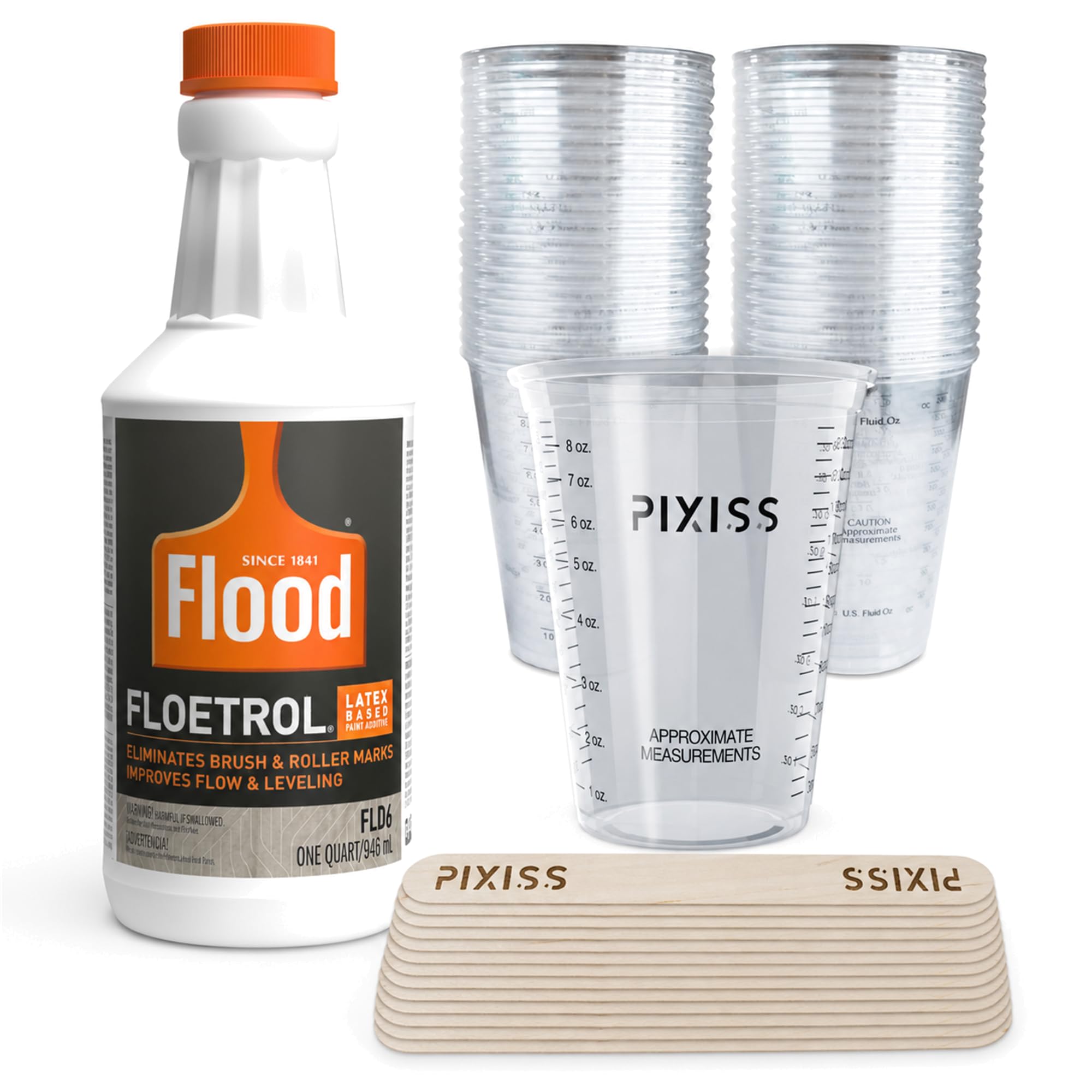
3. Floetrol for Acrylic Paint Pouring Medium Additive, White Paint Pouring Supplies
Everything a beginner needs to mix, pour, and clean up in one box.
This bundle solves the biggest beginner friction — you get the Floetrol pouring medium plus 20 disposable 10 oz graduated mixing cups and 20 wood stir sticks, so you never scramble for supplies mid-project. The cups have measurement readings that make mixing ratios repeatable, which is exactly what first-time pour painters need.
The medium itself keeps colors vibrant while giving them more flow. “As a first time pour painter very easy to use… White in color but does not affect color of paint” is the kind of reassurance that matters when you are learning. It works for paint pouring or as a paint leveling additive, and the washable formula cleans up with soap and water.
Against the plain Flood gallon above, this is the same Floetrol DNA in a smaller 1-quart size, paired with the tools. The trade-off is that serious pourers will blow through the quart fast — a couple of owners note you can find Floetrol cheaper at a hardware store, so you are paying a little for the convenience of the bundle.
The Convenience Factor
- 20 graduated cups with measurement markings
- 20 wood mixing sticks included
- White medium that does not shift paint color
The Catch
- Quart size runs out fast for frequent pourers
- Hardware stores may sell Floetrol cheaper
Best for: the brand-new pour painter who wants one box with everything to start today.
Look elsewhere if: you already have cups and sticks — just buy the plain gallon jug instead.
4. Pouring Masters 32 Oz (Quart) Acrylic Pearlescent Effects Medium

The medium that turns a flat pour into a shimmering pearl finish.
Nothing else on this list does what this one does — it adds a pearlescent, iridescent metallic shimmer to your acrylic paints. Pipette a bit into your mix and the pour catches light with a warm glow. It works on canvas, wood, or other art materials, and you can roll it on as a shimmery topcoat over a base coat.
It improves the consistency and flow of acrylic paints for smoother application, and it is flexible — use it independently or mix with other colors and mediums. You can thin it with up to 30% water or an acrylic medium to hit your preferred consistency. It also extends color volume and subtly lightens hues, giving you control over intensity.
The trade-off is thickness and price. A few owners find it very thick, and value-for-money splits opinions — some call it a good deal, others consider it expensive for the size. If you want a pure pearl shimmer that hugs the highs and lows of texture, this delivers it beautifully.
The Glow Factor
- Pearlescent iridescent metallic shimmer
- Works on canvas, wood, and art surfaces
- Thinnable with up to 30% water
Before You Buy
- Runs thick and may need thinning
- Value for money splits owner opinion
Reach for it if: you want an iridescent, pearl-like finish that adds a warm glow to your pours.
Choose something else if: you need a plain clear medium and do not want shimmer in every piece.
5. U.S. Art Supply Floetrol Pouring Medium and Pouring Oil for Acrylic Paint

A two-bottle set that pairs a thick medium with a cell-boosting oil.
This one is really two tools in one: a Floetrol pouring medium and a separate pouring oil, each in a 500 ml bottle. The medium has a thick, creamy consistency that mixes smoothly with acrylic paints, and the oil is what you reach for when you want to encourage cell formation in your pours.
Owners find the thickness perfect straight from the bottle — “Thickness was perfect as the add” captures the consensus. It covers 5-6 sq. meters per 500ml, so a little goes a long way for classroom or personal use. The lid prevents leakage, and the whole set cleans up easily since it is water-based.
The honest note is that the oil’s cell-boosting power is not universally proven. A handful of buyers report it does not make cells as expected, so treat it as an experiment rather than a guarantee. For the price, the set is well worth it — a couple of owners bought their own after using it in a paint class.
The Duo Advantage
- Medium plus separate pouring oil
- Thick, creamy consistency from the bottle
- Covers 5-6 sq. meters per 500 ml
The Uncertainty
- Oil does not always create cells as hoped
- 500 ml bottles run out fast for big pours
Pick this if: you took a pouring class and want the same reliable medium plus an oil to play with cells.
Pass on it if: you need maximum volume per dollar — the gallon jug beats it there.
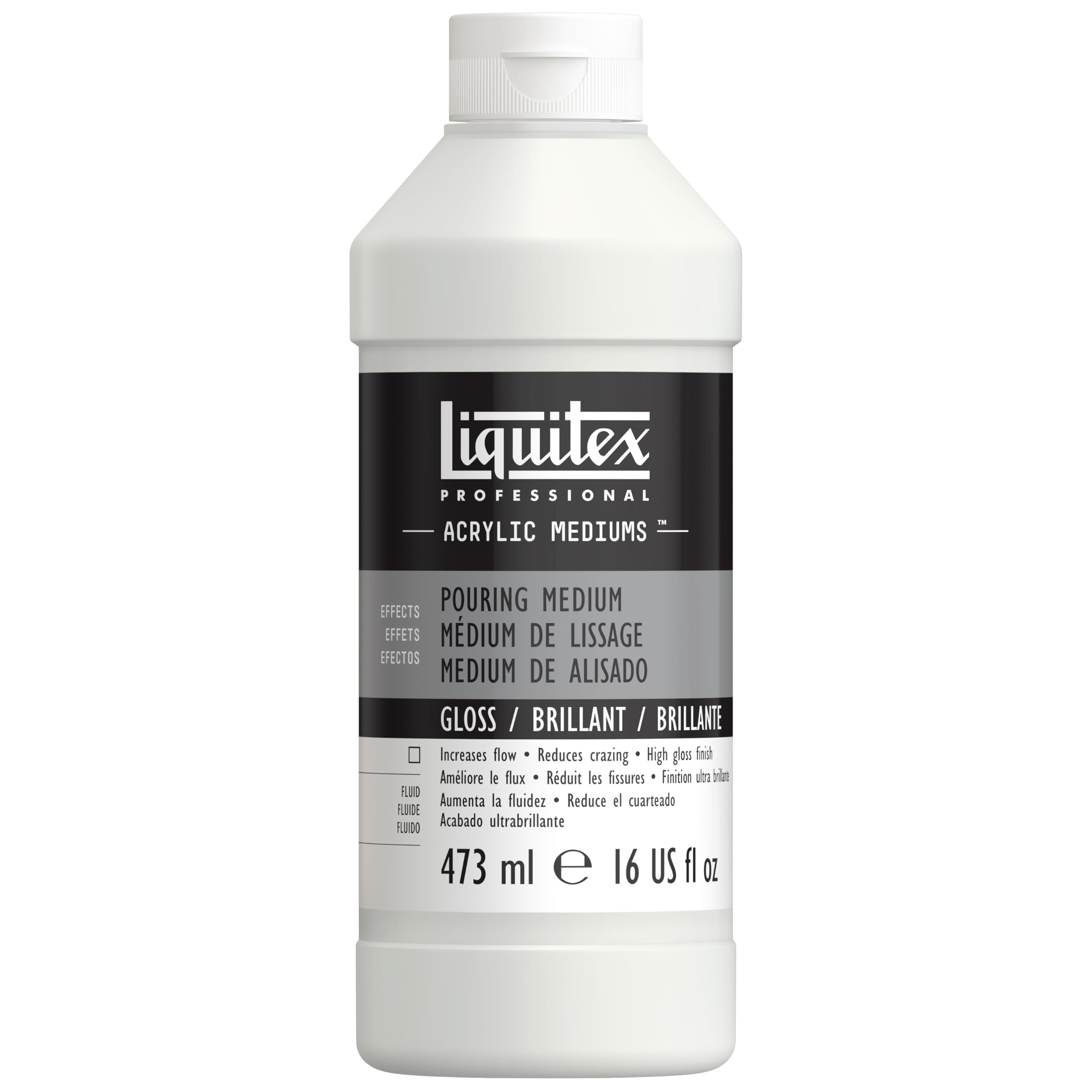
6. Liquitex Professional Effects Medium, 16-oz, Gloss Pouring Medium
The professional-grade gloss that resists yellowing and stays flexible for years.
Liquitex is the archival-quality player here. This 16-oz gloss pouring medium gives you smooth, wet-look pours with a high gloss finish, and it is engineered to resist aging — it does not yellow, dries waterproof, and stays flexible after drying. That means your pours keep their adhesion, durability, and archival quality over time.
It prevents hair cracks and bubbles in drip and pouring applications, even with puddles and acrylic skins. You can mix it with any acrylic paint to get smooth, even color films without increasing the transparency of the color, which is a real advantage for keeping colors punchy. It extends your color further without affecting acrylic stability.
The catch is the price per ounce — this is the most premium bottle on the list. One owner notes it “probably not worth the money” versus cheaper alternatives, and the label suggests 5% medium while some find 20% still not super easy to pour. If you want a reliable, archival-grade gloss and the budget allows, this is the one.
Why It Costs More
- Dries waterproof and stays flexible
- Does not yellow with age
- Prevents hair cracks and bubbles
The Price Check
- Premium cost per ounce
- Some find it still needs extra medium to pour easily
Choose this for: finished pieces you want to last for years without yellowing or cracking.
Save your money if: you are just practicing — a budget medium will do the job.
7. DecoArt Pouring Medium, 64 Fl Oz (Pack of 1)

A 64-ounce American-made can that handles ring pours with ease.
For volume alone, this is the biggest bottle after the gallon jug — a 64-ounce can that liquefies acrylics for pouring without altering your finish. It creates cell effects and dries to a flexible film that prevents cracking and crazing during the multi-day cure.
It is non-yellowing, water-based, and made in the USA. Owners find it particularly good for ring pours, producing transparent, layered watercolor-like effects. It flows well on textured surfaces and holds cells, drying slower than some alternatives, which gives you more working time.
The mixability is the mixed note — while many say it mixes well, one owner found it “difficult to mix to the proper consistency.” It is glossier and thinner than the Flood medium, and some note no clear cost advantage over that gallon jug. For ring pours and textured surfaces, though, it earns its keep.
The Big Can Appeal
- Huge 64 oz can for frequent pourers
- Creates cell effects and resists crazing
- Non-yellowing and water-based
What to Know
- Mixing to the right consistency takes practice
- Thinner and glossier than Flood medium
Reach for it if: you love ring pours and want a big can that flows beautifully on textured surfaces.
Prefer the gallon if: you want the most volume for the lowest cost per pour.
8. Tri-Art 20736 Liquid Glass Pouring Medium 500ml

The resin-look gloss that makes people ask if you used a two-step epoxy.
This is the closest thing to a resin finish without the messy two-part epoxy process. Tri-Art Liquid Glass dries extremely clear, smooth, and glossy without crazing, so your pours come out looking like a glassy topcoat. You can use it as a clear coat over finished work or mix in colors for color pours.
The glossiness is the thing everyone raves about — “Looks like a resin finish!!! Very high gloss finish” captures the wow factor. It is low odor and cleans up with water, and it is thick enough to encase paintings for protection. Owners use it on painted rocks, paperweights, and garden pieces to shield the acrylic from washing away or fading.
The trade-off is drying time and bubbles. Drying time gets mixed feedback — some say it dries clear without bubbles, while others report too many bubbles in their work. At 500 ml for this price, it is the second-most premium per-ounce buy here, so reserve it for pieces that deserve the glass finish.
The Glass Effect
- Resin-like high gloss finish
- Dries clear without crazing
- Low odor and cleans up with water
The Variables
- Bubbles appear for some users during drying
- Small 500 ml bottle for the price
Pick this for: a glossy, glass-like finish that protects your art and fools people into thinking it is resin.
skip it if: you need volume for daily practice — this is a specialty finish, not a workhorse medium.
Understanding the Specs
Volume and Cost per Pour
The bottle size dictates how many projects you can finish before reordering. A gallon jug (3.78 liters) covers dozens of canvases, while a 16-oz bottle suits occasional pours. Check the volume before comparing prices — a cheap small bottle can cost more per pour than a big jug.
Finish Type
Mediums dry gloss, matte, or metallic. Gloss gives a wet-look, resin-like shine. Matte keeps the color flat without sheen. Pearlescent or metallic adds shimmer and iridescence. Pick the finish that matches the mood of your piece, since it is baked in once dry.
Drying Behavior
A good medium dries clear and flexible, resisting cracks and crazing as the piece cures over days. Some dry slower, giving you more working time for ring pours. Watch for bubbles during drying — some gloss mediums trap air that shows up as tiny pits.
Consistency and Mixing
Thicker mediums need more stirring to blend fully but give you more control. Thin ones flow easily but can get watery. Most can be thinned with water or an acrylic medium, but test first — too much water breaks the acrylic binder and leads to cracks.
FAQ
Can I use Floetrol as a pouring medium?
What is the difference between a pouring medium and a glazing medium?
How much pouring medium do I need per canvas?
Why does my pouring medium crack as it dries?
Does pouring medium change the color of my paint?
Can I use water instead of a pouring medium?
How do I make cells in my acrylic pours?
Is a bigger bottle always a better deal?
Final Thoughts: The Verdict
For most people, the acrylic paint pouring medium winner is the Flood Floetrol 1 Gal because it pairs a huge 3.78-liter jug with self-leveling flow and a crowd-favorite reputation. If you want a creamy value bottle with safety certifications, grab the Nicpro Pouring Medium. And for a resin-like glass finish that fools people into thinking you used epoxy, the Tri-Art Liquid Glass is the one to reach for. Choose by your volume needs and finish preference, and you will pour with confidence.
How We Picked
We do not accept paid placement. Every pick is matched to a real buyer and a real use-case; we do not hands-on test units.
Sources & Methodology
Specifications: manufacturer listings and product documentation. Review insights: verified customer reviews, as of August 2026. Pricing: not shown on this page (it changes often); check the current price via the retailer link.
As an Amazon Associate, Gadgets Feed earns from qualifying purchases. This does not affect which products we feature.