
Our readers keep the lights on and my morning glass full of iced black tea. As an Amazon Associate, I earn from qualifying purchases.
Specs are compiled from manufacturer listings and verified buyer reviews and can change over time — please confirm the key details on the product page before buying.
You pour a perfect epoxy river table top, only to wake up to a surface full of trapped air bubbles that mock your hard work. An acrylic vacuum chamber fixes that by pulling the air out before your resin cures, and the right one depends on size, build thickness, and whether you already own a vacuum pump. Here are three proven chambers, what each one handles best, and the exact specs that decide if your casts come out crisp.
I’m Min — the founder and writer behind Gadgets Feed. This guide is built by comparing the manufacturers’ published specifications and the patterns across verified customer reviews, so you get each pick’s real strengths and trade-offs instead of marketing spin.
Degassing resin, silicone, and epoxy demands a chamber that seals tight and survives repeated vacuum pulls, so we compare the finest acrylic vacuum chamber options to find to find which one truly earns its place in your workshop.
Our Picks at a Glance
How To Choose The Best Acrylic Vacuum Chamber
An acrylic vacuum chamber is a clear box you pull air out of, forcing dissolved gas out of liquid resin, silicone, or epoxy before it hardens. Before you buy, know what you’re degassing, whether you have a pump, and how much negative pressure the acrylic can handle.
Match the gallon size to your projects
A 1-gallon chamber suits small crafts, phone repairs, and jewelry molds. A 2-gallon unit gives room for bigger silicone molds or multiple pieces at once. If you plan to degas large epoxy pours, go bigger — but remember you need a pump strong enough to pull that volume down to vacuum.
Check the acrylic thickness and seal
Thicker acrylic resists deformation and cracking under vacuum pressure. A silicone gasket on the lid creates the airtight seal that holds vacuum over hours, not minutes. Look for a lid that seats firmly without excessive force.
Know your pump compatibility
Most chambers connect via a 1/4″ SAE hose fitting. If you already own a vacuum pump, confirm the included hose matches your inlet. If not, a kit with a pump included saves you a second purchase.
Avoid solvents that attack acrylic
Acrylic lids crack when exposed to alcohol, ethanol, acetone, and stabilization resins. Stick to resin, silicone, and epoxy degassing, and keep the chamber temperature under 212°F to protect the material.
Quick Comparison
| Model | Best For | Chamber Capacity | Weight | Vacuum Gauge Range | Amazon |
|---|---|---|---|---|---|
| BACOENG 1 Gallon★ Best Overall | Small resin crafts and phone repairs | 1 gallon | 8.95 pounds | 0–30 inHg | Amazon |
| VEVOR 2 Gallon | Bigger silicone molds and multi-piece runs | 2 gallon | 10.1 pounds | Up to -29 inHg | Amazon |
| BACOENG 1.5 Gallon with Pump | Complete kit for beginners with no pump | 1.5 gallon | 23.6 pounds | 0–30 inHg | Amazon |
In‑Depth Reviews
1. BACOENG 1 Gallon Acrylic Vacuum Chamber
Our pick — 4.5★ from 40+ verified ratings; the strongest balance of quality and price.
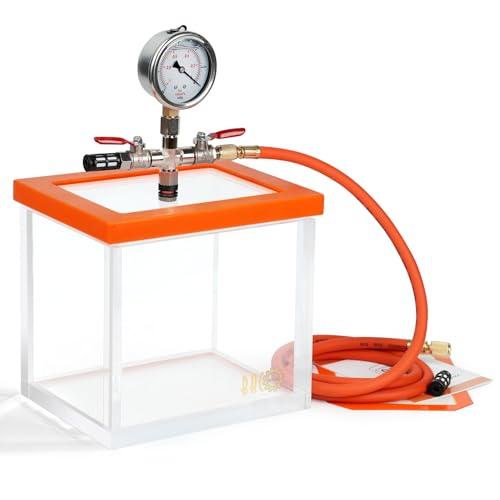
This 1-gallon chamber is the compact degassing workhorse for small shops, delivering bubble-free resin pours with a clear view of the process.
This 1-gallon chamber is built for hobbyists who cast jewelry, small epoxy pieces, or silicone molds and want a clear view of the defoaming process. Its acrylic lid offers 92% light transmittance, so you can watch bubbles rise and burst in real time and adjust your pump speed accordingly. The silicone gasket lid is rated for over 10,000 uses, making it a long-term investment for repeat pours.
The included 5-foot reinforced hose connects to a 1/4″ SAE port, withstands -29.92inHg without deformation, and has swivel ends for easy installation. The liquid-filled gauge measures 0–30inHg, giving you a precise read on vacuum level. At 8.95 pounds, it’s light enough to move around your bench, and its 8.1 x 8.1 x 7.1-inch footprint fits neatly on a standard work surface.
Buyers report this chamber excels at removing bubbles, and one owner used it to vacuum water out of a phone camera that had stopped working, reviving it after a 25-minute pull. It’s also a hit for science fair projects and STEM class demos, showing how vacuum affects sound and pressure. The caveat: acrylic lids crack when exposed to alcohol, acetone, or stabilization resins, so keep it to resin, silicone, and epoxy only.
What Owners Love
- Clear acrylic gives a full view of bubble removal in progress
- Reinforced hose resists collapsing under vacuum pressure
- Light 8.95-pound build is easy to reposition
Watch Out For
- Not compatible with stabilization resins, alcohol, or acetone
- 1-gallon size limits bigger epoxy pours
Reach for this if: you pour small resin pieces or want to rescue wet electronics and need a proven, budget-friendly degasser.
Look elsewhere if: you regularly cast large molds that won’t fit inside a 1-gallon space.
2. VEVOR 2 Gallon Vacuum Chamber

This 2-gallon chamber’s 0.7-inch thick acrylic holds vacuum pressure steady for full-day degassing sessions.
Double the capacity of the BACOENG 1-gallon, this VEVOR chamber is built from 0.7-inch (18mm) thick acrylic that withstands vacuum pressure and maintains a seal for 24 hours without leakage or deformation. Its square design boost usable space, so you can fit larger silicone molds or multiple parts in a single pull. The silicone-sealed lid and threaded valve interface achieve a vacuum level down to -29inHg, with only about a 5% leak over a 12-hour period in testing.
The silicone oil-filled gauge absorbs shock for precise readings, while the gauge and ball valves give flexible airflow control. It ships with a 59-inch flexible hose that resists deformation under negative pressure, plus an intake valve muffler that reduces noise and a filter screen that keeps dust out. At 10.1 pounds, it’s heavier than the 1-gallon BACOENG but still bench-friendly.
Owners mention it holds vacuum well and appreciate the clear acrylic for watching epoxy projects in real time. One owner summed it up: “It holds a vacuum well and is a good size.” The sticker peels off easily, and a bit of acetone removes the logo in seconds. The main caveat is that a rare unit may arrive not airtight, so test the seal before your first full pour.
Why It Stands Out
- 0.7-inch thick acrylic resists deformation under heavy vacuum
- 24-hour airtight seal for long degassing cycles
- Muffler and filter reduce noise and dust intake
Keep In Mind
- Occasional units arrive not fully airtight
- Heavier than smaller chambers at 10.1 pounds
Grab this for: bigger silicone or resin molds that need generous interior room and a seal that holds overnight.
skip it if: you only degas tiny pieces and want the lightest possible bench setup.
3. BACOENG 1.5 Gallon with 3.5 CFM Vacuum Pump
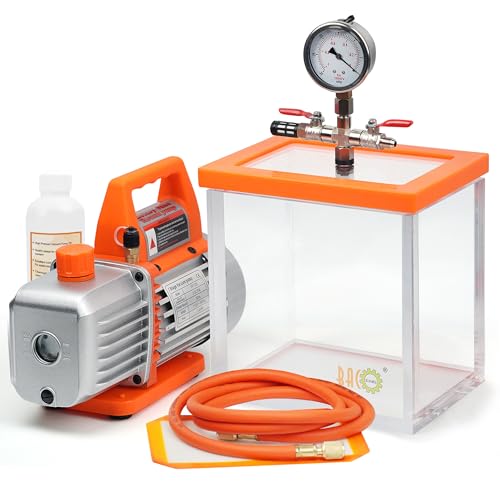
This 1.5-gallon kit pairs a chamber with a 3.5 CFM pump, giving beginners a matched setup from day one.
This 1.5-gallon kit pairs the chamber with a 3.5 CFM AC vacuum pump, so you don’t have to guess whether your existing pump can pull enough vacuum. The pump runs on 110V at 60Hz with 1/4HP power and connects through a 1/4 SAE inlet. It’s the heaviest pick here at 23.6 pounds, reflecting the integrated pump and motor. The chamber itself measures 9 x 6.3 x 8.5 inches, giving slightly more length than the 1-gallon BACOENG for longer molds.
The acrylic lid offers the same 92% light transmittance, so you can watch resin degas in clear detail. The 5-foot reinforced hose withstands up to -29.92inHg without deformation and has swivel ends for easy connection. Customers note the pump brings the chamber down to 29inHg and holds vacuum for 36 hours before releasing, making it reliable for long cure cycles and teaching demos.
Owners use it for degassing R/C car shocks and teaching A/C vacuuming techniques, with one noting the clear acrylic is a big upgrade over stainless steel pots. The catch is twofold: the lid requires pressing down to seal each use, and the initial glue smell is strong enough to cause dizziness for days. Also, acrylic cracks under solvents like acetone, so stick to resin and silicone.
What You Get
- Matched 3.5 CFM pump removes guesswork on compatibility
- Holds vacuum for 36 hours in owner testing
- Clear acrylic visibility for monitoring resin
Consider This
- Heavy 23.6-pound kit is not portable
- Initial glue smell can be overpowering
Best for: first-time buyers who want a ready-to-run setup without hunting for a compatible pump.
Think twice if: you already own a pump and just need a chamber, since the kit’s weight and smell add little value.
Understanding the Specs
Vacuum Level and Gauge Range
The vacuum gauge measures negative pressure in inches of mercury (inHg). A range of 0–30inHg covers most resin degassing needs, while some chambers reach -29inHg. The liquid-filled gauge dampens vibration for a stable reading, so you know exactly when your resin stops bubbling.
Acrylic Thickness and Material Limits
Thicker acrylic — like 0.7 inches on the VEVOR — resists deformation and cracking under repeated vacuum pulls. But acrylic has a hard limit: it reacts chemically with alcohol, ethanol, acetone, and stabilization resins, which can crack the lid. Keep your chamber under 212°F and stick to resin, silicone, and epoxy.
FAQ
Can I use an acrylic vacuum chamber for stabilizing wood?
What vacuum pump do I need for a 1-gallon chamber?
How long does an acrylic chamber hold vacuum?
Is a 2-gallon chamber better than a 1-gallon for resin?
Can I degas silicone and epoxy in the same chamber?
How much does an acrylic vacuum chamber weigh?
Will a vacuum chamber remove bubbles from epoxy?
What temperature can an acrylic chamber handle?
Final Thoughts: The Verdict
For most buyers, the acrylic vacuum chamber winner is the BACOENG 1 Gallon because it delivers proven bubble removal and a durable silicone gasket at a budget-friendly price. If you need room for bigger silicone molds, grab the VEVOR 2 Gallon with its thick 0.7-inch acrylic and 24-hour seal. And if you’re starting from scratch without a pump, the BACOENG 1.5 Gallon Kit is the one to reach for — just be ready for its initial smell and heavy 23.6-pound weight.
How We Picked
We do not accept paid placement. Every pick is matched to a real buyer and a real use-case; we do not hands-on test units.
Sources & Methodology
Specifications: manufacturer listings and product documentation. Review insights: verified customer reviews, as of August 2026. Pricing: not shown on this page (it changes often); check the current price via the retailer link.
As an Amazon Associate, Gadgets Feed earns from qualifying purchases. This does not affect which products we feature.