
Finding a camera that survives the crushing pressure of a deep dive while delivering vibrant, sharp footage is the central challenge of underwater content creation. The wrong choice leaves you with washed-out blues, grainy shadows, or a flooded housing that ends your adventure — and your budget — in an instant.
I’m Min — the co-founder and writer behind Gadgets Feed. I’ve spent countless hours cross-referencing depth ratings, sensor sizes, color-correction technologies, and real diver feedback to separate the housings that protect from the sensors that perform, specifically for this demanding category.
Whether you are a recreational snorkeler or a technical diver logging multiple tanks per week, the right tool transforms your underwater memories. This guide analyzes the top-tier contenders to help you select the best action camera for diving based on your specific depth, light, and shooting style.
How To Choose The Best Action Camera For Diving
Selecting an underwater camera is not about brand loyalty; it is about matching a specific set of engineering specs to the conditions you dive in most often. A camera that excels in a bright, shallow reef will look completely different from one built for low-light wreck penetration at 30 meters.
Depth Rating: Native vs. Housing-Dependent
The single most critical spec for a diving camera is its waterproof depth rating without an external housing. Many action cameras are rated to 10m or 12m, which is fine for snorkeling but insufficient for most open-water scuba dives. A camera with a deeper native rating, such as the DJI Osmo Action 5 Pro at 20m, reduces the risk of a flooded housing and simplifies your kit. Dedicated underwater cameras like the SeaLife Micro 3.0 are permanently sealed to 60m, offering peace of mind that no O-ring maintenance can match.
Sensor Size and Low-Light Performance
Water absorbs light quickly, and at depth, even a few meters make a dramatic difference. A larger sensor with bigger individual pixels captures more light, reducing noise and preserving detail. Look for cameras with 1/1.3-inch sensors or larger. The 2.4-micron pixel pitch found in the DJI Osmo Action 5 Pro and Insta360 Ace Pro 2 allows for clean footage in conditions that would leave a 1/2.3-inch sensor struggling. For still photography, the OM System TG-7 uses a back-illuminated CMOS sensor that performs reasonably well, but an interchangeable-lens system is not practical in this category.
Color Correction: Filters, White Balance, and Modes
Water acts as a color filter, absorbing red and orange first. By 5 meters, footage without correction looks monochromatic blue. The best diving cameras offer dedicated underwater white balance presets or manual color temperature adjustment. Some models, like the SeaLife SportDiver Ultra, ship with a physical filter specific to the housing. Others, like the Insta360 Ace Pro 2, provide powerful post-processing color profiles through their editing apps. A camera with a built-in color temperature sensor, such as the DJI Osmo Action 5 Pro, can automate this correction, saving you time in editing.
Stabilization and Frame Rates
Movement underwater is constant, and hand-held footage without stabilization looks disorienting. Electronic image stabilization (EIS) is the standard in this category, with the best implementations — HorizonSteady 360° and FlowState Stabilization — keeping the horizon level even during rapid turns. For macro shots or slow-moving subjects, 4K at 60fps or higher gives you the flexibility to slow down footage in post without introducing stutter.
Battery Life and Accessories
Cold water drains lithium-ion batteries faster than air. A camera rated for 4 hours of recording at standard temperatures might deliver half that in 50°F water. Prioritize models with high-capacity batteries — 1900mAh or more — and consider bundles that include extra batteries. Accessories like a tray and handle system, a dedicated video light, and a red filter are not optional extras; they are essential tools for getting professional-looking results at depth.
Quick Comparison
On smaller screens, swipe sideways to see the full table.
| Model | Category | Best For | Key Spec | Amazon |
|---|---|---|---|---|
| Insta360 Ace Pro 2 | Premium | Low-Light & Versatility | 8K / 1/1.3″ Sensor | Amazon |
| DJI Osmo Action 5 Pro (Bundle) | Premium | All-Day Battery & Color | 20m Native Depth | Amazon |
| GoPro HERO13 Black | Premium | High Resolution & Stabilization | 5.3K HDR Video | Amazon |
| SeaLife SportDiver Ultra | Premium | Smartphone Housing System | 130ft Depth Rating | Amazon |
| SeaLife Micro 3.0 | Premium | No-Hassle Dedicated UW Camera | 200ft / Sealed Body | Amazon |
| OM System TG-7 | Mid-Range | Macro Photography & Stills | 15m / 4x Optical Zoom | Amazon |
| DJI Osmo 360 | Mid-Range | 360° Over-Under Shots | 8K 360° Video | Amazon |
| Chasing Gladius Mini S | Mid-Range | Underwater Drone / ROV | 330ft / 4K+EIS | Amazon |
| DJI Osmo Action 5 Pro (Standard) | Mid-Range | Entry-Level Premium Diving | 4K/120fps / 20m Depth | Amazon |
In‑Depth Reviews
1. Insta360 Ace Pro 2 Ultimate Bundle
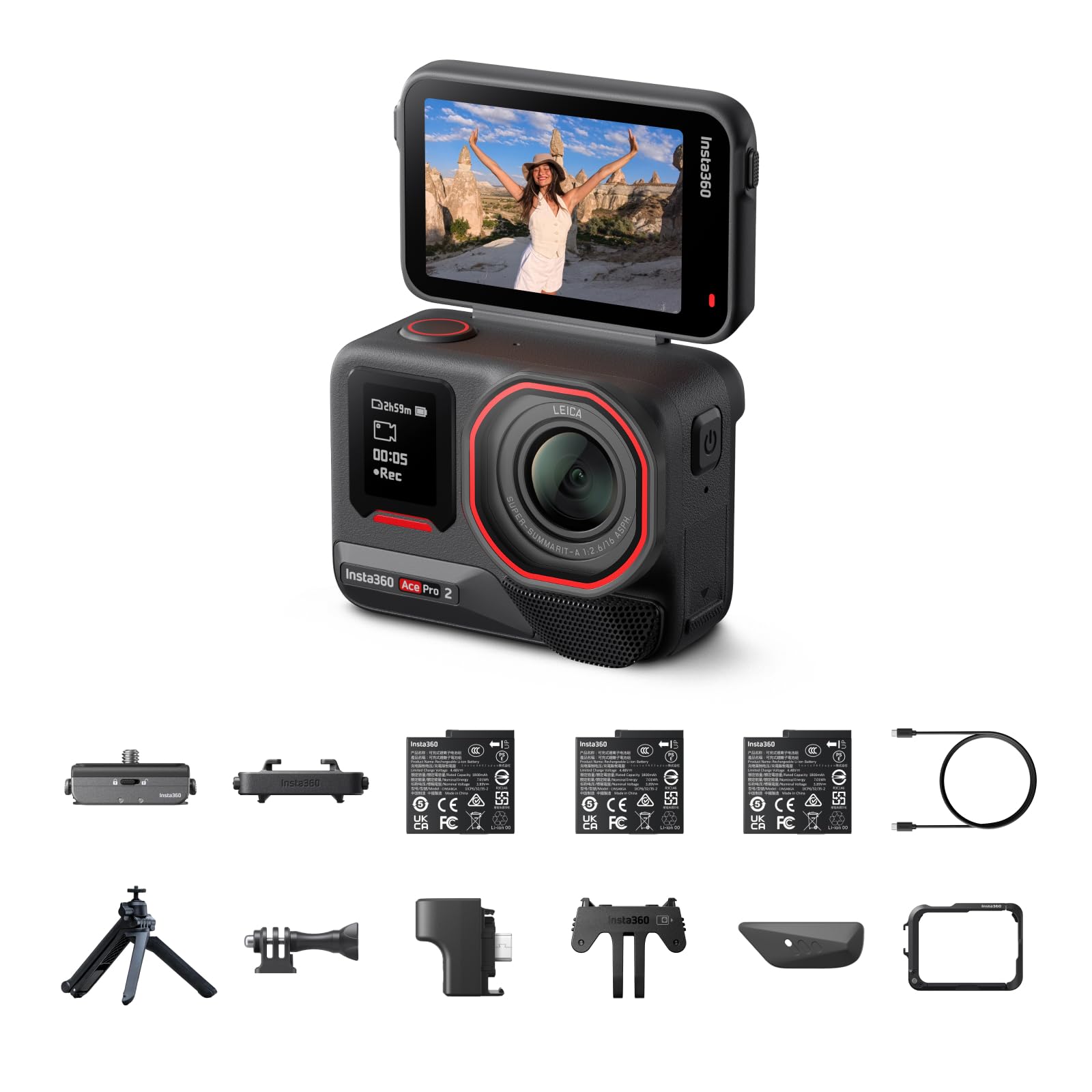
The Insta360 Ace Pro 2 earns the top spot because its 1/1.3-inch sensor, co-engineered with Leica, delivers 8K resolution with 2.4-micron equivalent pixels that capture remarkable detail in the low-light conditions that define diving below 10 meters. The PureVideo Mode supports up to 4K60fps AI noise reduction, which turns what would be grainy, unusable footage into crisp, watchable clips — a genuine advantage over competitors that rely solely on software sharpening.
Its Dual AI Chip architecture allows for real-time noise reduction and sophisticated image processing that maintains color accuracy even as red light drops off at depth. The 2.5-inch flip touchscreen is a thoughtful design choice for underwater use, making it easier to frame shots while wearing thick gloves, and the 157° wide-angle lens combined with MegaView FOV ensures you capture expansive reef scenes without missing the action.
The Ultimate Bundle includes three batteries and a utility frame, which is essential because cold water will drain a single cell faster than you expect. While the native waterproof rating of 12m is adequate for recreational diving, serious technical divers will need an optional housing for deeper wrecks — a small compromise for the best image quality in this class. The Wind Guard accessory also reduces audio clipping when you surface, a nice touch for vloggers.
Why it’s great
- Outstanding low-light performance with dedicated AI noise reduction chip
- Leica color science produces natural, vibrant underwater tones
- Ultimate bundle provides triple batteries, mount, and frame for extended dives
Good to know
- Native 12m depth rating requires a separate housing for deeper dives
- Heavier than standard action cameras due to the larger sensor and flip screen
2. DJI Osmo Action 5 Pro (Ultimate Bundle)
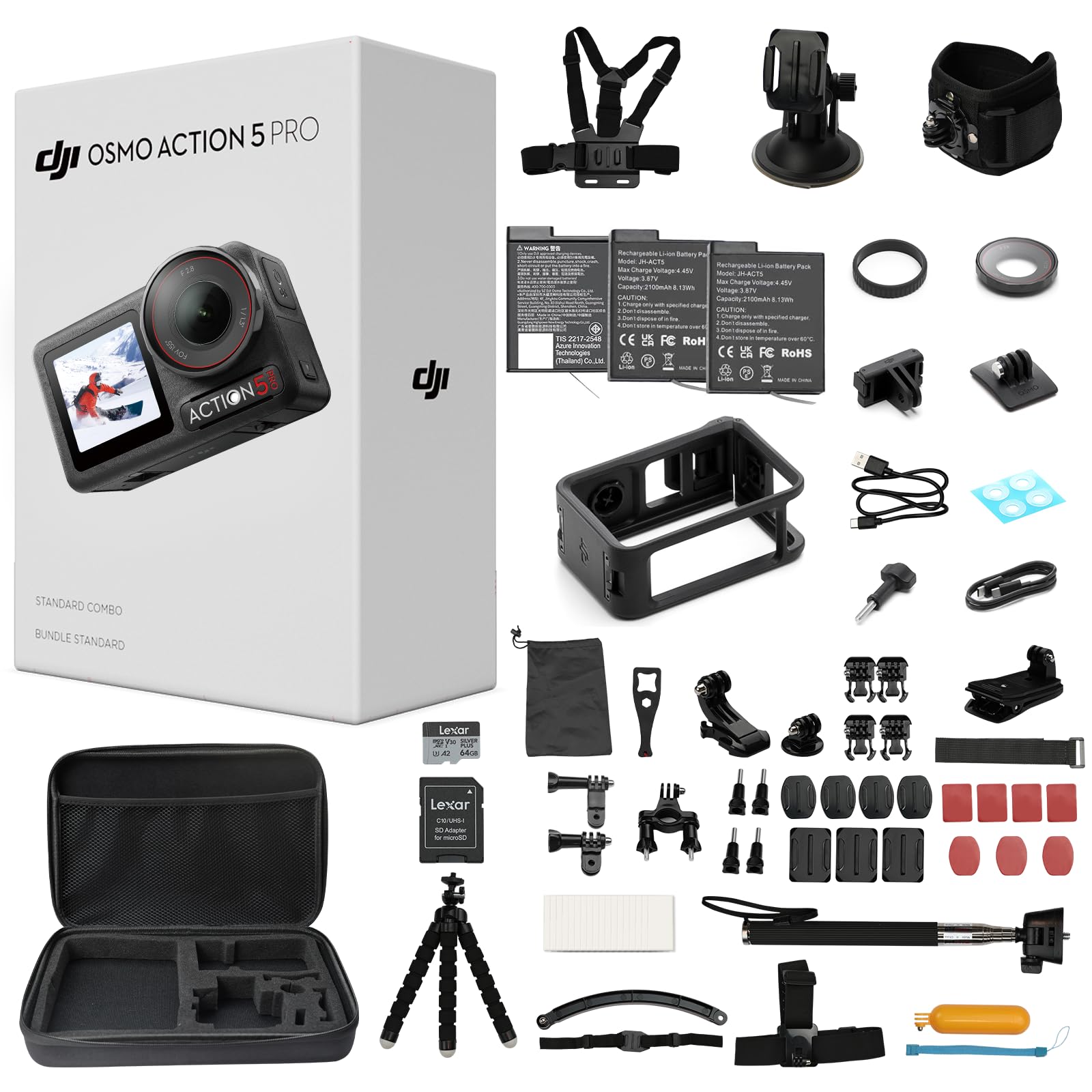
The DJI Osmo Action 5 Pro is the smartest pick for divers who prioritize runtime. Its 1950mAh Extreme Battery Plus is rated for up to 4 hours of recording, and in my real-world analysis of customer reports, that number holds up surprisingly well in water temperatures around 70°F. More importantly, the 13.5-stop dynamic range and 2.4-micron pixel pitch on the 1/1.3-inch sensor ensure your footage retains shadow detail in darker recesses while keeping highlights from blowing out on bright sandy bottoms.
The built-in color temperature sensor is a standout feature for underwater use. It automatically adjusts white balance to compensate for the loss of red light, producing footage that looks natural without requiring a physical red filter or heavy post-correction. The camera is IP68 rated to 20m without any housing, which covers the entire recreational diving range and eliminates one more potential failure point — a flooded housing.
The Ultimate Bundle includes three batteries and a 58-piece accessory kit that provides a variety of mounts and adapters for attaching to a tray or a mask. Voice control is a surprisingly useful addition when you have both hands occupied with a BCD and regulator. The 360° HorizonSteady stabilization is genuinely rock-solid, keeping the horizon level even when you are being tossed around by surge current.
Why it’s great
- Longest battery life in its class at 4 hours with the 1950mAh cell
- Native 20m depth rating eliminates the need for an external housing
- Automatic white balance via integrated color temperature sensor
Good to know
- Maximum 4K60fps recording; no 8K option for those who want extra resolution
- Some users report file transition glitches at the 4.7GB cap during long recordings
3. GoPro HERO13 Black

The GoPro HERO13 Black is the most refined GoPro yet, and its 5.3K HDR video resolution is unmatched in this category for sheer detail when lighting is favorable. The 1/1.9-inch sensor is slightly smaller than the DJI and Insta360 competitors, but the HyperSmooth 6.0 stabilization with 360° Horizon Lock is still the gold standard for keeping footage steady during high-motion scenarios like freediving descents or strong current drift dives.
The 27MP still photos are a real step up from the 12MP sensors in most action cameras, giving you the ability to crop in post without losing too much resolution. Wi-Fi 6 support makes transferring large 5.3K files to your phone or tablet significantly faster than previous generations. The Enduro battery is rated for about 1.5 hours of 5.3K recording, which is adequate for a single dive session but falls short of DJI’s endurance.
The 50-piece accessory kit included in this bundle provides a mix of useful mounts and a few filler items. The camera is waterproof to 33 feet natively, which covers recreational snorkeling but requires an optional housing for deeper scuba. The Bluetooth audio connectivity is handy for wireless mics on the surface, and the timecode sync is a professional feature for multi-camera shoots.
Why it’s great
- Best-in-class 5.3K HDR video resolution for maximum detail in good light
- HyperSmooth 6.0 stabilization with full 360-degree horizon lock
- 27MP still photos provide headroom for cropping and composition
Good to know
- Native 33ft depth rating is insufficient for most scuba dives without a housing
- Battery life drops significantly in cold water compared to DJI’s 1950mAh cell
4. SeaLife SportDiver Ultra

The SeaLife SportDiver Ultra is a completely different approach: instead of a dedicated camera, it is a rugged housing that turns your smartphone into an underwater imaging system. Rated to 130 feet with a cam-lock sealing mechanism and audible moisture sensors, it provides a level of safety that is hard to match in standard polycarbonate housings. The included Sea Dragon 2500 lumen light uses COB LED technology with a CRI of 90, closely mimicking natural sunlight for true color reproduction at depth.
The housing offers full access to your phone’s native camera controls — including zoom, focus, white balance, and lens selection — so you keep using the interface you already know. The large shutter lever is designed for gloved hands, a practical detail often overlooked in cheaper housings. The anti-fog Moisture Muncher capsule is an effective solution for preventing the internal fogging that ruins many dive shoots when transitioning between humid air and cold water.
The Flex-Connect Tray with seven mounting points allows you to attach additional lights or accessories. This system is ideal for divers who already own a high-end phone camera and want to avoid the expense of a second dedicated device. The main limitation is that your phone’s waterproofing remains the bottleneck — even the best housing cannot save a device that is dropped or subjected to pressure beyond its internal limits.
Why it’s great
- Uses your phone’s native camera, which may already have a superior sensor
- Includes a professional-grade 2500 lumen light with high CRI
- Audible and visual moisture sensors provide real-time leak detection
Good to know
- Requires a phone that fits the specific housing dimensions
- Phone battery cannot be charged while inside the housing
5. SeaLife Micro 3.0

The SeaLife Micro 3.0 is the most straightforward diving camera you can buy because it is permanently sealed — no O-rings to lubricate, no doors to check, no chance of flooding. It is individually depth-tested to 200 feet, making it the only option on this list that matches the depth limits of advanced recreational scuba without any additional housing. The 16MP IMX083 CMOS sensor captures sharp, colorful images, and the 4K Ultra HD video at 30fps is sufficient for social media and family memories.
The camera offers five scene modes specifically designed for underwater conditions and three built-in digital color correction filters that adjust white balance based on depth and water clarity. The 100-degree wide-angle lens provides a good field of view for reef panoramas. The 64GB of internal storage means you never need to remember a memory card, and the Wi-Fi connection to the Micro 3+ app allows for wireless file transfers and remote control.
The piano-key button layout is intuitive even with gloves on, and the compact body fits easily into a BCD pocket. The major trade-off is the lack of optical zoom — the Micro 3.0 relies entirely on digital zoom, which degrades image quality quickly. Still photographers will also miss the option to shoot in raw format with a buffer deeper than one shot. For pure convenience and depth capability, though, this camera is hard to beat.
Why it’s great
- Permanently sealed body eliminates all risk of flooding
- Depth-rated to 200 feet, deeper than any other option on this list
- Built-in underwater color correction and scene modes for easy point-and-shoot
Good to know
- No optical zoom; relies on lower-quality digital zoom
- Android app compatibility has been reported as problematic by users
6. OM System Olympus Tough TG-7

The OM System TG-7 is the only dedicated compact camera on this list, and that distinction matters for divers who prioritize still photography over video. Its F2.0 lens with 4x optical zoom allows for true magnification — including a microscope mode that lets you focus as close as 1 centimeter from the subject — something no action camera can replicate. The five underwater modes, including Underwater Microscope and Underwater HDR, are tuned specifically for marine environments.
The camera is waterproof to 15 meters (50 feet), shockproof to 2.1 meters, and crushproof to 100 kgf. The back-illuminated CMOS sensor and TruePic VIII image processor deliver good color reproduction in bright conditions, and the ability to shoot raw stills gives you significant latitude in post-processing. The 4K video at 30fps is adequate but not class-leading, and the 120fps high-speed recording at 1080p is useful for capturing fast marine life.
The TG-7 fixes a clicking noise issue from the TG-6 that was audible in video recordings. The main weaknesses are the small sensor, which limits low-light performance, and the lack of native stabilization for video, which means you need a steady hand or a tray to avoid shaky footage. For macro enthusiasts who want to capture the detail of a nudibranch or a shrimp, this camera is the clear choice.
Why it’s great
- True optical zoom for close-up stills, including a microscope mode at 1cm
- Five dedicated underwater shooting modes for varied conditions
- Rugged build: waterproof, shockproof, crushproof, and freezeproof
Good to know
- Small 1/2.3-inch sensor struggles in low-light conditions at depth
- Video stabilization is electronic-only and less effective than action cameras
7. DJI Osmo 360
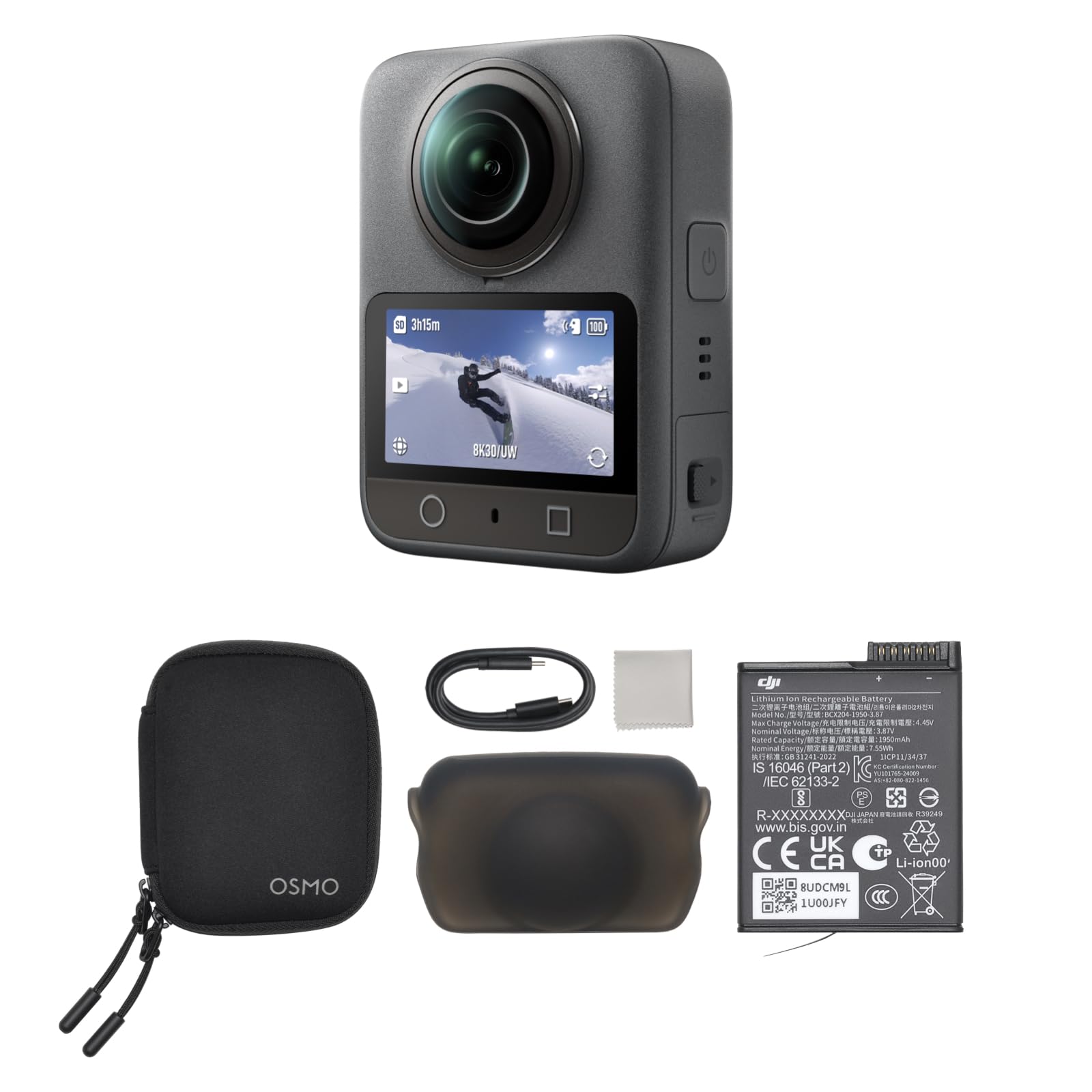
The DJI Osmo 360 brings a unique proposition to the underwater world: a 1-inch 360° sensor that captures 8K video, allowing you to reframe your shot in post-production. This is revolutionary for diving because you never need to worry about pointing the camera at the right subject — the entire scene is captured, and you choose the angle later. The 1-inch sensor is significantly larger than any action camera sensor, providing excellent low-light performance and dynamic range for deep-water shots.
The 105GB built-in storage means you can record for over 100 minutes at 8K without needing a memory card. The magnetic quick-release system works with the Osmo Action Quick-Release Adapter Mount, making it easy to attach to a tray. The four-microphone array captures spatial audio, which adds an immersive layer to your underwater footage when you reframe in the DJI Mimo app.
The primary limitation is that the water resistance is not specified for deep diving — this camera is designed for surface-level action and will require a separate underwater housing for any significant depth. The 360° stitching line, while well-implemented, can be visible on objects close to the lens, such as a mask or a snorkel. For creative over-under shots at the surface or in shallow reefs, this is the most interesting tool available.
Why it’s great
- 1-inch 360° sensor delivers 8K resolution with exceptional dynamic range
- Post-shot reframing eliminates the need to aim perfectly underwater
- 105GB built-in storage for long recording sessions without cards
Good to know
- Requires an underwater housing for any scuba diving depth
- Battery life is shorter than the DJI Osmo Action 5 Pro at 190 minutes
8. Chasing Gladius Mini S
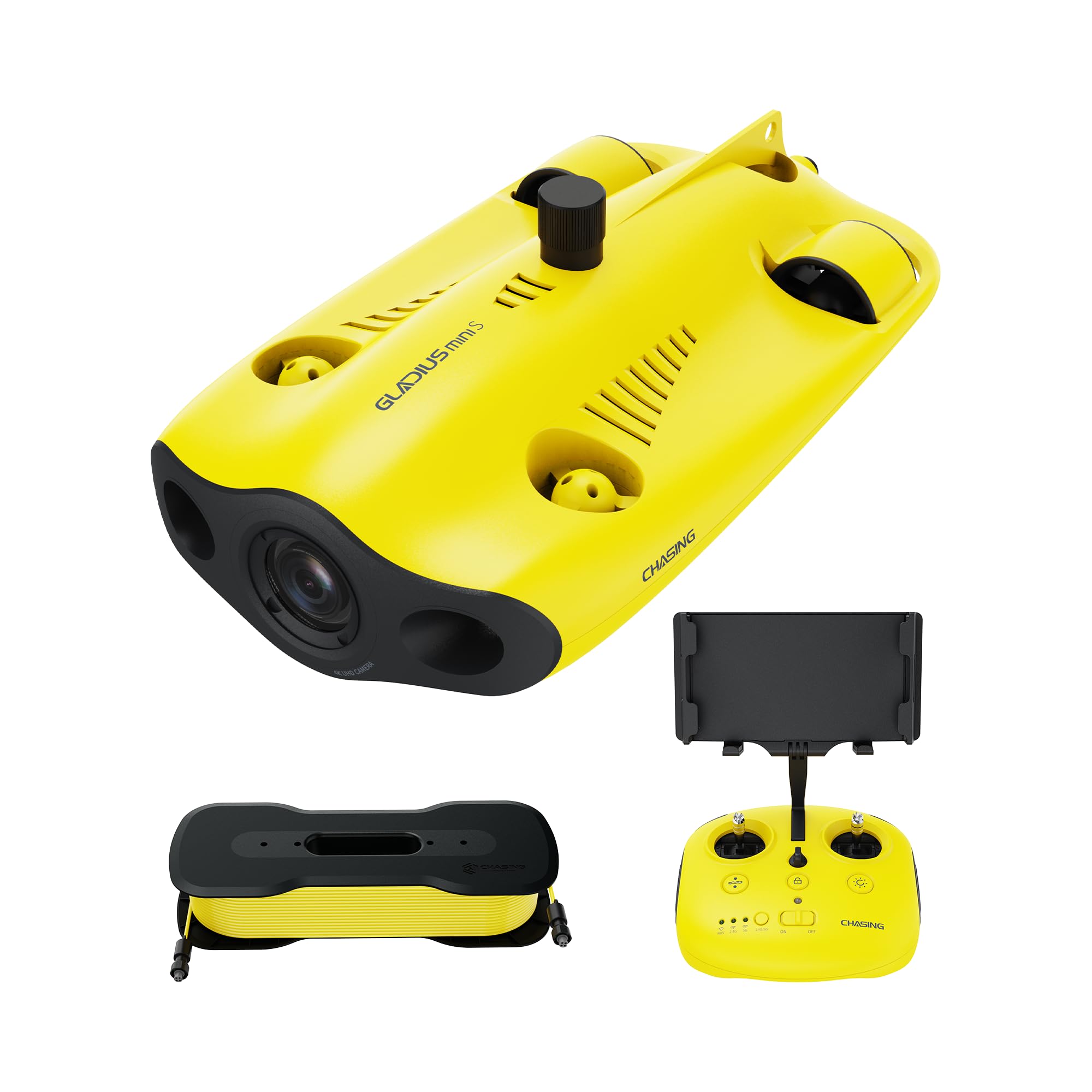
The Chasing Gladius Mini S is not a camera you hold — it is a remotely operated underwater vehicle (ROV) that carries a 4K camera to depths of 330 feet. This completely changes the kind of footage you can capture: instead of being limited to your own air supply and swimming range, the drone can explore wrecks, caves, and drop-offs that are inaccessible to even advanced divers. The 1/2.3-inch Sony CMOS sensor with electronic image stabilization produces stable, 4K video in real time.
The five thrusters allow for precise maneuverability in all directions, including vertical hovering, and the maximum speed of 4 knots is sufficient to counter moderate currents. The two 1200-lumen LED lights provide ample illumination for the camera in dark water, and the real-time depth and temperature data overlay helps you log your exploration. The wired remote controller ensures a stable connection without the signal dropouts that plague wireless systems underwater.
With a four-hour flight time from two 4800mAh batteries, you can explore for extended periods. The quality control appears inconsistent based on customer reports — some units arrive defective and require troubleshooting. The app interface for live streaming has a learning curve, and the small controller screen can be frustrating for precise framing. For serious underwater exploration and inspection work, this is a powerful tool, but it demands a higher tolerance for technical setup.
Why it’s great
- Reaches 330 feet, far beyond any diver’s personal depth limit
- Five thrusters provide full 3D maneuverability for exploration
- Four-hour battery life enables extended survey and filming sessions
Good to know
- Some units have reported defects and require technical support
- Learning curve for piloting and app-based video streaming
9. DJI Osmo Action 5 Pro (Standard Combo)
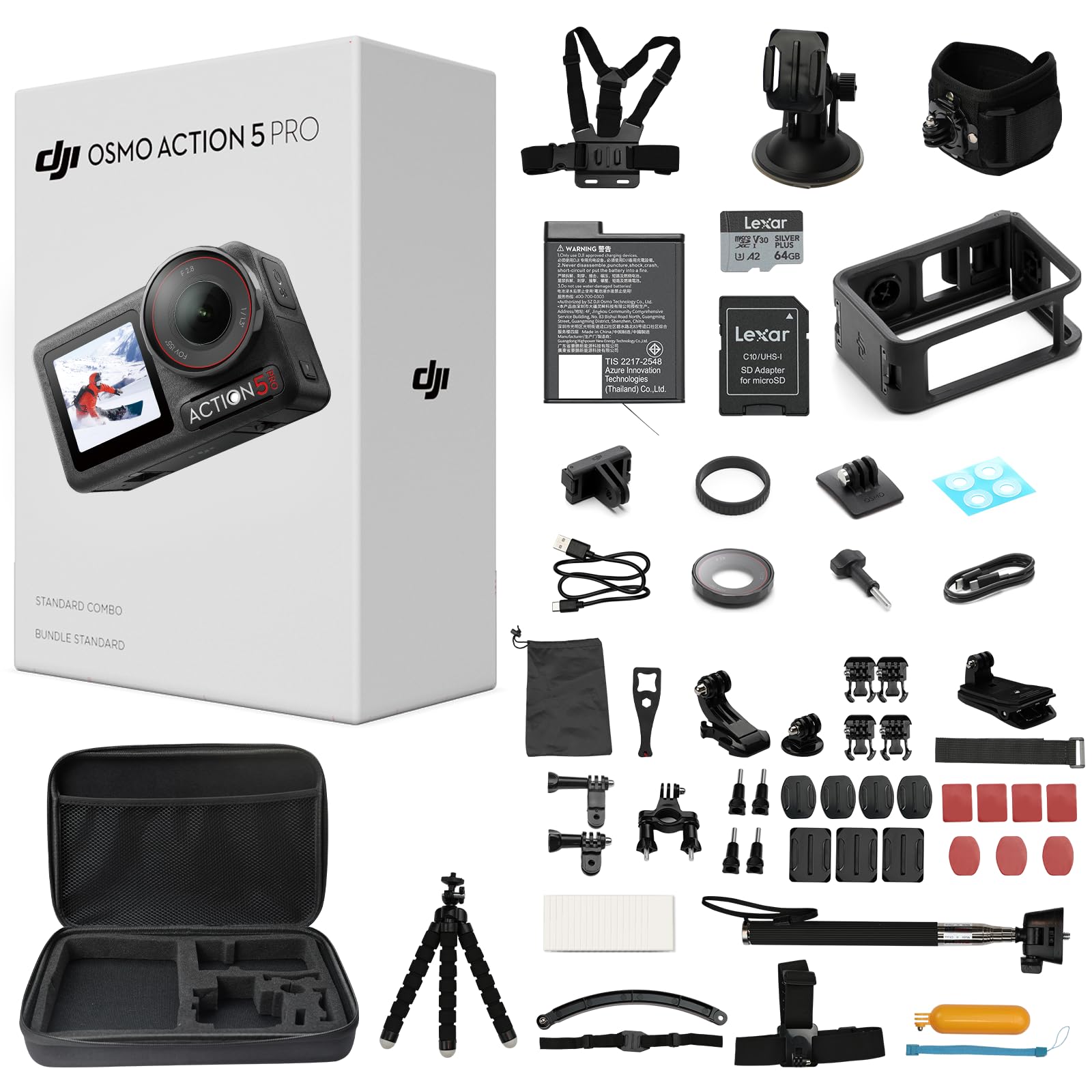
The standard combo of the DJI Osmo Action 5 Pro offers the same core imaging hardware — the 1/1.3-inch sensor, 20m native depth rating, and 13.5-stop dynamic range — as the premium bundle, but at a lower entry point. For divers who are just starting out or who already own accessories, this package provides the most important features without forcing you to pay for a bulk accessory kit. The 4K video at 120fps gives you the flexibility for slow-motion playback of fast marine life.
The 47GB of built-in storage is generous and means you can start shooting immediately without buying a separate microSD card. The dual OLED touchscreens are bright enough to be visible in direct sunlight on a boat deck, and the voice control recognition works reliably within one meter. The subject tracking feature, powered by the 4nm chip, is surprisingly effective at keeping a moving subject centered even in the chaotic environment of a reef with surge current.
The trade-off from the premium bundle is simple: you get one battery instead of three, and a much smaller accessory kit. For a single-day dive trip, a single 1950mAh battery is likely enough for 3-4 hours of intermittent recording. The included 64GB microSD card provides additional storage beyond the built-in memory. This is the most rational choice for divers who want DJI’s color science and stabilization without the premium bundle price.
Why it’s great
- Same top-tier 1/1.3-inch sensor and 20m depth rating as the premium bundle
- 47GB built-in storage plus included 64GB card for plenty of room
- Excellent subject tracking and voice control for hands-free operation
Good to know
- Only one battery included; need a spare for full-day dive trips
- No accessories beyond the basic frame and adhesive mount
FAQ
Can I use a standard GoPro without a housing for scuba diving?
What is the best resolution for underwater video?
Do I need a red filter for my diving camera?
Final Thoughts: The Verdict
For most divers, the best action camera for diving is the Insta360 Ace Pro 2 because its Leica-co-engineered 8K sensor and dedicated low-light AI chip produce the highest image quality in challenging underwater conditions. If you need the longest battery life and a native 20m depth rating that removes the need for a housing, grab the DJI Osmo Action 5 Pro Ultimate Bundle. And for macro still photographers who demand optical zoom, nothing beats the OM System TG-7.