
Our readers keep the lights on and my morning glass full of iced black tea. As an Amazon Associate, I earn from qualifying purchases.
Specs are compiled from manufacturer listings and verified buyer reviews and can change over time — please confirm the key details on the product page before buying.
Cloudy water, funky smells, and stressed fish are usually a sign your filter media is tired. The right activated carbon pulls out the invisible junk — dissolved waste, tannins, odors — and leaves your tank looking like bottled spring water. This guide compares four proven options so you pick the one that fits your filter and your schedule.
I’m Min — the founder and writer behind Gadgets Feed. This guide is built by comparing the manufacturers’ published specifications and the patterns across verified customer reviews, so you get each pick’s real strengths and trade-offs instead of marketing spin.
Whether you swap cartridges or cut your own pads, these are the top picks for activated carbon for fish tank that actually keep your water clean and your fish healthy.
Quick Picks
- Aquapapa 5 lbs Activated Charcoal Carbon Pellets — Best Overall
- Zuqqony 15 Pack PF-L Filter Cartridges — Top Performer
- Acurel LLC Economy Activated Filter Carbon Pellets, 3 Pound — Best Value
- AQUANEAT Aquarium Activated Carbon Filter Media Pad — Compact Pick
How To Choose The Best Activated Carbon For Fish Tank
Activated carbon traps dissolved waste, odors, and discoloration inside tiny pores. Once those pores fill up — usually after a few weeks — the carbon stops working and can even release trapped junk back into the water. Choosing the right format (pellets, pads, or cartridges) and the right replacement schedule is the key to keeping your tank crisp.
Format: Pellets vs. Pads vs. Cartridges
Loose pellets (like the Acurel and Aquapapa options) are the most flexible — you can put them in a mesh bag and place them anywhere in your filter. Pads (like the AQUANEAT) come pre-impregnated with carbon and are great for DIY cuts. Cartridges (like the Zuqqony) are the easiest: just swap the whole cartridge every few weeks, but they only fit specific filter models.
Replacement Frequency
All carbon media eventually saturates. Most brands recommend replacing every two to four weeks, depending on how many fish you have and how much you feed them. Heavily stocked tanks need more frequent changes. A good rule: if the water starts to smell or looks slightly yellow, it is time for fresh carbon.
Quick Comparison
On smaller screens, swipe sideways to see the full table.
| Model | Best For | Total Weight | Format | Replacement Interval | Amazon |
|---|---|---|---|---|---|
| Aquapapa 5 lbs Charcoal Pellets | Large tanks (55+ gal) | 5 lbs | Pellet in mesh bag | 2-4 weeks | $22.63Amazon |
| Zuqqony 15 Pack PF-L Cartridges | Top Fin Silenstream filters | 0.74 kg (15 count) | Cartridge | 2-4 weeks | $18.99Amazon |
| Acurel LLC 3 lb Pellets | Budget bulk users | 3 lbs | Pellet | As needed | $16.41Amazon |
| AQUANEAT Activated Carbon Pad | DIY filter builds | 8.1 oz | Cut-to-fit pad | 3-4 weeks | $16.99Amazon |
In‑Depth Reviews
1. Aquapapa 5 lbs Activated Charcoal Carbon Pellets

The big-bag value champion that handles large tanks without the mess.
This is the one to grab if you have a 55-gallon or larger setup. The carbon comes pre-loaded inside a reusable zippered mesh bag (12″ x 10″), so you just rinse it under running water until it runs clear, then drop it into your canister or power filter. No scooping, no fine dust floating through your tank. At a full 5 lbs versus the 3 lb Acurel bag, it offers more carbon by weight, making it the most economical choice for big jobs.
Buyers report these charcoal pellets are excellent at clarifying water instantly, and many use them for brewing as well as fish tanks. The minimal dust rinses off easily. One thing to note: the mesh bag is inside the plastic bag, so check both packages before discarding. The only minor complaint is that the bag could be a little larger for very wide filter chambers.
This pick works for both fresh and saltwater tanks and is phosphate-free, so it won’t fuel unwanted algae growth. It is also the fastest-working of the bunch in terms of clearing cloudiness — reviewers consistently mention seeing results overnight.
The case for it: The 5 lb weight in a ready-to-use mesh bag gives you the most carbon per dollar and the least mess — just rinse and drop.
The catch: The zipper pouch can lose durability over extended use, so you may eventually need to replace the bag itself.
Best for: Large freshwater or saltwater tanks (55+ gallons) where you want bulk value and easy placement.
Skip if: You have a very small filter compartment that cannot fit a 12″ x 10″ mesh bag.
2. Zuqqony 15 Pack PF-L Filter Cartridges

The drop-in cartridge for Top Fin owners who hate measuring and cutting.
If you own a Top Fin Silenstream PF20, PF30, PF40, or PF75 power filter, this 15-pack is the simplest way to keep fresh carbon in your tank. Each cartridge measures 6 inches long by 4.5 inches wide and uses high-density cotton plus 50% more nutshell activated carbon and zeolite (a mineral that pulls out ammonia and nitrogen) for a 4-layer filtering effect. The maker claims it filters 99% of impurities — so your water stays clean and your fish stay healthy.
Owners mention that the 15-pack saves money with bi-weekly changes, and the cartridges are thicker and taller than the original Top Fin-branded ones — which means they hold more media but may require trimming the top tab to fit. One reviewer noted delivery took much longer than expected (around a month), so order well before you run out. The replacement schedule recommended by the maker is every 2 to 4 weeks.
Unlike the loose-pellet options above, these cartridges also contain zeolite specifically to absorb ammonia and nitrogen, making them a stronger choice if you are dealing with water quality spikes in a newer or overstocked tank.
Why it’s great
- Drop-in fit for PF20/PF30/PF40/PF75 filters — no cutting or bagging needed
- 50% more nutshell activated carbon plus zeolite for ammonia removal
- 15-pack lasts months with bi-weekly swaps
Good to know
- Thicker than original Top Fin cartridges — you may need to trim the top tab
- Delivery can take weeks, so buy ahead
Best for: Owners of Top Fin Silenstream filters who want a no-fuss, ammonia-removing cartridge swap.
Skip if: You do not have a Top Fin Silenstream PF-series filter — these are not universal.
3. Acurel LLC Economy Activated Filter Carbon Pellets, 3 Pound

The no-frills pellet pack that seasoned fish keepers swear by.
These are the classic loose pellets — about 1/8-inch in diameter and 1/4 to 1 inch long — hard, dense, and low-dust. Customers note they are the cheapest and best carbon found, and many notice that the pellets work even better when lightly crushed for more surface area. This 3 lb bag is pre-washed (though you should still rinse it before use) and works in all filter types for both fresh and salt water. The Acurel pellets are noticeably heavier and more compact than granulated carbon, so 3 lbs here goes further than you might expect.
One buyer mentioned that extruded pellets like these may be slightly less effective than granulated activated charcoal, meaning you may need to replace them a bit more often. The same reviewer pointed out that the large, hard pieces (up to 2 cm long) make them good for pet fountains because they will not seep through the media bag. Another satisfied buyer with a 55-gallon tank said that the total price for two packages is less than one smaller package at Petco or PetSmart.
Because these are loose pellets, you will need your own media bag or filter compartment to contain them — they do not come pre-bagged like the Aquapapa option. But if you have a DIY filter setup or just want the cheapest per-pound price, this is the budget-friendly choice.
The case for it: At 3 lbs with ultra-low dust and hard pellets that do not crumble, it is the most cost-effective way to buy bulk carbon.
The downside: Extruded pellets are slightly less porous than granulated carbon, so they may saturate faster and need more frequent replacement.
Best for: Budget-conscious keepers with larger tanks who already own reusable media bags and want the lowest cost per pound.
Skip if: You want the absolute most porous, longest-lasting carbon — granulated types are more efficient.
4. AQUANEAT Aquarium Activated Carbon Filter Media Pad
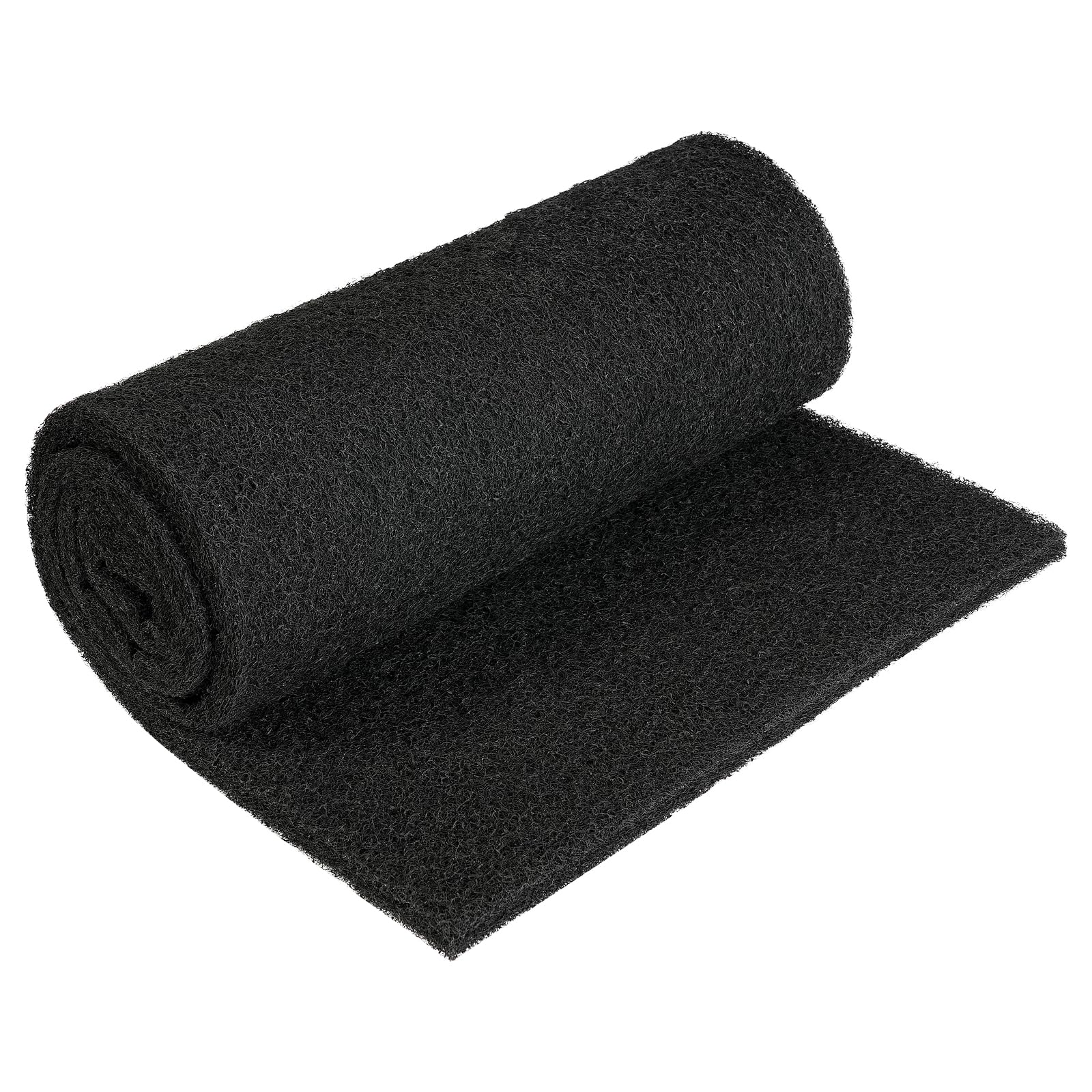
The DIY-friendly carbon pad you cut to size for any odd filter shape.
This is not a bag of pellets — it is a single black sheet of carbon-impregnated filter pad, 10.5 inches wide by 36 inches long, and roughly 3/8 to 1/2 inch thick. You cut it with scissors to fit exactly inside your canister, hang-on-back, wet/dry, or even a pond filter. It traps large particles and polishes the water at the same time, removing discoloration, odors, and pollutants. The maker recommends replacing the pad every three to four weeks depending on your tank’s waste load.
Buyers love how easy it is to cut and rinse — one reviewer with a small Betta tank said it keeps the water crisp and made his Betta more active. Another word of caution: live plant keepers should skip this one entirely, because the carbon removes all nutrients from the water, causing plants to die. It is also thicker than the standard sponges that come with most filters, so it catches more waste but may slow flow slightly in very small filters.
At only 8.1 ounces for the whole roll, this is the lightest and most portable option here. It works great for pet fountains too — just cut a small rectangle. The only real downside is that you cannot gauge how much of the carbon has been used up compared to pellets, so you have to replace on a strict schedule rather than by visual inspection.
Why it’s great
- Cut one roll into multiple custom pads for different filters or fountains
- Thick and durable — catches more waste than standard filter sponges
- Works in any filter type from small hang-ons to large pond systems
Good to know
- DO NOT use with live plants — it strips all nutrients from the water
- Thickness varies by batch (3/8″ to 1/2″) so check before cutting
Best for: DIY filter builders or anyone with multiple different-sized filters who wants one roll to serve all of them.
Skip if: You have a planted tank that needs its nutrients left alone.
Understanding the Specs
Pellet vs. Granular Carbon
Pellet carbon (like the Acurel and Aquapapa options) is compressed into hard, uniform shapes — about 1/8 inch in diameter. It produces less dust and is easier to rinse, but it has slightly less surface area than granular carbon, meaning it may saturate a bit faster. Granular carbon is loose and porous, offering more absorption per gram, but it creates more dust and can clog pumps if not bagged correctly.
Replacement Frequency
Most carbon media is rated to last between two and four weeks in a normally stocked tank. Heavily fed tanks or those with messy fish (goldfish, cichlids) will saturate the carbon faster. A good indicator it is time to replace: the water starts looking slightly yellow or green, or you notice a faint musty smell. Old carbon will not leach bad chemicals back into the water — it just stops working — so it is safe until you replace it.
Zeolite vs. Activated Carbon
Zeolite is a mineral that specifically traps ammonia and nitrogen — common culprits in new tank syndrome. Activated carbon targets dissolved organics, odors, and discoloration. Some cartridges (like the Zuqqony PF-L) combine both in one unit. If you have a newly cycled tank or are dealing with ammonia spikes, a zeolite-carbon blend is a smart upgrade over plain carbon.
Rinsing Before Use
All activated carbon produces fine black dust from shipping and handling. Every product in this guide should be rinsed under cold running water until the water runs clear before putting it in your filter. Skipping this step can release carbon fines into your tank, which are harmless to fish but will turn your water gray for a day or two before settling.
FAQ
Can I use activated carbon meant for aquariums in a planted tank?
How often should I replace my aquarium carbon?
Does old activated carbon release toxins back into the water?
What is the difference between pellet and granular activated carbon?
Will activated carbon remove ammonia from my fish tank?
Can I rinse and reuse activated carbon?
Is it safe to use activated carbon in a saltwater reef tank?
What size carbon bag do I need for a 10-gallon tank?
Does activated carbon help with algae blooms?
Can I use activated carbon meant for air purifiers in my fish tank?
Final Thoughts: The Verdict
For most people, the activated carbon for fish tank winner is the Aquapapa 5 lbs Charcoal Pellets because it combines the best value per pound with a ready-to-use mesh bag that eliminates mess and works for any filter type. If you want simple drop-in convenience for a Top Fin filter, grab the Zuqqony PF-L 15-pack. And for budget-friendly bulk carbon that fits in any media bag, the standout is the Acurel 3 lb Pellets.
How We Picked
We do not accept paid placement, and we did not hands-on test every unit. Instead, we match each pick to a real buyer and use-case by comparing the manufacturers’ published specifications against the patterns in verified customer reviews — so you get each pick’s real strengths and trade-offs instead of marketing copy.
Sources & Methodology
Specifications: manufacturer listings and product documentation. Review insights: verified customer reviews, as of July 2026. Pricing: not shown on this page (it changes often); check the current price via the retailer link.
As an Amazon Associate, Gadgets Feed earns from qualifying purchases. This does not affect which products we feature.
Product prices and availability are accurate as of the date/time indicated and are subject to change. Any price and availability information displayed on Amazon at the time of purchase will apply to the purchase of this product. As an Amazon Associate I earn from qualifying purchases.
CERTAIN CONTENT THAT APPEARS ON THIS SITE COMES FROM AMAZON. THIS CONTENT IS PROVIDED "AS IS" AND IS SUBJECT TO CHANGE OR REMOVAL AT ANY TIME.
Amazon and the Amazon logo are trademarks of Amazon.com, Inc. or its affiliates.