
For a child with motor delays, autism, or a physical disability, an off-the-shelf toy often requires more dexterity, strength, or coordination than they can reliably offer. The result is frustration instead of play. Adaptive switch toys solve this by replacing a complex set of actions with a single, deliberate press, push, or pull — giving every child the power to control their own fun.
I’m Min — the co-founder and writer behind Gadgets Feed. I’ve spent hundreds of hours researching adaptive play technology, analyzing activation forces, connector compatibility, and sensory outputs to build a guide that helps you match a toy’s spec sheet to your child’s actual needs without the marketing noise.
The goal is simple: help you find the very best adaptive switch toys by breaking down what each button, spin, and mechanism actually delivers for a child who needs more than a standard toy can offer.
How To Choose The Best Adaptive Switch Toys
The best adaptive switch toy is not the one with the most features — it’s the one whose activation method and sensory reward match your child’s current physical and neurological needs. These three factors matter most.
Activation Force and Physical Access
Some toys require a heavy press; others respond to the lightest tap, a slide, a twist, or even a spin. For children with low muscle tone or limited fine motor control, a low-activation-force switch like the AbleNet Jelly Bean (which activates with minimal pressure over its large 3-inch surface) is critical. For kids who can manage a firmer press but need a large target, the AbleNet Big Red Switch’s 5-inch activation surface is the gold standard. Always check whether a toy’s mechanism is a press, a lever, a toggle, or a spin, and match it to the child’s most reliable movement.
Sensory Output and Regulation
Every adaptive toy produces a specific sensory payoff: sound, light, vibration, movement, or a combination. A child who is sensory-seeking may need the intense vestibular input of a spinning chair or the rhythmic beat of a musical toy. A child who is sensory-sensitive may do better with a pop-up toy’s quiet click or a button that produces only a gentle visual reward. Matching the output to the child’s sensory diet prevents both overstimulation and understimulation.
Switch Compatibility and Expandability
Some toys have a built-in adaptive mechanism. Others require an external 3.5mm switch jack — the universal standard in assistive technology — to connect a dedicated button like the Jelly Bean or Big Red Switch. If you plan to build a system over time, invest in a toy that accepts an external switch. If you need an all-in-one solution, a self-contained pop-up or musical toy removes the complexity of separate components.
Quick Comparison
On smaller screens, swipe sideways to see the full table.
| Model | Category | Best For | Key Spec | Amazon |
|---|---|---|---|---|
| KidBloom Spinning Chair | Sensory Spin | Vestibular and proprioceptive input | 220-lb weight capacity, 360° silent swivel | Amazon |
| AbleNet Big Red Switch | Assistive Button | Universal switch for adapted toys | 5-inch activation surface, tactile + audible feedback | Amazon |
| AbleNet Jelly Bean Switch | Assistive Button | Low-force activation for limited motor control | 3-inch activation surface, 5.4 oz weight | Amazon |
| Fisher-Price Busy Buddies Pop-Up | Cause-and-Effect | Multi-mechanism fine motor practice | 4 animals, 4 activation types (press/flip/spin/slide) | Amazon |
| Fisher-Price Laugh & Learn Gamer | Pretend Play | High-contrast lights and cause-and-effect for infants | 10+ buttons, joystick, D-pad, 0.4 lb weight | Amazon |
| Duchong Pop Up Toys | Cause-and-Effect | Light-driven game mode and quiet play option | 4 animal triggers (lever, switch, dial, button) | Amazon |
| CYURMJUN Octopus Music Toy | Musical Sensory | Musical rhythm and instrument recognition | 32 music modes, 3 colors of LED lights | Amazon |
In‑Depth Reviews
1. KidBloom Spinning Chair
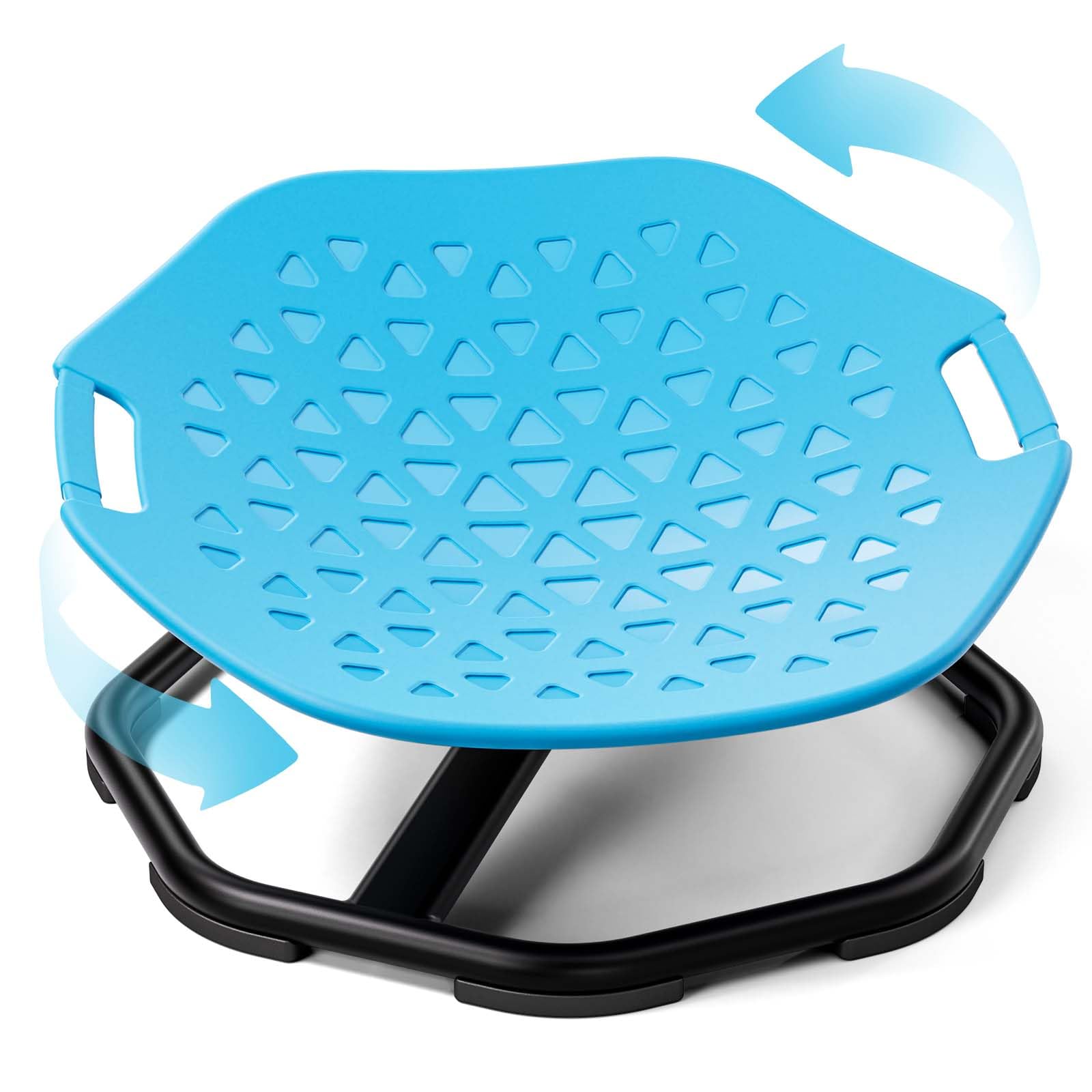
The KidBloom Spinning Chair bridges the gap between a sensory therapy tool and a fun piece of kid’s furniture. Its metal base and 360° silent swivel mechanism allow for smooth, noise-free spinning that delivers the vestibular input many sensory-seeking children crave. The octagonal diamond-patterned panel catches light and adds a tactile-visual layer that deepens the sensory experience during rotation.
This chair is designed around safety and independence. The dual handles give children a secure grip, which reduces the fear of tipping — a common concern with single-point spinning toys. It supports up to 220 pounds, so it can accommodate a wide age range and even an adult sitting with a child for co-regulation. Assembly is tool-free, and the non-slip base keeps it planted during active use.
Parents report that children with autism and ADHD use the chair to self-regulate, and that the spinning movement often encourages verbal requests — “spin me” or “more” — in children who are otherwise non-verbal. It works in therapy rooms, classrooms, and living rooms, and it actively pulls kids away from passive screen time into a movement-based experience that builds balance and coordination.
Why it’s great
- Silent swivel mechanism won’t disrupt a classroom or home environment
- Dual handles provide confidence and stability for younger or cautious spinners
- Supports up to 220 lbs, making it usable for older children and co-regulation
Good to know
- Requires supervision for younger children as it spins fast
- Not a travel-friendly toy — it is a piece of furniture
2. AbleNet Big Red Switch
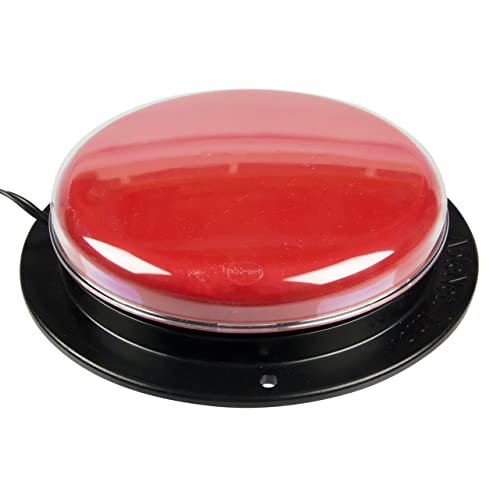
The AbleNet Big Red Switch is the industry standard for a reason: its 5-inch activation surface is large enough to be hit reliably by a fist, a palm, a foot, or even a head movement, and it provides both tactile and audible click feedback so the user knows the action registered. It comes with four interchangeable caps — red, blue, yellow, and green — plus a snap-on clear symbol holder for picture-based communication or instruction cues.
This switch operates as a normally-open momentary contact with a 1 Amp current rating, meaning it can control battery-powered adapted toys, communication devices, or powerwheel modifications. The surface-mount housing has holes on the back plate for zip ties or screws, allowing it to be fixed to a wheelchair tray, a table edge, or a play board. It is plug-and-play with any device that accepts a standard 3.5mm switch jack.
While the internal mechanism is a simple microswitch, the build quality is reliable enough for daily therapeutic and educational use. The main complaint is cost relative to the component inside, but the value is in the accessibility engineering — the large target area, the low activation force, and the visual contrast options all reduce the motor planning burden on the user, which is exactly what a good assistive switch should do.
Why it’s great
- Massive 5-inch activation surface works for gross motor movements
- Audible and tactile click confirms activation without needing to look
- Interchangeable colored caps and symbol holder add visual clarity
Good to know
- Considered overpriced for the simplicity of the internal microswitch
- May not be covered by insurance, making it an out-of-pocket expense
3. AbleNet Jelly Bean Switch

The AbleNet Jelly Bean Switch is the smaller sibling of the Big Red, and its 3-inch activation surface makes it a better fit for children who can isolate a finger or a palm press but lack the range for a larger target. The switch is lightweight at just 5.4 ounces, which makes it easy to mount on a wheelchair tray or position on a table without shifting. Its low-profile design means it does not raise the child’s hand position unnaturally high.
A standout feature is the ability to swap the button color without tools — parents and therapists report changing it to red or blue to re-engage a child’s interest or to color-code different actions during a switch-training session. Like the Big Red, it uses a standard 3.5mm plug and works with any adapted toy, communication device, or battery-interrupter setup.
Some users find the 3-inch surface just a bit too small for children with very wide or uncontrolled movements, and in those cases the Big Red is the better choice. But for a child who can target a palm-sized area and needs a switch that travels easily between home and school, the Jelly Bean hits the sweet spot between portability and usability.
Why it’s great
- Lightweight and compact for portable use between therapy and home
- Interchangeable color tops keep the toy fresh and aid visual discrimination
- Requires very low activation force for children with limited strength
Good to know
- 3-inch surface may be too small for children with very broad motor patterns
- Same cost as the larger Big Red Switch despite the smaller surface area
4. Fisher-Price Busy Buddies Pop-Up

The Fisher-Price Busy Buddies Pop-Up is a cause-and-effect powerhouse because it offers four distinct mechanical actions — a press, a flip, a spin, and a slide — each paired with a different animal reveal. The giraffe pops up from a button press that squeaks, the crocodile responds to a toggle that clicks, the elephant slides and chimes, and the lion spins with a clicking sound. This variety is critical for adaptive play because it lets a child practice multiple hand positions and force levels on a single toy.
It requires zero batteries. The entire experience is mechanical: the sound comes from moving parts, not speakers. This makes it ideal for children who are sensitive to electronic noise or who need a toy that works reliably without dying batteries. The toy is also sturdy enough to survive drops and throws — a parent of a child with disabilities explicitly confirmed it holds up after months of daily use.
At 1.3 pounds and measuring about 6 inches tall, it is heavy enough to stay put during play but light enough to carry in a diaper bag. The lack of lights or loud music makes it a strong choice for a calm sensory environment, though children who need high-intensity visual stimulation may find it understated. For fine motor practice and pure mechanical cause-and-effect, this is the most versatile option available.
Why it’s great
- Four distinct activation types build a wide range of fine motor skills
- No batteries required — mechanical sounds are gentle and never fail
- Extremely durable construction that survives drops and throws
Good to know
- No lights or electronic sounds for children who need high sensory input
- Animals pop up with a fairly soft action, not a dramatic spring
5. Fisher-Price Laugh & Learn Gamer

The Fisher-Price Laugh & Learn Gamer looks like a handheld gaming console, but its 10+ buttons, joystick, D-pad, and sliding controller handles are all designed for small hands with limited dexterity. At just 0.4 pounds, it is light enough for a 9-month-old to lift and hold, and the bright multi-color lights behind each button provide high visual contrast that draws attention and reinforces cause-and-effect learning.
The toy includes 65+ songs, sounds, and phrases that teach counting, shapes, and colors. The volume is adjustable, which is a critical feature for parents managing auditory sensitivity — the lowest setting is quiet enough not to overwhelm a child who is still building tolerance to sound. Multiple parents of children with disabilities reported this toy survives being thrown against the ground repeatedly and still functions perfectly.
The realistic design — joystick, D-pad, triggers — is also a social bridge. It lets a child with motor delays participate in pretend play alongside peers who use standard gaming controllers. It is not a switch-adapted device, but its low-force buttons and varied activation types (press, slide, twist, push) make it a functional all-in-one alternative for children who are not yet ready for a separate switch setup.
Why it’s great
- Extremely lightweight and easy for an infant to lift and manipulate
- 65+ songs and phrases offer long-term replay value for language exposure
- Adjustable volume prevents overstimulation for sound-sensitive children
Good to know
- Does not have a 3.5mm jack for external switch compatibility
- Buttons are not individually programmable or assignable
6. Duchong Pop Up Toys

The Duchong Pop Up Toy stands out among entry-level cause-and-effect toys because it offers three distinct play modes: Animal Sound Mode (plays the animal name and vocalization when it pops), Game Mode (follow-the-light to find hidden animals), and a Quiet Mode that works without batteries. This last mode is critical for children who are overwhelmed by sound but still need the motor practice of activating the levers, switches, dials, and buttons.
The toy is made from ABS plastic that is polished smooth and BPA-free, so it can handle mouthing and chewing during the oral-exploration phase. Each of the four animal triggers requires a different physical action, and the animals pop up with enough speed to create a surprise effect that keeps attention. The light in Game Mode provides a visual cue that helps children who struggle to process verbal instructions.
Some users noted that the flaps can get jammed if a child pushes down too aggressively, and the toy is lightweight enough to slide around during play without a non-slip base. For its price point, however, the inclusion of three modes — one fully mechanical — is rare. It is a strong starting point for a family exploring whether their child will engage with pop-up play before investing in a higher-end option.
Why it’s great
- Quiet Mode allows mechanical pop-up play without any electronic noise
- BPA-free ABS construction is safe for mouthing and chewing
- Three play modes extend the toy’s lifespan as the child develops
Good to know
- Flaps can stick if pushed with too much force by an aggressive player
- Lightweight body slides on smooth surfaces without a grip mat
7. CYURMJUN Octopus Music Toy

The CYURMJUN Octopus Music Toy packs 32 music modes across eight instrument families — jazz drums, guitar, rock, piano, saxophone, and more — into a compact, brightly colored shell with six easy-to-press buttons. Each button triggers a different instrument and lights up in one of three LED colors, providing multimodal sensory feedback (auditory + visual + tactile) from a single press. This is especially useful for children who need high-density sensory input to stay engaged.
The toy has a low and high volume setting, though some parents note that even the lowest setting is quite loud — a simple layer of tape over the speaker grille can tame it further. The buttons are large and require minimal force to activate, which makes it accessible for children with fine motor delays. The toy is also surprisingly durable: multiple reviews confirm it survived two babies in sequence and still works perfectly.
One unique aspect is that the toy plays recognizable song snippets from popular culture, which can be a motivator for older toddlers to press the buttons. The small plastic “plugs” that insert into the octopus’s arms are easy to lose, but the toy functions without them. For a child who responds strongly to music and needs a reliable, battery-operated cause-and-effect toy, this octopus delivers more modes per dollar than any other musical option in this class.
Why it’s great
- 32 music modes provide variety that prevents boredom over weeks of play
- Three-color LED lights add a visual reward layer for each button press
- Durable ABS shell holds up to drops and rough handling by multiple children
Good to know
- Lowest volume setting is still fairly loud for sensitive ears
- Small accessory plugs are easily misplaced and not essential for function
FAQ
What age range are adaptive switch toys suitable for?
Can I use the AbleNet Big Red Switch with any battery-powered toy?
How do I clean adaptive switch toys safely?
Final Thoughts: The Verdict
For most users, the best adaptive switch toys winner is the KidBloom Spinning Chair because it delivers intense, repeatable vestibular input in a safe, silent package that grows with the child and doubles as furniture. If you want a universal switch button to adapt existing toys, grab the AbleNet Big Red Switch. And for mechanical cause-and-effect play without batteries or screens, nothing beats the Fisher-Price Busy Buddies Pop-Up.