
That faint, sour smell near the drain field or a slow-draining toilet isn’t just an annoyance — it’s the first warning that the bacterial ecosystem inside your septic tank is out of balance. When solids accumulate faster than they break down, the sludge layer thickens, the scum layer hardens, and the leach field eventually clogs with organic debris and mineral deposits. A targeted biological additive recharges the enzyme and bacteria levels your system needs to digest waste, reduce odor, and prevent emergency pump-outs.
I’m Min — the co-founder and writer behind Gadgets Feed. I’ve analyzed dozens of septic formulations across bacteria strains, enzyme profiles, colony-forming unit counts, and application schedules to separate the maintenance products that actually stabilize a system from the ones that just mask the problem.
After reviewing culturing methods, tank size compatibility, and real-world customer outcomes from heavy-use households, I’ve narrowed the market to the most effective options. This guide walks you through the top-rated choices for the best additive for septic system maintenance available today.
How To Choose The Best Additive For Septic System
Not all septic additives work the same way. The difference between a product that keeps your system balanced and one that just colors your toilet water comes down to the specific bacterial strains, the total viable colony count, and the delivery mechanism. Here are the three factors that separate effective maintenance additives from the rest.
Bacterial Strain Diversity and CFU Count
A single bacterial species can’t break down toilet paper, grease, eggshells, and detergent residue equally. Effective septic additives use a consortium of aerobic and anaerobic strains — typically Bacillus subtilis, Bacillus licheniformis, and Pseudomonas — each producing distinct enzymes. The colony-forming unit (CFU) count per dose matters: a maintenance product should deliver at least 1 billion CFU per application to keep solids from accumulating between pump-outs.
Delivery Format: Tablet, Liquid, or Powder
Tablets are convenient for weekly or monthly flush-and-forget schedules, but some formulations are lighter than water and sit on top of the scum layer rather than penetrating into the sludge. Liquids and powders mix more thoroughly with the effluent and reach the bottom sediment faster, which makes them preferable for systems that are already showing slow drainage. The trade-off is that liquids often require measuring and may have shorter shelf lives once opened.
Enzyme Selection for Specific Waste Types
Look for a blend that includes cellulase (digests toilet paper fibers), lipase (breaks down fats, oils, and grease), and protease (handles protein-based waste). A formula heavy on one enzyme type may clear a specific smell but leave the underlying solid buildup untouched. The best additives list all three on the label; if the manufacturer only claims “natural enzymes” without specifying which ones, the formulation is likely too broad to target stubborn waste.
Quick Comparison
On smaller screens, swipe sideways to see the full table.
| Model | Category | Best For | Key Spec | Amazon |
|---|---|---|---|---|
| Down John Once-A-Year | Premium | Yearly single-dose maintenance | 3-part concentrate with live bacteria + carbon | Amazon |
| CCLS Biological Support | Premium | Monthly biological balance restoration | 32 oz dose; reduces COD, BOD, TSS | Amazon |
| RID-X Platinum Liquid | Mid-Range | Monthly flushable liquid for tanks up to 1500 gal | Dual-action formula; 2x more waste reduction | Amazon |
| Organic Plumber Bio Tabs | Mid-Range | Odor elimination and sludge penetration | 60 billion CFU per tablet | Amazon |
| Cabin Obsession 52-Week Fizz Tabs | Mid-Range | Weekly flushable tablet for year-long supply | Billions of active cultures per tablet | Amazon |
| Green Pig Pucks | Mid-Range | Every-other-month puck for tanks up to 1500 gal | Enzyme & bacteria-based dissolvable puck | Amazon |
| Septi-Flow Shock Drainfield Repair | Premium | Restoring clogged leach field absorption | 1-gallon; breaks sodium/soap buildup | Amazon |
In‑Depth Reviews
1. Down John (Once-A-Year) Septic Tank Treatment

Down John uses a three-part system — a live bacteria concentrate, an enzyme activator, and a carbon-based odor neutralizer — designed to work as a single yearly dose. The carbon component binds to toxins and nitrates that contribute to nitrogen loading in the drain field, while the bacterial portion re-establishes a healthy population that lasts well beyond the one-month mark. Customers with 25–30 year old tanks have reported that their maintenance inspections showed cleaner lateral lines and improved absorption after the second year of use.
The 3-part system is the key differentiator here. Most single-bottle additives flood the tank with bacteria that either die off quickly or fail to penetrate the sludge. Down John’s activator bottle primes the environment so the live bacteria have better survival rates. The carbon powder should be poured directly into the tank through the inspection port to avoid staining the toilet bowl — a minor but important user tip.
For homeowners who want a set-it-and-forget-it schedule, the once-a-year cadence removes the monthly reminder hassle. The treatment is all-natural and safe for both anaerobic and aerobic systems, though tanks over 2,500 gallons may need a double dose. The company’s founder, a chemist, offers direct phone consultation for system-specific dosing questions — a level of technical support uncommon in this category.
Why it’s great
- Single yearly application saves time and money
- Carbon component actively binds nitrate and odor-causing compounds
- Proven to restore absorption in aging leach fields over 12–24 months
Good to know
- Requires direct dosing into the tank for best carbon performance
- Higher upfront cost compared to monthly liquid products
- May need double dose for systems larger than 2,500 gallons
2. CCLS Septic Tank and Cesspool Treatment Additive

CCLS targets the chemical side of septic health by normalizing Chemical Oxygen Demand (COD) and Biochemical Oxygen Demand (BOD) — two metrics that indicate how much organic load the bacteria are handling. The formula uses enzyme-producing bacteria rather than pre-made enzymes, which means the bacterial colony continuously generates its own digestive tools as long as the population survives. This approach stabilizes the tank biology between pump-outs and produces a cleaner effluent that puts less strain on the drain field.
The recommended monthly dose of 32 oz is quite concentrated. A single gallon bottle supplies four monthly treatments, which makes the per-dose cost competitive with mid-range tablets. The manufacturer stresses that pumping and filter cleaning remain non-negotiable — CCLS is a biological stabilizer, not a replacement for physical maintenance. Customers who paired this additive with regular pumping reported extended intervals between pump-outs, with one pumper estimating the system could go eight years instead of five.
One concern is the product’s availability. The listing has been active since 2012 and the manufacturer is responsive, but some buyers have noted inconsistent stock levels. The liquid is biodegradable, non-toxic, and non-corrosive, which makes storage safer than acid-based drain field cleaners. It’s also one of the few additives that explicitly mentions reducing Total Suspended Solids (TSS) alongside the more common odor claims.
Why it’s great
- Reduces COD, BOD, and TSS for cleaner effluent
- Highly concentrated monthly dose lowers per-application cost
- Enzyme-producing bacteria sustain themselves vs pre-made enzymes
Good to know
- Requires monthly application schedule
- Bottle size is bulky for small storage spaces
- Stock availability can be inconsistent
3. Septi-Flow Shock Drainfield Repair Solution
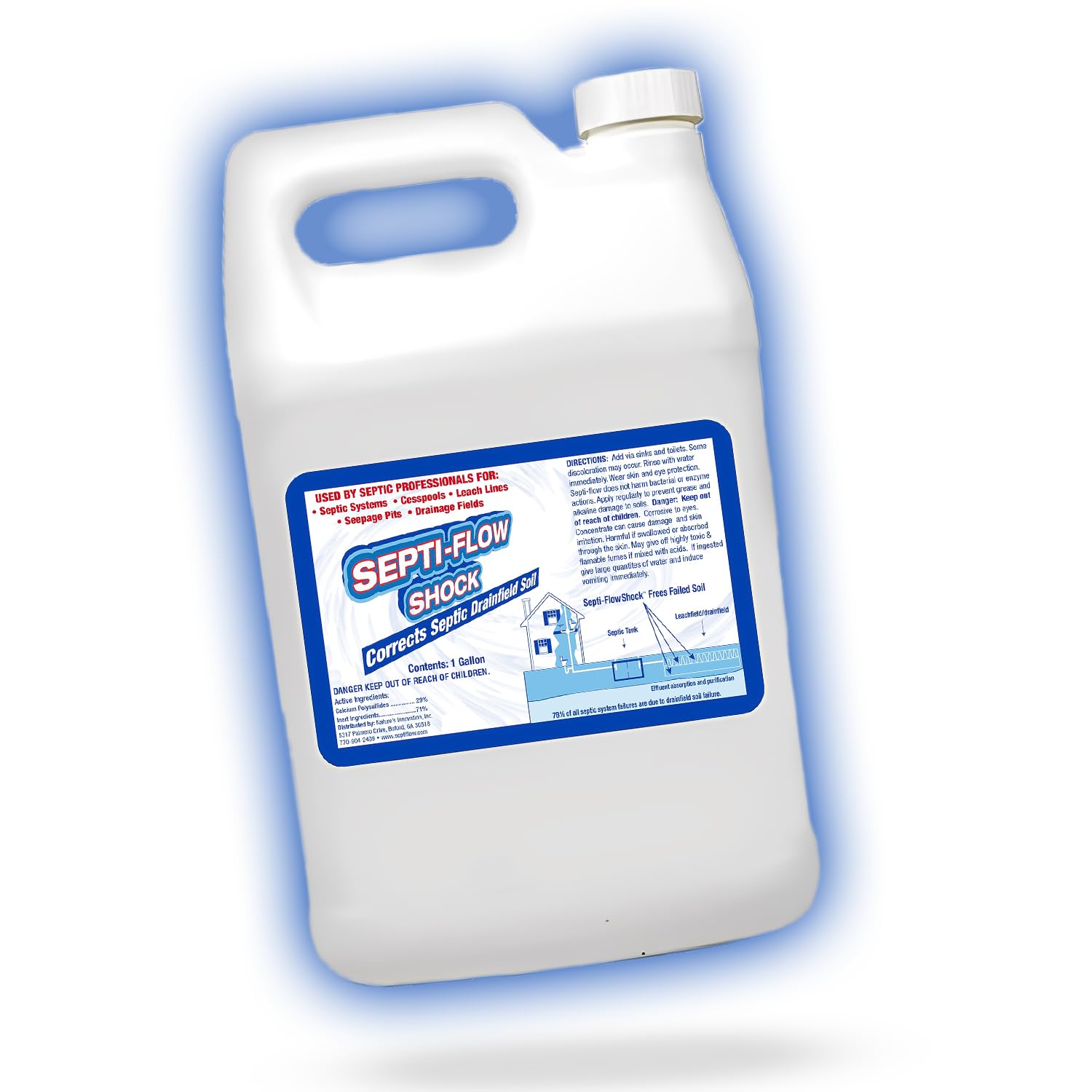
Septi-Flow Shock is not a maintenance additive in the traditional sense — it’s a heavy-duty treatment specifically designed to break down sodium, phosphate, and sulfate buildup that has hardened the soil in a failing leach field. The active chemistry targets the salts from soaps, dishwashing detergents, and water softeners that create “deadpan” soil where water can’t percolate. Users with slow-draining or partially clogged fields have reported visible improvement within two to four weeks after the initial treatment.
The recommended protocol for an average 1,500-gallon tank starts with four gallons of product: two gallons poured into the toilet or distribution box, then another two gallons one week later. The manufacturer explicitly states that this product will not work on a completely stopped system — there must be some existing flow for the solution to reach the clogged soil. Customers have used it successfully to avoid costly field replacement, with one buyer reporting that after nine years of biannual maintenance their fields remain clear.
The biodegradable formula is safe for all septic systems and plumbing, but it’s not a routine additive. Using it as monthly maintenance is overkill and unnecessary for a healthy system. It’s best deployed when an inspection reveals slow drainage or when the pumper recommends leach field intervention. The price per gallon is higher than general maintenance products, but it targets a different, more acute problem that no monthly tablet can solve.
Why it’s great
- Effectively dissolves hardened salt and soap deposits in drain fields
- Can restore failing leach fields and avoid expensive replacement
- Biodegradable and safe for all septic plumbing
Good to know
- Requires 4 gallons per treatment for standard 1,500-gal systems
- Won’t work on completely stopped leach fields with zero flow
- Not a substitute for regular biological maintenance products
4. RID-X Septic Tank Treatment Platinum Liquid
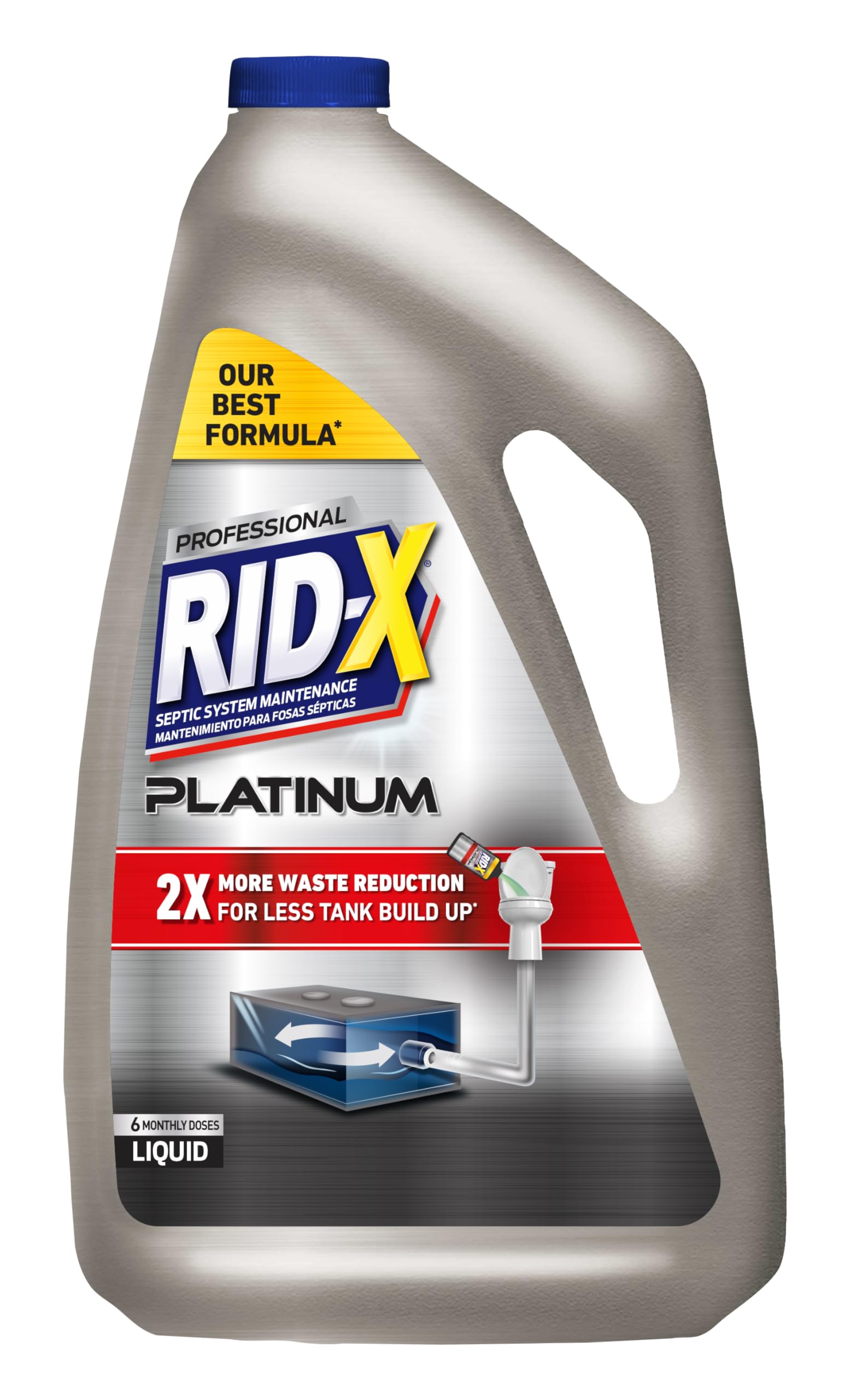
RID-X is the most recognized brand in the septic additive space, and the Platinum Liquid reformulation represents a measurable upgrade over the original powder. The dual-action formula targets toilet paper, fats, oils, grease, sugars, starches, and proteins simultaneously, which covers the main waste categories a typical household produces. The liquid format means the active bacteria and enzymes mix with the water column immediately and reach the sludge layer faster than a floating tablet would.
The monthly flushable dose is straightforward: pour the recommended amount into a toilet bowl and flush. No mixing, no measuring cup beyond the bottle’s own markings, no mess. The 6-month supply bottle reduces packaging waste and the frequency of re-ordering. Customers who switched from the powder version cited the convenience of the liquid and the absence of the pantry moth contamination issue that occasionally plagues dry formulations stored in the home.
The manufacturer’s claim of “2x more waste reduction” compared to the standard formula is supported by internal lab tests, though independent verification is limited. What matters more for the buyer is that the formula includes the three critical enzyme groups — cellulase, lipase, and protease — which is a stronger enzyme profile than many budget brands offer. For a monthly maintenance routine in a 1,500-gallon tank, the Platinum Liquid strikes a solid balance between proven brand reputation and updated formulation.
Why it’s great
- Trusted brand with millions of users and professional endorsements
- Liquid format mixes rapidly with effluent for faster sludge penetration
- Six-month supply bottle simplifies reordering schedule
Good to know
- Requires monthly application, not a set-and-forget
- Platinum formula is newer, so long-term user data is still building
- Larger bottle can be awkward to store upright
5. Organic Plumber Septic Tank Cleaner Bio Tabs

Organic Plumber differentiates itself with a 60 billion CFU count per tablet — a high viable bacteria concentration that competes with liquid products despite the tablet format. The formula includes both aerobic and anaerobic strains plus natural enzymes to break down fats, oils, fiber, and dense solids. The tablet is designed to sink through the sludge layer rather than float on the surface, which addresses a common inefficiency of lighter tablet formulations that never reach the bottom sediment where breakdown is needed most.
The most compelling user feedback centers on odor control. Multiple reviewers reported that a persistent sewer gas smell disappeared within two applications. This suggests the bacterial population in those tanks was likely suppressed by disinfectants or antibacterial soaps, and the high CFU dose was enough to re-establish the dominant culture. The tablets also dissolve quickly in hot conditions and won’t melt or clump during summer storage — a practical advantage for sheds or garages that see temperature swings.
The one-year supply includes 12 tablets (one per month), which makes the per-tablet cost very competitive. The packaging is compact, so storage footprint is minimal. The downside is that tablets, even dense ones, still need to fully dissolve and distribute before the bacteria can colonize the entire tank. Customers on well water with higher mineral content have reported occasional tablet residues that took extra time to break down.
Why it’s great
- 60 billion CFU per tablet is among the highest bacterial counts in its class
- Effective at eliminating septic gas odors, often in under two weeks
- Heat-resistant tablets won’t degrade during warm-weather storage
Good to know
- Tablets may dissolve slower in hard water or well water systems
- Monthly schedule is required, not a once-and-done treatment
- Some users report need for a second dose on initial strong odors
6. Cabin Obsession 52 Weekly Septic Tank Treatment Fizz Tablets

This product delivers the highest application frequency on the list: one tablet per week, every week, for a full year. The logic behind weekly dosing is that it keeps the bacterial population consistently elevated rather than allowing counts to crash between monthly treatments. Each tablet contains billions of active cultures that produce and recharge the enzymes needed to digest both the sludge layer and the scum layer. The fizz action helps distribute the bacteria more quickly than static tablets.
The weekly schedule works particularly well for households with high water usage, large families, or systems that are prone to odor spikes. Users in RV and marine applications have also reported success, as the concentrated formula handles the confined waste volume of holding tanks and camper toilets. The tablets are 100% natural and safe for both aerobic and anaerobic systems, which removes the guesswork around compatibility.
The main trade-off is the frequency. Monthly products require less active tracking, and it’s easy to forget a weekly dose until the bottle runs low. The plastic-free tablet packaging is a plus for environmentally conscious buyers, but the 52-count bottle occupies more shelf space than a single 6-month liquid bottle. Some users noted that the scent doesn’t change appreciably — the tablets control odor through biological digestion rather than masking fragrances.
Why it’s great
- Year-long single purchase with zero reordering for 12 months
- Weekly dosing maintains stable bacterial levels for high-use households
- Fizz action aids dispersion and faster sludge penetration
Good to know
- Weekly schedule is more demanding than monthly products
- Larger bottle requires more storage space
- No fragrance masking — odor control relies entirely on biological digestion
7. Green Pig Septic Tank Treatment Pucks

Green Pig uses a dissolvable puck format dosed every other month, which puts it in a sweet spot between weekly tablets and monthly liquids. Each puck contains a blend of enzymes and bacteria designed to digest organic waste, fats, and grease. The puck dissolves slowly as water passes through the toilet, releasing the active cultures over a period of hours rather than all at once, which can extend the treatment’s effectiveness into the second month.
Customer reviews lean toward long-term loyalty. Some users report using Green Pig for over 17 years, and many note that their septic pump-out frequency dropped from every three years to every five or six years after starting the product. The manufacturer also offers an emergency treatment gallon for severe backups, and customer service is frequently praised for responsive communication — one reviewer mentioned the owner personally replaced a lost package.
The six-puck supply covers a full year, and the pucks are unscented, which matters for sensitive noses. The main limitation is tank size: the formula is optimized for tanks up to 1,500 gallons. Systems larger than that may need supplementation, and the two-month interval might be too long for high-occupancy homes that generate waste faster than the slow-release puck can digest it. The puck also requires a drop-in-and-flush method that some users found less intuitive than a liquid pour.
Why it’s great
- Every-other-month schedule reduces application frequency
- Slow-release puck format may extend treatment duration
- Strong long-term user loyalty with 17+ year track record
Good to know
- Best suited for tanks up to 1,500 gallons
- Slow release may not be enough for high-occupancy households
- Unscented formula won’t provide any fragrance masking
FAQ
Can I use a septic additive if I have a leach field already showing signs of failure?
How long after treatment until I notice a difference in odor or drainage?
Will a septic additive allow me to skip scheduled pump-outs?
Can I overdose my septic tank with too much additive?
Final Thoughts: The Verdict
For most users, the best additive for septic system winner is the Down John Once-A-Year because its three-part carbon-enzyme-bacteria system delivers measurable leach field restoration with a single yearly application. If you want the simplicity of a monthly flushable liquid with a proven brand, grab the RID-X Platinum Liquid. And for reviving a partially clogged drain field where salt and soap have hardened the soil, nothing beats the Septi-Flow Shock.