
Our readers keep the lights on and my morning glass full of iced black tea. As an Amazon Associate, I earn from qualifying purchases.
Specs are compiled from manufacturer listings and verified buyer reviews and can change over time — please confirm the key details on the product page before buying.
Water finds every gap. A single missed seam around a window, door, or deck joist can turn into rot, rust, and expensive structural repairs, so choosing the right flashing tape is about protecting the work you do for decades. The best tapes use either butyl rubber or advanced acrylic adhesive, and the right choice depends entirely on whether you are flashing a rough opening on a house or sealing the top of a deck joist.
I’m Min — the founder and writer behind Gadgets Feed. This guide is built by comparing the manufacturers’ published specifications and the patterns across verified customer reviews, so you get each pick’s real strengths and trade-offs instead of marketing spin.
From acrylic tapes that bond to PVC windows to thick butyl rolls for deck framing, this breakdown of the top-rated adhesive flashing tape options will help you match the right sealant to the right job.
Our Picks at a Glance


How To Choose The Best Adhesive Flashing Tape
Flashing tape is a self-adhesive membrane that seals the seams of a building envelope. It blocks moisture and air from getting behind your siding, windows, and deck boards. Before you buy a roll, you need to know your surface, your climate, and the width your seam requires.
Match the adhesive to the surface
Acrylic tapes bond aggressively to smooth surfaces like PVC window flanges and glass-faced gypsum. Butyl tapes are softer and thicker, making them the right call for rough wood deck joists and metal beams where the tape needs to conform to uneven grain.
Check the temperature range
Installing in cold weather is a classic failure point. Some tapes only perform well down to 30°F, while premium options stay workable in extreme climates. Check both the install range and the long-term thermal stability to avoid a tape that freezes, melts, or shrinks after a few seasons.
Consider width and length for your project
A standard window rough opening needs a 4-inch or 6-inch tape to bridge the gap between the framing and the flange. A wider 9-inch tape is reserved for roof valleys. Buy enough linear feet to cover every seam with overlap, so you are not piecing together short strips.
Quick Comparison
| Model | Best For | Width | Length | Adhesive Type | Amazon |
|---|---|---|---|---|---|
| ZIP System Flashing Tape★ Best Overall | Window & Door Rough Openings | 6″ | 75′ | Acrylic | Amazon |
| DuPont Tyvek Flashing TapeTop Performer | Premium Window Sealing | 6″ | 75′ | Butyl | Amazon |
| FrogTape Pro GradeAll-Weather Pick | All-Weather Performance | 3.75″ | 75′ | Acrylic | Amazon |
| TS4100 Tite Seal | Long Runs on Windows | 4″ | 100′ | Butyl | Amazon |
| Typar Butyl Flashing Tape | Cold-Weather Application | 4″ | 75′ | Butyl | Amazon |
| ADHES Deck Joist Tape | Deck & Beam Protection | 4″ | 50′ | Butyl | Amazon |
| BXI Flashing Roll Tape | Roof & Gutter Repairs | 4″ | 32′ | Rubberized Asphalt | Amazon |
| Deck Joist Tape (JOAPRIL) | Budget Deck Sealing | 4″ | 50′ | Butyl | Amazon |
| XFasten Butyl Joist Tape | Extreme Temperature Sites | 2″ | 50′ | Butyl | Amazon |
In‑Depth Reviews
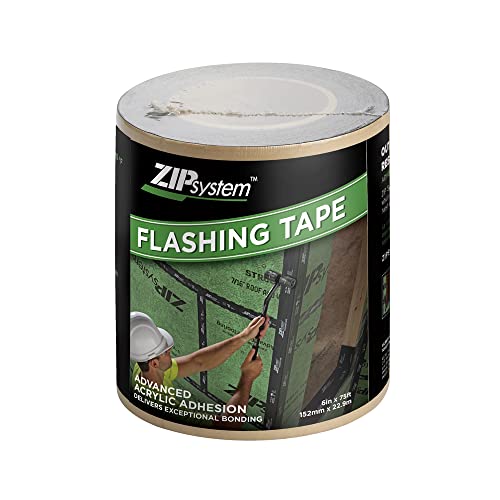
1. ZIP System Flashing Tape
Our pick — over 4.5★ from 400+ verified ratings; the strongest balance of quality and price.
The pro-grade acrylic seal that crews trust for a continuous air and water barrier
ZIP System is the reference standard for window and door rough openings, and this 6″ x 75′ roll is the one that pairs with ZIP sheathing for a reason. The advanced acrylic adhesive delivers superior bonding and long-duration bond strength, which means it stays put on demanding construction sites. It applies cleanly across common substrates, including exterior sheathing and PVC windows, so you can run a single continuous piece without worrying about which material you are crossing.
You get a 30-year limited warranty and an install range of 0 to 120 degrees Fahrenheit, so the tape stays flexible in extreme cold or heat. One owner flashed a dozen windows without issue, and buyers report: “I found the tape to be best for flat, vertical seams, ok for flat horizontal seams.” It excels on flat surfaces, but for complex transitions, liquid flashing may be more agile.
At 12 mils thick, it bridges transitions cleanly without being stiff, and the 6-inch width offers a comfortable overlap over flanges. The most-discussed trait is stickiness, and opinions split there — some find it tenacious, others want more grab on certain surfaces, so test a short piece before committing. Compared to the 4-inch deck rolls below, this gives you a 50% wider gap coverage, making it the more versatile pick for vertical house-wrapping work.
What wins people over
- Superior bonding with advanced acrylic adhesive
- Backed by a 30-year limited ZIP System warranty
- Stretches and holds without tearing mid-install
Know before you buy
- Stickiness is the most-discussed trait and it runs mixed
- Flat vertical seams are its strength, not complex corners
The pick for framing pros: This is the tape to reach for when you are flashing windows and doors on a weather-tight house wrap.
A fair warning: If you are working on uneven or curved surfaces, a liquid-applied flashing will be more forgiving than this tape.
2. DuPont Tyvek Flashing Tape
The butyl heavyweight that locks down the moment it touches the surface
DuPont brings the trusted Tyvek name to the flashing world with this self-adhering butyl tape, and the consensus is that it is as aggressive as they come. Owners describe the adhesive as amazing, warning that you better have it placed correctly because once it contacts the surface it is stuck. That makes it a firm favorite for newly installed windows where you want zero movement after placement.
This 6″ x 75′ roll runs the same width and length as the ZIP System pick above, which makes it a direct head-to-head for house-wrapping jobs. Where ZIP uses acrylic, this uses butyl, and the practical difference shows up on surfaces like flex wrap where adhesion can be trickier. The trade-off for that grip is the release liner, which a few owners find tricky to remove, so peel carefully as you lay it down.
This tape holds a strong rating among flashing tapes, and it handles cold-weather installs—one owner notes it works well even in 20-degree temperatures. If you want the confidence of a name brand on a critical seam, this is the butyl answer to the acrylic ZIP tape above.
Instant-grab grip: The adhesive is so strong this tape is essentially one-shot placement, which is exactly what you want on window flanges.
Liner friction: The backing can be fussy to separate — pull it at a sharp angle and go slowly.
Reach for this if: You want a premium butyl seal from a name you recognize, especially for window rough openings.
Look elsewhere if: You prefer a tape you can reposition slightly before it locks down.
3. FrogTape Pro Grade Flashing Tape
The acrylic tape engineered for brutal temperature swings and stubborn self-healing
FrogTape takes the acrylic formula and pushes the thermal limits further than most, rating this flashing tape for long-term performance from -40°F up to 240°F. That wide range means the adhesive will not freeze into a brittle mess in a northern winter or melt into a gooey smear under a summer roof. It is a genuine all-weather performer rather than a fair-weather seal.
The advanced acrylic adhesive offers initially repositionable adhesion to building materials like OSB, glass-faced gypsum, and concrete. That repositionability is a real advantage over the instant-lock butyl tapes, giving you a moment to align the tape perfectly on a window flange before pressing it home. It self-heals around nails, screws, and other fasteners, so a stray fastener does not become a leak path.
Owners praise the way it sticks like crazy, with one noting it works exactly like the leading “Z” brand but costs noticeably less. The recurring trade-off is that 3.75-inch width is narrower than the 4-inch and 6-inch standard picks, so you will need more strips for wide flanges. It is flexible across its width, stretches without breaking, and is made in the USA, which earns it a spot for anyone who wants premium performance without the brand tax.
Built for extremes
- Thermal range of -40°F to 240°F for long-term performance
- Repositionable adhesion on OSB, gypsum, and concrete
- Self-heals around nails and screws
What to watch
- Narrower 3.75″ width means more strips on wide openings
- Stickiness is the most-discussed trait and it runs mixed
Your best bet for: Extreme climates where you need a tape that stays workable in deep cold and doesn’t melt in heat.
skip it if: You are flashing wide openings and want to minimize seams with a wider roll.
4. TS4100 Tite Seal Original Window Tape

A hundred feet of butyl window tape that stops heating and cooling dollars from leaking out
This is the roll you want when you have a long to-do list of windows, doors, and skylights to flash, because the 100-foot length covers far more ground than the standard 50-foot and 75-foot rolls. It eliminates expensive leaks around openings, keeps out moisture and drafts, and works on sheathing panels and chimneys. One owner flashed 15 new windows with a single roll.
The adhesive delivers a tar-like grip that seals securely, and owners mention it is easy to use and holds well. A Florida homeowner credited it with protecting the house through Hurricane Irma. The flip side of that aggressive tar-like adhesion is that it is very difficult to remove once applied, so position carefully the first time.
The honest caveat is cold-weather installs: adhesion weakens below roughly 50°F, and several owners found they needed a heat gun to get it to stick to surfaces like Tyvek in cooler weather. Compared to the FrogTape above, which installs down to 0°F, this one is more of a warm-weather workhorse. If you are working in moderate temperatures and want maximum linear footage per dollar, this is a strong pick.
Maximum coverage: The 100-foot roll outlasts most competing rolls by 25 feet on the same peg.
Cold-weather limit: Plan to warm the tape or the surface if you are installing below 50°F — it will not grab on its own.
Who it beats: Any shorter roll on a multi-window project — the extra 25 feet means fewer reorders.
Who it doesn’t: Winter builders who need a tape that grabs in freezing temperatures.
5. Typar Butyl Flashing Tape

The clean-bonding butyl that installs down to 30°F without off-gassing
Typar brings a set of installation-friendly traits that set it apart from stickier rivals. It contains no VOCs and won’t off-gas, which makes it a more pleasant choice for indoor or enclosed work where fumes matter. It also won’t interact with most caulks and sealants, so you can run it alongside other weatherproofing products without chemical surprises.
This 4″ x 75′ roll installs down to 30°F, beating the Tite Seal pick above on cold-weather grip, and stays thermally stable up to 180°F. The split poly backing makes installation easier, letting you peel and position without fighting the liner. Owners replaced every window in a house without a single complaint, and another found it perfect for holding a vapor barrier against a crawlspace wall.
The most-discussed trait is adhesion, and reviews split on how it grabs wood — some say it sticks like nobody’s business while others found they needed a roller to force it against porous surfaces like cinder blocks. That means surface prep matters: clean, smooth surfaces get the best bond. It is not quite as heavy as some premium construction brands, but it did the job cleanly for every owner who matched it to the right surface.
Install-friendly formula
- No VOCs and won’t off-gas
- Installs down to 30°F for cold-weather work
- Split poly backing for easy peeling
Watch the surface
- Adhesion is the most-discussed trait and it runs mixed
- Porous surfaces like concrete need firm pressure to seal
Choose this for: Cold-weather installs and enclosed spaces where low-odor materials matter.
Pass on it if: You need a tape that grabs aggressively on rough, porous surfaces without extra effort.
6. ADHES Deck Joist Tape
Thick butyl rubber that shields joists and beams from rot and corrosion
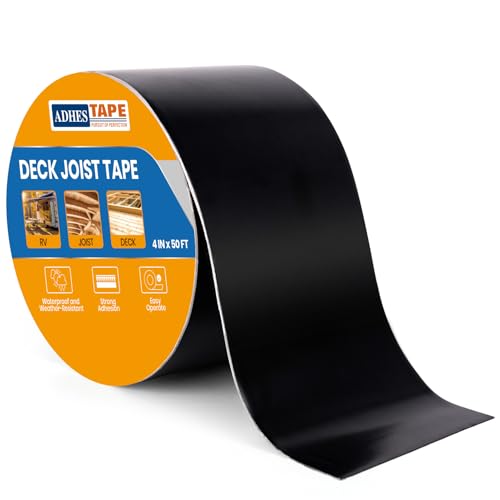
When you are about to bury a deck joist under boards, this 4″ x 50′ butyl tape is the insurance policy that keeps moisture from reaching the wood and metal. It resists harsh weather, UV rays, and extreme temperatures from -20°F to 230°F, protecting wooden joists, beams, and metal surfaces from rot, decay, and corrosion. One owner used it on a stained wood platform substrate under Trex decking, where the previous substrate had rotted away over 16 years of snow.
The self-adhesive backing and easy-to-peel protective film earn consistent praise, especially compared to cheaper rolls where the liner fights you the whole way. Owners say it is very sticky, stays in place, and feels like thick rubber. The brand’s honesty about the cure time is worth noting: it may not feel very sticky at first, but it achieves maximum adhesion within 24 hours after application.
The most-discussed trait is adhesiveness, which runs mixed in the reviews — mostly because some customers note the paper backing peeling off or the tape tearing during install. One owner did note the tape shrinks lengthwise, leaving gaps at overlapped seams. Warm the tape with a hair dryer in colder weather, as the brand advises, to get the best initial grab.
Built for the under-deck
- Resists UV, moisture, and corrosion on wood and metal
- Easy-to-peel liner that doesn’t fight you
- Feels thick and heavy like quality rubber
Know the cure
- Adhesiveness runs mixed, with some liner-tearing reports
- Reaches full adhesion only after 24 hours
Made for the DIY deck builder: The easy peel-and-stick liner makes it the most approachable joist tape for a weekend project.
Think twice if: You need instant full-strength grab — this one reaches maximum adhesion a full day after install.
7. BXI Flashing Roll Tape Membrane

The rubberized asphalt patch that fills cracks and stops leaks on roofs and gutters
This tape takes a different approach than the butyl and acrylic picks above, using SBS polymer-modified rubberized asphalt with a silver aluminum foil backing. That construction makes it the standout choice for repairs on roofs, gutters, RV roofs, chimneys, and pipes. The bitumen gradually penetrates into existing cracks and gaps, filling them entirely, which is why reviewers point out it stopping leaks in torrential rains.
At 0.06 inches thick, it is a heavier membrane than most flashing tapes, and it brings flame retardant, puncture resistant, and abrasion resistant properties to the job. The aluminum foil backing is paintable and UV-resistant, so it blends into a roof repair instead of standing out. One owner sealed a 12-14 inch crack in a 35-year-old flat roof that survived multiple multi-day storms over two years with zero leaks.
The trade-off is versatility versus adhesion consistency. Owners rave about the effectiveness, but adhesion is the most-discussed trait and it runs mixed — some report extreme adhesion while others say it doesn’t stick at all on certain surfaces. It adheres best to smooth, flat, dry surfaces, and the foil backing can separate during unrolling, so handle it gently. For a targeted roof or gutter fix rather than a full window-flashing job, this is the specialist.
Leak-stopping power
- Thick 0.06″ membrane with aluminum foil backing
- Flame retardant, puncture resistant, and abrasion resistant
- Painting-friendly foil blends into roof repairs
Handle with care
- Adhesion is the most-discussed trait and it runs mixed
- Foil backing can separate during unrolling
Reach for this when: You have a specific roof, gutter, or RV leak that needs a thick, paintable membrane patch.
Not the one for: Flashing window flanges where a clean, repositionable acrylic tape belongs.
8. Deck Joist Tape (JOAPRIL)

The thinner, easy-rolling deck tape that protects joists without the premium price
JOAPRIL positions this 4″ x 50′ butyl roll as a practical way to protect and refurbish old joists, and owners confirm it does exactly that at a friendlier price point. One builder picked up several widths in the same brand for a decking project and was impressed with how the tape sealed over both the joists and sub-deck framing. It handles wood, metal, and more, and the temperature range spans -20°F to 230°F.
Its thinner profile makes it easier to roll onto joists cleanly—owners describe it as “very sticky, and thinner than most, easy to install.” One owner called it a solid alternative to the Trex tape, noting it rolled on easily, stayed in place, and felt like heavy material. The easy install is the payoff for choosing a thinner membrane.
The honest trade-off is that the clear backing can be difficult to remove, and the thinness contributes to durability concerns, with several owners reporting it tears easily. Adhesiveness is the most-discussed trait and it runs mixed. This works well with treated pine and gives you a 50-foot length at a 4-inch width, which is the standard shape for deck work. If you want to protect joists on a budget and don’t need the thickest membrane available, this is a sensible pick.
The budget deck fix
- Thinner profile makes for easy, clean rolling
- Strong value for a 4″ x 50′ butyl roll
- Works well on treated pine
What to expect
- Clear backing can be difficult to remove
- Thinness means it tears more easily than heavier tapes
Best for the budget-conscious deck owner: A serviceable butyl seal that protects joists without stretching your project budget.
Look elsewhere if: You need maximum puncture resistance and are willing to pay for thicker rubber.
9. XFasten Butyl Joist Tape

The 2-inch strip rated for 50 years of service across a -40°F to 360°F range
XFasten rates this butyl joist tape to last up to 50 years against moisture, UV, steam, and extreme temperature. Its -40°F to 360°F thermal range far exceeds the typical -20°F to 230°F of most deck tapes. That means it won’t turn into a gooey mess in extreme heat or lose its seal in bitter cold.
The 2-inch width makes this the narrowest pick in the lineup, ideal for sealing the top surface of joists where you want a precise strip rather than a wide overlap. The quick-release liner makes the 50-foot roll flexible and fast to install, even on uneven surfaces and hard-to-reach joints. Owners confirm it sticks strongly to both new and old wood, with one noting it hasn’t moved an inch since install, and others using it on camper slide outs to keep water out.
The recurring gripe is the protective backing — it can be difficult to separate and may rip, which several owners flagged as the main friction point in an otherwise superior product. Durability also draws mixed feedback, with some reporting the backing peeling off. Adhesiveness is the most-discussed trait and it runs mixed. If you want a zero-maintenance seal with the widest temperature tolerance and 50-year confidence, this 2-inch roll is the one.
Extreme tolerance
- Rated to last up to 50 years
- Withstands -40°F to 360°F temperatures
- Zero-maintenance waterproof seal for joists and beams
The friction point
- Backing can be difficult to separate and may rip
- Narrower 2″ width means more strips on wide joists
The pick for extreme climates: A 50-year-rated seal that survives temperature swings no other tape here can match.
Pass on it if: You’d rather handle a wider tape than fight a finicky release liner.
Understanding the Specs
Acrylic vs Butyl Adhesive
Acrylic tapes bond aggressively to smooth surfaces like PVC window flanges and glass-faced gypsum, and they stay flexible for years. Butyl tapes are softer and thicker, which makes them better at conforming to rough wood deck joists and metal beams. Match the adhesive to your surface and the tape will do its job; match it wrong and you get peeling corners.
Temperature Range
Every tape lists two numbers that matter: the installation range and the long-term service range. A tape that installs down to 30°F is fine for warm-weather work, but a premium pick that installs at 0°F and survives up to 240°F is built for extreme climates. Cold installation without the right range is the classic reason tapes fail to grab.
Tape Thickness and Width
Thickness, measured in mils or fractions of an inch, determines puncture resistance and how well the tape bridges gaps. A thicker membrane like 0.06 inches shrugs off roof debris, while a thinner tape rolls on more easily. Width matters for coverage: a 6-inch tape bridges a window flange with comfortable overlap, while a 2-inch strip is precise for joist tops.
UV and Weather Resistance
A tape that sits exposed to sunlight needs UV resistance, or the backing will degrade and crack over time. Some tapes are rated for 12-month UV exposure, which is fine for temporary exposure before siding goes up. For permanent outdoor exposure, look for a foil-backed membrane that reflects UV and stays paintable.
FAQ
What is the difference between acrylic and butyl flashing tape?
Will flashing tape stick to treated lumber?
Can I install flashing tape in cold weather?
What width flashing tape do I need for a window?
How long does flashing tape last?
Does flashing tape stick to concrete blocks?
Can flashing tape be painted?
Why does my flashing tape peel off the backing hard?
Is flashing tape the same as duct tape?
Will flashing tape stop a roof leak?
Final Thoughts: The Verdict
For most people, the adhesive flashing tape winner is the ZIP System Flashing Tape because it pairs pro-grade acrylic adhesion with a 30-year warranty and a clean 6-inch application on window and door rough openings. If you want a butyl seal from a trusted name, grab the DuPont Tyvek Flashing Tape. And for deck joist protection at a friendly price, the ADHES Deck Joist Tape delivers thick rubber coverage that guards against rot and corrosion for years to come.
How We Picked
We do not accept paid placement. Every pick is matched to a real buyer and a real use-case; we do not hands-on test units.
Sources & Methodology
Specifications: manufacturer listings and product documentation. Review insights: verified customer reviews, as of August 2026. Pricing: not shown on this page (it changes often); check the current price via the retailer link.
As an Amazon Associate, Gadgets Feed earns from qualifying purchases. This does not affect which products we feature.