
A loose baseboard does more than just look sloppy—it invites dust, bugs, and drafts into the gap between your wall and floor. The wrong adhesive leaves you with sagging trim, failed bonds, and a second trip to the hardware store. Choosing the right adhesive for baseboards means matching the right chemistry to your trim material, surface porosity, and curing speed.
I’m Min — the co-founder and writer behind Gadgets Feed. I’ve spent hundreds of hours analyzing customer feedback, manufacturer spec sheets, and real-world application data across construction adhesives, peel-and-stick trims, and anchoring epoxies to build this guide around the specific demands of baseboard installation.
This guide breaks down the best options for every scenario—from heavy-duty construction adhesives for wood molding to crystal-clear glues for visible joints and peel-and-stick strips for DIY renter-friendly installs. Read on to find the very best adhesive for baseboards for your next project.
How To Choose The Best Adhesive For Baseboards
The right baseboard adhesive depends on three factors: your trim material, your wall surface, and your comfort with working time. Wood and MDF moldings need a strong gap-filling construction adhesive, while flexible vinyl trim may benefit from peel-and-stick tape. Plaster and painted drywall both require a bond strong enough to resist seasonal expansion and contraction.
Working Time Versus Grab Strength
Fast-grab adhesives hold trim in place within 30 seconds, eliminating the need for bracing or pin nails. However, they leave almost zero time for repositioning. Slow-cure adhesives (20-30 minute open time) allow you to shift the baseboard into perfect alignment before the bond sets. Choose based on your experience level and the complexity of your cuts.
Substrate Compatibility
Not all adhesives bond equally to painted drywall, bare concrete, or old plaster. Check the manufacturer’s list of compatible materials. Hybrid polymer formulas typically offer the widest compatibility, adhering to plastic, wood, metal, and masonry without issue. Latex-based adhesives struggle on non-porous surfaces like vinyl or aluminum trim.
Cure Time and Cleanup
Full cure usually takes 24 hours, but the adhesive must hold the trim in place during that window. Water-based adhesives clean up with soap and water while wet, but become stubborn once cured. Solvent-based formulas require mineral spirits for cleanup but often deliver stronger bonds on oily or glossy surfaces.
Quick Comparison
On smaller screens, swipe sideways to see the full table.
| Model | Category | Best For | Key Spec | Amazon |
|---|---|---|---|---|
| Loctite Power Grab Ultimate Crystal Clear | Construction Adhesive | Invisible repairs & finished surfaces | Dries clear; 9 fl oz cartridge | Amazon |
| Great Stuff PRO 26.5-Ounce Adhesive | Foam Construction Adhesive | Large subfloor & lumber bonding | Expanding foam; 26.5 oz can | Amazon |
| Professional Soma Fix S700 Anchor Adhesive | Anchoring Resin | Securing baseboard to concrete block | Fast-curing polyester resin; 10.1 fl oz | Amazon |
| PRO FLEX Vinyl Wall Base 4×20 ft | Peel-and-Stick Trim | Quick DIY vinyl baseboard install | Self-adhesive; 20 ft roll | Amazon |
| Gorilla Heavy Duty Construction Adhesive 7oz (2-Pack) | Hybrid Construction Adhesive | Gap-filling & general trim bonding | Grab in 30 seconds; 7 oz squeeze tube | Amazon |
| Muzata Vinyl Baseboard Trim 4×20 ft | Peel-and-Stick Trim | Budget-friendly rental baseboard cover | Flexible vinyl; self-adhesive backing | Amazon |
| Liquid Nails LN-710 Paneling & Molding | Construction Adhesive | Traditional wood paneling & molding | 20-min working time; 10 oz cartridge | Amazon |
In‑Depth Reviews
1. Loctite Power Grab Ultimate Crystal Clear Construction Adhesive
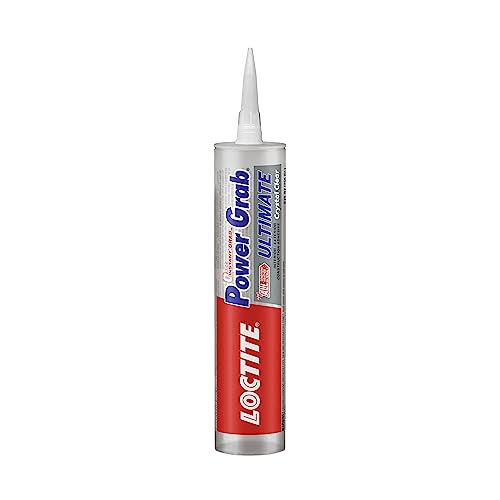
Loctite Power Grab Ultimate Crystal Clear is the best all-around adhesive for baseboards because it solves the two biggest problems with trim adhesives: visible squeeze-out and weak bonds on non-porous surfaces. The formula dries completely transparent during application and after full cure, meaning you do not have to worry about ugly white or tan beads showing along the top edge of your molding. It bonds reliably to wood, plywood, MDF, tile, plastic, and even non-porous materials like metal and finished polyurethane surfaces—confirmed by real users who applied it to stainless steel backsplashes with a five-pound load test.
The consistency starts off jello-like and low-odor, which makes application far less unpleasant than solvent-based construction adhesives. Users report it cures to a rubbery, gummy-bear hardness rather than a brittle rock, providing some flexibility to handle seasonal wall movement without cracking. This flexibility makes it an excellent choice for baseboards in rooms that experience temperature swings or slight humidity shifts. The 9-fluid-ounce cartridge delivers enough material for several linear feet of 1/4-inch bead, though users working on large stainless steel panels noted they used about 75 percent of the tube for a 36×24-inch area.
Cleanup requires mineral spirits if the adhesive has started to set, but fresh spills wipe away relatively easily. One caveat: the tip breaks if dropped on concrete, so have a spare nozzle or a caulking gun with a cutter handy. In freezing conditions below 32°F, the cure time extends significantly—one user reported it remained tacky after 24 hours in unheated outdoor conditions. For interior baseboard projects at room temperature, this adhesive delivers an invisible, strong, and slightly flexible bond that outperforms most competitors in finish quality.
Why it’s great
- Dries completely clear for invisible joints on finished trim
- Bonds to non-porous surfaces including metal and plastic
- Low odor and easy to apply with a standard caulking gun
Good to know
- Tip is fragile and may break if cartridge is dropped
- Not ideal for below-freezing outdoor installations
2. Great Stuff PRO 26.5-Ounce Construction Adhesive

Great Stuff PRO is not a traditional glue—it is an expanding foam adhesive dispensed from a 26.5-ounce aerosol can that requires the brand’s proprietary dispensing gun (sold separately). The foam expands slightly as it cures, filling gaps and creating a mechanical bond that bridges uneven subfloor-to-baseboard interfaces. Users report that one can covers up to 16 sheets of OSB for subfloor installations, making this the most efficient product on the list for large-scale projects like gluing baseboards over 1,000 square feet of floor area.
The foam bonds aggressively to wood, concrete, masonry, Styrofoam, metal, glass, and most plastics. Its working time is extremely short—15 to 30 minutes before the foam starts curing—so you must have all your baseboard pieces cut and test-fit before you apply any adhesive. Users who used the product for laminated foam board installations emphasized pre-cutting every piece before starting because the fast cure leaves no room for repositioning.
Cleanup is straightforward if you use the designated foam cleaner on the gun before the foam sets. Users advise wearing eye protection and gloves because uncured foam sticks aggressively to skin and is difficult to remove. The 26.5-ounce can replaces up to 16 standard caulk tubes of construction adhesive, reducing cartridge waste. For contractors or serious DIYers installing baseboards across multiple rooms, the speed and coverage of this expanding foam adhesive make it a top-tier choice.
Why it’s great
- One can replaces up to 16 standard caulk tubes of adhesive
- Expands to fill uneven gaps between baseboard and floor
- Bonds to a wide variety of wall and floor materials
Good to know
- Requires a Great Stuff PRO dispensing gun (sold separately)
- Very short working time demands pre-cut trim pieces
3. Professional Soma Fix S700 Anchor Adhesive
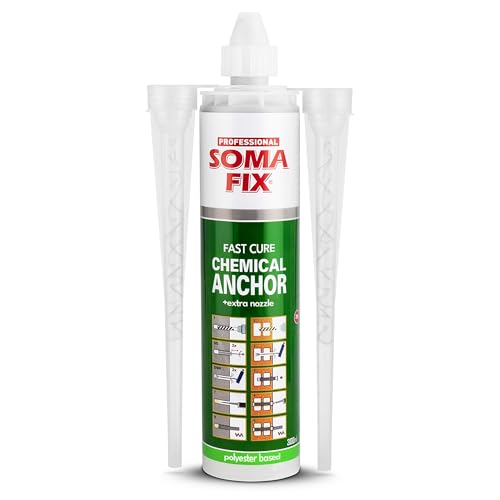
Standard construction adhesives fail on concrete block and brick because they lack the structural strength to anchor threads or withstand shear loads. The Soma Fix S700 is a fast-curing polyester resin designed specifically for anchoring fasteners into concrete, brick, stone, and granite. While it is overkill for nailing a simple wood baseboard to drywall, it becomes the right tool when you are attaching baseboard to a concrete or masonry wall in a basement, garage, or commercial space.
The application process is different from a cartridge adhesive: you drill a hole, clean it thoroughly, inject the resin, and insert the fastener before the resin cures. The included extra mixing nozzle allows you to run multiple anchors without downtime. Users confirm it hardens very quickly, so you must have all your fasteners ready to insert immediately after injection. One reviewer successfully used it to fix a loose outdoor railing, demonstrating its ability to handle structural loads far beyond what baseboards require.
The S700 resin has no expansion pressure, meaning it will not crack brittle masonry or push your anchor out of alignment. At half the price of competitive products like Sika, this polyester resin delivers professional-grade anchoring at a fraction of the cost. For baseboard installations on concrete walls, use this resin to secure furring strips or masonry screws, then attach the baseboard to those strips with a standard construction adhesive.
Why it’s great
- Delivers structural-strength anchoring in concrete and brick
- Extra mixing nozzle included for multi-anchor jobs
- No expansion pressure prevents masonry cracking
Good to know
- Overpowered for standard drywall baseboard installations
- Requires drilling and fastener insertion before fast cure
4. Gorilla Heavy Duty Construction Adhesive 7oz (2-Pack)
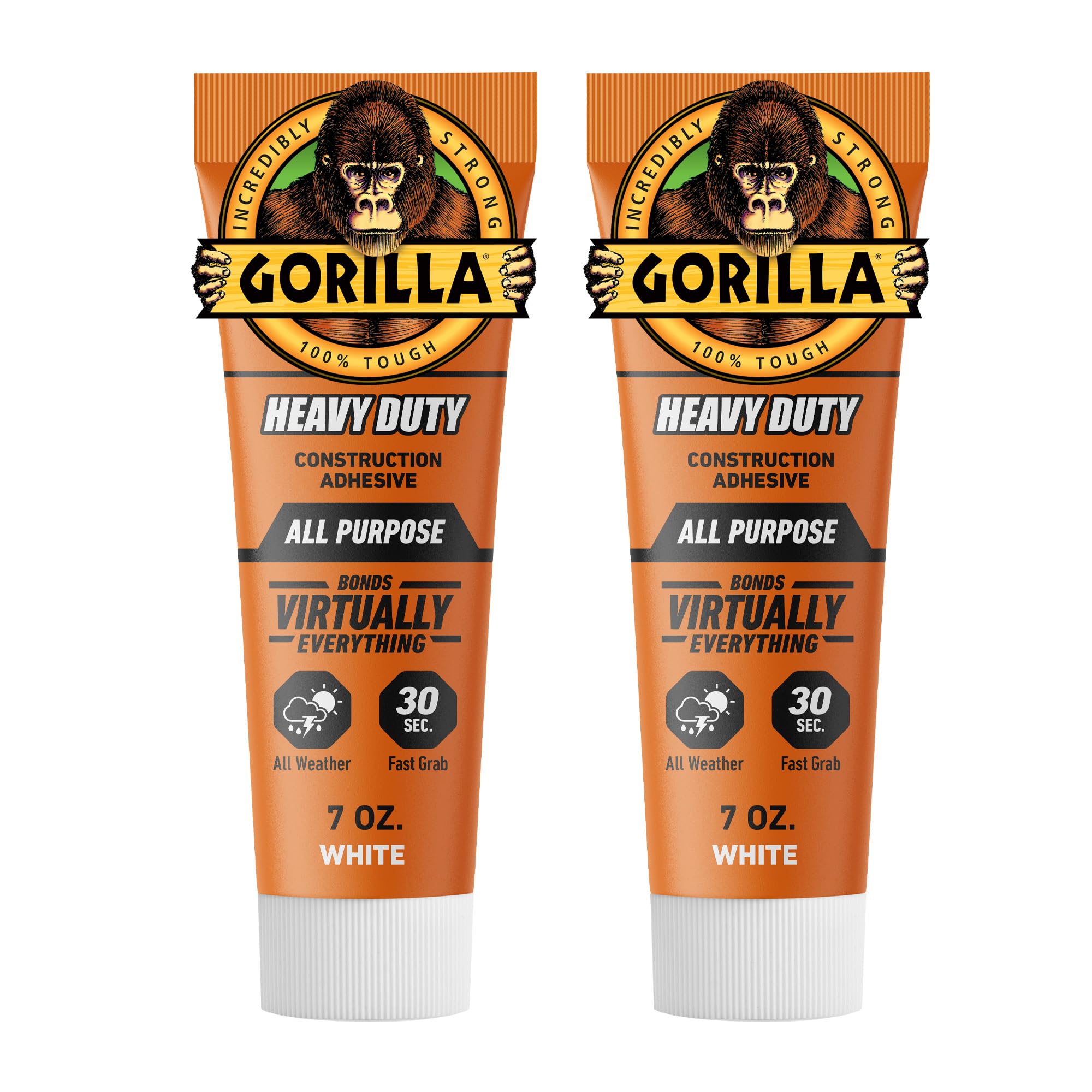
Gorilla Heavy Duty Construction Adhesive comes in a squeezable 7-ounce tube—no caulking gun required, which makes it the most accessible option for quick baseboard repairs or if you do not own a caulking gun. The white hybrid polymer formula grabs in just 30 seconds, eliminating the need for pin nails or painter’s tape to hold the trim in place while the adhesive cures. The two-pack gives you 14 ounces of adhesive for roughly the same price as a single 10-ounce cartridge from competitors.
This adhesive bonds to a dizzying list of surfaces: wood, brick, concrete, masonry, metal, drywall, tile, granite, marble, aluminum, and even wet surfaces. Its gap-filling properties mean it can bridge small irregularities between a warped baseboard and a wavy wall. Users confirm it holds strongly once fully cured at 24 hours, though some noted the paste is thick and white, which can be visible if you apply too much and do not clean the squeeze-out immediately.
The main limitation is that while the initial grab is fast, the final cure strength is not as high as the best cartridge adhesives—one reviewer who used it for heavier projects found the hold weaker than expected and wished for a clearer finish. For standard baseboard attachment on painted drywall, the bond strength is more than adequate. The squeeze tube design makes both storage and disposal simpler than caulk gun cartridges. For anyone looking for a no-tool adhesive for baseboards, this two-pack delivers excellent value.
Why it’s great
- No caulking gun needed—just squeeze and apply
- 30-second grab holds trim without bracing
- Gap-filling formula bridges uneven surfaces
Good to know
- White color may be visible if squeeze-out is not cleaned
- Final bond strength is lower than premium cartridge adhesives
5. PRO FLEX White Vinyl Wall Base 4×20 ft

PRO FLEX delivers a 4-inch-tall, 20-foot-long roll of flexible vinyl baseboard with a strong pre-applied adhesive backing. This system eliminates the need for any tube adhesive—you simply peel the release paper, press the trim against the wall, and it sticks. The vinyl material resists dents, scratches, and warping, making it a durable option for high-traffic areas like hallways, daycares, and retail shops. Users report the trim cuts cleanly with standard scissors and wraps around inside corners with an easy triangular relief cut.
The adhesive backing holds securely on smooth, clean painted drywall. One user who installed it in a chicken coop as a waterproof barrier noted the bond held strongly even in a humid, dirty environment when combined with a silicone caulk bead at the top edge. Another user who installed it in a daycare center praised the sleek, modern look and the ease of cleaning the vinyl surface. The cove-and-toe profile mimics traditional baseboard aesthetics in a slimmer 0.8-inch depth.
The primary limitation is that adhesive performance depends heavily on wall cleanliness and temperature. A few users reported the bottom edge was difficult to bend and adhere to the floor, and one reviewer noted the adhesive was not strong enough to hold the trim without supplemental power grab glue. For best results, clean the wall surface with isopropyl alcohol before application and use a roller to press the trim firmly into place. For renters or quick room makeovers, this peel-and-stick baseboard trim offers the fastest install of any option on this list.
Why it’s great
- Fastest installation—no tools, no glue, no nails
- Durable vinyl resists dents and scratches in high-traffic zones
- Clean modern look with cove and toe profile
Good to know
- Adhesive may require supplemental glue on uneven or dirty walls
- Not reusable after removal—adhesive loses tack
6. Muzata Vinyl Baseboard Molding Trim 4×20 ft

Muzata’s peel-and-stick baseboard trim offers the most budget-friendly entry point for covering baseboard gaps without traditional construction adhesive. The 4-inch-tall, 20-foot-long strip uses the same self-adhesive concept as PRO FLEX but at a lower price point, making it an attractive option for renters, garage refinishing, or temporary room updates. The vinyl material is flexible enough to bend around corners without cracking—users confirm it wraps inside corners easily with a simple triangle cut at the back of the trim.
Real-world performance is solid for light-duty applications. One long-term user who applied it to their entire studio unit bought a second roll to finish the rest of the space, praising how it made the small room look bright and clean. Another user installed it in their garage and reported the adhesive is very strong—cautioning to careful positioning because repositioning is difficult once the tape contacts the wall. The trim cuts neatly with household scissors, and the powder-coated white finish provides a clean look that blends with standard white baseboards.
Where this product falls short of PRO FLEX is in bottom-edge adhesion. Several users noted the bottom of the trim—where it meets the floor—was tough to bend and stick securely, especially if the wall-to-floor transition is not perfectly clean and dry. The adhesive’s performance is temperature-sensitive, so apply in a warm room and press firmly with a roller. For a quick, low-cost cosmetic fix on smooth walls, this peel-and-stick baseboard delivers surprising value despite the minor adhesion quirks.
Why it’s great
- Very affordable entry into peel-and-stick baseboard systems
- Flexible vinyl wraps around tight corners without cracking
- Easy to cut and install with zero tools required
Good to know
- Bottom edge may not stick well on uneven floor transitions
- Adhesive is temperature-sensitive—apply in warm conditions
7. Liquid Nails LN-710 Paneling & Molding Adhesive
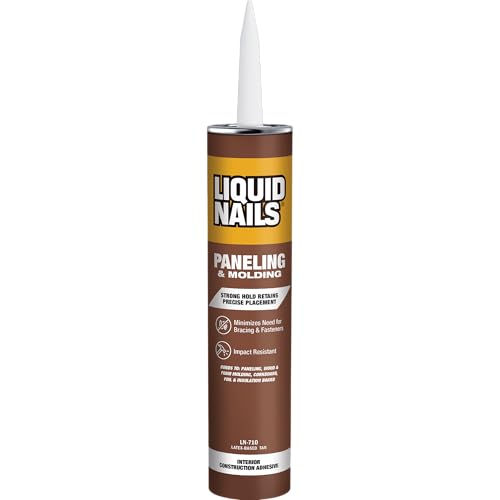
Liquid Nails LN-710 is the budget-friendly, proven workhorse for traditional wood paneling and molding installations. The 10-ounce cartridge delivers a waterproof, impact-resistant bond with a generous 20-minute working time—more than enough to align, shim, and adjust baseboard trim before the adhesive sets. The Low VOC formula achieves a strong bond while reducing solvent fumes, making it more comfortable for indoor use than older solvent-based Liquid Nails variants.
The coverage rating of 30 linear feet per 1/4-inch bead means one cartridge handles a standard bedroom’s baseboard circumference. The instant-grab formula holds trim in place without excessive bracing, though it is not as lightning-fast as the 30-second grab of Gorilla. Compatible materials include wood and plastic, but the manufacturer notes that when bonding plastic moldings, the second surface should be porous for best results—meaning non-porous vinyl baseboard may not adhere as strongly as wood.
The biggest practical limitation is that the tip on the cartridge has been reported to arrive broken in some shipments, which can cause a frustrating delay if you do not have a spare nozzle or caulking gun cutter handy. At full cure after 24 hours, the tan-colored adhesive forms a waterproof bond strong enough to resist impact in high-traffic areas. For traditional wood or MDF baseboard installations where you want a full 20 minutes to fine-tune alignment, this is the most cost-effective tube adhesive available.
Why it’s great
- 20-minute working time allows precise baseboard positioning
- Low VOC formula reduces indoor fumes during application
- Waterproof bond is impact-resistant for high-traffic areas
Good to know
- Tip may arrive damaged or broken in some shipments
- Not ideal for non-porous plastic moldings
FAQ
Can I use construction adhesive for baseboards on painted walls?
How long should I brace baseboards after gluing?
Will peel-and-stick baseboard trim damage walls when removed?
Final Thoughts: The Verdict
For most users, the adhesive for baseboards winner is the Loctite Power Grab Ultimate Crystal Clear because it dries completely invisible, bonds to virtually any baseboard material, and leaves a clean professional finish. If you prefer the fastest possible installation with no tubes or caulking gun, grab the PRO FLEX peel-and-stick vinyl trim. And for anchoring baseboards to concrete walls in basements or garages, nothing beats the structural resin strength of the Professional Soma Fix S700.