
Cork is a uniquely porous, flexible, and lightweight material that demands an adhesive formulation capable of penetrating its cellular structure without dissolving it or leaving a brittle residue. A wrong glue choice often leads to curled edges, yellowed surfaces, or a bond that fails under the slightest tension, especially on curved or vertical surfaces like bulletin boards, coasters, or soundproofing tiles.
I’m Min — the co-founder and writer behind Gadgets Feed. I have spent countless hours researching the chemical properties, drying times, and substrate compatibility of adhesives to bring clarity to this notoriously confusing buying decision.
If you need a reliable grab that stays clear, won’t yellow, and holds cork firmly to wood, foam, plastic, or paper without warping, this guide cuts through the noise to help you find the best adhesive for cork.
How To Choose The Best Adhesive For Cork
Choosing the right glue for cork comes down to the substrate you are bonding it to, the flexibility required after curing, and whether you need a permanent or a repositionable bond. Spray adhesives dominate this category for large, flat surfaces, while liquid or gel formulas work better for small, precise applications like coasters or model making. Understanding the specific chemical makeup of the adhesive is the first step to avoiding a disaster.
Water-Based vs. Solvent-Based Formulas
Water-based adhesives are safer to use indoors with less odor, but they can cause thin cork sheets to wrinkle or curl as the moisture is absorbed into the porous material. Solvent-based or spray contact adhesives dry much faster and do not reintroduce moisture, making them the safer choice for cork projects where flatness is critical. Always check if the glue is labeled as “water-resistant” or “moisture-resistant” if the cork might be exposed to humidity.
Open Time and Working Window
Open time is the duration you have to position the cork after applying the adhesive before the bond becomes permanent. For large cork sheets on a wall or floor, a longer open time of 20 to 60 minutes is a major benefit, allowing you to slide and adjust the material. For smaller crafts or repairs, a faster grab is preferable to avoid holding the piece in place for extended periods.
Non-Yellowing and Photo-Safe Properties
Cork is often used in visible areas like pin boards, coasters, and decorative panels. A non-yellowing formula ensures the glue line remains clear over time, while photo-safe or acid-free adhesives prevent chemical migration that can stain the cork or any material it holds. These properties are essential for archival-quality projects.
Quick Comparison
On smaller screens, swipe sideways to see the full table.
| Model | Category | Best For | Key Spec | Amazon |
|---|---|---|---|---|
| 3M Hi-Strength 94 ET | Premium Spray | Heavy-duty wood & metal bonds | 60-minute open time | Amazon |
| Gorilla Heavy Duty Spray Adhesive | Mid-Range Spray | Multi-surface bonding | 10-minute repositionable window | Amazon |
| Scotch Spray Mount Repositionable | Specialty Spray | Temporary mounting & layouts | Acid-free, photo safe | Amazon |
| Beacon Foam-Tac | Precision Liquid | RC foam & cork repairs | UV blockers included | Amazon |
| Elmer’s Multi-Purpose Spray Adhesive | Budget Spray | Light crafts & displays | Acid-free formula | Amazon |
| Roberts 1407 Wood Adhesive | Flooring Liquid | Cork underlayment & flooring | 30-minute working time | Amazon |
| ROBERTS Universal Flooring Adhesive | High-Volume Liquid | Large flooring projects | Microban protection | Amazon |
In‑Depth Reviews
1. 3M Hi-Strength 94 ET Spray Adhesive
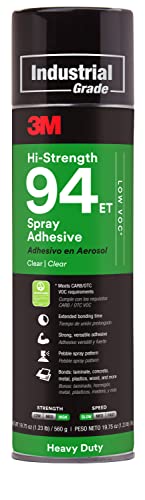
The 3M 94 ET is the industrial-grade standard for bonding cork to materials like wood, metal, rubber, and even some plastics, offering an exceptionally aggressive tack that grabs on contact. Its low-VOC formula is GREENGUARD certified, making it one of the safer choices for indoor use without compromising on the sheer holding strength that larger cork panels require. The 19.75-ounce can provides extensive coverage for sizable projects like wall panels or workbenches.
What truly sets this apart is the open time of up to 60 minutes, which gives you a full hour to align and reposition large cork sheets before the bond locks permanently. This window is a lifesaver when working alone with tricky dimensions. Users consistently praise its ability to hold foam soundproofing and cork to vertical plastic surfaces in freezing temperatures, a testament to its environmental resilience.
The primary drawback is the strong solvent smell, which demands proper ventilation or a respirator during application. It also requires a 30-minute drying time before pressing the materials together, adding a planning step that casual DIYers might find cumbersome. For permanent, heavy-duty installations where failure is not an option, this is the adhesive to beat.
Why it’s great
- Exceptional long open time for precise alignment of large cork sheets
- Low-VOC and GREENGUARD certified for safer indoor use
- Forms a strong, durable bond on wood, metal, and plastic substrates
Good to know
- Strong solvent odor requires good ventilation and a mask
- Requires a 30-minute flash-off time before bonding
2. Gorilla Heavy Duty Spray Adhesive
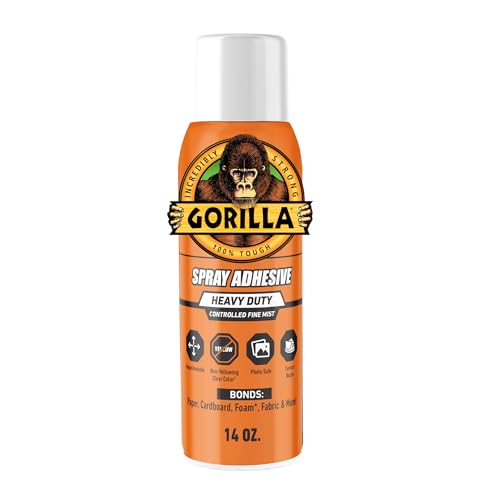
Gorilla’s Heavy Duty Spray Adhesive strikes an excellent balance between professional-grade hold and user-friendly application, making it the most versatile choice for cork projects of all sizes. The wide-pad nozzle delivers a controlled fine mist that covers evenly without soaking the cork, and the formula is specifically designed to be repositionable for up to 10 minutes before setting into a permanent bond. This repositionability is ideal for mounting cork sheets onto foam board or plywood.
The bond cures clear and remains non-yellowing, which is crucial for decorative cork items like coasters, trivets, or bulletin boards where aesthetics matter. It bonds cork to paper, cardboard, fabric, wood, metal, leather, and even glass, covering almost every scenario a hobbyist or homeowner would encounter. Reviews also confirm the bond holds up in hot car dashboards without bubbling, proving its heat and moisture resistance.
The main concern is overspray, which can land on unintended surfaces if you are not using a drop cloth or working in an outdoor area. Some users also note that the fine mist can clog the nozzle if not cleared after each use. It is a premium mid-range option that outclasses budget alternatives in consistency and durability without reaching the specialized price point of industrial adhesives.
Why it’s great
- Repositionable for up to 10 minutes for precise placement
- Dries clear and resists yellowing over time, ideal for visible cork projects
- Bonds a wide variety of substrates from paper to metal
Good to know
- Overspray can be messy; best used with masking or outdoors
- Nozzle may clog if not cleaned after each session
3. Beacon Foam-Tac Powerful Glue
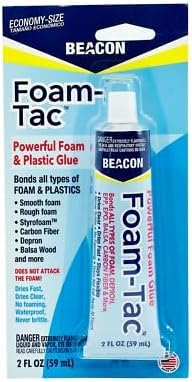
Beacon Foam-Tac is a specialist liquid adhesive that stands out for its flexibility and UV resistance, making it an exceptional choice for small cork repairs and models where spray adhesives would cause overspray. Its thick, gel-like consistency allows it to be applied precisely to cracks or seams without running, and it cures with a flexible bond that moves with the cork material. This flexibility prevents the brittle cracking common with super glues used on porous surfaces.
The inclusion of UV blockers in the formula is a rare and valuable feature, preventing the glue line from yellowing or degrading when exposed to sunlight, which is perfect for outdoor cork projects like plant coasters or signs. Users have successfully used it to fix cracked Cambro coolers, demonstrating its ability to penetrate and seal materials that experience natural flexing. It also bonds well to EPP, EPO, and balsa wood, common substrates for cork layering in RC plane construction.
Application demands some technique—the glue is extremely snotty and stringy, and the bottle does not come with a precision tip, requiring you to squeeze carefully or use a toothpick for small dots. It also has a longer cure time of 24 hours for full strength. If you need a glue for detailed, durable cork repairs rather than large surface covering, this is the top contender.
Why it’s great
- UV-blockers prevent yellowing from sunlight exposure
- Flexible bond ideal for cork that undergoes movement or pressure
- Strong adhesion to plastics, foam, and wood in addition to cork
Good to know
- Thick and stringy consistency requires practice for neat application
- Full cure takes 24 hours, slower than spray alternatives
4. Scotch Spray Mount Repositionable Adhesive

Scotch Spray Mount is the definitive choice for temporary mounting and repositioning of cork sheets, particularly for presentation boards, mock-ups, and craft layouts where you need to adjust placement multiple times. This adhesive creates a clean, removable tack that holds cork firmly in place but allows you to lift and reapply the material without tearing or leaving residue. Excess adhesive rubs off easily, keeping your workspace clean.
The acid-free, photo-safe formulation means it will not cause yellowing or chemical migration over time, which is a critical factor if you are using cork to frame archival documents, photos, or artwork. The fine mist application provides even coverage with minimal wrinkling, even on thin cork sheets, and the light tack is surprisingly strong for lightweight materials. Users have successfully used it to hold acoustic foam panels and stencils, proving its grip on porous surfaces like cork.
Its major limitation is that the bond is not heavy-duty or permanent by design—it is meant for low-weight applications. Pressing heavy objects on the cork or exposing it to high humidity may cause the bond to loosen over time. For permanent installations like cork flooring or wall covering, you will want a permanent spray adhesive instead.
Why it’s great
- Allows multiple repositioning attempts without damaging cork or substrate
- Acid-free and photo safe for archival and presentation projects
- Dries clear and rubs off cleanly if excess appears
Good to know
- Not designed for heavy loads or permanent, high-stress bonds
- May lose grip in humid or wet environments
5. Elmer’s Multi-Purpose Craft Spray Adhesive Glue

Elmer’s Multi-Purpose Spray Adhesive is an entry-level, no-fuss option for light cork crafts and school projects where simplicity and low cost are the priorities. This fast-drying spray is acid-free, making it safe for temporary displays and photo mounting where long-term archival stability is not a concern. The wide spray pattern is ideal for covering large surfaces like foam boards or poster-sized cork sheets quickly and evenly.
The adhesive dries clear and provides a strong, permanent hold on paper, cardboard, leather, and plastic—all common backing materials for cork crafts. For event signage, holiday decorations, or classroom cork boards, this glue gets the job done without the aggressive initial tack of higher-end sprays. Users describe it as a reliable workhorse for mounting posters.
Where this adhesive falls short is in heavy-duty applications and repositionability. It bonds permanently and very quickly, offering almost zero adjustment time after the materials touch. It is also not moisture-resistant, so cork items exposed to condensation or humidity may eventually separate. It is the best value when the project volume is high but the stakes are low.
Why it’s great
- Acid-free and safe for use with photos and delicate paper
- Fast-drying formula allows rapid project completion
- Very affordable for large-scale craft or display projects
Good to know
- Bonds permanently with almost no repositioning window
- Not moisture-resistant, limiting outdoor or humid use
6. Roberts 1407-30C Wood Adhesive
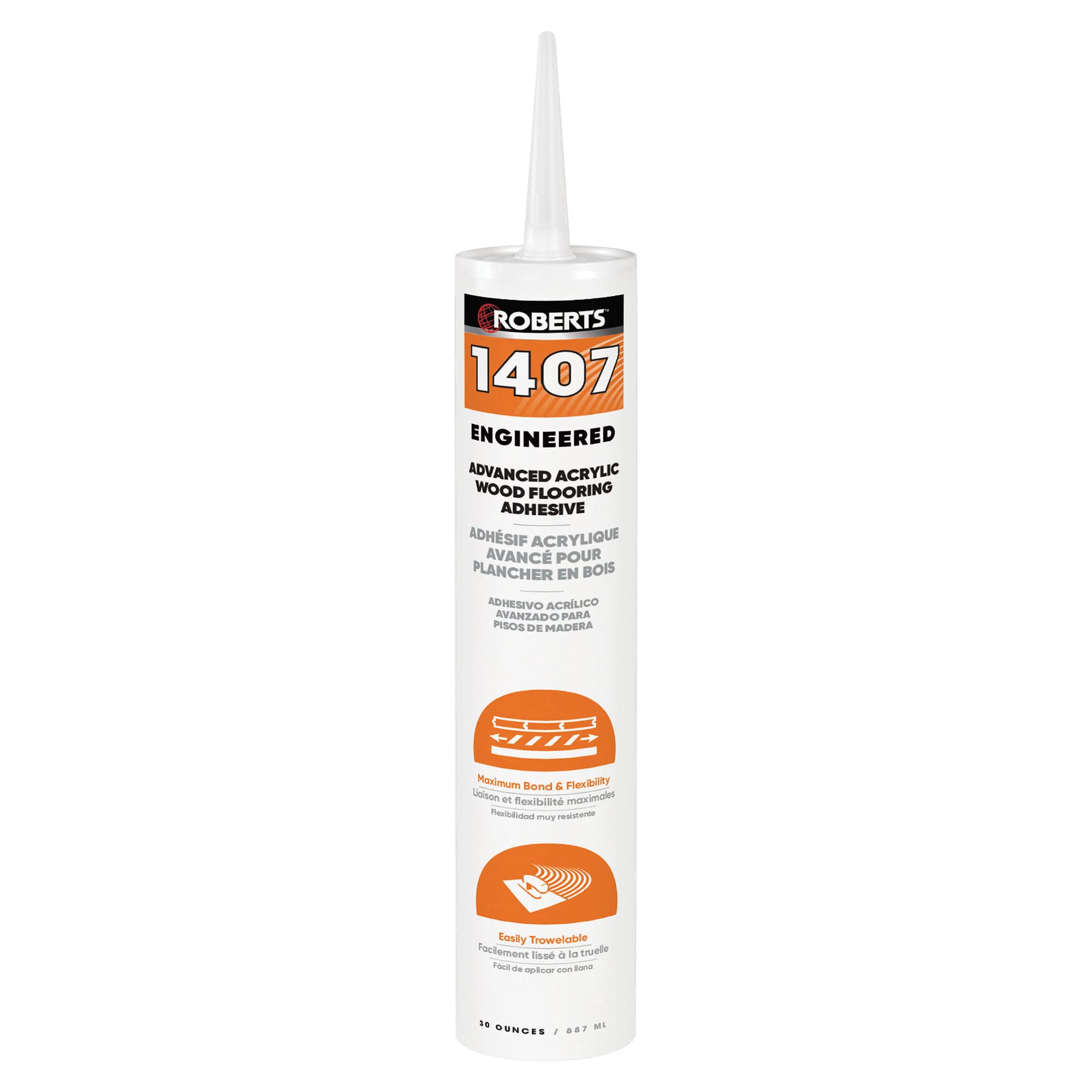
The Roberts 1407 Wood Adhesive is a water-based, solvent-free liquid designed specifically for bonding engineered wood flooring, plywood, and acoustic cork underlayment to concrete or subfloors. Its formulation provides up to 20 minutes of open time and a 30-minute working window, which is substantial for positioning full sheets of cork flooring. The medium viscosity spreads easily with a trowel, ensuring an even layer without pooling.
It is rated for heavy residential and moderate commercial use, meaning it can handle the foot traffic and weight typical of cork flooring installations. The bond remains slightly flexible after curing, which accommodates the natural expansion and contraction of cork without cracking. Users also report it is easier to clean up with warm water than many competing flooring adhesives, a major plus for DIY installers.
Quality consistency has been flagged by some users, with different batches showing varying drying times and tack levels. Some tubs dry very fast, requiring two people to keep up, while others stay tacky for longer. It is also not water-resistant, so it should not be used in bathrooms or basements prone to moisture. For interior cork flooring jobs, it is a reliable mid-range contender.
Why it’s great
- Solvent-free and water-based for easier cleanup and safer indoor use
- Medium viscosity spreads smoothly for even coverage on subfloors
- Flexible bond accommodates natural cork expansion and contraction
Good to know
- Not suitable for wet or high-moisture environments
- Inconsistent drying times reported between different batches
7. ROBERTS Universal Resilient Flooring Adhesive

This ROBERTS Universal adhesive is formulated for large-scale resilient flooring installations, including luxury vinyl tile, vinyl sheet goods, and vinyl-backed carpet tile, but its pressure-sensitive acrylic latex formulation works equally well for heavy cork sheet flooring. The 1-gallon pail gives you the volume to tackle an entire room without multiple trips to the store, and the Microban antimicrobial protection helps prevent stains and product degradation beneath the surface.
The solvent-free, low-odor composition makes it suitable for indoor use with moderate ventilation, and it offers a long working time that allows you to spread and adjust cork planks without rushing. Users have tested it in harsh environments like motorcycle trailers, subjecting the bond to mud, snow, and rain over six months with no lifting. Dried adhesive remains visible as clear, allowing chalk lines underneath to guide your layout.
The biggest practical issue is cleanup—if the adhesive dries on tools or skin, it is challenging to remove without immediate water and soap. Also, the pail lid has been reported to leak slightly during shipping, so you may want to tape the seal shut before storing. It is a premium volume purchase best reserved for whole-room cork flooring or large commercial spaces.
Why it’s great
- Microban protection fights stains and microbial growth under flooring
- Long working time allows careful positioning of large cork planks
- Solvent-free, low-odor formula safe for enclosed indoor spaces
Good to know
- Cleanup must be done immediately before the adhesive dries
- Pail lid may leak during shipping; secure it with tape upon arrival
FAQ
Can I use regular super glue on cork?
Will spray adhesive cause cork to curl or wrinkle?
How do I remove adhesive residue from cork?
Final Thoughts: The Verdict
For most users, the winner for the adhesive for cork is the Gorilla Heavy Duty Spray Adhesive because it balances a generous repositionable window with a clear, non-yellowing finish that handles cork-to-wood, cork-to-foam, and cork-to-fabric projects effortlessly. If you need a heavy-duty permanent bond with an hour of open time for large installation work, grab the 3M Hi-Strength 94 ET Spray Adhesive. And for precise, small-scale repairs where UV resistance is crucial, nothing beats the Beacon Foam-Tac Powerful Glue.