
Our readers keep the lights on and my morning glass full of iced black tea. As an Amazon Associate, I earn from qualifying purchases.
Specs are compiled from manufacturer listings and verified buyer reviews and can change over time — please confirm the key details on the product page before buying.
A popping or hollow spot under your hardwood floor is one of those annoyances that gets worse every time you step on it. The right adhesive fixes that loose plank or clicking sound for good — this guide sorts through the top options so you know which one actually works for your specific subfloor and floor type.
I’m Min — the founder and writer behind Gadgets Feed. This guide is built by comparing the manufacturers’ published specifications and the patterns across verified customer reviews, so you get each pick’s real strengths and trade-offs instead of marketing spin.
From a fast-acting repair glue that lets you walk on the floor in an hour to a premium polyurethane that bonds solid hardwood to concrete, here is the honest breakdown of the best adhesive for hardwood flooring for your specific project.
Quick Picks
How To Choose The Best Adhesive For Hardwood Flooring
The first thing you need to settle is whether you are doing a new full-floor glue-down installation or patching a few problem spots. These are two completely different jobs that need different adhesives. New installations call for a full-spread trowel-on adhesive, while repairs rely on a thin syringe-injected glue that fills the hollow gap.
Match the formula to your subfloor
Not every adhesive sticks well to concrete, and some are designed specifically for wood-on-wood (tongue and groove) floating floors. If your engineered floor is glued directly onto a concrete slab, you need a polyurethane or a specialized repair glue that grabs concrete. For a floating installation where you glue only the tongue and groove joints, a fast-setting PVA (polyvinyl acetate — a water-based glue like strong woodworker’s glue) like Titebond is the right move. Check the “compatible material” on the label — it will tell you straight up if it works with concrete, wood, or both.
Full cure time makes or breaks your timeline
Cure time is the number that dictates when you can walk on the floor or lay furniture back down. Some repair adhesives cure in one hour and let you use the room the same day. Others demand 24 hours of no weight. If you are repairing a high-traffic hallway, a quick-cure glue saves you a full day of inconvenience. If you are installing a whole room, you have the luxury of waiting for a stronger bond.
VOC content affects your air quality
Volatile organic compounds (VOCs — chemicals that evaporate into the air you breathe) are common in many adhesives and can cause headaches or irritation in a closed room. Several top picks are labeled “VOC-free,” meaning no detectable VOCs are released during or after application. This matters a lot if you are working in a bedroom or a space with limited ventilation. It also means cleanup is simpler — usually just a damp cloth for wet residue or mineral spirits if it dries.
Quick Comparison
| Model | Best For | Full Cure Time | Container Size | Compatible Material | Amazon |
|---|---|---|---|---|---|
| Sika DriTac 1 Qt | Spot repairs on engineered wood | 1 Hour | 32 fl oz | Concrete, Wood | Amazon |
| SIKA DriTac 1 Gal | Large-area repair glue-down floors | — | 1 Gallon | Wood | Amazon |
| Titebond T&G Flooring Glue (6-pack) | Floating tongue-and-groove installations | 24 Hours | 6 x 16 oz | Wood | $79.21Amazon |
| Sikabond-T21 Polyurethane (4 Gal) | Full-spread glue-down solid hardwood on concrete | — | 4 Gallons | Wood | $234.89Amazon |
In‑Depth Reviews
1. Sika DriTac – Professional Wood Floor Repair Adhesive – White – 1 Qt
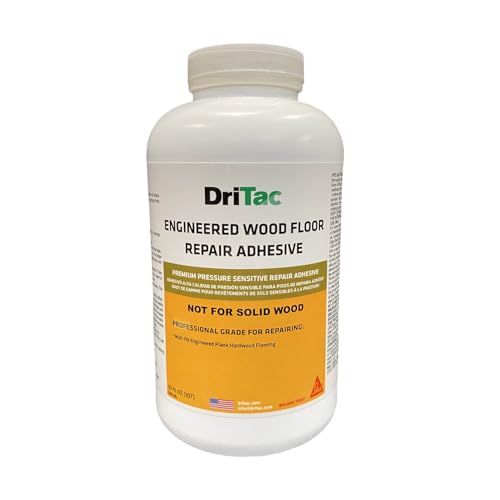
The fastest cure in the lineup — walk on your repaired floor in one hour.
This is your go-to if you have a few noisy or hollow spots in an engineered wood floor and you need the room usable the same day. The quart-sized bottle works with concrete and wood subfloors, and the full cure time of 1 hour means you are not tiptoeing around for an entire day — at 1 hour versus the Titebond glue below at 24 hours.
Buyers report it “fixed soft spots and popping in engineered hardwood,” though they warn it requires patience: warm up the bottle in a water bath to thin the glue, draw it slowly into the syringe, and vacuum the dust out of each hole first. One quart fills roughly 12 to 14 holes, so measure your job before ordering. The glue is certified free of volatile organic compounds (VOCs — chemicals that evaporate into indoor air), so it is safer to use in a room with limited windows. Cleanup is simple too: a damp cloth wipes up wet residue, and mineral spirits handle any dried spots.
If you are dealing with a single squeaky plank or a small patch, this quart is the perfect amount. For a larger area — say a whole room with widespread popping — you will run out fast and be better served by the gallon jug below. One reviewer had no luck after multiple injections, so the technique matters: drill holes every 6 to 10 inches and inject until glue seeps back, then let it sit the full 24 hours for best results rather than walking on it early.
Why It Wins
- Full cure in 1 hour — fastest of any pick here, versus the Titebond at 24 hours
- Low VOCs (no volatile organic compounds) for safer indoor use
- Works on both concrete and wood subfloors
- Easy cleanup with a damp cloth or mineral spirits
The Fine Print
- Small quart size fills only about 12-14 injection holes
- Technique matters: needs warm water bath and slow syringe draw
- Short shelf life after opening (use within 2 weeks per buyers)
Reach for it when: you have a handful of popping spots in engineered wood and want the floor walkable today.
Look elsewhere if: the hollow area is larger than a few square feet — you will need a bigger container.
2. SIKA DriTac Wood Repair Adhesive – 1 Gallon
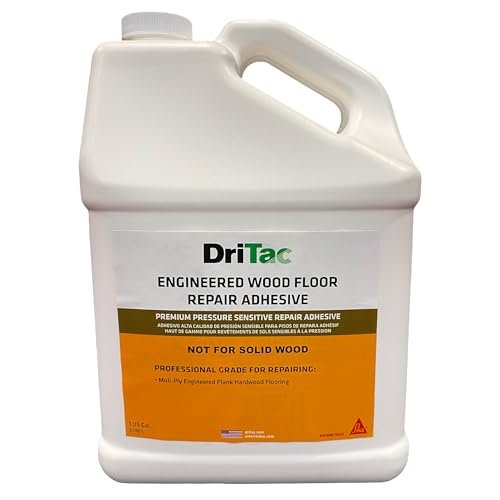
The gallon-sized version for when your floor has more than a few trouble spots.
If the hollow or popping area in your glue-down engineered floor covers a serious chunk of the room, stepping up to this gallon jug saves you from buying multiple small bottles. One buyer filled voids up to three feet in diameter and used three gallons for the job — a good indicator of how far this goes. The thin consistency lets you pour the adhesive directly into a syringe or draw it up after dipping the tip, and you apply it through a modest hole until you feel back pressure, which means the void is full.
Owners mention this works “excellently for engineered floor glued on concrete with hollow/creaking spots” and say it feels like an expanding glue that fills gaps completely. A common tip from the pros: coat your syringe plunger with Vaseline to keep it from sticking, and clean any spills within 10 minutes because dried residue requires mineral spirits. One gallon covers roughly 6 square feet of void area, so budget accordingly. The adhesive is completely free of volatile organic compounds (VOCs), keeping your indoor air cleaner during and after the repair.
The catch is that this gallon jug does not include a syringe, needles, or any applicator — you must buy those separately. Buyers recommend a 200ml syringe with a 14-gauge blunt tip needle, which fits a 3/32-inch drill hole. The product also flows slowly and may bubble out of the hole, so painters tape over the injection point helps. Some users report low yield and uneven flow, but they got decent results with careful technique. Unlike the fast-curing 1-quart DriTac, the manufacturer claims no setting period is needed, but they got decent results with careful technique.
What You Get
- Large gallon container — plenty for big repairs
- VOC-free, safer for indoor projects
- Thin formulation flows easily into deep gaps
- No waiting period to walk on the floor after application
What You Need To Know
- No syringe or needles included — must buy separately
- Low coverage: ~6 sq ft per gallon
- Clogs syringe quickly if you do not coat the plunger with lubricant
- Short shelf life after opening; use within ~2 weeks
Pick this when: you have a large hollow area or multiple trouble zones in a glue-down engineered floor.
skip it if: you only have a couple of spots — the quart bottle is cheaper and less wasteful.
3. Titebond Tongue & Groove Flooring Glue #2104 (6 bottles)

The go-to glue for floating installations where you glue the tongue and groove together.
This is not a repair adhesive; it is a PVA-based (polyvinyl acetate, a water-based glue similar to woodworker’s glue but much stronger) formula made for installing floating engineered wood or laminate floors where you glue only the tongue and groove joints. Each 16-ounce bottle covers roughly 200 linear feet at a 1/8-inch bead. One reviewer used four bottles for 225 square feet of solid oak, so the math works out well for a medium-sized room.
Customers note installations done five years ago are “still holding tight,” and multiple reviews mention the glue sets fast — you have about 4 to 5 minutes to adjust each board before it grabs permanently. That means you should dry-lay the whole floor first before applying any glue. The formula passes Type II water resistance (meaning it withstands occasional moisture without breaking down), so a spilled drink or a wet mop will not wreck the bond. The six-bottle pack gives you enough for roughly 1,200 linear feet of bead, which covers most single rooms with plenty to spare.
Patience is the trade-off: the full cure time is 24 hours, meaning you cannot walk on the floor or move furniture onto it for a full day. The Sika DriTac quart cures in one hour, so this is the slower option. Some users also note the bottom of each bottle gets thick over time, so combining leftover glue from multiple bottles helps avoid waste. If you are installing a floating floor and can afford to wait a day before using the room, this is the most reliable PVA glue for the job.
Why Choose This
- Strong PVA bond designed specifically for tongue-and-groove floating floors
- Passes Type II water resistance for everyday moisture
- Sets fast (4-5 minutes) so boards lock quickly
- Six-bottle pack provides plenty for a full room installation
The One Downside
- Full cure takes 24 hours — cannot use the room for a full day
- Bottle bottoms thicken over time if you do not use them quickly
- Not for repairs — only for new tongue-and-groove installations
Best for: anyone installing a floating engineered or laminate floor who can wait a day before walking on it.
Not for: fixing popping spots or glue-down concrete subfloor projects — pick the DriTac instead.
4. Sikabond-T21 All-in-One Polyurethane Adhesive for Wood Floors – 4 Gallons

The heavy hitter for solid hardwood glued directly onto concrete.
This is the full-spread adhesive for a proper glue-down installation — you trowel it across the entire subfloor, not just the tongue and groove. It bonds solid hardwood up to 3/4-inch thick and 8 inches wide, and the polyurethane formula (a durable, moisture-resistant synthetic rubber-like polymer) creates a bond that stays slightly elastic even after curing. One reviewer put it plainly: “It remains relatively elastic once cured which makes the floor feel very solid and eliminates noise and creaks.” That elasticity is the key feature because it absorbs the natural expansion and contraction of wood without popping a plank loose.
The 4-gallon pail is a serious volume — enough for a substantial room. Reviewers point out the product cures in only a few hours, so you are not stuck waiting an extra day to walk on your new floor. Multiple shoppers say they saved hundreds of dollars doing the glue-down themselves rather than hiring a pro. One buyer mentions the pail includes a snap-on trowel blade, though the bucket arrived with a deformed lid due to poor shipping packaging, so inspect the lid before you open it.
The obvious consideration here is the price — this is the most expensive pick by a wide margin. It also requires a full trowel application, which is more labor-intensive and messier than a tongue-and-groove bead. If you are installing solid hardwood over a concrete slab and want a floor that stays silent for years, this polyurethane adhesive is the professional-grade solution. For a small repair or a floating floor, it is overkill.
What Makes It Worth It
- Bonds solid hardwood up to 3/4″ thick and 8″ wide on concrete
- Stays slightly elastic after curing — absorbs wood movement, eliminates creaks
- Cures in a few hours
- Large 4-gallon pail covers a full room installation
Before You Buy
- Most expensive option — significant upfront cost
- Full trowel application is messy and labor-intensive
- Shipping damage risk: pail may arrive with deformed lid
Choose it when: you are gluing down solid hardwood over a concrete slab and want the quietest, most stable floor possible.
Pass on it if: you are repairing a few hollow spots or installing a floating floor — you will spend more than you need to.
Understanding the Specs
Full Cure Time
This is the amount of time you must wait before putting weight on the floor after applying the adhesive. The Sika DriTac quart cures in 1 hour, which means you can walk on the repaired area the same day. The Titebond glue requires 24 hours of no weight — a full day of staying off that room. If you are repairing a high-traffic hallway, a short cure time saves you a full day of inconvenience.
Volatile Organic Compounds (VOCs)
VOCs are chemicals that evaporate from wet adhesive into the air you breathe. High-VOC glues can cause headaches or irritation, especially in a room with poor ventilation. “VOC-free” means the product releases no detectable VOCs during or after application. Both DriTac options in this guide are labeled VOC-free, making them safer choices for bedrooms or enclosed spaces.
FAQ
Will a repair adhesive fix hollow spots in solid hardwood or only engineered wood?
How many holes do I need to drill for a repair adhesive?
Can I use a tongue-and-groove glue for a full glue-down installation?
How long does the Sika DriTac last after I open the bottle?
Does the Titebond glue work on concrete subfloors?
What size syringe and needle do I need for the DriTac gallon?
Can I walk on the floor right after applying the DriTac repair adhesive?
Is the Sikabond-T21 adhesive waterproof?
How much coverage does the Titebond 6-pack provide?
What is the difference between PVA and polyurethane adhesive for wood floors?
Final Thoughts: The Verdict
For the majority of shoppers, the adhesive for hardwood flooring winner is the Sika DriTac 1 Qt because it cures in just one hour, is VOC-free, and handles both concrete and wood subfloors. If you need to repair a large area, grab the SIKA DriTac 1 Gallon. And for a full-spread solid hardwood installation on concrete, the standout is the Sikabond-T21 Polyurethane.
How We Picked
We do not accept paid placement. Every pick is matched to a real buyer and a real use-case; we do not hands-on test units.
Sources & Methodology
Specifications: manufacturer listings and product documentation. Review insights: verified customer reviews, as of July 2026. Pricing: not shown on this page (it changes often); check the current price via the retailer link.
As an Amazon Associate, Gadgets Feed earns from qualifying purchases. This does not affect which products we feature.
Product prices and availability are accurate as of the date/time indicated and are subject to change. Any price and availability information displayed on Amazon at the time of purchase will apply to the purchase of this product. As an Amazon Associate I earn from qualifying purchases.
CERTAIN CONTENT THAT APPEARS ON THIS SITE COMES FROM AMAZON. THIS CONTENT IS PROVIDED "AS IS" AND IS SUBJECT TO CHANGE OR REMOVAL AT ANY TIME.
Amazon and the Amazon logo are trademarks of Amazon.com, Inc. or its affiliates.