
Nothing kills a car’s interior vibe faster than a drooping headliner. That once-taut fabric slowly peeling away, flapping in the breeze from an open window, or just hanging there like a sad curtain is a problem that demands a solution that sticks—permanently. The right spray adhesive is the difference between a one-and-done fix and a repeat headache, and not every can on the shelf is built to handle the heat, humidity, and weight of automotive headliner material.
I’m Min — the co-founder and writer behind Gadgets Feed. I’ve spent hundreds of hours analyzing adhesives for challenging substrate bonds, comparing aerosol spray patterns, tack times, and heat resistance ratings to separate the products that deliver a factory-like finish from those that let go after one hot summer day.
Choosing the wrong product means a sagging headliner all over again. This guide focuses solely on finding the best adhesive for headliners by examining bond strength, heat tolerance, spray pattern precision, and workable tack time.
How To Choose The Best Adhesive For Headliners
Selecting a headliner adhesive is not about grabbing the cheapest can on the shelf. The bond must withstand cabin temperatures that can exceed 140°F on a sunny day, support the weight of foam-backed fabric, and stay flexible enough to prevent cracking. Three factors matter most.
Heat & Water Resistance
Automotive interiors bake. A standard multi-purpose spray glue will soften and lose its grip when the interior temperature climbs. Look for adhesives explicitly rated for high heat—at least 120°F continuous, with some industrial-grade options holding up to 160°F. Water resistance is equally critical for vehicles in humid climates or those with sunroofs where moisture can seep through the fabric.
Tack Time & Workability
Headliner fabric is unforgiving. Once it touches the adhesive, pulling it back without tearing the foam backing is nearly impossible. Some adhesives grab instantly (contact cement style), while others offer 5 to 10 minutes of repositioning time before the bond sets permanently. Beginners benefit from a slightly longer tack window, while professionals prefer instant grab to speed up the job.
Spray Pattern & Coverage
A wide, even spray pattern reduces overspray on interior trim and ensures uniform coverage across the headliner board. Look for products with adjustable nozzles or a fan-spray design. Lace or web patterns—where the adhesive comes out in thin, interconnected strands—provide coverage without soaking into the foam backing, preventing bleed-through that can ruin the fabric’s appearance.
Quick Comparison
On smaller screens, swipe sideways to see the full table.
| Model | Category | Best For | Key Spec | Amazon |
|---|---|---|---|---|
| 3M Headliner & Fabric Adhesive | Premium | Full headliner replacement | 18.1 oz aerosol, adjustable nozzle | Amazon |
| DAP Weldwood Landau Top & Trim | Mid-Range | Automotive headliners & vinyl | Heat resistant, 79 sq ft coverage | Amazon |
| Polymat 797 Hi-Temp Spray | Premium | High-heat & marine conditions | 160°F heat resistance rating | Amazon |
| Camie Fast TACK Upholstery | Premium | Foam-to-foam & foam-to-fabric | Web spray pattern, 2-hour cure | Amazon |
| Polymat 777 Fast Tack | Mid-Range | Speaker box carpet & upholstery | 120°F temperature resistance | Amazon |
| Gorilla Heavy Duty Spray | Mid-Range | Light headliner repairs & crafts | 10-minute repositionable window | Amazon |
| 3M Scotch Spray Mount | Budget | Lightweight fabric & posters | Repositionable, 10.25 oz can | Amazon |
In‑Depth Reviews
1. 3M Headliner & Fabric Adhesive

3M’s headliner-specific formulation is the benchmark for automotive fabric bonding. Each 18.1-ounce can delivers exceptional strength on heavyweight headliners, with a controlled spray pattern that reduces overspray on surrounding interior panels. The adhesive sets in 30 to 60 minutes, giving you enough time to position the fabric without rushing, and it dries completely clear so no residue shows through the headliner material.
The formula resists the real enemies of a headliner bond: extreme heat, moisture, humidity, and cold. Users report successful installations on Jeep hardtops and convertible roofs where interior temperatures spike dramatically. The two-pack provides ample adhesive for a full sedan or SUV headliner replacement, and the adjustable nozzle lets you fine-tune the spray width for precise application on curved roof sections.
One caveat: this glue grabs aggressively. First-time installers should practice on scrap material because the quick-tack characteristic makes repositioning difficult once the fabric makes contact. That same aggressive bond, however, is precisely why this adhesive delivers professional-grade results that hold for years.
Why it’s great
- Engineered specifically for automotive headliners
- Resists heat, cold, and humidity degradation
- Adjustable nozzle for controlled application
Good to know
- Very aggressive tack leaves little room for error
- Requires careful alignment on first contact
2. DAP Weldwood Landau Top & Trim
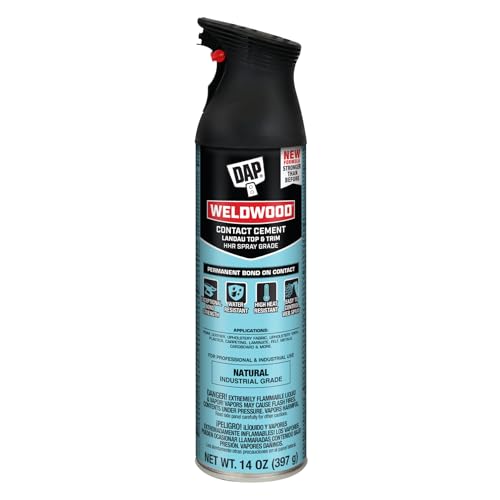
DAP Weldwood has been a staple in automotive upholstery shops for decades, and the Landau Top & Trim formula is the direct descendant of that legacy. This solvent-based contact cement uses a synthetic rubber compound that bonds foams, upholstery fabric, vinyl, and plastics on contact while remaining flexible after curing. It covers up to 79 square feet per 14-ounce can at a thin 1 gram per square foot application rate.
Heat resistance is where this product shines. It remains stable in high-temperature environments common inside parked vehicles, and it achieves full water resistance after the 24-hour cure cycle. The spray pattern uses a web-style delivery that minimizes soak-in into the headliner foam backing, preventing the adhesive from bleeding through and staining the visible fabric surface.
The 1-3 minute tack time before bonding is fast enough for efficiency but gives a brief window to align the fabric. Users note the nozzle can occasionally sputter rather than spray evenly, so a quick test spray before starting the actual job is recommended. For vinyl-to-metal and heavy headliner repairs, this is a tried-and-true choice.
Why it’s great
- Trusted brand for automotive interior repairs
- Excellent heat and water resistance after cure
- Web pattern reduces foam saturation
Good to know
- Spray quality can be inconsistent between cans
- Needs full 24-hour cure for maximum strength
3. Polymat 797 Hi-Temp Spray Adhesive

Polymat 797 is the industrial-grade option for environments where standard adhesives fail. With a heat resistance rating of 160°F, it is purpose-built for automotive headliners, vinyl tops, and hood silencer pads that bake under direct sunlight or near engine compartments. The formula is also water resistant, making it a strong candidate for marine upholstery applications where humidity and moisture are constant challenges.
The spray covers carpeting, foams, felt, and cloth effectively when bonding to metals, wood, and hardboard surfaces. Users who have applied it to door jambs report the bond holding strong even after four years of seasonal temperature swings. The clear formula dries without visible residue, and the heavy-duty grip can handle the weight of thicker headliner materials without sagging over time.
A minor trade-off is the spray pattern: some users report the adhesive comes out white initially before drying clear, which can be confusing during application. Also, the 13-ounce can is slightly smaller than some competitors, so large SUV headliners may require two cans. For heat-critical repairs, however, the 797’s thermal ceiling is unmatched in this price tier.
Why it’s great
- Highest heat resistance rating in this guide
- Suitable for marine and high-humidity environments
- Long-term bond durability reported over years
Good to know
- Appears white during application before drying clear
- Smaller can size may require multiple units for large vehicles
4. Camie Fast TACK Upholstery Adhesive
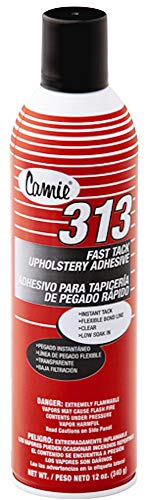
Camie 313 Fast TACK is specialty adhesive formulated for foam-to-foam and foam-to-fabric bonding, which makes it particularly useful for headliners where the foam backing needs to remain intact. The web spray pattern creates lace-like strands of adhesive that provide coverage without soaking into the porous foam, preserving its structural integrity while delivering instant tack.
The bond develops flexibility that accommodates the natural expansion and contraction of vehicle interiors without cracking. Users report excellent results adhering sections of upholstery foam together, and the 2-hour full cure time is faster than many contact cements. The formula also works well on vinyl, making it a versatile option for combined headliner and interior trim repairs.
Overspray is a factor to plan for—this glue atomizes widely, so protecting windows and seats with drop cloths is essential. Additionally, the instant tack means zero repositioning once the surfaces meet, so precise alignment on the first try is critical. For experienced DIYers who want a fast, aggressive bond on foam-backed materials, this is a top-tier choice.
Why it’s great
- Low soak-in web pattern protects foam backing
- Fast 2-hour cure time
- Flexible bond resists cracking
Good to know
- Significant overspray requires thorough masking
- No repositioning possible after contact
5. Polymat 777 Fast Tack Spray Glue

Polymat 777 delivers professional-grade strength at a mid-range price point. The 12-ounce can produces a lace spray pattern that applies evenly without pooling, and the fast-tack formula achieves foam-tearing strength almost immediately. It bonds flexible urethane and latex foams to wood, paper, corrugated materials, and fabrics, making it suitable for headliner repairs where the foam backing is still intact.
The adhesive is rated for temperatures up to 120°F, which covers most moderate-climate applications but falls short of the extreme heat tolerance of its premium-tier sibling, the Polymat 797. Where the 777 excels is in speaker box carpeting and general upholstery work, where its high strength and low soak-in provide clean results without dimpling the outer fabric surface.
Some users have reported nozzle reliability issues—the spray tip can clog or detach after the first use, which can ruin the rest of the can if not addressed. Wiping the nozzle with solvent after each use helps prevent this. For the price, this is a capable adhesive for those who don’t need the maximum heat ceiling of more expensive options.
Why it’s great
- Foam-tearing strength at a competitive price
- Lace pattern prevents dimpling on fabric
- Environmentally friendly with no CFCs or chlorinated solvents
Good to know
- Nozzle can clog or detach during use
- Limited to 120°F heat resistance
6. Gorilla Heavy Duty Spray Adhesive
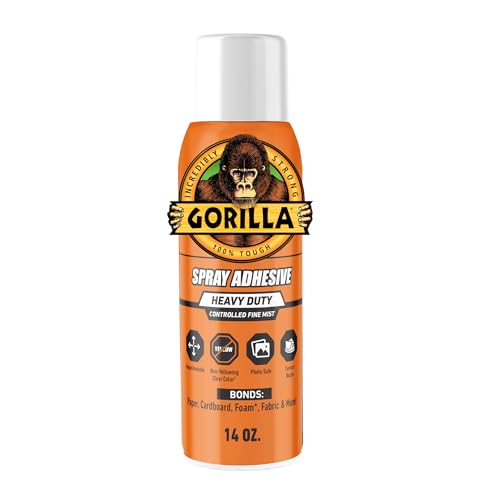
Gorilla Heavy Duty Spray Adhesive is the most versatile option in this lineup, offering a repositionable window of up to 10 minutes before forming a permanent bond—a feature that beginners find incredibly forgiving. The wide pad nozzle delivers a controlled fine mist that covers evenly without splattering, and the clear, non-yellowing formula is photo-safe for craft applications beyond just headliners.
The bond is moisture resistant and holds on paper, cardboard, fabric, foam, wood, metal, leather, glass, and plastic. For headliner repairs, this makes it a solid choice for smaller sagging sections or re-bonding fabric around dome lights and sun visors. The 14-ounce can provides generous coverage, and the repositionable window gives you the rare ability to lift and re-lay fabric for alignment without destroying the material.
The trade-off is that this is not a dedicated high-heat automotive adhesive. While it holds well in moderate conditions, it is not rated for the sustained 140°F+ temperatures that parked cars generate in summer. Use it for light-duty headliner touch-ups or crafts, but consider a specialty product from this guide for a full driver-side headliner replacement in a daily driver.
Why it’s great
- Repositionable up to 10 minutes for error-free placement
- Multi-surface bond for flexible repairs
- Dries clear with no yellowing over time
Good to know
- Not designed for extreme automotive heat conditions
- Best for light repairs rather than full replacement
7. 3M Scotch Spray Mount

3M Scotch Spray Mount is a repositionable adhesive designed primarily for lightweight materials like posters, layouts, and presentations, but it has a place in headliner repair for specific use cases. Its non-wrinkling formulation and repositionable nature make it ideal for securing thin headliner fabric that has separated at the edges or for holding appliqué pieces in place before sewing.
The 10.25-ounce can offers a low-VOC formula that is less aggressive than industrial contact cements, which makes cleanup easier and reduces the risk of damaging delicate foam backings. Users have successfully used it to re-adhere posters and lightweight fabric panels, and it works well for craft projects where the headliner material is thin and the vehicle is not exposed to extreme interior temperatures.
This is not a product for a full headliner replacement in a daily driver. The bond strength and heat resistance are significantly lower than the automotive-dedicated options in this guide. Use it for temporary fixes, low-stress applications, or as a positioning aid before permanent sewing. Its budget-friendly price makes it an affordable entry point for minor cosmetic repairs.
Why it’s great
- Repositionable bonding for forgiving application
- Low-VOC formulation is gentler on materials
- Non-wrinkling for thin fabrics
Good to know
- Not designed for high-heat automotive environments
- Limited bond strength for heavy headliner materials
FAQ
Can I use general-purpose spray adhesive for a car headliner?
How long should I wait before pressing the headliner fabric onto the adhesive?
Will spray headliner adhesive damage the foam backing of my headliner fabric?
Final Thoughts: The Verdict
For most users, the best adhesive for headliners winner is the 3M Headliner & Fabric Adhesive because it combines professional-grade bond strength with a heat-resistant formula specifically engineered for automotive use and comes in a two-pack for full vehicle coverage. If you want a proven contact cement with a reputation spanning decades, grab the DAP Weldwood Landau Top & Trim. And for extreme heat environments where interior temperatures regularly exceed 140°F, nothing beats the Polymat 797 Hi-Temp Spray Adhesive for its unmatched 160°F thermal ceiling.