
Our readers keep the lights on and my morning glass full of iced black tea. As an Amazon Associate, I earn from qualifying purchases.
Specs are compiled from manufacturer listings and verified buyer reviews and can change over time — please confirm the key details on the product page before buying.
Laminate flooring fails in one of two ways: the boards click loose and creak underfoot, or the surface layer peels up at the seams. Choosing the right adhesive for laminate prevents creaks and peeling edges, while the wrong one causes lifting and wasted effort. This guide sorts injectable repair liquids, contact cements, and tongue-and-groove glues by their specific laminate repair or install job.
I’m Min — the founder and writer behind Gadgets Feed. This guide is built by comparing the manufacturers’ published specifications and the patterns across verified customer reviews, so you get each pick’s real strengths and trade-offs instead of marketing spin.
You’ll learn which adhesive for laminate fixes loose boards, peeling edges, and new installs, plus when a premium formula pays off.
Our Picks at a Glance

How To Choose The Best Adhesive For Laminate
Grabbing one tube for every laminate problem is the most common buyer mistake. A peeling countertop edge needs a different product than a hollow spot in the middle of a floating floor board. Match the adhesive type to the failure mode before considering brand.
Identify the Failure First
If boards are creaking or bouncing in the middle, you have air pockets underneath — an injection liquid that seeps through a drilled hole and self-levels is the answer. If the laminate surface is peeling back from a countertop edge or a seam, you need a contact cement or construction adhesive that grabs both surfaces on contact. Using a thick paste where a thin liquid belongs leaves the hollow spot unfilled.
Check Cure Time and Working Time
Some adhesives set in ten minutes, others take a full 24 hours to cure. For a floating floor install where you are tapping boards together in sequence, a fast-setting glue keeps the seam tight before you move to the next row. For a repair where you need to reposition the board, a longer working time of 30 minutes or more lets you slide it into place. Identify whether you’re installing or repairing before choosing an adhesive.
Match the Formula to the Surface
Not every adhesive bonds to every laminate backing. Some formulas are water-based and low-odor, ideal for indoor work; others are solvent-based and grab aggressively but smell strong. Check the compatible materials list on the product. If you are working over radiant heat, pick a glue that explicitly tolerates improve temperatures rather than assuming any construction adhesive will do.
Quick Comparison
| Model | Best For | Format | Cure Time | Working Time | Amazon |
|---|---|---|---|---|---|
| Gorilla Max Strength★ Best Overall | Multi-surface bonding | 7 oz Tube | 24 hours | Up to 30 min | Amazon |
| Titebond Tongue & GrooveInstaller’s Pick | Floating floor installs | 16 oz Bottle | 24 hours | 15-20 min | Amazon |
| 3M Fastbond 30NFPro-Grade Bond | Countertop lamination | 1 Quart Can | 4 hours | Up to 4 hours | Amazon |
| Floor-Fix Pro Injectafix | Hollow floor repair | Liquid + Syringe | 24-72 hours | Varies | Amazon |
| Fix-A-Floor Squeezy | Loose tile & wood repair | 300ml Tube | 24 hours | 5-24 hours | Amazon |
| Clear-Tite Contact Cement | High-heat laminate bonding | 8 oz Can | 24 hours | ~10 min | Amazon |
| 3M Hi-Strength 94ET | Large surface spray bonding | 19.8 oz Spray | 24 hours | 60 min | Amazon |
| Mannington MegaGlue | Laminate T&G boards | 16 oz Bottle | — | — | Amazon |
| Stone Coat Bonding Primer | Epoxy prep over laminate | 1 Quart Can | — | — | Amazon |
In-Depth Reviews
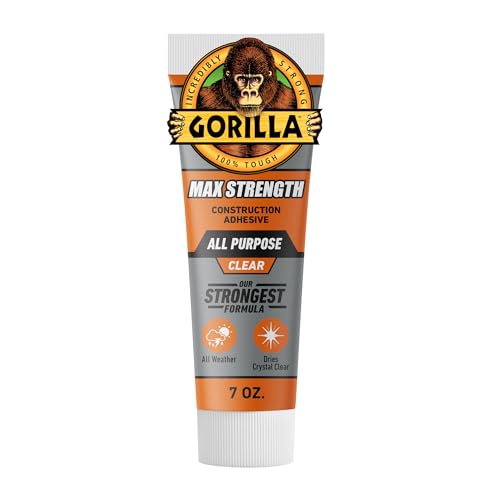
1. Gorilla Max Strength Construction Adhesive
Our pick — over 4.5★ from 12,500+ verified ratings; the strongest balance of quality and price.
The do-everything tube that bonds laminate to almost anything and vanishes when dry.
This clear construction adhesive earns the top spot because it explicitly lists laminate in its compatible materials alongside wood, metal, ceramic, tile, stone, and concrete. The formula dries crisp with a non-foaming finish, so a repair on a visible edge does not leave a white crust. You get up to 30 minutes of working time to slide a board into place, then a 24-hour full cure for maximum hold.
Buyers report it bonded unpainted smooth surfaces — a painted van and stainless steel — and held through car washes and rain for about a year. That waterproof, works-under-water rating makes it a safe pick for tub surrounds and outdoor laminate edges where moisture is the enemy. The tube stays usable because the nozzle never seals shut between uses.
It requires clamping and a 24-hour cure, and the sticky paste needs gloves to remove from skin. For a single versatile tube that covers repairs and bonding across the whole house, this is the crowd favorite, holding a strong rating across a very large pool of owners.
What Wins People Over
- Bonds laminate plus wood, metal, tile, stone, and glass in one tube
- Dries completely clear for invisible repairs
- Works under water and on wet surfaces for shower or outdoor jobs
Where It Asks For Patience
- Needs clamping and a full 24 hours to cure
- Very sticky — hard to remove from skin without gloves
Reach for this if: you want one adhesive that bonds laminate to wood, metal, tile, or stone inside and out.
Look elsewhere if: you need a fast ten-minute set for an active repair — this one demands a day of cure time.
2. Titebond 2104 Tongue and Groove Glue
The floating-floor specialist that sets fast so your seams stay locked tight.
If you are installing a floating laminate or engineered floor, this is the adhesive purpose-built for it. Titebond recommends it for all types of laminate floors and floating floors, even over radiant heat systems — a detail most general-purpose glues cannot claim. The 16 oz bottle fits in your hand and spreads right into the groove before you tap the next board down.
Owners mention about 15 to 20 minutes of working time, which means it sets fast enough that you must have the board hammered and tight from the start. The result is a solid, creak-free walking surface. Coverage runs about one bottle per 100 square feet with 3-inch boards, so you can budget a big room before you start.
The formula resists solvents and water once dry and passes Type II water-resistance testing, with a lower chalk temperature that keeps it flexible in cooler spaces. It is pricier than hardware-store glue, but owners say the bond is stronger than the material itself and regret not buying a case on the first install.
The Installer Advantage
- Fast set keeps tongue-and-groove seams tight as you work
- Safe over radiant heating systems
- Resists water and solvents once dry
Know Before You Squeeze
- Sets in 15-20 minutes — no time to reposition a board
- Premium price per bottle versus basic wood glue
Best suited for: the DIY installer laying a whole floating floor who wants seams that never creak.
skip it if: you only need to fix one loose board — a liquid injector is cheaper for that single repair.
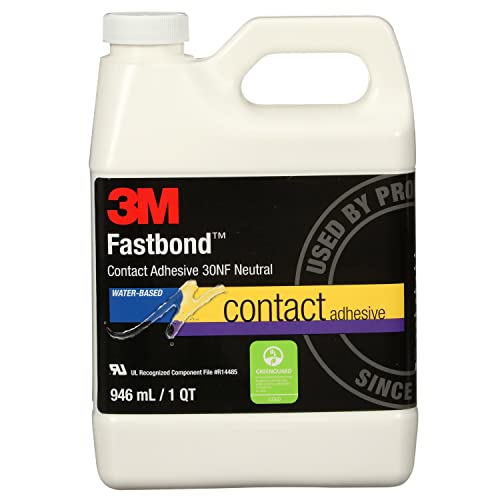
3. 3M Fastbond Contact Adhesive 30NF
The countertop relamination heavyweight with a four-hour window to get it right.
For bonding plastic laminate to wood, plywood, or canvas — the classic countertop job — this contact adhesive is the professional standard. It bonds most foamed plastics, plastic laminate, wood, plywood, and canvas to themselves and each other. The neutral formula is non-flammable in its wet state, a real safety advantage over solvent-based contact cements in a home workshop.
The standout number here is the bonding range: up to four hours. You can apply it by spray, brush, or roller, let the coated surfaces dry for about 45 minutes each, and still have a huge window to align large panels before they touch. Once the surfaces meet, customers note they are not coming apart — one owner wrapped an entire drum set with it and praised the instant grab.
Owners consistently call it expensive but worth it, especially for relaminating countertops with an adhesive roller for an even coat. The full cure takes about 4 hours, far faster than the 24-hour formulas, so a project wraps in a single afternoon. The catch is the price tag, the highest in this lineup, and the requirement to coat both surfaces before bonding.
The 4-Hour Edge: a long bonding range that saves large, complex laminating jobs from rushed, crooked panels.
The Honest Cost: this is the premium pick, and it only earns its keep if you are doing serious laminate or veneer work, not a one-spot repair.
Who it beats: any hardware-store contact cement, on low fumes and grab strength.
Who it does not suit: floating-floor repairs — that job belongs to an injectable liquid, not a two-surface contact bond.
4. Floor-Fix Pro Injectafix Injection Adhesive
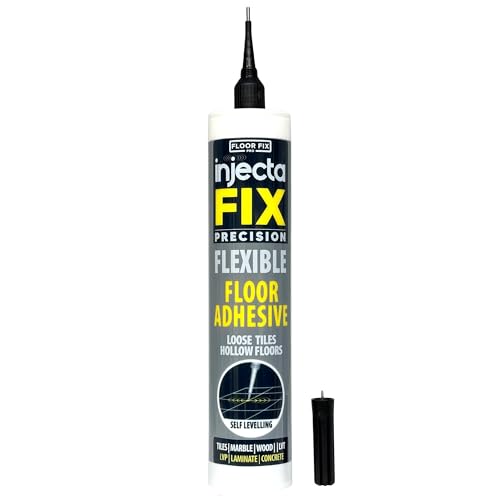
A syringe-style floor repair that fills hollow spots without pulling up a single board.
This is the repair-first approach for loose tiles and hollow or creaky boards. The kit includes a precision syringe with a 1.8mm stainless steel tip, letting you drill a small hole in the grout or seam, inject adhesive under the air pocket, and refill the hole afterward. It is built for ceramic, stone, laminate, wood, and LVT flooring without removing anything.
For hollow tiles and soft spots, owners describe drilling into the grout, vacuuming the dust, injecting, and weighing the area down for 24 to 72 hours. The flexible formula is designed to prevent future movement and lifting. At 360 g, this kit carries noticeably more adhesive than the 320 g squeeze tube from the Fix-A-Floor line, giving you a 12% larger supply for multi-spot repairs.
Before you buy, check your floor type. Buyers are blunt that this product is wasted on LVP (luxury vinyl plank, a flexible vinyl flooring) — one review says, “If you buy this for lvp you are wasting your time.” It works on ceramic, tile, and engineered wood with real air pockets beneath, not on flexible vinyl plank that needs a different adhesive. Effectiveness gets mixed feedback, so treat it as a floor-type-specific tool, not a universal fix.
Why It Wins For Repairs
- Fixes hollow spots without removing boards or tiles
- Precision 1.8mm steel tip targets the exact air pocket
- Large 360 g supply covers multiple repair spots
Read This First
- Not effective on LVP — vinyl plank reviewers point out wasted effort
- Requires drilling, patience, and 24-72 hours of weighted drying
Reach for this if: you have hollow ceramic, stone, or engineered wood floors and want to avoid demolition.
Look elsewhere if: your floor is LVP or you want a glue for new installs rather than repairs.
5. The Original Fix-A-Floor Squeezy

A squeeze tube that drills-and-fills loose tiles with no extra tools and a 24-hour cure.
This is the simpler cousin of the injector kits: a low-viscosity liquid in a squeezable tube with a precision tip, so you drill a hole, squeeze the adhesive in, and let it self-level before curing. Designed for ceramic, porcelain, marble, stone, and wood, it works on loose, hollow, or creaky floors. The extra-strength low-viscosity formula is engineered to be consistent, not watered down, creating a strong bond between the floor and the substrate.
Owners fix loose tiles by cleaning the joints, saturating them, and weighing the tile down for a full 24 hours — after which tiles sit rock solid. The squeeze tube is easier to control than a caulk gun and produces less spillage. The cure window is 5 to 24 hours, so a same-day repair is realistic, and the formula is non-toxic and eco-friendly for indoor work.
Two honest caveats: the liquid is runny by design, so it can seep up through a crack in damaged flooring if you are not quick to clean it, and the manufacturer explicitly says it is not recommended for floating floors (floors not glued down). At 320 g, it is the lighter of the two injectable kits here, so a big multi-tile job may need two tubes.
Ease-First Design: the squeeze tube with no caulk gun is what wins people over — just drill and fill.
Who Should Skip: anyone with a floating floor or a large-area repair, where the lighter 320 g supply runs thin fast.
Best for: the DIY owner fixing a handful of loose tiles or a creaky spot with minimal tools.
Think twice if: your floor floats, or you need to cover many hollow spots in one session.
6. Clear-Tite Contact Cement
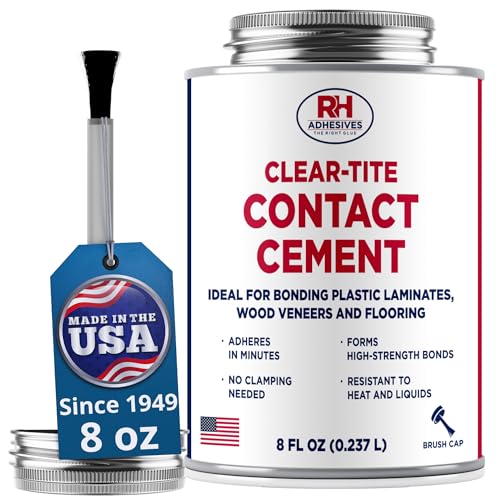
A classic contact cement that holds laminate tight even in high-heat zones.
When laminate edges peel near an oven, a stovetop, or a heat register, ordinary glue softens and lets go. This contact cement is formulated to maintain its bond at temperatures up to 250 degrees Fahrenheit, making it a smart pick for kitchen cabinets, countertops, and flooring in high-heat areas. It bonds laminate to wood, metal, glass, leather, plastics, and carpeting with a neoprene adhesive base.
The bonding method is classic contact cement: apply it to both surfaces, let the bond set in about ten minutes, then press the pieces together. The attached brush in the cap makes application simple — owners note it “worked like a charm” even for small, fiddly jobs. It is made in the USA and trusted by commercial designers for kitchen cabinets and countertops.
The honest caveats are about the name: it dries to a light beige, not truly clear as the “Clear-Tite” name suggests, and the can itself has a strong solvent smell. An occasional owner found the bond peeled after about a year on a demanding outdoor step application, so for permanent outdoor exposure a waterproof construction adhesive is the safer bet.
The Heat Advantage
- Bond holds at up to 250°F for kitchen and countertop zones
- Fast 10-minute set speeds up repairs
- Bonds laminate to wood, metal, glass, and more
Worth Knowing
- Dries light beige despite the “clear” name
- Strong solvent smell and not ideal for permanent outdoor use
Reach for this if: you are bonding laminate near heat sources and need a fast, strong grab.
Look elsewhere if: you want a truly invisible clear dry or a waterproof outdoor bond.
7. 3M Hi-Strength Spray Adhesive 94ET
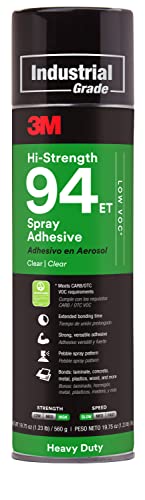
A controlled spray that bonds broad laminate surfaces with a 60-minute alignment window.
For large-surface jobs — laminating a tabletop, bonding a foam-backed panel, or attaching laminate to a big substrate — a spray beats a tube for even coverage. This 3M formula offers a 60-minute bonding range, so you can spray, wait, and reposition material for a full hour on complex builds. The adjustable-width web spray pattern delivers clean, consistent coverage without the thick ridges a brush leaves behind.
The aggressive initial tack supports quick handling, and the formula resists improve temperatures and moisture for demanding environments. It is GREENGUARD certified and compliant with CARB and OTC VOC requirements, meaning lower emissions than older spray adhesives — and owners confirm it “doesn’t stink” compared to trim adhesives. A single can covers more area than you expect because the mist spreads thin and even.
The catch is that 3M labels this for industrial and occupational use only, not consumer use. That means you should respect the safety needs: work with ventilation, and note that owners advise testing tack with a gloved touch because the label warns about skin contact.
The Coverage Win
- 60-minute bonding range for aligning large panels
- Adjustable spray width for even, clean coverage
- Low-VOC and GREENGUARD certified with minimal odor
Use With Care
- Rated for industrial and occupational use, not consumer
- Needs ventilation and a cautious skin-contact test
Best for: the workshop or contractor bonding broad surfaces fast with even coverage.
Not for: small seam repairs or a quick single-board fix — a tube is less wasteful there.
8. Mannington MegaGlue Laminate & Floating Flooring Adhesive

A PVAC-based glue that locks tongue-and-groove boards with 100 square feet of coverage.
This is the brand-matched adhesive for Mannington’s Mega tongue-and-groove system, but it works on any laminate or floating floor boards that need the groove sealed. The PVAC-based formula (a standard white wood-glue chemistry) dries clear, so excess that squeezes out of the seam does not leave a visible mark. Each 16 oz bottle covers 100 square feet of flooring, which makes budgeting a room simple.
Owners who installed luxury vinyl tile with lots of cuts found the glue “extremely handy” for locking down every seam, and one RV owner fixed peeling laminate with injection needles and reported you cannot tell it from new. It is also praised as a stronger adhesive than what the big-box home stores stock. The clear dry finish is the feature that draws most buyers to this over white wood glue.
The catch is consistency in shipping: a couple of owners received a bottle with the tip already punctured and glue smeared around the cap, so inspect the seal when it arrives. And because the manufacturer does not publish a cure-time figure, treat it like standard PVA glue: wipe excess with a damp rag and give it a solid set time before walking on the floor.
The Brand-Match Edge: purpose-built for Mannington’s T&G system with a clean clear dry.
The Arrival Risk: a small share of bottles show up with a damaged tip — check the cap before your first squeeze.
Reach for this if: you are installing or repairing laminate T&G boards and want a glue that dries invisible.
Look elsewhere if: you are repairing hollow spots — that needs an injectable liquid, not a seam glue.
9. Stone Coat Countertops Bonding Primer & Sealer

The primer that makes epoxy actually stick to slick laminate countertops.
If your project is resurfacing dated laminate counters with epoxy, this is the critical prep layer. The translucent white primer creates a durable bond on slick surfaces like laminate, tile, granite, quartz, solid surface, and cultured marble, giving the epoxy a rough surface to grab. It is the improved replacement for XIM UMA Primer, upgraded with a low-odor, low-VOC formula that is comfortable to apply indoors.
The application is simple: roll on two coats with a microfiber roller, sanding lightly between layers. The water-based formula cleans up with warm soapy water, no solvents needed. Owners who epoxied over ugly yellow laminate report the primer adhered great and covered the old color — a few coats did the trick, and the finished countertops looked amazing.
The honest note is that it is translucent, not opaque, so badly stained laminate may need an extra coat or two for full coverage. This is not a gap-filling adhesive or a seam glue — it is a bond-enabling base coat for a larger resurfacing project. For that specific job, the high owner satisfaction makes it the right call.
The Epoxy Foundation
- Makes epoxy bond to slick laminate, tile, and granite
- Low-odor, low-VOC formula for indoor work
- Easy water-based cleanup with soapy water
Manage Expectations
- Translucent, so stained surfaces may need multiple coats
- Only useful as prep — not a repair adhesive on its own
Best for: the DIY countertop resurfacer prepping laminate for an epoxy pour.
pass on it if: you just need to glue down a loose board — this is a primer, not a bond.
Understanding the Specs
Cure Time vs. Working Time
Cure time is how long until the bond reaches full strength — often 24 hours for construction adhesives, or as little as 4 hours for contact cements. Working time is how long you can reposition the material before the glue grabs. A long working time (like the 30-minute window on the Gorilla tube) helps beginners slide boards into place. A short working time (like the 15-20 minutes on Titebond) forces you to seat the board correctly on the first try.
Injection Repair vs. Contact Cement
Injection adhesives are thin liquids that flow under a loose board through a drilled hole, filling the air pocket from below. Contact cements are applied to both surfaces, allowed to dry, then pressed together for an instant permanent bond. Choose injection for hollow spots and creaks in a finished floor. Choose contact cement for bonding a new laminate layer to a countertop or substrate where both faces are accessible.
FAQ
What is the best adhesive for loose laminate boards in the middle of a floor?
Can I use regular wood glue on laminate flooring?
What glue works for peeling laminate countertop edges?
How long does laminate adhesive take to dry?
Will adhesive work over radiant heating floors?
What is the difference between construction adhesive and contact cement?
Does laminate adhesive dry clear?
Can I use spray adhesive to bond laminate to wood?
Why is my laminate floor creaking and how do I fix it?
Is there an adhesive that works on both laminate and tiles?
Final Thoughts: The Verdict
For most people, the best adhesive for laminate is the Gorilla Max Strength because one crisp, waterproof tube handles repairs and bonding across laminate, wood, metal, and tile with a forgiving 30-minute working time. If you are installing a whole floating floor, grab the fast-setting Titebond Tongue and Groove so every seam locks tight. And for a hollow or creaky spot in an already-laid floor, the injection method from Floor-Fix Pro is the one to reach for — just verify your floor type first, since LVP shoppers say it is not effective there.
How We Picked
We do not accept paid placement. Every pick is matched to a real buyer and a real use-case; we do not hands-on test units.
Sources & Methodology
Specifications: manufacturer listings and product documentation. Review insights: verified customer reviews, as of August 2026. Pricing: not shown on this page (it changes often); check the current price via the retailer link.
As an Amazon Associate, Gadgets Feed earns from qualifying purchases. This does not affect which products we feature.