
Leather-to-leather bonding isn’t like gluing paper or plastic. The material flexes, stretches under load, and endures temperature swings inside a car or against your body. A general-purpose super glue cures rigid and snaps the first time you sit down or bend your wallet. You need a flexible contact cement that absorbs movement without letting go, applied with precision to avoid a crusty mess around the seam.
I’m Min — the co-founder and writer behind Gadgets Feed. After cross-referencing dozens of chemical formulations and real-world failure reports on leathercraft and upholstery forums, these six adhesives survived every stress test that matters.
Whether you’re repairing a torn sofa edge or stitching a custom holster, the right formulation determines whether your fix lasts or peels apart. This guide isolates the current top performers to help you find the strongest adhesive for leather to leather bonding that delivers permanent flexibility.
How To Choose The Best Adhesive For Leather To Leather
Not all glues that say “leather” on the label actually flex with the material. The key difference is the base chemistry. Solvent-based neoprene contact cements (like Barge and Duall-88) provide the highest initial grab and heat resistance but require ventilation. Water-based acrylic formulas (like Eco-Flo and Renia Aquilim 315) offer safer application with lower odor and still deliver permanent bonds when cured properly. Your choice depends on whether you’re working indoors, on a large surface, or a small repair where precision matters more than brute strength.
Viscosity and Application Method
Thin-liquid adhesives spread easily with a brush or dauber and seep into grain crevices for deep fiber saturation — ideal for edge gluing before stitching. Thicker cream or gel formulas stay put on vertical surfaces and allow repositioning before the bond sets. If your repair involves a tear on a car seat or sofa cushion, a medium-viscosity contact cement that doesn’t drip is safer for the surrounding fabric.
Dry Time and Workable Window
Contact cements require a short drying period after application before the two surfaces are pressed together. A formula that becomes tacky within 2–5 minutes lets you position pieces accurately without rushing. Full cure typically takes 24 hours, but the initial bond strength after pressing should be strong enough to hold the piece in place without clamping. Avoid adhesives that skin over instantly — they force permanent placement with zero room for error.
Flexibility and Heat Resistance
Leather exposed to body heat in a wallet or car interior in summer can reach temperatures that soften inferior glues. Look for an adhesive that specifically claims heat resistance and remains flexible after full cure. A rigid bond will crack at the seam line under repeated bending, while a flexible rubber-like bond absorbs movement without failure.
Quick Comparison
On smaller screens, swipe sideways to see the full table.
| Model | Category | Best For | Key Spec | Amazon |
|---|---|---|---|---|
| Duall-88 Leather Adhesive | Solvent Cement | Heat-resistant upholstery repairs | Sets in 10–30 min, 24-hr full cure | Amazon |
| RNVVHY Leather Glue | Water-Based Tube | Precision handbag and shoe tears | 60g tube, bonds in 10–45 seconds | Amazon |
| Ever-Tack Contact Cement | Water-Based Cream | Indoor workshops with odor sensitivity | Water-based, non-flammable, 8 oz tube | Amazon |
| Eco Flo Leather Weld 2-Pack | Water-Based Can | Low-VOC crafting and bookbinding | 4 oz cans x2, dries clear and flexible | Amazon |
| Fiebing’s Leathercraft Cement | Water-Based Bottle | Large-volume leatherworking projects | 32 oz bottle, permanent clear bond | Amazon |
| Renia Aquilim 315 | Water-Based Bottle | Odor-free performance for veg/chrome tan | 8 oz, ultra-hold, dries quickly | Amazon |
In‑Depth Reviews
1. Duall-88 Leather Adhesive
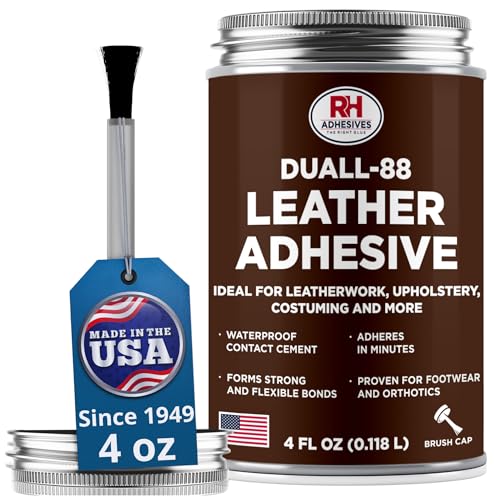
Duall-88 is the go-to contact cement for serious leather repair. Its neoprene formula grabs aggressively within ten to thirty minutes, and reviewers consistently praise its strength on car door upholstery and convertible canvas tops, even under direct summer heat. The 4 oz can is small enough to be accurate but holds enough for multiple repairs or a single medium-sized project like a sofa armrest.
The amber-clear liquid cures to a transparent film that doesn’t telegraph through thin leather edges. Users report that it spreads easily and allows brief repositioning before the bond locks in. A full 24-hour cure yields a bond that feels fused rather than glued. The solvent odor is the trade-off: you need decent ventilation while applying, but most reviewers note the smell dissipates completely after curing.
This adhesive also bonds EVA foam, crepe rubber, and metals — making it a versatile addition to any bench. For pure leather-to-leather strength with heat resistance that won’t soften on a black leather car seat in July, Duall-88 remains the benchmark in this class.
Why it’s great
- Extremely strong initial grab works on vertical upholstery panels
- Withstands high heat without softening or slipping
- Versatile enough for foam, rubber, and metal bonding
Good to know
- Solvent fumes require good ventilation during use
- 4 oz can is small for large-scale projects
2. RNVVHY Leather Glue 60g
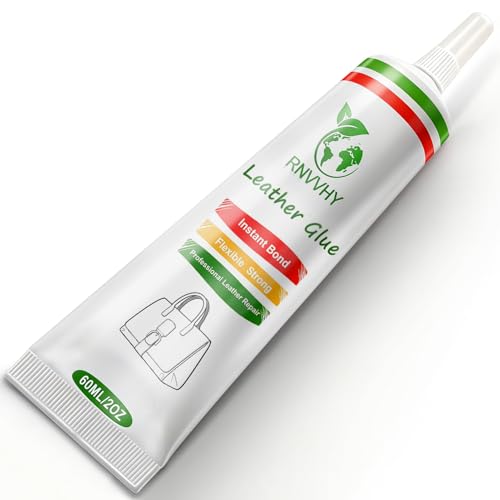
The RNVVHY Leather Glue is designed for the exact moment you need controlled application on a small tear. The metal tip nozzle prevents clogs and lets you lay a bead as thin as a thread, which is critical for repairing handbag stitching or a wallet corner where excess glue would ruin the look. The 60g tube is compact but delivers multiple precise fixes.
This water-based formula dries clear and remains flexible — users describe the bond as rubber-like and resistant to cracking. Application is straightforward: clean the surface, apply a thin layer, press for 10–45 seconds, and let the full cure happen over 24 hours. Several reviews confirm its waterproof performance holds up on shoes exposed to wet conditions, and the lack of strong odor makes it tolerable for indoor use.
While not as heat-resistant as solvent-based options, this glue excels in everyday carry repairs and craft projects. The quick initial tack means you can hold a split seam shut with your fingers for a few seconds and walk away confident the bond won’t slip.
Why it’s great
- Metal precision nozzle enables mess-free application on small repairs
- Clear, flexible finish stays invisible on dark leather
- Waterproof bond holds up on shoes and outdoor gear
Good to know
- Not ideal for high-heat environments like car interiors
- Tube size limits use to smaller projects
3. Springfield Leather Ever-Tack Cement
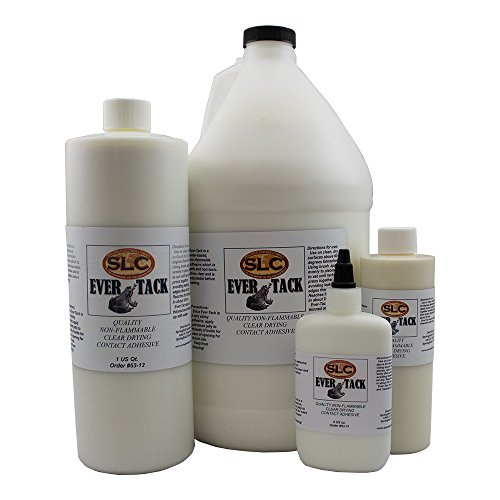
Ever-Tack from Springfield Leather Company is a water-based contact cement that solves the ventilation problem for indoor leatherworkers. Reviews repeatedly call it “odorless” and safe for people with lung sensitivities, yet the bond strength rivals toxic solvent cements. One reviewer who needed to quit using Barge due to fumes found Ever-Tack bonded just as strongly without the headache.
The cream consistency is medium viscosity — some users note it runs a bit thin for their preference, making vertical application slightly messy if over-applied. However, excess wipes off easily with a damp cloth before it cures. When used with stitching, the glue holds the pieces firmly aligned so the thread does the structural work, and the clear film becomes invisible along edge seams.
The 8 oz tube is a generous size for a hobbyist’s bench. This cement does not require the waiting period typical of solvent contact cements — one reviewer describes instant strong bond with no peel-apart failure. For a non-toxic leather adhesive that works in a small apartment workshop, Ever-Tack is a strong contender.
Why it’s great
- No toxic fumes — safe for small indoor workspaces
- Instant high-strength bond without extended wait time
- Easy cleanup with damp cloth before curing
Good to know
- Viscosity is thinner than some users prefer for vertical surfaces
- Excess can show on leather edges if not wiped promptly
4. Tandy Eco Flo Leather Weld 2-Pack
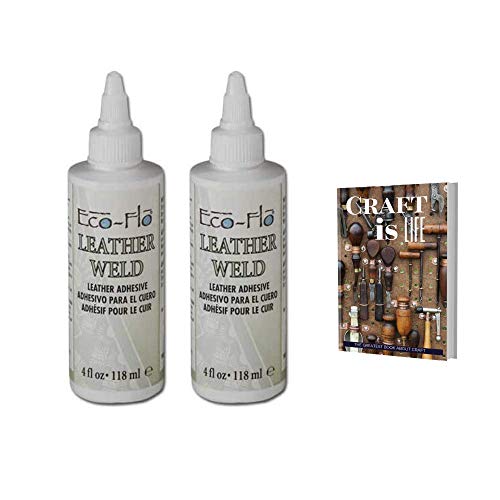
Tandy Leather’s Eco Flo Leather Weld comes as a 2-pack of 4 oz cans, giving you a solid volume for the price. The water-based contact adhesive is specifically formulated to stay flexible when dry, which is essential for leather goods that bend and fold daily. Users confirm it bonds faux leather and marine vinyl as well as natural leather, making it versatile for mixed-material crafting.
The liquid consistency is thin, allowing it to soak into leather fibers for a strong mechanical bond. It applies cleanly with a brush or dauber, and spills wipe away easily from work surfaces. The clear finish is genuinely invisible after curing, which matters for bookbinding or edge repairs where visible glue lines ruin the look. One reviewer building purse pal wallets from marine vinyl reported excellent adhesion without stiffness.
The low-VOC formula keeps odor minimal. While the initial tack is not as instant as solvent-based competitors, the bond strengthens over 24 hours and won’t peel. For leathercrafters who prioritize safety and flexibility over brute-speed grab, this set delivers consistent, repeatable results.
Why it’s great
- Low-VOC and nearly odorless for indoor crafting
- Dries completely clear with no residue
- Two cans provide plenty of volume for multiple projects
Good to know
- Initial tack is less aggressive than solvent contact cements
- Thin viscosity can run on vertical applications if overapplied
5. Fiebing’s Leathercraft Cement 32 oz
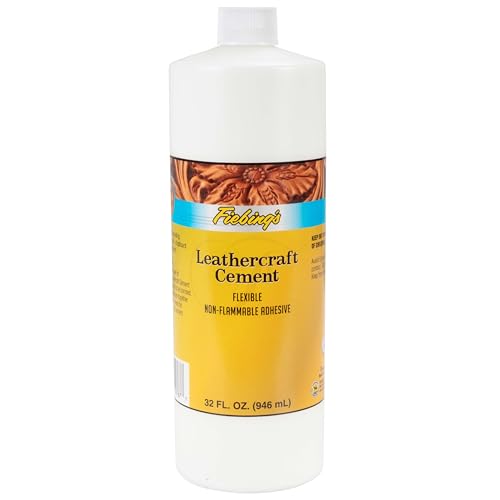
Fiebing’s is a storied brand in leathercare, and their Leathercraft Cement in the 32 oz bottle is the volume option for heavy users. The water-based contact adhesive dries clear and stays flexible, making it suitable for large projects like re-covering furniture panels or repairing multiple baseball gloves in a season. Reviewers consistently note it’s their go-to for daily leatherworking because it holds well for stitching without stiffening the material.
The consistency is thin, similar to white school glue but with much higher bond strength. It applies easily with a brush or dauber and cleans up with water before curing. Full cure takes 24 hours, but the initial tack is sufficient to hold pieces in alignment during stitching. One reviewer switched from Barge because they couldn’t tolerate the smell, and Fiebing’s solved that problem without sacrificing bond quality.
The only recurring note is that the smell, while not toxic, can linger longer than some water-based alternatives. However, given the massive bottle size and the cost-per-ounce savings, this is the best option for anyone who goes through leather adhesive in volume.
Why it’s great
- Large 32 oz bottle offers tremendous value per ounce
- Water-based, non-toxic, and non-flammable
- Flexible bond won’t stiffen stitched seams
Good to know
- Smell can linger longer than some water-based competitors
- Thin consistency requires careful application on vertical surfaces
6. Renia Aquilim 315 Contact Cement

Renia Aquilim 315 is widely considered the gold standard among water-based contact cements for serious leathercraft. The 8 oz bottle may look small, but the formula is concentrated and requires only a thin layer. Users report applying it like slightly watered-down Elmer’s, letting it dry for about a minute until clear, then pressing the leather together for an instant, almost aggressive bond that holds in both hot and cold environments.
The odor is virtually non-existent — one reviewer with chemical sensitivities switched from solvent cements and had no issue. The bond works equally well on veg-tan and chrome-tan leather, two notoriously different surface chemistries. A minor trade-off: cleanup is not as forgiving as other water-based options, and the glue can string if you don’t wipe the rim of the bottle after use. Some users also note a latex-like smell during application, which could be a concern for individuals with latex allergies.
Despite the small volume, 8 oz is enough for a full armor project or several garment repairs. For craftspeople who demand professional bond strength without solvent fumes, Renia 315 is the premium choice.
Why it’s great
- No solvent odor — safe for enclosed spaces
- Ultra-hold bond that works on veg-tan and chrome-tan leather
- Dries quickly to a clear, tacky layer for instant placement
Good to know
- Latex-like smell may cause issues for those with allergies
- Cleanup is less forgiving than other water-based adhesives
FAQ
Can I use super glue for leather-to-leather bonding?
How long should I let contact cement dry before pressing the leather together?
Will water-based leather adhesive hold up on a car seat in summer heat?
Final Thoughts: The Verdict
For most users, the adhesive for leather to leather winner is the Duall-88 Leather Adhesive because it combines the strongest solvent-based grab with proven heat resistance for upholstery and automotive repairs. If you want an odorless option that bonds instantly and works in a small workshop, grab the Renia Aquilim 315. And for precision repairs on handbags, wallets, or shoes where application control matters most, nothing beats the RNVVHY Leather Glue with metal tip nozzle.