
Our readers keep the lights on and my morning glass full of iced black tea. As an Amazon Associate, I earn from qualifying purchases.
Specs are compiled from manufacturer listings and verified buyer reviews and can change over time — please confirm the key details on the product page before buying.
Matching a plastic part to a smooth glass surface is one of the trickiest bonds in home repair — the two materials expand at different rates, and most glues simply slip off the glass. The right adhesive for this job has to flex, grip, and stay clear, all at once. The good news is that you do not need a workshop full of specialized epoxies to get a permanent, water-resistant hold.
I’m Min — the founder and writer behind Gadgets Feed. This guide is built by comparing the manufacturers’ published specifications and the patterns across verified customer reviews, so you get each pick’s real strengths and trade-offs instead of marketing spin.
When you need to bond plastic to glass—say, reattaching a cracked mirror frame, a broken phone stand, or a kayak hatch—the right adhesive for plastic to glass depends on how each formula handles moisture, temperature swings, and how long you have before it sets.
Our Picks at a Glance

How To Choose The Best Adhesive For Plastic To Glass
The first thing to understand is that glass is non-porous — it has no microscopic pores for glue to seep into, so it relies entirely on surface grip. This means the adhesive’s chemistry matters far more than its thickness. You need a formula that grabs glass chemically, not one that just dries hard on top of it.
Flexible vs rigid bond
Plastic expands and contracts with temperature changes at a different rate than glass. A rigid glue that dries rock-hard will eventually crack or let go along that seam. A flexible, toughened formula absorbs that movement, which is why silicones and toughened epoxies tend to outlast basic superglues on this particular pairing.
Curing time and working time
Working time is how long you have to slide the pieces into perfect alignment before the glue grabs; curing time is how long it takes to reach full strength. For a small craft piece, a fast set of 7–8 minutes is ideal. For a heavy, load-bearing repair, you want a slower cure so the bond can reach maximum strength.
Moisture and UV resistance
If your repair lives near water — a shower, a fish tank, an outdoor planter — a waterproof formula is non-negotiable. Check whether the product also resists UV light, because direct sunlight can yellow or degrade some clear adhesives over time. A UV-resistant and water-resistant glue keeps the bond clear and strong for years.
Quick Comparison
| Model | Best For | Full Cure Time | Waterproof | Format | Amazon |
|---|---|---|---|---|---|
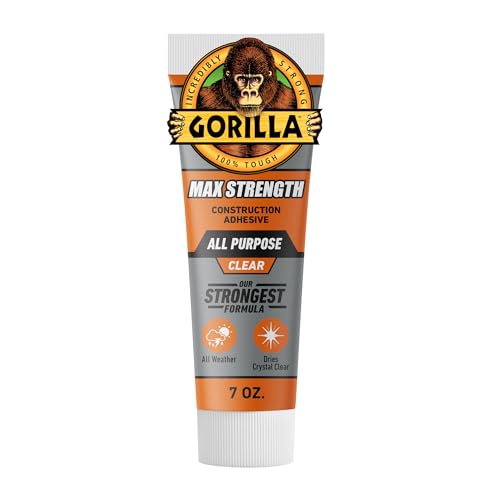
| Gorilla Max Strength Construction Adhesive★ Best Overall | Heavy-duty outdoor bonding | 24 hours | Yes | 7 oz tube | Amazon |
| Loctite Vinyl, Plastic, and Fabric AdhesiveBest Value | Flexible fabric and vinyl repairs | 24 hours | — | 2-pack tubes | Amazon |
| Metal Glue Heavy Duty Waterproof Epoxy | Metal-to-plastic repairs | 24 hours | Yes | 1.6 oz epoxy | Amazon |
| Aleene’s The Ultimate Multi-Surface Adhesive | Crafts and fine-tip precision | 8 minutes | Yes | 1.5 fl oz 3-pack | Amazon |
| Loctite Glass Glue | Glass-to-glass and glass-to-plastic | 24 hours | Yes | 2g tube 6-pack | Amazon |
| Permatex 80855 Clear RTV Silicone | Sealing and vibration-prone joints | 24 hours | Yes | 11 oz cartridge | Amazon |
| Starbond 5 Minute Epoxy Pro Kit | Flexible, high-strength repairs | 24 hours | — | 8 oz kit | Amazon |
In‑Depth Reviews
1. Gorilla Max Strength Construction Adhesive
Our pick — over 4.5★ from 12,500+ verified ratings; the strongest balance of quality and price.
The gap-filling heavyweight that survives car washes and rain on bare metal
This is the one to grab when your plastic-to-glass repair needs to handle serious abuse. It is a 100% waterproof formula that works under water and bonds on wet surfaces, so it is a natural fit for showers, tubs, worktops, and outdoor jobs. It also lists glass, mirrors, plastic, and metal among its compatible materials — the exact pairing this guide is about.
You get up to 30 minutes of working time to reposition your pieces before the bond sets, which is generous for a construction-grade adhesive. It dries crisp with a non-foaming formula, so the finished repair looks nearly invisible. The tube is designed to be reusable, staying soft instead of hardening or sealing shut between projects.
What wins people over is its raw effectiveness, and the consistency holds up across thousands of projects. Buyers report bonding unpainted metal to a painted van body without any prep, and the bond survived both car washes and rain. The catch is the cure — it takes 24 hours to fully set, and it is very sticky, so it resists coming off your hands while you work.
What makes it the top pick
- Truly waterproof, even bonding on wet surfaces
- Gap-filling formula covers uneven joints with a clear finish
- Painting-friendly once it dries
What to plan around
- Needs full clamping during the 24-hour cure
- Very sticky texture is hard to wash off skin
Reach for it if: your plastic-to-glass bond lives outdoors or near water and needs a bond that can take a beating. It holds even heavy items like plexiglass windshields.
Plan for the wait: set up clamps or tape before applying, because this formula takes a full day to reach maximum strength.
2. Loctite Vinyl, Plastic, and Fabric Adhesive
A flexible formula that flexes with vinyl, fabric, and soft plastics where rigid glues crack apart
If your plastic-to-glass repair involves a flexible plastic — think a vinyl seat, a foam pad, or anything that bends — this Loctite is the right tool. It is formulated specifically for vinyl, plastic, and fabric, yet its material list also includes glass, so it bridges the two surfaces without becoming brittle. The two-pack gives you a spare tube for the next repair, which is a nice value.
This is a paste that stays slightly flexible when dry, unlike hard cyanoacrylate superglues that shatter under stress. The drying time gets the most praise from users, and the durability holds up in real use. The classic success story is a lawn mower seat: with proper surface preparation, the adhesive held the padding for an entire mowing season.
The honest limit is that it is not marketed as waterproof, so it is safer for indoor, dry repairs than for constant submersion. It also needs patience — like most paste adhesives, it takes 24 hours to fully cure. For a fabric-to-plastic or vinyl-to-glass seam that needs to stay soft, this is the one you want.
Flex-first formula: unlike the Gorilla above, which cures rigid and strong, this Loctite stays flexible so soft plastics and fabric do not tear the bond apart.
Best for: reattaching vinyl, fabric, or foam padding to a harder surface like glass or plastic trim.
Keep it dry: this is not a waterproof product, so it suits indoor repairs where the joint will not face constant moisture.
3. Metal Glue Heavy Duty Waterproof Epoxy

A two-part epoxy with metal powder mixed in, built to stand in where a welder used to be
This epoxy delivers the strongest chemical bond on this list, so you should reach for it when a plastic part meets metal or glass and the joint must bear real weight. It works on glass, plastic, and many metals, including aluminum and stainless steel. The added metal powder in the formula boosts adhesion and hardness while keeping some toughness, so the bond resists impacts better than standard epoxies.
The working pace is a standout: it reaches initial solidification in 10 minutes and reaches usable strength in 12 hours, with full cure at 24 hours. It is resistant to high and low temperatures, water, and oil, and after curing it can be sanded, painted, and drilled. The 1:1 ratio design means you squeeze both parts out together and mix — no measuring cups or guesswork.
The strong bond is the thing everyone raves about, and the application process earns nearly as much praise. Owners mention it creating a strong bond that holds metal parts securely, dries quickly, and stays waterproof and easy to apply. The recurring theme is that it saved them the cost of replacement parts entirely.
Why it earns the top performer slot
- 10-minute initial set gets your repair handling quickly
- Water and oil resistant, surviving extreme environments
- Sandable, paintable, and drillable once cured
Before you commit
- Two-part mixing adds a step versus single-tube adhesives
- Grey color, not clear, so the bond line will show
Choose this if: the joint carries weight — a cracked bracket, a fuel tank, a furniture frame — and needs a weld-like hold between metal, glass, or plastic.
Mind the color: the dark grey finish is invisible on metal but visible on clear glass, so match it to the repair spot.
4. Aleene’s The Ultimate Multi-Surface Adhesive

The fine-tip precision glue that dries clear in minutes and gives you time to line things up perfectly
Aleene’s is a different animal from the construction adhesives above. It is a gel that dries clear and fast — in 7 to 8 minutes — which makes it the speed pick for crafts, models, and small repairs where you cannot wait overnight. The fine tip gives you precise control, and it lists plastic, metal, glass, wood, fabric, and ceramic among its compatible surfaces.
The versatility is the thing that gets praised most. It is UV and waterproof, so it holds up outdoors, yet it is gentle enough for paper and mixed-media projects. What owners really love is the working time: it gives you a little window to make adjustments before it grabs, so you can get pieces perfectly lined up. The 3-pack is a genuine value, with one owner noting a single tube lasted six months of near-daily use.
The one recurring frustration is that the tube can push glue out a bit too fast, so control takes a steady hand. And because it sets in minutes, you have to position everything before you squeeze. For fast, clear, hobby-grade bonds between plastic and glass, this is the one to keep in the craft drawer.
Speed meets control: while the Gorilla gives you 30 minutes to reposition before a 24-hour cure, Aleene’s sets in 8 minutes — the right trade-off for small, precise work.
Grab this for: model kits, jewelry, small appliance trim, and any plastic-to-glass repair where the bond line has to look clean and dry fast.
Expect the flow: the tube dispenses quickly, so practice on scrap paper first to get the pressure right.
5. Loctite Glass Glue
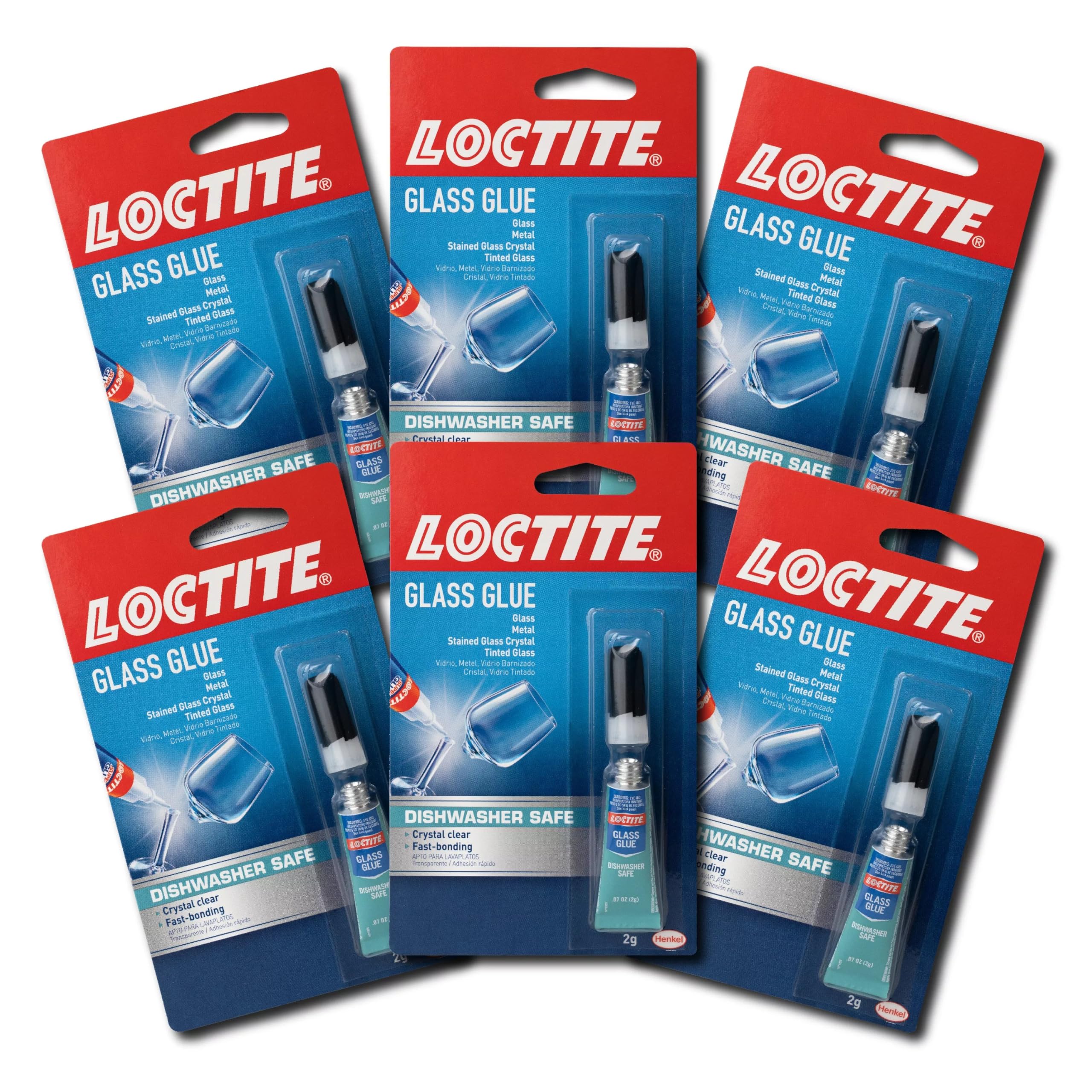
An instant-bond superglue specifically engineered for glass, and it holds without any clamping
This is the specialist when your project is glass-first — think a cracked wine glass stem, a chipped tabletop, or a glass pane that needs a plastic frame reattached. Unlike general-purpose glues, this Loctite is purpose-built to bond glass to itself and to certain metals and plastics, with no clamping required. It dries clear and colorless, so the repair seam stays nearly invisible.
The six-pack of 2-gram squeeze tubes is a smart format: each tube is small enough to use up in one go, which avoids the dried-out-tube problem that plagues bigger containers. It is heat resistant, waterproof, and dishwasher safe, making it a legitimate choice for glassware that gets washed. It handles clear, tinted, brown, opaque, and stained glass with equal ease.
Effectiveness is what buyers praise most across the board. They report repairing plate glass tabletop chips, bonding circuit boards to glass guitar picks, and fixing crystal wine glass stems — and once the glue sets, the pieces are inseparable. The catch for outdoor use: this is for indoor use only, so it is not the choice for a patio or greenhouse repair. And because it sets fast, you should practice your alignment before applying.
Why it leads on glass
- Bonds without clamps, saving you setup time
- Dries clear and stays invisible on glass
- Dishwasher safe for repaired glassware
Where it falls short
- Indoor-only formula — not for exterior glass
- Sets fast, so misalignment means starting over
Pick this for: drinking glasses, glass shelves, and any indoor glass-to-plastic repair where the bond must look clean and survive the dishwasher.
Skip it for: outdoor or greenhouse use — this formula is explicitly not recommended for exterior surfaces.
6. Permatex 80855 Clear RTV Silicone Adhesive Sealant

A clear silicone that seals as it bonds, made for joints that vibrate, flex, and get wet
This Permatex is the pick when your plastic-to-glass job is really a sealing job — a bath fixture, a car trim piece, a pool filter hose. It is a silicone adhesive sealant, which means it stays permanently flexible and creates a watertight barrier at the same time as it bonds. Its compatible material list covers glass, metal, plastic, and vinyl, so it spans the two surfaces you are joining.
What buyers highlight is how well it handles real-world wear. The classic use stories are reattaching a seat cushion to its base on a Honda Pioneer side-by-side and connecting pool filter hoses. It stays tacky for 1 to 2 hours, which gives you a generous window to seat the part, then cures to a clear finish. It is also durable enough to vulcanize and bond a door seal to concrete even in 40-degree weather.
The part to remember is that silicone takes a full 24 hours to fully cure, and it stays a bit rubbery — that is the feature, not a flaw, because that flexibility is what lets it survive vibration. The 11-ounce cartridge is far more product than the small tubes, so it suits bigger jobs or multiple repairs over time.
Seal and stick in one: unlike the instant Loctite glass glue above, this silicone stays flexible — the right call for parts that vibrate or shift.
Reach for this when: you need a watertight, vibration-proof joint between plastic trim and glass, metal, or vinyl, especially in a vehicle or near water.
Respect the cure: give it the full day to set before putting any weight or water pressure on the repair.
7. Starbond 5 Minute Epoxy Pro Kit

A 5-minute epoxy that absorbs vibration instead of cracking, with every tool you need in the box
Starbond brings the best of both worlds: the speed of an instant glue paired with the strength of an epoxy. It reaches handling strength in about 5 minutes and fully cures in 24 hours, and it is engineered with a flexible toughened formula that absorbs vibration and stress without brittle cracking. Its compatible materials span wood, metal, glass, ceramic, and many plastics including ABS and PVC.
The 8-ounce Pro Kit is the most complete package on this list. It includes screw-cap bottles, reusable mixing trays, and tools for clean, controlled application — no leaky syringes, just easier mixing and less waste. The 1:1 mix ratio by volume takes the guesswork out, and it cures clear for a clean-looking repair line.
The effectiveness and quality get consistent praise, with owners calling it essential for various trades. The success stories are practical: fixing a cast aluminum table, resealing a basement crack, and bonding parts that need both strength and a slight flex. The one honest limitation is that the adhesion is mixed on some plastics — specifically, it does not bond well to PLA 3D-printed parts, so check your plastic type before committing.
What the kit delivers
- 5-minute set with 24-hour full cure balance
- Flexible, vibration-absorbing bond that resists cracking
- Includes trays and tools for clean mixing
Know the limits
- Does not adhere well to PLA 3D-printed parts
- Two-part mixing required before every use
Best for: furniture fixes, household repairs, and crafts that need a flexible, high-strength bond across wood, metal, glass, or plastic.
Check your plastic: if your part is 3D-printed PLA filament, this epoxy may peel off — match it to ABS, PVC, or molded plastics instead.
Understanding the Specs
Cure time vs working time
Cure time is the clock that matters most for a load-bearing repair. The fast-setting picks here cure in 8 minutes, while the heavy-duty options need the full 24 hours to reach maximum strength. Working time is the window you have to slide pieces into alignment — the Gorilla gives you 30 minutes, the Aleene’s gives you just a few. Match the pace to your project’s complexity.
Flexible vs rigid bonding
Glass and plastic expand at different rates when temperatures change, so a rigid bond can crack apart. Toughened epoxies like the Starbond and silicone sealants like the Permatex stay slightly flexible to absorb that movement. Rigid superglues like the Loctite Glass Glue work best for small, stationary parts where the two surfaces will not shift against each other.
FAQ
What is the best glue to bond plastic to glass?
Will Gorilla Glue work on plastic and glass?
How long does adhesive take to fully cure on glass?
Can I use superglue on glass and plastic?
Is there a glue that stays flexible for plastic to glass?
Will epoxy work for plastic to glass?
How do I prepare glass before gluing plastic to it?
What glue works underwater or on wet glass?
Is Gorilla Construction Adhesive paintable?
Which adhesive is best for a vibrating plastic and glass part?
Final Thoughts: The Verdict
Across the board, the best adhesive for plastic to glass is the Gorilla Max Strength Construction Adhesive because its 100% waterproof, gap-filling formula gives you up to 30 minutes of working time, so it handles the widest range of indoor and outdoor jobs. If you need a fast, clear craft-grade bond that cures in minutes, choose the Aleene’s Ultimate Multi-Surface Adhesive. And for a repair that must bear real weight between metal, glass, and plastic, the Metal Glue Heavy Duty Epoxy is the one to grab.
How We Picked
We do not accept paid placement. Every pick is matched to a real buyer and a real use-case; we do not hands-on test units.
Sources & Methodology
Specifications: manufacturer listings and product documentation. Review insights: verified customer reviews, as of August 2026. Pricing: not shown on this page (it changes often); check the current price via the retailer link.
As an Amazon Associate, Gadgets Feed earns from qualifying purchases. This does not affect which products we feature.