
Our readers keep the lights on and my morning glass full of iced black tea. As an Amazon Associate, I earn from qualifying purchases.
Specs are compiled from manufacturer listings and verified buyer reviews and can change over time — please confirm the key details on the product page before buying.
The job sounds simple enough — stick a plastic part to a piece of wood and have it stay put. But anyone who has tried it knows the frustration: one adhesive slides off the slick plastic surface, another cracks under movement, and a third just refuses to grip the wood grain at all. The problem is that plastic is non-porous and flexible, while wood is thirsty and rigid, so an adhesive that works well on one often fails on the other. This guide cuts through the confusion by matching each adhesive type — cyanoacrylate, epoxy, polyurethane, and specialty contact cement — to the specific plastic-to-wood scenario you actually have.
I’m Min — the founder and writer behind Gadgets Feed. This guide is built by comparing the manufacturers’ published specifications and the patterns across verified customer reviews, so you get each pick’s real strengths and trade-offs instead of marketing spin.
You will find the strongest, most reliable options that handle the unique stress of bonding plastic to wood in our guide to the adhesive for plastic to wood.
Our Picks at a Glance

How To Choose The Best Adhesive For Plastic To Wood
Bonding plastic to wood is trickier than bonding two pieces of wood together because the two materials expand and contract at different rates with temperature and humidity. The plastic side is also non-porous, meaning the adhesive cannot soak in to form a mechanical grip the way it does on wood. You need an adhesive that bridges that gap — flexible enough to handle movement, strong enough to hold plastic, and able to wet out the wood fibers. Here are the three key factors to check before you buy.
Chemistry Match: Cyanoacrylate, Epoxy, Polyurethane, or Contact Cement
The chemistry of the adhesive determines how it bonds to each surface. Cyanoacrylate (super glue) excels on non-porous plastic and dries fast, but it can be brittle and may not fill gaps if the wood surface is uneven. Epoxy (two-part resin and hardener) offers the strongest fill and the best gap-bridging ability, making it ideal for repairs where the plastic piece is broken or the wood is rough. Polyurethane glue expands as it cures, pushing into wood pores to create a strong mechanical lock, but it generates foam that can squeeze out and needs a damp surface to cure properly. Contact cement bonds on contact and stays flexible, which suits large panels or laminates but demands precise alignment because the bond is instant and permanent.
Working Time vs. Full Cure Time
For plastic-to-wood bonds, you often need to clamp, position, or adjust the parts before the glue hardens. A short working time (like 5 minutes for a fast-set epoxy) forces you to prep everything beforehand. A longer working time (like 30 minutes for epoxy putty) gives you room to align the pieces and wipe away squeeze-out. Full cure time — the number of hours before the bond reaches its full design strength — matters most if the joint will bear weight or face stress before then. Most epoxy putties and polyurethane glues need 24 hours to fully cure, while some cyanoacrylates reach handling strength in minutes.
Flexibility and Gap-Filling Ability
Plastic flexes under load; wood does not. An adhesive that dries rock-hard can crack at the interface when the plastic part expands or vibrates. Flexible-toughened epoxies and polyurethane glues absorb this movement better. Gap-filling ability is equally critical — if the plastic part has a broken edge or the wood surface is not perfectly flat, a runny cyanoacrylate will just soak away. Epoxy putties and thickened epoxies stay in place and fill voids, making them the default choice for repair work rather than simple bonding.
Quick Comparison
| Model | Best For | Chemistry | Full Cure Time | Item Weight | Amazon |
|---|---|---|---|---|---|
| Super Glue XXL★ Best Overall | Quick, thin-gap fixes | Cyanoacrylate | 3 Hours | 50 Grams | $9.99$11.98Amazon |
| Starbond 8 oz. EpoxyTop Performer | Flexible high-strength builds | Epoxy (Toughened) | 24 Hours | — | $28.49Amazon |
| Gorilla Epoxy Ultimate | Submerged repairs | Epoxy (Methyl Methacrylate) | 24 Hours | 0.14 Pounds | $9.88Amazon |
| Boncart Epoxy Putty | Gap-filling repair putty | Epoxy Putty | 24 Hours | 8 Ounces | $11.99Amazon |
| Endhokn Epoxy Putty | Large-volume waterproof fixes | Epoxy Putty | 24 Hours | 300 Grams | $13.99Amazon |
| Gorilla Original Polyurethane | Porous wood-to-plastic bonds | Polyurethane | 24 Hours | 0.29 Kilograms | $9.98$12.99Amazon |
| S-18 All-Purpose Adhesive | Flexible panel lamination | Neoprene Contact Cement | 24 Hours | 5.6 Ounces | $11.99$12.99Amazon |
In‑Depth Reviews
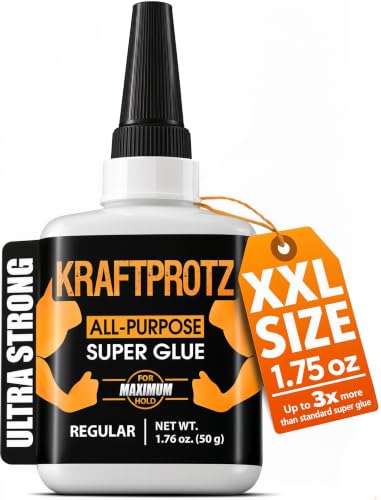
1. Super Glue XXL Value Size (1.76oz) Liquid Adhesive
Our pick — over 4.5★ from 20,500+ verified ratings; the strongest balance of quality and price.
The fast-drying liquid that fills hairline cracks between plastic and wood in seconds.
For a tight joint where the plastic sits flush against the wood with no gap, this cyanoacrylate (super glue) formula is the quickest solution — it reaches full cure in just 3 hours, far faster than any epoxy or polyurethane option here. The maker packed 50 grams (1.76oz) into a single bottle, so it outlasts the tiny tubes you typically find. One buyer called it the “best super glue for plastic repairs,” noting it dries in 2-3 minutes, builds up and sands well, and offers great value for a large bottle. Another reviewer used it to snug up a wobbly toilet paper holder — a classic plastic-to-wood scenario.
The chemistry here is cyanoacrylate, which bonds best on non-porous surfaces like plastic but struggles on porous wood if the wood surface is not perfectly smooth or if there is a gap. The formula is thin — buyers warn it is “thin, so it is great to use it in small cracks” — so it is not a gap-filler. Unlike the Boncart putty which fills 5mm gaps, this one relies on a tight fit. The anti-clogging safety cap with an airtight precision tip helps prevent dry-out, a common frustration with smaller super glue tubes. It dries clear, so the bond line remains invisible on the finished project.
Why it wins at speed
- Full cure in 3 hours, compared to the Boncart putty’s 24-hour cure.
- Large 1.76oz bottle (50g) provides multiple repairs without running out.
Where it falls short
- Thin liquid does not fill gaps — the plastic part must sit flush against the wood.
- Brittle cure can crack if the plastic part flexes or the joint sees vibration.
Reach for it: When you need a fast, invisible bond for a tight-fitting plastic-to-wood joint that will not see heavy load or movement. Great for craft projects, model-making, or small furniture fixes.
Not for: Gap-filling repairs, high-vibration applications, or outdoor use where the joint will get wet.
2. Starbond 8 oz. 5 Minute Epoxy Pro Kit
The specialist formulated to flex with plastic so it does not fracture at the wood line.
You get a bond that absorbs vibration and stress without brittle cracking — exactly what you need when plastic and wood move against each other differently — thanks to the maker’s “flexible toughened formula.” It reaches handling strength in about 5 minutes, so you have a small window to position parts, with full cure in 24 hours. The 2,600 lb shear strength rating (the force needed to slide the bond sideways) shows the raw grip, but the flexibility is what separates it from a standard rigid epoxy.
Unlike the Boncart epoxy putty below, which is a moldable repair stick, this is a two-part liquid paste that comes with screw-cap bottles and reusable mixing trays. Buyers report it sets quickly but allows minor positioning adjustments, and it works well over cured UV resin. One reviewer noted it restored an old tombstone, proving the bond holds up outdoors. The clear finish keeps the repair invisible on projects where appearance matters.
Flex-first grip: Best for projects where the plastic part will flex or vibrate — think tool handles, furniture leg caps, or repair of a cracked plastic housing on a wooden base. The 5-minute working time demands you prep surfaces and have clamps ready before you mix.
Reach for it when: You need a strong, clear, gap-filling bond that moves with plastic rather than shattering.
Look elsewhere if: You want a moldable putty to sculpt into a missing corner — this is a paste, not a clay.
3. Gorilla Epoxy Ultimate, 10 Minute Set

The syringe-loaded epoxy that cures black and survives full submersion.
Gorilla claims this is their strongest epoxy formula at 4,250 PSI, and it forms a permanent bond that is waterproof — buyers back this up by describing repairs to a resin water fountain that held underwater for months. The 10-minute set time means you have ten minutes to position and clamp the plastic-to-wood joint, but reviewers warn you must apply within that window because it is working fast. Full cure takes 24 hours, at which point it is fully hardened and waterproof.
This product uses a two-component methyl methacrylate chemistry that cures to a black paste-like finish, not a clear one. That makes it ideal for dark plastics, automotive interior repairs, or anywhere a black bond line is acceptable or even preferred. One buyer mentioned the smell is strong — they called it “very toxic” — so you will want ample fresh air or to work outdoors. Unlike the flexible Starbond above, this one cures to a more rubber-like texture per some reviews, which can actually help absorb movement between plastic and wood.
Why it stands out
- Waterproof bond proven in submerged use for months.
- High 4,250 PSI strength formulation from Gorilla.
Watch for
- Strong solvent odor requires good ventilation.
- Black cure color limits use on light-colored parts.
Ideal for: Outdoor plastic-to-wood repairs — garden furniture, pond fittings, or auto interior bits that see moisture. Its black color is a feature, not a flaw, when the bond line can be hidden.
skip it if: You need a clear finish for a visible repair area.
4. Boncart Epoxy Putty, 200g Fast Repair AB Epoxy Putty

The kneadable epoxy that fills gaps and hardens rock-solid for plastic-to-wood repairs.
This is not a liquid — it is a two-part putty stick you cut, knead together until the color turns off-white, and then press into place. It gives you a 30-minute working time before it hardens, so you have plenty of room to align the plastic piece, fill a missing corner, or sculpt a new edge. One buyer used it to reattach a broken plastic bin piece inside a refrigerator and to fix a chip in a porcelain sink, reporting that it hardened like rock after 24 hours.
The full cure time is 24 hours, compared to the 3-hour full cure of the Super Glue XXL. Once cured, it can be sanded, drilled, tapped, and painted, so you can shape the bond flush with the wood surface. It withstands temperatures from -58°F to 266°F, making it suitable for outdoor furniture or garage fixtures. Unlike the Starbond which is a paste, this putty stays exactly where you put it with zero drip.
Gap-filling workhorse: Perfect when the plastic part has broken edges, the wood surface is uneven, or you need to rebuild missing material. The 30-minute working time is generous, but you must use the whole section after mixing because it hardens irreversibly.
One caveat: One owner reported it “does not take stain well” — on a wood repair, the putty may show through if you stain over it, so plan to paint rather than stain.
Best for: Structural repairs where you need to fill gaps and rebuild broken plastic parts on a wooden base.
Not for: Quick five-minute fixes — the 24-hour full cure is a commitment.
5. Endhokn Epoxy Putty, 10.5oz White Putty Stick

300 grams of epoxy putty that can cure underwater and still bond plastic to wood.
This is essentially a larger-capacity version of the Boncart putty above — you get 300 grams total (150g of Part A and 150g of Part B), plus two pairs of gloves, a scraper, and an instruction manual. The big selling point here is that it can be used both above and below water, filling and sealing leaks in pipes, tanks, and swimming pools. The maker claims it handles heat resistance from -50°C to 130°C, giving it a wide temperature range for outdoor repairs in extreme climates.
One buyer used it to fill a 2-inch hole for A/C pipes, reporting it mixed easily and created a tight seal that hardened nicely. Another used it to fix sentimental ceramic salt and pepper shakers, proving it bonds to smooth glazed surfaces as well. The working time is listed as 30 minutes before it hardens, with full cure in 24 hours. After curing, it can be drilled and painted, so you can finish the repair to match the wood. It holds a slight edge in volume-per-dollar compared to the Boncart, making it the smarter pick if you have multiple repairs or a large single job.
The big plus
- Large 300g quantity means half left over for future repairs after one big job.
- Can be applied underwater, opening up wet-environment repairs.
The trade-off
- One customer observed the finished product feels slightly greasy (though cures perfectly and can be painted).
- Not suitable for stain finishes on wood — paint is the recommended topcoat.
Take it for: Big repair projects — plumbing leaks, pool fixes, or multiple plastic-to-wood bonds where you need plenty of putty on hand.
Pass if: You only need a small amount for a single repair; the 200g Boncart or a tube of epoxy will waste less material.
6. Gorilla Original Gorilla Glue, 8 oz. Polyurethane

The classic foaming glue that burrows into wood pores for a grip no liquid can match.
This is the original water-activated polyurethane glue — you apply it to a damp surface, then clamp the parts together. The glue expands three times into the materials as it cures, pushing into the wood grain to form a mechanical lock that is extremely strong on porous surfaces. The maker states it bonds wood, stone, metal, ceramic, foam, glass, and concrete, and that the bond is 100% waterproof once cured. Full cure time is 24 hours.
Where this shines for plastic-to-wood is in the wood direction — the polyurethane chemistry creates a tenacious grip on the wood side, and the expansion fills tiny gaps that a liquid cyanoacrylate would miss. However, the plastic side must be roughened or slightly porous for the glue to grab effectively; smooth polypropylene or polyethylene plastics will not bond well here. Buyers consistently report the glue is strong, durable, and weatherproof, but they also warn that the foam squeeze-out requires cleanup before it dries. Unlike the Starbond epoxy which stays exactly placed, this one expands visibly, so you need to use less than you think and have a damp rag ready.
Wood-anchored strength: Best when the plastic part is rough (like a nylon bracket or textured ABS) and the wood side is the primary anchor. The expansion fills gaps that thicker epoxies might bridge but do so with foam, not solid filler.
Key caution: Clamping is essential, and a dry surface will not cure the glue — you must lightly dampen the wood with water before applying. The brown color is also visible, so it is not a clear-finish adhesive.
Great for: Outdoor furniture repair, tool handle reattachment, or any job where the wood side is the main load-bearing surface and the plastic part has some texture.
Skip if: You need a clean, non-foaming bond for a visible joint or if the plastic is smooth with no surface texture.
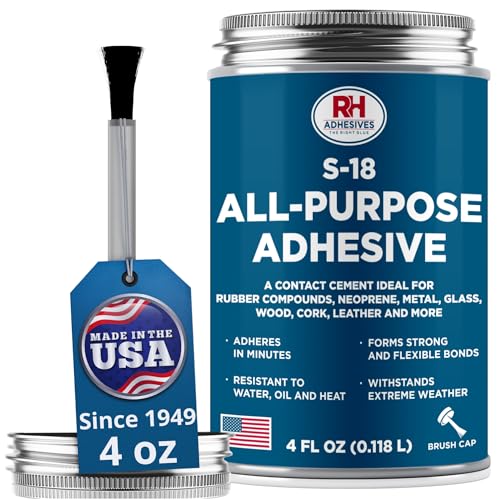
7. S-18 All-Purpose Adhesive, 4 oz. by RH Adhesives
The contact-cement specialist that bonds neoprene and rubber to metal and wood.
This is not your everyday epoxy or super glue — it is a neoprene-based contact adhesive made in America since 1949, designed to bond both porous and non-porous materials in a single application. You brush it onto both surfaces, let it dry until tacky (usually 10-15 minutes), then press the parts together for an instant permanent bond. It creates strong films with excellent peel strength and aging properties, plus it is water-resistant and heat-resistant, suitable for marine applications where a flexible seam is needed.
Where this fits the plastic-to-wood category is when you are bonding flexible plastics like SBR rubber or neoprene to wood — think gaskets, weather-stripping, foam padding on a wooden chair, or rubber feet to a wooden base. The bond remains flexible, so it absorbs vibration and movement without cracking. One buyer used it to glue black foam pipe insulation to the legs of a bed, reporting a strong hold with low smell. Another reviewer found it held up well for leather boot repairs, but another reported it failed in heat and rain for an outdoor neoprene car-protection use, so it is best kept for indoor or light-duty outdoor applications.
Flexible film specialist: Ideal for bonding sheet plastics and rubber to flat wood surfaces where a flexible, peel-resistant seam matters more than sheer shear strength. The 24-hour full cure is standard, but the bond-on-contact nature gives immediate handling strength.
Know before you buy: This is not a gap-filler — both surfaces must make full contact for the bond to work. The solvent smell is present but reviews describe it as lower than typical contact cements.
Choose this for: Laminating flexible plastic sheets, rubber, or foam to wooden panels, valances, or furniture. Great for craft projects, marine upholstery, and DIY gasket-making.
Avoid it if: You need to fill a gap, bond a rigid plastic bracket to wood, or make a repair that will face constant outdoor wet exposure.
Understanding the Specs
Full Cure Time
This is the number of hours an adhesive needs to reach its maximum design strength. It is not the same as “set time” or “handling time” — those are when the glue holds parts in place. For plastic-to-wood bonds, the full cure matters because the different expansion rates of the two materials can stress an uncured bond. The Super Glue XXL reaches full cure in 3 hours, while most epoxies and polyurethane glues need 24 hours. If you are clamping a joint and need it ready the same day, look for a short full-cure figure. If you have overnight to let it sit, epoxies offer superior strength and gap-filling ability in exchange for the longer wait.
Chemistry Type: Epoxy vs. Polyurethane vs. Cyanoacrylate vs. Contact Cement
The chemistry dictates everything about how the glue works. Epoxy (two-part resin and hardener) cures through a chemical reaction and is the strongest gap-filler. Polyurethane (water-activated) expands as it cures, making it ideal for porous wood but messy on smooth plastic. Cyanoacrylate (super glue) is activated by moisture in the air and bonds instantly to non-porous surfaces but is brittle. Contact cement (neoprene-based) forms a flexible film that bonds on contact, perfect for laminating sheet materials but useless for gap-filling. For plastic-to-wood, the choice depends on whether the plastic is rigid or flexible and whether the wood surface is porous or sealed.
FAQ
Will Gorilla Glue bond plastic to wood?
What is the strongest adhesive for plastic to wood?
How long does epoxy putty take to cure on plastic and wood?
Can super glue be used for plastic to wood?
What does “toughened” epoxy mean?
Is contact cement good for plastic to wood?
How should I prepare the plastic and wood before gluing?
Can I paint or stain over the cured epoxy putty?
Is there an adhesive that works underwater for plastic to wood?
Which adhesive dries fastest for a quick plastic to wood fix?
Final Thoughts: The Verdict
For the majority of shoppers, the adhesive for plastic to wood winner is the Starbond 8 oz. 5 Minute Epoxy Pro Kit because its toughened formula absorbs vibration between the two materials while delivering a strong, clear, gap-filling bond. If you need a waterproof bond for outdoor or submerged repairs, go with the Gorilla Epoxy Ultimate. And for fast, invisible fixes on tight-fitting joints, the Super Glue XXL Value Size gives you the speed and value — it cures in 3 hours and costs less per gram than tiny tubes.
How We Picked
We do not accept paid placement. Every pick is matched to a real buyer and a real use-case; we do not hands-on test units.
Sources & Methodology
Specifications: manufacturer listings and product documentation. Review insights: verified customer reviews, as of July 2026. Pricing: not shown on this page (it changes often); check the current price via the retailer link.
As an Amazon Associate, Gadgets Feed earns from qualifying purchases. This does not affect which products we feature.
Related Guides
Product prices and availability are accurate as of the date/time indicated and are subject to change. Any price and availability information displayed on Amazon at the time of purchase will apply to the purchase of this product. As an Amazon Associate I earn from qualifying purchases.
CERTAIN CONTENT THAT APPEARS ON THIS SITE COMES FROM AMAZON. THIS CONTENT IS PROVIDED "AS IS" AND IS SUBJECT TO CHANGE OR REMOVAL AT ANY TIME.
Amazon and the Amazon logo are trademarks of Amazon.com, Inc. or its affiliates.