
Our readers keep the lights on and my morning glass full of iced black tea. As an Amazon Associate, I earn from qualifying purchases.
Specs are compiled from manufacturer listings and verified buyer reviews and can change over time — please confirm the key details on the product page before buying.
Polyethylene foam is that slick, waxy material that seems to reject every glue you try — most adhesives just bead up and peel off. The fix is not a stronger general-purpose glue, but a specific bonding approach that primes the surface first. These three picks are the ones that actually crack the code.
I’m Min — the founder and writer behind Gadgets Feed. This guide is built by comparing the manufacturers’ published specifications and the patterns across verified customer reviews, so you get each pick’s real strengths and trade-offs instead of marketing spin.
Whether you are repairing an RC foam wing or piecing together a craft project, the right adhesive for polyethylene foam depends on how well it handles that non-stick surface under real use.
Our Picks at a Glance
How To Choose The Best Adhesive For Polyethylene Foam
Polyethylene foam is a closed-cell material (pores that do not connect) with a very low surface energy — that smooth, waxy feel is exactly what makes most glues slide right off. You are looking for an adhesive that either chemically primes the surface first or is formulated with a solvent that etches into the foam without melting it. Picking wrong means the bond peels cleanly after a day.
Surface Activation Matters Most
A two-part system — an activator or primer applied first, then a cyanoacrylate glue (a type of fast-drying superglue) — is the most reliable method for true polyethylene (PE). The activator changes the surface chemistry so the adhesive can actually grip. Single-application foam glues work well on EPO (expanded polyolefin) and EPP (expanded polypropylene) foams (common in RC models) but may not have the same bite on raw PE sheets. Check the product’s explicit compatibility list: if it says “polyethylene” or “PE” by name, you are safe.
Flexibility and Cure Time
Foam parts flex, bend, and vibrate, especially on RC aircraft or padded gear. A rigid glue that cures rock-hard can crack under that movement. You want an adhesive that stays somewhat flexible after the full 24-hour cure. Fast-setting formulas (seconds to minutes) are convenient for quick clamps, but a slower cure often gives a stronger final bond because the glue can soak into the foam’s pores.
Quick Comparison
| Model | Best For | Bond Type | Full Cure | Foam Compatibility | Amazon |
|---|---|---|---|---|---|
| Loctite Plastics Bonding System★ Best Overall | True PE / polypropylene bonding | Cyanoacrylate + activator | 24 hours | Polyethylene, polypropylene, PTFE | Amazon |
| Beacon Foam-Tac | RC aircraft & flexible repairs | Foam-safe contact adhesive | 24 hours | EPP, EPO, Depron, balsa, carbon fiber | Amazon |
| Ceoighe Foam Glue | Budget-friendly foam craft repair | Foam-safe liquid | 24 hours | EPP, EPO, EPS, balsa, carbon fiber | Amazon |
In‑Depth Reviews
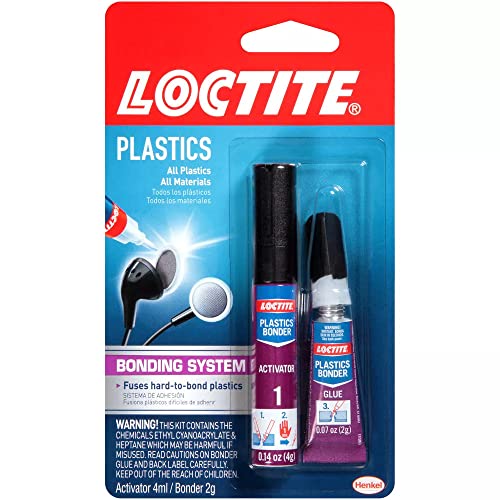
1. Loctite Plastics Bonding System (6-Pack)
Our pick — over 4★ from 4,000+ verified ratings; the strongest balance of quality and price.
The two-step system that turns impossible plastics into a solid hold — this is the one that actually names PE on the label, unlike most other glues.
This is the adhesive that specifically lists polyethylene and polypropylene (a similar tough plastic) as compatible materials, which is rare. The two-part formula works like this: you swipe the activator stick (a felt-tip marker) onto both surfaces, let it evaporate for a few seconds, then apply the cyanoacrylate superglue (a fast-drying glue). The activator primes the low-energy surface so the glue can chemically grip instead of beading up. Buyers report that “two years later, bond still strong; silicone rubber tore before glue let go” — that kind of durability tells you the bond outlasted the original material. The 0.14 oz. activator stick and 0.07 oz. glue tube per pack give you six full repair kits, and the glue dries clear and weatherproof (resistant to water, chemicals, and freezing temps), so number plates stay readable at night.
The catch is quality control on the activator: several buyers noted that the included glue tube arrived sealed shut or the activator had dried out before first use. You may want to have a standard tube of Loctite superglue on hand as backup, since the activator stick works fine with other cyanoacrylate glues. Compared to the foam-specific options below, the Loctite system is the only pick that handles true polyethylene rather than just foam variants like EPO or EPP — making it sharper for pure PE than the Beacon Foam-Tac.
Why It Owns PE
- Explicitly compatible with polyethylene and polypropylene — the only pick here that says so on the package
- One buyer confirmed the bond outlasted the silicone rubber itself after two years of use
- Weatherproof formula resists water, chemicals, and freezing temperatures for outdoor repairs
Watch Out For
- Some packs arrive with a dried-out activator or a glue tube that is sealed shut
- Not ideal for large-area coverage due to the small glue tube size
Reach for this if: you need a true bond on a known polyethylene or polypropylene surface, not just foam — and you are comfortable with a two-step application process.
Look elsewhere if: you want a single-step glue with a brush applicator for covering larger areas or thin foam sheets.
2. Beacon Foam-Tac (2 oz)
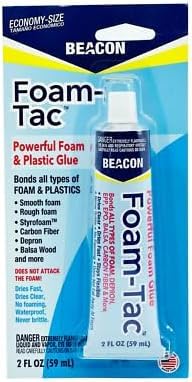
The foam builder’s go-to that cures flexible and resists sunlight — a top pick among RC pilots because it absorbs vibration without cracking.
Foam-Tac works like a contact cement: you apply it to both surfaces, let it tack up for a few minutes, then press together. You can reposition the parts during that window, which is a huge advantage over instant-set cyanoacrylates (like the Loctite system). The formula includes UV blockers (additives that shield the glue from sunlight damage), so the bond does not yellow or degrade when your foam plane sits in the sun. Owners mention a “strong, flexible bond for foam; easier cleanup than superglue.” One reviewer even saved a cracked Cambro cooler — the glue penetrated the cracks and stayed flexible enough to handle the natural flexing of the food box. It works on EPP (expanded polypropylene), EPO (expanded polyolefin), Depron foam (a dense polystyrene foam), balsa wood, carbon fiber, and even 3D printed parts. The improved formula also has a special adhesion promoter (a chemical that helps the glue stick) built in, so you do not need a separate activator step.
The trade-off is the texture: this glue is extremely thick and stringy, almost snot-like, and the bottle has no nozzle. Applying it cleanly takes practice, and customers note it can get goopy if you are not careful. Unlike the Loctite system above, Foam-Tac is not explicitly labeled for raw polyethylene — it is built for the expanded foams (EPP, EPO, Depron) common in RC models, so test it on a scrap piece of PE foam first if that is your main material.
Standout Strengths
- Flexible bond that absorbs vibration, perfect for RC planes and gear that flexes
- UV blockers prevent yellowing and degradation from sunlight exposure
- Reviewers point out it works on a cracked Cambro cooler — flexible enough for thick plastic parts
The Real Annoyance
- Very thick, sticky consistency; shoppers say no nozzle included and it gets stringy fast
- Not explicitly labeled for raw PE — best for foam variants like EPO, EPP, and Depron
Who it fits: RC aircraft builders and hobbyists who need a flexible, weather-resistant bond on EPP, EPO, or Depron foam, and prefer a repositionable contact-style glue.
A fair warning: if you need a glue that explicitly names polyethylene on the package, go with the Loctite system instead — this one does not.
3. Ceoighe Foam Glue (4 oz)
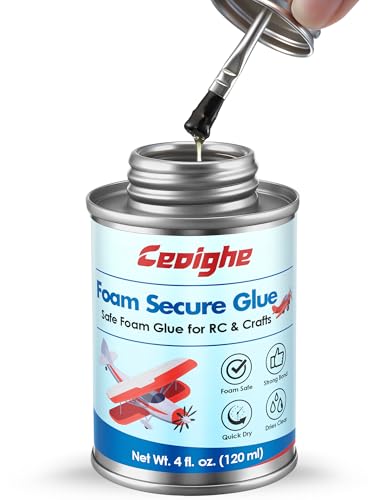
A generous 4-ounce bottle with an integrated brush cap that makes spreading glue on wings and crafts a clean job — it gives you the most glue per dollar.
Buyers report it “holds the epo foam very well dries quick super sticky was worth the value and the in bottle applicator made it easy to use.” The glue cures to a slightly flexible, dark yellow finish that is waterproof and UV-resistant, so outdoor repairs hold up. It sets in minutes and fully cures in 24 hours. Compatibility covers EPP (expanded polypropylene), EPO (expanded polyolefin), EPS (expanded polystyrene, like Styrofoam), balsa wood, and carbon fiber, making it a versatile pick for RC planes, crafts, and general foam assembly.
Two honest limits: this glue is not marketed for raw polyethylene foam, so treat it as a foam-safe adhesive rather than a dedicated PE bonder. And the color is a distinct dark yellow, not clear — that makes it visible on white foam repairs unless you are careful with application. Some buyers also mention the consistency could be thicker for vertical applications, but the brush cap helps control the flow.
Biggest Pros
- 4 oz bottle with brush cap for clean, precise application without staining your hands
- One buyer confirmed it “holds the epo foam very well” and dries “super sticky” and durable
- Waterproof and UV-resistant cure rated for RC planes and outdoor exposure
Honest Cons
- Dries dark yellow (not clear), so it shows on light-colored foam repairs
- Not explicitly labeled for raw polyethylene — best for EPP, EPO, and EPS foams
Take this if: you want the most glue per dollar for RC plane or craft repairs and value the brush applicator for neat work on foam wings.
skip it if: you need a clear-drying bond on a known polyethylene sheet — pick the Loctite system instead.
Understanding the Specs
Surface Activation (Primer vs No Primer)
Polyethylene has an extremely low surface energy — glue wants to ball up rather than spread. A two-part system (like the Loctite kit) uses a chemical activator that etches the surface at a molecular level so the cyanoacrylate (fast-drying superglue) can grip. A single-application foam-safe glue relies on solvents that soften the foam itself, which works on EPO (expanded polyolefin), EPP (expanded polypropylene), and EPS (expanded polystyrene) but may not bond to raw PE. If your project is true polyethylene sheet or bottle plastic, the activator route is more reliable.
Cure Time and Flexibility
All three picks here reach full strength in 24 hours, but the working window differs. Cyanoacrylate (superglue) sets in seconds with no repositioning — good for quick clamps, bad for mistakes. Contact-style adhesives like Foam-Tac let you slide parts into place for a few minutes before pressing. Flexibility matters because foam bends and vibrates; a rigid glue cracks under movement, while a flexible bond (Foam-Tac, Ceoighe) absorbs shock. For RC planes, that vibration resistance prevents the glue line from snapping on landing.
FAQ
Will regular superglue work on polyethylene foam?
Can I use these adhesives on EPO, EPP, and EPS foam?
How long do these adhesives take to fully cure?
Is the glue waterproof after it cures?
Can I use these adhesives on balsa wood or carbon fiber?
Why does the Ceoighe glue say “dark yellow” in the specs?
Will the activator in the Loctite kit dry out before I use it?
Can I use these glues on flexible foam parts that bend a lot?
Final Thoughts: The Verdict
For most people hunting for an adhesive for polyethylene foam, the winner is the Loctite Plastics Bonding System because it is the only pick that explicitly names polyethylene and uses a chemical activator to tame that non-stick surface. If you are repairing RC foam planes and want a flexible bond with UV protection, grab the Beacon Foam-Tac. And for budget-friendly craft repairs where the brush cap makes application easy, the Ceoighe 4 oz Foam Glue gives you the most glue for your money.
How We Picked
We do not accept paid placement. Every pick is matched to a real buyer and a real use-case; we do not hands-on test units.
Sources & Methodology
Specifications: manufacturer listings and product documentation. Review insights: verified customer reviews, as of July 2026. Pricing: not shown on this page (it changes often); check the current price via the retailer link.
As an Amazon Associate, Gadgets Feed earns from qualifying purchases. This does not affect which products we feature.