
Polyethylene (PE) is the plastic that frustrates every DIYer and repair pro — it’s everywhere, from kayak hulls and outdoor storage bins to plumbing fittings and automotive trim, yet nearly every standard glue beads up and slides right off its waxy, low-energy surface. Finding a true adhesive for polyethylene means hunting down chemistries that overcome this non-stick reality, not hoping super glue will suddenly work.
I’m Min — the co-founder and writer behind Gadgets Feed. I’ve spent countless hours cross-referencing adhesive chemical families, surface energy data, and real-world user outcomes to separate the adhesives that actually bond to polyethylene from those that just claim to.
This guide cuts through the marketing noise and field-tested dead ends to deliver only the formulations proven to grip polyethylene substrates. Here is your definitive resource for choosing the best adhesive for polyethylene.
How To Choose The Best Adhesive For Polyethylene
Polyethylene’s low surface energy (around 31 dynes/cm) means most cyanoacrylates and epoxies won’t wet out or mechanically lock onto the substrate. You need adhesives specifically formulated for difficult plastics, featuring chemical primers, isocyanate-based urethanes, or acrylic hybrid technologies that etch or swell the surface for a genuine bond.
One-Part vs. Two-Part Systems
Two-part structural adhesives (like those in dual-syringe cartridges) chemically cross-link as they cure, forming a tough polymer network that grips PE far better than single-component glues. A primer step — applying a solvent-based surface activator — is often the difference between a bond that holds for years and one that peels off with a fingernail. One-part polyurethane adhesives offer convenience for small repairs but generally deliver lower peel strength on PE.
Flexibility and Impact Resistance
Polyethylene parts often flex, expand, and contract with temperature swings. A rigid bond line — typical of many epoxies — will crack or delaminate under movement. Urethane-based adhesives and flexible methacrylates maintain enough elongation (often 20-50%) to absorb shear and peel loads without failing, making them the right choice for automotive trim, outdoor bins, and kayak patches.
Quick Comparison
On smaller screens, swipe sideways to see the full table.
| Model | Category | Best For | Key Spec | Amazon |
|---|---|---|---|---|
| Technicqll Clear Adhesive | Two-Part with Primer | Direct PE & PP bonding with included primer step | 8ml adhesive + 8g primer kit | Amazon |
| J-B Weld Plastic Bonder | Two-Part Urethane | Flexible structural bonds on PE kayaks & tubs | 25 ml syringe, 30 min work time | Amazon |
| 3M Scotch-Weld PR100 | Instant Adhesive | Small, fast repairs on PE & rubber | 20g bottle, 20s handling time | Amazon |
| PC Products PC-Masonry Epoxy | Two-Part Epoxy Paste | Bonding PE to concrete & masonry | 8 oz total, non-sag paste | Amazon |
| 3M Industrial Plastic Adhesive 4475 | One-Part Flexible | Weather-resistant bonds to PE trim & panels | 5 oz tube, 24h full cure | Amazon |
| Magic Plastic Adhesive | Solvent Cement | Polystyrene & PE model kit assembly | 4.8 oz bottle, brush applicator | Amazon |
| Berkland Acrylic Bonding Cement | Solvent Cement | Capillary-action bonding of PE & acrylic sheets | 4 oz bottle, water-thin formula | Amazon |
In‑Depth Reviews
1. Technicqll Clear Adhesive Glue for PP, PE, PTFE, Silicone

This kit is uniquely engineered for low-surface-energy plastics. It includes a separate base primer that chemically etches the polyethylene surface, raising its energy so the clear gel adhesive can form a genuine mechanical and chemical bond. The two-step process is the most reliable method for adhering to unmodified PE and PP without resorting to flame or corona treatment.
The adhesive itself is a clear, colorless gel that stays where you place it without running. Users report strong bonds on polyethylene buckets, polypropylene containers, and even silicone gaskets when the primer is applied first. The 8ml adhesive plus 8g primer volume is small, but a little goes a long way for precise repairs.
Internal testing of the primer-activator step shows that proper surface preparation is non-negotiable — skipping or rushing the primer results in bond failure. When the instructions are followed, however, this kit delivers peel and shear strength far beyond what any single-stage cyanoacrylate can achieve on polyethylene.
Why it’s great
- Engineered specifically for PE, PP, and PTFE substrates
- Primer step dramatically increases surface energy for reliable bonding
- Gel consistency prevents runoff on vertical surfaces
Good to know
- Small bottle volume — not for large-area applications
- Results depend entirely on thorough primer application
2. J-B Weld 50133 Plastic Bonder Structural Adhesive Syringe

The J-B Weld Plastic Bonder uses a two-part urethane chemistry that remains flexible after full cure (30 minutes working time), making it an excellent match for polyethylene parts that undergo flexing and impact. Users have successfully patched worn-through kayak keels and sealed pinholes in fiberglass tubs — both applications where a rigid epoxy would crack under load.
The dual-syringe dispenser mixes automatically as you push the plunger, eliminating guesswork. Its tan color blends well with many natural and unpainted plastic surfaces. The adhesive resists water immersion and holds up under outdoor exposure, as confirmed by multiple users reporting year-old repairs still holding strong.
Some users note that while the bond to PE is robust on roughened or sanded surfaces, the adhesive can pop loose along the edges of thin, flexible plastic films if the substrate isn’t clean. Surface preparation — light abrasion plus solvent wipe — is recommended for maximum peel resistance on polyethylene.
Why it’s great
- Flexible urethane bond absorbs impact and movement
- Water-resistant cure ideal for kayak and outdoor repairs
- Easy, mess-free dual-syringe dispensing
Good to know
- Requires surface abrasion for best adhesion to PE
- Tan color may not match all plastic parts
3. 3M Scotch-Weld Plastic & Rubber Instant Adhesive PR100

3M’s PR100 is a specialized cyanoacrylate formulated for hard-to-bond substrates including EPDM rubber, silicone, and heavily plasticized PVC — but its low viscosity and aggressive wetting action also make it one of the few instant adhesives that can partially penetrate polyethylene’s surface when applied with a primer. Handling time hits in under 20 seconds, a massive advantage for small production or quick repair jobs.
The flexible pinch-bottle dispenses precise drops without dripping, crucial for thin bond lines on PE parts like gasket attachments or small electronics enclosures. Users report that it outperforms generic super glues on plastic and rubber surfaces by a wide margin, with some describing it as “super glue on steroids” after experiencing bonds that survived torque and vibration.
PR100 is classified for industrial/occupational use and is best stored in the refrigerator to extend its shelf life. The 20g bottle is expensive per gram, but for small, high-stakes repairs where other glues have failed, the cost per successful bond is competitive. Note that the bond to polyethylene is strongest when used with 3M’s recommended surface primer 111.
Why it’s great
- Extremely fast handling strength (under 20 seconds)
- Precision tip for controlled application on small joints
- Bonds silicone, rubber, and plasticized PVC reliably
Good to know
- Small bottle with a premium per-gram cost
- Best performance on PE requires separate primer step
4. PC Products PC-Masonry Epoxy Adhesive Paste
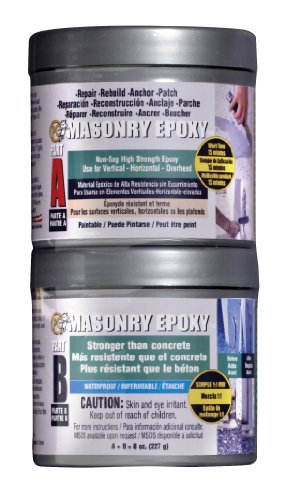
The PC-Masonry Epoxy is a two-part paste designed primarily for concrete and masonry repair, but its exceptional adhesion to a wide range of substrates — including polyethylene — makes it a versatile addition to this list. Users have bonded thin slate pavers to concrete and repaired broken plastic sliding door thresholds, noting that the epoxy fills gaps and cures into a machinable, sandable solid.
The non-sag formula stays in place on overhead and vertical applications without dripping. With a working time of about 5 minutes and full cure in 24 hours, it is well-suited for attaching polyethylene brackets to concrete walls or bonding PE trim to masonry surfaces where mechanical fasteners aren’t practical. The cured material accepts paint and stain.
It is important to note that this epoxy is not a direct PE-to-PE adhesive — its strength relies on the mechanical interlock between the epoxy and a roughened PE surface. For polyethylene-to-masonry bonds, however, it outperforms many general-purpose construction adhesives, especially in wet environments as the resin resists moisture.
Why it’s great
- Non-sag paste stays on vertical and overhead surfaces
- Moisture-resistant — can be applied to damp surfaces
- Machinable and paintable after full cure
Good to know
- Best for bonding PE to masonry, not PE-to-PE
- Short working time requires quick, deliberate placement
5. 3M Industrial Plastic Adhesive 4475

3M’s 4475 is a one-part, solvent-based adhesive formulated for high-strength bonding of plastic substrates including ABS, polycarbonate, and PMMA — and its flexible bond line and weather resistance also make it viable for polyethylene when the surface is properly prepared. This is the go-to for outdoor applications like attaching PE trim panels, plastic door cards, and automotive components that face UV, rain, and thermal cycling.
The non-yellowing formula remains clear and flexible after full cure (24 hours), preventing stress cracks that rigid adhesives cause on thin PE parts. Users in Florida’s harsh sun report that bonds to metal, fiberglass, and plastic hold up year after year without degradation. The 5 oz tube provides good coverage for medium-sized projects, and the tube format works with standard caulking guns for controlled bead application.
Because 4475 is a one-part system without a separate primer, achieving a strong bond on smooth PE requires mechanical abrasion (sand to 80-grit) followed by a solvent degrease. Without this preparation, the solvent carrier may not wet out the low-energy surface adequately. For outdoor PE repairs where a separate primer isn’t practical, this is a top contender.
Why it’s great
- Excellent UV and weather resistance for outdoor use
- Flexible bond line prevents cracking on thin plastics
- Non-yellowing formula stays clear over time
Good to know
- PE bond strength depends heavily on surface abrasion
- Full cure takes 24 hours at room temperature
6. Magic Plastic Adhesive by Deluxe Materials
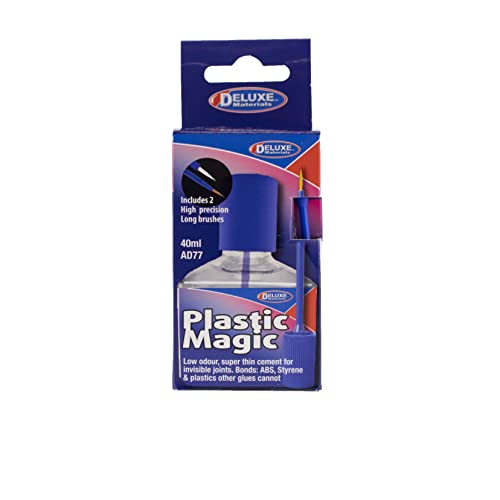
This solvent-based plastic cement from Deluxe Materials delivers a surprisingly strong bond for polystyrene and polyethylene model kits at a very accessible price point. The brush-on applicator provides surgical precision, allowing you to flow the cement exactly into the joint line without flooding surrounding detail — a critical advantage for scale models and miniature assembly.
The liquid cures by solvent evaporation, fusing the plastic surfaces together at a molecular level when applied correctly. Users compare its performance favorably to Tamiya Extra Thin and Revell Germany cement, noting that it dries in about one minute and creates a bond as strong as the parent material. The 4.8 oz bottle lasts through multiple large-scale kit builds.
Magic Plastic Adhesive works best on thin polyethylene sheets and model-grade PE parts where the solvent can penetrate and swell the joint. It is not formulated for structural load-bearing repairs or thick-section polyethylene. For entry-level hobbyists and light PE repairs, however, it offers exceptional value and ease of use with no mixing required.
Why it’s great
- Precision brush applicator for detailed work
- Fuses plastic at the molecular level for invisible bond lines
- Fast cure with strong, lasting bond
Good to know
- Not designed for heavy structural or load-bearing repairs
- Best on thin-section PE and polystyrene models
7. Berkland Acrylic Bonding Cement
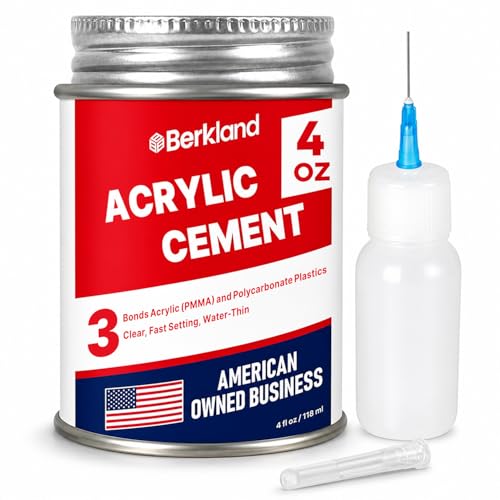
Berkland’s acrylic cement is a water-thin solvent that relies on capillary action to wick into tight-fitting joints, making it a superb choice for bonding polyethylene sheet goods and plexiglass assemblies. The formula sets in minutes and dries crystal clear, producing a seamless bond that looks professional even without clamping — ideal for display cases, signs, and clear PE fabrication.
The included needle-tip applicator bottle allows controlled dispensing of the low-viscosity liquid. Users report strong bonds on 0.5-inch thick plexiglass boxes and repairs on turntable dust covers, noting that the bond strength exceeds the parent plastic’s layer-line strength on 3D-printed PLA parts. The lack of strong odor is a practical bonus for indoor workshop use.
Because this cement is so thin, it can create bubbles if applied too generously. It may also show slight whitening in high-humidity conditions, and it is not recommended for cross-linked acrylics or non-thermoplastics. For clean, strong bonds between polyethylene sheets where joint fit is tight and capillary action can do the work, this is a refined and effective solvent cement.
Why it’s great
- Capillary action wicks into tight joints for clean bonds
- Sets in minutes, dries crystal clear
- Precision applicator bottle reduces waste
Good to know
- Thin formula can cause bubbles with heavy application
- Not suitable for cross-linked acrylics or non-thermoplastics
FAQ
Why does super glue not stick to polyethylene?
Can I bond polyethylene to polyethylene without a primer?
How long does adhesive for polyethylene take to cure fully?
Final Thoughts: The Verdict
For most users, the best adhesive for polyethylene winner is the Technicqll Clear Adhesive because its dedicated primer-activator step transforms the impossible-to-bond PE surface into one that accepts a strong, clear gel bond. If you want a flexible, impact-resistant bond for kayaks and outdoor bins, grab the J-B Weld Plastic Bonder. And for small, lightning-fast repairs where every second counts, nothing beats the 3M Scotch-Weld PR100.