
The wrong adhesive turns a pottery repair into a permanent eyesore. A cloudy, thick glue line or a bond that fails in the kiln can ruin hours of work. Selecting the correct formulation for your clay body and firing stage is the difference between an invisible fix and a discarded piece.
I’m Min — the co-founder and writer behind Gadgets Feed. I’ve spent hundreds of hours analyzing technical datasheets, cross-referencing cure chemistries, and parsing user reviews to identify which adhesives truly deliver on their promises for potters and ceramic artists.
After evaluating dozens of formulations across different price tiers, I have identified the specific products that solve real pottery repair problems. This guide will walk you through the proven options for finding the best adhesive for pottery, from bisque repair to high-temperature kiln fixes.
How To Choose The Best Adhesive For Pottery
Pottery adhesives are not interchangeable. A glue that works perfectly on a glazed mug will fail catastrophically on a bisque-fired planter, and a bisque fix will burn out if applied to a piece destined for high-fire cone 10. You need to match the adhesive chemistry to the firing stage and the material porosity.
Firing Stage Compatibility
The most critical factor is whether your piece has been fired. Greenware and bisque are highly porous and absorb liquid glues instantly, which can starve the bond line. For these stages, you need a product like AMACO Bisque Fix that is designed to be re-fired. For fully glazed or glass-smooth stoneware, a low-viscosity cyanoacrylate that wicks into micro-gaps without pooling on the surface is the better choice.
Service Temperature and Water Resistance
If your repaired piece must withstand boiling water, dishwasher cycles, or direct oven heat, the adhesive’s service temperature range matters more than its initial bond strength. Standard cyanoacrylate glues typically fail above 212°F, whereas sodium silicate and high-temperature epoxy pastes can endure 2000°F or more. Always confirm the upper temperature limit before committing to a repair on functional pottery.
Quick Comparison
On smaller screens, swipe sideways to see the full table.
| Model | Category | Best For | Key Spec | Amazon |
|---|---|---|---|---|
| AMACO Bisque Fix | Bisque Repair | Re-firing repairs up to Cone 10 | Fireable to Cone 10 / 2381°F | Amazon |
| Lynn Manufacturing Sodium Silicate | High-Temp Bond | Kiln furniture & ceramic fiber repairs | 2000°F service temperature | Amazon |
| STARBOND 5-Minute Epoxy Pro Kit | Flexible Epoxy | Vibration-prone repairs & mixed materials | 2600 lb shear strength | Amazon |
| LEENEXUS Super Glue for Ceramic | Cyanoacrylate | Invisible hairline crack repairs | 15-45 second set time | Amazon |
| PC Products PC-Woody Epoxy Paste | Epoxy Paste | Filling large chips or rot in pot bases | 24-hour full cure time | Amazon |
| Weldbond Multi-Surface Adhesive | PVA Craft Glue | Mosaic tile & non-functional decorative pottery | 20-minute full cure | Amazon |
| BEACON 527 Multi-Use Glue | General Purpose | Multi-material craft repairs | 1-hour dry time | Amazon |
In‑Depth Reviews
1. AMACO 28897B 4-Ounce Bisque Fix
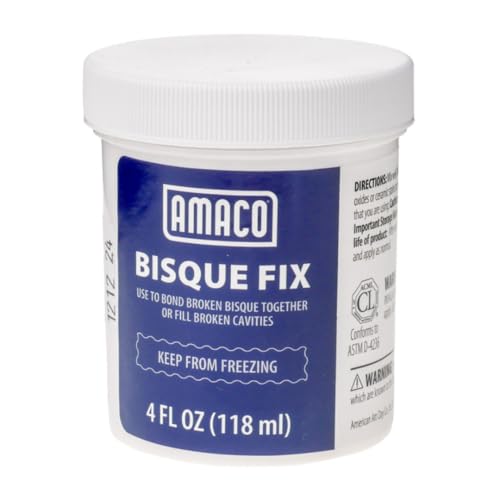
This white paste from AMACO is the single best formulation for repairing bisque-fired pottery that will be re-fired. It conforms to ASTM D-4236 and can withstand temperatures up to Cone 10 (2381°F), meaning your repair survives the glaze firing intact. The paste texture allows you to sculpt missing edges or fill cracks in greenware and bisque with reasonable control.
You can mix metal oxides or ceramic stains directly into the paste to match the color of your clay body, which helps the repair blend into the surrounding surface. Multiple users confirm it works for reattaching handles inside mugs before glazing, and the texture hides the repair line effectively when applied with a small brush or spatula.
The product ships in a 4-ounce jar that is prone to drying out if the lid is not sealed tightly between uses. Several buyers reported receiving jars that had already hardened in transit due to packaging damage. Keep a small spray bottle of water handy to rehydrate the paste as you work, and consider buying from a local supplier if you are concerned about shipping conditions.
Why it’s great
- Fireable to Cone 10, surviving the glaze kiln without degrading
- Accept stains and oxides for custom color matching
- Thick paste texture allows sculpting on broken edges
Good to know
- Jar dries out fast if not sealed properly between uses
- Fragile packaging in transit may lead to hardened product on arrival
2. Lynn Manufacturing High Temperature Adhesive

This sodium silicate solution, also called water glass or liquid glass, is the definitive choice for high-temperature ceramic repairs. It dries to a clear, glass-like solid that maintains its integrity up to 2000°F, making it ideal for repairing kiln furniture, ceramic fiber blankets, and pottery that will see direct flame or extreme heat conditions.
The 40% solution has a viscosity similar to maple syrup, which lets it flow into tight cracks and coat porous surfaces evenly. Users report painting it onto broken ceramic flame guards and firebrick, where it cures into a hard, clear bond that withstands repeated thermal cycling without flaking or crumbling. Cleanup requires only water if done before the adhesive fully cures.
The adhesive is caustic alkaline and requires careful handling with gloves and eye protection. Because it is water-soluble until fully sealed, any repaired piece that will contact moisture must be fired or sealed with a waterproof coating. The 4-ounce bottle is small but goes surprisingly far — a thin brush coating covers a large repair area.
Why it’s great
- Withstands extreme temperatures up to 2000°F without degradation
- Dries to a clear glass-like bond that is nearly invisible
- Water cleanup before cure eliminates solvent fumes
Good to know
- Caustic alkaline formula requires gloves and eye protection
- Water-soluble unless sealed, requiring a firing step for waterproofing
3. STARBOND 5 Minute Epoxy Pro Kit

This two-part epoxy from STARBOND is engineered to absorb vibration and stress without brittle cracking, which is critical for repairing pottery handles or any piece subject to mechanical load. The flexible toughened formula achieves handling strength in roughly five minutes and reaches a full cure in 24 hours, with a reported shear strength of 2600 pounds per square inch.
The 1:1 mix ratio by volume is straightforward, and the pro kit includes screw-cap bottles, reusable mixing trays, and tools that prevent the leaky syringe mess typical of other epoxy systems. Users have successfully used it to restore broken tombstone sections, seal basement cracks, and reattach ceramic fragments where some flex is needed to prevent the bond from shattering under use.
Because this is a paste, it does not wick into hairline cracks as effectively as a low-viscosity cyanoacrylate. For very fine fissures in glazed pottery, you would need to force the epoxy into the gap with a toothpick or choose a thinner adhesive. The cure time gives you about five minutes of positioning flexibility, so you have enough time to align broken pieces accurately.
Why it’s great
- Flexible formula resists cracking under vibration and thermal cycling
- Straightforward 1:1 mixing with minimal mess
- Pro kit includes all tools needed for application
Good to know
- Paste consistency does not wick into hairline cracks effectively
- Five-minute window requires pre-alignment of parts before mixing
4. LEENEXUS Super Glue for Ceramic
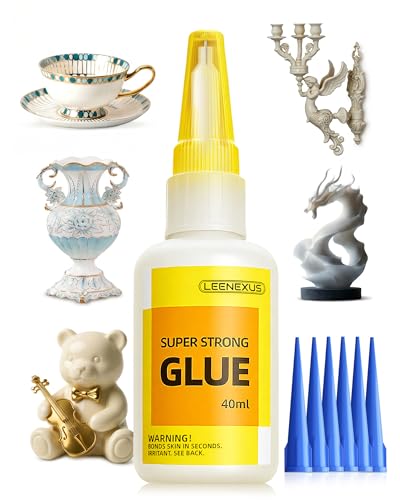
This low-viscosity cyanoacrylate is engineered specifically for invisible ceramic repairs. Its water-thin liquid wicks into hairline cracks by capillary action, creating a micron-thin bond layer that cures crystal clear — the repair virtually disappears. This makes it the top choice for repairing beloved china, decorative vases, or any piece where aesthetics matter most.
The triple-protection cap system includes a built-in cleaning needle, a dual-threaded cap that prevents cross-threading, and an air-tight moisture-proof seal that dramatically extends the glue’s shelf life compared to standard super glues. Users report successful repairs on ceramic mugs, shoe heels, and even tire sidewall punctures, with the bond holding strong for months after application.
The set time of 15-45 seconds is very fast, leaving almost no room for repositioning. Apply a single small drop — using too much glue actually delays bonding and can cause white residue. The 40ml bottle comes with six precision tips for controlled application, but the glue works best when applied to clean, dry surfaces in a well-ventilated area.
Why it’s great
- Ultra-low viscosity wicks into microscopic cracks for invisible repairs
- Cures crystal clear with no cloudy residue
- Anti-clog cap system significantly extends usable life
Good to know
- Extremely fast set time leaves no room for alignment adjustment
- Using too much glue causes whitening and weakens the bond
5. PC Products PC-Woody Epoxy Paste Kit
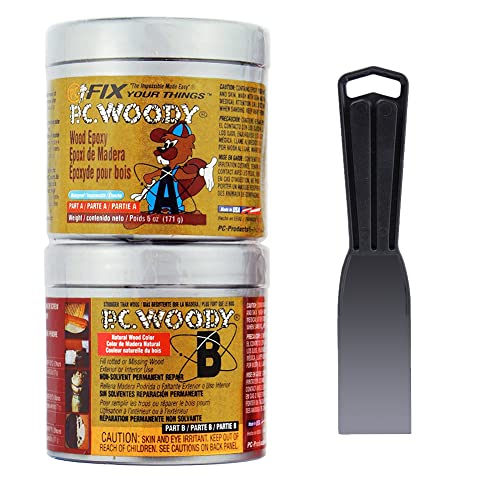
Although labeled as a wood repair epoxy, this two-part paste from PC Products works exceptionally well for filling large chips, cracks, and missing chunks in ceramic pot bases and flower pot rims. The high-tack formula helps reduce drips and sags when applied to vertical surfaces, and it dries hard enough to be sanded and painted to match the surrounding clay body.
The epoxy is resistant to dry rot, UV light, fresh water, and salt water, with a service temperature range of -20°F to 200°F. This makes it suitable for outdoor pottery that will sit on a patio or in a garden. Users have successfully used it to repair rotted window sills and termite damage, which speaks to its durability in demanding conditions.
Mixing the two parts in equal volumes is straightforward, but the paste is extremely sticky and will adhere to latex gloves, fingers, and spatulas with frustrating tenacity. Use a dedicated mixing tool on a flat surface, and do not attempt small batches in teaspoon-size increments because off-ratio mixing becomes highly likely. Sanding is almost always required to achieve a smooth final surface.
Why it’s great
- High tack formula prevents drips and sags on vertical repairs
- Sands and paints well for a smooth, color-matched finish
- Withstands outdoor exposure including UV and water
Good to know
- Extremely sticky and difficult to smooth cleanly
- Requires sanding to achieve a flat surface
- Small batch mixing is prone to off-ratio errors
6. Weldbond Multi-Surface Adhesive
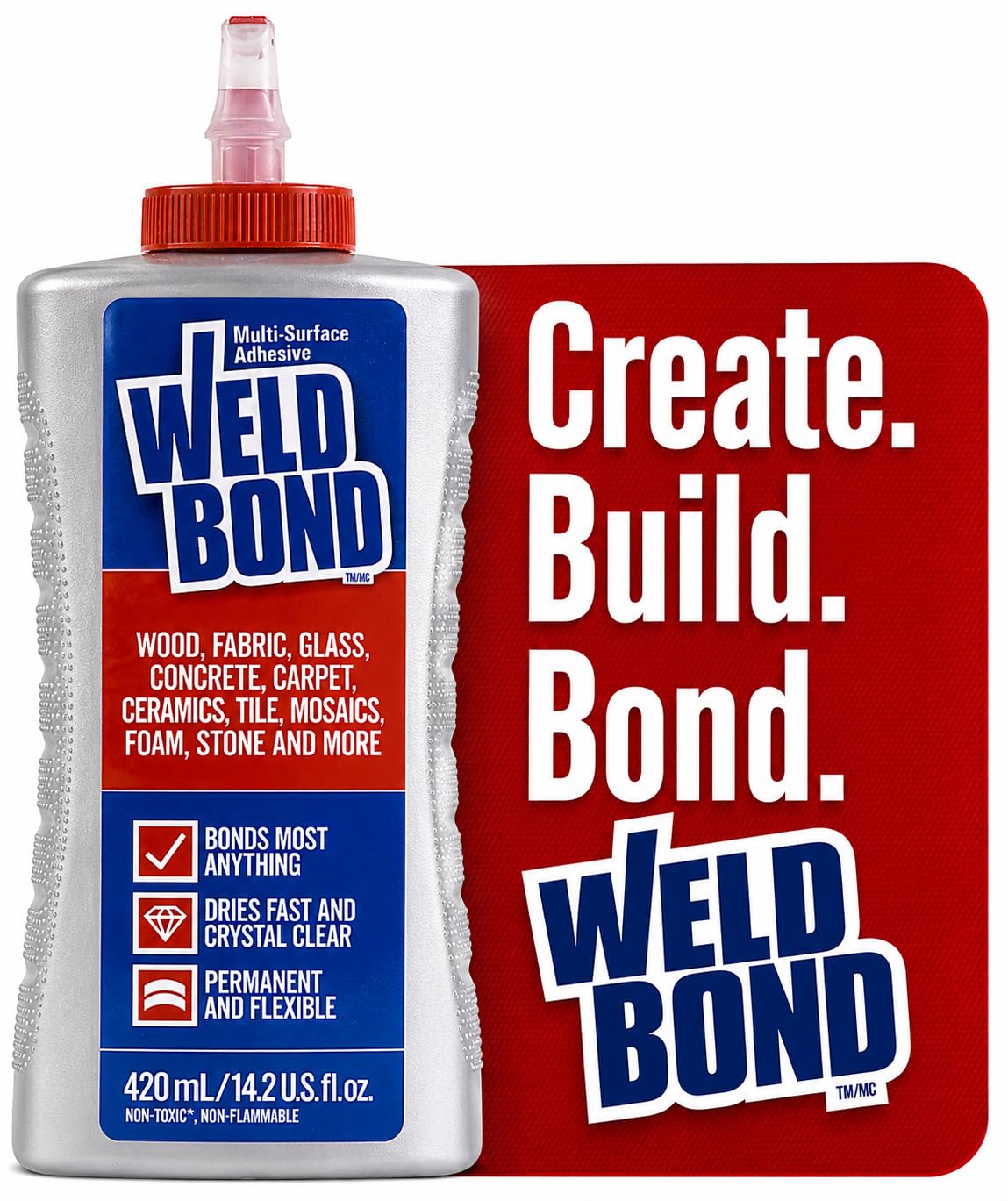
Weldbond is a PVA-based adhesive that dries crystal clear and creates a permanent, flexible bond on ceramic, glass, tile, and stone. It is particularly effective in mosaic applications where you need to secure ceramic tiles to a backing material without the strong fumes of solvent-based adhesives. The glue grabs quickly, holding pieces in place without sliding.
The full cure time is remarkably short at just 20 minutes, which allows you to continue working on a mosaic panel without extended waiting periods. Users who switched from E6000 report that Weldbond eliminates the strong chemical smell and messy tube cracking associated with that product, while providing comparable holding strength on ceramic and glass surfaces.
This is not a high-temperature adhesive and will degrade if the repaired piece is fired in a kiln or exposed to direct heat. It is best suited for decorative pottery, mosaic wall art, and non-functional ceramic repairs that will remain at room temperature. The 14.2-ounce bottle is economical for larger projects but may be more than needed for a single small repair.
Why it’s great
- Odorless and low-VOC formula suitable for indoor craft work
- Fast 20-minute cure allows rapid project progression
- Dries crystal clear with strong grab on ceramic and tile
Good to know
- Not suitable for kiln firing or high-temperature exposure
- Bottle may be large for small single-repair jobs
7. BEACON 527 Multi-Use Glue
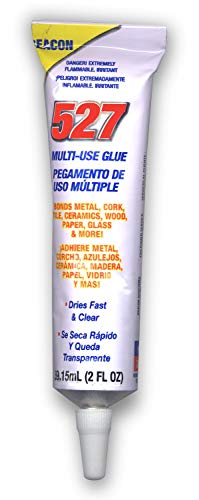
BEACON 527 is a versatile, fast-drying adhesive that bonds ceramics, china, metal, shells, and tile with a clear, waterproof finish. It dries to the touch in about one hour and fully cures within 24 hours, striking a useful balance between speed and working time. The formula is UV-resistant and shock-resistant, making it suitable for repairs on items that will be handled frequently.
This two-pack provides good value for general household ceramic repairs. Users consistently describe it as a reliable go-to glue for repairing chipped mugs, broken figurines, and craft projects. It applies cleanly with a thin layer to one surface, and excess can be cleaned up with toluene while still wet.
While 527 performs well on glazed ceramics and glass, it is not designed for porous bisque or greenware and will not survive a kiln firing. The bond strength is adequate for decorative and light-use functional repairs, but heavy loads or repeated dishwasher cycles may eventually compromise the joint. Consider it a solid entry-level option that handles 80% of typical pottery repair scenarios.
Why it’s great
- Dries crystal clear with a waterproof, UV-resistant bond
- Versatile across multiple materials including ceramic and glass
- Two-pack offers excellent value for general repairs
Good to know
- Not suitable for bisque, greenware, or kiln firing
- May not withstand heavy loads or repeated dishwasher exposure
FAQ
Can I put glued pottery back in the kiln for a second firing?
Why does my super glue turn white when I repair ceramic mugs?
What is the difference between bisque fix and epoxy for pottery?
Final Thoughts: The Verdict
For most users, the best adhesive for pottery winner is the AMACO Bisque Fix because it is the only entry-level product designed to survive kiln firing while allowing color matching with ceramic stains. If you need a high-temperature bond for kiln furniture or flame-exposed repairs, go with the Lynn Manufacturing Sodium Silicate. And for invisible repairs on glazed decorative pottery where aesthetics are paramount, nothing beats the LEENEXUS Super Glue for Ceramic.