
Our readers keep the lights on and my morning glass full of iced black tea. As an Amazon Associate, I earn from qualifying purchases.
Specs are compiled from manufacturer listings and verified buyer reviews and can change over time — please confirm the key details on the product page before buying.
That tricky spot where the top stair meets the landing is the one that gets scuffed, tripped over, and stained first. You want something that grabs on tight, stays flat, and doesn’t peel up after a month of foot traffic. The challenge is finding a self-adhesive strip that actually lives up to its sticky promise across different materials like wood, tile, or concrete.
I’m Min — the founder and writer behind Gadgets Feed. This guide is built by comparing the manufacturers’ published specifications and the patterns across verified customer reviews, so you get each pick’s real strengths and trade-offs instead of marketing spin.
The three options below cover budget-friendly L-shaped guards, premium rubber nosing, and tested real-world buyer experiences. This is the working list for adhesive for stair nose that cuts through the inconsistency reported by people who actually installed them.
Quick Picks
- Hamminy Stair Edge Trim Self Adhesive Vinyl Stair Nosing Molding Trim Non-Slip Rubber Nose Protector — Top Performer
- Pionasuicg Rubber Stair Edging Self Adhesive Staircase Step Edge Protector Vinyl Stair Nose — Best Value
- LeongLzt L-Shaped Stair Edge Protector Vinyl Stair Edging Self-Adhesive Rubber Stair Nosing — Edge Protector
How To Choose The Best Adhesive For Stair Nose
Most stair nose strips rely on a pressure-sensitive adhesive (PSA) backing — you peel the paper off, stick it on, and press down firmly. But real-world grip depends on two things you can’t see on the package: the adhesive formula itself and the surface you’re sticking it to. Concrete, tile, wood, and painted metal each need slightly different tack levels. The three specs that separate a one-year fix from a three-day failure are the material thickness, the profile shape (L-shaped wraps the edge, rectangular sits on top), and the groove pattern on the surface that provides slip resistance.
The L-Shaped Advantage for Edge Coverage
An L-shaped profile wraps around the front lip of the stair. That means it protects both the walking surface (the tread) and the vertical face (the riser) at the same time. The extra surface area means the adhesive works on two planes instead of one, which helps resist the prying action of a shoe toe catching the nosing. Rectangular strips sit flat on the tread only, so they rely entirely on the tape’s bond to hold against side-to-side kick force.
Groove Depth and Slip Resistance
The sawtooth or groove pattern cut into the top surface is what keeps feet from sliding when the strip gets wet. Thicker grooves — around the 3-millimeter range — provide more bite than shallow embossing. If the strip is going on an outdoor step or near a door that gets rain, look for a raised texture rather than a smooth vinyl surface.
Commercial-Grade vs Standard Adhesive
Some strips are rated “Commercial” grade, which signals a stronger adhesive intended for light commercial traffic or heavier household use. A “Standard” rating works fine for low-traffic bedrooms or laundry rooms. One consistent complaint across multiple brands is that glue quality can vary between production rolls — a roll that works perfectly may be followed by one with air bubbles in the tape that reduces stickiness.
Quick Comparison
| Model | Best For | Profile Shape | Material | Thickness | Amazon |
|---|---|---|---|---|---|
| Stair Edge Trim (Hamminy) | Premium hold on tile/wood stairs | Rectangular | Rubber | Not stated | $24.99Amazon |
| Rubber Stair Edging (Pionasuicg) | Budget 10-ft run with strong initial stick | Rectangular | PVC | Not stated | $23.99Amazon |
| LeongLzt L-Shaped Edge Protector | Edge-wrapping safety on concrete/metal | L-shaped | PVC | 3 mm | $15.99Amazon |
In-Depth Reviews
1. Hamminy Stair Edge Trim Self Adhesive Vinyl Stair Nosing Molding Trim Non-Slip Rubber Nose Protector
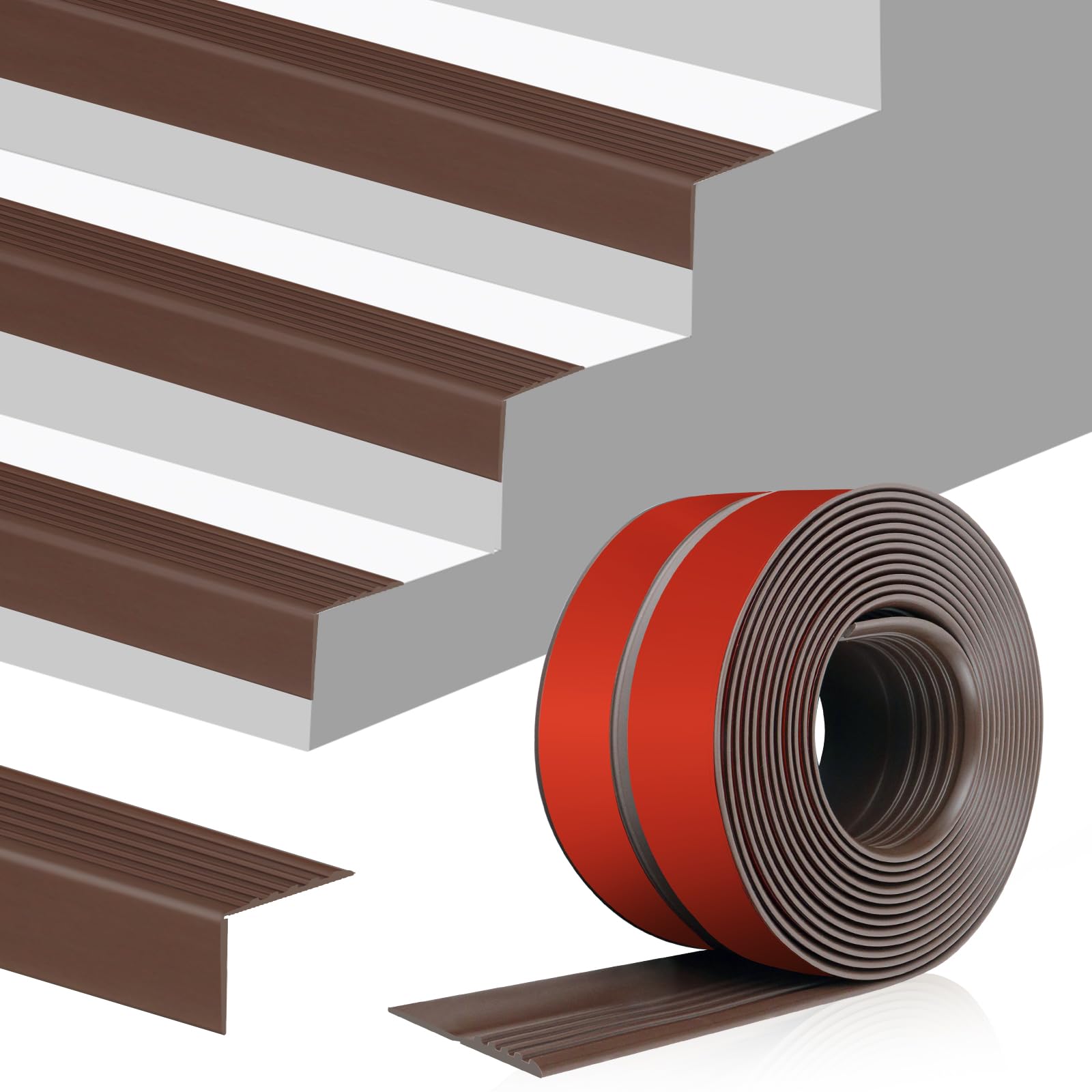
This rubber strip gives you the best grip and flexibility for tricky surfaces like tile and marble, with a slip-resistant groove pattern.
This strip is made from rubber rather than basic PVC (polyvinyl chloride, a common plastic). That makes it more flexible, so it conforms to slight unevenness in the step surface. The grooved non-slip top helps feet find traction — buyers report it instantly makes stairs feel safer for elderly individuals and children, and one customer called it “awesome in my camper” for a quick RV step upgrade. At 10 feet long and 4 inches wide, it covers a standard residential stair run in one piece. The adhesive is described as extremely sticky right out of the package.
One experienced buyer noted the roll arrives curled from shipping and recommends warming it in the sun for a couple of hours to let it flatten before sticking — they pressed it onto concrete with water jugs as weights, and it held through daily foot traffic for months. Compared to the LeongLzt L-shaped guard below, this strip sits flat on the tread only (rectangular profile) rather than wrapping the edge. That is a trade-off if you specifically need the front lip protected. A reviewer also flagged that the first roll was perfect but the second roll had air bubbles in the tape that reduced adhesion — a quality inconsistency worth watching.
For a stair nose that needs to resist slipping and stay put in a high-traffic area like a school, hospital, or busy home entry, this rubber option brings the most durable feel and the thickest grip texture. It sits at the premium end of the spectrum.
What Works
- Rubber material feels more durable than PVC, resists wear and splitting
- Adhesive is very sticky — one reviewer noted repositioning was hard once placed
- Grooved surface provides noticeable slip resistance for wet or worn steps
The Catch
- Rectangular profile does not wrap the stair lip like an L-shape
- Adhesive consistency varies between production batches
Reach for this if: you want a flexible rubber strip with proven hold on tricky surfaces like tile and marble, and you are willing to warm it up flat before installation for the best bond.
Look elsewhere if: you need edge-lip coverage to protect the front nose of the step — the L-shaped LeongLzt below is a better fit for that job.
2. Pionasuicg Rubber Stair Edging Self Adhesive Staircase Step Edge Protector Vinyl Stair Nose
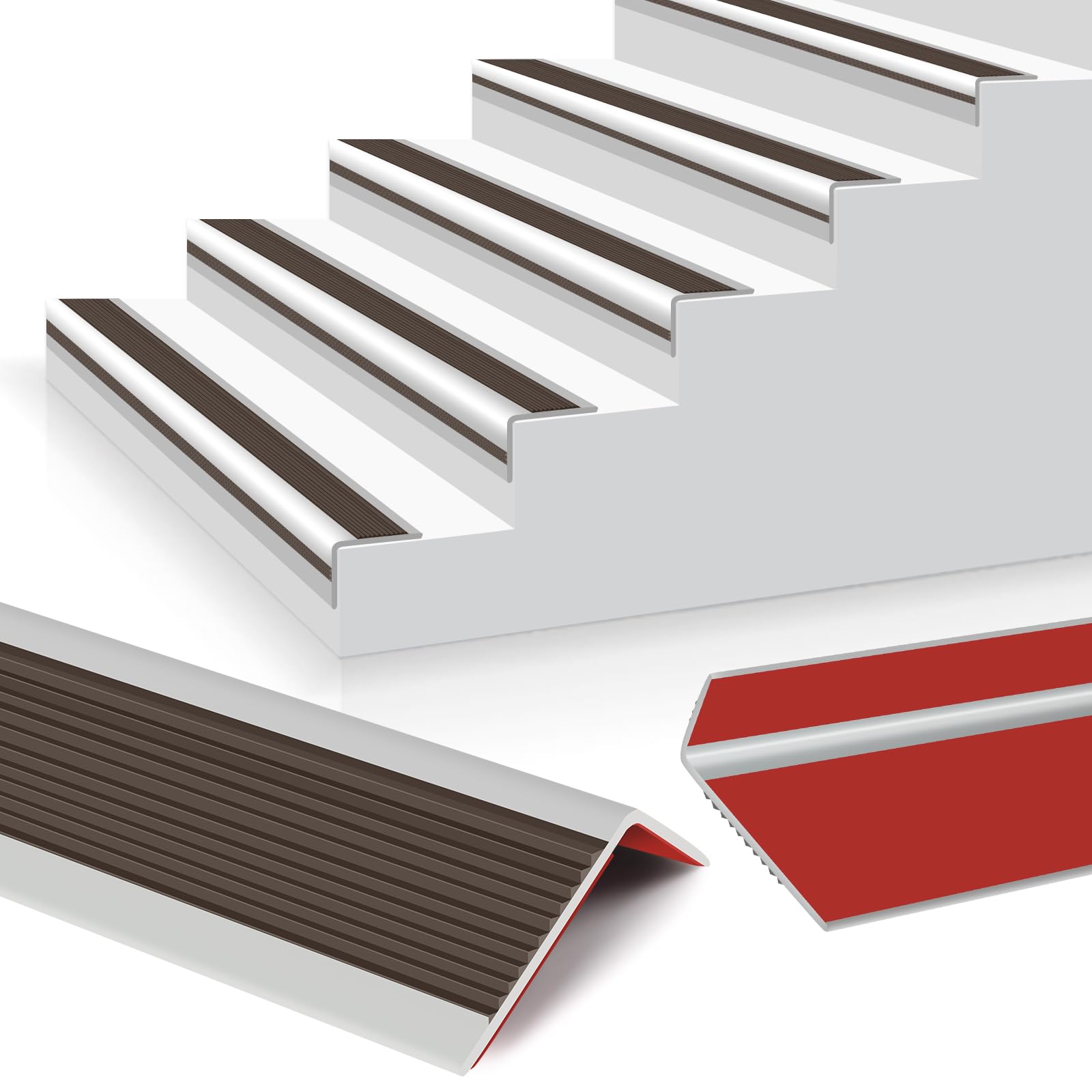
This budget strip gives you strong initial grip for 10 feet of coverage at the lowest price, but PVC (polyvinyl chloride) may split under daily use.
This strip from Pionasuicg is the entry-level option in the lineup. It is priced for a quick fix like edging a raised laminate floor around a door threshold. Owners mention the adhesive is “super strong” and after several weeks it had not budged, with one reviewer calling it “perfect” for a transition from floor to stair. The PVC material is waterproof and easy to clean — just wipe with a cloth. The rectangular shape sits flat on the tread surface.
However, the longevity concern is real. One buyer mentioned that the strip started splitting on a single step only a few months after installation, even on a low-traffic interior step in a laundry room. That splitting pattern is a known weak point for PVC stair noses under repeated foot pressure, and it is noticeably absent from the rubber-based Hamminy pick above. Another buyer noted theirs stayed stuck after cleaning with alcohol, but still lifted after a while — so surface prep is critical but not always enough for this grade of adhesive. Unlike the Hamminy strip, this one carries a “Standard” grade rating rather than Commercial, which suggests a lighter-duty adhesive formulation.
If you need a quick, inexpensive solution for a low-traffic step or a temporary floor transition and you are comfortable replacing it down the road, this strip gives you a clean look and easy install for a low upfront cost. It is the most budget-friendly option here.
Honest trade-off: the first-week hold is great, customers note, but the PVC material is prone to splitting under repeated foot pressure within a few months — fine for a spare bedroom or threshold cap, risky for a main staircase.
Grab it if: you want a 10-foot run of adhesive nosing at the lowest price point and the step sees light foot traffic (a guest room or laundry area).
skip it if: the stair is used daily by a family — the splitting reports suggest you will be replacing it before the year is out.
3. LeongLzt L-Shaped Stair Edge Protector Vinyl Stair Edging Self-Adhesive Rubber Stair Nosing
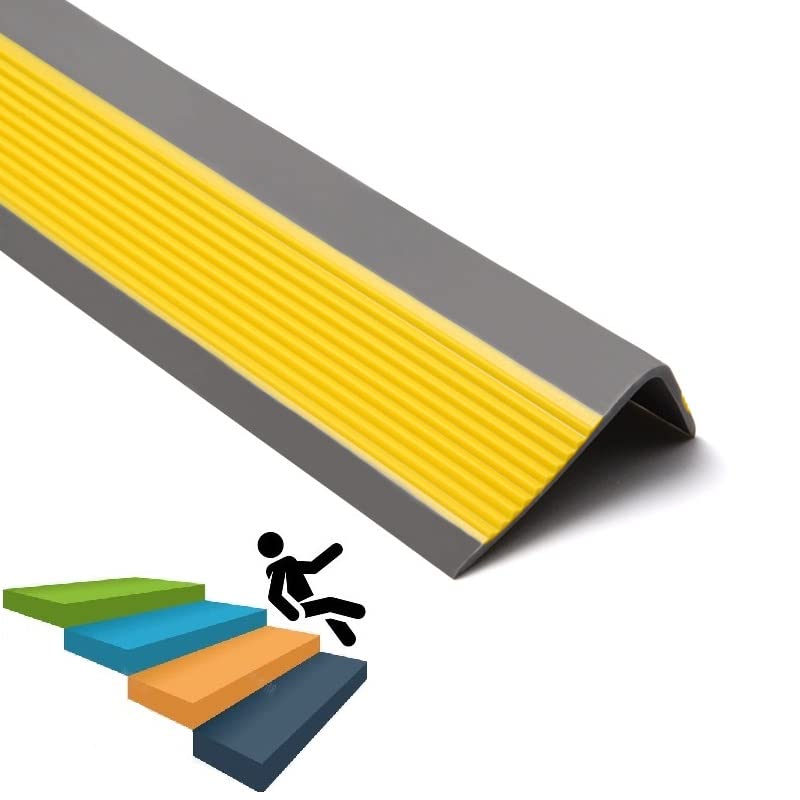
The L-shaped profile wraps the stair lip for edge-to-edge safety, with a 3 mm thick sawtooth surface that provides clear traction feedback.
This is the only pick in the group with an L-shaped profile. That means it covers both the top tread (where you step) and the front vertical edge of the step. That matters if you are worried about a shoe toe catching the front lip, or if you want extra protection against scuffing the painted edge of a wooden step. The material is PVC rated Commercial grade, and the surface has “thickened sawtooth grooves” that boost friction — the maker says it is non-fading, waterproof, and flame resistant for all weather conditions, including outdoor use.
The dimensions are 50mm by 25mm by 3mm thick, which is the only stated thickness among the three products — a tangible spec that tells you exactly how much cushion and grip you are getting. The adhesive is described as ultra-strong and claims to stick to wood, tile, concrete, and metal without extra glue. One limitation compared to the Hamminy pick above is that the LeongLzt strip is only 30 inches (0.76 meters) long per piece — you will need multiple strips for a full staircase, whereas the Hamminy and Pionasuicg strips each cover 10 feet in a single roll. The color options are limited, so check the listing for available shades before ordering.
For a single step that needs full edge-wrapping protection — like the top step of a concrete porch or a tile step where the front lip is exposed — this L-shaped guard gives you the most complete coverage and the thickest 3 mm groove pattern of the three picks.
Edge Advantage
- L-shape wraps the front stair lip for safety against toe catches and scuffs
- 3 mm thickness is the only stated spec — gives clear cushion feel
- Commercial grade rating for slightly heavier-duty adhesive
Length Limitation
- Only 30 inches per piece — requires multiple strips for a full staircase
- Limited color selection; some buyers may not find their match
Best for: a single exposed step (like a porch or entry) where you want the front edge covered and need the thickest 3mm groove for wet grip.
Not for: a long staircase run where you prefer a single continuous 10-foot strip — the rectangular Hamminy or Pionasuicg options cover more length per piece.
Understanding the Key Specs
Profile Shape (L-Shaped vs Rectangular)
This is the single most important visual and functional difference between stair nose adhesives. An L-shaped profile wraps around the front lip of the step, protecting both the tread (where you step) and the riser (the vertical face). That extra surface area helps the strip resist peeling from foot traffic, and it also covers the sharp or painted edge of the stair that gets scuffed first. A rectangular profile sits flat on the tread only — it is simpler to install but offers no edge coverage. If your stair has a raw or chipped front lip, the L-shape is the one to choose.
Adhesive Grade (Standard vs Commercial)
Some strips carry a “Commercial” grade rating, which signals a stronger adhesive intended for light commercial traffic or heavier residential use. “Standard” grade is fine for low-traffic steps like a spare bedroom or a laundry room. The real-world catch is that customer reviews across multiple brands report that adhesive quality can vary from roll to roll within the same product line — one batch sticks perfectly, the next has air bubbles in the tape that weaken the bond. When possible, test the strip on a small section first before committing the whole roll.
Frequently Asked Questions
Will adhesive stair nosing stick to concrete stairs?
How long does self-adhesive stair nosing typically last?
Can I use adhesive stair nosing on tile stairs?
What is the difference between L-shaped and rectangular stair nosing?
How wide should stair nose edging be?
Will the adhesive damage my stair finish when removed?
Can I cut self-adhesive stair nosing to fit uneven steps?
How do I get a rolled-up stair nosing to lay flat before installation?
Which Adhesive Stair Nosing You Should Buy
For most buyers, the adhesive for stair nose winner is the Hamminy Stair Edge Trim because its rubber construction gives the best combination of grip, flexibility, and long-term hold based on buyer feedback. If you want the edge-wrapping coverage that protects the front lip of a single exposed step, the LeongLzt L-Shaped Edge Protector is the right call for that 3 mm thick groove pattern. And for a fast, low-cost fix on a low-traffic step where budget matters most, the Pionasuicg Rubber Stair Edging delivers a 10-foot length and easy one-person install at the lowest price.
How We Picked
We do not accept paid placement. Every pick is matched to a real buyer and a real use-case; we do not hands-on test units.
Sources & Methodology
Specifications: manufacturer listings and product documentation. Review insights: verified customer reviews, as of July 2026. Pricing: not shown on this page (it changes often); check the current price via the retailer link.
As an Amazon Associate, Gadgets Feed earns from qualifying purchases. This does not affect which products we feature.
Related Guides
Product prices and availability are accurate as of the date/time indicated and are subject to change. Any price and availability information displayed on Amazon at the time of purchase will apply to the purchase of this product. As an Amazon Associate I earn from qualifying purchases.
CERTAIN CONTENT THAT APPEARS ON THIS SITE COMES FROM AMAZON. THIS CONTENT IS PROVIDED "AS IS" AND IS SUBJECT TO CHANGE OR REMOVAL AT ANY TIME.
Amazon and the Amazon logo are trademarks of Amazon.com, Inc. or its affiliates.