
Choosing the right adhesive for a tile backsplash is the single most consequential decision in the entire project. A weak bond means tiles sag overnight, gaps appear at the grout line, and within weeks you are staring at a repair job that costs more than doing it right the first time. The wrong formulation — a mastic that never fully cures behind glass tile, or a standard thin-set that lacks flexibility — turns a weekend upgrade into a recurring headache. This guide isolates the seven adhesives that actually deliver a lasting bond specifically for backsplash conditions, from steam-prone kitchen walls to the constant humidity behind a bathroom vanity.
I’m Min — the co-founder and writer behind Gadgets Feed. I have spent hundreds of hours analyzing technical datasheets, customer durability reports, and formulation specs across tile adhesives, mastics, epoxy putties, and peel-and-stick mat systems so you know exactly which product your tileset demands.
After scrutinizing pull-strength data, open-time windows, and real-world installation feedback across multiple adhesive types, I have identified the best adhesive for tile backsplash installations that balances workability, bond strength, and mess-free application for both ceramic and glass tile.
How To Choose The Best Adhesive For Tile Backsplash
Backsplash tile sits on a vertical plane, often over drywall that has been painted or primed. The adhesive must resist gravity sag, handle the thermal expansion of a cooking range wall, and remain stable under occasional steam without re-emulsifying. Three key factors separate a 24-hour success from a three-month failure.
Open Time vs. Vertical Slip
Open time is the minutes after application during which the adhesive remains tacky enough to adjust a tile. Most mastics give 15 to 30 minutes of workable open time. For a backsplash, you need at least 20 minutes to set a full row. If the adhesive skins over too fast, you will be tempted to push tiles into a drying crust, which reduces contact area by as much as 40% and guarantees future pop-offs.
Cure Chemistry: Mastic, Thin-Set, or Mat
Premixed mastic is the most forgiving for ceramic and porcelain backsplash tile because it grabs immediately and doesn’t require mixing. But mastic re-emulsifies in constant standing water — it is a no-go for shower surrounds. Thin-set (powdered Portland cement) is waterproof but requires exact water ratio and a shorter pot life. Peel-and-stick mats offer zero-cleanup installation for wall tile up to 1 square foot, but the wall must be scrupulously clean and free of texture for the pressure-sensitive adhesive to lock.
Container Integrity
An overlooked failure mode: adhesive pails with weak snap-on lids that pop open in shipping or during storage. If dry air hits the surface layer, the mastic forms a skin you must dig out and discard. Several customer reviews across the products below cite lid damage as the reason a perfectly good adhesive arrived unusable. When choosing, check whether the container uses a screw-top or a reinforced latching lid if you plan to store leftovers for a future project.
Quick Comparison
On smaller screens, swipe sideways to see the full table.
| Model | Category | Best For | Key Spec | Amazon |
|---|---|---|---|---|
| MusselBound Adhesive Tile Mat | Peel-and-Stick Mat | Zero-mess DIY backsplash | 15 sq ft coverage per roll | Amazon |
| Coconix Tile & Stone Repair Kit | Epoxy Putty | Repairing chips and cracks | 10 color compounds included | Amazon |
| HIMG Glue Adhesive for Stone | 2-Part Acrylic | Bonding granite/marble edges | Cures hard in 5 minutes | Amazon |
| Henry 314 Premixed Mastic | Premixed Mastic | Small ceramic tile patch jobs | Quart size, fast-dry formula | Amazon |
| Custom Bldg Products TAGWQT | Premixed Grout/Adhesive | Touch-ups over existing grout | Bright white, dries in 30 min | Amazon |
| Henry W.W. 12097 #430 | Liquid Mastic | Wood subfloor tile bonding | 1 QT pail, beige color | Amazon |
| Mosaic Mercantile ADH-8 | Water-Based Mastic | Mosaic and glass tile adhesion | Dries clear, 8 oz bottle | Amazon |
In‑Depth Reviews
1. MusselBound Adhesive Tile Mat with Spacers
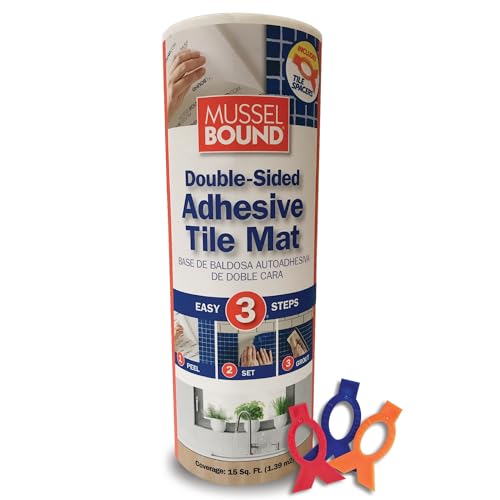
The MusselBound mat replaces the messy mortar bucket entirely. Each roll covers 15 square feet at 12 inches wide and 15 feet long, with integrated tile spacers (1/6″, 1/32″, 1/8″) that eliminate the fiddly cross-spacer dance. The double-sided adhesive grabs tile instantly on contact, and because there is no water or mixing, you can grout the same day — no 24-hour wait. Customers report a bond strong enough for wall tile up to 1 square foot without any sagging, even on vertical kitchen backsplashes.
This system is particularly smart for DIY beginners because you can lift and realign a tile within the first few minutes if the pattern drifts. The mat itself adheres tenaciously to clean, smooth drywall, but textured walls or old paint with a glossy sheen will compromise the grip — a quick sanding or a primer coat solves that. Multiple users note they keep a partial roll on hand for hanging lightweight decor afterward, which speaks to the mat’s versatility beyond tile.
The only real constraint is moisture exposure: the mat is not rated for direct shower spray or submerged applications. For a standard kitchen or bathroom backsplash, however, the peel-and-stick approach delivers a faster, cleaner result than any wet adhesive and eliminates the biggest variable — the quality of your mix.
Why it’s great
- No mixing, no dry time, immediate grout-ready surface
- Built-in spacers save setup time
- Removable from drywall without damage if realignment is needed
Good to know
- Requires scrupulously clean, flat wall surface — textured paint reduces adhesion
- Not designed for wet shower surrounds or standing water exposure
2. Coconix Tile & Stone Repair Kit
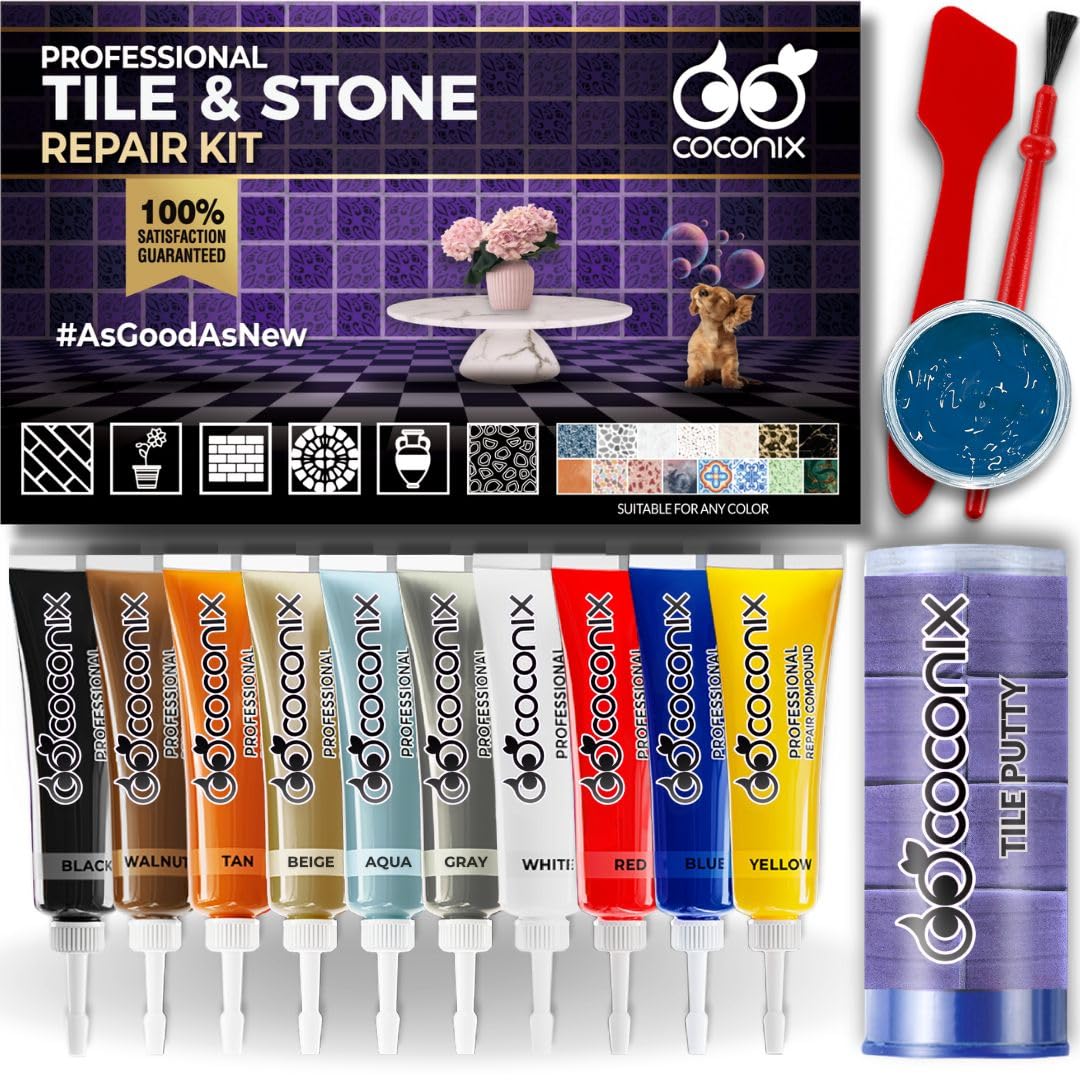
When a tile on an existing backsplash cracks or chips, the Coconix kit is the right tool. The system uses a kneadable epoxy putty that you mix with any of the ten included color compounds to match your tile shade precisely. The putty cures to a semi-gloss finish that blends into ceramic, porcelain, and natural stone — and the manufacturer offers free color-matching advice if you need a custom blend. Multiple customers report that hairline cracks become practically invisible after a single application.
The kit includes everything: the putty, a full spectrum of powdered pigments from white through sand beige, terracotta, and aqua, plus mixing tools. The putty stays workable for only a few minutes after kneading, so you need to work fast, but the quick cure means you can finish a repair in under ten minutes. Users who repaired kitchen backsplash tiles near the stove report the bond held up through repeated heat cycles without yellowing or softening.
One limitation: the cured putty dries matte relative to high-gloss glazed tile, so on shiny subway tile the repair spot may catch the eye if the chip is on a front-facing edge. The manufacturer suggests a clear topcoat to match gloss, but that adds a step. For matte or honed stone, the match is near-seamless.
Why it’s great
- Ten color compounds make matching easy for most stone and ceramic shades
- Kneadable putty cures waterproof and durable in minutes
- Free expert color-matching support from the manufacturer
Good to know
- Dries slightly matte — high-gloss tile may need a clear topcoat for full blend
- Putty sets quickly — you have to mix and apply within about three minutes
3. HIMG Glue Adhesive for Granite, Marble, Stone

HIMG delivers an extra-strong bond specifically engineered for polished stone surfaces — granite, marble, quartz, and engineered Corian. The two-part acrylic dispenses from a side-by-side syringe that mixes the clear and yellow components as you push the plunger. Full cure happens in five minutes, which is exceptionally fast for a stone adhesive. That speed makes it ideal for reattaching a loose backsplash edge piece or bonding a corner trim that popped off, because you can hold it in place for under 60 seconds and let the chemical bond set.
The acrylic formulation is non-toxic and odorless during application, and crucially, it does not yellow over time — a common failure of standard epoxy on white marble or light quartz. Several users report fixing cracks in kitchen marble countertops and matching backsplash edges with no visible ambering after months of kitchen heat and sunlight exposure. The syringe format gives precise control, so you avoid the squeeze-out mess that ruins polished stone finishes.
The main complaint: the syringe ships with only two mixing nozzles, and once the acrylic sets inside a nozzle, it is non-reusable. For a single-edge repair, two nozzles are enough. But users tackling multiple breaks report running out of nozzles before the tube is empty, which wastes remaining adhesive. Stocking extra nozzles or syringes is the workaround.
Why it’s great
- Cures fully in five minutes — fastest in this guide
- Non-yellowing formula works on white stone and polished quartz
- Syringe applicator controls bead placement on vertical surfaces
Good to know
- Only two mixing nozzles included; nozzle clogs quickly and is not reusable
- Some users report poor bond on specific granite types — surface prep is critical
4. Henry 314 Premixed Mastic Adhesive 1 QT

The Henry 314 is a classic premixed mastic that has been a staple for small-format tile jobs for years. The quart-size pail is just right for a 4- to 6-square-foot backsplash area or for replacing a few popped tiles in an existing installation. The consistency is thick enough to hold ceramic and porcelain tile vertically without slip, and the open time runs around 20 minutes — enough to set a row of subway tile but fast enough that you can grout within a few hours. Users specifically call out that it works great for tiling non-standard surfaces like metal plant stands or painted wood backsplash panels.
Where the 314 shines is its grab strength on the first press. Even before the mastic cures, the immediate tack holds the tile in place, eliminating the need for temporary spacers or tape on most lightweight tile. Customers who used it on a small metal backsplash behind a stove reported no sagging and a strong bond that survived the heat of daily cooking. The drying speed is a double-edged sword, however — you must work fast because the mastic skins over quicker than generic alternatives.
The recurring negative is the pail’s lid. Multiple customers received the container with the lid partially popped open, causing the top layer to dry into a hard crust that had to be scooped out and discarded. If you buy this, check the seal immediately upon delivery and transfer unused mastic to a screw-top jar if you plan to keep it for later touch-ups.
Why it’s great
- Strong immediate grab — tiles stay in place without temporary bracing
- Fast-dry formula allows same-day grouting on small jobs
- Quart size is ideal for patch repairs and small backsplash sections
Good to know
- Lid seal is prone to popping in transit, drying out the top layer
- More expensive per ounce than bulk mastic buckets
5. CUSTOM BLDG PRODUCTS TAGWQT Quart Premixed Bright White
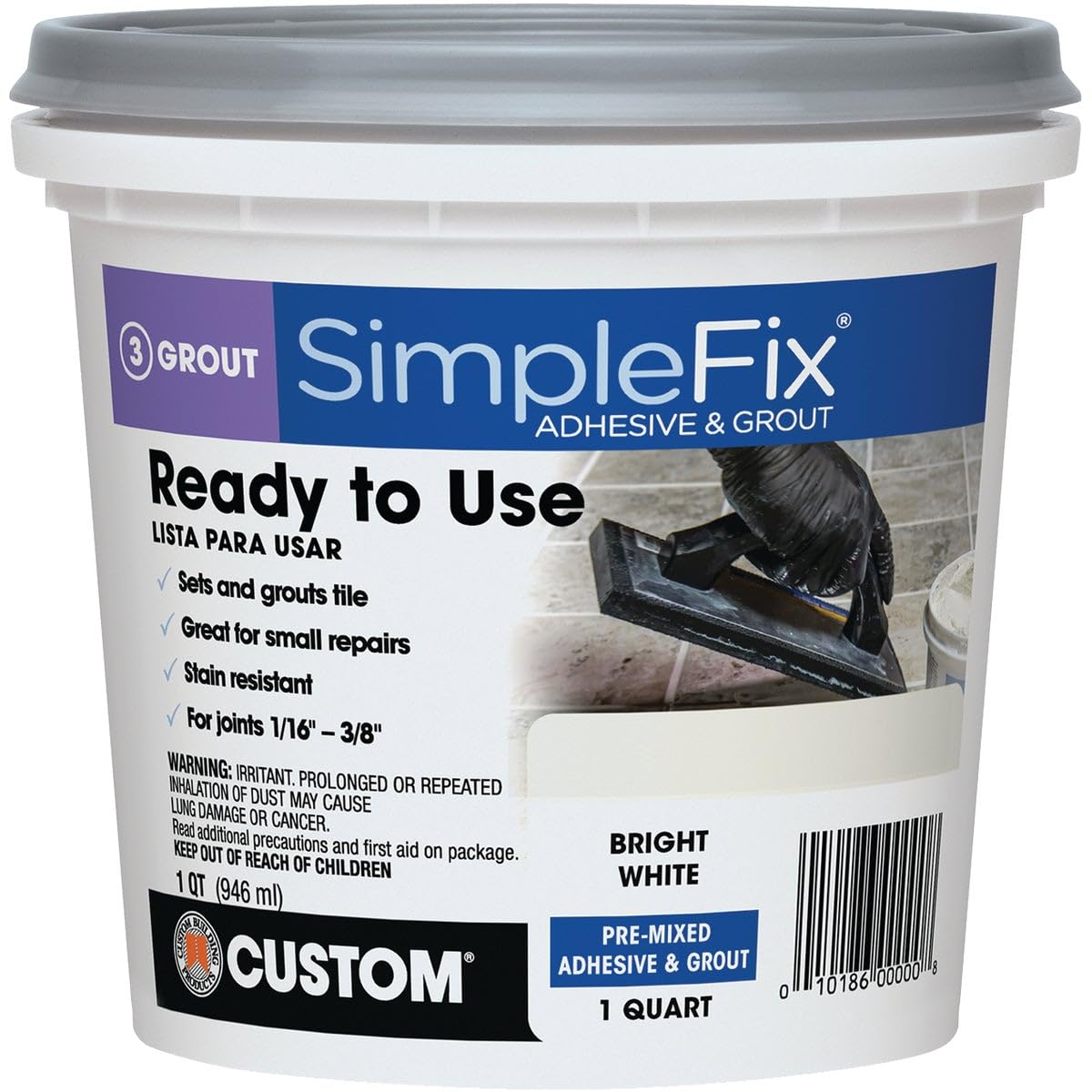
Custom Building Products’ TAGWQT is technically a grout, but its formulation works equally well as a thin-layer adhesive for ceramic and mosaic tile on backsplash applications. The consistency spreads like butter — customers use that exact description — and it sets in about 30 minutes, allowing a quick second coat or grout application in the same session. The bright white color is specifically useful for white subway tile backsplashes where a contrasting adhesive line would show through translucent or thin tile edges.
Users report excellent results applying it directly over existing grout lines for refreshes without tearing out the old tile. The formula adheres tenaciously to concrete backer board and primed drywall, and once cured, it resists mildew without a separate sealer. In a bathroom backsplash context, that means one less chemical treatment to maintain over the life of the installation. The cleanup with soap and water during the wet stage is straightforward, reducing the risk of dried adhesive smears on tile faces.
Like the Henry 314, the TAGWQT suffers from a poor lid design. The pail’s snap-on lid frequently pops open during shipping, and the grout in the exposed layer hardens into a rubbery disc. Customers advise ordering from sellers who over-pack with tape or bubble wrap, and always inspect the seal before accepting delivery. The product inside is excellent; the container is the weakest link.
Why it’s great
- Smooth, butter-like spreadability makes tiling fast and even
- Bright white color is ideal for white tile edges and translucent materials
- Once cured, resists mold and mildew without an additional sealer
Good to know
- Snap-on lid pops open in transit, causing product spoilage
- Must wipe excess immediately — dried grout is hard to remove from tile faces
6. Henry W.W. 12097 QT #430 Tile Adhesive
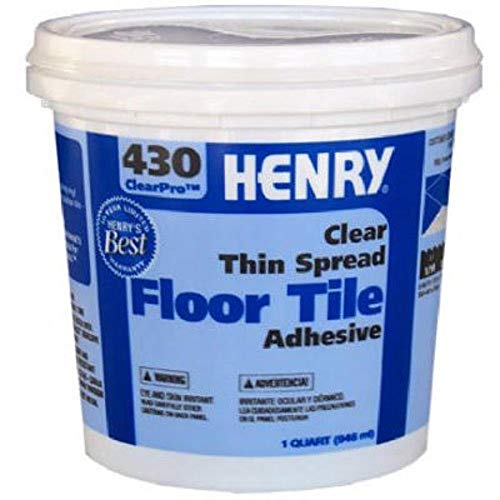
The Henry #430 is the entry-level liquid mastic that many homeowners reach for when the local hardware store is out of stock. It comes in a 1-quart pail at a very accessible price point, and it is formulated for bonding vinyl composition tile and asphalt tile to wood subfloors. For a backsplash project, however, the bond characteristics are noticeably different from purpose-made wall tile adhesives. The liquid consistency is runny — several customers describe it as “too runny” for vertical applications — and the open time is extended by the thin formula, requiring hours before the adhesive achieves enough tack to hold tile in place on a vertical wall.
Where this adhesive works is on flat, horizontal surfaces or on wood substrates where gravity is not fighting you. For a wood-paneled backsplash replacement or for adhering tile to a pre-existing wood counter section, the #430 provides adequate adhesion and easy spreadability. The beige color blends acceptably behind most ceramic and porcelain tiles, and the water cleanup during application keeps the mess manageable.
The extended drying time is the dealbreaker for vertical backsplash work. Even with the thinnest coat, users report the adhesive takes well over 24 hours to clear and become dry enough to hold tile in position without sagging. If you are tiling a vertical wall, you need faster grab. Reserve the #430 for flat, horizontal patch work or as a general-purpose floor tile adhesive where slip is not a concern.
Why it’s great
- Very low cost per quart for small household projects
- Easy water cleanup during application
- Works reliably on wood and vinyl subfloor surfaces
Good to know
- Too thin for vertical backsplash — tiles will sag before the adhesive dries
- Extended dry time can exceed 24 hours even with thin application
7. Mosaic Mercantile ADH-8 8-Ounce Adhesive

Mosaic Mercantile ADH-8 occupies a specific niche: bonding glass, mirror, and metal mosaic tiles to backsplash surfaces where the adhesive might be visible through translucent material. The water-based formula applies white but dries completely clear, so no off-white haze shows behind stained glass or iridescent mosaic pieces. Customers who build mosaic mirrors and shell-embedded backsplashes consistently return to this product because the bond remains flexible enough to handle thermal expansion without cracking the tile matrix.
The 8-ounce bottle is a concentrated format — you get only half a pound of adhesive per purchase. That is enough for a small mosaic project or for fixing loose mosaic sheets, but insufficient for a full 15-square-foot subway tile installation. Users who work with it regularly note that the bottle must be used within a reasonable time frame because the thick consistency in the neck makes it difficult to squeeze after it begins to dry, and buying in multipacks often means the last bottle arrives dried out. The viscosity is thicker than most mastics, which is excellent for vertical grab but makes the squeeze bottle a challenge for fine detail work.
Durability data from long-term users is impressive: one customer reports mosaic pieces left outdoors for five years still holding fast, though for purely indoor backsplash use, the adhesive’s longevity is not in question. For glass tile, beaded mosaic, or mixed-material backsplash art, the clear-dry formulation is superior to any pigmented mastic that would bleed through the tile.
Why it’s great
- Dries completely clear — ideal for glass, shell, and translucent mosaic tiles
- Thick consistency holds vertical mosaic sheets without sag
- Proven outdoor durability over multiple years
Good to know
- 8-ounce bottle is small — not cost-effective for full backsplash coverage
- Thick formula hardens in the bottle neck over time, making squeezing difficult
FAQ
Can I use standard thin-set mortar for a kitchen tile backsplash?
How long should I wait before grouting backsplash tile?
Will a peel-and-stick mat hold large-format tile on a backsplash?
Why did my adhesive arrive with a dried crust on top?
Can I use clear-dry mastic behind white subway tile?
Final Thoughts: The Verdict
For most users tackling a standard kitchen or bathroom backsplash, the best adhesive for tile backsplash winner is the MusselBound Adhesive Tile Mat because it eliminates the two biggest failure points: mixing errors and drying-time management. If you need to repair a chip or crack in existing tile, the Coconix Tile & Stone Repair Kit delivers the most precise color-matched fix. And for a fast structural bond on polished stone edge pieces, nothing beats the HIMG Glue Adhesive with its 5-minute cure and non-yellowing acrylic formula.