
A loose tile, a chipped corner, or a hollow sound underfoot — few things undermine a clean renovation faster than failed adhesion. Whether you are fixing a backsplash, re-bonding a floor tile, or repairing a crack in porcelain, the adhesive you choose determines whether the repair lasts a week or a decade.
I’m Min — the co-founder and writer behind Gadgets Feed. I’ve spent countless hours analyzing technical formulations, cure times, bond strength data, and real-world user reports on tile-specific adhesives to separate the products that actually hold from those that disappoint.
This guide breaks down the top mixes of polymer chemistry, application method, and durability to help you confidently select the right adhesive glue for tile for your specific project, whether it’s a small chip repair or a full floor of re-bonding loose tiles.
How To Choose The Best Adhesive Glue For Tile
Selecting the right tile adhesive hinges on three core factors: the tile material (ceramic, porcelain, stone, or glass), the location (floor, wall, wet area, or exterior), and the repair type (re-bonding loose tiles, filling chips, or new installation). Each product is engineered for a specific viscosity, open time, and waterproof rating.
Viscosity and Application Method
Thin, self-leveling adhesives like those in tube or cartridge form are ideal for injecting under loose floor tiles through small drilled holes. Thicker pastes and mastics work better for vertical wall tiles where sag resistance is critical. Spray adhesives offer even coverage for large laminate or foam-backed panels but lack the gap-filling ability needed for uneven tile edges.
Water Resistance and Cure Time
For bathroom, kitchen, and exterior tile projects, a waterproof formula is non-negotiable. Look for adhesives that explicitly state water resistance or waterproofing in their spec sheet. Cure time directly impacts project workflow — instant-grab formulas reduce the need for clamping but require precise positioning within seconds, while 24-hour full-cure adhesives allow repositioning but demand temporary support for vertical tiles.
Quick Comparison
On smaller screens, swipe sideways to see the full table.
| Model | Category | Best For | Key Spec | Amazon |
|---|---|---|---|---|
| Titebond TiteGrab Plus | Construction Adhesive | Instant grab for backsplash & tub surrounds | 9 oz cartridge, advanced polymer | Amazon |
| Gorilla Max Strength Clear | Construction Adhesive | Clear, waterproof, gap-filling repairs | 2.5 oz tube, hybrid polymer | Amazon |
| Tile Repair Kit (Ankita) | Repair Kit | Color-matching chips & cracks on porcelain | Paste, 7 pigments included | Amazon |
| Fix-A-Floor (Pack of 2) | Loose Tile Repair | Re-bonding loose ceramic & stone floor tiles | 20.2 oz tube, self-leveling CoPolymer | Amazon |
| Fix-A-Floor (Pack of 12) | Loose Tile Repair | Multi-tile floor projects & contractor jobs | 12 tubes, self-leveling CoPolymer | Amazon |
| 3M Hi-Strength 94 ET Spray | Spray Adhesive | Large surface laminations & foam to tile | 19.75 oz can, low-VOC epoxy | Amazon |
| Henry 314 Premixed Mastic | Mastic Adhesive | Small DIY tile projects on metal & concrete | 1 qt pail, medium viscosity | Amazon |
In‑Depth Reviews
1. Titebond TiteGrab Plus Construction Adhesive

The TiteGrab Plus uses an advanced polymer formula that grabs instantly, making it the top choice for vertical tile applications like backsplashes and tub surrounds. Its creamy consistency extrudes smoothly from a standard caulk gun and provides an immediate bond that reduces the need for bracing or temporary fasteners. Users consistently report it as the only product they trust for kitchen and bathroom tile renovation because of its reliable hold on ceramic, marble, and cement board.
With a full cure time of 24 hours and a waterproof rating that holds up to indoor and outdoor conditions, this adhesive shines in moisture-prone environments. The 9-ounce cartridge delivers enough material for several square feet of tile work, and the high-solids formula means it won’t shrink or become brittle over time. It bonds both porous and non-porous surfaces, including painted drywall and foam board, which adds versatility for mixed-material projects.
One consideration is that smooth, glossy tile surfaces require a slightly different approach — the grip is strongest on textured or porous substrates. For polished porcelain or glass tile, surface preparation with a primer may be needed to achieve maximum adhesion. Still, for the vast majority of standard tile repair and installation tasks, the TiteGrab Plus offers the best balance of grab speed, durability, and all-weather performance.
Why it’s great
- Instant grab reduces need for braces on vertical tile work
- Waterproof formula suitable for kitchen and bathroom use
- Bonds a wide range of materials including wood, metal, concrete, and foam
Good to know
- Does not bond as strongly to very smooth, glossy tile surfaces without priming
- Requires a standard caulk gun for application
2. Gorilla Max Strength Construction Adhesive, Clear
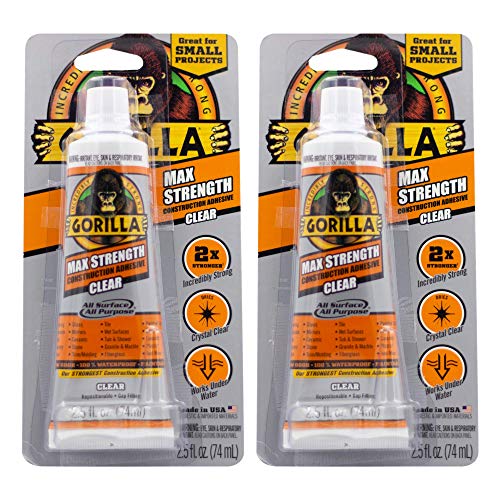
Gorilla’s Max Strength formula claims 2x the strength of its own heavy-duty construction adhesive, and user tests back that up with impressive results on materials like fiberglass, foam, glass, stone, and wood. The clear, viscous liquid dries to a hard rubber-like consistency that remains flexible enough to handle minor substrate movement without cracking. It is particularly effective for gap-filling applications where a discreet, invisible bond line is preferred.
The squeeze tube format offers excellent control for smaller repairs — users appreciate the ability to apply precise beads along tile edges or into cracks. It bonds within 30 seconds and allows repositioning for up to 5 minutes, which is a generous window for aligning tiles compared to instant-grab alternatives. The waterproof nature of the cured adhesive makes it reliable for outdoor tile repairs and areas exposed to standing water.
On the downside, the stickiness is extreme — it clings aggressively to skin and requires rubbing alcohol or mineral spirits for cleanup. The 24-hour full cure time means parts need clamping or weighting during the first day. Some users note that the tube’s opening dispenses glue faster than desired, leading to gobs on the surface. Despite this, its clear finish and versatile material compatibility make it a strong pick for mixed-material tile repairs.
Why it’s great
- Dries crystal clear, leaving an invisible bond line on glass and stone tile
- Waterproof and gap-filling for interior and exterior repairs
- 30-second bond with 5-minute repositioning window
Good to know
- Extremely sticky — difficult to remove from skin and surfaces
- Squeeze tube dispenses quickly, requiring careful handling
3. Tile Repair Kit (Ankita) Color Match
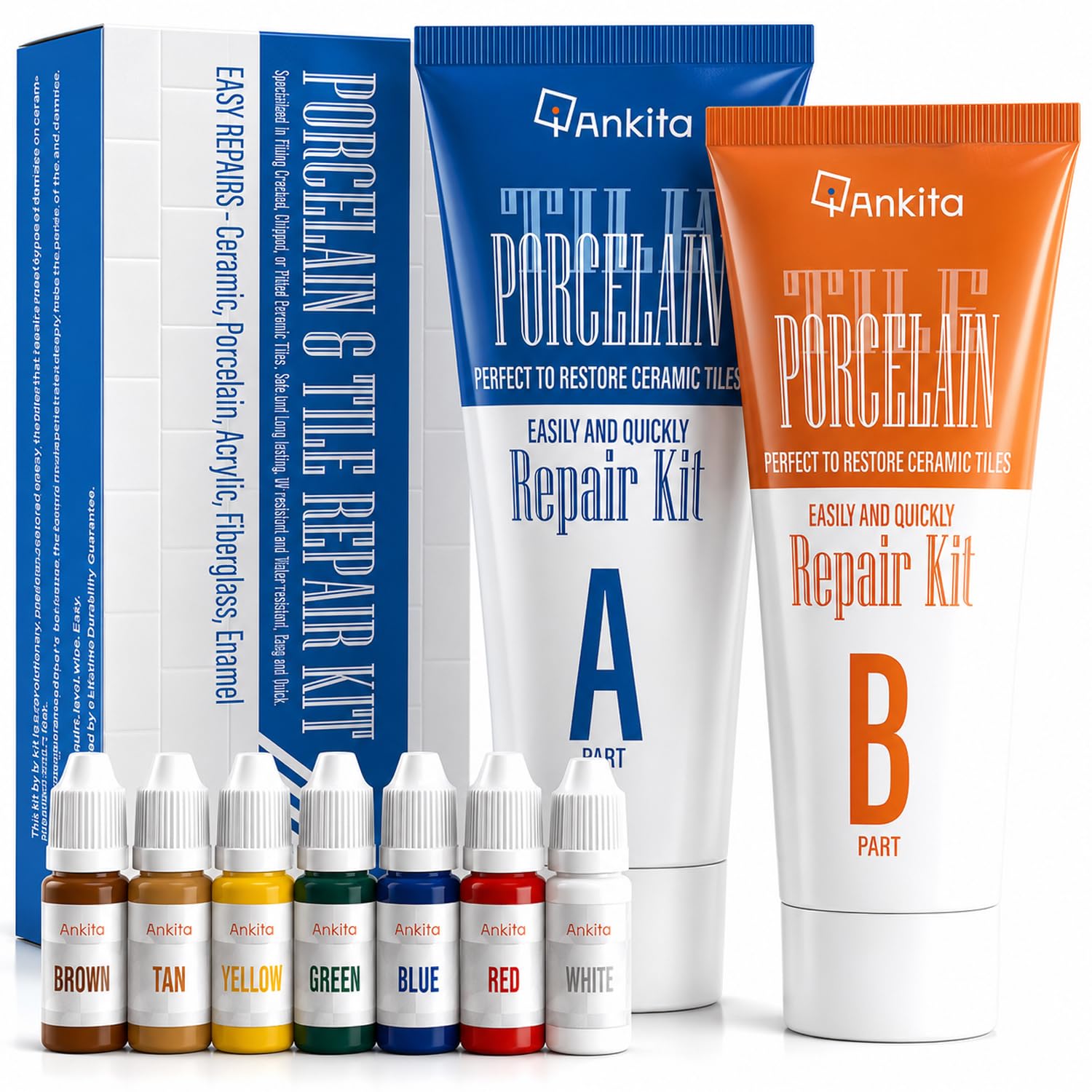
This all-in-one kit targets a very specific but common problem: visible chips, cracks, and scratches on ceramic and porcelain tiles. It comes with a two-part epoxy paste plus seven color pigments that let you blend a custom shade to match your existing tile. Users report spot-on color matching for whites, beiges, grays, and almond tones, with the ability to adjust for blues and blacks as well. The paste application is straightforward — mix Part A and Part B, apply with the included tool, and let it cure.
The cured finish is hard, durable, and water-resistant, making it suitable for bathroom tub surrounds, kitchen backsplashes, and even high-traffic floor areas. The kit is designed to fill small holes and surface damage that would otherwise require full tile replacement. For a beginner, the step-by-step instructions help achieve a seamless-looking finish without professional tools or experience.
A limitation is that the paste is best-suited for small repairs — chips up to about a quarter-inch in diameter or hairline cracks. Larger damaged areas require multiple applications, and the color match can shift slightly as the epoxy cures, turning more cream or yellow over time in some cases. Sanding the cured repair is difficult because the material remains somewhat flexible. For quick, affordable cosmetic fixes on ceramic and porcelain, however, this kit delivers strong results.
Why it’s great
- Seven pigments allow custom color matching for common tile shades
- Strong, waterproof bond for wet-area repairs
- DIY-friendly with clear instructions and included mixing tools
Good to know
- Best for small chips and cracks — not designed for large missing sections
- Color may shift slightly as epoxy cures over time
4. Fix-A-Floor Loose Tile Repair Adhesive (Pack of 2)
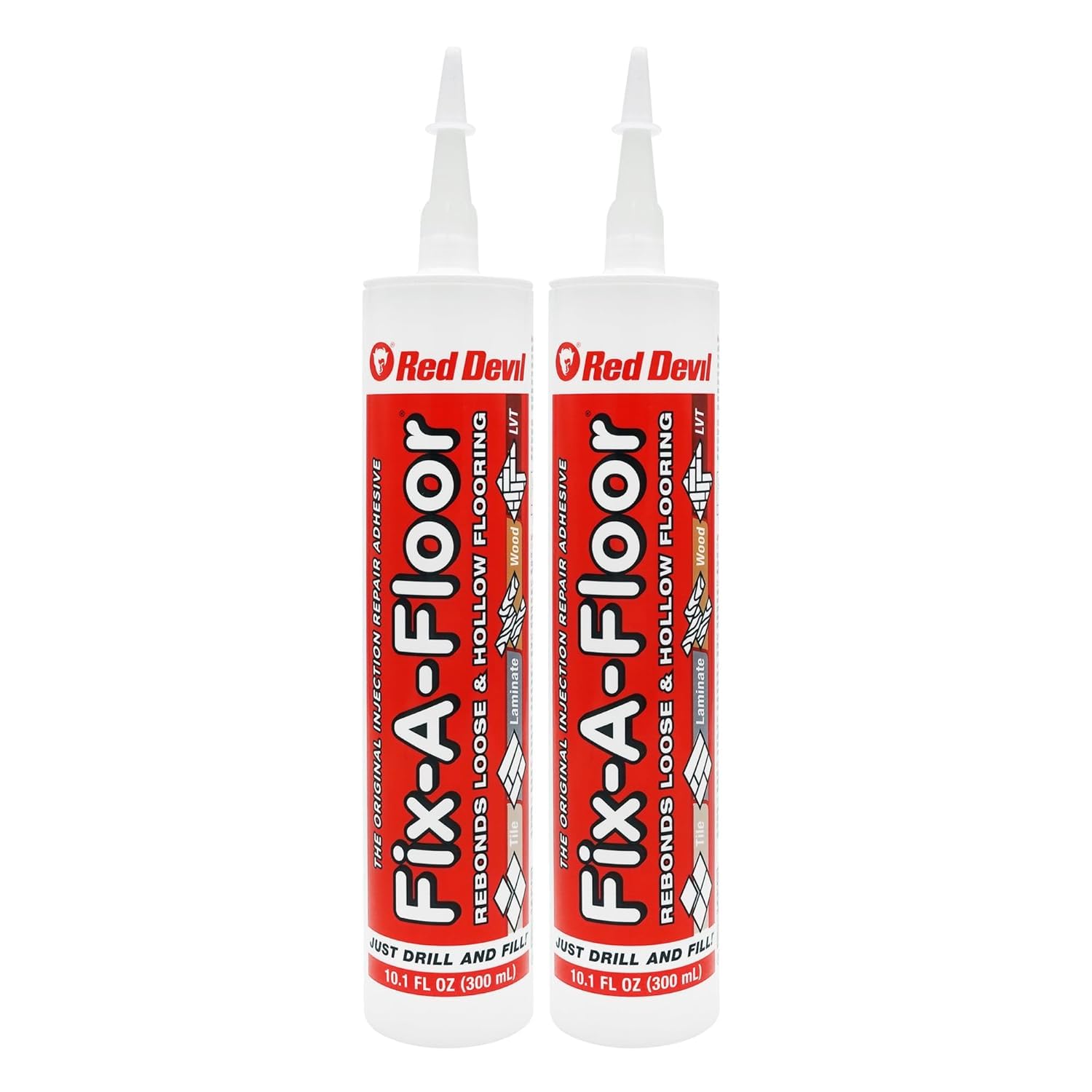
Fix-A-Floor is engineered specifically for the most frustrating tile problem: loose tiles that sound hollow when stepped on but are not yet broken. The CoPolymer formula is self-leveling, meaning it flows into the void under the tile after drilling small injection holes through the grout line. It bonds to virtually all subfloor materials including concrete, plywood, and cement board, and works on ceramic, porcelain, marble, stone, and even engineered wood flooring.
The pack includes precision tip applicators sized 1/8-inch, 3/16-inch, 1/4-inch, and 2.5mm, allowing you to match the tip to your specific grout line width. Users report that the adhesive is extremely fluid — it penetrates deep into hollow spaces and creates a durable bond that eliminates the hollow sound within 24 hours. The non-toxic formulation is safe for use over underfloor heating systems, which is a critical advantage for modern heated bathroom floors.
Delivery can be messy — the tube design has been known to leak from the back end when used with a caulk gun, and the supplied needle applicator can clog. Many experienced users recommend transferring the adhesive into 30ml luer-lock syringes for cleaner, more controlled application. Despite the delivery quirks, the bonding performance is excellent, making this kit the go-to solution for homeowners dealing with hollow-sounding floor tiles.
Why it’s great
- Self-leveling formula flows under loose tiles for complete adhesion
- Works with underfloor heating systems
- Multiple tip sizes fit different grout line widths
Good to know
- Tube design can leak from the back — using syringes improves control
- Needle applicator may clog; standard caulk tip cut at an angle works better
5. Fix-A-Floor Loose Tile Repair Adhesive (Pack of 12)
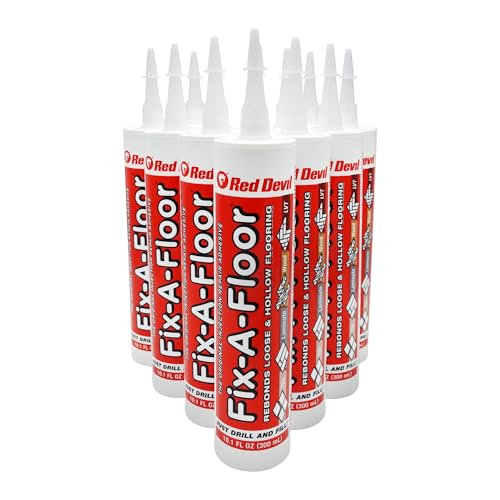
This bulk pack of Fix-A-Floor delivers the same self-leveling CoPolymer adhesive as the 2-pack but at a volume designed for multi-room or contractor-grade projects. Each of the 12 tubes contains 20.2 fluid ounces of the same fluid, high-strength formula that has become a standard for re-bonding loose ceramic, porcelain, marble, and stone floor tiles without removal. The non-toxic, self-leveling properties remain consistent across every tube, ensuring repeatable results across large areas.
The kit includes precision tips for all common grout sizes, making it suitable for a wide range of tile thicknesses and joint widths. Users tackling entire floors of hollow-sounding tiles report that the 12-tube quantity covers a significant area — enough for a medium-sized living room or large master bathroom. The adhesive works particularly well on older floors where the original thin-set has failed, creating a new mechanical bond between the tile and subfloor through the injection points.
As with the smaller pack, the delivery mechanism requires careful handling. The tubes can leak if over-pressurized in a caulk gun, and the pre-drilled holes need to be cleaned of dust before injection for optimal flow. Using a wet rag to wipe excess adhesive immediately and weighting the tiles with water-filled buckets during the 24-hour cure period ensures a professional result. For anyone with a large-scale loose-tile problem, this bulk pack saves both time and money while delivering consistent bonding performance.
Why it’s great
- Bulk 12-pack is cost-effective for large floor projects
- Self-leveling formula penetrates deep hollow spaces under tiles
- Works on ceramic, porcelain, marble, stone, and wood flooring
Good to know
- Tube can leak from the back under pressure
- Requires pre-drilling holes and weighting tiles during cure
6. 3M Hi-Strength 94 ET Spray Adhesive
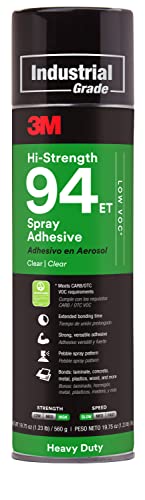
For applications where a tube or paste won’t work — laminating foam backing to tile, adhering carpet or fabric to ceramic surfaces, or bonding large sheets of laminate — the 3M Hi-Strength 94 ET spray adhesive offers an industrial-grade solution. It delivers a high-tack bond with an open time of up to 60 minutes, giving you a full hour to position and reposition materials before the adhesive sets. This window is significantly longer than most contact cements, reducing pressure during alignment.
The formula is low-VOC and GREENGUARD certified, making it a safer choice for indoor use compared to traditional spray adhesives. It bonds effectively to wood, metal, rubber, carpet, flooring, foam, fabric, glass, and plastic. Users have successfully used it for soundproofing foam on walls, reupholstery projects, and attaching insulation to metal surfaces. The spray pattern provides even coverage across large areas, eliminating the uneven bead lines that tubes can leave.
The main drawback is the strong solvent odor — even with low-VOC formulation, the spray smells like airplane glue and requires good ventilation. Users must wear a respirator mask and gloves, and a skin contact test is needed to check when the adhesive is dry to the touch. Additionally, it is not a gap-filler — it works best on flat, continuous surfaces where even contact pressure can be applied. For large-surface tile laminations or foam-backed tile installations, this spray is a standout choice.
Why it’s great
- 60-minute open time allows careful positioning of materials
- Low-VOC and GREENGUARD certified for safer indoor use
- Covers large surface areas evenly without bead lines
Good to know
- Strong solvent odor requires ventilation and mask
- Not suitable for gap-filling or uneven tile edges
7. Henry 314 Premixed Mastic Adhesive

The Henry 314 is a classic premixed mastic adhesive that has been a staple for small DIY tile projects for decades. It comes ready-to-use in a 1-quart pail — no mixing, no additives, just open and apply with a notched trowel. The beige, medium-viscosity paste is designed for ceramic tile on concrete, metal, and existing tile surfaces, making it a solid choice for small backsplashes, countertop tile, and decorative wall projects.
Users praise its ease of use for projects like tiling a metal plant stand or repairing a small section of wall tile. The mastic spreads smoothly and provides a strong initial tack that holds lightweight wall tiles in place without slipping. Drying time is fast — users report about 2-3 minutes of working time before the adhesive starts to set, so you need to work quickly and position tiles accurately on the first attempt.
The limitations are significant for larger or more demanding projects. This mastic is not waterproof — it is water-resistant at best, meaning it should not be used in standing water environments like shower floors or pool surrounds. It also dries crumbly if worked beyond its open time, and the pail container can split during shipping, leading to dried-out product on arrival. For small, dry-area tile fixes at a minimal cost per square foot, it gets the job done, but serious tile work calls for a more advanced adhesive.
Why it’s great
- Ready-to-use premixed mastic — no mixing required
- Good initial tack for lightweight wall tiles
- Low cost for small DIY projects
Good to know
- Not waterproof — avoid wet areas like shower floors
- Dries quickly, leaving little time for adjustment
- Pail container may split in transit
FAQ
Can I use regular construction adhesive for tile?
How do I remove old tile adhesive before reapplying?
Final Thoughts: The Verdict
For most users, the adhesive glue for tile winner is the Titebond TiteGrab Plus because it combines instant grab for vertical tile work with a waterproof, durable bond that lasts for years. If you need a discreet clear finish for mixed-material tile repairs, grab the Gorilla Max Strength Clear. And for fixing hollow-sounding floor tiles without breaking them up, nothing beats the Fix-A-Floor Loose Tile Repair Kit.