
A helmet that doesn’t fit right is just a heavy hat. The rear dial, the internal shape, and the strap geometry determine whether that critical safety gear actually works when you need it. For commuters, trail riders, and weekend cruisers, the search for a helmet that locks in place without pressure points is the difference between a purchase you wear and one you leave hanging in the garage.
I’m Min — the co-founder and writer behind Gadgets Feed. I analyze helmet retention systems, MIPS integration, and ventilation channel designs across dozens of models to find the ones that deliver true security without the hot, squeeze-y feeling.
Whether you’re looking for advanced rotational impact protection or simply a daily commuter lid that doesn’t look like a mushroom, these are the models that stand out after hours of comparison. This guide breaks down the essential specs behind the best adjustable bicycle helmets.
How To Choose The Best Adjustable Bicycle Helmets
The wrong dial system or internal shape turns a 30-minute commute into a headache. Focus on the adjustable retention mechanism, the rotational impact protection layer, and the real-world airflow before you look at color or brand reputation.
Retention System: Dial Depth and Geometry
Not all dials are equal. A three-point adjuster that wraps around the occipital bone locks the skull in place without side pressure. Systems like the ErgoKnob or Roc Loc offer micro-adjustments that let you fine-tune tension mid-ride, while cheaper dials only provide coarse clicks or squeeze the temples unevenly.
Safety Certifications Beyond CPSC
All models meet the U.S. CPSC standard, but the difference is rotational impact management. MIPS (Multi-directional Impact Protection System) adds a low-friction layer between the shell and liner to reduce rotational forces in angled impacts. Koroyd is a honeycomb-like structure that crushes for energy absorption. Both increase the purchase price but significantly raise the protection ceiling.
Ventilation vs. Weight
More vents mean cooler rides but also a heavier or bulkier structure if the internal reinforcement isn’t optimized. Look for 14 to 23 vents combined with deep internal channeling — the channel design matters more than the raw vent count. A well-ventilated helmet that weighs under 12 ounces is the sweet spot for all-day wear.
Quick Comparison
On smaller screens, swipe sideways to see the full table.
| Model | Category | Best For | Key Spec | Amazon |
|---|---|---|---|---|
| Smith Persist MIPS | Road/Performance | Long road rides | Zonal Koroyd + MIPS | Amazon |
| Giro Register II MIPS | All-Rounder | Versatile daily use | Integrated MIPS | Amazon |
| Triple Eight Gotham MIPS | Multi-Sport | Biking & skateboarding | Dual Certified CPSC/ASTM | Amazon |
| Thousand Heritage 2.0 | Commuter/Style | Urban daily commutes | PopLock anti-theft | Amazon |
| Retrospec Rowan Mountain | Mountain/Trail | Trail and dirt riding | 14 ventilation ports | Amazon |
| SLANIGIRO Urban Bike Helmet | City Commuter | Night riding visibility | USB-C rear taillight | Amazon |
| Anharluka Youth/Adult Road | Budget Family | Growing riders & casuals | Dual visors included | Amazon |
In‑Depth Reviews
1. Smith Persist MIPS
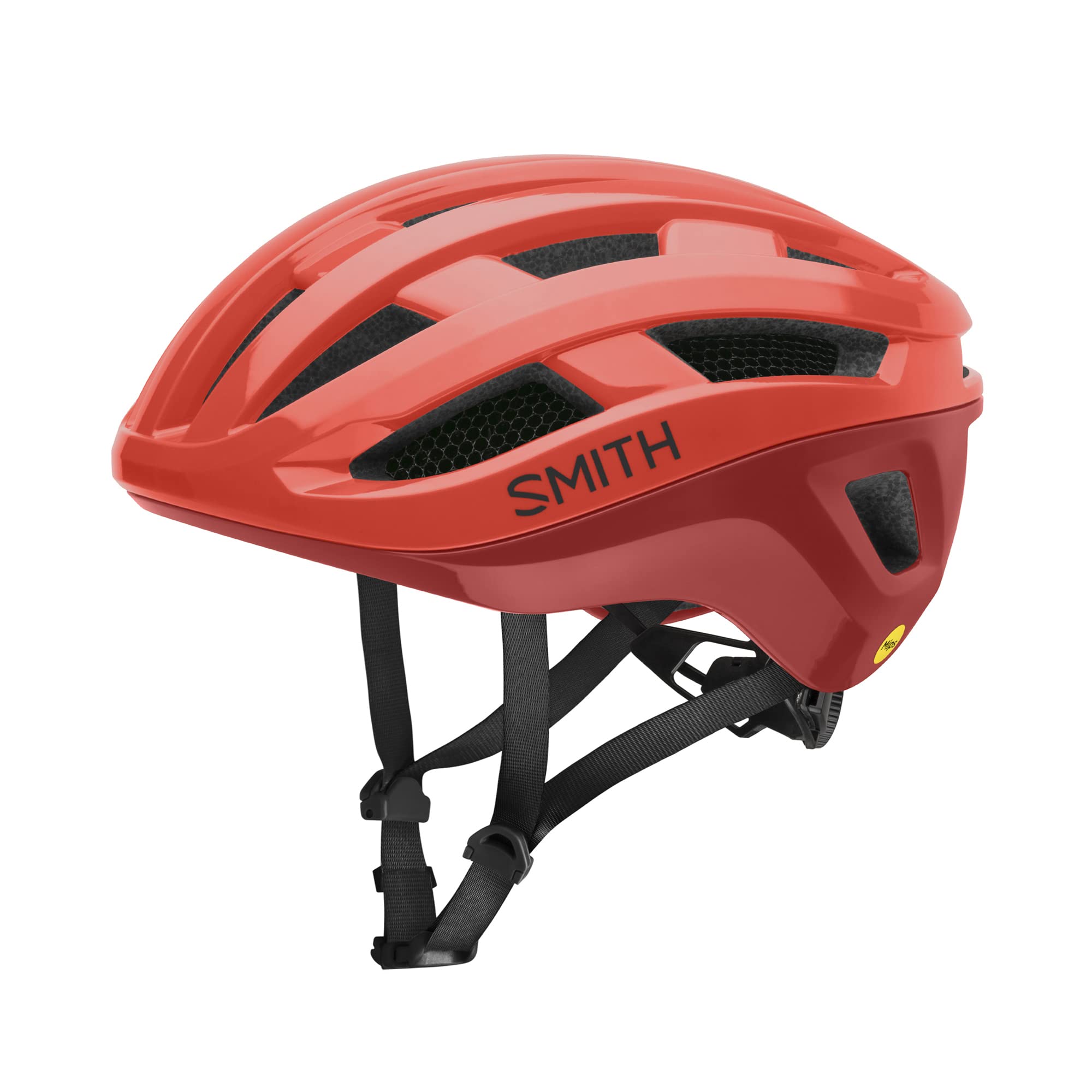
The Smith Persist brings two advanced safety technologies — MIPS and Zonal Koroyd — into a single package that weighs just 11 ounces. The 21 fixed vents work with the AirEvac system to keep eyewear clear, while the adjustable rear dial provides micro-tuning that eliminates pressure points even on 60-mile rides. The Koroyd honeycomb structure crushes incrementally during impact, absorbing energy that would otherwise transfer to the skull.
The interior shape accommodates oval head profiles without rocking, and the pad density is forgiving enough to wear over a thin skull cap in cold weather. Smith’s multi-position strap splitter allows the webbing to sit flush against the ear’s Y-junction without sliding. The matte finish hides scuffs well, and the brim sits low enough to block glare without limiting upward peripheral vision.
The only notable shortcoming is the absence of sunglass dock ports, which some riders use to secure eyewear during stops. The weight distribution is slightly front-heavy on certain head shapes, but the Koroyd material also produces a mild “mushroom” silhouette that purists may find visually bulky. For riders who prioritize crash safety and ventilation, this remains the most technically complete option.
Why it’s great
- Dual-layer impact protection (MIPS + Koroyd)
- Lightweight at 11 oz with 21 airflow vents
- Dial micro-adjustment fits varied head shapes
Good to know
- No built-in sunglass storage ports
- Front-heavy weight bias on some users
2. Giro Register II MIPS

The Giro Register II MIPS uses a two-piece shell construction: a tough outer hard shell fused to a polycarbonate lower liner that wraps the EPS foam core, minimizing weight while maximizing durability. The integrated MIPS system sits on a low-friction elastomeric layer inside the liner, designed specifically to manage rotational forces in angled impacts. The Roc Loc fit system enables 360-degree micro-adjustment through a rear dial that lifts or lowers the fit cradle relative to the occipital bone.
Ventilation is above average for a hardshell design — the internal channeling routes air across the crown and out the rear exhaust ports, keeping riders cool even during 100°F summer climbs. The strap splitter uses a soft-touch Y-junction that doesn’t chafe, and the buckle has a low profile that clears the chin without digging in. Reviewers consistently note that the fit accommodates large head circumferences better than most competitors in this price range.
The Roc Loc dial mechanism has been flagged by some long-term users for occasional breakage after 3–4 years of frequent adjustment. The visor attachment feels less robust than the helmet shell itself, and the overall weight at 1.54 pounds is noticeable compared to sub-12-ounce alternatives. The color options in the matte black/raspberry finish are divisive — some love the subtle branding, others prefer a more understated look.
Why it’s great
- Hardshell durability with MIPS rotational protection
- Roc Loc dial offers 360-degree micro-adjustment
- Wide sizing accommodates larger head shapes
Good to know
- Dial durability concern over extended use
- Heavier than some premium road helmets
3. Triple Eight Gotham MIPS

The Triple Eight Gotham MIPS is the rare helmet that passes both CPSC bicycle and ASTM skateboarding safety standards, making it a legitimate crossover option for riders who alternate between bike commuting and bowl skating. The vented ABS shell handles hard impacts from board slides and bike crashes alike, while the MIPS low-friction layer adds rotational impact defense. The adjustable dial system includes a reflective ring, and the chin strap uses a side-release buckle with a splitter that doesn’t twist.
The internal fit pads come in two thickness sets, allowing riders to fine-tune the snugness without changing the shell size. The XL/XL size range (up to 61 cm) covers most adult heads, but the shell runs smaller than comparable brands — some users with a 22-inch head found the S/M too tight and had to size up. The padding is dense enough to feel secure but not so thick that it traps heat, and the 10 ventilation ports keep airflow decent during moderate exertion.
The 1.5-pound weight is a trade-off for the dual certification and ABS durability — it’s heavier than pure road helmets. The styling is distinctly skate-influenced, with a subtle brim that may look out of place on a road bike. The yellow MIPS sticker on the rear is permanent and visible, which some style-conscious riders may want to remove but cannot. For multi-sport users who want one helmet for everything, the Gotham’s versatility is unmatched.
Why it’s great
- Dual certified for biking and skateboarding
- Adjustable fit pads for personalized snugness
- Reflective dial ring boosts night visibility
Good to know
- Shell runs smaller than marked sizes
- Heavy frame at 1.5 pounds for all-day rides
4. Thousand Heritage 2.0

The Thousand Heritage 2.0 reimagines the commuter helmet with a low-profile silhouette that mimics a classic leather cycling cap while integrating modern safety gear. The PopLock system — a hidden channel behind the rear logo — lets you thread a U-lock or chain through the helmet so you can secure it to your bike frame instead of carrying it around. The magnetic Fidlock buckle operates one-handed, snapping shut with a satisfying click and releasing with a single pull.
The Dial Fit System wraps the occipital bone with a three-point cradle that stays secure without squeezing the temples. The internal leather liner adds a premium tactile feel that absorbs sweat without getting crusty after repeated use. At roughly 1.1 pounds, it’s light enough for daily carry, and the 11 ventilation ports keep air moving during warm commutes. The brim sits low enough to block the sun without obstructing upward vision — a common complaint with retro-styled helmets.
The magnetic clasp requires practice — riders coming from traditional buckles will fumble the first few times until the muscle memory sets in. The shell is certified for cycling and skateboarding, but the exposed leather liner needs occasional conditioning to prevent drying. The price is at the higher end of this list, and the Koroyd/MIPS protection found in competitors is absent here. For urban commuters who value style and convenience over raw headroom safety specs, this is the most thoughtful daily driver.
Why it’s great
- PopLock lets you secure helmet to bike frame
- Magnetic one-hand Fidlock buckle
- Leather-lined interior for premium comfort
Good to know
- No MIPS or Koroyd rotational protection
- Magnetic buckle has a learning curve
5. Retrospec Rowan Mountain Bike Helmet

The Retrospec Rowan targets mountain and trail riders with a dense EPS foam core fused to an in-mold polycarbonate shell, delivering impact absorption that matches pricier competitors. The ErgoKnob dial system provides precise rear adjustment with a wide cradle that locks the occipital bone without pinching. The 14 strategically placed vents channel air through deep internal grooves, keeping riders cool during long, dusty climbs.
The removable visor offers two tilt positions: one flush to the shell for low profile, and one angled downward for deeper sun and debris coverage. The padding is moisture-wicking and removable for machine washing, which is essential for trail riders who sweat hard. The weight distribution is impressively balanced despite the larger coverage area — the center of gravity sits low, reducing the bobble-head sensation common with budget mountain helmets.
Multiple reviewers noted a tight fit above the temples that caused discomfort on rides longer than two hours, especially for riders with wider skull profiles. The padding density is moderate — not plush, not harsh — but the comfort ceiling is lower than what you’d find in a Giro or Smith at double the price. The Matte Evergreen color is visually appealing but scratches show more easily than matte black finishes. For the price, it competes directly with helmets costing more.
Why it’s great
- ErgoKnob dial cradles occipital bone securely
- Removable, washable moisture-wicking padding
- Two-position adjustable visor for sun/debris
Good to know
- Temple area may pinch wide skulls on long rides
- Paint finish scratches more readily than matte
6. SLANIGIRO Adult Urban Bike Helmet

The SLANIGIRO Urban Bike Helmet packs a USB-C rechargeable rear light — with three lighting modes and a 6–8 hour battery life — into a sub-12-ounce package that costs less than most basic lids. The integrated polycarbonate shell bonds directly to the EPS liner during molding, reducing weight while maintaining structural integrity. The M-size fits head circumferences 55–58 cm, and the L-size covers 59–61 cm, both with a simple strap and dial adjustment system.
The gradient colorway (Matte Blue shown here) gives the helmet a distinctly modern look that avoids the “dad helmet” aesthetic, and the 8 large vents run front-to-back through the EPS for unrestricted airflow. Reviewers consistently report being able to wear a thin beanie underneath during colder months without compromising the fit. The rear light charges via USB-C in about two hours and stays visible from several car lengths away at night.
There is no MIPS or equivalent rotational impact system here — this is a standard in-mold construction with no advanced slip-plane technology. The strap adjustment is less refined than the dial systems on premium helmets, and the visor is absent, which means sun glare directly hits the eyes. The padding is adequate but thin, and the lack of a carrying bag (not included) makes storage bulkier than expected. For the price, the integrated light alone justifies the purchase for urban riders.
Why it’s great
- Built-in USB-C rechargeable taillight
- Lightweight 11.5 oz with gradient styling
- Fits over a thin winter beanie comfortably
Good to know
- No MIPS rotational impact protection
- No visor included for sun glare blocking
7. Anharluka Youth/Adult Road Bike Helmet
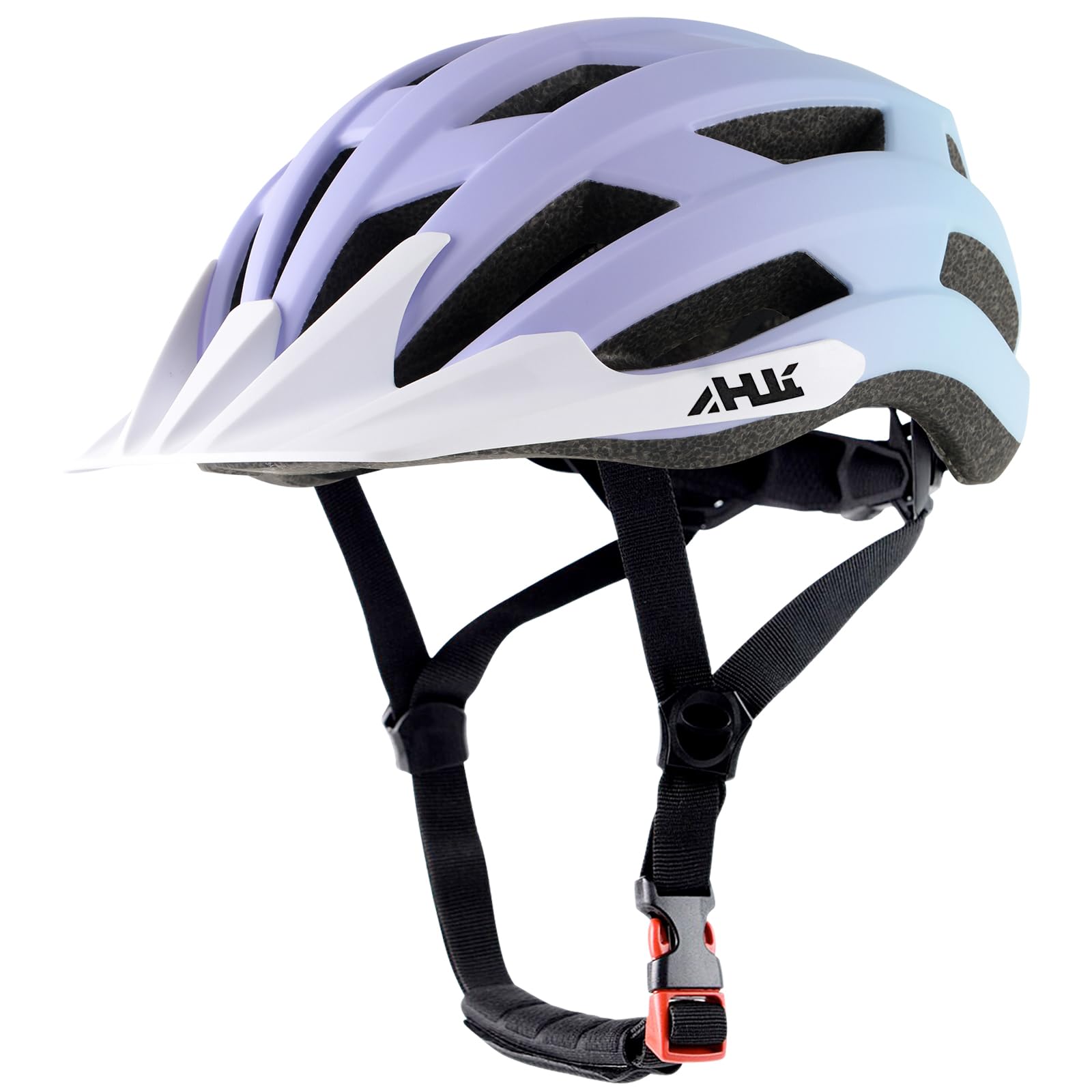
The Anharluka Road Bike Helmet bridges the gap between youth sizing (54–58 cm for ages 8–14) and adult sizing (58–61 cm for men and women), making it a smart choice for households with growing riders. The in-mold polycarbonate shell and high-density EPS foam core meet CPSC standards for ages 5 and up. The 23 ventilation ports are among the highest counts in this price range, supported by an insect net at the front openings that keeps debris out of the liner.
The standout feature is the inclusion of two removable visors — one black, one white — that clip onto the same mounting point, allowing riders to color-coordinate with their bike or kit. The rear dial system adjusts in small increments, and the chin strap has a splitter that locks the webbing in a fixed Y-position so it doesn’t slide around. The removable inner pads can be hand-washed, and the carrying bag keeps the helmet scratch-free during transport.
The visor attachment is not the sturdiest — it can pop off if knocked against a low branch or doorframe. The helmet sits slightly higher on the head than low-profile designs, which may feel bulky to adult riders seeking a sleek look. The weight at 9.5 ounces is genuinely impressive for a helmet at this price point, and the dual-size capability means it can serve a family for years before needing replacement. For budget-conscious buyers with youth or teen riders, this is the clear pick.
Why it’s great
- Two interchangeable visors for style options
- 23 vents with front insect net for airflow
- Dual size range covers youth to adult heads
Good to know
- Visor clips are not impact-rated; can pop off
- Sits taller on head than low-profile designs
FAQ
Do I need MIPS on my adjustable bicycle helmet?
How tight should the adjustable dial feel when riding?
Can I wear a beanie or ponytail under an adjustable bicycle helmet?
Final Thoughts: The Verdict
For most riders, the best adjustable bicycle helmets winner is the Smith Persist MIPS because it combines dual-layer impact protection, excellent ventilation, and a micro-adjustable dial at a weight that disappears on your head. If you want integrated crash protection with a proven brand and 360-degree fit tuning, grab the Giro Register II MIPS. And for urban commuters who need visibility, security, and style, nothing beats the Thousand Heritage 2.0.