
Our readers keep the lights on and my morning glass full of iced black tea. As an Amazon Associate, I earn from qualifying purchases.
Specs are compiled from manufacturer listings and verified buyer reviews and can change over time — please confirm the key details on the product page before buying.
If your headphones dig a hard band into the top of your skull after an hour, or clamp so tight your jaw aches, the fix is not a different brand — it is an adjustable headband that actually fits your head size. That one thing decides whether a pair is still comfortable at hour three. The picks below solve the fit problem three ways: a self-adjusting mesh hammock, a slide-and-swell leather band, and a sleep band you tighten with a hook-and-loop strap (a strap that sticks to itself).
I’m Min — the founder and writer behind Gadgets Feed. This guide is built by comparing the manufacturers’ published specifications and the patterns across verified customer reviews, so you get each pick’s real strengths and trade-offs instead of marketing spin.
Wired or wireless, open-back or noise cancelling, each pick below is chosen for a headband that fits. Here is the honest read on the adjustable headband headphones worth your money, sorted by how each one actually fits and sounds.
Our Picks at a Glance


How To Choose Adjustable Headband Headphones
The fit mechanism is the part most buyers skip, and it is the part they notice most after an hour of listening. An adjustable headband spreads the weight of the headphones across the top of your head instead of pinching one spot, and it lets you dial in how tightly the earcups grip. A band that fits keeps the earcups sealed and the weight off your crown, so sound and noise cancelling hold up over a long session. A band that pinches or slides turns a superb pair into a headache within an hour.
Match the band style to how you wear them
A self-adjusting hammock band uses elastic or mesh to rest lightly on your head and stretch to your shape, so you never fiddled with a slider. A sliding band with a stepless adjuster lets you set an exact size, which suits people with a smaller or larger head who find one-size bands too loose or too tight. A hook-and-loop strap, as on the sleep band here, lets you cinch the band down flat against your pillow so it stays put through the night.
Decide wired versus wireless before anything else
Wired headphones draw no battery and never drop a connection, which is why studio-minded picks here run on a detachable 3.5 mm cable. Wireless pairs free you from the desk, but every feature — noise cancelling, spatial audio — drains the battery faster. Read the playtime figure as a ceiling, and check whether noise cancelling is quoted separately, because a 135-hour claim usually assumes it is switched off.
Know what open-back and closed-back actually mean
An open-back headphone has vents behind the driver, so sound leaks out and the outside world leaks in — you hear a wider, airier stage, but these are desk headphones, not commuter headphones. A closed-back design seals the cup, blocks more surrounding noise, and keeps your music to yourself. If you need quiet on a train, closed-back; if you want the most spacious sound, open-back.
Quick Comparison
| Model | Best For | Connection | Driver Size | Playtime | Amazon |
|---|---|---|---|---|---|
| PHILIPS Fidelio X2HR★ Best Overall | Studio and desk listening | Wired (3.5 mm detachable) | 50 mm | — | Amazon |
| Hook-and-Loop Sleeping Headphones 2-PackBest for Sleep | Side sleepers and light exercise | Bluetooth 5.4 | — | 14 hours | Amazon |
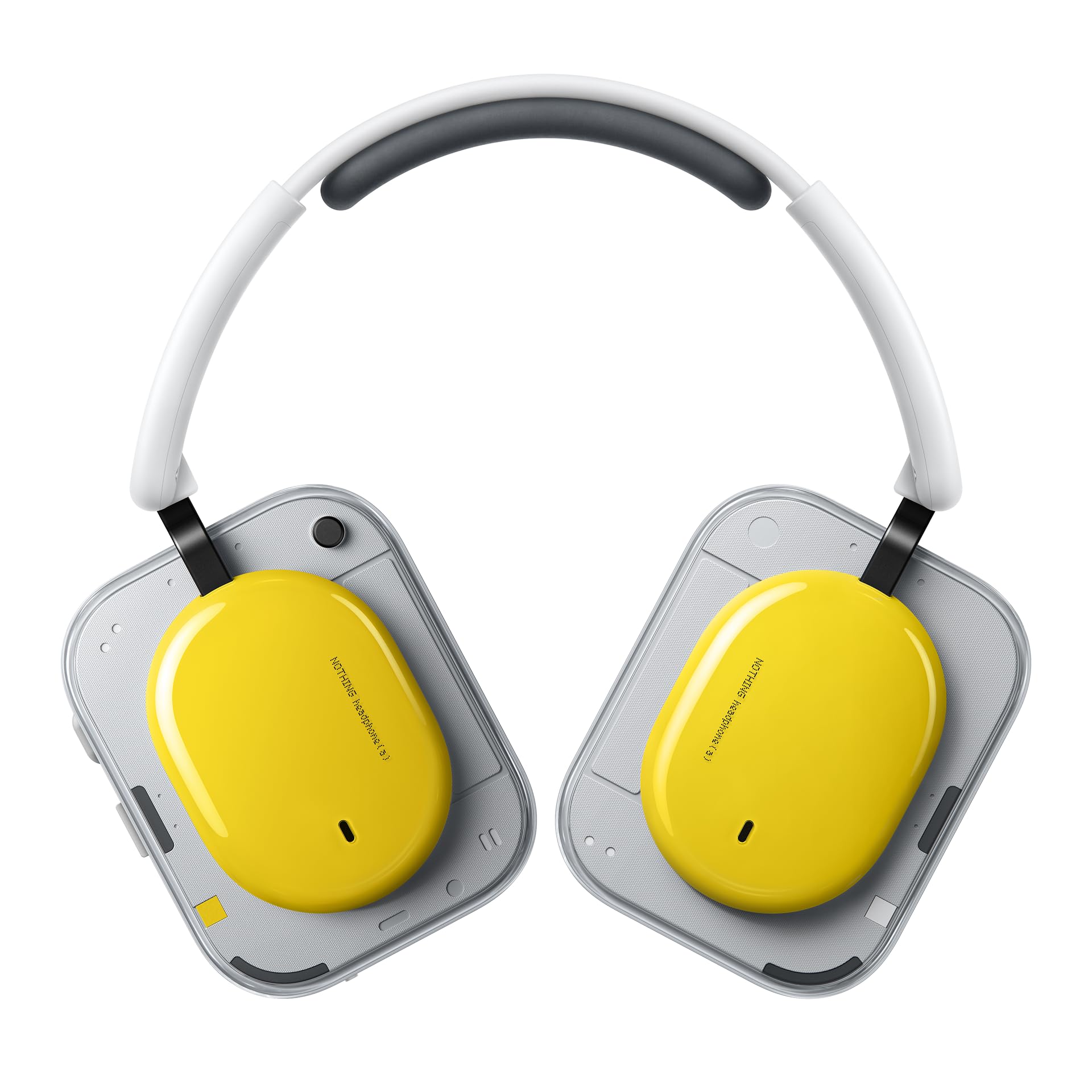
| Nothing Headphone (a)Playtime Champion | All-day wireless with ANC | Bluetooth 5.4 | 40 mm | 135 hours | Amazon |
| HIFIMAN Edition XS | Audiophile open-back listening | Wired (3.5 mm detachable) | Planar magnetic | — | Amazon |
| HEAVYS H1H | Bass-heavy wireless sessions | Bluetooth 5.1 | 40 mm | 50 hours | Amazon |
| MEZE AUDIO 99 Classics Second Gen | Wood-cup audiophile showpiece | Wired (3.5 mm / USB-C) | — | — | Amazon |
| Bose QuietComfort (2nd Gen) | Travel and rich sound | Bluetooth 5.4 | — | 24 hours | Amazon |
| Bose QuietComfort (Blue Dusk) | Everyday ANC all-rounder | Bluetooth 5.1 | — | 24 hours | Amazon |
| Sony WH-1000XM6 | Top-tier noise cancelling | Bluetooth 5.3 | — | 30 hours | Amazon |
In‑Depth Reviews
1. PHILIPS Fidelio X2HR Over The Ear Open Back Wired Headphone
Our pick — 4.5+★ from 8,000+ verified ratings; the strongest balance of quality and price.
The headband does the fitting for you — a stretchy mesh hammock that settles onto your head and stays there.
This is the pick for the listener who wants studio-grade sound without a fiddly size dial. The self-adjusting hammock band — 3D mesh on the inside, genuine leather on the outside — flexes to your head shape the moment you put it on. No slider to set, no notch to hunt for. The 50 mm neodymium drivers (the speaker units that actually make the sound) are large, and they give you a wide, open soundstage that puts instruments around you rather than stacked in your ears.
The open-back architecture (vents behind each driver) is the defining feature here. It lets air move, so vocals sound natural and the stage feels roomy, and it is exactly why this is a desk headphone. Sitting at a computer, producing music, or gaming late at night, this is where those big 50 mm drivers sing. The replaceable memory foam earpads with breathable velour finishing are a practical touch, because you can swap them out when they wear instead of replacing the whole headphone.
What wins people over is the sound itself — the sheer openness and clarity of it. Value is the next thing buyers talk about, and it is a fair read: this delivers a lot of audio for what you pay. The trade-off is honest and physical. Open-back means the outside world gets in and your music gets out, so do not take these on a noisy commute. Some also find the clamp or the headband fit needs a break-in period; if you have a smaller head, give them a day or two to settle before judging.
What earns the top spot
- Self-adjusting 3D mesh hammock band flexes to your head with zero fiddling
- Big 50 mm neodymium drivers with a wide, airy open-back soundstage
- Replaceable memory foam earpads with breathable velour finishing
- Detachable 3 m oxygen-free cable plus a 3.5 mm to 6.3 mm adapter in the box
Where it asks something of you
- Open-back design leaks sound both ways — a bad fit for noisy commutes or quiet offices
- Wired only, so you are tethered and there is no battery-free freedom of movement
- The clamp and head fit can want a break-in stretch for smaller heads
Made for: the desk listener, producer, or gamer who wants an airy, wide sound and a band that fits itself.
Think twice if: you need to block out a train carriage — the open-back vents work against you there.
2. Hook-and-Loop Sleeping Headphones 2-Pack Bluetooth Headband
A soft band you cinch with a hook-and-loop strap — built for lying on your side, not for a listening chair.
Side sleepers get the most out of these. The low-profile speakers rest over your ears instead of pressing into the ear canal, so white noise, a podcast, or an audiobook keeps playing while your ear takes the pillow. The hook-and-loop strap (the same grippy fastener material as a velcro-style tab) lets you tighten the band to your head and keep it flat through the night. The stretchy fabric is meant for sleep, yoga, travel, and light workouts, so you can leave it on when you roll over or get up.
Pairing this sleep band with your phone or tablet is quick and steady, thanks to Bluetooth 5.4. Playtime runs up to 14 hours on a charge, with a 1–2 hour recharge — enough for a full night with room to spare. Raised, separate buttons let you change volume, skip tracks, and answer calls in the dark without looking. When it needs a clean, pull out the electronics and hand-wash the fabric.
The two-pack logic: one band for the bed, one for the gym bag or a partner is genuinely useful, and the electronics-free wash keeps it hygienic over time.
Set your expectation: this is a comfort-first sleep tool, so treat the sound as clear and balanced for wind-down audio rather than a match for the big-driver picks in this list.
Reach for this if: you fall asleep to audio and hate hard earbuds against your ear.
Look elsewhere if: you want serious music fidelity — this is about comfort in bed, not critical listening.
3. Nothing Headphone (a) Adaptive Active Noise Cancelling Headphones
One hundred and thirty-five hours between charges — this is the headphone you forget to plug in.
The rated playtime is up to 135 hours with noise cancelling off, or 75 hours with ANC on — versus 14 hours on the sleep band above. A 5-minute top-up buys 8 hours of playback, so a forgotten charge before a flight is not a disaster. The 40 mm dynamic drivers pair with LDAC Hi-Res wireless certification and Spatial Audio for a wide, detailed stage.
The noise cancelling is the piece to think about. It is hybrid adaptive ANC with four selectable levels (High, Mid, Low, and Adaptive) plus a Transparency mode, and it adjusts to your surroundings. The app open up a Personal Sound Profile and an Ultra Bass setting if you want more low end. Controls use a roller and paddle interface, which is easier to find by feel than a flat touch panel. There is also a neat extra: a remote camera shutter that presses your phone’s shutter from the earcup, handy for vlogs and group shots.
Comfort holds up over long sessions, and the design turns heads — the yellow is a statement. The honest catch is the noise cancelling itself: it is the most debated feature on this headphone, so if deep, aircraft-cabin silence is your top priority, audition it against the Bose picks below before committing. Sound quality is what keeps people happy overall, so as an all-day music companion with exceptional stamina, it delivers.
Land on this one when: battery anxiety is real and you want modern wireless features without charging every night.
Pass it over if: class-leading noise cancellation is the whole reason you are buying.
4. HIFIMAN Edition XS Open-Back Planar Magnetic Headphones

Planar magnetic drivers and stealth magnets — the most spacious, detailed listen in this lineup.
Here is the headphone for the person who sits down to listen, not to multitask. Instead of a conventional cone driver, the Edition XS uses a planar magnetic driver — a thin flat diaphragm moved by magnets on either side. HIFIMAN’s NEO supernano diaphragm responds fast and pulls out fine detail. The Stealth Magnet shape lets sound waves pass through without the turbulence a normal magnet creates, which cuts distortion. The result is a wide, natural soundstage that can place a singer front and center.
The headband is a lightweight ergonomic design with memory foam inside, and it works to spread weight so you can sit for hours. The 3.5 mm cable is detachable, so a snagged cord is a cheap fix rather than a dead headphone. This is a wired, open-back desk instrument — pair it with a proper amp or DAC and it rewards the effort. It is the kind of headphone that makes a well-recorded album feel like a small venue.
Know what you are stepping into. The sound is the star; the fit is where opinions split, and some people with smaller heads find it loose, while others want a gentler clamp for long sessions. It is also physically open, so it leaks and lets room noise in, and the planar design is a heavier, more deliberate thing to wear than a lightweight wireless set. Treat it as a stay-put listening companion, not a commuter.
Who it is for: the detail-chaser with a quiet room and a decent source, chasing an open, realistic stage.
The real caveat: plan for a firm fit and a nose for its size — this is not a plug-and-go pair for every head shape.
An easy call for: audiophiles who listen at a desk and prize soundstage above all.
Not your pair if: you want portability and silence — open-back planars want a quiet room and a seat.
5. HEAVYS H1H Wireless Over-Ear Headphones
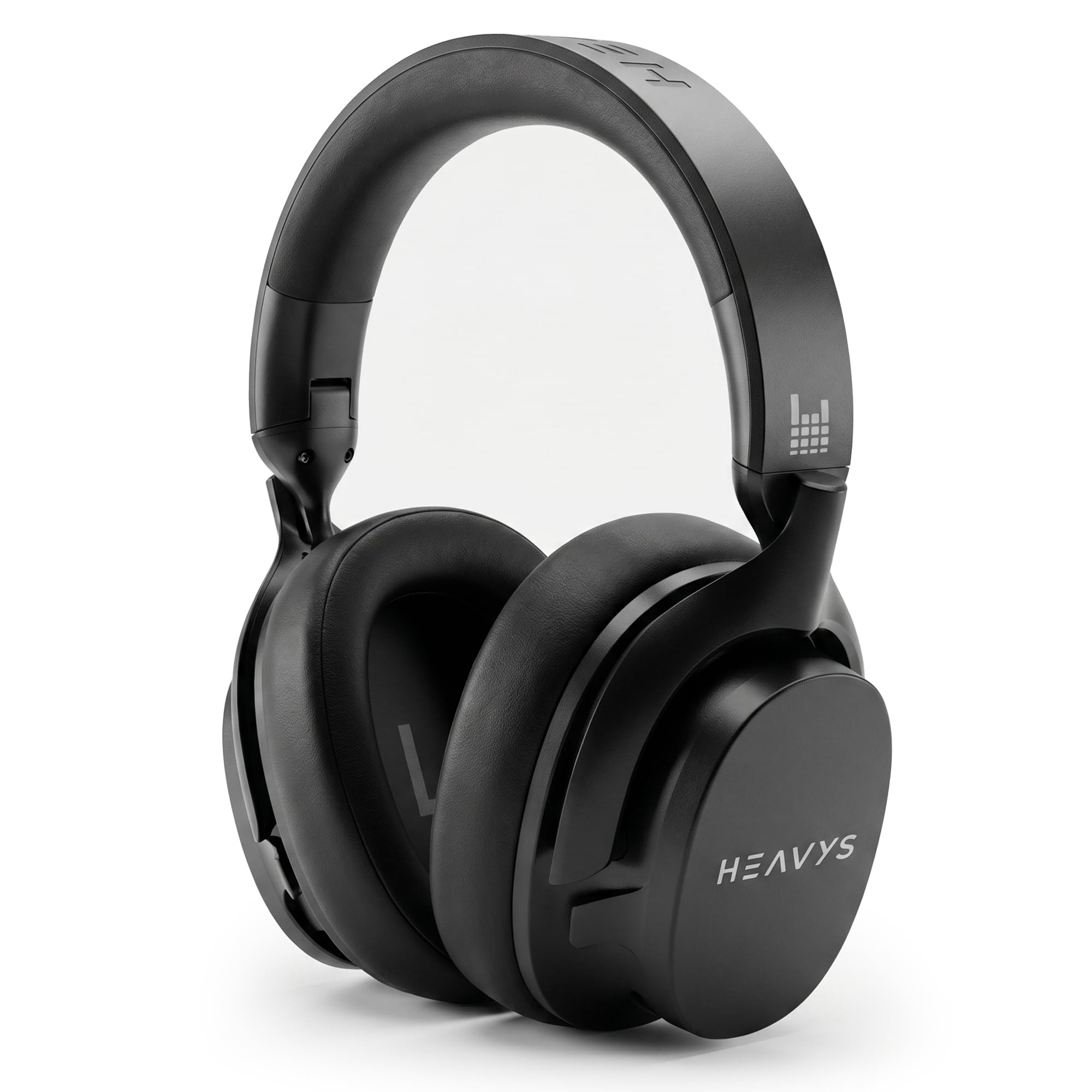
Eight speakers inside two cups — four per ear — aimed squarely at people who want to feel the low end.
Most headphones use one driver per side. This one stacks four speakers per ear, arranged with front-facing tweeters and dual woofers. The idea is separation: tweeters handle the highs in front of your ear for direction, while the woofers push bass with less distortion even when you crank it. The design tries to mimic how sound reaches your outer ear before the eardrum, which is meant to cut listening fatigue over long sessions. If bass-heavy tracks are your thing, this is the build that chases them.
You get up to 50 hours per charge, charged in about 4 hours, plus a wired mode when you want to switch off the radio. The earpads use pressure-distributing foam and are replaceable, so long listening sessions stay comfortable. Multipoint pairing keeps two devices connected, and the foldable, detachable-cable design makes it a reasonable traveler. Build quality is the thing buyers praise most here, which matters when a headphone carries this much hardware.
The trade-off to weigh is noise cancelling. It is the most split topic on this headphone — some find it strong, others find it does not quite match the premium ANC sets in this list. If you want silence on a plane above all, look to the Bose picks. If you want a big, physical bass presentation with a long battery and solid construction, this earns its place.
The pitch in one line: a bass-forward, four-driver-per-ear design that you feel as much as hear, with a 50-hour tank.
Where it lands short: noise cancellation is its weakest link, so buy it for the sound and stamina, not the silence.
Worth grabbing for: bass lovers who want a durable, long-running wireless set with wired backup.
Keep looking if: pristine noise cancelling is the feature you care about most.
6. MEZE AUDIO 99 Classics Second Gen Wooden Closed-Back Headphones

Hand-finished walnut cups and a self-adjusting spring-steel band — the pair you notice on the shelf first.
Some headphones are tools; this one is an object. Each pair’s earcups are machined from solid walnut, then hand-finished and polished, so no two sets look alike. The self-adjusting headband runs on a manganese spring steel frame that distributes pressure evenly, so it fits as you put it on without a manual slider. Closed-back wooden cups give you noise isolation without the leak of an open-back design — the opposite approach to the Fidelio above.
The 2nd Gen retunes the tuning toward a balanced, neutral target, with bass a touch more controlled so midrange and treble come forward. A clever extra: acoustic absorbers let you shift the voicing warmer, so you get two tonalities in one headphone. Snap-fit earpads swap in seconds, and the whole thing is assembled with screws, not glue, so earcups, pads, cables, and band can all be serviced. The bundle includes a Kevlar-sheathed OFC cable and a USB-C DAC/amp for phones without a headphone jack.
Here is the honest read on sound. It is the most discussed aspect of this headphone, and opinions are split — some find the retuning fantastic, others expected more at this tier. Build and looks are where it clearly wins, so buy it for the craftsmanship and design, and audition the tuning if neutral-and-clean is your priority. It is a wired, self-adjusting, forever-repairable headphone for someone who values how a thing is made.
Pick this if: you want a unique wood-cup headphone you can repair for years, not replace.
Reconsider if: the sound signature is your only metric — try before you commit.
7. Bose QuietComfort Headphones (2nd Gen)

A wider sliding headband, legendary noise cancelling, and lossless audio over USB-C — the long-flight package.
For the frequent flyer, this is the one to weigh first. The updated design adds a wider headband than the previous generation, with more of the supple synthetic leather found on the earcups, and it balances clamping force for a secure, lightweight fit. The sliding adjustable headband sets your size precisely. Bose QuietControl noise cancelling with ActiveSense handles adaptive reduction, and there is now also a Cinema Mode plus Immersion for content, and an ANR-off option when you want to hear the room.
Whatever you play sounds more rich with Bose TrueSpatial Technology, and the 2nd Gen adds high-fidelity lossless audio over a USB-C connection — a wired path that skips Bluetooth compression (the data squeeze wireless audio uses) entirely. Battery runs up to 24 hours with full noise cancelling, or up to 18 with TrueSpatial on, with a 3-hour full charge and a 15-minute quick charge for 2.5 hours of playback. You can even charge while you listen. Improved call handling better blocks background noise so your voice stays clear.
The fit is where a few buyers split — the adjustability gets mixed notes, so check the headband range suits you. Sound, noise cancelling, and connectivity are the strengths buyers consistently land on, and wireless range reaches 30 feet from your device. The hard-shell case protects it in a bag. Think of this as the travel-and-call headphone that also happens to sound great.
Why it travels well: adaptive noise cancelling, a 15-minute quick charge for 2.5 hours, and a hard case included.
Where to check: the sliding band’s range matters — size it to your head before you commit.
For the road warrior: frequent travelers and call-heavy workdays where silence and clarity matter.
Try the fit first if: you have a head size that sits at the edge of typical headband ranges.
8. Bose QuietComfort Bluetooth Headphones (Blue Dusk)

The crowd-favorite noise canceller — a plush padded band, 24 hours of quiet, and the Blue Dusk colorway.
If you want one set for commute, office, and home, start here. Plush earcup cushions hug your ears, and the padded adjustable band keeps them gently in place through long sessions. Quiet and Aware modes toggle between full noise cancelling and full awareness of your surroundings — awareness is the transparency mode that lets announcements in. An adjustable EQ lets you tune bass, mid-range, and treble to your taste.
Battery runs up to 24 hours on a single charge, and a 15-minute top-up adds up to 2.5 hours of playback. The batteries-plus-cable backup means you can plug the included audio cable in and keep listening even when the battery is flat. Multipoint Bluetooth keeps your phone and laptop connected at once, so you switch without re-pairing. The Bose app adds software updates and feature access. This is the everyday, do-everything quiet headphone.
The honest note is on value and reliability — some find it well worth it, others expected more at this tier, and a few flag reliability. Sized against how many people love it, those are minority voices. Quality and sound sit at the top of the praise, with noise cancelling and comfort close behind. The adjustable headband deserves a mention too, because a padded band that stays put is why these last through a full workday.
The everyday argument: Quiet and Aware modes, adjustable EQ, and 24 hours make this the no-thought daily driver.
The honest caveat: value is debated by a minority, so buy it for the noise cancelling and comfort, which are its clear strengths.
The default choice for: anyone who wants one headphone for commute, office, and home without overthinking it.
Look to the 2nd Gen if: you specifically want lossless USB-C audio and the newest modes.
9. Sony WH-1000XM6 Noise Cancelling Wireless Headphones

A processor and twelve microphones working in real time — the most aggressive noise cancelling here.
For pure quiet, this is the headphone to beat. The HD Noise Canceling Processor QN3 works with 12 microphones in real time to detect and cancel external noise. An Adaptive NC Optimizer adjusts to ambient noise, air pressure, and even how you wear them — including over a hat or glasses. Fewer distractions, more music. Six AI beamforming microphones keep your voice isolated on calls, with wind-resistant design for outdoor talking.
Sound is co-developed with mastering engineers, using a driver with a lightweight carbon fiber dome to keep vocals and instruments balanced. The 3.5mm detachable cable and USB-C charging are included, and the foldable design packs into a compact case with a magnetic closure. A wider, asymmetrical headband with smooth synthetic leather and a stepless slider adjusts to your head. Battery runs up to 30 hours, with a 3-minute charge buying up to 3 hours of playback on a USB-PD adapter.
Two things to weigh honestly. Fit is the most split topic — some find it comfortable, others say it sits tight over the ears, so try the headband range against your head. And value is debated by a minority, as you would expect at this top tier. The adjustable headband and stepless slider are genuinely helpful here, because the pressure-free all-day fit is a big part of the pitch. If noise cancelling is the reason you buy headphones, this is the ceiling.
The top of the tree for: buyers who want the deepest noise cancelling and don’t mind auditioning the fit.
Weigh the fit if: you have a head size that finds tight bands uncomfortable — the clamp is the polarizing part.
Understanding the Specs
Headband Type and Adjustment
An adjustable headband comes in three broad styles. A self-adjusting hammock band uses mesh or elastic to rest on your head and flex to your shape, so there is nothing to set. A sliding band with a stepless or padded adjuster lets you pick an exact size. A hook-and-loop strap lets you cinch the band flat and snug, which suits sleep and exercise. Pick the style that spreads weight across your crown rather than pinching one spot.
Driver Size and Open versus Closed Back
The driver is the speaker unit inside each earcup; a larger driver in millimeters generally moves more air. Open-back headphones vent behind the driver, so the sound feels airy and wide, but they leak and let room noise in — great for a desk, poor for a commute. Closed-back headphones seal the cup for isolation. Open-back suits a quiet desk; closed-back suits trains and shared rooms.
Playtime and Charging
Battery life is quoted as a ceiling, and noise cancelling, spatial audio, and higher volume all pull it down. Some headphones quote playtime with ANC off and a shorter figure with it on, so read both. Quick-charge figures tell you how much playback a short top-up buys, which matters more on a travel day than the full-charge number.
Bluetooth Version and Connections
The Bluetooth version is the wireless standard the headphone uses to pair with your phone or laptop; a higher number generally means more stable, efficient pairing. Wired headphones skip wireless entirely and use a detachable 3.5 mm cable, and some add a USB-C path for lossless audio. Multipoint lets one headphone stay connected to two devices, which is handy for switching between a laptop and a phone.
FAQ
Will an adjustable headband actually fit a larger or smaller head?
Can I wear Bluetooth headphones like the sleep band to bed every night?
What is the difference between open-back and closed-back headphones?
Do I need an amp or DAC to run the planar magnetic HIFIMAN Edition XS?
How long does the battery last on the noise cancelling picks?
Can I still listen if the battery dies on the wireless headphones?
Are the Fidelio X2HR and HIFIMAN Edition XS good for commuting?
Do the earpads and cables wear out and get replaced?
Which pick has the best noise cancelling for a flight?
Can I connect these headphones to two devices at once?
Final Thoughts: The Verdict
For most people, the adjustable headband headphones that get out of the way best are the PHILIPS Fidelio X2HR: its self-adjusting mesh hammock band fits itself, while the 50 mm open-back drivers (speakers that let air escape for a wider sound) deliver a wide, natural sound at a desk. Want the deepest quiet and a stepless sliding band? Reach for the Sony WH-1000XM6. Fall asleep to audio? The Hook-and-Loop Sleeping Headphones are the pair built for lying on your side. Start with the band that fits your head; the rest follows.
How We Picked
We do not accept paid placement. Every pick is matched to a real buyer and a real use-case; we do not hands-on test units.
Sources & Methodology
Specifications: manufacturer listings and product documentation. Review insights: verified customer reviews, as of November 2026. Pricing: not shown on this page (it changes often); check the current price via the retailer link.
As an Amazon Associate, Gadgets Feed earns from qualifying purchases. This does not affect which products we feature.