
Our readers keep the lights on and my morning glass full of iced black tea. As an Amazon Associate, I earn from qualifying purchases.
Specs are compiled from manufacturer listings and verified buyer reviews and can change over time — please confirm the key details on the product page before buying.
An adjustable lever arm is only worth owning if it stays exactly where you put it. The whole point of a lever arm — whether it is a friction arm holding a camera overhead or a jammer arm bolted to a power rack — is that one knob or lever locks the joint and the load stops moving. Get that wrong and you spend every session re-tightening instead of working. This guide breaks down the seven arms worth your money, sorted by what they actually hold and how they lock.
I’m Min — the founder and writer behind Gadgets Feed. This guide is built by comparing the manufacturers’ published specifications and the patterns across verified customer reviews, so you get each pick’s real strengths and trade-offs instead of marketing spin.
Two families dominate this category: camera and lighting arms built around friction joints, and steel rack attachments built around lever geometry. What separates a keeper from a return is load rating, thread standard, and how the joint locks — and the picks below cover both worlds.best adjustable lever arm
Our Picks at a Glance


How To Choose The Best Adjustable Lever Arm
The first question is not how much you want to spend — it is what you are hanging off the end of the arm and how often you will move it. A camera arm gets repositioned twenty times in a shoot. A rack-mounted lever arm gets set once per exercise and then loaded with plates. Those two jobs demand completely different joints, so pick your family first.
Friction joints versus locking levers
A friction joint (a ball-and-socket end you tighten with a knob until it grips) lets you swing and stop anywhere in its arc. That is the right tool when you need micro-positioning for framing. A locking lever acts more like a switch — it is either clamped or free — and it shines when you want repeatable positions under load. Camera arms in this list lean friction; rack arms lean lever.
Thread size and rack hole diameter
Camera-side arms connect through female threads, and the two standards you will meet are 3/8″ and 1/4″ — both appear on the same arm here, so tripod heads and clamps swap straight over. On the rack side, hole diameter rules everything: an arm listed for 5/8″ or 1″ holes simply will not drop into a 1/2″ rack without drilling. Measure your rack holes before you buy, not after.
Published load ratings
Load ratings are written in pounds and describe what the arm is designed to hold. Treat them as the ceiling, not the target. The most common owner complaint in this category is not that an arm failed at its rating — it is that wobble and flex start showing up well before it. If you plan to load near the top of a rating, plan to check the mounting hardware too.
Quick Comparison
| Model | Best For | Load Capacity | Arm Length | Mount Style | Amazon |
|---|---|---|---|---|---|
| Manfrotto 244N Variable Friction Arm★ Best Overall | Pro camera and light rigging | Up to 6.6 lbs | 20″ (53 cm) | 3/8″ and 1/4″ female threads | Amazon |
| JiGiU 4040 Angle Connector Joint ConnectorBest for Builders | Aluminum extrusion framing pivot | — | 1.57″ | 4040 slot and 8 slot extrusion | Amazon |
| Kyostar Hydraulic Drift Handbrake | Drift and rally rear lockup | 3/4 master cylinder | 15.75″ | Steel bracket, universal fit | Amazon |
| FAGUS H Belt Squat Attachment | Home rack leg training | — | 28″–46.5″ | 3″x3″ or 2″x2″ racks, 1″ or 5/8″ holes | Amazon |
| SELEWARE Adjustable Lever Arms | Versatile rack lever work | 600 lbs per arm | — | 3″x3″ racks, 5/8″ or 1″ holes | Amazon |
| Manfrotto 143N Magic Arm | On-set light and monitor mounting | Up to 6.6 lbs | 20.87″ folded | Clamps 1/2″ to 2″ surfaces | Amazon |
| Kipika Power Rack Jammer Arms | Full-body rack training | 600 lbs per arm | 1.3 ft to 3.59 ft grip heights | 2″x2″ racks, 5/8″ or 1″ holes | Amazon |
In‑Depth Reviews
1. Manfrotto 244N Variable Friction Arm Without the Camera Platform
Our pick — over 4★ from 450+ verified ratings; the strongest balance of quality and price.
A 20″ aluminum friction arm rated to 6.6 lbs, with a variable friction knob that locks any angle in the arc.
If you mount anything overhead — a light, a monitor, a tube mic — this is the one to start with. It is a 20″ (53 cm) aluminum arm that carries up to 6.6 lbs and locks through a variable friction knob instead of a hard on-off clamp. That means you can loosen it, glide the joint to the exact angle you want, and tighten it back down without the whole rig flopping mid-adjustment. At 2.5 lbs it travels in a normal gear bag.
What wins people over is pure function: the arm does what it is told, over and over, and the friction adjustment is the second most-praised thing about it. The dual-sided ball joints end in 3/8″ and 1/4″ female threads — the two standard camera-mount sizes — so with an adapter plate you can mount an iPad or a MIDI controller. One owner describes using it on a power rack for a keyboard shelf: “Works great for temporary and sometimes even full time mounting of vision systems,” adding that Manfrotto accessories “all pair with eachother.”
Here is the catch nobody puts on the box: it ships unassembled. You get roughly ten parts and no instructions, so budget assembly time on the first setup. Value and long-term durability get a genuinely mixed reception — most owners call it worth the money, a minority find it steep, and a used-unit buyer found his missing a cork friction washer, which he returned. Buy from a seller with a clean returns path.
What earns the top spot
- Variable friction control lets you position mid-swing and lock without tools
- 6.6 lb load rating covers full-frame cameras, LED panels, and monitors
- 3/8″ and 1/4″ female threads match standard tripod and clamp accessories
- 20″ reach with 2.5 lb carry weight — long enough to clear a light stand, light enough to pack
What to plan around
- Arrives unassembled with no instructions in the box
- Higher buy-in than most friction arms, and durability opinions split
- Quick release and super clamp are separate purchases
- Load capacity tops out at 6.6 lbs — heavy cinema rigs need a bigger arm
Reach for this if: you rig cameras, lights, or monitors into awkward spots and want one arm that repositions smoothly instead of fighting you.
Look elsewhere if: you want something that works the second it leaves the box, or you need to carry more than 6.6 lbs.
2. JiGiU 2PCS Angle Connector Joint Connector 4040 Nut8 180° Rotation Flexible Hinge
A two-pack of 4040 extrusion joints with a hand-tightened clamping lever and 180° of rotation.
This one is a different animal from the camera arms — it is a pair of 4040 aluminum extrusion joints with a clamping lever, and at 1.57″ long by 1.57″ wide, it is by far the smallest thing in this group. The Kyostar handbrake runs 15.75″ long, so the size gap between these two picks is enormous. That is not a weakness: these are meant to disappear inside a frame and give you one hinged corner that you can tighten by hand.
The body is zinc alloy and the handle is aluminum alloy, which is why buyers describe the pieces as heavy duty and well made — several say they plan to buy more. The clamping lever gives the joint a full 180° rotation range, so it is built for a folding keyboard shelf, a pivoting monitor bracket, or a sim-rig accessory arm. One user mounted it on a Sim racing rig for a keyboard pivoting shelf and reported it “worked great.”
The honest catch is what one less-impressed buyer flagged: the inserts meant to stop the joint twisting do not grip all that well, and he recommends adding thread locker and lock washers. At the top end of its range it is also not a continuously adjustable tool — the mounting screws and brackets are soft-threaded and will not take constant re-tightening. Order the right slot size, too: at least one buyer ordered the 2020 version while needing the 4040 size and found himself holding two tiny connectors he had no use for.
The fit test: you need a European-standard 4040 slot with an 8 mm threaded end hole drilled into the profile — the connector does not work with customized extrusion. Get that right and it drops in.
Where it lands: set it to a position and leave it. If you plan to swing this joint back and forth every session, the softer threads will let you down; use thread locker and lock washers and you will get far more life out of it.
Worth buying if: you build with 4040 extrusion and want a hand-tightened pivot at one corner without re-drilling anything.
Skip the hassle if: you need a joint that survives constant daily adjustment — this one prefers to be set and left alone.
3. Kyostar Aluminum Racing Handbrake, Hydraulic Drift Handbrake Lever Long Arm Brake Lever

A 15.75″ machined-aluminum handbrake with a steel bracket and a 3/4 master cylinder for locking rear wheels.
This is the pick for anyone whose “lever arm” is a handbrake — the kind you pull to lock the rear wheels and rotate a car through a corner. Kyostar builds it from machined aluminum with a steel bracket, and that steel bracket is the point: it cuts flex so more of your pull reaches the master cylinder. The arm runs 15.75″ long and 6.2″ wide, giving you real leverage, and the 3/4 master cylinder is sized to lock up even large 2-port rear brakes as found on Skylines.
Owners running drift and rally builds call it smooth and responsive, and the machined finish draws comment — one reviewer noted the machine work “looks amazing.” It offers adjustable pretension and pin positions so you can set custom heights, and it ships with the handbrake included.
Two things to sort before you order. First, this is a drift-only part — the maker states plainly it “can’t for original car,” and it needs a stock brake assembly removed plus clearance room matching the listed dimensions. Second, expect some install fuss: one e46 owner with a QMS dual caliper setup got the wheels locking but found the top reservoir bolt hard to reach, and recommends blue thread locker on the hardware before you install it. Handle length also draws minor grumbling, so measure your mounting depth first.
What it does well: a long shaft plus a 3/4 cylinder plus a rigid steel bracket is exactly the recipe for lockup, and the adjustable pretension lets you dial in the pull that suits your style.
What it asks of you: fitting is on you — drilling, trimming, and thread locker are part of the job, and it is not a swap-in for a street car’s parking brake.
Built for: drift and rally cars where the rear needs to break loose on command and you are comfortable doing the install.
Not built for: a daily driver or a stock parking brake — this is a dedicated hydraulic setup.
4. FAGUS H Adjustable Length Belt Squat Attachment for All Power Racks
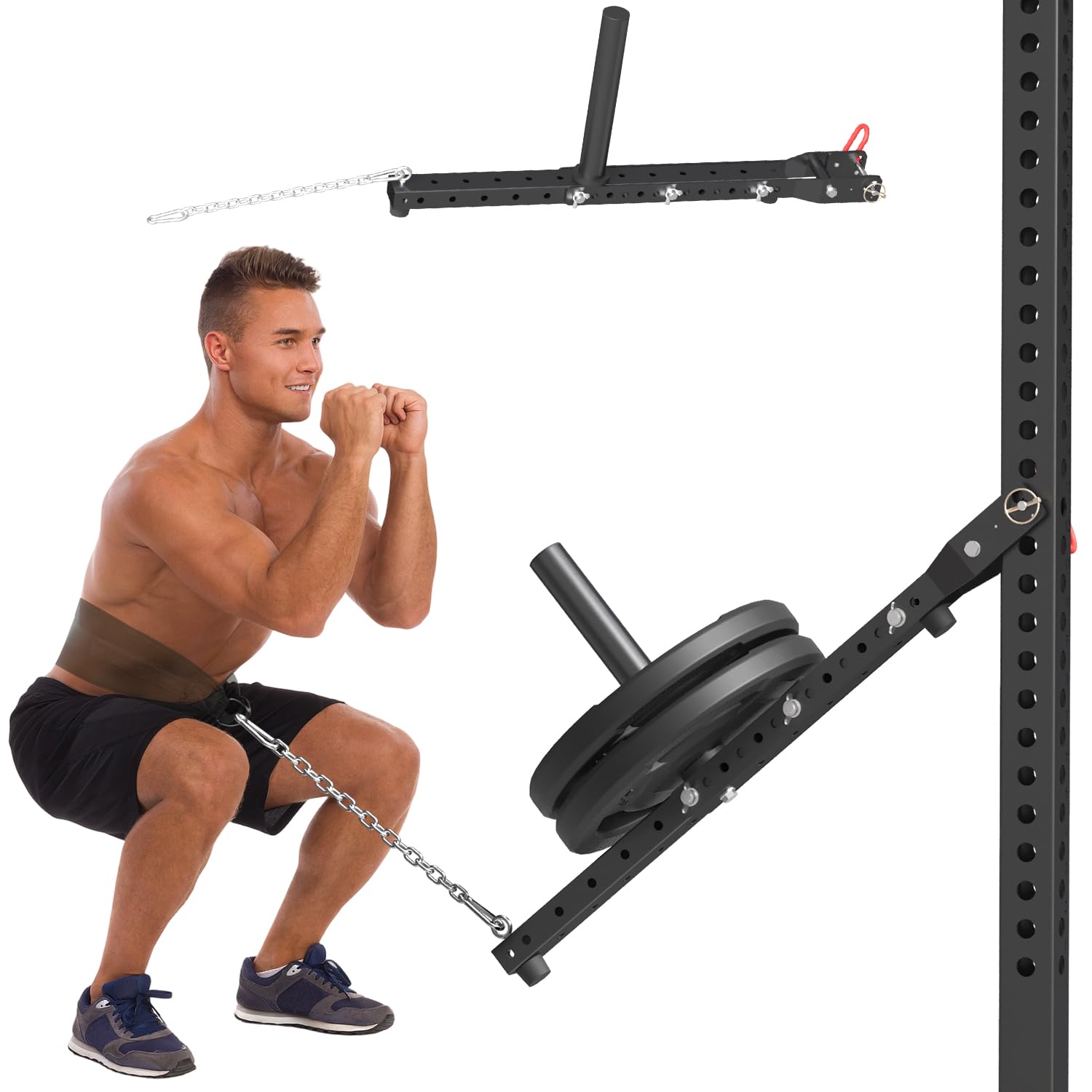
A belt squat attachment that flips to fit 2″x2″ or 3″x3″ racks and adjusts from 28″ to 46.5″.
Most rack attachments make you choose: a 2″x2″ rack or a 3″x3″ rack. This one handles both — you flip the main body over to match whichever uprights and hole pattern you own. It fits 3″x3″ or 2″x2″ power racks with 1″ or 5/8″ holes, so a Rogue Monster Lite wall mount at the 3″ end and a plain 2″x2″ rack with 5/8″ holes are both covered.
The adjustable lever arms run from 28″ to 46.5″ in length, and that range is the useful part — it lets you set the starting height for deep squats or reset it higher for curls or rows. Owners describe it as durable and heavy-duty, with pin attach and detach making it quick to mount and slim enough to store. Assembly is measured in minutes, not afternoons.
The main gap buyers raise is that it is strictly a squat-style lever arm — it travels one plane, and it has no kickstand option, which at least one owner said he would happily pay extra for. The clearest real-world note comes from a user who found it “easy to load and use hold onto plates for deep squats,” and liked that bailing out is as simple as sitting down and unclipping. Its main limit is that it cannot do everything a full jammer-arm pair does.
Why rack owners like it
- Adapts to both 2″x2″ and 3″x3″ racks by flipping the body
- 28″–46.5″ adjustable length covers deep squats up through rows and curls
- Assembles in minutes and stores slender, so a small garage gym keeps its floor
Where it falls short
- No kickstand option — a common request that is not offered
- Works in one plane, so it is not a full lever-arm rig
- Package tips the scale; plan for a two-person lift onto the rack
Made for: a home gym owner running one rack who wants belt squats, rows, and curls without buying three separate attachments.
Not the tool for: anyone who wants a kickstand or needs true side-to-side lever travel.
5. SELEWARE Adjustable Lever Arms Jammer Arms for 2” x 2” and 3” x 3” Power Racks

Alloy steel arms rated 600 lbs each, with 10 handle height positions on 3″x3″ racks.
SELEWARE builds these from alloy steel with a black powder-coated finish, rates each arm at 600 lbs, and gives the handle 10 levels of height adjustment. It is designed for 3″x3″ racks with 5/8″ or 1″ holes and takes standard 2″ Olympic plates, so it slots into most strength racks. The design is insertion-and-swing: slide the insert into the rack hole, swing down, and it locks.
What earns praise most here is the quality — the welds and hardware read as gym-grade, and the height and angle range lets you shift between muscle groups without swapping attachments. For explosive pressing and rowing movements, that adjustability is the whole sell.
Where this arm gets complicated is the hardware and the load ceiling. Multiple owners describe significant slop in the connection, with the plates able to strike the rack if you are careless, and the protective rubber between the arm and the rack is thin enough to scratch your finish. One owner reports the support pin giving way mid-rep, well below the 600 lb rating, so if you plan to load heavy, check every bolt and keep your weight honest. Others call the build out for weak stopper pins and bolts sharp enough to catch your hands.
The read: the arm itself is not the weak link — the mounting hardware is what people end up replacing. Inspect the bolts and rubber pads on arrival and thread-lock anything that wiggles.
What it gives back: ten grip heights and a locking swing motion mean less fiddling and faster transitions between pressing, rowing, and squatting drills.
Buy it if: you want a lot of positions on a 3″x3″ rack and you are prepared to upgrade the bolts and add grip tape.
Don’t buy it if: you expect to load 600 lbs straight from the start — treat that number as a ceiling, not a promise.
6. Manfrotto 143N Magic Arm – Arm Alone without Camera Bracket

A 6.6 lb aluminum arm with a center lock lever that clamps every joint at once and grips surfaces from 1/2″ to 2″.
Where the 244N uses a knob to dial in friction, this arm uses a center lock lever: pull it, set your whole articulation, and push it back to clamp every joint at once. It is built from aluminum, holds up to 6.6 lbs, and clamps to surfaces from 1/2″ to 2″ — light stands, shelf edges, tube frames, all fair game. The folded size runs 20.87″, so it packs down between shoots.
Owners describe the build as excellent — several note the arms lock very securely once engaged, ideal for placing a camera, flash, or light head in a spot you cannot reach with a stand. It is the classic easy setup, and it complements the 244N above rather than replacing it: settle on the friction knob if you want to tweak the joint mid-shoot, choose this arm if you want one clean clamp and a rock-solid hold.
The main point to weigh before you buy is the locking lever itself — it is praised as secure but criticized as hard to engage and disengage. The most-praised aspect among buyers is how well the joint holds once it is engaged, followed by how well it rigs a light into a tight corner. If you shoot run-and-gun and need to reposition constantly, the tighter feel may frustrate you; if you want a one-and-done clamp, it is exactly what you want.
The trade-off: a single center lever means the whole arm locks rigid the instant you flip it — great when the arm is set, awkward when you are dialing in. It favors setup once, leave it alone.
Setup facts: it mounts to flat and tubular surfaces between 1/2″ and 2″, and the crew on set tends to keep spares because it is an accessory you reach for often.
Pick it if: you mount lights and monitors into tight spots and you would rather lock the whole rig in one motion than fiddle with three separate joints.
Look past it if: you constantly micro-adjust a camera’s angle — the stiff lever will slow you down.
7. Kipika Power Rack Jammer Arms – Adjustable Height & Angle Lever Arm System
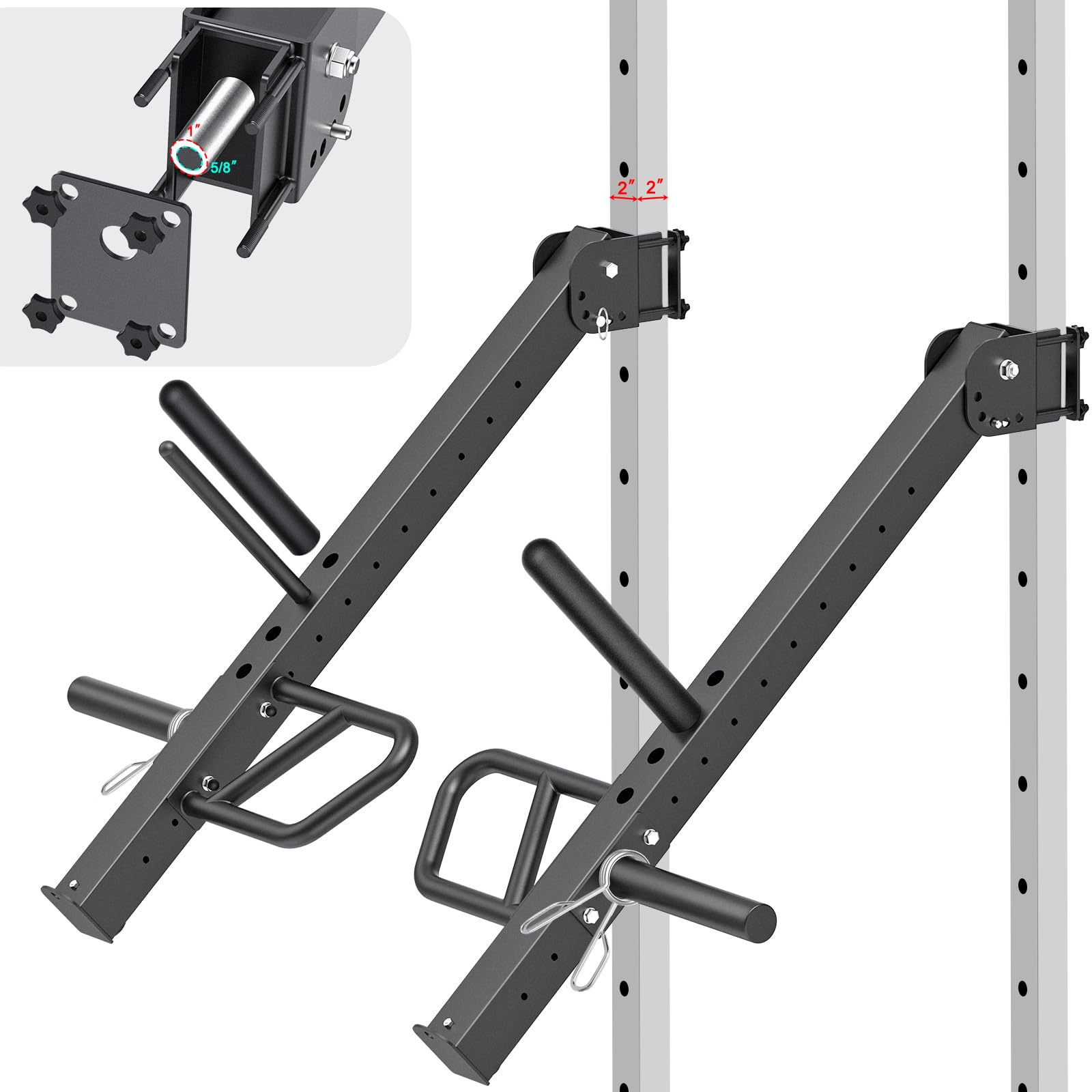
Steel jammer arms with 14 grip heights from 1.3 ft to 3.59 ft and five locking angles, rated 600 lbs each.
Kipika’s jammer arms set the bar for adjustability in this lineup: 14 grip height settings spanning 1.3 ft to 3.59 ft, plus five locking positions that let you take neutral, pronated, or angled grips on presses, rows, and shrugs. Each arm is built from high-strength steel with a scratch-resistant finish and rated at 600 lbs, and they fit 2″x2″ racks with 5/8″ or 1″ holes and all 2″ Olympic plates. The brand does flag one thing up front: verify your rack’s hole size before you order.
What people notice is how sturdy the arms feel once they are in the rack — heavy-duty, no beam flex under hundreds of pounds, with only a slight twist at the rack mount from loose tolerance. Owners also like the practical extras: rubber mount pads are included, two weight horns per arm stay out of the way, and the pin-style bracket keeps the floor clear when the arms are stored. One buyer mentioned that straight up-and-down travel — rather than a curved path — opens up far more exercises than curved competitors allow.
Plan around two things. Changing a handle’s position means pulling two bolts per arm, which is slow mid-session, and the rack pins only come in 5/8″ or 1″ — if your rack uses 1/2″ holes you will be drilling them out. The maker also shipped thumb nuts that one owner found prone to failing under load, so swap in solid metal nuts before you go heavy.
The standout: that 14-position range is what separates this from the cheaper jammer arms — you can set it up for a 5-foot-tall lifter as easily as a 6-foot-2 one.
The recurring gripe: tool-time. Four bolts per arm if you want to change a handle position or move the arms out of the way, so settle on your setup and leave it.
Right for: lifters with a 2″x2″ or 3″x3″ rack who want one tool that does pressing, rowing, and squatting work without a spotter.
Think twice if: you like to rearrange your rig mid-workout, or your rack runs 1/2″ holes — you will be drilling before you lift.
Understanding the Specs
Load capacity in pounds
A load rating tells you the maximum weight an arm is designed to support at the joint, and it tracks directly with the material and joint style. A 6.6 lb camera arm runs on friction and lightweight aluminum; a steel rack arm rated at 600 lbs leans on thick brackets and welded pins. The rating is a ceiling — flex and wobble often show up first in the mounting hardware, so inspect bolts and rubber pads before you push toward the top of that number.
Arm length and adjustment range
Length is what gives you leverage and reach. A 20″ friction arm reaches past a light stand; a 28″–46.5″ rack arm sets your starting squat height; a 15.75″ handbrake gives your wrist the throw to lock rear wheels. When an arm’s length is adjustable, the range is the spec that matters most — it decides which exercises and which body heights the attachment suits.
Thread and hole compatibility
Camera-side arms connect through female threads sized 3/8″ or 1/4″, the two standard camera-mount sizes. Rack-side arms mount through rack holes, and the two common sizes are 5/8″ and 1″ — most arms will not fit a 1/2″ rack hole without drilling. Extrusion joints have their own spec: a 4040 connector needs a European-standard 4040 slot with an 8 mm threaded end hole. Match all three numbers to your hardware before ordering.
Joint style: friction, lever, or cam
A friction joint is tightened gradually with a knob, letting you reposition mid-swing. A locking lever clamps every joint at once for a rigid hold. A cam or insert-style joint drops into place and locks with a twist. Friction joints favor constant re-aiming; locking and insert joints favor set-and-hold use under heavy loads. Which you need depends on whether you move the arm twenty times a session or set it once and clamp it tight.
FAQ
Will the Manfrotto 244N fit my tripod head?
Do I need to assemble the Manfrotto 244N from the start?
What is the difference between the Manfrotto 244N and the 143N Magic Arm?
How do I know which rack size fits my power rack?
Can the SELEWARE lever arms handle 600 pounds in real use?
Will the JiGiU 4040 joint connector fit my aluminum extrusion?
Is the Kyostar handbrake usable in a street car?
Which arm is easiest to adjust between exercises?
Do adjustable lever arms need thread locker?
Final Thoughts: The Verdict
The top pick is the Manfrotto 244N Variable Friction Arm — its variable friction control, 6.6 lb capacity, 20″ reach, and aluminum build make it the arm most people should reach for first. If you want a faster, more rigid camera mount, the one-lever Manfrotto 143N Magic Arm holds the same 6.6 lbs and clamps surfaces from 1/2″ to 2″. For a home gym, the FAGUS H Belt Squat Attachment adapts to both 2″x2″ and 3″x3″ racks and gives you 28″–46.5″ of adjustable length for leg work, while the SELEWARE and Kipika arms suit lifters who want the full range of rack exercises and are prepared to tighten up mounting hardware. Whichever way you go, check thread size or rack hole diameter first — that single number decides whether your arm fits at all.
How We Picked
We do not accept paid placement. Every pick is matched to a real buyer and a real use-case; we do not hands-on test units.
Sources & Methodology
Specifications: manufacturer listings and product documentation. Review insights: verified customer reviews, as of September 2026. Pricing: not shown on this page (it changes often); check the current price via the retailer link.
As an Amazon Associate, Gadgets Feed earns from qualifying purchases. This does not affect which products we feature.