
A fixed stride length on an elliptical is a gamble. Too short and your gait feels clipped, forcing your hips into an unnatural rock that can irritate the lower back. Too long and you over-reach, losing the fluid pendulum motion that makes low-impact cardio actually sustainable. An adjustable stride elliptical solves this by letting you match the machine’s range of motion to your own leg length, walking gait, and workout goals — from a compact high-cadence sprint to a long, gliding stride for steady-state endurance.
I’m Min — the co-founder and writer behind Gadgets Feed. I’ve spent hundreds of hours cross-referencing flywheel weights, magnetic resistance torque curves, noise isolation designs, frame weld quality, and customer longevity reports across dozens of home elliptical models to isolate the machines that genuinely deliver on stride adjustability without wobbling or wearing out.
Whether you are shopping for a machine that fits tall users, a compact footprint that still opens up for a longer reach, or a smooth transition between stride lengths mid-workout, this guide breaks down exactly what separates a so-so elliptical from a truly capable one in the best adjustable stride elliptical machine category.
How To Choose The Best Adjustable Stride Elliptical Machine
Selecting an adjustable stride elliptical means evaluating core mechanics that a fixed-stride machine doesn’t require you to think about. The following factors determine whether the machine feels like an extension of your body or a frustration you learn to tolerate.
Stride Length Range and Your Height
The most critical spec on an adjustable stride elliptical is the minimum and maximum stride length. Shorter users (under 5’4″) often feel most natural at 16–18 inches, while taller users (6’0″ and up) need at least 19–20 inches to avoid a cramped gait. A machine that adjusts between 16 and 20 inches covers the widest range of users. Pay attention to whether the adjustment mechanism is tool-free and whether the stride transition can happen mid-workout or requires stopping and re-clipping the linkage arms.
Flywheel Weight and Inertia
A heavier flywheel smooths out the dead spots at the top and bottom of each pedal stroke. Look for a flywheel between 18 and 25 pounds for a home machine. Lighter flywheels (under 15 pounds) create a jerky, start-stop sensation that requires constant effort just to maintain momentum, undermining the low-impact promise of elliptical training. The flywheel’s inertia directly determines how natural the stride feels, especially at low resistance levels.
Frame Stability and Weight Capacity
An adjustable stride mechanism introduces more moving parts, which means more potential for wobble if the frame isn’t overbuilt. Look for a machine with a steel H-frame or O-frame design and a weight rating of at least 300 pounds. Adjustable stabilizer feet on all four corners are a strong sign that the manufacturer expects the machine to be placed on uneven surfaces without rocking. Test the side-to-side rigidity of the arm handles during a dry push-pull motion before committing.
Resistance System and Noise Output
Magnetic resistance is the gold standard for silence and minimal maintenance. Eddy-current magnetic systems produce near-silent operation — typically under 20 dB — and require no pad replacement or lubrication. Belt-drive systems are quieter than chain-drive systems and reduce vibration transfer through the frame. If noise is a concern (apartment living, early morning workouts), prioritize a magnetic resistance machine with a belt drive and measure the noise claims against real user reports.
Quick Comparison
On smaller screens, swipe sideways to see the full table.
| Model | Category | Best For | Key Spec | Amazon |
|---|---|---|---|---|
| Niceday CT11PRO-20 | Premium | Tall users and heavy-duty home use | 20″ stride, 500 lbs capacity | Amazon |
| SOLE E25/E35/E95 | Premium | Power incline and muscle targeting | 20″ stride, 20 resistance levels | Amazon |
| NordicTrack Step Climber XL | Premium | Interactive training and smart features | 22 resistance levels, 16″ touchscreen | Amazon |
| Merach E27 | Mid-Range | High weight capacity on a budget | 19″ stride, 400 lbs capacity | Amazon |
| Teeter FreeStep SE2001 | Mid-Range | Joint rehab and seated exercise | 18″ stride, 13 resistance levels | Amazon |
| Sunny Health & Fitness SF-E3889SMART | Mid-Range | Budget-friendly quiet operation | 18″ stride, app connectivity | Amazon |
| GOELLIPTICAL V-450X | Entry-Level | Programmable workouts at low cost | 18″ stride, 24 resistance levels | Amazon |
In‑Depth Reviews
1. Niceday CT11PRO-20
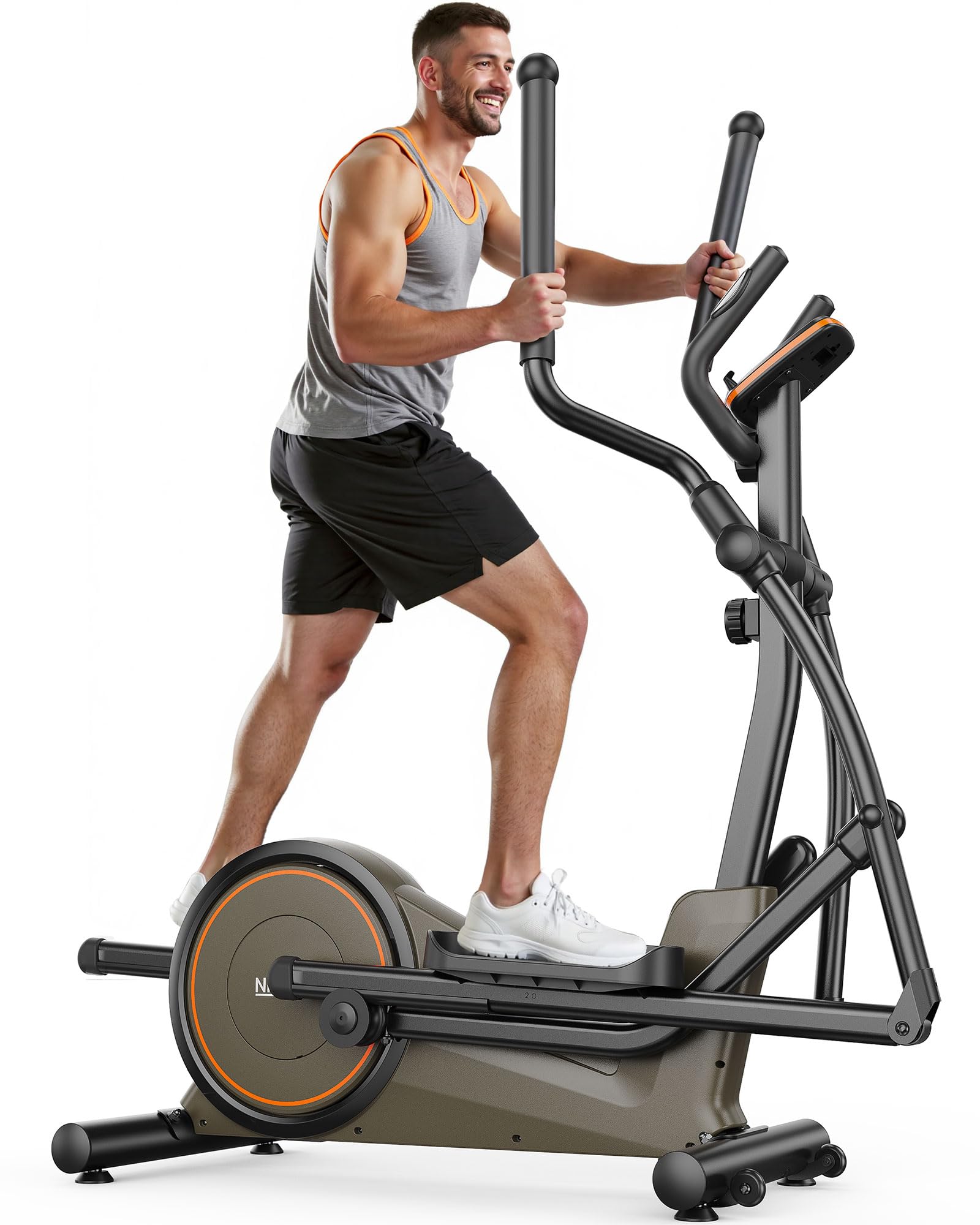
The Niceday CT11PRO-20 delivers the longest stride in this test at a full 20 inches, paired with an 18-pound flywheel that creates a smooth, heavy feel uncommon in machines under a thousand dollars. The double-linkage axis dynamic balance system keeps the gait consistent across the entire stride range, which reduces the toe-down pressure that causes numbness on shorter machines. With a 500-pound weight capacity supported by a 2-inch thickened H-shaped steel tube frame, this machine feels rock-solid under aggressive strides — no lateral sway or creaking.
Assembly is manageable at 85% pre-assembly, and the non-electric drive means you can place it anywhere without a wall outlet. The magnetic resistance system is genuinely near-silent; users consistently report whisper-quiet operation even at higher cadences. The HD display tracks time, speed, distance, calories, and heart rate, though the pulse monitor on the fixed handlebars is less accurate than a chest strap. Kinomap app integration adds structured workout variety for those who need more than manual resistance changes.
Where the Niceday falls short is the resistance adjustment dial, which sits low on the console and feels less precise than the switch-based systems on premium competitors. The device holder also partially obstructs the display when a tablet is mounted. If you prioritize a long natural stride and bomb-proof build quality over extra console features, this machine earns its spot as the top pick for the adjustable stride category.
Why it’s great
- 20″ stride accommodates users up to 6’5″ without feeling cramped
- 500 lb weight capacity with an overbuilt H-frame for zero wobble
- Self-powered operation allows placement anywhere without a power cord
Good to know
- Device holder partially blocks the console display
- Resistance dial is low and not as ergonomic as switch controls
- Heart rate monitor on fixed handles is less accurate than standard
2. SOLE E25/E35/E95 Series
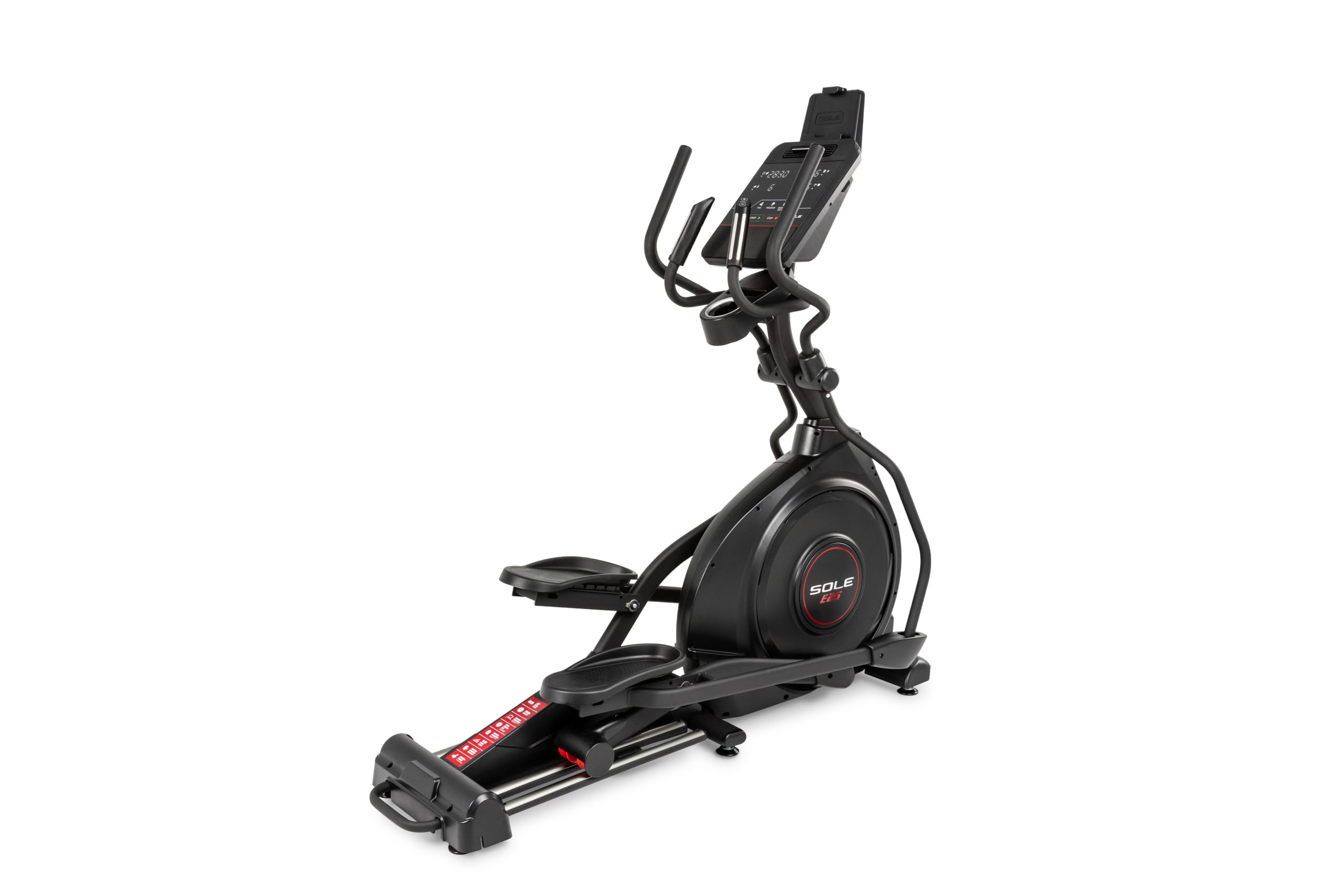
The SOLE elliptical series brings a feature that very few adjustable stride machines offer: a power incline ranging from 0 to 20 degrees. This changes the muscle recruitment pattern entirely — climbing an incline targets the glutes and hamstrings more aggressively than a flat stride, adding variety that keeps workouts from plateauing. The 20-inch stride is smooth and consistent, paired with a balanced 20-pound flywheel that feels substantial at every cadence. The 20 resistance levels allow fine-grained intensity control that matters when you’re alternating between incline settings.
The LED console is clear and readable, with a four-window display that shows time, distance, calories, and pulse simultaneously. Repositioned resistance and incline switches on the center arms are a thoughtful ergonomic touch — you don’t have to reach forward or break your stride to adjust mid-workout. The frame supports up to 350 pounds with a solid feel. Users report that the machine remains quiet and stable after a year of daily use, though some mention intermittent squeaks on the pedal platforms that may require occasional tightening.
The assembly process is time-consuming, with plastic covers that can be tricky to align. Delivery is curbside-only, so you’ll need help moving the heavy package (over 130 pounds) into your workout space. The cooling fan is relatively weak and won’t replace a dedicated floor fan for intense sessions. If power incline is your priority and you are comfortable with a longer assembly process, the SOLE series is the most versatile stride machine in the premium segment.
Why it’s great
- 0–20 degree power incline targets different muscle groups effectively
- 20 resistance levels with ergonomic center-arm switches for easy mid-workout adjustment
- 20 lb flywheel and 20″ stride deliver a smooth, natural gait
Good to know
- Assembly is slow and requires patience with plastic cover alignment
- Curbside delivery only — you must bring the box inside yourself
- Built-in cooling fan is too weak for intensive cardio sessions
3. NordicTrack Step Climber XL
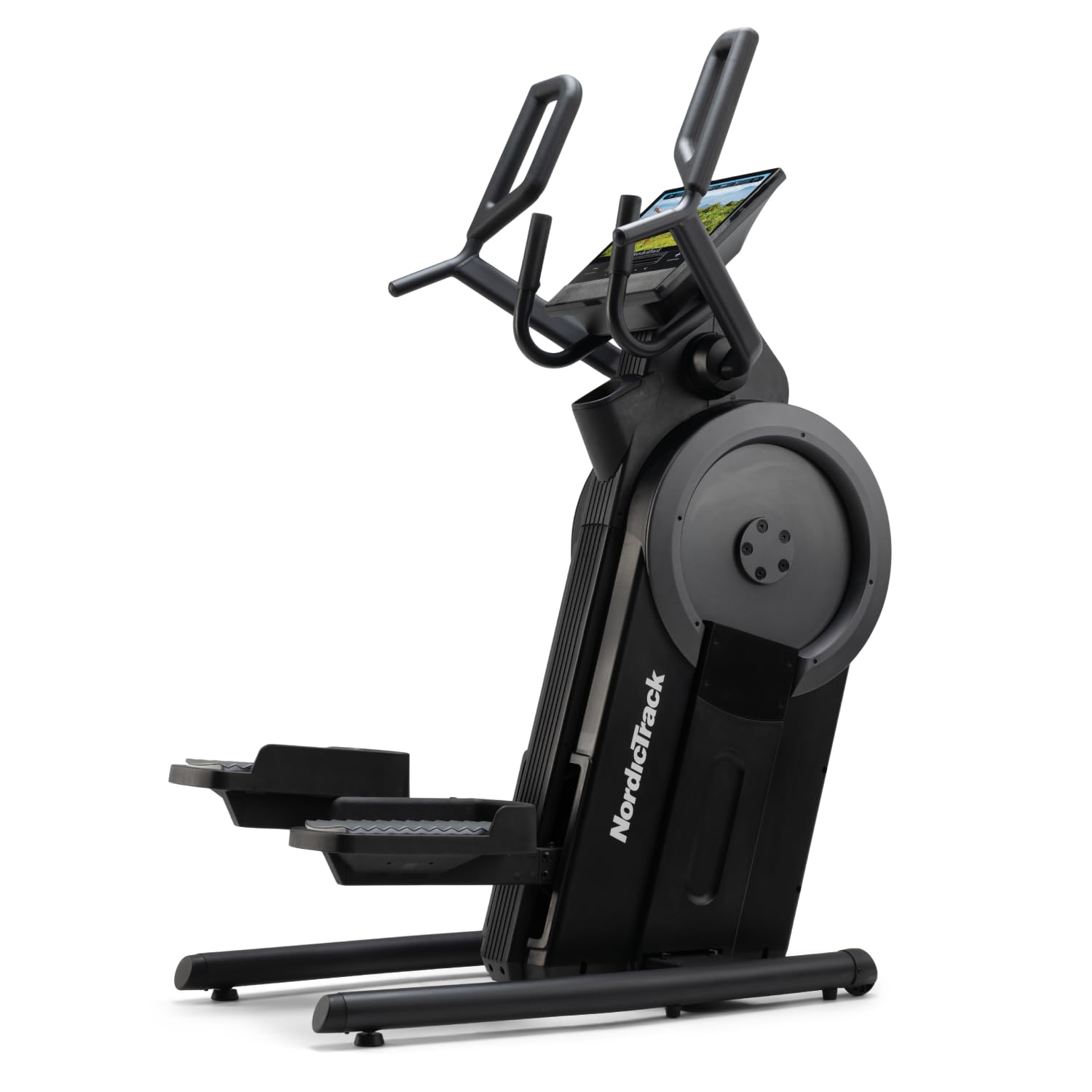
The NordicTrack Step Climber XL integrates a 16-inch HD touchscreen directly into the machine, creating an interactive experience that goes beyond standard console tracking. The 22 digital resistance levels adjust automatically via iFIT’s SmartAdjust feature, which learns your performance and adapts resistance in real time — this makes stride transitions feel seamless because the machine compensates for your fatigue curve. The oversized cushioned pedals reduce joint impact significantly, which matters during longer sessions when foot fatigue typically sets in.
The AutoBreeze fan automatically adjusts airflow based on workout intensity, a small but noticeable quality-of-life feature that keeps sweat from accumulating on the touchscreen. Integrated handle controls let you adjust incline, decline, and resistance without removing your hands from the moving handles. The machine syncs with Strava, Garmin Connect, and Apple Health, so your data flows into your existing fitness ecosystem. Users report that the build quality is excellent, with a solid frame that supports heavy daily use without developing squeaks.
The major caveat is the iFIT Pro Membership requirement (/month) to access most of the smart features. Creating and saving custom workouts is functional but frustrating without the subscription — the machine essentially requires an ongoing investment to reach full capability. The delivery process is also lengthy, with a wide delivery window that can waste an entire day. If you are comfortable with a subscription model and want a machine that thinks for you, this is the most technologically advanced option in the category.
Why it’s great
- 16″ HD touchscreen with iFIT integration for guided programming
- 22 resistance levels with SmartAdjust auto-adaptation based on performance
- Cushioned pedals reduce foot and joint impact during long sessions
Good to know
- Requires /month iFIT Pro Membership to access most smart features
- Custom workouts require subscription — limited free options
- Delivery window is wide and unpredictable; may require a full day wait
4. Merach E27

The Merach E27 is the budget-friendly surprise of this lineup, offering a 19-inch stride and a 400-pound weight capacity at a price that undercuts most competitors by hundreds of dollars. The double-thickness Gcr15 high-carbon steel base gives the frame a rigidity that you don’t expect at this price tier — no flexing during hard pushes. The 16-level electromagnetic resistance is controlled by a simple twist knob, and the 17.6-pound flywheel provides enough inertia to keep the stride smooth at lower cadences. The self-powered system means no power cord, so you can place it on a balcony or in a garage without worrying about outlet proximity.
The machine comes 90% pre-assembled, and setup takes under 20 minutes with the included toolkit. The compact footprint (58.5″ L x 22.2″ W) fits in smaller spaces without sacrificing stride length. Multiple handle positions allow you to target different muscle groups, and the smart display tracks heart rate, time, distance, calories, and speed. The Merach App provides personalized fitness plans for those who want guided workouts without a subscription fee.
There are some trade-offs at this price point. A few users report clicking noises after several weeks of use, which may require checking and tightening pin connectors. The forward pedal tilt can cause toe discomfort on sessions exceeding 90 minutes. The console loses workout progress quickly when paused, which is annoying if you take mid-workout breaks. If you need a heavy-duty adjustable stride machine on a tight budget and are comfortable with occasional minor adjustments, the Merach E27 delivers exceptional value.
Why it’s great
- 400 lb weight capacity with double-thickness steel frame at an affordable price
- 19″ stride fits taller users without the premium price tag
- Self-powered system with 90% pre-assembly for quick setup
Good to know
- Some units develop clicking noises that require connector troubleshooting
- Forward pedal tilt can cause toe discomfort on very long sessions
- Console loses workout data if paused for more than a brief moment
5. Teeter FreeStep SE2001

The Teeter FreeStep is structurally different from every other machine on this list — it is a recumbent cross trainer stepper, not a traditional elliptical. The seated position with a patented natural stride licensed from commercial physiotherapy steppers eliminates spinal loading entirely. This makes it the best option for users with arthritis, Parkinson’s, MS, or recovering from hip, knee, or back injuries. The 18-inch stride is not adjustable in the traditional sense, but the variable seat height and 3-position recline effectively change the biomechanics of the stride to accommodate different leg lengths.
The magnetic resistance system is whisper-quiet, with 13 levels controlled by an easy-grip lever. The dual power motion means the handles and pedals move together, distributing effort across upper and lower body muscles. You can isolate your legs by letting the handles rest or focus on arms by keeping your feet planted. The Teeter Move app provides free trainer-led classes without a subscription, which is a refreshing contrast to the subscription-heavy competition. The frame is aluminum and supports up to 300 pounds with a low 106.9-pound overall weight, making it easier to move than steel-framed machines.
The biggest drawback is the mount and dismount process — users with limited mobility may need assistance getting on and off, as the step-over height is higher than ideal. The seat cushion is firm and may become uncomfortable on sessions over 45 minutes; an aftermarket gel seat cover solves this. The console is basic, tracking time, distance, speed, and calories without smart features or app connectivity beyond the external Teeter Move app on your own device. If joint preservation or injury recovery is your primary goal, this machine is unmatched in the category.
Why it’s great
- Seated design eliminates spinal and joint stress — ideal for rehab and chronic conditions
- Patented physiotherapy stride mimics natural walking motion without impact
- Free training app with no subscription required for guided classes
Good to know
- Mounting and dismounting is difficult for users with limited mobility
- Seat cushion is firm and may require a gel cover for longer sessions
- Basic console lacks smart features and connected fitness integration
6. Sunny Health & Fitness SF-E3889SMART

The Sunny Health & Fitness SF-E3889SMART delivers a genuinely silent workout experience — the magnetic resistance system is so quiet that the only sound you hear is your own breathing. The 18-inch stride is fixed but aligns with the natural gait of most users between 5’4″ and 5’10”. The digital monitor tracks calories, distance, odometer, pulse, RPM, speed, and time, with a scan mode that rotates through metrics automatically. Bluetooth connectivity to the SunnyFit App allows you to track, adjust, and personalize workouts on your phone.
The frame is made from alloy steel and weighs 124 pounds, providing a stable base that doesn’t shift on carpet or hard floors. The pulse sensors on the fixed handles give real-time heart rate data, though they are less reliable than a chest strap during vigorous sessions. The long stride engages the full body effectively, and the low-impact nature protects knees and hips. Assembly is straightforward, with clear instructions and labeled parts that most users complete in under an hour.
The main limitations are the 265-pound weight capacity, which rules out heavier users, and the 18-inch stride, which feels cramped for anyone over 5’11”. A few users report quality control issues with the computer console or pedal assembly, and customer support can be inconsistent. If you are a lighter to average-weight user who prioritizes silence above all else and doesn’t need a long stride, this machine offers excellent value for the price.
Why it’s great
- Near-silent magnetic drive system ideal for noise-sensitive environments
- Bluetooth connectivity to the SunnyFit App for workout tracking
- Stable steel frame with easy assembly and clear instructions
Good to know
- 265 lb weight capacity limits use for heavier individuals
- 18″ stride is too short for users over 5’11”
- Quality control can be inconsistent — some units arrive with defective consoles
7. GOELLIPTICAL V-450X

The GOELLIPTICAL V-450X stands out with 24 resistance levels — the highest count in this lineup — giving you granular control over workout intensity that most adjustable stride machines don’t offer. The 18-inch stride is paired with a 20 kg inertia flywheel and a belt drive with a 1:12.7 speed ratio, which creates a smooth motion despite the relatively standard stride length. The 3-position chrome swinging arms and 8-position adjustable foot pedals allow you to fine-tune your body position beyond what most ellipticals offer, which matters when you’re trying to find the perfect ergonomic fit.
The console includes MP3 and iPod compatibility through a headphone port, a USB charging port for devices, and a built-in media rack. The heart rate monitoring via EKG contact sensors on the fixed handlebar works within a limited accuracy range but is functional for steady-state tracking. The random program feature creates unlimited workout variations, preventing the boredom of manual mode. The frame is alloy steel and weighs 131 pounds, providing a stable platform that feels solid during use.
The assembly process is the most time-consuming of any machine here — expect 2 to 4 hours depending on your mechanical experience. Some users report that screws don’t thread fully, requiring careful alignment. The console is plasticky and the pulse reader is notoriously inaccurate. A few units develop squeaks after weeks of use, and the plastic joint covers can break over time. If you prioritize the highest number of resistance levels and pedal adjustability and are willing to invest significant assembly time, the V-450X offers a feature-rich experience at an entry-level price point.
Why it’s great
- 24 resistance levels provide the most intensity granularity in this test
- 8-position adjustable foot pedals and 3-position arms for ergonomic fine-tuning
- Built-in media rack, USB charging, and MP3 integration
Good to know
- Assembly takes 2–4 hours and some screws may not thread cleanly
- Console feels plasticky and the heart rate monitor is unreliable
- Some units develop squeaks and plastic joint covers break over time
FAQ
What stride length do I need for my height?
Is a heavier flywheel always better on an adjustable stride machine?
Can I use an adjustable stride elliptical for physical therapy or injury recovery?
How much maintenance does an adjustable stride elliptical require?
Final Thoughts: The Verdict
For most users, the best adjustable stride elliptical machine winner is the Niceday CT11PRO-20 because it combines the longest stride range (20 inches) with a 500-pound weight capacity and a self-powered, near-silent magnetic drive system at a price that undercuts premium competitors by hundreds of dollars. If you want power incline to target glutes and hamstrings with every stride, grab the SOLE E25/E35/E95 series. And for injury recovery or chronic joint issues where spinal loading must be eliminated, nothing beats the Teeter FreeStep SE2001 with its seated physiotherapy design and free training app.