
Forget the guesswork of fixed-frequency drivers and the scorched fingers from overdriven coils. An adjustable ZVS driver puts the power curve in your hands, letting you tune the resonance for flyback experiments, induction heating, or plasma generation without swapping out a single capacitor bank. This is the sweet spot between raw high-voltage chaos and controlled laboratory-grade oscillation.
I’m Min — the co-founder and writer behind Gadgets Feed. After analyzing dozens of driver topologies and hundreds of user reports on oscillation stability, thermal runaway thresholds, and power-handling under load, I’ve isolated the adjustable ZVS drivers that actually let you dial in performance without blowing your load transistors on the first test fire.
This guide breaks down the top modules and kits available now, comparing thermal management, input voltage flexibility, and coil compatibility to help you find the best adjustable zvs driver for your specific bench experiments or repair applications.
How To Choose The Best Adjustable ZVS Driver
Picking the right adjustable ZVS driver means matching the board’s electrical limits to your specific load — whether that’s a flyback plasma arc or a work coil for induction annealing. The wrong driver will either saturate your transformer or cook its own MOSFETs within seconds.
Input Voltage & Current Ceiling
Most adjustable ZVS boards accept 12V to 30V DC, but the real limiter is the current your power supply can deliver. A 1000W module at 24V needs over 40A — anything less and the MOSFETs will drop out of ZVS mode, spiking switching losses and burning up the board. Verify your bench supply can deliver at least 1.5x the expected draw.
MOSFET & Heat Sink Quality
Cheaper boards use unbranded trench MOSFETs with high RDS(on), translating to more waste heat. Look for boards with IRFP260N or IRFP460NPBF MOSFETs paired with aluminum heat sinks that have visible fin depth — not just a bent tab. Good thermal paste application between the transistor tab and the sink is a telltale sign of manufacturing quality.
Onboard Adjustability vs External Control
True adjustable ZVS drivers include a trim pot (typically a 10k or 50k potentiometer) to vary the drive frequency. This lets you tune into the exact resonance point of your flyback or work coil, maximizing energy transfer and minimizing MOSFET stress. Without an adjustable pot, you are locked to a fixed frequency that may not match your coil’s natural resonance, leading to poor efficiency and premature failure.
Quick Comparison
On smaller screens, swipe sideways to see the full table.
| Model | Category | Best For | Key Spec | Amazon |
|---|---|---|---|---|
| ZVS Driver Module 12-30V | Mid-Range | Flyback & induction coil experiments | 12-30V DC, double layer FR4 PCB | Amazon |
| Low Voltage Heating Module 1000W | Mid-Range | Induction heating & annealing | 1000W max, 40mm coil ID | Amazon |
| Harsire Induction Heater 1300W | Premium | Automotive bolt removal | 1300W, flameless, 3 coils | Amazon |
| Taishi Induction Heater 1000W | Premium | Multi-coil rusted bolt loosening | 1000W, 4 coils, LED, cooling fan | Amazon |
| Solary Induction Heater 1200W | Premium | 15-second fast heating jobs | 1200W, 4 coils, smart cooling | Amazon |
| VEVOR Induction Heater 1800W | Premium | Heavy-duty mechanical repair | 1800W, 4 coils, shoulder strap | Amazon |
| Honeywell HZ322K Zone Kit | Premium | HVAC zone control (non-ZVS) | 3 zones, 24V, transformer included | Amazon |
In‑Depth Reviews
1. ZVS Driver Module 12V to 30V DC High Voltage Generator
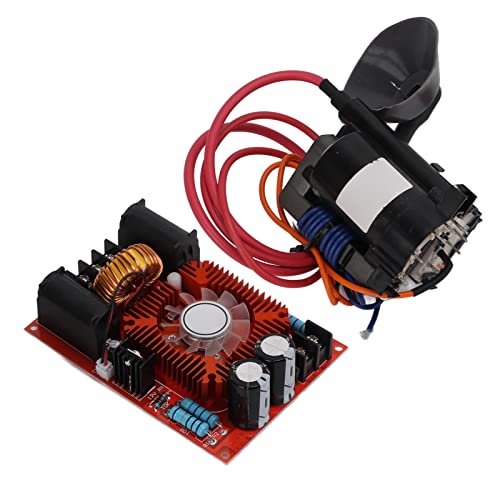
This LiebeWH ZVS module is the most balanced adjustable driver in the lineup, accepting 12V to 30V DC and using genuine zero-voltage switching topology to drive flyback and ignition coils with minimal switching loss. The onboard layout includes tinned high-current traces and a graphic-style heat sink that spreads thermal load effectively, keeping the MOSFETs from spot-heating during extended plasma arc demonstrations.
Built on a double-layer FR4 glass fiber board with thickened copper, the PCB resists pad lifting from repeated soldering and vibration — a practical advantage for lab setups where you’re swapping flyback transformers weekly. At 15.5 ounces, the module has enough heft to stay put on a bench without sliding around, and the stainless steel hardware used in the mounting points adds corrosion resistance in humid workshop environments.
Users report arcs jumping 4 to 5 inches at 24V input, and the flyback transformer heats predictably during high-power runs while the ZVS driver itself stays cool thanks to those wide tin-treated traces. The lack of printed instructions is a minor drawback, but the circuit is straightforward enough that experienced hobbyists will have it wired to a flyback and a 24V supply within minutes.
Why it’s great
- Double-layer FR4 PCB with thickened copper prevents pad lift during vibration or repeated soldering
- Input voltage range from 12V to 30V gives flexibility for different power supply configurations
- Wide tinned traces and aluminum heat sink keep the driver cool even during extended arc generation
Good to know
- No printed documentation included — wiring requires basic knowledge of flyback transformer pinouts
- Packaging can be minimal; some units arrive with bent pins if shipping box is crushed
2. Low Voltage Heating Module 1000W ZVS Driver
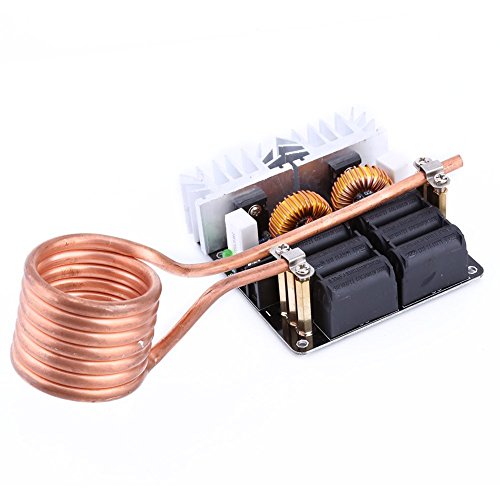
The Estink 1000W ZVS driver is the go-to choice for induction annealing and heat treatment experiments, including the heating coil with a 40mm inner diameter in the box. The maximum power rating of 1000W at 20A means you can drive a steel screwdriver tip to red-hot in four seconds flat, as multiple users have confirmed, making it practical for small-part hardening and annealing without a torch.
Constructed on FR4 material, the board holds up well under the thermal cycling of repeated heating runs, though the included coil connectors are basic clips that require careful bending and drilling to secure properly. Some users have reported that the unloaded coil draws a high idle current of 67.7A, so a quality 24V power supply rated for at least 50A is non-negotiable for safe operation.
The module operates at approximately 86 KHz and pulls around 400W in typical use, with the MOSFETs and capacitors staying reasonably cool under moderate duty cycles. One user melted a 7.62×51 case in about 1.5 seconds at full power, demonstrating the induction energy density this driver can deliver. The lack of overload protection means you must monitor the coil temperature yourself to avoid damaging the work piece or the driver.
Why it’s great
- Includes the heating coil with a 40mm inner diameter — ready to run out of the box
- Can heat a 6mm steel shank to cherry red in about 3 seconds at moderate power
- FR4 board material withstands repeated thermal cycling without delamination
Good to know
- No overload or short-circuit protection — requires a current-limited power supply or fusing
- Coil mounting clips are poor quality and may need to be replaced or modified to hold the work coil securely
3. Harsire Induction Heater 1300W 110V
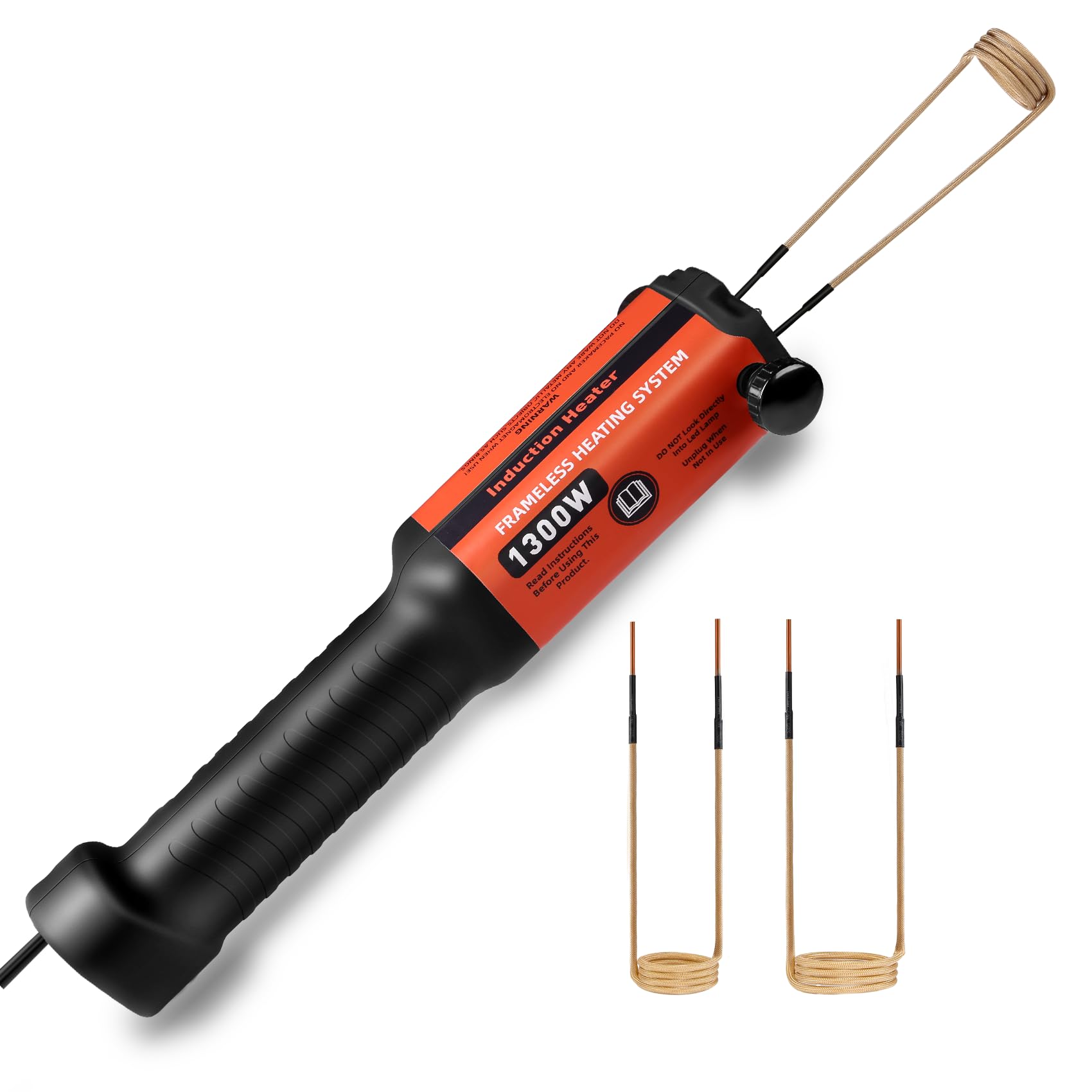
The Harsire 1300W induction heater is designed for the garage mechanic who needs to free rusted bolts and nuts without an open flame. Using magnetic induction technology, the handheld tool delivers concentrated heat directly to the metal surface within 25 seconds, leaving surrounding plastics, rubber bushings, and painted panels completely cool to the touch — a significant safety and convenience advantage over a propane torch.
Built with a heavy-duty aluminum casing and an ergonomic anti-slip handle, the unit weighs about 3.66 pounds and includes three specialized coils for different fastener sizes. The integrated smart cooling and overheat protection system prevents the tool from shutting down mid-job, though the cooling fan does produce a constant audible whir during operation that some users find noticeable in a quiet workshop.
Real-world users consistently report that the Harsire turns seized exhaust bolts into non-issues, with one mechanic noting it heats fasteners to glowing red without damaging adjacent rubber components. The built-in LED light at the working end is a genuine asset when you are working under a car in dim light. This is a purpose-built tool for automotive repair, not a bare PCB module for benchtop experiments.
Why it’s great
- Flameless induction heating eliminates fire risk from fuel lines and brake fluid near stuck bolts
- Three specialized coils let you match the induction field to different bolt diameters
- Integrated overheat protection and smart cooling allow continuous use without thermal shutdown
Good to know
- At 3.66 pounds, the tool is heavier than a typical torch, which can fatigue the wrist during overhead work
- The included coils are sized for automotive fasteners — not ideal for delicate electronics or small-scale induction heating tasks
4. Taishi Magnetic Induction Heater Kit 1000W
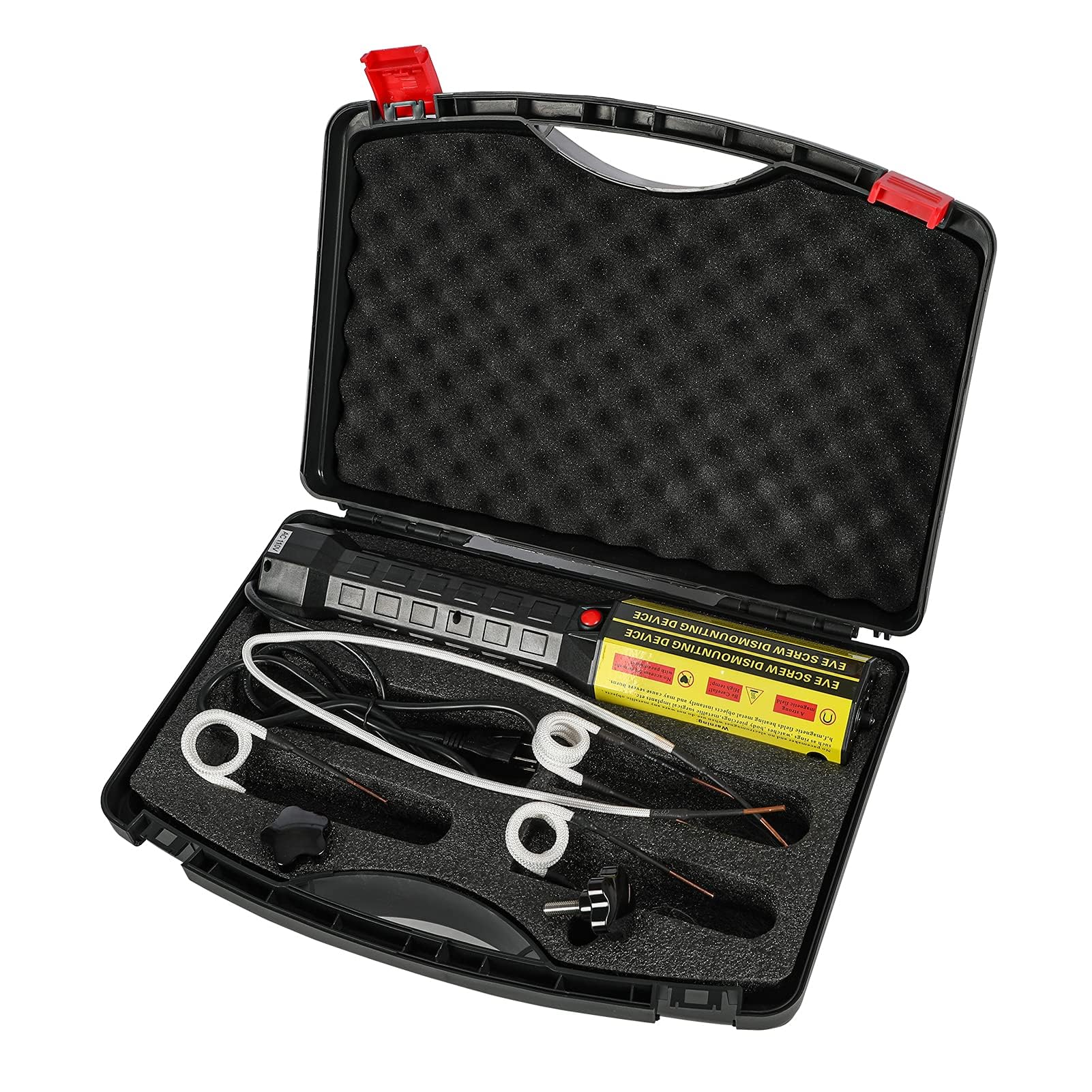
The Taishi 1000W induction heater is a complete kit that has been on the market since late 2019, earning a following among automotive DIYers and professional mechanics alike for its consistent performance on rusty bolts and seized nuts. The unit includes four coils — 20mm, 25mm, 30mm inner diameters, plus a soft copper wire coil — all packed in a hard plastic storage case that keeps the components organized and protected between jobs.
Ergonomic design is a clear priority here: the handle is shaped to reduce wrist fatigue during prolonged use, and a built-in LED illuminates the work area without requiring a separate drop light. The internal cooling fan and thermal protection circuit have proven reliable over hundreds of hours of duty-cycled use, though the unit is sensitive to power supply quality and requires a dedicated 20A outlet to deliver its full 1000W rating.
Users with old cars and farm equipment report that this tool has saved countless broken bolts and trips to the hardware store. The magnetic heating field works on fasteners from 8mm up to roughly 30mm, with larger nuts requiring a longer heat cycle and applications of penetrating oil. The soft copper coil is particularly useful for wrapping around oddly shaped fasteners where rigid coils cannot make good contact.
Why it’s great
- Four included coils cover a wide range of fastener sizes, from small 20mm nuts up to 30mm bolts
- Built-in LED light and ergonomic handle make under-car and low-light work practical without extra gear
- Thermal protection and cooling fan allow sustained use without performance degradation
Good to know
- Requires a 20A dedicated circuit to output full 1000W power — standard 15A circuits may limit heating speed
- Weight of 6.89 pounds makes it one of the heavier handheld induction tools in this comparison
5. Solary Magnetic Induction Heater Kit 1200W
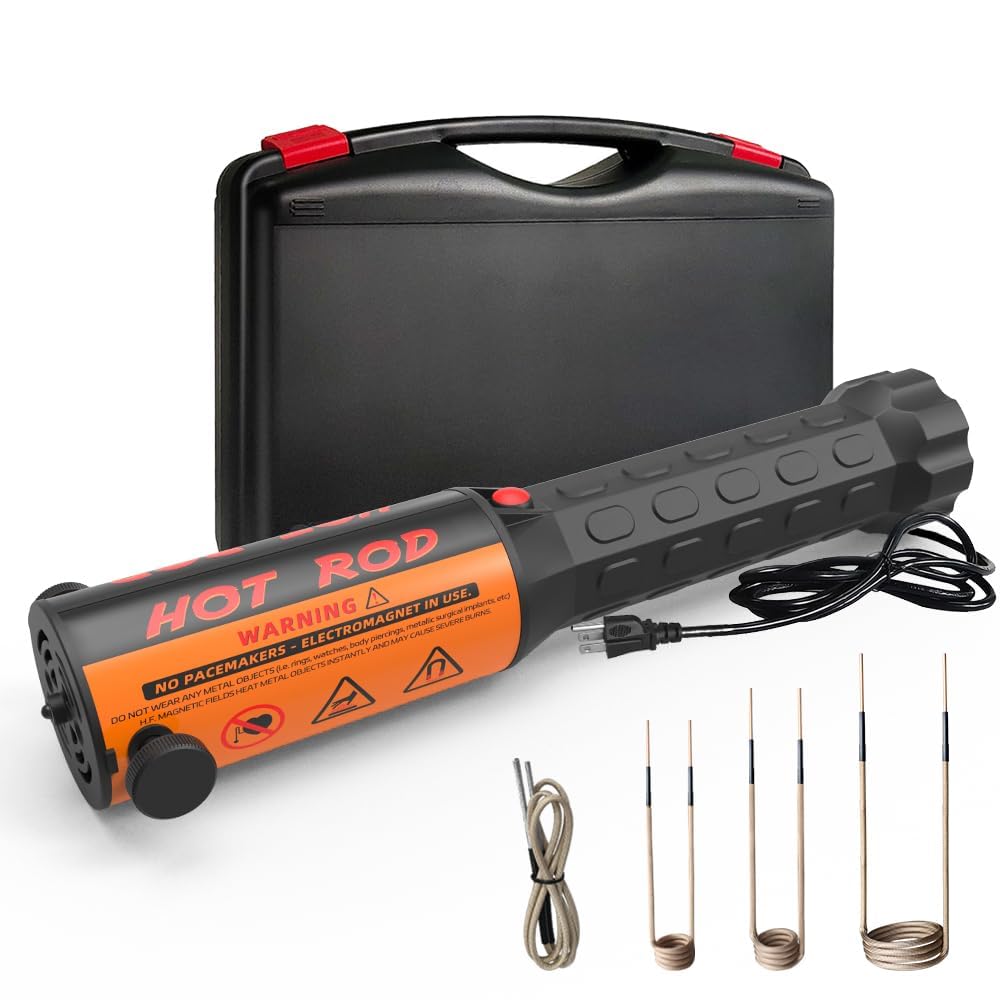
The Solary H7 induction heater is the newest entry on this list, arriving in early 2025 with a 1200W power rating and a focus on rapid heating — the manufacturer claims a 15-second cycle for common automotive fasteners. The kit includes four coil sizes: 15mm, 20mm, 30mm inner diameters, plus a flexible 1000mm long coil, giving you coverage from tiny exhaust manifold bolts to larger suspension components without needing to purchase additional accessories.
The smart cooling system is a standout feature: the fan activates automatically when the unit is powered on, requiring no manual intervention, and the overheat protection circuit cuts power if internal temperatures climb too high. The ergonomic handle and compact overall footprint — roughly 17.3 x 5.1 x 13 inches in the case — make this easy to store in a crowded toolbox drawer, and the bright orange casing makes it easy to spot on a cluttered bench.
Mechanics in the rust belt have reported this tool liquefies nylon lock nuts and loosens rusted tie rod ends without breaking studs — a major advantage over impact wrenches that often snap corroded hardware. One user experienced a failure after about 10 months of use, but the seller replaced the unit promptly under warranty. The heating speed for larger components is noticeably faster than 1000W units, reducing the time you spend waiting for metal to reach temperature.
Why it’s great
- Includes a 1000mm flexible long coil for accessing tight spots and wrapping around awkward fastener shapes
- Smart cooling with automatic fan activation removes the need to monitor temperature manually
- 15-second heating claim holds up in practice for most common sized automotive bolts and nuts
Good to know
- Warranty replacement process is straightforward but the unit may require an extension cord to reach the work area
- Heating performance is slightly less intense than a 1300W or 1800W unit for very large, thick fasteners
6. VEVOR Induction Heater Bolt Removal 1800W
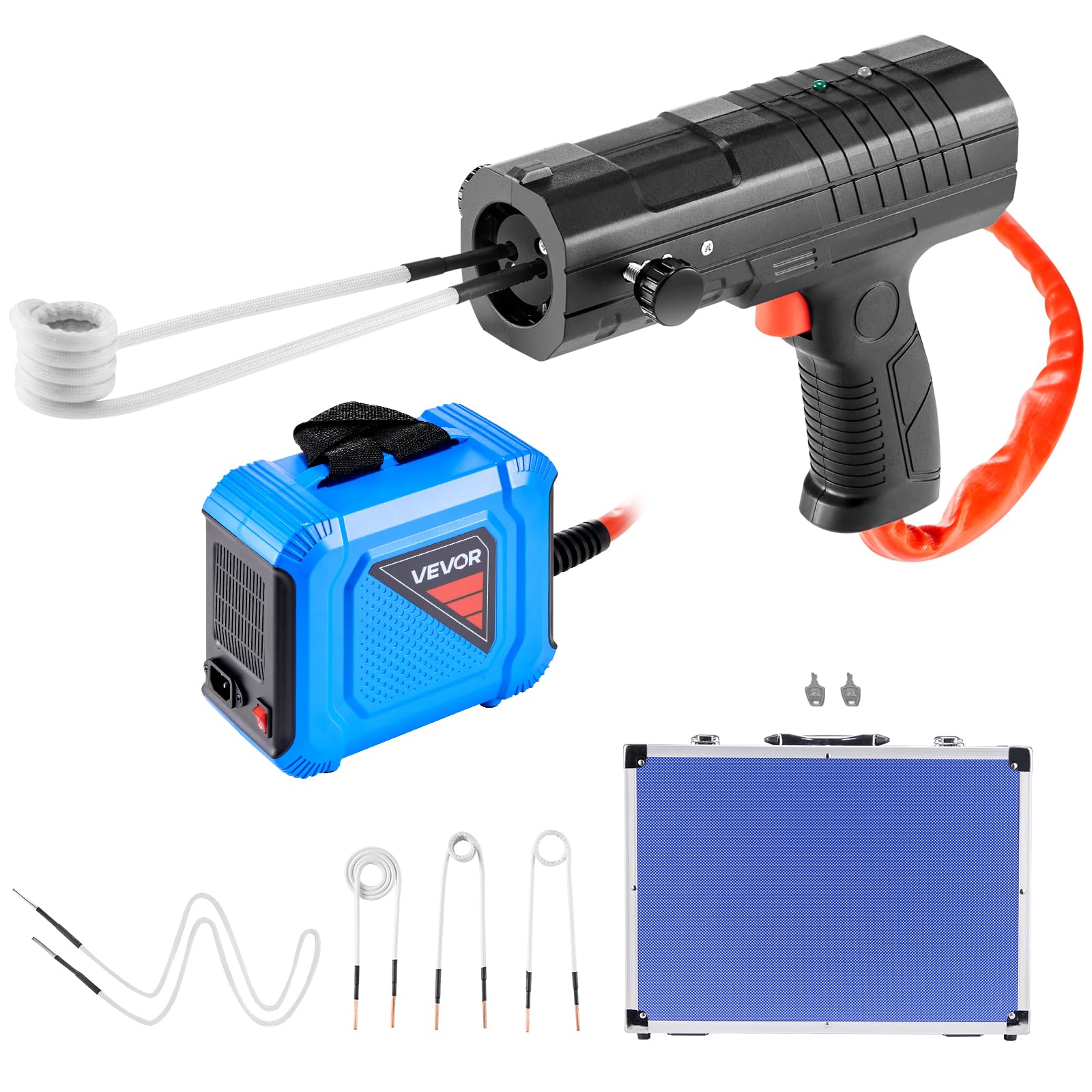
The VEVOR 1800W induction heater is the most powerful unit in this roundup, designed specifically for heavy-duty mechanical repair where you need to heat large bolts, bearings, and frozen lathe fasteners quickly. The maker claims an 8-second heat-up to target temperature, with the full heating cycle completing in 25 to 40 seconds, and the separated motor module improves heat dissipation to extend the tool’s lifespan through repeated high-intensity work sessions.
The kit includes four heating coils and a lockable toolbox with a shoulder strap for carrying the 9.83-pound unit around the workshop or between job sites. The push-button operation and LED indicator are simple to use, though the constant fan noise is a recurring complaint among users who work in quiet environments. The short power cable means you will almost certainly need a heavy-duty extension cord to reach vehicles parked outside the workshop bay.
Users restoring heavy trucks and classic cars report that the VEVOR makes short work of rusted suspension bolts and seized exhaust hardware, though the learning curve for hobbyists is steeper than for professional mechanics. One unit arrived with surface rust right out of the box, indicating that the manufacturing and storage conditions could be inconsistent. The high power output demands a 20A circuit and quality copper coils to avoid arcing at the connection points.
Why it’s great
- 1800W power rating delivers the fastest heating times for large, thick fasteners in the comparison
- Separated motor module and fan improve thermal management during extended heavy-duty use
- Lockable toolbox with shoulder strap provides secure storage and easy transport for mobile mechanics
Good to know
- Fan noise during operation is noticeably loud — not ideal for noise-sensitive environments
- Some units have arrived with surface rust on metal parts, suggesting variable quality control during storage
7. Honeywell HZ322K Truezone Kit

The Honeywell HZ322K Truezone kit is an HVAC zone control panel, not a ZVS driver in the traditional sense — yet it belongs in this roundup because it offers a true adjustable control scheme (three zones via digital display) that complements a ZVS-driven induction heating system when you need intelligent power routing or thermal management across multiple work heads. The kit includes the HZ322 panel, a DATS sensor, and a 24V transformer, all housed in a durable plastic enclosure with push-in terminals for quick field wiring.
The digital display guides you through a four-step setup process using plain language, eliminating the need for a service manual or specialized HVAC training. The variable-speed fan control allows you to match airflow to the heat load, which is useful if you are building a custom induction annealing station that requires active cooling between heating cycles. The push-in connectors are robust enough to handle repeated connections without loosening, though the mounting hardware for the main unit is not included in the box.
Users have successfully replaced failed zone boards in their homes with the HZ322K, with one install taking about an hour including taking reference photos before disconnecting the old wiring. The built-in test program walks you through a checkout procedure that can identify a bad damper position, saving a service call. This kit is for the advanced builder who wants to integrate a structured control system around their ZVS driver setup, not for bare-bones bench experiments.
Why it’s great
- Three-zone control with digital display allows precise routing of power or air flow in complex setups
- Includes DATS sensor and 24V transformer — no extra components needed for basic HVAC control
- Push-in terminals and self-test program reduce installation time and troubleshooting effort
Good to know
- Not a ZVS driver PCB — it is an HVAC zone panel that requires external ZVS modules to control heating
- Does not include mounting hardware for the main unit; plan to supply your own screws or standoffs
FAQ
Can I use a standard computer power supply to run an adjustable ZVS driver?
Why does my ZVS driver get hot even when nothing is connected to the coil output?
What is the difference between zero voltage switching and hard switching in these drivers?
Final Thoughts: The Verdict
For most users, the best adjustable ZVS driver is the LiebeWH ZVS Module because it offers the widest input voltage range and robust double-layer FR4 construction that holds up to repeated coil swaps and extended flyback runs. If you need a dedicated induction heating station for annealing and heat treatment, grab the Estink 1000W Induction Heating Module. And for automotive bolt removal where flameless precision matters most, nothing beats the Solary 1200W Induction Heater Kit.