
Our readers keep the lights on and my morning glass full of iced black tea. As an Amazon Associate, I earn from qualifying purchases.
Specs are compiled from manufacturer listings and verified buyer reviews and can change over time — please confirm the key details on the product page before buying.
Flying a rental 172 without ADS-B In (a receiver that pulls traffic and weather broadcasts into your cockpit) means you miss planes that a towered approach controller might not have time to call out. The weather picture on your kneeboard is always ten minutes old. A good receiver changes that: it pulls live traffic, free FIS-B weather (the FAA’s no-subscription weather service — animated radar, current reports, forecasts), and backup attitude right to your iPad or Android tablet. The catch is that the right choice depends on how many hours you fly, what tablet you use, and if you want a ready-to-go box or a tinker-friendly kit.
I’m Min — the founder and writer behind Gadgets Feed. This guide is built by comparing the manufacturers’ published specifications and the patterns across verified customer reviews, so you get each pick’s real strengths and trade-offs instead of marketing spin.
Every receiver here gives you live aviation weather and air-to-air traffic without a subscription fee. That makes an ads-b in receiver one of the smartest upgrades you can add to any cockpit bag.
Quick Picks
- Garmin GDL 50 Portable ADS-B Receiver — Best Overall
- Stratux ADS-B Dual Band Receiver – Internal Battery Kit — Best Value
- Stratux ADS-B Receiver – Unit and Antennas Only — DIY Pick
How To Choose The Best ADS-B In Receiver
An ADS-B In receiver pulls two types of broadcast signals from ground towers and nearby aircraft: 978 MHz (the UAT frequency, which carries free FIS-B weather) and 1090 MHz (the transponder frequency most airliners and newer GA planes use for traffic). Without both bands, you miss either the full weather picture or a chunk of traffic. Here is what to check before you buy.
Dual-Band or Single-Band Reception
Dual-band means the receiver can listen on 978 MHz and 1090 MHz at the same time. You get the full weather suite (animated NEXRAD, METARs, TAFs, winds aloft) on 978 while also seeing transponder-based traffic on 1090. Single-band receivers only cover one frequency, so you might get traffic but no weather, or weather but miss aircraft that only squawk on 1090. Every receiver in this guide is dual-band.
Battery Life vs. Real Flight Time
Spec sheets list battery life, but real-world use varies with screen brightness, number of tablets connected, and whether you have AHRS (a motion sensor) running. A 6-hour battery is fine for a local VFR hop. A model that advertises 8 hours gives you a comfortable margin for a 400-mile cross-country day without hunting for a USB port on the panel.
App Ecosystem and Tablet Compatibility
The receiver is only the signal processor — you view the data on an EFB app (Electronic Flight Bag, like ForeFlight, Garmin Pilot, FlyQ, WingX). Some receivers, like the Garmin GDL 50, only talk to Garmin Pilot on Android tablets (they also support iOS ForeFlight), while Stratux-based units connect via WiFi to any EFB on iPads, iPhones, or Android tablets. If you are an Android user check the compatibility list before buying.
AHRS: The Backup Attitude You Hope to Never Use
AHRS (Attitude and Heading Reference System) is a set of motion sensors that calculates your aircraft’s pitch and roll. If your vacuum-driven attitude gyro fails in IMC (Instrument Meteorological Conditions — low visibility or clouds), AHRS from the receiver can display synthetic vision on your tablet and keep you upright. It adds cost and requires the receiver to be mounted rigidly along the plane’s longitudinal axis. If you fly VFR only (Visual Flight Rules — clear weather), this feature is optional; if you fly IFR (Instrument Flight Rules), it is a strong safety net.
Quick Comparison
| Model | Best For | Battery Life | AHRS | App Connectivity | Amazon |
|---|---|---|---|---|---|
| Garmin GDL 50 Portable ADS-B Receiver | Android pilots / Garmin Pilot users | 8 hours | Yes | Bluetooth to iPad & Android, plus Garmin portables | $850.00Amazon |
| Stratux ADS-B Dual Band Receiver – Internal Battery Kit | Budget-conscious pilots wanting AHRS | 6 hours | Yes | WiFi to ForeFlight, FlyQ, WingX, Garmin Pilot, and more | $389.99Amazon |
| Stratux ADS-B Receiver – Unit and Antennas Only | Builders who bring their own battery | User-determined | Yes | WiFi to all major EFBs | $354.99Amazon |
In‑Depth Reviews
1. Garmin GDL 50 Portable ADS-B Receiver

The rugged plug-and-play box that gives you the longest battery life in this group — 8 hours — so you can fly a full cross-country day without hunting for a USB port.
Your tablet choice matters here. The GDL 50 only pairs with the Garmin Pilot app on Android devices, but on iOS it works with ForeFlight too — so Android owners finally get a top-tier receiver that talks natively to their EFB. It pulls dual-link ADS-B (both 978 MHz and 1090 MHz), giving you the full FIS-B weather suite plus traffic. The internal AHRS delivers backup pitch and roll, and its 8-hour battery beats the Stratux kit by a 33% margin, which several reviewers confirm is plenty for a full 400-mile cross-country day. Buyers report it is “rugged, simple to understand, and worked right from the start,” though some note the micro USB port feels fragile and the device gets hot during extended use. The charge level indicator is also hard to read from the single LED. Unlike the Stratux units below, this is a polished commercial product with Garmin support — but it only supports Bluetooth connectivity (no built-in WiFi), so if your tablet is WiFi-only you need to check compatibility first. For pilots who value a single-box no-tinker solution, especially Android tablet users who are locked out of Stratux’s WiFi network, this is the receiver to pick.
Owners mention it is “rugged, simple to understand, and worked right from the start,” though some note the micro USB port feels fragile and the device gets hot during extended use. The charge level indicator is also hard to read from the single LED. Unlike the Stratux units below, this is a polished commercial product with Garmin support — but it only supports Bluetooth connectivity (no built-in WiFi), so if your tablet is WiFi-only you need to check compatibility first.
For pilots who value a single-box no-tinker solution, especially Android tablet users who are locked out of Stratux’s WiFi network, this is the receiver to pick.
What Backed It Up
- 8-hour battery — the longest in this group — covers long XC days
- Bluetooth pairs easily with Garmin Pilot on Android, an option Stratux does not offer
- Dual-link ADS-B plus AHRS in one rugged commercial package
What Held It Back
- Micro USB port is fragile and device runs hot, per repeated owner feedback
- Battery charge level is hard to judge from the single LED
- Bluetooth-only — tablets without Bluetooth capability cannot connect
Reach for this if: you fly an Android tablet with Garmin Pilot and want a rugged, fully-supported receiver that works the minute you unbox it.
Look elsewhere if: your tablet is WiFi-only (no Bluetooth) or you prefer a simpler receiver that connects to any EFB over WiFi.
2. Stratux ADS-B Dual Band Receiver – Internal Battery Kit

This kit gives you the same core features as the Garmin GDL 50 — AHRS, dual-band — but at roughly half the price, including a 10,000 mAh battery.
That is the ideal pick if you want AHRS (a motion sensor that provides backup attitude data) and a battery built into the kit, but do not want to pay Garmin’s premium. The 10,000 mAh rechargeable pack delivers about 6 hours of runtime — that is enough for most local VFR flights, though customers note it falls short of the GDL 50’s 8-hour life. It connects to any tablet or phone over WiFi, so your iPad Mini, Android tablet, or even an older WiFi-only iPad works. The dual-band reception covers 978 MHz weather and 1090 MHz traffic, and the included high-gain dmurray14 antennas keep the signal strong. One reviewer noted the fan is “loud” and the micro USB power connector “loosens” over time. Another called the large antennas “obnoxious” compared to a sleek commercial box. On the plus side, reviewers consistently say traffic and weather accuracy matches what their G1000 panel shows. Unlike the GDL 50, this Stratux kit is built from a Raspberry Pi 3 board and open-source software, so it runs the latest Stratux firmware (v1.6r1) from the start and supports every major EFB — ForeFlight, FlyQ, WingX, Garmin Pilot, you name it.
One buyer mentioned the fan is “loud” and the micro USB power connector “loosens” over time. Another called the large antennas “obnoxious” compared to a sleek commercial box. On the plus side, reviewers consistently say traffic and weather accuracy matches what their G1000 panel shows. Unlike the GDL 50, this Stratux kit is built from a Raspberry Pi 3 board and open-source software, so it runs the latest Stratux firmware (v1.6r1) from the start and supports every major EFB — ForeFlight, FlyQ, WingX, Garmin Pilot, you name it.
If you are comfortable with a unit that looks homemade and might need a replacement USB cable after a season of use, the value here is tough to top.
Why It Earns the Spot
- AHRS and dual-band reception at a mid-range price
- 10,000 mAh battery included and easy to replace with a larger one for longer days
- Universal WiFi compatibility with practically every EFB app
Where It Cut Corners
- Fan noise is noticeable in a quiet cockpit
- Micro USB power connector is finicky and prone to loosening
- 6-hour battery is shorter than the GDL 50’s 8 hours
Go with this if: you want AHRS and dual-band without paying premium-brand prices, and you use a standard EFB like ForeFlight or WingX.
skip it if: you need a polished, quiet box with a long-lasting battery that requires zero fuss.
3. Stratux ADS-B Receiver – Unit and Antennas Only
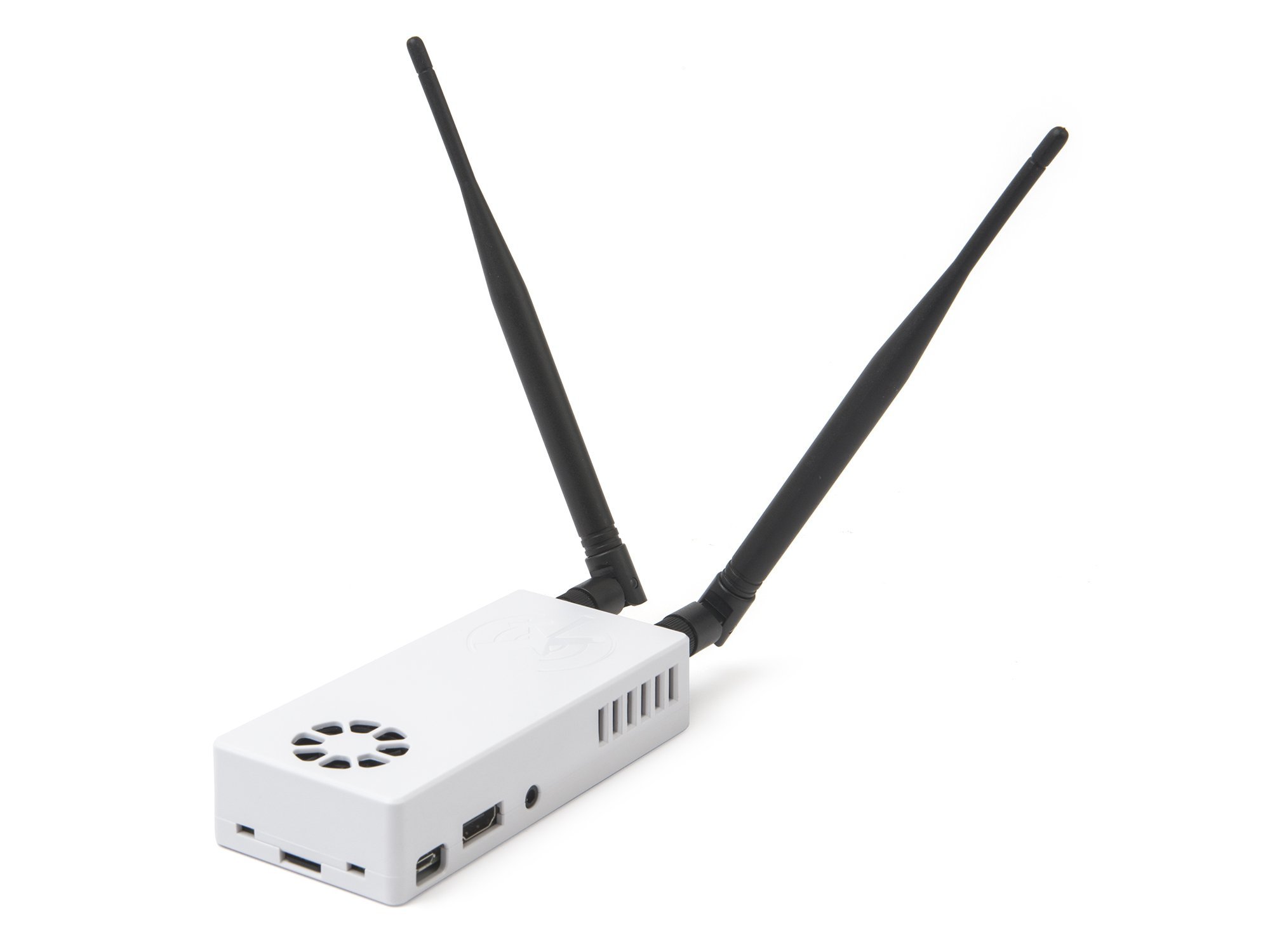
The featherlight kit (0.4 pounds) that rewards pilots who bring their own battery — one buyer swapped in a 10,000 mAh Li-ion pack and reports over 8 hours of runtime, beating the official kit’s 6 hours.
This is the same core Stratux dual-band receiver board, antennas, and suction mount as the full kit above, but without the 10,000 mAh battery pack. That saves weight — at 0.4 pounds it is only half the heft of the internal-battery version — but the catch is that you need your own USB power bank or a panel USB port to make it run. One buyer solves this by swapping in a 10,000 mAh Li-ion pack (ASIN B07K6HJTK2) themselves and reports it “runs over 8 hours,” which actually surpasses the official kit’s battery life.
Reviewers praise the “excellent value vs. brand names” and note that Crew Dog Electronics provides solid technical support. The AHRS sensor (a motion sensor for backup attitude) is still on the board, so you get backup attitude, and the unit supports ForeFlight Synthetic Vision. The open-source Stratux software (v1.6r1) is preloaded, but you will need a computer if you want to update the firmware. Unlike the Garmin GDL 50, this unit uses WiFi, so any iPad, iPhone, or Android tablet can connect without a Bluetooth pairing step.
The reliability feedback is mixed: several long-time Stratux users say it works flawlessly for years, but others report disconnections from ground towers mid-flight that require a power cycle. If you enjoy tinkering and already have a quality USB battery, this is the cheapest path to full dual-band ADS-B with AHRS.
What Made the Cut
- Dual-band ADS-B and AHRS at the lowest entry price in this roundup
- Ultra-light at 0.4 lbs, easy to stow in a flight bag
- WiFi connects to any EFB on any device
The Caveats
- No battery included — you must supply your own power bank or panel USB
- Some reviewers point out random disconnections from towers requiring a manual re-plug
- Firmware updates require a separate computer and a bit of patience
Made for: the builder who wants to choose their own battery capacity and who does not mind occasional disconnects in exchange for the lowest cost.
Not for you if: you want a pre-assembled, grab-and-go system that does not need you to source a battery or troubleshoot connection drops.
Understanding the Specs
AHRS (Attitude and Heading Reference System)
This is a set of small motion sensors inside the receiver (gyroscopes and accelerometers) that detect your aircraft’s pitch and roll angle. If your vacuum-driven attitude indicator fails — especially in clouds or low visibility — the AHRS can display synthetic horizon lines on your tablet, giving you a backup reference to keep the wings level until you can get clear. It is an important safety net for IFR pilots, but it requires the receiver box to be mounted firmly and aligned straight with the plane’s centerline to work accurately.
FIS-B (Flight Information Service-Broadcast)
This is the free weather data service broadcast by ground stations on the 978 MHz frequency. It includes animated NEXRAD radar images, METARs (current weather reports), TAFs (forecasts), winds and temperatures aloft, AIR/SIGMETs (weather advisories), TFRs (temporary flight restrictions), and NOTAMs (notices to airmen). A dual-band receiver pulls everything from this feed, so you see the big weather picture without paying a subscription fee — a major perk of ADS-B In.
Dual-Band Reception (978 MHz + 1090 MHz)
Two distinct radio frequencies carry ADS-B traffic information. The 1090 MHz band is used by airliners, business jets, and most modern general aviation planes for transmitting their position (ADS-B Out). The 978 MHz UAT band carries both traffic from smaller GA aircraft and the full FIS-B weather package. A dual-band receiver listens on both frequencies at once, so you see weather, the jet inbound from 20 miles out, and the Cessna in the pattern without switching between channels.
EFB Compatibility (Electronic Flight Bag)
Your EFB app is the display where you actually see the traffic and weather. Most receivers use either a WiFi or Bluetooth signal to send data to your tablet. Stratux-based units broadcast their own WiFi network that any device can join, making them compatible with ForeFlight, FlyQ, WingX, Garmin Pilot, Avare, and others. The Garmin GDL 50 uses Bluetooth and only works with the Garmin Pilot app on Android, but it also supports ForeFlight on iOS. Always check that the receiver you pick talks to the app you already use.
FAQ
Will an ADS-B In receiver work with a WiFi-only iPad?
Do I need a subscription for the weather data?
What is the difference between ADS-B In and ADS-B Out?
How long does the battery last in flight?
Can I use a Stratux receiver with Garmin Pilot?
What is AHRS and do I really need it?
Will a portable receiver interfere with my transponder?
How do I mount the receiver in the cockpit?
Can I connect more than one tablet at the same time?
What happens if the receiver disconnects from towers in flight?
Final Thoughts: The Verdict
For most buyers, the ads-b in receiver winner is the Garmin GDL 50 because it gives you the longest battery life (8 hours), the most rugged build quality, and the only Bluetooth option for Android Garmin Pilot users — all in one reliable box. If you want to save money and still get AHRS plus dual-band, grab the Stratux Dual Band Receiver Kit. And for the budget builder who already owns a USB power bank, the Stratux Unit & Antennas Only delivers the same core hardware at the lowest entry cost.
How We Picked
We do not accept paid placement. Every pick is matched to a real buyer and a real use-case; we do not hands-on test units.
Sources & Methodology
Specifications: manufacturer listings and product documentation. Review insights: verified customer reviews, as of July 2026. Pricing: not shown on this page (it changes often); check the current price via the retailer link.
As an Amazon Associate, Gadgets Feed earns from qualifying purchases. This does not affect which products we feature.
Related Guides
Product prices and availability are accurate as of the date/time indicated and are subject to change. Any price and availability information displayed on Amazon at the time of purchase will apply to the purchase of this product. As an Amazon Associate I earn from qualifying purchases.
CERTAIN CONTENT THAT APPEARS ON THIS SITE COMES FROM AMAZON. THIS CONTENT IS PROVIDED "AS IS" AND IS SUBJECT TO CHANGE OR REMOVAL AT ANY TIME.
Amazon and the Amazon logo are trademarks of Amazon.com, Inc. or its affiliates.