
Our readers keep the lights on and my morning glass full of iced black tea. As an Amazon Associate, I earn from qualifying purchases.
Standing still on concrete is a fast track to sore knees, a locked-up lower back, and a nagging sense that your body is stiffening by the hour. An adult balance board replaces that static, punishing floor contact with a responsive, living surface that forces micro-adjustments through your ankles, hips, and core. That constant, low-level muscle engagement does more than just burn a few extra calories — it keeps your joints lubricated, your posture honest, and your focus sharp.
I’m Min — the co-founder and writer behind Gadgets Feed. I’ve spent countless hours dissecting the material stacks, pivot mechanics, and weight tolerances of dozens of balance platforms to isolate the boards that actually deliver stability, durability, and progressive resistance. This guide cuts through the wobble to surface the boards worth your time and floor space.
Whether you are rehabbing an injury, upgrading your standing desk routine, or cross-training for a sport, the right platform transforms idle standing into active training. Here is the definitive guide to the best adult balance board.
How To Choose The Best Adult Balance Board
The right balance board depends entirely on your primary use case and the type of instability you want to train. A standing desk worker needs broad, stable movement that doesn’t distract from typing, while a snowboarder or skater needs a narrow roller system that builds lateral edge control. Every board type trades off something — stability for challenge, portability for durability. Here is how to match the mechanism to your goal.
Rocker Boards vs. Wobble Boards
Rocker boards move on a single axis — forward and backward or side to side — and are ideal for targeted rehabilitation, standing desk micro-movement, and beginners building confidence. Wobble boards incorporate a spherical fulcrum that allows 360-degree tilting, which forces your whole chain (ankles, knees, hips, core) to fire simultaneously, making them better for advanced balance training and sport-specific conditioning. If you are recovering from an ankle sprain, start with a rocker. If you want to sharpen your reflexes for surfing, graduate to a wobble board.
Weight Capacity and Build Materials
A board rated for 350 pounds offers a wider safety margin and typically uses thicker Baltic birch or Canadian maple plywood, which resists warping and cracking under daily use. Molded plastic boards (often from mid-range brands) are lighter and cheaper but can feel hollow or develop fatigue points over time. The surface texture also matters — a non-slip coating keeps your feet planted during sweaty sessions, while a smooth lacquer finish is better for barefoot, subtle desk movements where you don’t want grip interfering with small adjustments.
Portability and Desk Clearance
If the board stays under your standing desk, measure the clearance between your desk’s lowest setting and the floor, then subtract the board’s height (typically 2.5 to 4 inches). A 2.5-inch low-profile board like the FluidStance Plane fits under most adjustable desks without crushing your monitor height. For home gym use, weight and length matter — a 30-inch long roller board with a separate tube is harder to stash in a closet but adds the rolling axis that athletes need for sport-specific training.
Quick Comparison
On smaller screens, swipe sideways to see the full table.
| Model | Category | Best For | Key Spec | Amazon |
|---|---|---|---|---|
| FluidStance Plane | Premium | Standing desk micro-movement | 2.5-inch low-profile, 360-degree tilt | $179.00Amazon |
| Indo Board | Premium | Elite sports performance training | 30-inch x 18-inch maple deck+roller | $199.00Amazon |
| Fitterfirst Pro Rocker | Premium | Clinical physical therapy rehab | Adjustable 10-15° tilt, 20-inch width | $159.95Amazon |
| Gaiam Evolve | Mid-Range | Office standing desk companion | 27-inch long rocker, 250 lb limit | $77.99Amazon |
| Fitlaya Fitness | Mid-Range | Action sports skill transfer | 29.1-inch maple board+roller, 350 lb | $58.99Amazon |
| StrongTek Wooden Wobble | Mid-Range | Versatile home wobble training | Cross-base 360° wobble, 350 lb limit | $38.99Amazon |
| Theraband Rocker | Budget | Lightweight PT and travel | 3.5 lb molded plastic, 13×14 inch deck | $53.58$66.35Amazon |
In‑Depth Reviews
1. FluidStance Plane
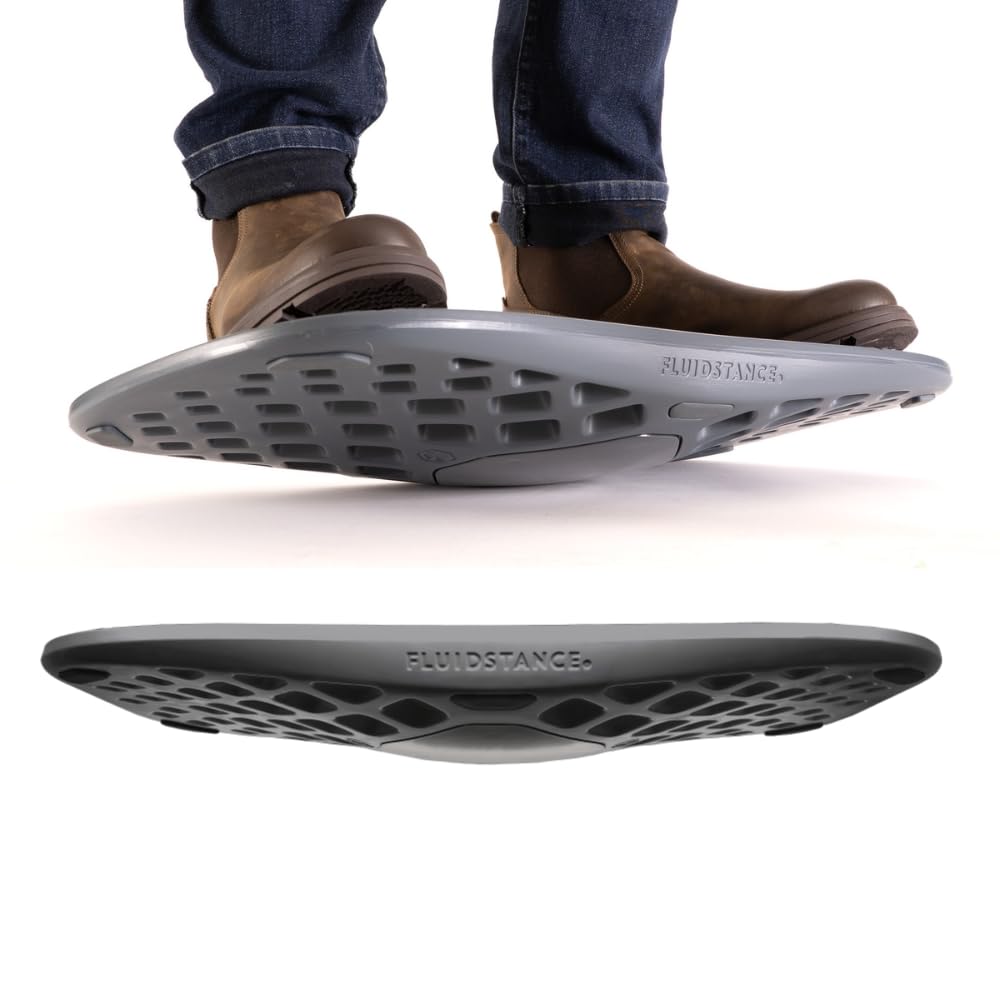
The FluidStance Plane is the goldilocks board for anyone who spends hours at a standing desk: it is low enough (2.5 inches) to slide under most desks without raising the surface, yet it offers full 360-degree tilt that keeps your hips and lower back active without feeling unstable. The deck is made from 100% recycled tire treads with a rubbery grip that holds bare feet or socks equally well, and the recycled plastic base has rubber bumpers that create a natural end stop so you never tilt too far. It tracks at 200 pounds max, which is conservative, but the board is built for finesse, not heavy landings.
Users report that the Plane relieves lower back pain and knee locking within the first week of daily use, and the ability to rock side-to-side and front-to-back keeps the body engaged without interrupting typing. The flat deck surface allows a wide stance, which is a relief if you have tried narrow wobble boards that cramp your foot position. The board is quiet on tile and slightly more resistant on carpet, and the 30-day guarantee removes the risk of an expensive static paperweight.
The only real drawback is that the Plane is not designed for high-intensity athletic training — it will not build the lateral ankle strength needed for snowboarding or surfing. It is engineered for ergonomic movement and subtle calorie burn (about 19.2% higher caloric expenditure compared to sitting). If your goal is to stop hurting at the end of a workday and start moving, this is the board to beat.
Why it’s great
- Ultra-low profile fits under almost any standing desk
- Full 360-degree movement with rubber end stops for safety
- Made from sustainable recycled materials in the USA
Good to know
- 200 lb weight limit is lower than competitors
- Not challenging enough for advanced sports training
2. The Original Indo Board
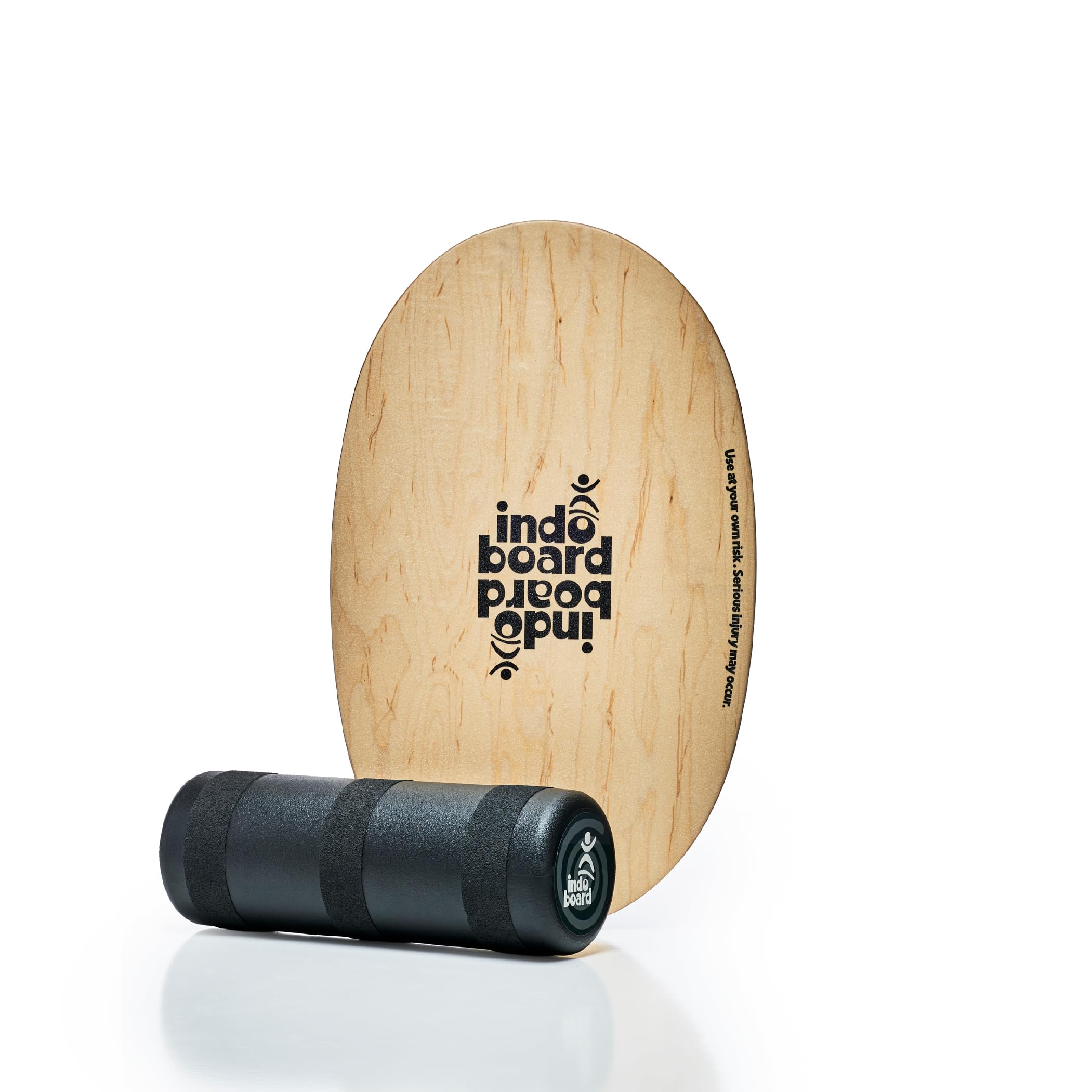
The Indo Board is the original roller-and-deck balance trainer that started the category for surf and skate training, and it remains the benchmark for sport-specific proprioception. The deck is a 30-inch by 18-inch slab of maple wood with a gritty non-slip surface, paired with a separate PVC roller that creates a true 360-degree unstable platform. There is no rail system, meaning the board is completely free to slide in any direction off the roller, requiring constant engagement from your ankles, knees, and core to keep it centered. That freedom is exactly what makes it the gold standard for athletes — watching a hockey player or snowboarder on an Indo Board reveals why: every micro-adjustment translates directly to edge control on the hill or ice.
Construction quality is outstanding, with a weight capacity of 350 pounds and a natural wood finish that gets better with age. Users consistently mention that the roller is wider and taller than cheaper clone boards, which makes the instability more pronounced and more effective. The board is best used on carpet to keep the roller from shooting out from under you, and beginners are advised to use a spotter or start near a wall. For experienced users, the challenge is addictive — sessions feel like a game, and improvements in balance and reaction time become noticeable within a week.
The Indo Board is not ideal for standing desk work or physical therapy for acute injuries because of its high instability level. It demands attention and proprioception that you cannot afford to divide while typing. It also requires a fair amount of floor space (about 3 feet by 2 feet of clearance). For the price, it is a one-time investment that will outlast most plastic alternatives, and the natural wood deck can be refinished if the grip wears down after years of use.
Why it’s great
- True 360-degree freedom of movement on a roller
- Thick maple deck with a 350 lb weight rating
- Endorsed by elite athletes across dozens of sports
Good to know
- Too unstable for desk work or acute rehab
- Requires carpet or a padded surface for safe use
3. Fitterfirst Professional Rocker Board – 20”

The Fitterfirst Professional Rocker Board is the exact piece of equipment found in physical therapy clinics across North America, and for good reason. It is a single-plane rocker board that offers forward-to-backward movement only, with an adjustable tilt angle (10, 12, and 15 degrees) controlled by two removable spheres that slot under the deck. This adjustability is critical for rehabilitation — you can start at the gentlest setting after ankle sprain or knee surgery, then progress to a steeper angle as your range of motion and strength return. The 20-inch wide deck provides a very stable stance, which is reassuring when you are wobbly from an injury.
The board is made in Canada from Baltic birch plywood, weighs 7.5 pounds, and has a 350-pound capacity. The top surface is coated with a non-slip tape similar to what you find on skateboard decks, which works well with athletic shoes and stays grippy even when you sweat. Users recovering from ankle fractures, plantar fasciitis, and hip replacements consistently report that the Fitterfirst duplicates the exact therapy protocol they received from their physiotherapist, allowing them to continue rehab at home. The adjustable angle graduates the challenge, so the board grows with you as you heal.
Because it is a rocker, not a wobble board, the Fitterfirst does not train multi-directional stability. Lateral (side-to-side) balance is not engaged on this board unless you rotate 90 degrees and rock on the opposite edge, which does not feel as natural. The non-slip tape can also be abrasive on bare feet, so you will want to wear shoes or socks. The price is higher than a basic plastic rocker, but the adjustability and clinical-grade build quality justify the premium for anyone serious about rehabilitation.
Why it’s great
- Adjustable tilt angle (10-15°) progresses rehab difficulty
- 20-inch wide platform for a stable, confident stance
- Clinical-grade Baltic birch build, made in Canada
Good to know
- Single-plane movement only (forward/backward)
- Grip tape can be rough on bare feet
4. Gaiam Evolve Balance Board
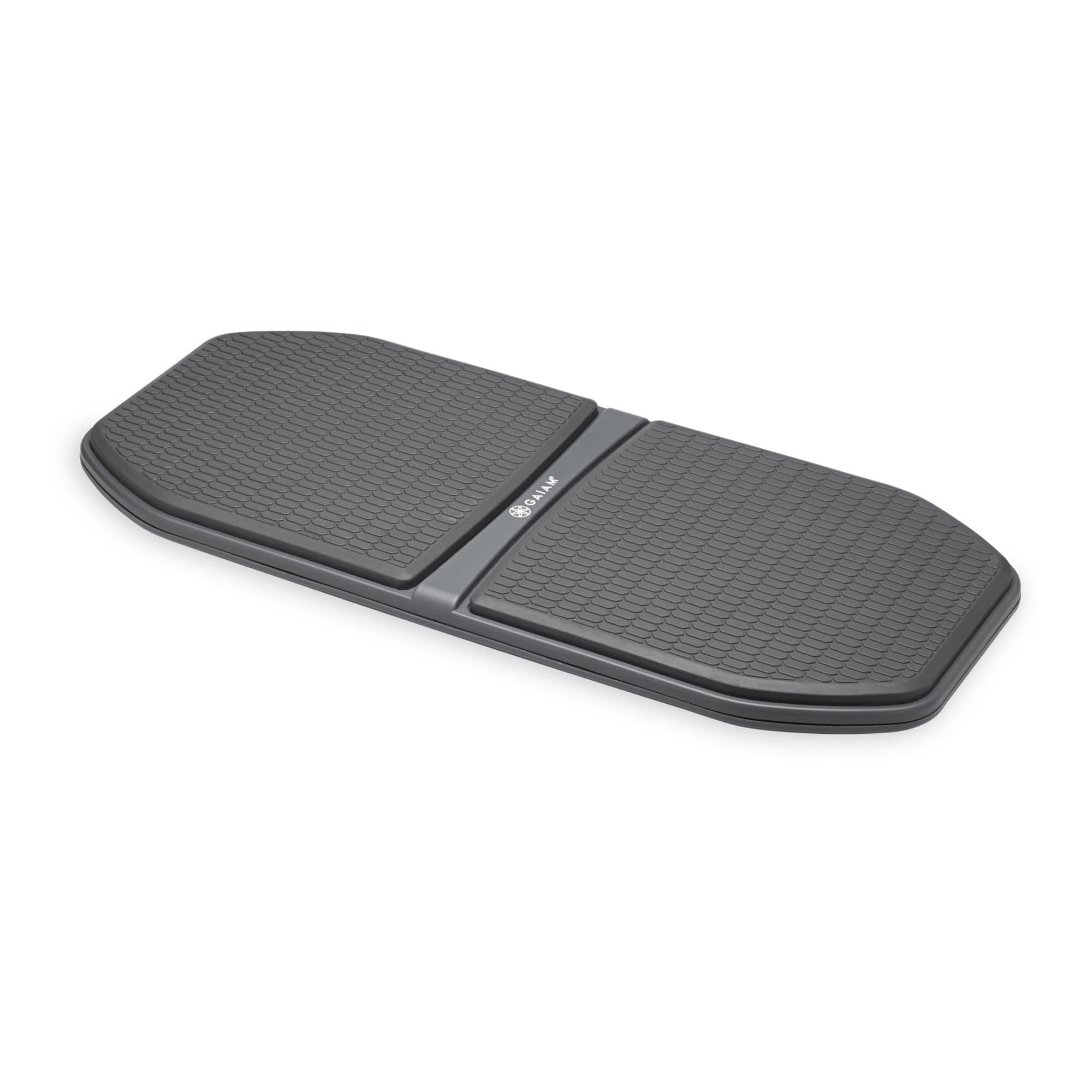
The Gaiam Evolve Balance Board is the most popular standing desk rocker on Amazon for a simple reason: it is wide, lightweight (6.5 pounds), and provides a fluid rocking motion that is just enough to keep your legs and core engaged without ever feeling destabilizing. The board is 27 inches long and 12 inches wide, which gives your feet room to shift naturally as you work, and the honeycomb non-slip texture on top grips socks and bare feet without being abrasive. The curved bottom allows movement in 360 degrees, but the curve is gentle — you can rock forward and back or side to side, but the board resets to center easily, so you never feel like you are fighting it.
Users consistently report being able to stand at their desk for 2-3 hours longer per day without lower back pain or knee locking after switching to this board. It also functions as a footrest when you are sitting. The construction uses a mix of PU, PVC, and TPR materials that feel dense but not rock-solid — the top cushion layer has been noted to peel near the center after several months of heavy use. The weight limit is 250 pounds, which is lower than the premium wooden boards, so heavier users may want to look at the StrongTek or Fitterfirst alternatives.
The Gaiam is not designed for high-intensity training or advanced balance work. If you try to shift your weight aggressively, the curved base will roll out from under you rather than hold an edge. For its intended purpose — keeping you moving and comfortable during a workday — it is a near-perfect bridge between an anti-fatigue mat and a serious balance trainer. The value proposition is strong: you get desk-specific ergonomics without paying the premium for the FluidStance name.
Why it’s great
- Long 27-inch platform allows natural foot shifting
- Lightweight and easy to move between desk and home
- Smooth, gentle rocker motion ideal for office use
Good to know
- 250 lb weight limit may not suit all body types
- Top cushion layer can peel with extended use
5. Fitlaya Fitness Balance Board Trainer

The Fitlaya Fitness Balance Board is a roller-and-deck system that competes directly with the Indo Board but at a much lower cost. The deck is made from Canadian maple, measures 29.1 inches by 11 inches, and is paired with a 17.8-inch foam roller. The deck has stop guards on the underside to prevent the roller from shooting out the sides, which is a meaningful safety improvement for beginners who are not yet confident balancing on a free-rolling system. The weight capacity is 350 pounds, matching the premium boards, and the non-slip rubber top provides excellent traction even during sweaty training sessions.
Parents and athletes alike report that this board is a hit for kids and adults training for snowboarding, skateboarding, and surfing. The controlled instability is challenging without being paralyzing, and the rubber end caps on the roller stay in place during most sessions (some users report the caps popping off after extended use, but they snap back on easily). The board is also a solid choice for home fitness — you can integrate it into bodyweight circuits, squats, and push-up variations to build core stability across multiple planes.
The Fitlaya is heavier and bulkier than a simple rocker board, so it is not ideal for sliding under a standing desk or throwing into a carry-on. The foam roller also compresses slightly over time, which reduces the board’s height and challenge. If you are looking for an affordable entry into roller-style board training without committing to the Indo Board premium, the Fitlaya delivers 90% of the performance at roughly half the cost.
Why it’s great
- Stop guards prevent the roller from sliding out
- Maple construction supports up to 350 pounds
- Excellent for snowboard, surf, and skate training
Good to know
- Plastic end caps on the roller may pop off
- Foam roller compresses slightly with heavy use
6. StrongTek Wooden Balance Board

The StrongTek Wooden Balance Board occupies a unique middle ground between a traditional rocker and a full wobble board. It uses a cross-shaped base instead of a hemisphere, which allows 360-degree directional wobble but with a larger floor contact area that feels more controlled and approachable than a round-base wobble board. This design makes it an excellent stepping stone for people who find basic rocker boards too easy but are not ready for the demanding stability of a round-base board. The platform is made from lauan hardwood plywood with a textured non-slip top and measures 17.5 inches by 13.5 inches, which is compact enough to store on its side in a closet or under a couch.
Users in their 70s, post-knee surgery patients, and desk workers all report that the StrongTek is surprisingly sturdy and confidence-inspiring. The 350-pound weight capacity means it can handle most users safely, and the price makes it an easy impulse buy for anyone curious about balance training. The board comes with four rubber corner pads on the bottom to protect floors, but the adhesive backing is weak — multiple reviewers mention the pads fall off within days. This is a minor but fixable issue (a drop of super glue solves it).
Because the board is built from layered hardwood plywood rather than solid maple, it does flex slightly under very heavy loads, but for the price, the durability is impressive. The compact size means your feet are closer together than on a 27-inch rocker board, which may feel restrictive for tall users. If your goal is to train wobble-style stability on a budget and you do not mind applying your own adhesive to the corner pads, the StrongTek delivers more than its price suggests.
Why it’s great
- Cross-base design is more stable than round wobble boards
- 350 lb weight rating at a very low cost
- Non-slip top surface keeps feet secure
Good to know
- Corner pad adhesive is weak and needs reinforcement
- Compact 13.5-inch width may feel narrow for some users
7. Theraband Rocker Balance Board
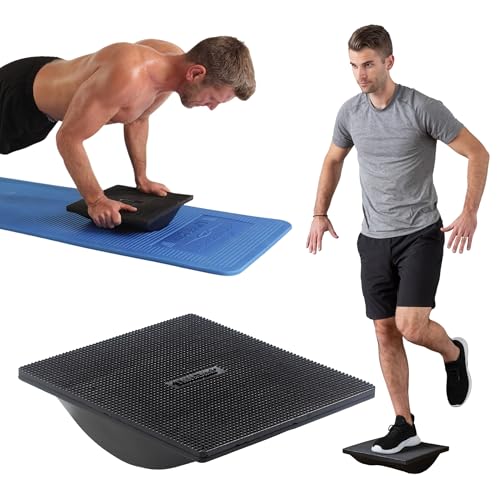
The Theraband Rocker Balance Board is a no-frills, clinic-proven rocker board that has been a staple in physical therapy settings for years. The board is made from black molded plastic, measures 18 inches by 15 inches, and offers a single plane of instability at a time (you choose forward-backward or side-to-side by rotating the board). The 30-degree angle of deflection provides a moderate tilt that is challenging enough for rehab without being intimidating. The top surface has a tactile texture that works well with athletic shoes, and the anti-skid bottom grips firmly on carpet and yoga mats — on hardwood floors, the bottom is smooth and can slide if you push hard.
At just 3.5 pounds, the Theraband is the lightest board in this lineup, making it genuinely portable. Physical therapists prescribe it for ankle sprain rehab, plantar fasciitis stretching, and post-operative knee conditioning, and users confirm that the included 37-exercise guide is well-designed and easy to follow. The board is durable enough to withstand years of daily use, and the plastic construction is virtually maintenance-free — no wood to warp or finish to refinish. Users with balance issues or seniors find the single-plane rocker much easier to manage than a multi-directional wobble board.
The main trade-off is the deck size. At 13 inches by 14 inches, the standing surface is relatively small, and users with larger feet (size 12+) may find their toes and heels overhanging the edge. The board is also not designed for standing desk use — it is too small to provide stable support for long periods, and the rocker motion is better suited to short rehab sets. If you need a lightweight, portable rocker for travel or clinic-prescribed exercises, the Theraband is the industry standard for a reason. If you need a roomy platform for all-day standing, look at the Gaiam or FluidStance instead.
Why it’s great
- Extremely lightweight (3.5 lb) for easy portability
- Single-plane rocker is ideal for targeted rehab
- Comes with a 37-exercise guide from a trusted brand
Good to know
- Small deck may not accommodate larger feet
- Plastic bottom can slide on hardwood floors
FAQ
Can I use a roller balance board after an ankle sprain?
Are balance boards safe for seniors?
How much space do I need around a roller balance board?
Final Thoughts: The Verdict
For most users, the best adult balance board winner is the FluidStance Plane because it seamlessly integrates into a standing desk workflow, provides just enough instability to keep you moving without sacrificing typing focus, and is built from sustainable, premium-grade materials. If you want dedicated performance training for snowboarding, surfing, or skating, grab the Original Indo Board for its true 360-degree roller deck and elite-athlete pedigree. And for the best value in clinical rehabilitation, nothing beats the Fitterfirst Professional Rocker — its adjustable tilt angles let you progress safely from beginner to advanced while staying on the same board.
Product prices and availability are accurate as of the date/time indicated and are subject to change. Any price and availability information displayed on Amazon at the time of purchase will apply to the purchase of this product. As an Amazon Associate I earn from qualifying purchases.
CERTAIN CONTENT THAT APPEARS ON THIS SITE COMES FROM AMAZON. THIS CONTENT IS PROVIDED "AS IS" AND IS SUBJECT TO CHANGE OR REMOVAL AT ANY TIME.
Amazon and the Amazon logo are trademarks of Amazon.com, Inc. or its affiliates.