
Our readers keep the lights on and my morning glass full of iced black tea. As an Amazon Associate, I earn from qualifying purchases.
Specs are compiled from manufacturer listings and verified buyer reviews and can change over time — please confirm the key details on the product page before buying.
Choosing an adventure helmet means deciding how much weight your neck can endure through a full day of riding, all while trusting a shell to keep your head together in a crash. The real trick isn’t just picking a safe helmet — it’s finding one that balances that safety with ventilation, a usable visor, and a fit that doesn’t give you a headache after an hour.
I’m Min — the founder and writer behind Gadgets Feed. This guide is built by comparing the manufacturers’ published specifications and the patterns across verified customer reviews, so you get each pick’s real strengths and trade-offs instead of marketing spin.
The nine helmets here range from budget-friendly ABS shells to premium polycarbonate builds with MIPS, each covering a specific riding style and head shape. This is the adventure helmet guide you need to sort out what really works off-road and on the highway.
Our Picks at a Glance


How To Choose The Best Adventure Helmet
Adventure helmets sit between a motocross helmet and a full-face street helmet — they need a visor for off-road debris, a faceshield for highway speeds, and enough ventilation to keep you cool during technical climbs. The three specs that matter most are weight, ventilation, and safety certifications.
Weight and Neck Fatigue
A heavy helmet feels fine in the store, but after four hours of trail riding, that extra pound translates to real neck strain. The helmets here range from roughly 3.5 pounds to over 6 pounds. The difference means picking between a lightweight shell that reduces fatigue and a heavier one that might offer more features like an integrated sunshield.
Safety Certifications
DOT (Department of Transportation) is the minimum standard in the US. ECE (Economic Commission for Europe) is a more rigorous test used internationally. Many helmets here carry both. MIPS (Multi-directional Impact Protection System) is an additional layer that reduces rotational forces — a key feature for off-road riders who hit angled surfaces. Every helmet here meets at least DOT FMVSS 218.
Ventilation and Visor Design
Adventure riding means changing conditions — hot climbs, cold descents, dusty trails, and wet pavement. A helmet with multiple intake and exhaust vents keeps your head cool when you are working hard. An adjustable visor lets you ride with goggles in dusty conditions or flip up a faceshield for airflow.
Quick Comparison
| Model | Best For | Weight | Safety Cert | Visor Type | Amazon |
|---|---|---|---|---|---|
| ILM Dual Sport WS902★ Best Overall | Budget adventure with dual visor | 1650 g | DOT | Dual visor + drop-down sunshield | Amazon |
| Bell MX-9 Adventure MIPSAlso Great | Premium dual-sport versatility | 3.75 lbs | DOT, ECE, MIPS | Adjustable + Integrated shield | Amazon |
| ScorpionEXO T520Premium Tourer | Touring comfort with air-fit | 4.8 lbs | DOT, ECE | Drop-down sun visor + shield | Amazon |
| Alpinestars SM3 Solid | Pure motocross protection | 5.2 lbs | DOT, ECE 22.06 | Standard peak visor | Amazon |
| LS2 Blaze II | Budget adventure with sunshield | 6 lbs | DOT, ECE | Drop-down sun shield + shield | Amazon |
| Troy Lee Designs SE4 MIPS | Lightweight off-road performance | 2.22 kg | DOT, ECE 22.06, MIPS | Standard peak visor | Amazon |
| Fox Racing V Core MIPS | Top-tier protection with MIPS | 5 lbs | DOT, ECE 22.06, MIPS | Magnetic visor release | Amazon |
| Fly Racing Kinetic Solid | Budget off-road confidence | 3.59 lbs | DOT | Standard peak visor | Amazon |
| O’NEAL 3 SRS MX | Entry-level motocross value | 2.18 kg | DOT, ECE 22-05 | Standard peak visor | Amazon |
In‑Depth Reviews
1. ILM Dual Sport Adventure Motorcycle Helmet with Pinlock Compatible Sun Visor Snowmobile ATV Dirt Bike Off Road Casco Model WS902
Our pick — over 4.5★ from 550+ verified ratings; the strongest balance of quality and price.
An ABS adventure helmet with a dual-visor system that punches above its price.
The ILM Dual Sport WS902 is the most budget-friendly adventure helmet here, and it packs features you usually find on helmets costing twice as much — a dual-visor system with an oversized removable outer visor and an internal drop-down sunshield, plus a Pinlock-compatible ultra-wide eye port (Pinlock 30 insert sold separately). The shell is made from ABS and EPS foam (Acrylonitrile Butadiene Styrene and Expanded Polystyrene), which meets FMVSS-218 and DOT safety standards. It has seven ventilation positions for adjustable airflow and a quick-release clasp with a removable chin curtain. At 1650 grams, it is roughly 3.64 pounds — lighter than the LS2 Blaze II but heavier than the Fly Racing Kinetic.
The comfort liner has fewer seams to reduce pressure points, and the helmet includes Bluetooth module cutouts for communicators. Customers note it is lightweight and comfortable, though highway wind noise is present and the visor stays stable at speed. One customer observed the ventilation is poor at cruising speeds, so they ride with the primary shield up for airflow. The cushioning creates a “chipmunk” look in the cheeks, and the visor screw tightness and track alignment require attention. For the price, this is a solid entry-level adventure helmet, but it lacks MIPS and the premium polycarbonate shell of more expensive picks.
Feature-rich for the price: The built-in drop-down sunshield and Pinlock-compatible eye port are features you typically only find on helmets that cost significantly more, making this a true bargain for budget-conscious adventure riders.
The ventilation reality: Reviewers point out poor airflow at cruising speeds, so you may need to ride with the shield up for breathability — which negates some of the wind noise and weather protection.
Reach for this if: you want a dual-sport helmet with an integrated sunshield on a tight budget and are willing to accept some wind noise and limited ventilation.
Look elsewhere if: you prioritize ventilation and quietness at highway speeds — the Bell MX-9 or ScorpionEXO T520 handle airflow much better for the extra cost.
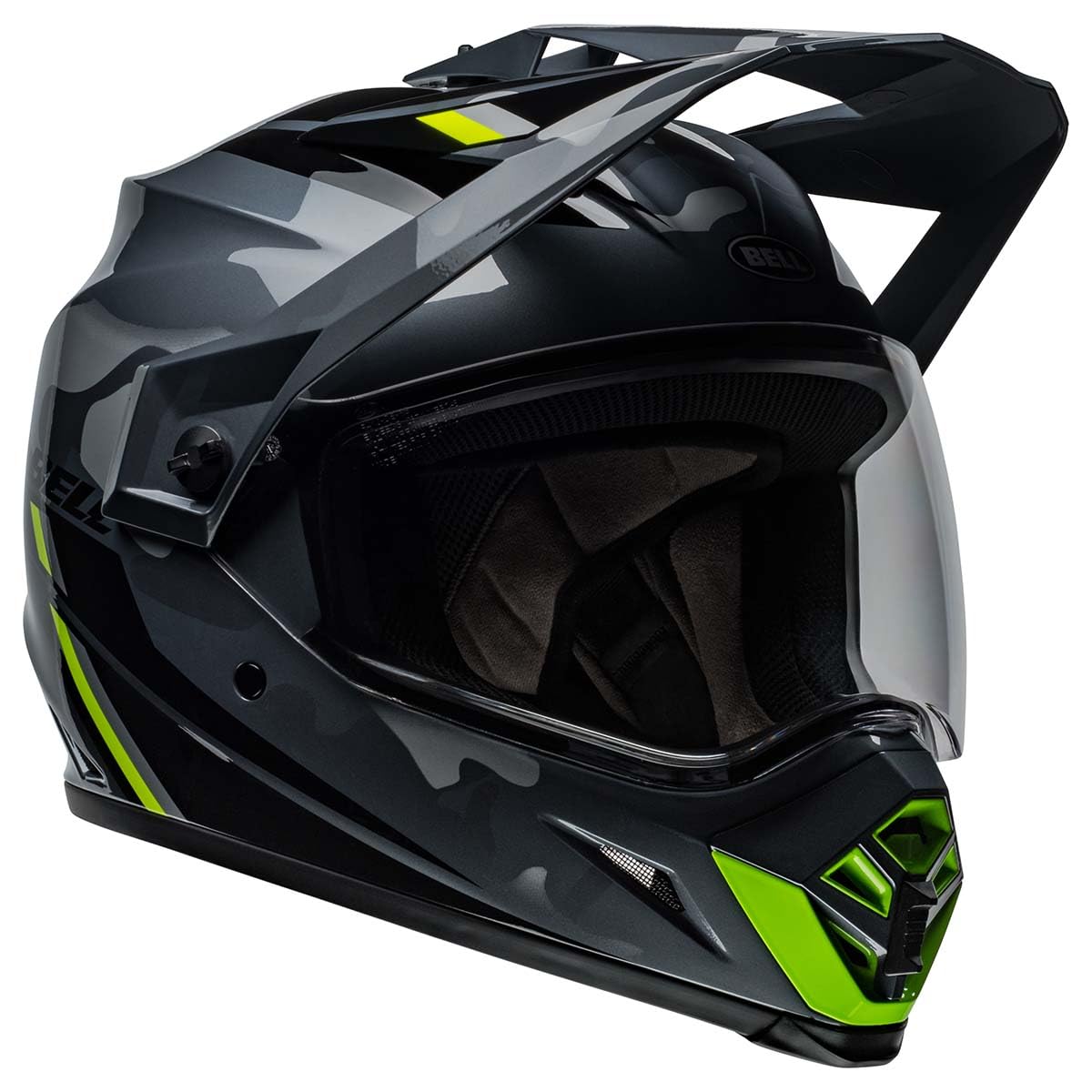
2. Bell Powersports MX-9 Adventure MIPS Motorcycle Helmets
The lightest premium pick that works equally well on singletrack and pavement.
This Bell MX-9 Adventure MIPS helmet is the most versatile adventure helmet here because it gives you an integrated anti-fog, anti-scratch faceshield plus an adjustable visor — so you can flip up the shield for goggles in extreme conditions or remove the visor for a stealth street look. At 3.75 pounds, it is noticeably lighter than many competitors, which reduces neck fatigue during long days that mix dirt and asphalt. The MIPS protection (a slip-plane layer inside that reduces rotational forces during angled impacts) adds a serious safety upgrade that many helmets at this price lack.
The Velocity Flow ventilation system uses multiple intake and exhaust ports to keep air moving, though buyers report the vents are always open — so it may get chilly in cold weather. One reviewer noted the visor tends to catch wind at high speeds, but it is removable. The main trade-off is wind noise, which is more like a dirt bike helmet than a quiet touring lid; reviewers recommend earplugs or earbuds at highway speeds above 60 mph.
The dual-use champion: This is the one helmet that actually does both off-road and street duty without compromise — the faceshield flips up for goggles or removes completely, and the anti-microbial, washable liner keeps it fresh after muddy rides.
The honest catch: The visor fogs up in cold weather and does not clear up even when you start moving, so you will need to crack it open or use the Pinlock insert to manage condensation.
Reach for this if: you ride dual-sport and want one helmet that handles everything from technical singletrack to highway commuting without breaking your neck.
Look elsewhere if: you prioritize absolute quietness on the highway or ride primarily in freezing conditions where fogging becomes a daily annoyance.
3. ScorpionEXO T520 Full Face Touring Motorcycle Helmet
A touring-focused shell that inflates its cheek pads for a custom seal.
The ScorpionEXO T520 is built for riders who spend hours in the saddle and want a helmet that adapts to their face shape. Its AirFit Inflation System lets you pump air into the cheek pads after putting on the helmet, creating a snug fit that reduces wind noise and lift — a feature you do not see on most adventure helmets. It also includes KwikFit cheekpads with cutouts that make it easy to slide in eyeglasses, plus large speaker pockets inside for Bluetooth communicators like the EXO-COM system (sold separately). The helmet weighs 4.8 pounds, heavier than the Bell, but the comfort features compensate for the extra mass.
The Ellip-Tec Ratchet System pulls the shield tight against the eye port for a proper seal, and the Everclear no-fog shield has fog-free technology on both surfaces so you do not get clouded up in wet conditions. The drop-down SpeedView sun visor works instantly with a slider, eliminating the need to swap shields when light changes. Owners mention the helmet is comfortable after break-in and the anti-fog tech works even in rain. The main complaint is highway wind noise — reviewers suggest earplugs, which is common for helmets in this category.
Custom-fit comfort: The AirFit system is the standout feature — it lets you dial in the perfect cheek pressure without returning the helmet, something the other helmets here do not offer.
The trade-off: At 4.8 pounds, it sits heavier than the Bell MX-9 and the Troy Lee SE4, so you will notice it more after four hours of off-road riding compared to lighter picks.
Best for: riders who do long highway touring days and want a helmet that seals out wind noise, fits glasses, and integrates with a Bluetooth communicator.
skip it if: you are a pure off-road rider who needs a lightweight shell for technical trails — the T520 is a touring helmet first, adventure helmet second.
4. Alpinestars SM3 Solid Motocross and Off Road Helmet
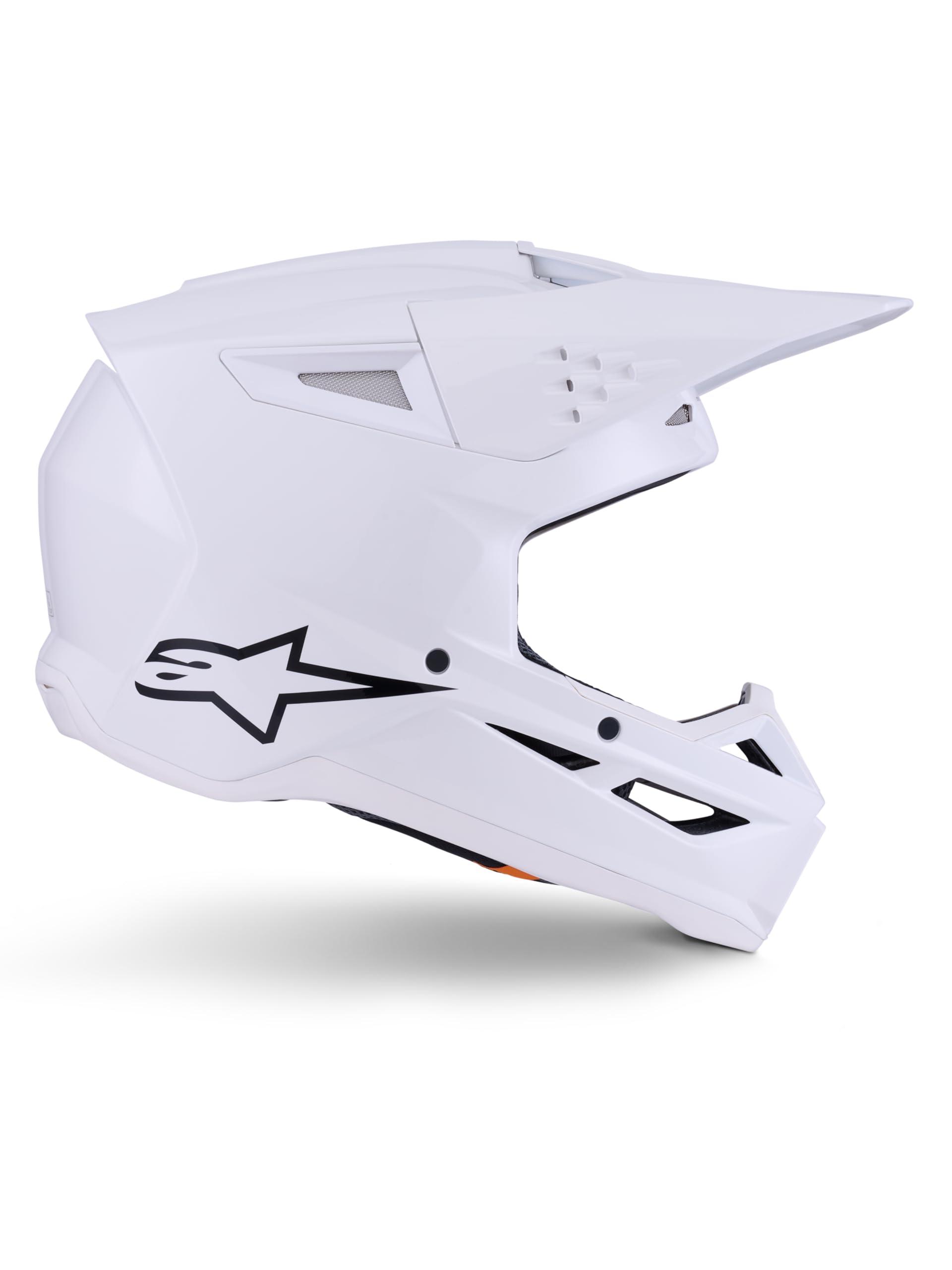
A true motocross helmet from a brand that lives on the track.
If your riding is 90% dirt and 10% pavement connecting trails, the Alpinestars SM3 Solid is a purpose-built off-road helmet that prioritizes impact protection over touring amenities. It has a thermo-injected polycarbonate shell with variable thickness designed to manage impact energy, and it meets both DOT and the latest ECE 22.06 standard — the toughest European certification. At 5.2 pounds, it is heavier than the Bell MX-9, but the weight reflects a thicker shell built for repeated impacts. The interior padding is removable and washable, which matters after muddy rides.
The SM3 is engineered for motocross goggles, with a shape that holds goggles stable during aggressive riding. Customers note it has good ventilation and feels comfortable for long rides. One buyer mentioned the sizing is accurate — an XXL fits a larger head well. The helmet does not include a faceshield or drop-down sun visor, so you need goggles for dirt riding and a separate street shield if you want highway protection. This is a pure motocross helmet, not a dual-sport hybrid.
Track-proven build: Alpinestars is a household name in motocross protective gear, and the SM3 delivers the same shell technology used by professional racers at a price that undercuts most premium off-road helmets.
The limitation: No integrated faceshield or sun visor means it is not practical for highway touring — you will need to carry goggles and a separate street shield for mixed riding.
Reach for this if: you ride motocross or enduro and want a helmet that meets the latest ECE 22.06 standard without paying for street features you will not use.
Look elsewhere if: you need a helmet that transitions from dirt to highway without swapping shields and goggles mid-ride.
5. Troy Lee Designs SE4 Polyacrylite Adult Motocross Off-Road Dirt Bike Helmet with MIPS
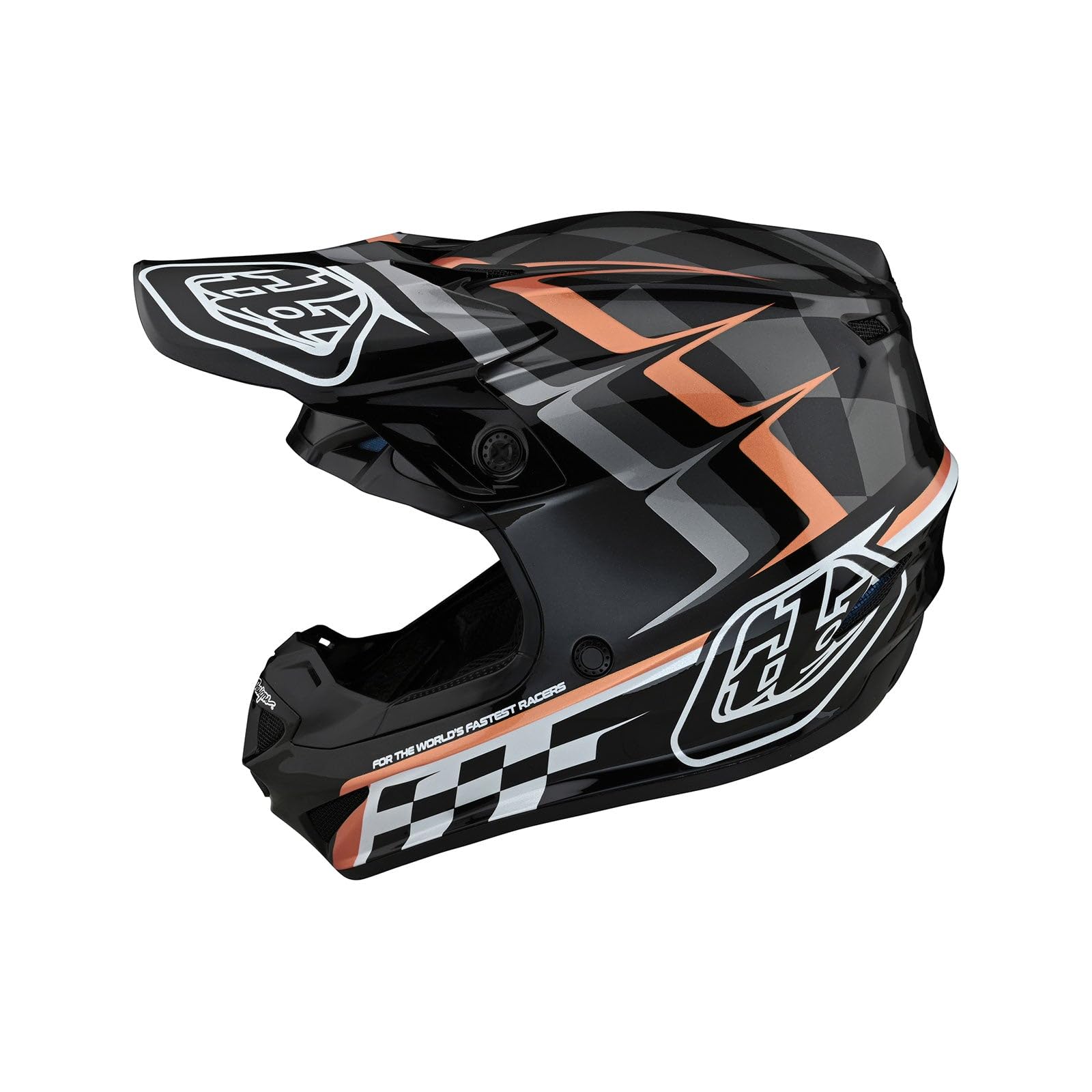
Premium MIPS protection at a price that undercuts most competitors.
The Troy Lee Designs SE4 is a lightweight off-road helmet that delivers MIPS (Multi-directional Impact Protection System) at roughly the same price as helmets without it. It weighs 2.22 kilograms — noticeably lighter than the Fox Racing V Core at 5 pounds — making it a strong choice for riders who prioritize neck comfort during long trail days. The shell has 16 cooling vent ports plus a chin bar with an EPP (Expanded Polypropylene) collarbone ventilation system, which directs air up to keep your face cool. The liner and cheek pads are removable, washable, and interchangeable across six sizes for a customized fit.
Reviewers point out the medium size is snug but breaks in well, and the visor does not catch wind at highway speeds the way some dirt helmets do. One reviewer confirmed it fits large goggles like 100% Armegas perfectly. The SE4 meets both DOT FMVSS 218 and ECE 22.06 standards — the same European certification found on helmets costing twice as much. The only real downside is that this is a pure off-road shell with no faceshield or drop-down visor, so it is not a dual-sport helmet. You will need goggles on the trail and a separate shield for street riding.
MIPS for the masses: Getting MIPS and ECE 22.06 at this price point is rare — the SE4 gives you race-level rotational impact protection at a mid-range budget, something the Fly Racing and O’NEAL helmets here lack.
The honest catch: The fit runs slightly snug, which is intentional for off-road use, but if you are between sizes, you may want to size up for comfort.
Best for: off-road riders who want MIPS and ECE 22.06 without paying premium-tier prices, especially if you ride enduro or trail where weight matters.
pass on it if: you need an adventure helmet with an integrated faceshield for highway commuting — this is a motocross shell, not a dual-sport hybrid.
6. Fox Racing Unisex-Adult V Core MIPS Motocross Dirt Bike Helmet

A Fox motocross legend with a magnetic visor that breaks away in a crash.
The Fox Racing V Core MIPS is a motocross helmet built around two standout safety features: MIPS for rotational impact protection and a magnetic visor release system that stays secure under roost but detaches during a crash to reduce neck strain. The shell is an injection-molded polycarbonate and ABS construction across four shell sizes and five EPS sizes, which means a more precise fit than brands using fewer molds. It has nine intake and four exhaust vents — thirteen total — which buyers confirm keeps your head cool even during aggressive riding. At 5 pounds, it is heavier than the Troy Lee SE4 but lighter than the Alpinestars SM3, sitting in a solid mid-range for motocross weight.
The V Core meets both DOT and ECE 22.06 standards. Fox recommends measuring head circumference and sizing up if between sizes — one owner reported the adult XS was too tight for a youth medium helmet user, suggesting the sizing guide is critical. Reviewers consistently call it comfortable from the start and well-ventilated, with removable and washable pads to manage funk after long seasons. This is a dedicated off-road helmet, so you will need goggles and a separate street shield for mixed riding. The Fox V Core is 39% heavier than the Fly Racing Kinetic Solid at 5 pounds compared to 3.59 pounds, so neck fatigue is a real factor on long days.
Magnetic safety innovation: The visor release system is unique — in a crash, the visor detaches rather than levering your neck, which is a genuine safety upgrade over standard bolted visors.
The weight reality: At 5 pounds, it is heavier than lighter options like the Fly Racing Kinetic at 3.59 pounds, so you will feel it after hours on the trail compared to featherweight shells.
Reach for this if: you ride motocross or enduro and want a helmet with both MIPS and the magnetic visor release for added crash safety.
Look elsewhere if: you prioritize the lightest possible shell for endurance trail riding — the Fly Racing Kinetic Solid is significantly lighter at roughly 3.59 pounds.
7. LS2 Helmets Blaze II Adventure Motorcycle Helmet W/SunShield

An adventure helmet with a drop-down sun shield and a lightweight polymer alloy shell.
The LS2 Blaze II is an adventure-oriented helmet that uses a Kinetic Polymer Alloy (KPA) shell — a proprietary material LS2 says provides superior impact protection while keeping weight down compared to standard polycarbonate. The integrated drop-down sun shield eliminates the need to swap face shields when lighting changes, a feature adventure riders appreciate when moving from shaded forest trails to open pavement. It also includes an emergency release system that lets first responders remove cheek pads after a crash. At 6 pounds, the Blaze II is heavier than the Bell MX-9 at 3.75 pounds, so it is one of the heavier picks here, but the added weight comes from the dual-shield mechanism and larger shell.
The helmet meets both DOT and ECE standards and uses a quick-release snap chin strap. Shoppers say it fits true to size and feels comfortable, with one reviewer calling it “a comfortable cave you are resting in” compared to other name-brand helmets like Bell and Shoei that felt too tight. However, the shield does not stay open for ventilation in rain or humidity, and wind noise is present — the manufacturer recommends earplugs. The ventilation is adequate for adventure riding, but not as aggressive as a pure motocross shell.
Adventure-ready features: The drop-down sun shield and emergency release system are practical additions that make this a true dual-sport helmet, not just a street shell with a visor bolted on.
The weight penalty: At 6 pounds, it is the heaviest helmet here — 2.25 pounds more than the Bell MX-9 — so neck fatigue is a real trade-off for the convenience of the integrated shield.
Best for: adventure riders on a budget who want the convenience of an integrated drop-down sun shield and do not mind a heavier shell for that feature.
it’s not for you if: you prioritize the lightest possible helmet for long off-road days — the Bell MX-9 is roughly 2.25 pounds lighter and serves a similar dual-sport role.
8. Fly Racing Kinetic Solid MX Motorcycle Helmet – DOT Approved, Lightweight Dual-Density EPS, TFV Ventilation
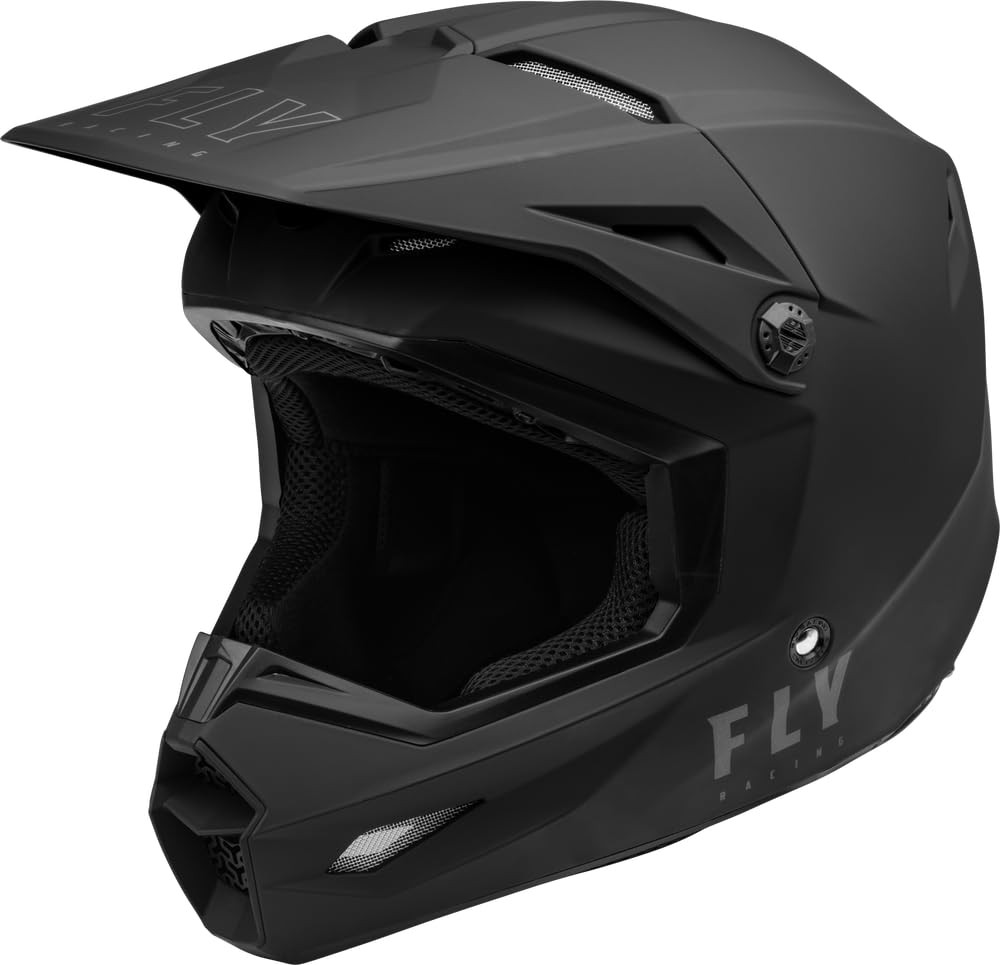
A featherweight motocross shell that punches above its price point.
At 3.59 pounds, the Fly Racing Kinetic Solid is the lightest helmet in this roundup — 39% lighter than the Fox Racing V Core at 5 pounds. That weight savings come from a polymer alloy shell across three shell sizes and four EPS sizes, which reduces rider fatigue during long trail sessions. The TFV (True Functional Ventilation) system pulls air in through front intake ports and pushes it out through rear exhaust vents, keeping you cool when you are working hard on the bike. It meets DOT and FMVSS 218 safety standards, and includes a dual-density EPS liner for impact management.
The interior features a moisture-wicking comfort liner and quick-release cheek pads that are fully removable and washable. It also comes with a replaceable high-flow mouthpiece and a fleece storage bag. Buyers report the helmet looks great and the padding is on point, but the sizing runs small — one reviewer who normally wears a size large in other full-face helmets could barely get their head into the large Fly Racing, so sizing up is strongly recommended. This is a pure off-road helmet with no faceshield or drop-down visor, so you will need goggles for trail riding.
Lightest in class: At roughly 3.59 pounds, it weighs less than every other helmet here except the Bell MX-9 — great for riders who prioritize neck comfort and all-day trailability.
Fit warning: Multiple owners mention the helmet runs small, so order at least one size up from your usual size or you may not get your head in at all.
Best for: budget-conscious motocross and off-road riders who want the lightest shell possible without spending premium money.
look elsewhere if: you need an adventure helmet with a faceshield for street riding — this is a pure dirt helmet with no street features.
9. O’NEAL 3 SRS MX Helmet Adult

A budget-friendly ABS motocross helmet with a shell weight of only 1340 grams.
The O’NEAL 3 SRS MX Helmet is an entry-level motocross helmet that keeps costs down by using an ABS shell construction — a durable but heavier plastic than the polycarbonate used in premium helmets. The shell weight for a size large is 1340 grams, which is around 2.95 pounds, making the actual helmet lighter than the packaging weight of 2.18 kilograms suggests (the box includes packaging). It meets DOT, ECE 22-05, and AS/NZS safety standards, giving you international certifications at a budget price. The ultra-plush, removable, and washable liner wicks away sweat to keep you cool and dry, and multiple air vents help airflow during rides.
Buyers consistently praise the comfort and design, with one reviewer calling O’Neal’s padding the most secure and comfortable they have experienced. The fit, however, runs small — multiple reviewers mention sizing up is necessary. This is a pure dirt bike helmet with no faceshield or drop-down sun visor, so goggles are required for any riding. Compared to the Troy Lee Designs SE4 at 2.22 kilograms, the O’NEAL is roughly 2% lighter overall, but the Troy Lee offers MIPS and ECE 22.06 for a small premium.
Budget-friendly build: For riders just getting into motocross or off-road riding, this helmet offers international certification and a comfortable liner at an accessible price.
Sizing caution: The helmet runs small, so order one size up from your usual measurement to avoid a squeeze that makes it unwearable.
Best for: new off-road riders who want a DOT and ECE certified helmet at the lowest possible cost without sacrificing basic comfort features.
steer clear if: you need MIPS or the latest ECE 22.06 standard — the O’NEAL uses the older ECE 22-05 and lacks rotational impact protection.
Understanding the Specs
Weight and Shell Materials
Helmet weight directly affects how tired your neck feels after a long day. ABS (Acrylonitrile Butadiene Styrene) is a durable, budget-friendly plastic found in helmets like the ILM WS902 and O’NEAL 3 SRS. Polycarbonate (PC) is lighter and stronger, used in the ScorpionEXO T520 and Alpinestars SM3. Kinetic Polymer Alloy (KPA) is LS2’s proprietary lightweight material. The lightest helmets here, like the Fly Racing Kinetic at 3.59 pounds, reduce fatigue significantly compared to heavier options like the LS2 Blaze II at 6 pounds.
MIPS and Rotational Impact Protection
MIPS (Multi-directional Impact Protection System) is a low-friction layer inside the helmet that allows the shell to slide slightly on impact, reducing rotational forces that can cause brain injuries during angled crashes. The Bell MX-9, Troy Lee Designs SE4, and Fox Racing V Core all include MIPS. Helmets without MIPS (like the Fly Racing Kinetic, O’NEAL 3 SRS, and ILM WS902) still provide good linear impact protection but lack this rotational safety feature. For off-road riding where angled falls are common, MIPS is a meaningful upgrade.
Ventilation and Visor Systems
Adventure helmets need ventilation systems that move air across your head to prevent overheating during technical climbs. Look for multiple intake vents at the front and exhaust ports at the rear. The Fox Racing V Core has 13 total vents (9 intake, 4 exhaust), while the Troy Lee SE4 has 16 ports. Visor systems vary: some helmets (Bell MX-9, ILM WS902, LS2 Blaze II) include an integrated faceshield plus a drop-down sun visor, making them true dual-sport helmets. Pure motocross helmets like the Alpinestars SM3 and Fly Racing Kinetic have only a standard peak visor and require separate goggles.
Safety Certifications
DOT (Department of Transportation) FMVSS 218 is the minimum US standard. ECE (Economic Commission for Europe) is a more rigorous test that includes impact testing at different speeds and angles. All helmets here meet at least DOT. The Troy Lee SE4, Fox V Core, and Alpinestars SM3 meet the latest ECE 22.06 standard, which is the toughest European certification. The O’NEAL 3 SRS meets ECE 22-05, an older standard. For maximum safety, prioritize ECE 22.06 and MIPS when your budget allows.
FAQ
What is the difference between an adventure helmet and a motocross helmet?
Does every adventure helmet here include MIPS?
Will an adventure helmet fit my Bluetooth communicator?
How do I know what size adventure helmet to buy?
Is an ECE certified helmet safer than a DOT certified helmet?
Can I use an adventure helmet for snowmobiling?
How heavy is too heavy for an adventure helmet?
What does the emergency release system do on the LS2 Blaze II?
Final Thoughts: The Verdict
For most riders, the adventure helmet winner is the Bell MX-9 Adventure MIPS because it balances the lightest weight among premium picks with MIPS protection and a versatile dual-sport design that works on dirt and asphalt without compromise. If you want touring-specific comfort with an inflation-fit cheek pad system, grab the ScorpionEXO T520. And for the best value MIPS motocross helmet that does not break the bank, the Troy Lee Designs SE4 delivers race-level protection at a mid-range price.
How We Picked
We do not accept paid placement. Every pick is matched to a real buyer and a real use-case; we do not hands-on test units.
Sources & Methodology
Specifications: manufacturer listings and product documentation. Review insights: verified customer reviews, as of July 2026. Pricing: not shown on this page (it changes often); check the current price via the retailer link.
As an Amazon Associate, Gadgets Feed earns from qualifying purchases. This does not affect which products we feature.