
A compacted lawn strangles roots, blocks water, and starves your grass of the oxygen it needs to thrive. A dedicated aeration tool physically removes plugs of soil — or drives deep spikes — to open the root zone, making every watering and fertilizing session dramatically more effective. Choosing the wrong tool means wasted effort, back strain, and a lawn that still looks half-dead.
I’m Min — the co-founder and writer behind Gadgets Feed. I’ve spent hundreds of hours analyzing manual coring spikes, tow-behind rigs, and step-in aerators across dozens of brands, digging into stainless steel thickness, tine geometry, weight distribution, and real-world soil penetration data to build this guide.
Whether you maintain a postage-stamp city yard or a sprawling suburban lot, this guide to the best aerator for lawns breaks down which core-removal method, handle height, and build quality will actually get the job done without breaking your back or your budget.
How To Choose The Best Aerator For Lawns
Manual aerators split into two camps: spike tools that poke holes and core (plug) tools that extract a physical cylinder of soil. Core removal is the only method that actually relieves compaction — spiking can sometimes compact the soil further around the hole. Your choice should match your lawn size, soil type, and willingness to sweat.
Corer vs. Spike — The One Spec That Matters
Aerators with hollow tines (typically 3 or 4 per step) pull out a 0.5-inch diameter plug, creating permanent channels for air and water. Solid spike tools simply push soil aside, which can increase density in clay-heavy ground. If your soil is hard-packed clay, prioritize a stainless-steel coring tool with tines at least 3.5 inches long.
Handle Height and Foot Bar Ergonomics
A 36-inch handle forces a hunched posture on taller users; a 42-inch shaft allows an upright stance and drives force through your legs rather than your lower back. Look for a wide, flat foot bar (not a rounded tube) that gives your boot sole stable leverage. Soft rubber grips prevent blisters during longer sessions.
Build Quality and Tine Material
Powder-coated steel frames resist rust, but the tines themselves should be stainless steel (often SUS 304) or heat-treated alloy. Cheaper tools use soft steel that bends after a few uses in compacted ground. For anything over 2,000 square feet, consider a tow-behind unit with a weight tray — manual tools become exhausting at scale.
Quick Comparison
On smaller screens, swipe sideways to see the full table.
| Model | Category | Best For | Key Spec | Amazon |
|---|---|---|---|---|
| Brinly PA-403BH-A3 | Tow-Behind | Large lawns over 1 acre | 24 heat-treated spoons, 3″ plugs | Amazon |
| Landzie Hollow Tine | Manual Corer | Medium lawns, premium build | 3 stainless steel tines, 42″ handle | Amazon |
| Yard Butler IM-7C | Manual Spike | Light aeration, top-dressing prep | 4 steel spikes, 3″ depth | Amazon |
| EEIEER 2025 Upgraded | Manual Corer | Small to medium lawns, budget value | 3 coring tines, 38″ ergonomic handle | Amazon |
| Dolibest 4-Corer w/ Tray | Manual Corer | Efficient plug collection | 4 stainless plugs, storage tray | Amazon |
| MEIIOFS Coring Tool | Manual Corer | Compact spaces, quiet operation | 4-tine design, soil storage tray | Amazon |
| Dolibest 4-Corer Basic | Manual Corer | Budget-friendly entry coring | 4 stainless plugs, soft rubber grip | Amazon |
In‑Depth Reviews
1. Brinly Tow Behind Plug Aerator PA-403BH-A3

The Brinly PA-403BH-A3 eliminates the manual labor equation entirely by turning your lawn tractor into an aeration machine. Its 24 heat-treated, 16-gauge steel spoons penetrate compacted soil and extract plugs up to 3 inches long — a depth most manual tools can’t sustain across a full acre. The fully enclosed weight tray holds up to 150 pounds of sandbags or concrete blocks, letting you dial in penetration force without adding bulk to the frame.
Three independently rotating tine sections minimize turf tear during tight turns, and the single-pin universal hitch attaches to virtually any lawn tractor or ZTR in under a minute. Assembly runs about 90 minutes with a drill, and the semi-pneumatic 10-inch tires make transport across driveways and sidewalks effortless thanks to the dedicated transport lever. Real-world users report consistent 2.5-inch plugs in clay soil after adding a 60-pound concrete block to the tray.
This is not a tool for casual gardeners — it weighs 64 pounds and requires a tow vehicle. But for anyone managing a half-acre or larger, the Brinly replaces hours of back-breaking stomping with a single pass behind a riding mower. The all-steel chassis and heat-treated spoons are built for annual seasonal use without rust or bending.
Why it’s great
- Covers large areas in a fraction of the time of manual tools
- Weight tray accepts up to 150 lbs for deep penetration in hard clay
- Rotating tine sections prevent turf damage on turns
Good to know
- Requires a riding mower or ATV — not suitable for small yards
- Assembly takes about 1.5 hours with multiple hardware steps
2. Landzie Hollow Tine Lawn Aerator
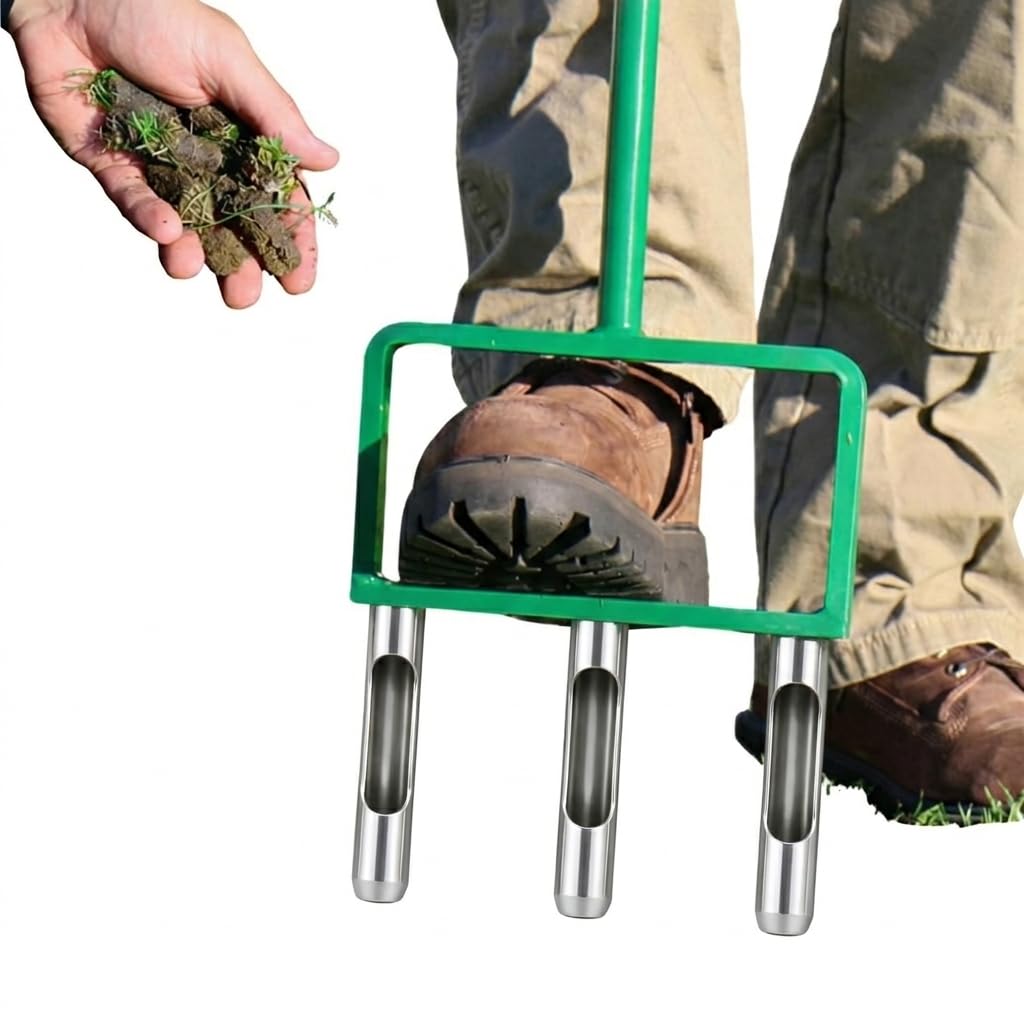
Landzie’s original hollow-tine design solves the two biggest complaints of manual coring: clogging and assembly. The beveled stainless steel tines are engineered so that soil cores push out the top with each insertion — no poking, no cleaning sticks, no stopping. At 42 inches, the handle is the longest in this guide, letting a 6-foot user stand fully upright and drive force through the legs rather than the lower back.
The frame arrives fully assembled with tines already fitted, a welcome departure from the two-wrench struggle common among budget competitors. Each tine is replaceable, and the powder-coated steel frame has survived multiple seasons of heavy use in reviews — one user reported zero structural issues after 10 sessions over a year. The 42-inch height and 5.6-pound weight make it manageable for 25-foot-by-25-foot sections in under an hour with properly damp soil.
No tool is effortless, and the Landzie demands good soil moisture to reach its full 3-inch depth. Dry, compacted clay will stop it at 2 inches. But for the manual-aeration purist who wants a single lifetime purchase, the Landzie’s clog-free engineering and full-height handle put it in a class above the mid-range competition.
Why it’s great
- Beveled tines push cores out automatically — zero clogging
- 42-inch handle allows upright posture for reduced back strain
- Fully assembled out of the box with replaceable tines
Good to know
- Best results require soil to be damp; struggles in dry, hard-packed clay
- Foot bar can feel slippery with wet boots
3. Yard Butler Spike Aerator IM-7C
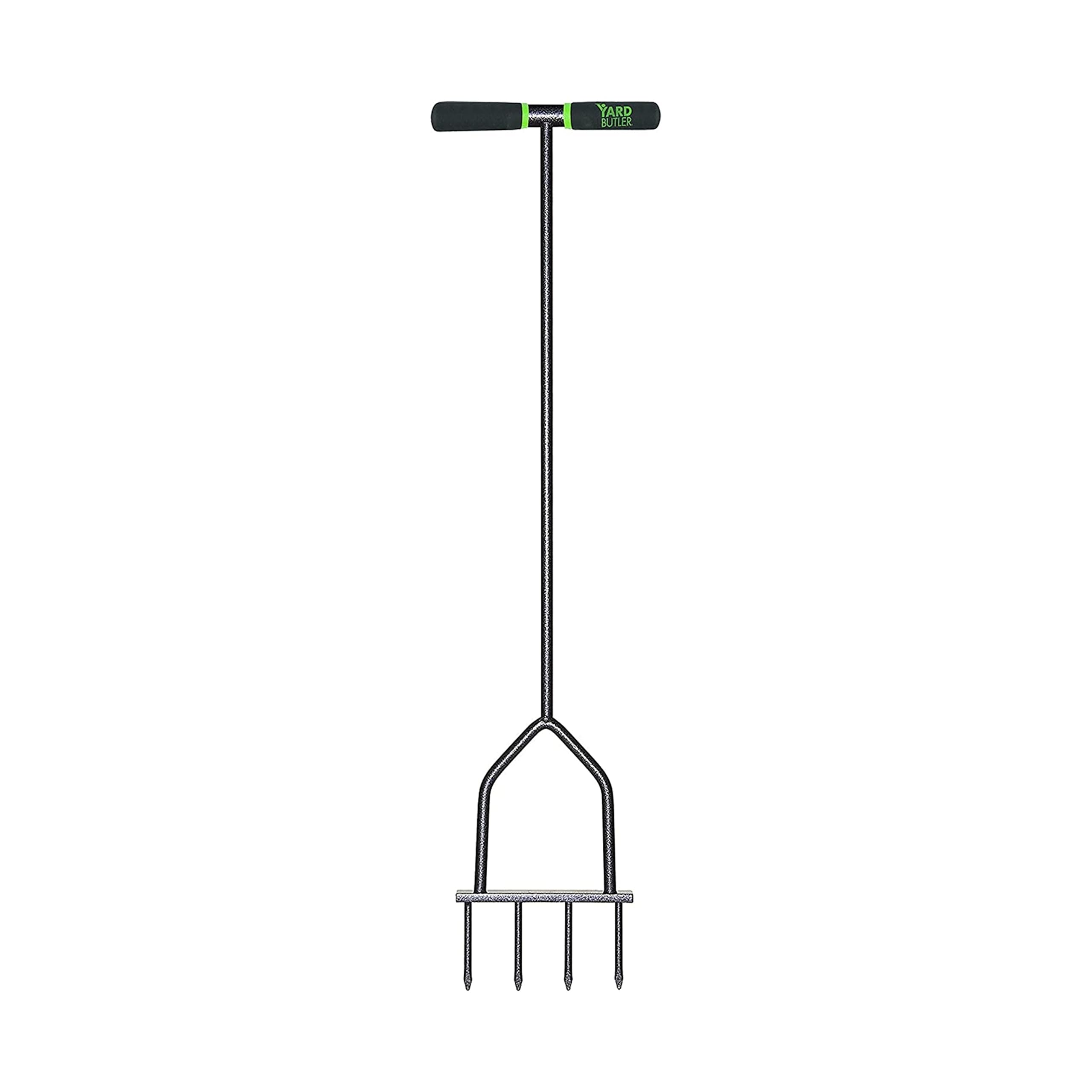
The Yard Butler IM-7C is the classic spike aerator that has been a garden shed staple for years. Its four 3-inch steel spikes punch through thatch and open the soil surface for water infiltration, making it a solid choice for prepping a lawn before top-dressing or overseeing. The 37-inch powder-coated steel shaft offers decent leverage, though taller users will need to bend slightly at the hips.
Customer feedback from Texas clay yards shows the spike design effectively improves drainage on slopes — water collects in the holes and soaks in rather than running off. The tool works best after a light rain or thorough watering; dry, compacted soil demands significant foot pressure and can slow progress to about 325 square feet per hour. Some recent buyers note that the tine tips feel blunter than previous production runs, requiring more stomping force in hard ground.
It is important to remember that spike aeration does not remove soil cores, so it is less effective at relieving deep compaction than a coring tool. The Yard Butler shines as a cheap, low-effort maintenance tool for sandy or loamy soils where compaction is mild. For heavy clay or neglected lawns, a coring aerator remains the superior choice.
Why it’s great
- Lightweight at 2.25 pounds and easy to maneuver
- Improves water infiltration on sloped lawns effectively
- Simple, durable steel construction with powder coating
Good to know
- Spike method does not remove soil cores — less compaction relief
- Tines may bend in very hard or rocky soil
4. EEIEER 2025 Upgraded Manual Lawn Aerator

The EEIEER 2025 Upgraded model brings thoughtful design tweaks to the crowded manual corer category. Its three sharp tines minimize insertion resistance — a notable advantage over four-tine designs that demand more downward force. The integrated soil storage basket catches the ejected cores, saving you the chore of raking them off the lawn afterward. The 38-inch handle height splits the difference between economy (36 inches) and premium (42 inches), suiting average-height users without excessive stooping.
Build quality is a genuine differentiator here: EEIEER uses a patented one-piece bottom structure instead of welded joints, and the tine wall thickness has been upgraded from 1.2mm to 2mm to resist bending in dense soil. The included cleaning stick doubles as a weeding tool, though some users found the foam grip on the handles less durable than the rubber found on pricier competitors. The basket fills quickly in sandy soil, requiring periodic emptying.
This tool works best on soil that has been moistened the day before — dry clay causes clogging and requires more aggressive prying. For yards up to 3,000 square feet, the EEIEER delivers core removal performance at a price that undercuts premium brands while offering features (storage basket, thicker tines) that cheaper models omit entirely.
Why it’s great
- Soil storage basket eliminates post-aeration cleanup
- Thickened 2mm tine walls resist bending in compacted soil
- One-piece bottom construction is stronger than welded alternatives
Good to know
- Foam handle grips may wear faster than rubber
- Basket fills quickly in sandy or loose soil
5. Dolibest 4-Corer with Storage Tray
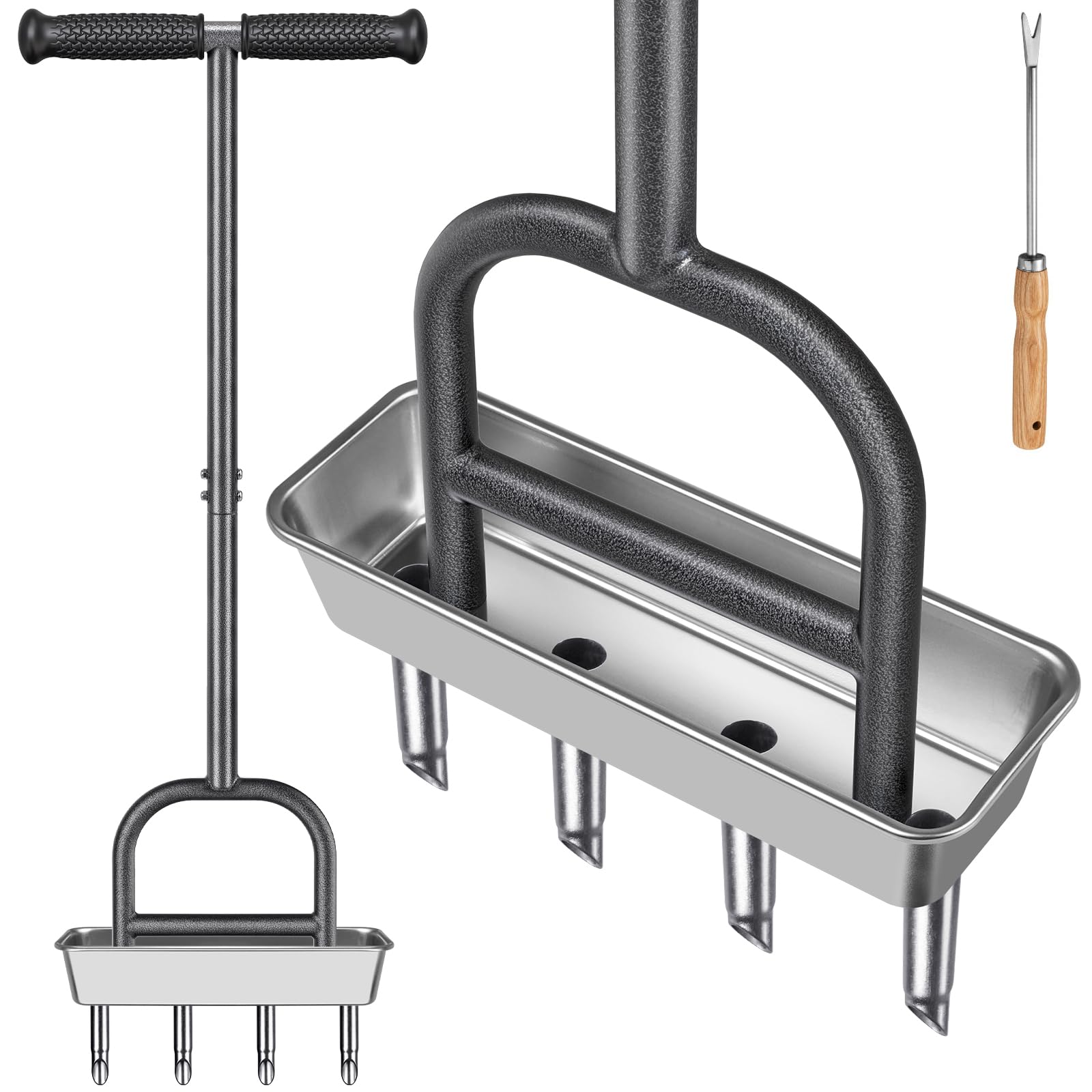
Dolibest’s 4-corer model elevates the manual aeration experience with SUS 304 stainless steel throughout — both the coring plugs and the soil storage tray resist rust and deformation far better than the painted mild steel found on entry-level tools. The four plugs extract four cores per stomp, doubling the coverage rate of three-tine competitors without significantly increasing required foot pressure, thanks to the sharpened edges of the stainless tubes.
Assembly takes about two minutes: the three-part tool screws together at the center pole, handle, and base. The elevated foot crossbar keeps your shoe from blocking the core ejection path, a small detail that prevents frustrating clogging mid-session. The included 12-inch weeding tool serves double duty as a cleaning rod for the tines and a transplanting trowel. Users report the hollow tines rarely clog in moist loam, though denser clay can still cause occasional sticking.
The trade-off for all that stainless steel is weight — at 6.2 pounds, it is heavier than the basic Dolibest model and may fatigue smaller users over a full yard. The handle height is adequate for average builds but could be taller for users over 5-foot-10. For a mid-yard corer that prioritizes material longevity and plug collection convenience, this Dolibest variant is hard to beat.
Why it’s great
- SUS 304 stainless tines and tray resist rust permanently
- Four-tine design extracts more soil per step for faster coverage
- Quick 2-minute tool-free assembly
Good to know
- Heavier than comparable 3-tine models at 6.2 pounds
- Handle could be taller for users over 5’10”
6. MEIIOFS Coring Aerator Lawn Tool

The MEIIOFS Coring Aerator offers a practical soil-storage-tray solution at an accessible price point. Its high-density alloy construction aims for rust resistance and durability, while the T-type foam-cushioned handle and non-slip foot rod are designed for comfort across longer sessions. The tool pulls plugs effectively and keeps them contained in the tray, eliminating scattered soil mess on the lawn.
Assembly is straightforward, though buyers should note the tool runs smaller than product photos suggest — the working width is compact, making it better suited to small backyards or targeted dead-spot treatment than full-lawn coverage. The 4-tine design pulls four plugs per press, but the smaller footprint means more steps per square foot compared to wider manual aerators. The included cleaning tool helps address occasional tine clogging, particularly in wetter soil conditions.
User feedback highlights solid build quality and ease of use for small areas, with some noting the tool feels sturdy and well-constructed for its price tier. The handle length works well for average-height users, though very tall individuals may want a longer shaft. For small-space gardeners or those tackling patchy compaction rather than full-yard renovation, the MEIIOFS is a functional, no-frills option.
Why it’s great
- Integrated tray collects soil plugs automatically
- Sturdy alloy construction feels solid for the price
- Includes cleaning tool for unclogging tines
Good to know
- Smaller working width requires more passes for full coverage
- Handle could be longer for taller users
7. Dolibest 4-Corer Basic Lawn Aerator
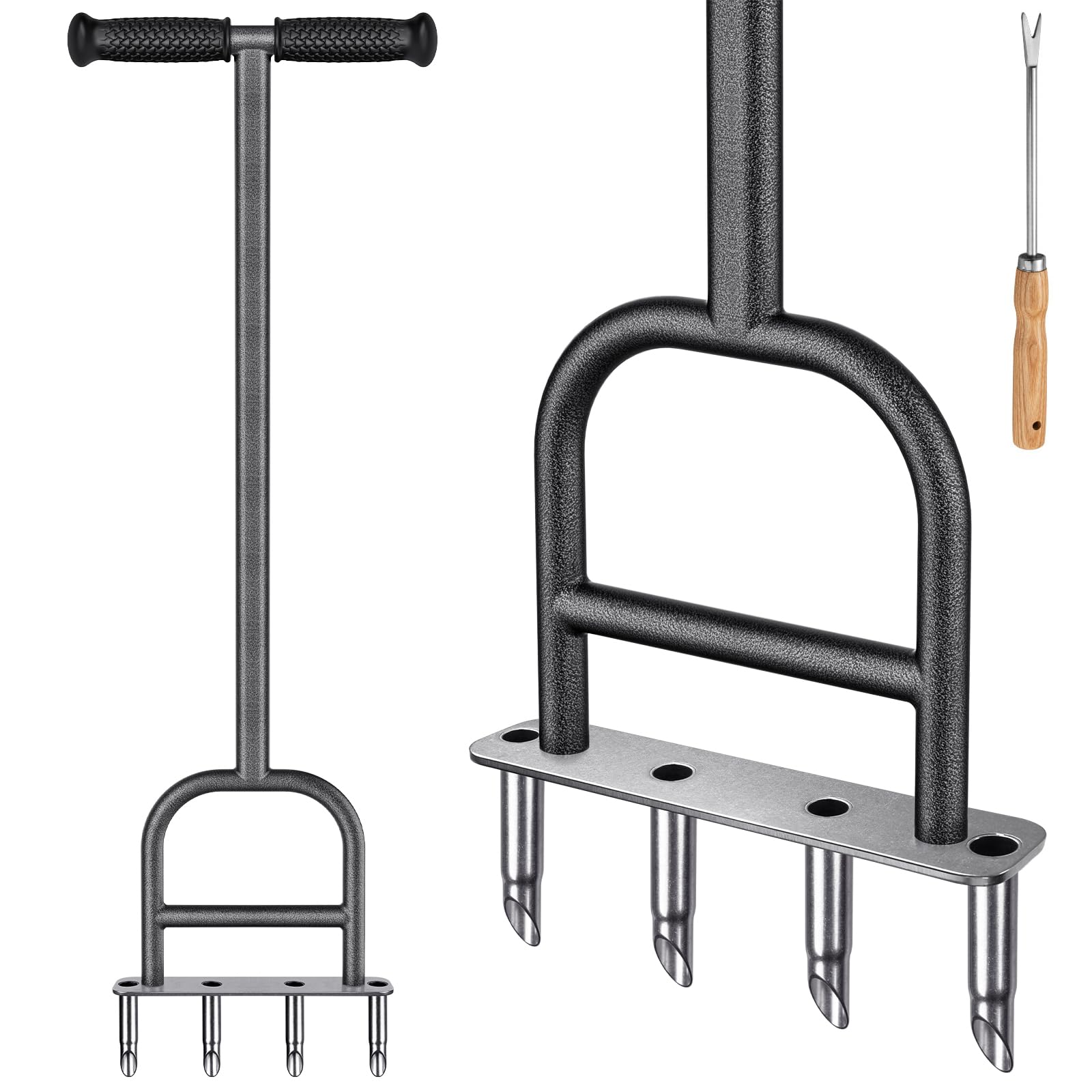
The Dolibest 4-Corer Basic cuts straight to the essential function: extracting 0.5-inch diameter soil plugs with four stainless steel corers per press. The powder-coated steel frame and stainless bottom section are designed to resist rust, though the black coating may chip over time with heavy use. The soft rubber grip prevents blisters during extended sessions, and the elevated foot bar keeps your shoe clear of the core ejection path.
Users consistently praise this tool for small to medium projects, noting the plug spacing is excellent and the welded construction feels sturdy. The key to success is soil moisture — the tool works best when the lawn has been watered the day before. In very wet soil, the hollow tines can clog, while dry clay requires significant downward force and a rocking side-to-side motion for full insertion. The included 12-inch weeding tool clears blockages and doubles as a garden trowel.
Depth can be a limitation: some users report achieving only 2 inches of penetration in harder ground versus the advertised 3.5-inch plug length. A heavier user or the addition of a weight vest helps drive the tines deeper. For entry-level coring on a tight budget, the Dolibest Basic delivers reliable core removal where it counts — just keep your soil moist and your expectations realistic about maximum depth.
Why it’s great
- Four stainless steel corers provide good value at entry price
- Soft rubber grip reduces hand fatigue during longer sessions
- Welded construction feels solid for the price tier
Good to know
- Actual plug depth may reach only 2 inches in hard soil
- Tines can clog in overly wet soil conditions
FAQ
Should I water my lawn before using a manual core aerator?
How many tines do I need — 3 or 4 per step?
Final Thoughts: The Verdict
For most users, the best aerator for lawns winner is the Landzie Hollow Tine Lawn Aerator because its 42-inch handle, clog-free beveled tines, and stainless steel construction deliver professional-grade coring without the back pain. If you want to aerate a large lawn without manual labor, grab the Brinly PA-403BH-A3. And for the budget-conscious homeowner with a compact yard, nothing beats the Dolibest 4-Corer Basic for entry-priced core extraction.