
Matching factory paint from a rattle can sounds impossible until you factor in prep work, nozzle quality, and whether the can uses a single-stage or two-part formula. The difference between a repair that screams “touch-up” and one that blends into the surrounding panel comes down to adhesion, drying time, and the clear coat’s resistance to UV and fuel. Getting that seamless, durable result requires choosing the right chemistry for your substrate—plastic trim, bare metal, or existing OEM paint.
I’m Min — the co-founder and writer behind Gadgets Feed. I’ve poured hours into digging through customer accounts, verifiable technical data sheets, and real-world durability reports to separate the aerosol paints that truly bond and hold gloss from those that peel after one winter.
Read on for a category-specific breakdown of nozzle design, catalyst-activated formulas, and proper surface prep so you can confidently select the best aerosol paint for cars that matches your project’s exact demands.
How To Choose The Best Aerosol Paint For Cars
Automotive aerosol paint occupies a tricky middle ground between a quick rattle-can job and a professional spray-gun finish. The right choice hinges on three non-negotiable factors: paint chemistry (1K vs 2K), nozzle spray pattern, and color-code accuracy. Ignore any of these and you risk poor adhesion, visible mismatch, or a finish that softens under gasoline exposure.
1K vs 2K: The Single-Stage vs Catalyst-Activated Divide
Standard 1K (one-component) aerosol paint dries by solvent evaporation. It is adequate for trim, chassis components, and small touch-ups where maximum hardness is not critical. 2K (two-component) paint contains a separate hardener that you activate before spraying. The resulting chemical cross-link creates a much tougher film that resists scratching, fuel, and UV degradation. If you are painting a hood, roof, door panel, or any horizontal surface that takes direct sun, a 2K clear coat is the only way to avoid premature yellowing and chipping.
Nozzle Technology: Fan Spray vs Standard Round
A standard round nozzle concentrates paint into a small wet circle, making it nearly impossible to lay down an even coat without runs. Premium automotive aerosols use a 360° fan-spray nozzle that distributes the product across a wider, more consistent pattern. This directly reduces orange peel and the amount of wet sanding needed afterward. The nozzle on the can is not a minor detail—it is the single biggest mechanical factor determining whether your repair looks like a bodyshop or a DIY blemish.
Color Code Verification
Never rely on a visual guess. Every car manufacturer stamps a paint code on a placard inside the driver’s door jamb, glovebox, or radiator support. Brands like Dupli-Color tie their product SKUs to those exact codes. Using the wrong code, even a shade off, will be obvious under daylight on adjacent panels. Verify the code before purchasing, and note that some formulas require a separate clear coat to reach full gloss depth.
Quick Comparison
On smaller screens, swipe sideways to see the full table.
| Model | Category | Best For | Key Spec | Amazon |
|---|---|---|---|---|
| Dupli-Color EBTY16177 | Exact-Match | Factory color matching (Toyota Classic Silver) | 8 oz, color code 1F7 | Amazon |
| SEM 49143 Trim Black | Trim Restoration | Faded plastic, aluminum, steel trim | 14.5 oz, satin finish | Amazon |
| ERA Paints 2K Clear | 2K Clear Coat | Showroom gloss over base color | 11.8 oz, catalyst-activated | Amazon |
| Eastwood 2K Clear | 2K Clear Coat | Durable high-gloss protection | 11.8 oz, 12-hour cure | Amazon |
| Moshify Spraymax 2K | 2K Clear Coat | Large panel repairs, pro-level hardness | 400 ml, 48-hr pot life | Amazon |
| VHT SP671 Chassis Paint | Epoxy Chassis | Frame, roll bar, equipment coating | 11 oz, heat resistant to 250°F | Amazon |
| Dupli-Color EBFM02297 | Exact-Match | Factory color matching (Ford Oxford White) | 8 oz, color code 9L | Amazon |
In‑Depth Reviews
1. Dupli-Color EBTY16177 Perfect Match – Toyota Classic Silver Mica 1F7

The Dupli-Color Perfect Match line is built around a simple promise: spray the code on the door jamb and the color matches the factory coat. For Toyota Classic Silver Mica (code 1F7), the acrylic lacquer formulation lays down a satin finish that, with a separate clear coat, blends invisibly into adjacent panels. The 8-ounce can provides roughly 10-12 square feet of coverage, which is enough for a bumper, a door, or a collection of trim pieces.
Users consistently report that the color match is spot-on for 2000-era 4Runners and 2005-era Silverados, with good adhesion on properly prepped surfaces. The EZ Touch 360° fan-spray nozzle delivers a wide, consistent pattern that minimizes the orange peel typical of round-spray cans. The paint flashes dry in 30 minutes and can be handled in one hour, meaning a full multi-coat job can be completed in an afternoon.
The trade-off is that this is a 1K lacquer, so it lacks the chemical and UV resistance of a 2K product. Top-coating with a clear urethane is strongly advised for horizontal panels exposed to sun and fuel. The 8-ounce volume also means large projects (like an entire van) will require multiple cans—some owners report using seven or eight cans for a full respray.
Why it’s great
- Factory color match accuracy is verified across Toyota and Chevy platforms with zero visual mismatch in daylight.
- 360° fan-spray nozzle provides broad, even coverage that reduces runs and wet-sanding time.
- Fast flash time (30 minutes) enables rapid layering for full coverage in a single session.
Good to know
- 1K acrylic lacquer will not resist UV and fuel as well as a 2K clear coat; plan to top-coat for high-exposure panels.
- 8-ounce can yields only 10-12 square feet—buy multiple cans for larger body panels or a full respray.
2. SEM 49143 Trim Black Ultra

SEM 49143 is engineered specifically for automotive trim, not for full-body painting. The formula is optimized to bond with TPO, PP, aluminum, and steel—the exact materials found on faded window pillars, rocker panels, and bumper cladding. The satin black finish (true jet-black color code #000000) restores the original low-gloss sheen that OEM trim has before UV exposure turns it gray.
With 14.5 ounces per can, the coverage is generous—about 4 to 5 square meters—and the proprietary “ultra transfer efficiency” aerosol deposits more paint on the surface and less into the air. Customer reports show that a 2018 truck’s pillars and wheel-well trim returned to a like-new appearance with just one can. The adhesion is strong enough to resist peeling after weeks of rain and sun, suggesting the formula contains an adhesion promoter that generic spray paints lack.
The 24-hour cure time is longer than most 1K paints, but the result is a finish that looks OEM rather than painted-over. It is not suited for clear-coat application on top—this is a standalone product for black trim restoration. Users who apply it to metal surfaces should ensure the metal is scuffed or primed first for best grip.
Why it’s great
- Formulated specifically for TPO and PP plastic—the common fade-prone trim materials—so adhesion is reliable without extra primer.
- Large 14.5-ounce can covers an entire vehicle’s trim set in one purchase, saving time and cost on multiple cans.
- Satin black finish matches the exact gloss level of factory unpainted trim, avoiding the “painted-over” look.
Good to know
- 24-hour full cure is slower than many aerosol paints; plan for overnight drying before reassembly or exposure to moisture.
- Not intended as a color match for body panels—this is a trim-only product and will not match metallic or tinted OEM paint.
3. ERA Paints 2K High Gloss Clear Coat
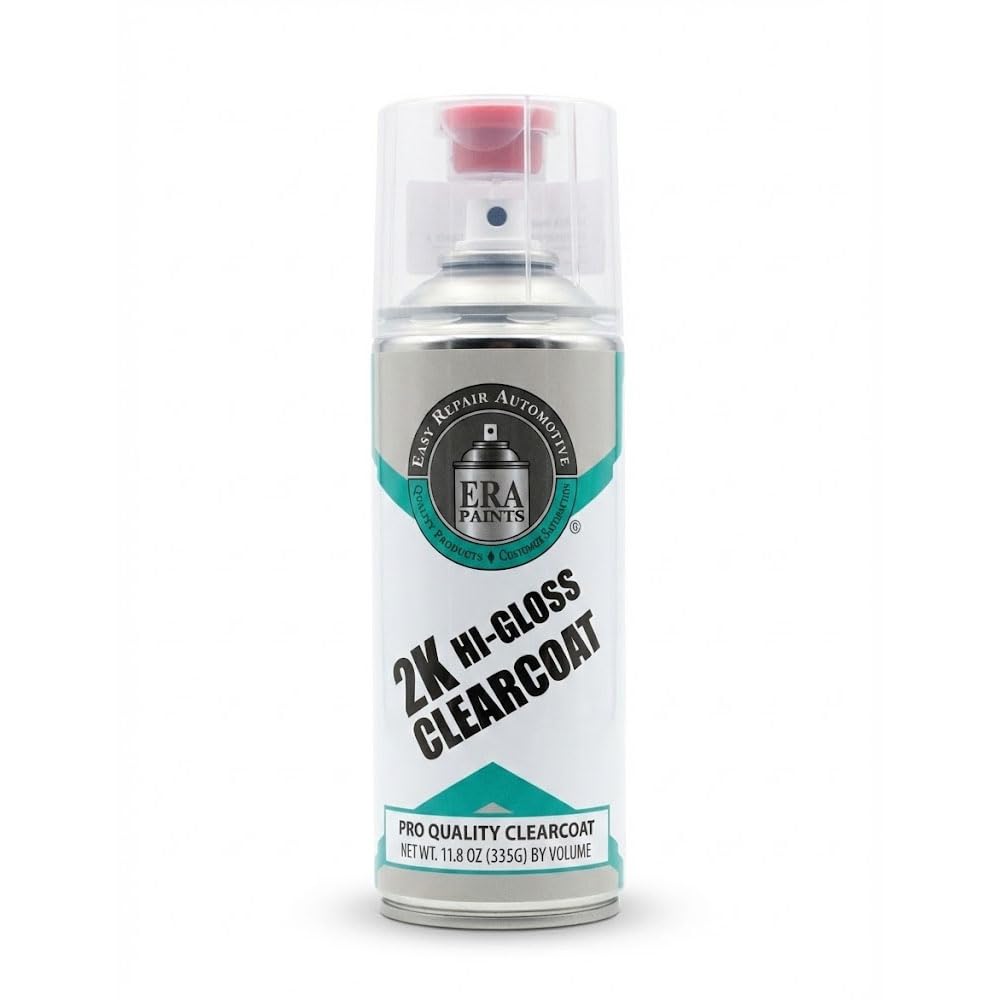
ERA Paints delivers a true 2K (catalyst-activated) clear coat in an aerosol can, which chemically cross-links during cure to produce a film hardness approaching that of a spray-gun urethane. The 11.8-ounce can includes a built-in hardener that you activate before spraying, and the resultant coating resists yellowing, fuel, and UV better than any 1K product can claim. The company states it is made in Oregon with premium-grade resins, and users report it survives automatic car washes without hazing.
The fan nozzle creates a wide, even pattern that lays down approximately 3.5 square feet per can, meaning one can covers a single panel if applied in three medium coats. Customer reviews highlight that a skilled home user can achieve a showroom shine without buffing, and several people report that after wet-sanding and polishing, the finish is indistinguishable from factory clear. The 24-hour full cure time is comparable to other 2K aerosols, but the flash time between coats is only a few minutes, making the spray session itself efficient.
The coverage (3.5 square feet) is lower than a comparable 1K product because the 2K film builds thicker per coat. For an entire car, budget at least three to four cans. Also, because this is a real two-part paint, you must wear a proper respirator—standard dust masks will not filter the isocyanate vapors.
Why it’s great
- True 2K chemistry with built-in catalyst delivers a hard, fuel-resistant finish that 1K clear coats cannot match.
- Multi-coat application can yield a showroom gloss without buffing, saving significant labor time.
- Made with premium domestic resins and packaged in the USA, ensuring consistent batch quality.
Good to know
- Limited coverage of 3.5 square feet per can means multi-panel jobs require multiple cans, increasing project cost.
- Requires a proper isocyanate-rated respirator; standard masks offer no protection against the activated hardener.
4. Eastwood 2K Aerosol Clear Coat

Eastwood’s 2K clear coat is designed for the builder who expects the same durability from a rattle can that a bodyshop gets from a spray gun. The activated formula builds at about 1.2 mils per pass, and the 11.8-ounce can covers 5.4 to 8.1 square feet depending on how many coats you lay down. The 12-hour full cure at 68°F (or 40 minutes at 140°F with IR drying) is relatively fast for a 2K product, which means you can sand and polish the same day if you use heat.
The spray pattern is even enough that wet sanding with 2000 grit is straightforward, and the final polish brings out a gloss that matches the original. The pot life is approximately 48 hours, so you can use the same can for multiple panels over two days.
The main caution is that this is a 2K paint, meaning the hardener is activated inside the can. Once activated, the entire can must be used within 48 hours. The coverage numbers are realistic for single-panel touch-ups but will not stretch to a full car with one can. A respirator is mandatory, and Eastwood provides lifetime tech support for any application questions.
Why it’s great
- Fast 12-hour full cure at room temperature (or 40 minutes with IR) allows same-day sanding and polishing.
- Proven long-term UV resistance—no yellowing reported after 1.5 years in direct sun in southern climates.
- 48-hour pot life gives flexibility to use the can across multiple panels over two days without waste.
Good to know
- Requires a respirator rated for isocyanates; standard dust masks do not provide adequate protection.
- Once activated, the remaining paint must be used within 48 hours or it will harden in the can.
5. Moshify Spraymax 2K Clear Coat

The Moshify (Spraymax) 2K clear coat is the highest-coverage option in this guide, claiming 118 to 130 square feet per can—enough to clear two entire cars if applied in thin coats. That coverage figure is realistic only for a single, light pass, but it does indicate that the 400-milliliter can contains a high volume of activated material. The 48-hour pot life mirrors the Eastwood product, giving you ample time to complete a multi-panel project.
Users who tackled clear-coat delamination on an Audi A4 report that after sanding off the failed clear and applying five coats, the finish hardened “like stone” and wet-sanded to a mirror shine. Tips from experienced buyers emphasize spraying in zero wind, watching the pattern video beforehand, and using three coats minimum for orange-peel-free results. Bundled spray trigger is included, though some users found it drippy after extended use.
The trade-off is that the solvent smell is strong, and the isocyanate hazard is real—proper respiratory protection is non-negotiable. The claim of covering an entire car with one can is optimistic if you use the recommended 3+ coats for a smooth finish; budget two to three cans for a full car. The hardness after cure is excellent, making it a strong choice for horizontal surfaces like hoods and roofs.
Why it’s great
- Highest raw coverage figure (118–130 sq ft per can), reducing the number of cans needed for large projects.
- Proven ability to bond over sanded delaminated clear coat and restore a factory-like gloss after wet sanding and polish.
- 48-hour pot life allows a thorough multi-panel project without rushing or wasting activated material.
Good to know
- Included spray trigger can drip after the first few uses; many users discard it and spray directly from the can nozzle.
- Requires a dedicated isocyanate respirator—no shortcuts on safety for this chemistry.
6. VHT SP671 Roll Bar and Chassis Paint – Satin Black
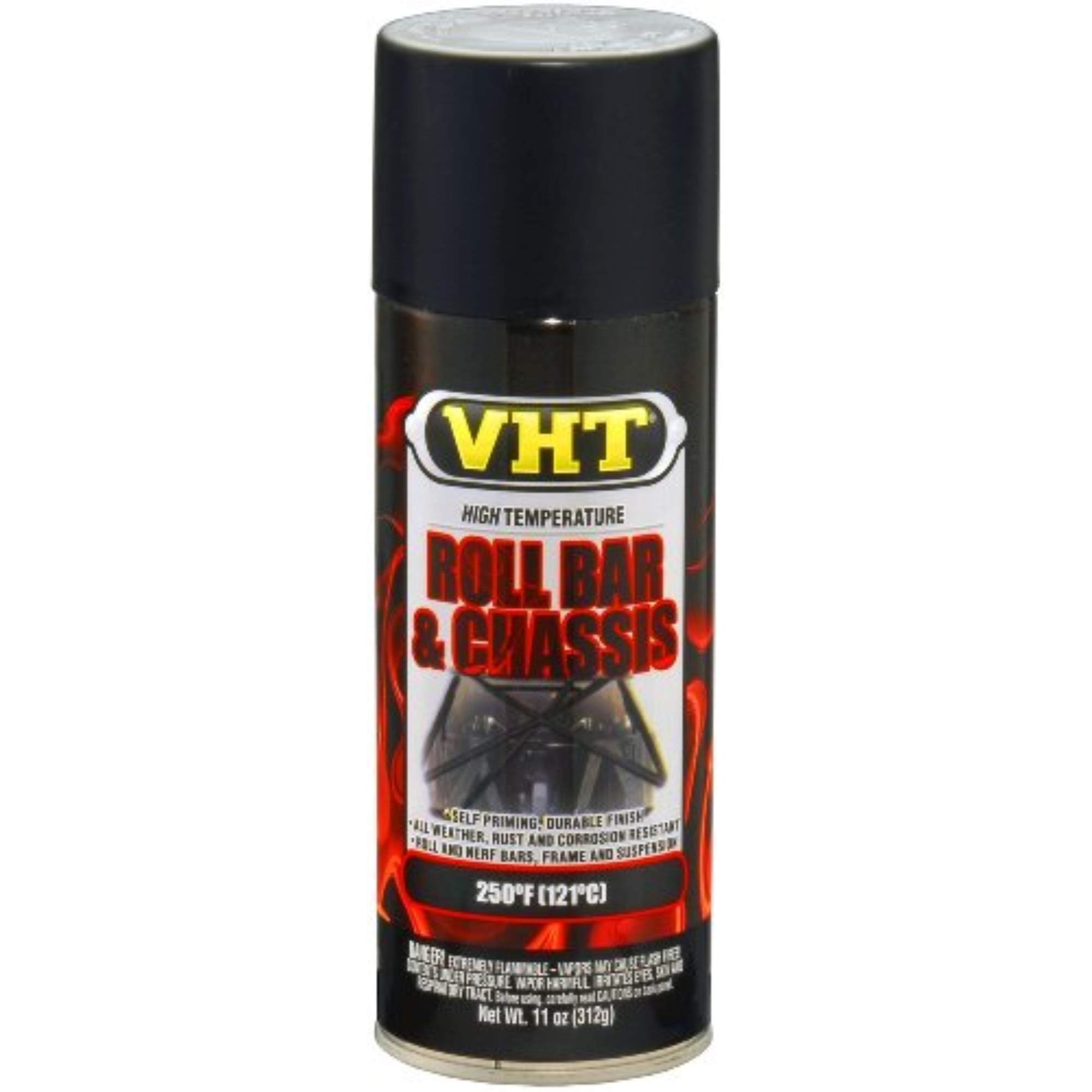
VHT SP671 is not intended for body panels—it is a one-step epoxy coating designed for frames, roll bars, chassis components, and underbody surfaces. The formula bonds directly to bare or rust-removed metal without a separate primer, and the resulting film resists salt, corrosion, chemicals, and intermittent heat up to 250°F. The satin black finish (color code 7015) provides a tough, baked-on look that matches OEM chassis coatings.
Real-world reports from Jeep, Ram, and tractor owners back up the durability claims: after cleaning rust with a wire wheel and acetone, applying three to four coats, the paint held for a year in Texas heat and two years of off-road mud and rock contact. The 30-minute dry-to-touch time and overnight full cure mean you can undercoat a vehicle in a day. The 11-ounce can provides high coverage, with users noting that one can covers a pickup truck frame with a single coat.
The limitation is strictly functional: this paint is not formulated for UV gloss retention on visible body panels. It is a satin, not gloss, product, so it will not match the reflective sheen of a clear-coated exterior. Some users also mention that one can’s nozzle snapped off mid-use, which is a known inconsistency in VHT packaging.
Why it’s great
- Epoxy-based formulation needs no primer and bonds directly to bare, cleaned metal—saving prep time on frames and brackets.
- Rated for intermittent heat to 250°F, making it suitable for exhaust-adjacent chassis components.
- Proven multi-year durability in off-road conditions with salt, mud, and rock contact, according to verified owner reports.
Good to know
- Satin finish is not suitable for visible body panels; it will not match the gloss level of painted exterior surfaces.
- Nozzle quality is inconsistent—some users report a snapped nozzle that wastes remaining paint in the can.
7. Dupli-Color EBFM02297 Perfect Match – Ford Oxford White 9L

This Dupli-Color Perfect Match variant is identical in construction to the silver version reviewed above, but keyed to Ford Oxford White (codes 9L, A9, YO, YZ). It is an 8-ounce acrylic lacquer that delivers a satin finish, requiring a clear coat if you want the full gloss depth of a factory two-stage paint job. The coverage is the same 10-12 square feet per can, making it suitable for bumpers, door touch-ups, or trim painting on Ford, Lincoln, and Mercury models.
Verified customers report that Oxford White matches a 2005 Chevy Silverado when cross-referenced with GM code WA8624/50U (Summit White), though it needs a clear coat to achieve the same gloss. One user painted their entire Town & Country van with seven to eight cans and was satisfied with the result, confirming the lacquer’s buildability. The EZ Touch nozzle performs identically to the silver variant—wide fan pattern, minimal orange peel if sprayed in light coats.
The same caveats apply: 1K lacquer is less resistant to fuel and UV than 2K clear, so plan to top-coat any panel that will see direct sun or fuel exposure. The 8-ounce can size also means larger jobs require multiple cans. But for a precise factory-color match at a low entry point, this is a reliable option.
Why it’s great
- Accurate color match to Ford Oxford White (9L) verified by users on multiple Ford and GM platforms with correct code cross-referencing.
- EZ Touch 360° fan-spray nozzle provides consistent, wide coverage that reduces the risk of runs and drips.
- Fast 30-minute dry time allows multiple coats in a single afternoon for time-sensitive repairs.
Good to know
- Acrylic lacquer lacks the UV and fuel resistance of 2K clear; always top-coat for longevity on exterior panels.
- 8-ounce can means larger panels or full-vehicle work will require several cans to achieve full coverage.
FAQ
Can I apply 2K clear coat over a 1K base color?
Yes, as long as the 1K base coat is fully cured (usually 24 hours at room temperature) and scuffed with 600-800 grit sandpaper. The 2K clear will bond mechanically to the scuffed surface. Always test on a small inconspicuous area first, because some 1K formulations contain silicone that can cause fisheyes in the 2K clear.
How do I find the correct paint code for my car?
Look for a small metal or sticker placard inside the driver’s side door jamb. It typically lists a three-digit or alphanumeric code under “PAINT” or “EXT PNT.” For Ford and GM vehicles, the code is often also printed on the radiator support or inside the glovebox. Dupli-Color and other exact-match brands list their products by these codes, so match the code exactly before purchasing.
Is a 2K aerosol paint safe to spray indoors?
No. 2K paints contain isocyanates, which are respiratory sensitizers and can cause permanent lung damage even in a single exposure. Always spray in a well-ventilated area outdoors or in a booth with forced-air extraction. Use a respirator fitted with organic vapor/particulate cartridges rated for isocyanates—standard dust masks are not sufficient.
Do I need to wet sand between coats of aerosol clear coat?
Only if you see visible orange peel or dust nibs. For most home jobs, applying three to four medium-wet coats with good flash time (3-5 minutes between coats) at a consistent distance (8-10 inches) produces a smooth finish that only requires final buffing. If the texture is rough, wet sand with 1500-2000 grit after the final coat cures for 24 hours, then buff with a compound.
Final Thoughts: The Verdict
For most users, the best aerosol paint for cars winner is the Dupli-Color EBTY16177 Perfect Match because it delivers factory-level color accuracy, a user-friendly fan-spray nozzle, and fast flash times that make single-panel repairs manageable in an afternoon—all without the hazardous isocyanate requirements of 2K paint. If you need a durable, gloss-retaining clear coat for horizontal or high-exposure panels, grab the ERA Paints 2K High Gloss Clear Coat. And for restoring faded plastic trim or coating a chassis frame, nothing beats the SEM 49143 Trim Black Ultra for adhesion and OEM-matching satin finish.