
Our readers keep the lights on and my morning glass full of iced black tea. As an Amazon Associate, I earn from qualifying purchases.
Specs are compiled from manufacturer listings and verified buyer reviews and can change over time — please confirm the key details on the product page before buying.
Buying your first affordable 4K video camera should feel notable, not like decoding a spec sheet. You want crisp footage that actually looks like 4K, a way to keep your shots steady without a Hollywood rig, and a price tag that doesn’t make you wince. This guide cuts through the noise to help you find the camera that fits your real-life shooting.
I’m Min — the founder and writer behind Gadgets Feed. This guide is built by comparing the manufacturers’ published specifications and the patterns across verified customer reviews, so you get each pick’s real strengths and trade-offs instead of marketing spin.
We looked at sensor size, stabilization, and battery life to find the best affordable 4k video camera for vloggers, streamers, and everyday creators who want professional results while staying affordable.
Our Picks at a Glance


How To Choose The Best Affordable 4K Video Camera
Picking your first 4K camera depends on a few key specs that directly affect how your final video looks. You don’t need to know every technical detail, but these three areas will make the biggest difference in your daily shooting.
Sensor Size and Low-Light Performance
The sensor is the part of the camera that captures light. A larger sensor, like a 1-inch or an APS-C sensor (a sensor roughly the size of an APS-C film frame), collects more light. This means your footage stays clean and less grainy when you shoot indoors or at dusk. Most entry-level cameras use smaller sensors, so checking the sensor size is the first step to better-looking video.
Stabilization: Mechanical vs. Digital
Shaky footage is the quickest way to make a great scene look amateur. Mechanical stabilization uses physical motors and gimbals to counteract your movement, while digital stabilization uses software to crop and smooth the frame. For walking shots or handheld vlogging, mechanical 3-axis stabilization (which steadies the camera on three axes of motion) produces a much smoother result than digital-only stabilization.
Interchangeable Lenses vs. Fixed Lens
Cameras with interchangeable lenses let you swap glass for wide-angle, zoom, or portrait shots as your skills grow. Fixed-lens cameras are smaller, lighter, and ready to shoot straight from the start. If you plan to travel light and vlog on the go, a fixed-lens pocket camera is often easier. If you want room to grow into more creative shots, a mirrorless camera (a compact, interchangeable-lens camera) with a kit lens is a better starting point.
Quick Comparison
| Model | Best For | Sensor | Stabilization | Battery Life | Amazon |
|---|---|---|---|---|---|
| Xtra Muse★ Best Overall | Pocket gimbal vlogging | 1-inch CMOS | 3-axis gimbal | 161 minutes | Amazon |
| DJI Osmo Pocket 3Also Great | Ultra-portable vlogging | 1-inch CMOS | 3-axis mechanical | 166 minutes | Amazon |
| Panasonic LUMIX G85Best Dual-I.S. | Hybrid stills/video | 16 MP Micro Four Thirds | 5-axis in-body | — | Amazon |
| Sony Alpha ZV-E10 | Oversampled 4K quality | 24.2 MP APS-C | Digital | — | Amazon |
| Canon EOS R100 (Twin Lens) | Entry-level dual lens kit | 24.1 MP APS-C | Digital | — | Amazon |
| Nikon Z50 | Compact mirrorless hybrid | 20.9 MP DX | Digital | — | Amazon |
| Canon EOS R100 (Single Lens) | Budget mirrorless starter | 24.1 MP APS-C | Digital | — | Amazon |
| OBSBOT Tail Air | PTZ streaming | 50 MP | Digital | — | Amazon |
In‑Depth Reviews
1. Xtra Muse
A pocket gimbal camera that mimics the DJI formula at a more accessible price.
The Xtra Muse packs a 1-inch CMOS sensor (the same physical size as the DJI Osmo Pocket 3’s sensor) and records 4K resolution at 120fps for smooth slow-motion. The built-in 3-axis gimbal stabilizer provides mechanical steadiness for walking or running shots without external gear.
The 2-inch touch screen supports vertical and horizontal shooting, and the camera offers 10-bit X-Log color (a flat color profile that keeps up to one billion colors for flexible editing). The Master Follow feature keeps you centered in the frame when the camera is on a tripod. Connectivity relies on USB and a 1/4-inch threaded handle for mounting.
Customers note the smooth stabilization is comparable to higher-priced models, though the 2-inch screen is smaller than the 2-inch rotating screen on the DJI Osmo Pocket 3, which also has a more extensive accessory ecosystem. The still resolution and video quality serve well for social media content creators on a budget.
Strong points
- 1-inch CMOS sensor with 3-axis gimbal for smoot h handheld 4K.
- 10-bit X-Log color supports 1 billion colors for professional grading.
Weak points
- Battery life is 161 minutes vs the DJI’s 166 minutes.
- Smaller accessory ecosystem compared to the DJI Osmo Pocket 3.
Best for: creators who want DJI-like gimbal stabilization and 4K/120fps in a pocket camera at a friendlier price point.
Consider another if: reliable accessories and proven long-term support matter more than saving a bit upfront.
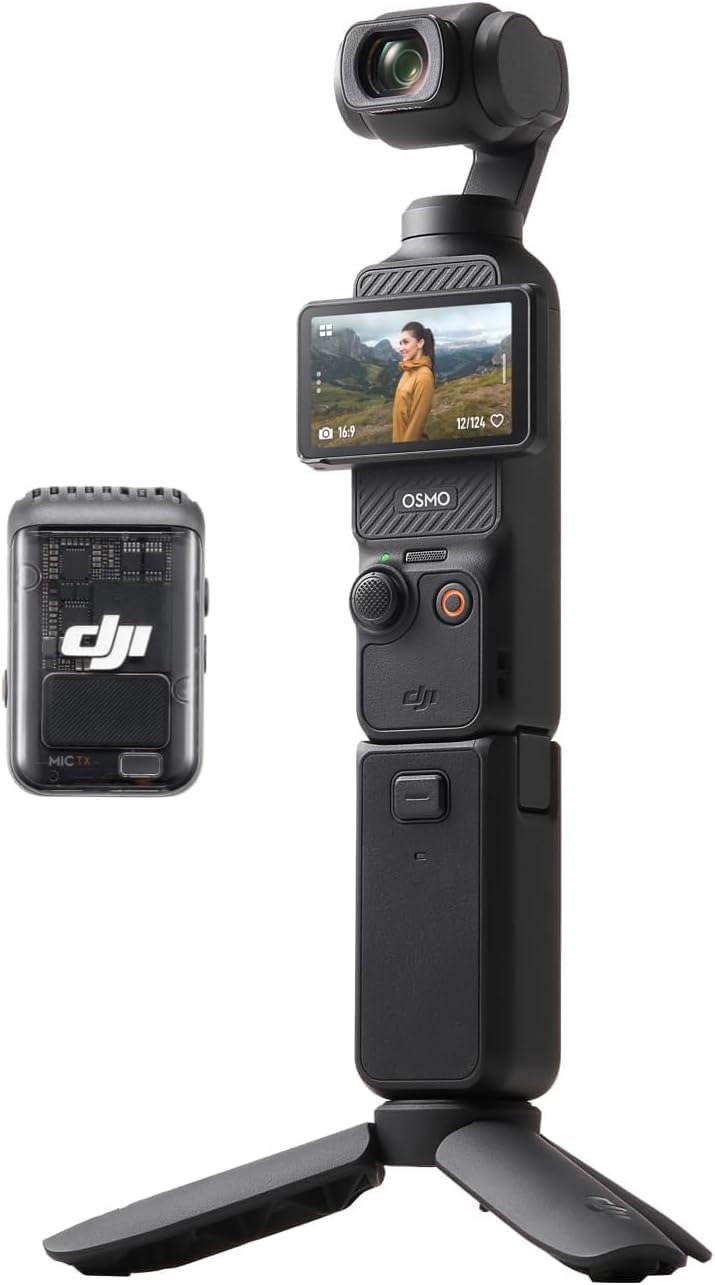
2. DJI Osmo Pocket 3 Creator Combo
The pocket-sized powerhouse that shoots buttery-smooth 4K/120fps video with zero shake.
You get a 1-inch CMOS sensor (a larger-than-average sensor that pulls in more light) that records 4K resolution at 120fps, so slow-motion playback stays crisp and clear. The 3-axis mechanical stabilization (physical motors that counter every bump and step) is the real star — it keeps footage steady while you walk, run, or dance without needing an external gimbal. The battery lasts 166 minutes, which edges out the Xtra Muse’s 161 minutes by a small margin, giving you just a little more runtime on a day out.
The 2-inch rotatable touch screen flips for horizontal or vertical shooting, making it a natural fit for TikTok or Instagram Reels without any cropping. It also connects directly to two DJI Mic 2 transmitters for clear audio, cutting wire headaches on the go.
Buyers report the ActiveTrack 6.0 keeps them locked in the frame even during fast spins, and the D-Log M 10-bit color mode (a flat color profile that preserves more editing flexibility) lets you grade colors professionally in post. The catch is the non-replaceable lens — you are stuck with the wide-angle view, so zoom-in shots are done digitally.
Standout features
- 3-axis mechanical stabilization eliminates shake during walking shots.
- Rotatable touch screen switches between horizontal and vertical modes.
Limitations
- Fixed lens means no optical zoom or lens swaps.
- Effective still resolution of 9.4 MP is lower than some competition like the OBSBOT Tail Air’s 50 MP.
Reach for this if: you want the most portable 4K camera with professional-grade stabilization from the start.
Look elsewhere if: you need interchangeable lenses for creative flexibility, like a mirrorless system offers.
3. Panasonic LUMIX G85
A mirrorless workhorse that pairs rock-solid stabilization with a versatile zoom lens.
The Panasonic LUMIX G85 combines a 16-megapixel Micro Four Thirds sensor (a compact interchangeable-lens sensor size that balances quality and portability) with a 12-60mm Power O.I.S. lens. What makes it stand out is the 5-axis in-body dual image stabilization — it steadies the camera on five planes at once, so you can shoot 4K video handheld without a gimbal, even in lower light. The sensor lacks a low-pass filter, which the maker claims boosts fine detail resolution by nearly 10% over older 16MP sensors.
An integrated OLED live viewfinder with 2360K dots (a sharp electronic viewfinder that shows your exact exposure before you shoot) sits alongside a 3-inch rear tilt-touch LCD. The 4K Photo mode lets you pull still frames at up to 30fps and choose your focus point after the fact.
Buyers praise the camera’s “class-leading” stabilization for handheld video, noting it makes walking shots nearly as smooth as a gimbal. The Micro Four Thirds lens mount opens a wide ecosystem of affordable glass, though the 16-megapixel resolution is lower than the 24-megapixel APS-C sensors found in the Sony ZV-E10.
What stands out
- 5-axis in-body stabilization works with any lens you mount.
- 4K Photo and Post Focus let you select focus after the shot.
Trade-offs
- 16-megapixel sensor is lower resolution than some competitors.
- Lacks a built-in flash; relies on hotshoe accessories.
Who it fits: hybrid shooters who want a mirrorless camera with excellent stabilization for both 4K video and stills.
Who might prefer something else: anyone who wants the very highest still resolution — the Sony ZV-E10’s 24.2 MP beats it.
4. Sony Alpha ZV-E10
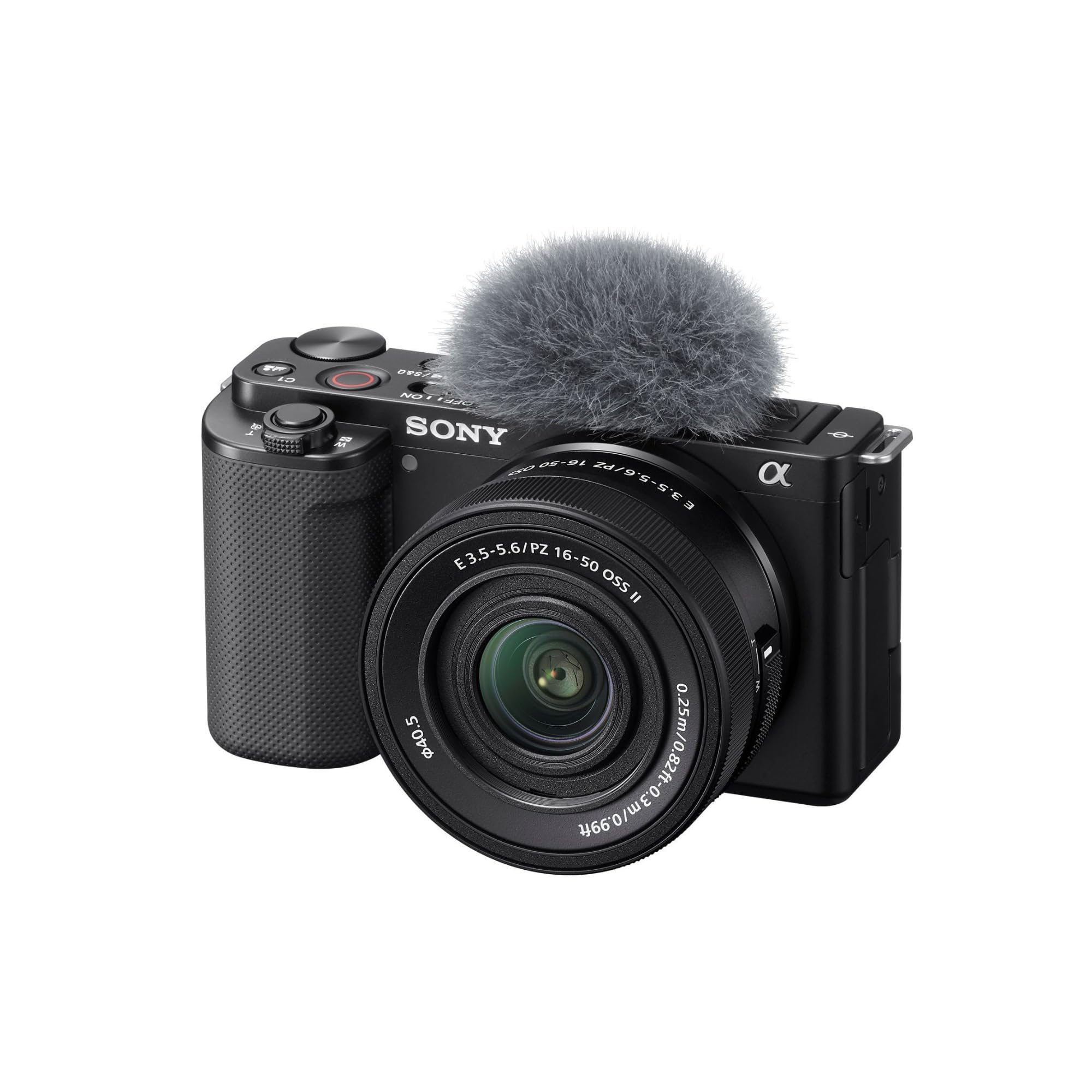
A vlogging mirrorless that captures 4K from a 6K readout for noticeably sharper detail.
The Sony ZV-E10 packs a 24.2-megapixel APS-C Exmor CMOS sensor (a larger sensor that gives you better low-light performance than smaller sensors) paired with the BIONZ X processor. Its headline feature is 4K Movie recording oversampled from a 6K full pixel readout — meaning the camera uses more data than a standard 4K image and compresses it down, resulting in sharper, more detailed footage with less noise. The 425-point hybrid autofocus (a phase- and contrast-detection system that locks onto subjects quickly) includes real-time eye tracking for people and animals.
You also get a Product Showcase Setting that transitions focus from your face to an object you hold up, perfect for reviews and unboxing videos. The Background Defocus button is a one-tap toggle between blurred and sharp backgrounds. A single USB cable connects the camera for live streaming without extra hardware.
Owners mention the “incredible” autofocus for vlogging and the clean 4K quality, especially in good light. The digital-only stabilization means you will get better handheld results from a gimbal-camera like the DJI Osmo Pocket 3, but the image detail from the oversampled 4K is tough to top at this level.
Key strengths
- Oversampled 4K from a 6K readout delivers superior video detail.
- 425-point hybrid AF with eye-tracking keeps subjects sharp in motion.
Things to note
- No in-body stabilization relies on digital correction or external gimbals.
- Camera flash is hotshoe-only; no built-in pop-up flash.
Best suited for: vloggers and creators who prioritize video sharpness and reliable autofocus over built-in stabilization.
Probably not for: anyone who shoots a lot of handheld walking footage without a gimbal — the DJI Osmo Pocket 3 handles that better.
5. Canon EOS R100 (Two-Lens Kit)
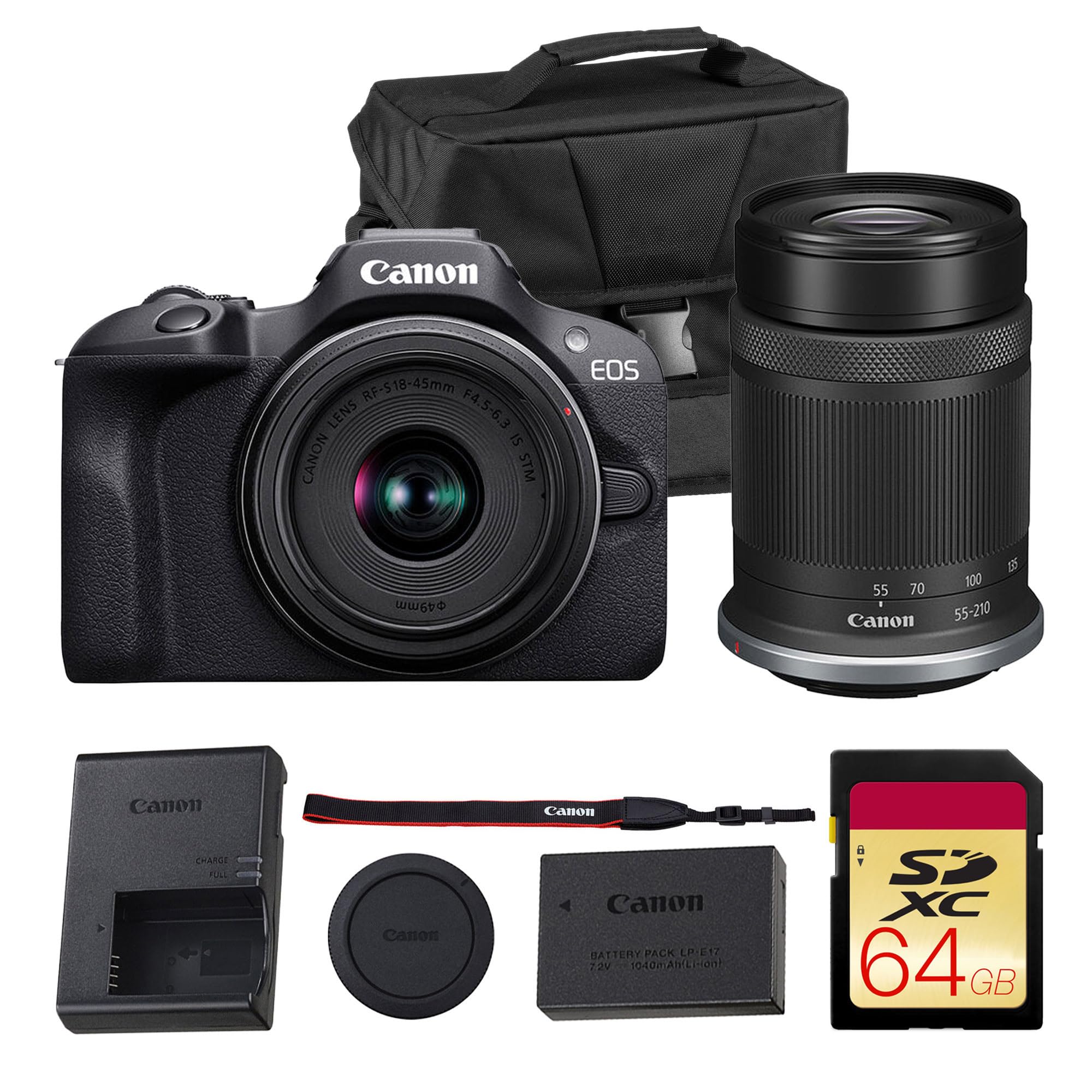
A beginner mirrorless kit that hands you two zoom lenses for every situation.
This Canon EOS R100 kit bundles the camera body with both an 18-45mm and a 55-210mm RF lens, covering wide-angle group shots through to distant action. The 24.1-megapixel APS-C CMOS (APS-C is a sensor size larger than a smartphone’s, giving you better control over background blur) and DIGIC 8 processor handle 4K video capture. The Dual Pixel CMOS AF (a technology that uses phase-detection autofocus across most of the sensor) provides 143 autofocus points with human, animal, and vehicle detection.
The R100 is the smallest and lightest body in the EOS R series, making it easy to pack for travel. The 45 autofocus points listed in the detailed specs are a separate count for a different shooting mode, so you get solid coverage in both stills and video. The kit includes a shoulder bag and a 64GB SD card, so you’re ready to shoot from the start.
Buyers appreciate the “lightweight” feel and how the dual-lens kit covers a wide focal range without buying extra glass. Unlike the OBSBOT Tail Air’s dedicated streaming features, the R100 is a traditional mirrorless camera, not a PTZ camera for live production.
What you get
- Two RF mount zoom lenses included for wide to telephoto coverage.
- Smallest and lightest EOS R body for easy portability.
Limitations
- No built-in flash and no pop-up flash included.
- Autofocus points are lower at 45 compared to Sony’s 425 in hybrid mode.
A good match for: beginners who want a lightweight Canon mirrorless with two lenses for learning different photography styles.
Not ideal for: anyone who needs built-in flash or a higher number of autofocus points for tracking fast action.
6. Nikon Z50 (Refurbished)

A compact mirrorless that balances 20.9 megapixels with a solid kit lens for hybrid shooting.
The Nikon Z50 uses a DX-format (APS-C) 20.9-megapixel CMOS sensor and the EXPEED 6 image processor to deliver 4K Ultra HD video. The 209-point hybrid autofocus (a system combining contrast and phase detection for faster lock-on) covers a wide area for both stills and video. The native ISO range runs from 100 all the way up to 51,200 (this means it can handle very dim light before the image gets noisy). It shoots at up to 6.5 frames per second in full-resolution stills.
The flip-down LCD screen is positioned for selfie-style vlogging and self-portraits, a design choice some find more natural than side-flip screens. The kit includes the NIKKOR Z DX 16-50mm f/3.5-6.3 VR lens, which has vibration reduction built into the lens itself. Built-in Wi-Fi and Bluetooth make pairing with your smartphone simple for remote control and transfers. This is a 90-day manufacturer refurbished unit, so it comes with a shorter warranty than new-in-box options like the Sony ZV-E10.
Buyers describe the Z50’s image quality as “excellent” for its size and note the lens is sharp for a kit option. The 20.9-megapixel sensor trails the 24.1-megapixel sensor in the Canon R100, but the Z50 offers a wider native ISO range for better low-light flexibility.
Highlights
- 209-point hybrid AF with wide coverage for reliable subject tracking.
- Built-in Wi-Fi and Bluetooth for easy smartphone pairing.
Considerations
- Refurbished condition comes with a 90-day warranty instead of a full-year.
- 20.9-megapixel sensor is lower resolution than the 24.1 MP Canon EOS R100.
Pick this if: you want a compact Nikon mirrorless with strong low-light performance and a selfie-friendly flip screen.
Skip if: you prefer a full factory warranty or need the highest possible still resolution from an entry-level mirrorless.
7. Canon EOS R100 (Single Lens Kit)
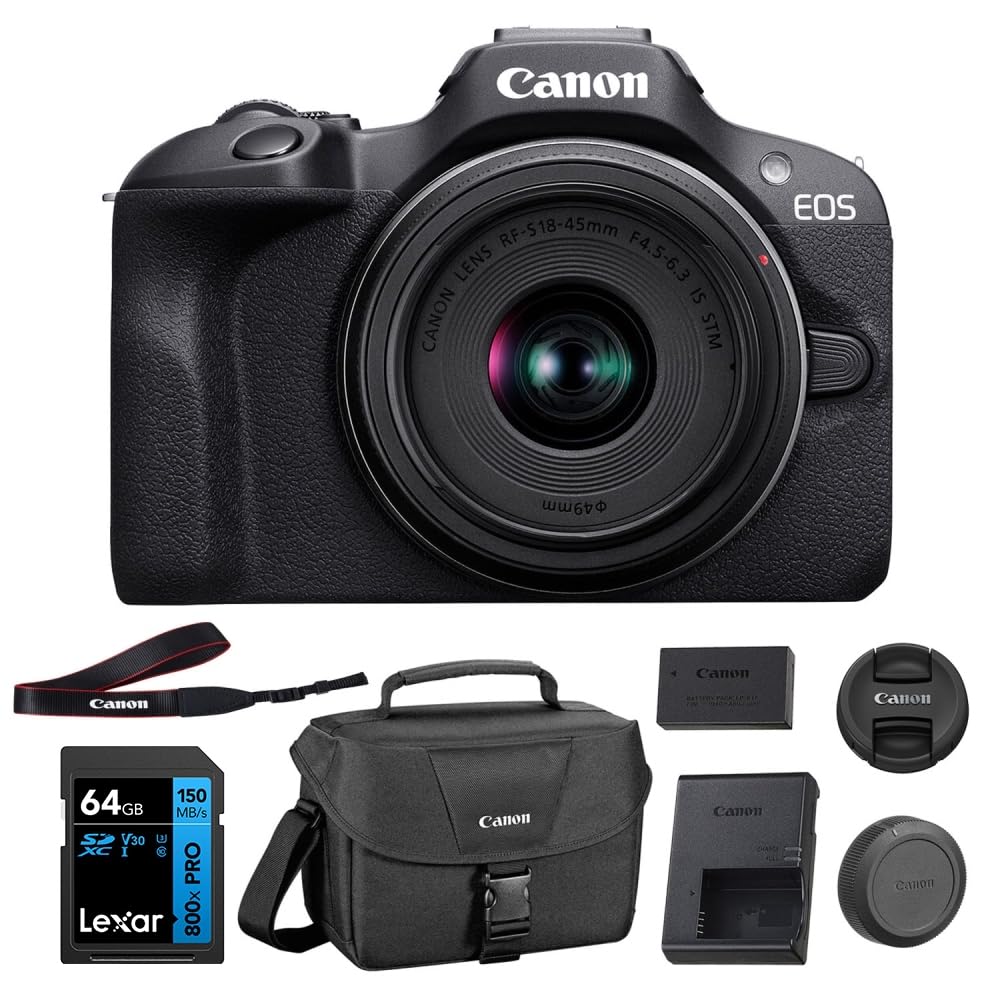
The lightest Canon R-series mirrorless that fits 4K into an affordable, easy-to-carry body.
This single-lens EOS R100 kit pairs the 24.1-megapixel APS-C CMOS sensor with the compact RF-S18-45mm F4.5-6.3 IS STM lens, giving you a stabilized standard zoom for everyday shooting. The DIGIC 8 processor (the chip that handles image processing and video encoding) supports 4K video capture and continuous shooting at up to 6.5 frames per second in One-Shot AF. The Dual Pixel CMOS AF covers 143 zones with human face and eye detection, so you can rely on the camera to keep faces sharp during vlogging.
At the smallest and lightest body in the EOS R series, this camera is built for mobility. It includes a built-in pop-up flash, a feature the two-lens R100 kit lacks, making it a more versatile low-light option straight from the start. The kit bundles a 64GB SD card and a shoulder bag for immediate use.
Buyers praise the “natural bokeh” from the APS-C sensor and the camera’s lightweight build for travel. As a single-lens kit, you sacrifice the telephoto reach of the twin-lens version, but the built-in flash gives you an edge for indoor evening shots.
Reasons to get it
- Built-in pop-up flash for low-light situations without accessories.
- Smallest and lightest EOS R body, easy to carry daily.
Things to know
- Single lens limits your focal range to standard zoom only.
- No external microphone input for enhanced audio options.
Who it works for: budget-conscious beginners who want a light mirrorless with a built-in flash for evening photos.
Not for you if: you need a telephoto zoom for sports or wildlife — the twin-lens kit is a better fit.
8. OBSBOT Tail Air NDI Streaming Camera

A tiny PTZ camera that tracks your movement while streaming in full 4K.
The OBSBOT Tail Air is a PTZ (pan, tilt, zoom) camera designed for live streaming, YouTube, and worship use. It records 4K resolution and supports a 320° horizontal and 180° vertical rotation range, so it can follow a speaker moving across a stage. The AI tracking can lock onto humans, animals, and objects, and you can control the camera through gestures, remote control, or the companion Obsbot Start app.
Connectivity is flexible with Micro HDMI, USB-C, Ethernet, and Wi-Fi options, plus support for RTMP, RTSP, and VISCA protocols. The effective still resolution is 50 MP, a massive 5.3x gap compared to the DJI Osmo Pocket 3’s 9.4 MP, making it a better choice if you need high-resolution stills from video frames. The digital zoom reaches 4x, which is double the DJI’s 2x digital zoom.
Buyers appreciate the “game-changing” auto-tracking for live events and streaming. The NDI license key (required for network streaming) is purchased separately, which is an additional cost to factor in. Unlike the Xtra Muse or DJI Pocket 3, this is not a handheld vlogging camera — it is a fixed-camera solution for studio-like production.
Key benefits
- AI auto-tracking for people, animals, and objects works hands-free.
- Multi-protocol streaming (RTMP, RTSP, VISCA) for live broadcasts.
Important details
- NDI license key is an additional purchase, not free.
- Designed for stationary streaming, not handheld vlogging.
Who it’s for: live streamers, church tech teams, and creators who need automated tracking in a small PTZ form factor.
Not for: vloggers or travel shooters needing a portable handheld camera.
Understanding the Specs
Sensor Size and Type
The sensor is the heart of any camera. A 1-inch CMOS sensor is larger than what you find in most smartphones, which means it captures more light for crisper video, especially indoors or at dusk. APS-C and Micro Four Thirds sensors found in mirrorless cameras are even larger, giving you more control over depth of field (the blur behind your subject) and better performance in dim light. A bigger sensor usually means better-looking footage, but also a larger camera body.
Stabilization Systems
Stabilization determines whether your walking shots look smooth or seasick. Mechanical 3-axis stabilization uses physical motors to counter movement, producing the smoothest handheld footage without extra gear. In-body 5-axis stabilization works with any lens you mount and is common in mirrorless cameras like the Panasonic G85. Digital stabilization crops the image to smooth it out, which can lower the field of view. For active shooting, mechanical or in-body stabilization is worth prioritizing.
Frame Rate and Resolution
4K at 30fps is the standard for smooth video, but 4K at 60fps or 120fps lets you slow down footage in editing without it looking choppy. The “oversampled 4K” feature (shooting at a higher resolution like 6K, then downsampling to 4K) produces sharper video with less noise. A digital zoom, like the OBSBOT’s 4x or the DJI’s 2x, crops into the image rather than using optical zoom, so expect a slight loss in quality when you zoom in.
Autofocus Performance
Good autofocus keeps your subject sharp even when you or your subject are moving. Hybrid autofocus systems combine phase-detection and contrast-detection to lock onto faces, eyes, and animals reliably. The number of autofocus points, like the Sony ZV-E10’s 425 or the Nikon Z50’s 209, indicates how much of the frame the camera can track. For vlogging, face and eye detection is the most important feature — it ensures you stay in focus as you move.
FAQ
What is the difference between a 1-inch and an APS-C sensor for 4K video?
Do I need a gimbal if the camera has built-in stabilization?
Is “affordable” 4K video quality good enough for professional work?
What does “oversampled 4K” mean and why is it better?
Can I use a 4K video camera for live streaming?
What is the difference between a mirrorless camera and a traditional camcorder for video?
How long can these affordable 4K cameras record continuously?
Do I need a fast memory card for 4K video?
Can I use a Canon lens on a different brand’s camera?
What is the benefit of the Panasonic LUMIX G85’s 5-axis stabilization?
Final Thoughts: The Verdict
For most people, the affordable 4k video camera winner is the DJI Osmo Pocket 3 because it combines a 1-inch sensor, 3-axis mechanical stabilization, and a 166-minute battery in a genuinely pocketable body that delivers smooth, vibrant footage right from the start. If you want the sharpest oversampled 4K and interchangeable lenses for room to grow, grab the Sony Alpha ZV-E10. And for a budget-friendly mirrorless with built-in 5-axis stabilization and a versatile zoom lens, the Panasonic LUMIX G85 is a strong pick.
How We Picked
We do not accept paid placement. Every pick is matched to a real buyer and a real use-case; we do not hands-on test units.
Sources & Methodology
Specifications: manufacturer listings and product documentation. Review insights: verified customer reviews, as of July 2026. Pricing: not shown on this page (it changes often); check the current price via the retailer link.
As an Amazon Associate, Gadgets Feed earns from qualifying purchases. This does not affect which products we feature.