
A 65-inch screen is the sweet spot for cinematic immersion, but the price tags on flagship models can make your wallet wince. The good news is that the market for mid-range and budget-friendly large-screen TVs has never been more competitive, with Mini-LED backlighting, high refresh rates, and advanced HDR formats trickling down to surprisingly accessible price points. Navigating this landscape requires separating marketing buzz from actual panel performance.
I’m Min — the co-founder and writer behind Gadgets Feed. I’ve spent hundreds of hours cross-referencing technical datasheets, analyzing real-world contrast ratios, refresh rate capabilities, and HDR format support to cut through the noise and identify the TVs that deliver genuine value.
For shoppers wanting a massive upgrade without the massive investment, this guide breaks down the top contenders to help you choose the best affordable 65 inch tv for your living room.
How To Choose The Best Affordable 65 Inch TV
Finding a great 65-inch TV that respects your budget means knowing where to compromise and where to stand firm. The panel type, the smart platform, and the connectivity options are the three pillars you need to evaluate before making a decision.
Panel Technology: LED, QLED, or Mini-LED?
Standard LED backlighting is the most common and cost-effective approach, but it often suffers from poor contrast and “blooming” around bright objects on a black background. QLED (Quantum Dot LED) enhances the color volume significantly, delivering richer, more vibrant hues without raising the price too much. Mini-LED, once a premium-only feature, is now appearing in value-tier sets; it uses hundreds of tiny LEDs to create far more precise local dimming zones, resulting in deeper blacks and higher peak brightness that can approach entry-level OLED performance.
Refresh Rate: 60Hz vs. 120Hz vs. 144Hz
For casual streaming and news, a 60Hz panel is perfectly sufficient. However, if you watch a lot of live sports or play fast-paced console/PC games, a 120Hz or 144Hz panel makes a dramatic difference. At these higher refresh rates, motion blur is drastically reduced, and the image remains clear during rapid camera pans or quick in-game movements. Look for a native 120Hz or 144Hz panel rather than one that claims to accept a 120Hz signal but only refreshes at 60Hz internally.
HDR Support: Dolby Vision vs. HDR10+
HDR (High Dynamic Range) is what makes highlights pop and shadows retain detail. HDR10 is the baseline standard found on all 4K TVs. Dolby Vision and HDR10+ are dynamic formats that adjust brightness and contrast on a scene-by-scene or even frame-by-frame basis. Dolby Vision is more widely adopted in streaming content from Netflix, Disney+, and Apple TV, while HDR10+ is supported by Amazon Prime Video and some 4K Blu-rays. A budget-friendly TV that supports both dynamic formats offers the most flexibility.
Quick Comparison
On smaller screens, swipe sideways to see the full table.
| Model | Category | Best For | Key Spec | Amazon |
|---|---|---|---|---|
| TCL T7 Series | QLED | High-refresh gaming | 144Hz native refresh | Amazon |
| Sony BRAVIA 3 II | LED | Best picture processing | XR Cognitive Processor | Amazon |
| Hisense U6 Pro | Mini-LED | Total value package | Native 144Hz + subwoofer | Amazon |
| Toshiba Z670R | Mini-LED | AI picture processing | REGZA Engine ZRi Gen3 | Amazon |
| Samsung M70H | Mini-LED | Samsung ecosystem | DLG 120Hz | Amazon |
| iFFALCON U85 | Mini-LED | Console gaming | 4x HDMI 2.1 (144Hz) | Amazon |
| Sony BRAVIA 2 II | LED | PS5 integration | 4K Processor X1 | Amazon |
| Panasonic W70 | LED | Fire TV integration | HDR Bright Panel | Amazon |
| Roku Plus Series | Mini-LED QLED | Ease of use | Roku OS + Bluetooth audio | Amazon |
| Amazon Ember QLED | QLED | Alexa ecosystem | WiFi 6 + Omnisense | Amazon |
| Samsung Crystal UHD U800H | LED | Entry-level value | Crystal Processor 4K | Amazon |
In‑Depth Reviews
1. TCL T7 Series (65T7)

The TCL T7 Series fires on all cylinders for the modern gamer and streamer. It marries a native 144Hz refresh rate with QLED quantum dot color, covering nearly the entire DCI-P3 color space for exceptionally vibrant and lifelike images. The AIPQ Pro Processor intelligently optimizes color, contrast, and clarity, making both high-bitrate 4K streams and standard HD content look their best.
Gamers will appreciate the inclusion of a 144Hz Variable Refresh Rate (VRR) panel, which supports up to 288Hz in specific modes, ensuring tear-free and ultra-smooth motion in fast-paced titles. The FullView 360 Metal Bezel-less design gives it a premium, edge-to-edge look that minimizes distractions. With four HDMI inputs including one with eARC, connecting multiple consoles and a soundbar is straightforward.
While the built-in speakers are decent for casual use, serious viewers will want a separate sound system to get the most out of the Dolby Atmos support. The Google TV interface is snappy and intuitive, though some users may need an adjustment period to get used to the layout. For the price, the combination of high refresh rate, rich color, and solid processing is hard to beat.
Why it’s great
- Native 144Hz panel with VRR for pristine gaming motion
- QLED technology delivers wide color gamut and high brightness
- Sleek, bezel-less design with height-adjustable feet
Good to know
- Built-in audio lacks deep bass
- Google TV interface can feel cluttered initially
- Requires internet setup before HDMI input use
2. Sony BRAVIA 3 II (K-65XR30M2)
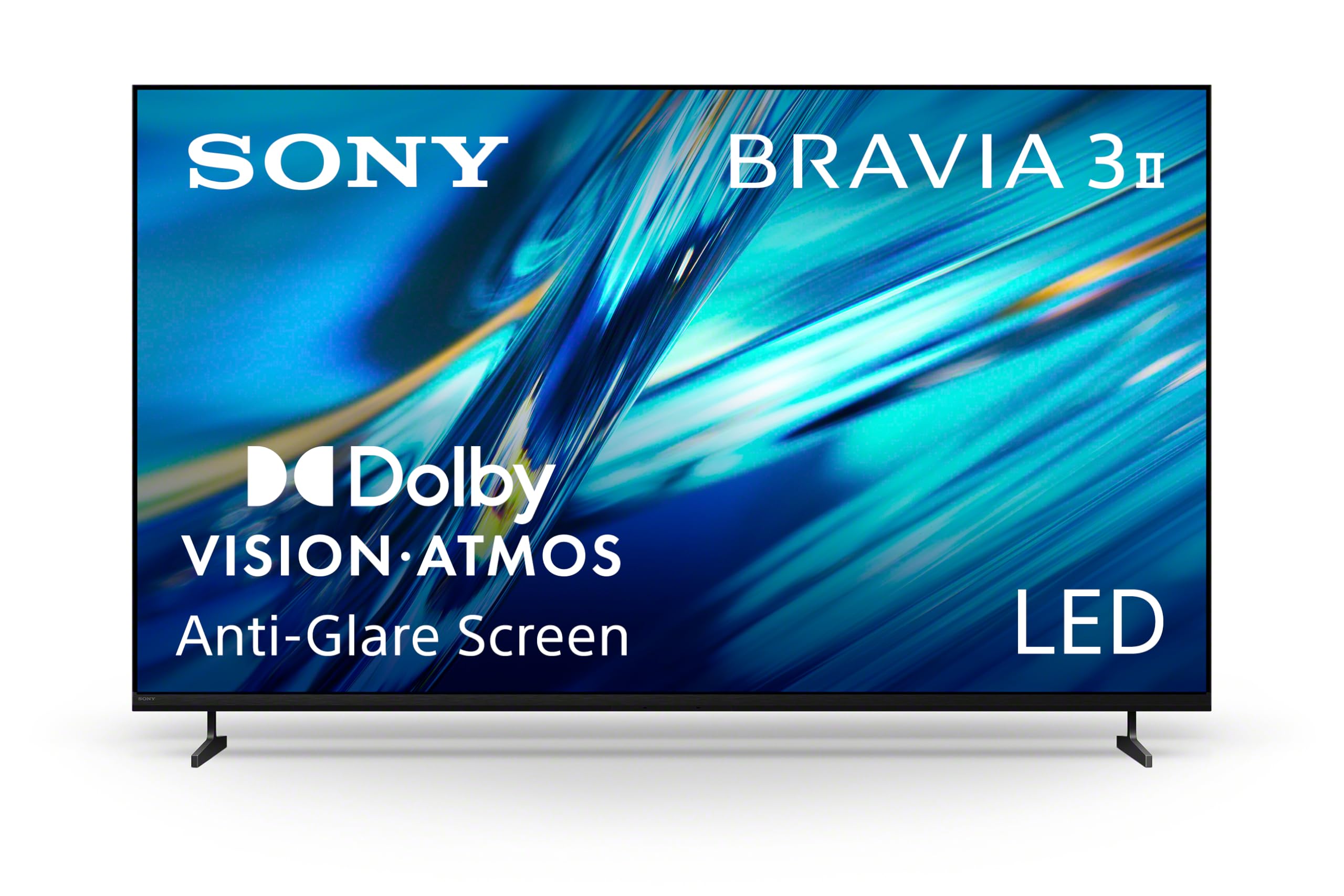
The Sony BRAVIA 3 II represents the pinnacle of what a mid-range LED TV can achieve, thanks almost entirely to its Cognitive Processor XR. This chip uses AI scene recognition to analyze and optimize every element of the picture — color, contrast, and clarity — in real-time, resulting in a remarkably lifelike image that often rivals more expensive OLED sets in terms of depth. The anti-glare screen is also a standout feature, making it a top choice for bright living rooms.
For PlayStation 5 owners, this TV is a no-brainer. Exclusive features like Auto HDR Tone Mapping and Auto Genre Picture Mode are handled automatically, ensuring the console outputs its best possible picture without any manual calibration. The 120Hz panel with Motionflow XR keeps fast-moving sports and action sequences crisp, while the inclusion of Dolby Vision and Dolby Atmos provides a complete cinematic package.
The biggest trade-off for this premium processing is that it uses a standard Direct LED backlight, not Mini-LED. This means local dimming is less precise than on Mini-LED competitors, so you may see some blooming in very dark scenes. The XR Triluminos Pro technology does a fantastic job reproducing over a billion colors, but the peak brightness isn’t as high as some Mini-LED rivals. It’s the best choice for picture purists who value processing over raw nits.
Why it’s great
- XR Processor delivers best-in-class upscaling and AI-driven picture quality
- Anti-glare screen is excellent for bright rooms
- Perfect integration and exclusive features for PS5
Good to know
- Standard LED backlight, not Mini-LED
- Peak brightness is lower than some Mini-LED alternatives
- Sony’s Android TV software can occasionally stutter
3. Hisense U6 Pro Series (65U6SF Pro)
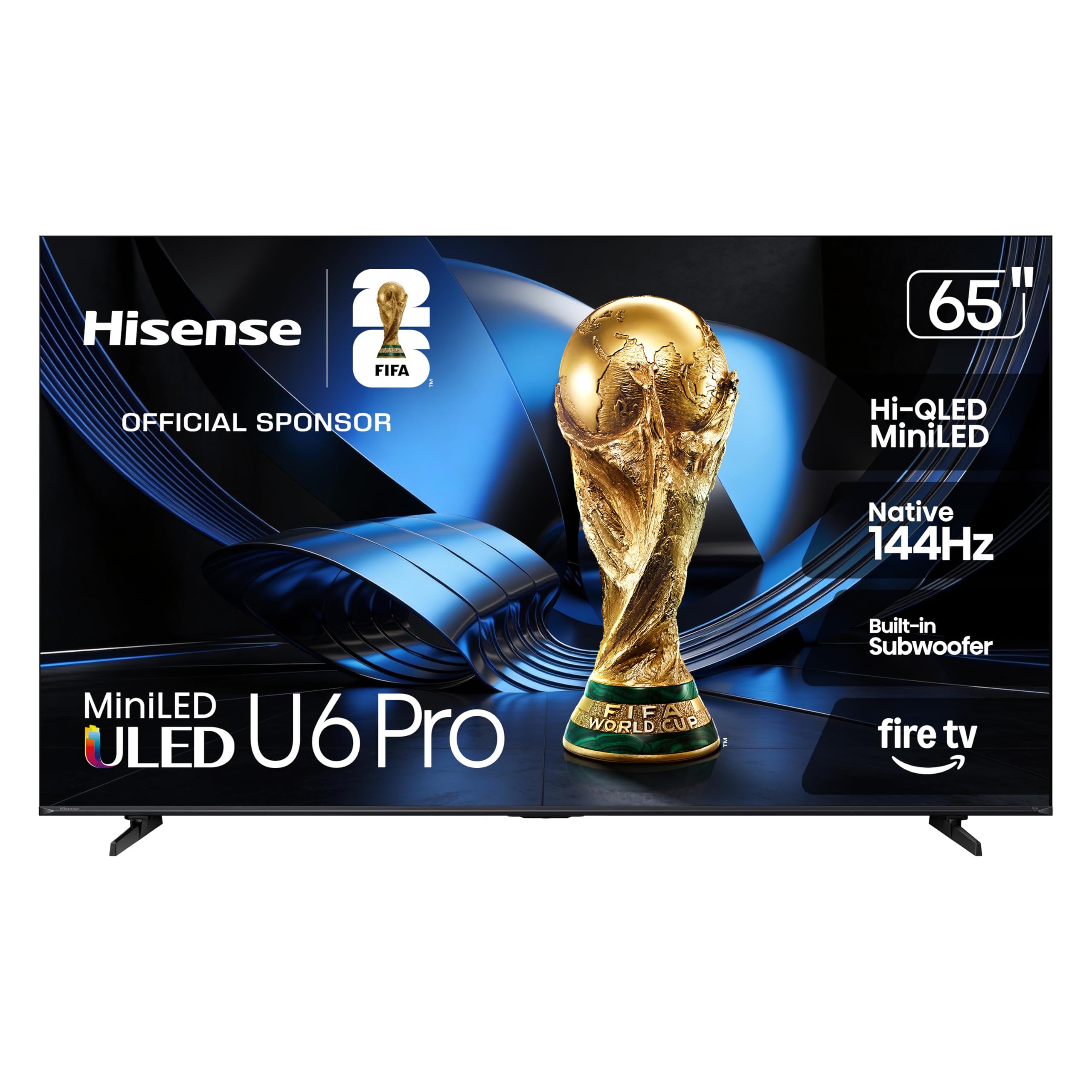
The Hisense U6 Pro is a heavyweight contender in the value segment, packing a Hi-QLED Mini-LED panel with a native 144Hz refresh rate into a package that feels like a steal. The Mini-LED backlighting, combined with hundreds of local dimming zones, delivers punchy contrast with deep blacks and intense highlights that standard LED sets simply cannot match. The Hi-View AI Engine automatically adjusts picture settings based on content, ensuring consistent quality across movies, sports, and games.
One of its most unique features is the built-in subwoofer, which provides genuinely impactful bass without needing an external soundbar. The Fire TV interface is responsive and deeply integrated with Alexa, making voice control a breeze. Gamers will appreciate the native 144Hz panel, VRR support, and the inclusion of both Dolby Vision Gaming and IMAX Enhanced certification, which unlocks superior visuals and audio from compatible content.
On the downside, the TV’s processing power, while good, isn’t quite up to Sony’s level, and lower-resolution content (480p to 720p) can look a bit soft or fuzzy on the large 65-inch screen. The remote control feels a bit cheap given the otherwise premium feature set. For those who want the brightest picture and highest refresh rate at a mid-range price, the U6 Pro is an outstanding choice.
Why it’s great
- Excellent Mini-LED contrast and brightness for the price
- Built-in subwoofer adds real punch to audio
- Native 144Hz panel with Dolby Vision Gaming and IMAX Enhanced
Good to know
- Upscaling of low-resolution content is mediocre
- Smartphone-like remote feels flimsy
- Requires careful calibration out of the box for best contrast
4. Toshiba Z670R Series (65Z670R)
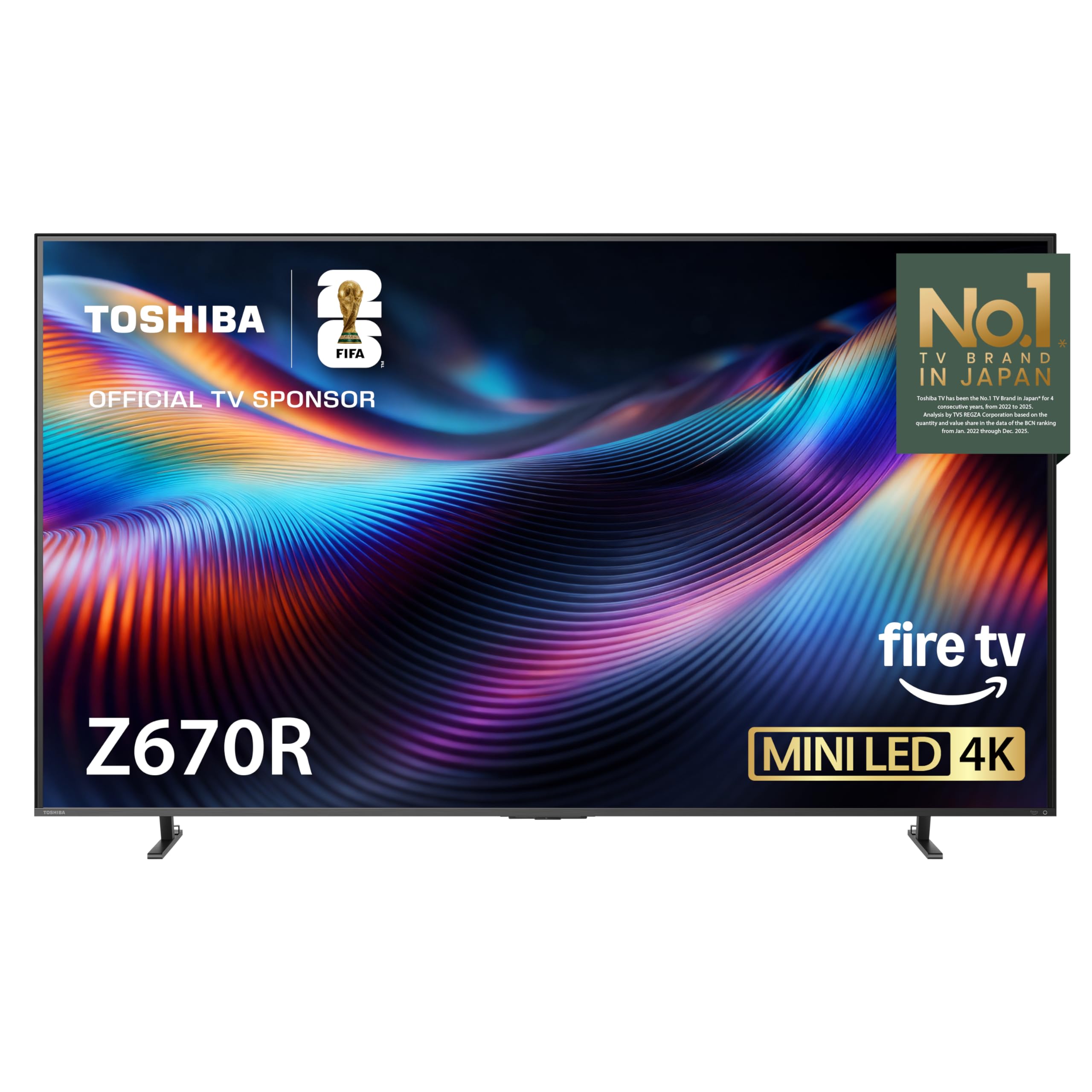
Toshiba has made a strong return to the market with the Z670R, a Mini-LED TV that emphasizes intelligent picture processing. The REGZA Engine ZRi Gen3, fine-tuned by Toshiba engineers in Japan, is the star of the show. It uses AI to optimize clarity, contrast, and audio on a scene-by-scene basis, resulting in a very natural, refined viewing experience that excels with a variety of content. The Full Array Local Dimming adds precision to the Mini-LED backlight, minimizing blooming.
The Z670R is also a gamer-friendly set, featuring a native 144Hz panel with AMD FreeSync Premium, VRR, and ALLM. This combination ensures tear-free, low-latency performance for PC and console gamers. The inclusion of both Dolby Vision IQ and HDR10+ Adaptive means the TV adjusts its HDR performance based on ambient room lighting, a feature usually reserved for much more expensive models. The REGZA Power Audio Pro system with its dedicated bass woofer delivers room-filling sound.
While the picture quality is generally excellent, some users might find the REGZA engine’s processing a bit too aggressive in certain modes, occasionally softening fine details in the pursuit of noise reduction. The Fire TV platform, while feature-rich, can feel slower than Google TV on some competing hardware. If you value a “set it and forget it” AI that consistently delivers a great picture, this Toshiba is a serious contender.
Why it’s great
- Advanced REGZA ZRi Gen3 AI processing for natural picture
- Full Array Local Dimming provides excellent Mini-LED contrast
- Supports Dolby Vision IQ and HDR10+ Adaptive
Good to know
- AI processing can sometimes oversoften details
- Fire TV interface is not as snappy as some competitors
- Design is minimalist but not particularly striking
5. iFFALCON 65U85
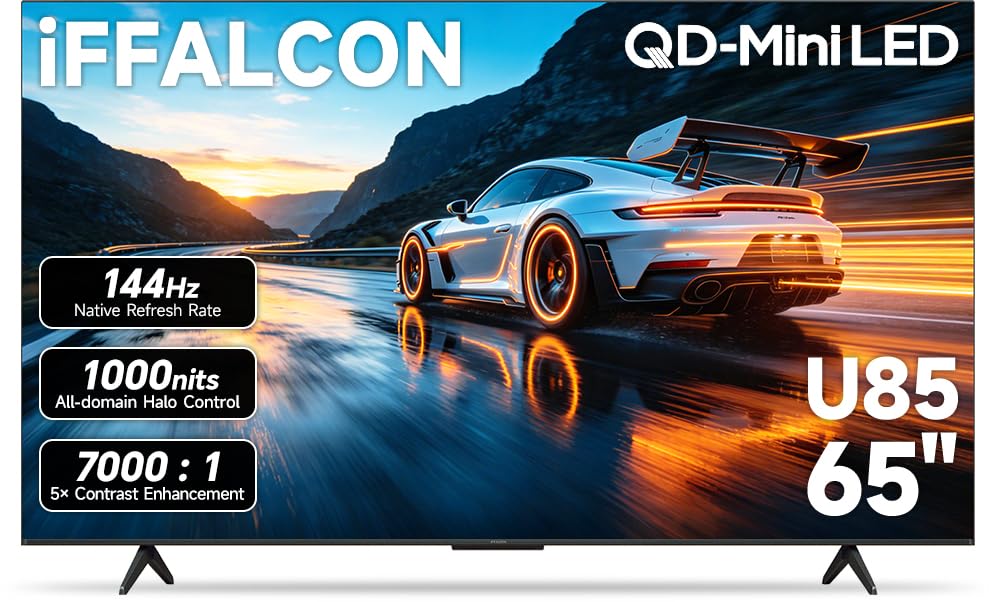
The iFFALCON U85 is a purpose-built gaming machine that doesn’t ignore the home theater experience. Its biggest differentiator is the inclusion of four HDMI 2.1 ports, two of which support 4K@144Hz. This allows you to permanently connect a PS5, Xbox Series X, a gaming PC, and a soundbar without having to swap cables. The 144Hz panel with VRR (up to 288Hz) and FreeSync Premium Pro ensures buttery-smooth, tear-free visuals with exceptionally low input lag.
The picture is no slouch either, with a Mini-LED backlight delivering up to 1000 nits of peak brightness and a 7,000:1 contrast ratio. It supports every major HDR format, including Dolby Vision IQ and IMAX Enhanced, making it versatile for both dark room movie watching and bright room gaming. The built-in 50W 2.1-channel audio system (with a dedicated woofer) is surprisingly powerful and provides an immersive soundstage with Dolby Atmos passthrough.
One trade-off is that the TV’s panel is a bit thicker than the ultra-slim models from major brands, though this is a typical compromise for a feature-packed budget set. The Google TV interface is smooth and bloat-free, which is a major plus. It’s also one of the few TVs in this price range that offers hotel mode and IP control, making it a smart choice for Airbnbs or commercial installations.
Why it’s great
- 4x HDMI 2.1 ports — unmatched connectivity for gamers
- High brightness (1000 nits) with excellent Mini-LED contrast
- Powerful 50W built-in audio system
Good to know
- Chassis is thicker than flagship competitors
- Availability and brand support may be less established
- Best value usually found during sales events
6. Samsung M70H Series (65M70H)
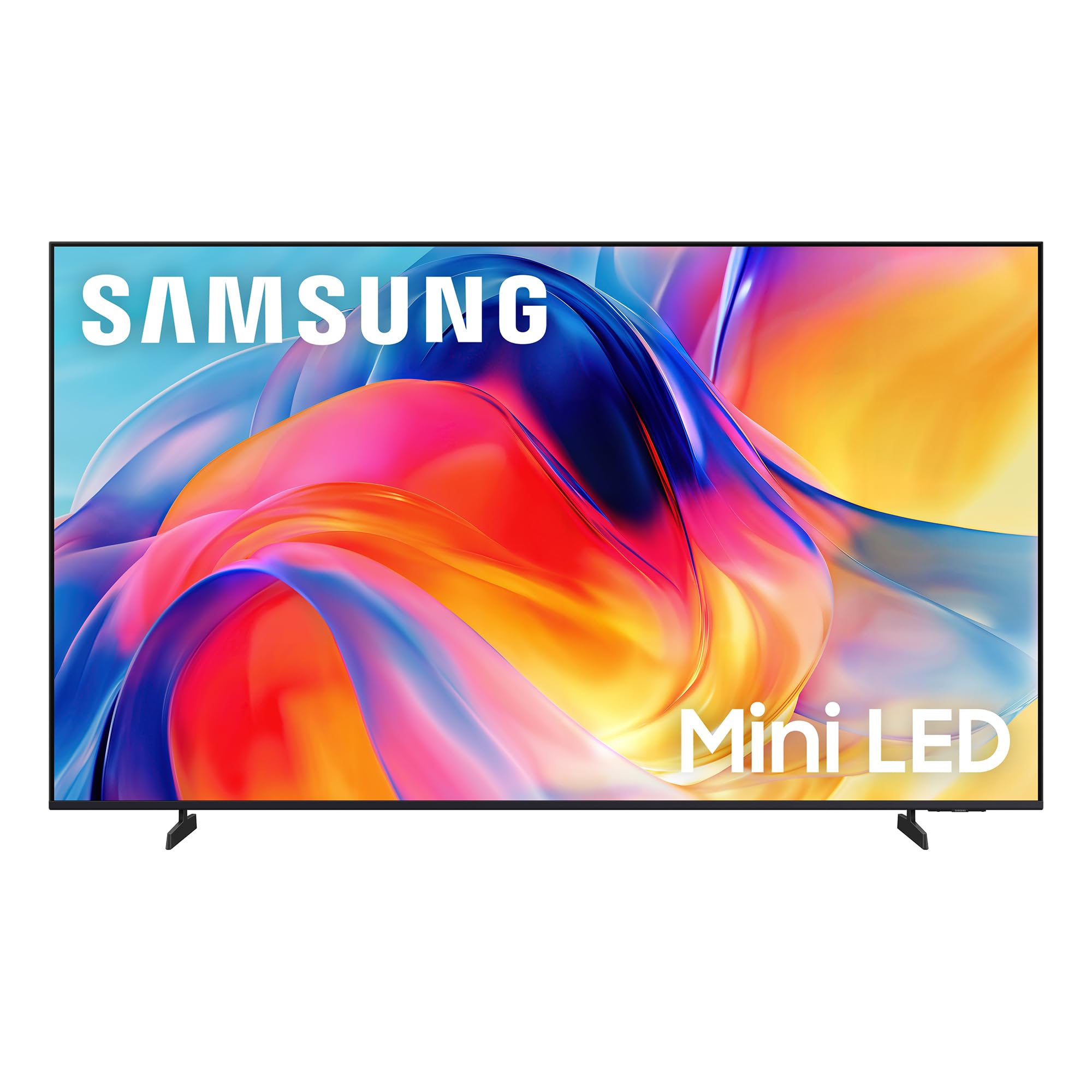
The Samsung M70H represents the entry point into the world of Samsung’s Mini-LED technology, offering the superior contrast and brightness of Mini-LED at a much more accessible price than the company’s high-end Neo QLED models. The Pure Spectrum Color technology, combined with Mini-LED precision, delivers over a billion true-to-life colors with impressive depth. The Supreme Mini LED Dimming system creates deep blacks and bright highlights for a rich HDR experience.
Samsung’s Tizen smart TV platform has improved significantly and is now responsive and easy to navigate. The Samsung Vision AI adds smart features like automatic picture optimization and content recommendations. The Motion Xcelerator + DLG 120Hz is a clever feature that uses Dynamic Link Gaming to boost motion clarity, making sports and games look smoother without requiring a native 120Hz panel. The inclusion of Samsung TV Plus provides thousands of free channels out of the box.
However, the remote control has been a significant point of frustration for many users. It lacks dedicated volume buttons and an input source button, forcing you to navigate through the SmartThings app or menu to switch between HDMI devices. This can be tedious for a shared living room TV. The interface also has a habit of defaulting to the built-in Pluto TV app on startup. If you can tolerate the remote quirk, the panel quality is excellent for the price.
Why it’s great
- Mini-LED backlighting provides superb contrast and brightness
- Pure Spectrum Color delivers vibrant, lifelike colors
- Samsung TV Plus offers extensive free content
Good to know
- Remote control lacks basic volume and input buttons
- TV often defaults to Pluto TV on startup, not last input
- Menu system can be confusing and hard to navigate
7. Sony BRAVIA 2 II (K-65S20M2)

The Sony BRAVIA 2 II is a lean, mean entertainment machine, stripped of some of the frills of the BRAVIA 3 but retaining the core Sony strengths: excellent processing and unparalleled PS5 integration. The 4K Processor X1 does a fantastic job of upscaling lower-resolution content to near-4K quality, making older DVDs and streaming content look sharp on the large screen. The inclusion of Sony Pictures CORE with free movie credits adds immediate value for film lovers.
For PS5 owners, the exclusive features like Auto HDR Tone Mapping and Auto Genre Picture Mode are genuinely useful, automatically optimizing the TV for gaming or movies without any menu diving. The Google TV interface is clean and supports all major streaming apps. With Motionflow XR, fast-paced sports and action movies remain clear and free of judder, making it a reliable choice for casual sports fans.
As a standard LED TV, the picture quality in a perfectly dark room will show its limits compared to Mini-LED competitors, with blacks appearing more gray and less deep. The panel is a 60Hz model, so it’s not the best choice for competitive gamers who need 120Hz. It’s a very reliable, well-rounded TV that prioritizes a great all-around viewing experience over gaming-centric specs.
Why it’s great
- Excellent 4K upscaling from the X1 Processor
- Seamless integration and exclusive features for PS5
- Includes Sony Pictures CORE with movie credits
Good to know
- Standard LED backlight with less impressive blacks
- 60Hz panel, not ideal for high-end console/PC gaming
- Some users report occasional freezing or WiFi drops
8. Panasonic W70 Series (65W70BP)

Panasonic’s return to the US TV market is marked by the W70 Series, a solid performer that combines a reliable LED panel with the convenience of Fire TV built-in. The HDR Bright Panel, powered by a 4K Studio Color Engine with MEMC technology, delivers a bright, colorful picture with smooth motion handling. Voice control via the Alexa remote makes finding content effortless, and the inclusion of Apple AirPlay 2 allows for easy casting from iPhones and iPads.
Connectivity is a strong point, with four HDMI ports including one HDMI 2.1 port. This makes it a suitable companion for next-gen consoles, even if the panel is only 60Hz. The built-in speakers are adequate for a small to medium-sized room, delivering clear dialog. The build quality feels solid, with metal stands that give it a sturdy foundation. Setup is quick and straightforward, often using a QR code to sync settings from your phone.
However, the Fire TV OS implementation on this model can feel a bit slow compared to native Fire TV devices. Some users have reported laggy navigation and occasional system crashes. The design, while functional, is bulky and lacks the slim profile of many competitors. It’s a good, no-frills option for someone deeply invested in the Alexa ecosystem who wants a straightforward, no-nonsense TV.
Why it’s great
- Integrated Fire TV with Alexa voice control
- Solid picture quality with MEMC motion smoothing
- Includes an HDMI 2.1 port for consoles
Good to know
- Fire TV interface can be sluggish and buggy
- Bulkier design compared to slim modern TVs
- 60Hz panel limits competitive gaming potential
9. Roku Plus Series (65 Inch)
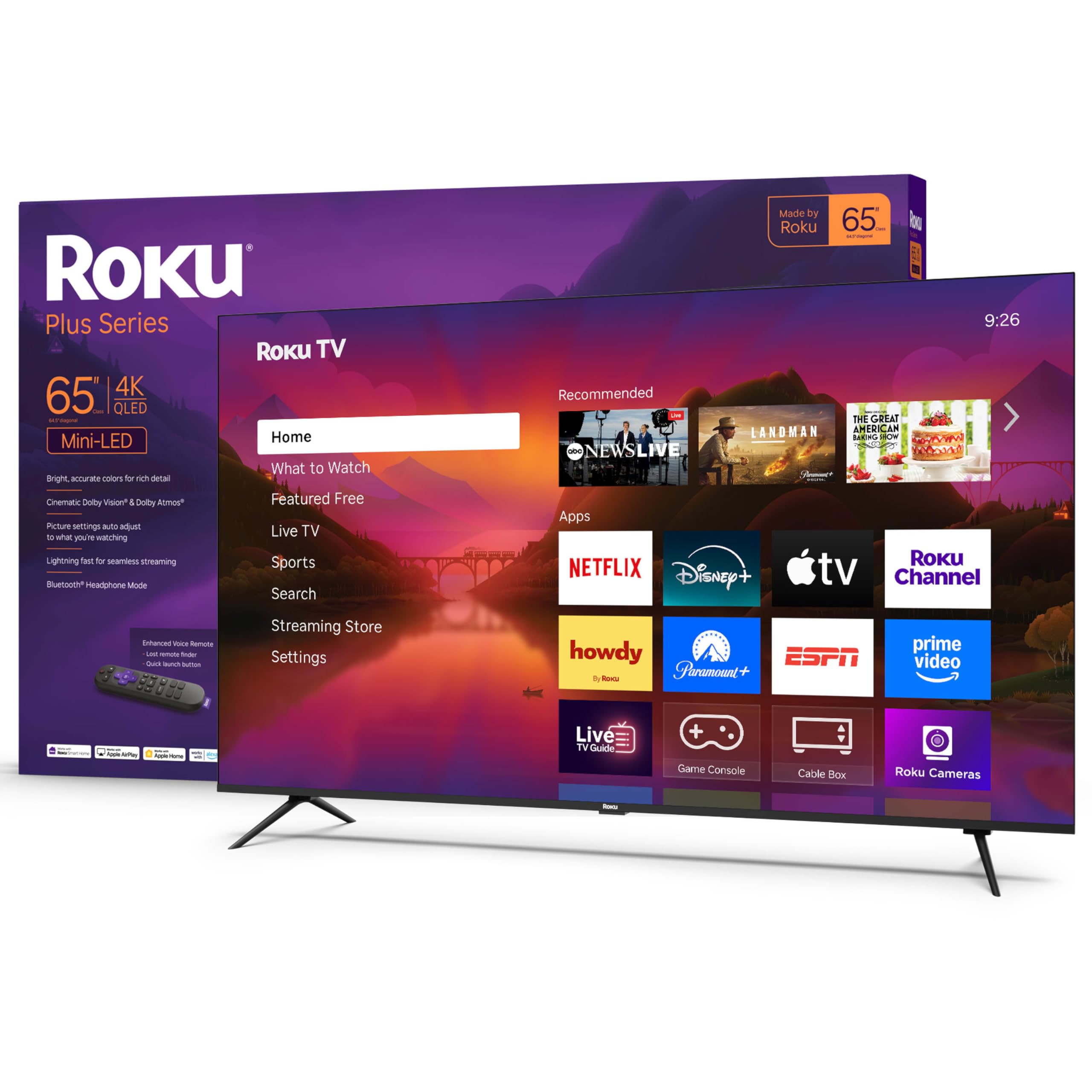
The Roku Plus Series is a masterclass in user experience, proving that a fantastic interface can be as important as the panel it drives. It combines a Mini-LED backlit QLED panel with Dolby Vision for stunning color and contrast, with the simple, lightning-fast Roku OS that everyone loves. The AI-powered Roku Smart Picture Max optimizes the picture automatically, so you can just sit back and enjoy. The inclusion of Dolby Atmos and a built-in subwoofer makes the sound surprisingly full and cinematic.
One of the biggest advantages of the Roku platform is its agnostic nature — it doesn’t favor any one streaming service, making it incredibly easy to customize your home screen and launch any app instantly. The Enhanced Voice Remote includes a lost remote finder and customizable shortcut buttons, which is a huge convenience. The TV also supports Apple AirPlay 2, Siri, Alexa, and Google Assistant, making it the most versatile smart TV platform on this list.
While the picture quality is excellent for the price, it doesn’t hit the same peak brightness or deep black levels as some of the more gaming-focused Mini-LED sets. The Roku settings menu is also quite basic, lacking the fine-grained calibration controls that videophiles might crave. It’s the perfect choice for families or anyone who values a fast, intuitive, and ad-free smart TV experience above all else.
Why it’s great
- Best-in-class Roku OS is fast, simple, and ad-light
- Mini-LED backlight with QLED and Dolby Vision
- Excellent sound with built-in subwoofer
Good to know
- Not as bright as some gaming-focused Mini-LED TVs
- Basic settings menu lacks advanced calibration options
- No USB port, only USB-C
10. Amazon Ember QLED Series
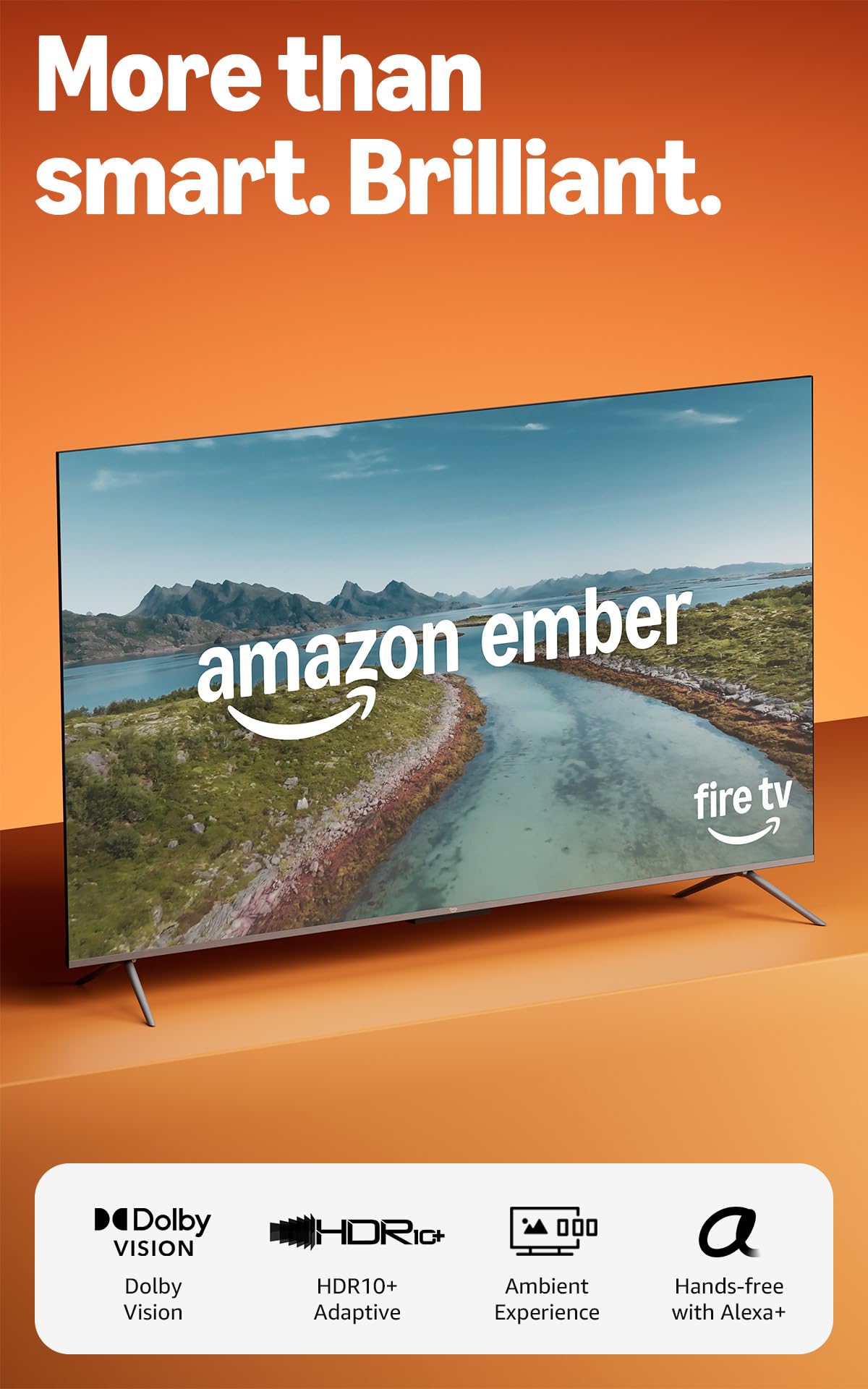
The Amazon Ember QLED Series is the definitive Fire TV experience, deeply integrated into the Amazon ecosystem. It features a 4K QLED display with Dolby Vision and HDR10+ Adaptive, coupled with full-array local dimming to enhance contrast. The inclusion of Wi-Fi 6 ensures fast, reliable streaming even in busy wireless environments, and the new quad-core processor keeps the interface snappy. The unique Omnisense technology wakes the TV as you enter the room, displaying artwork or readying the home screen.
The new Alexa+ with natural language processing makes finding content feel conversational and intuitive. The hands-free voice control works even when the screen is off, allowing you to set timers, check the weather, or control smart home devices. For gamers, it supports Amazon Luna and Xbox Game Pass streaming without a console. The four HDMI inputs provide ample connectivity for your devices.
The biggest drawback is that the software can be buggy. Several users have reported a frustrating issue where the TV goes black (with sound still playing) after being powered off, requiring a full unplug to reset. The audio, while decent, often defaults to 5.1 surround sound, which can cause dialog to sound quiet on a TV’s built-in speakers unless you manually switch to a stereo mode. It’s a high-value contender if you’re fully invested in Prime and Alexa, but software reliability is a concern.
Why it’s great
- Deep, seamless integration with Alexa and Prime Video
- WiFi 6 support for smooth 4K streaming
- Omnisense sensor for wake-on-approach convenience
Good to know
- Software bugs like black screen-on-wake have been reported
- Audio default settings can make dialog sound weak
- Cheaper alternatives from Hisense offer similar hardware
11. Samsung Crystal UHD U800H (65U8000H)
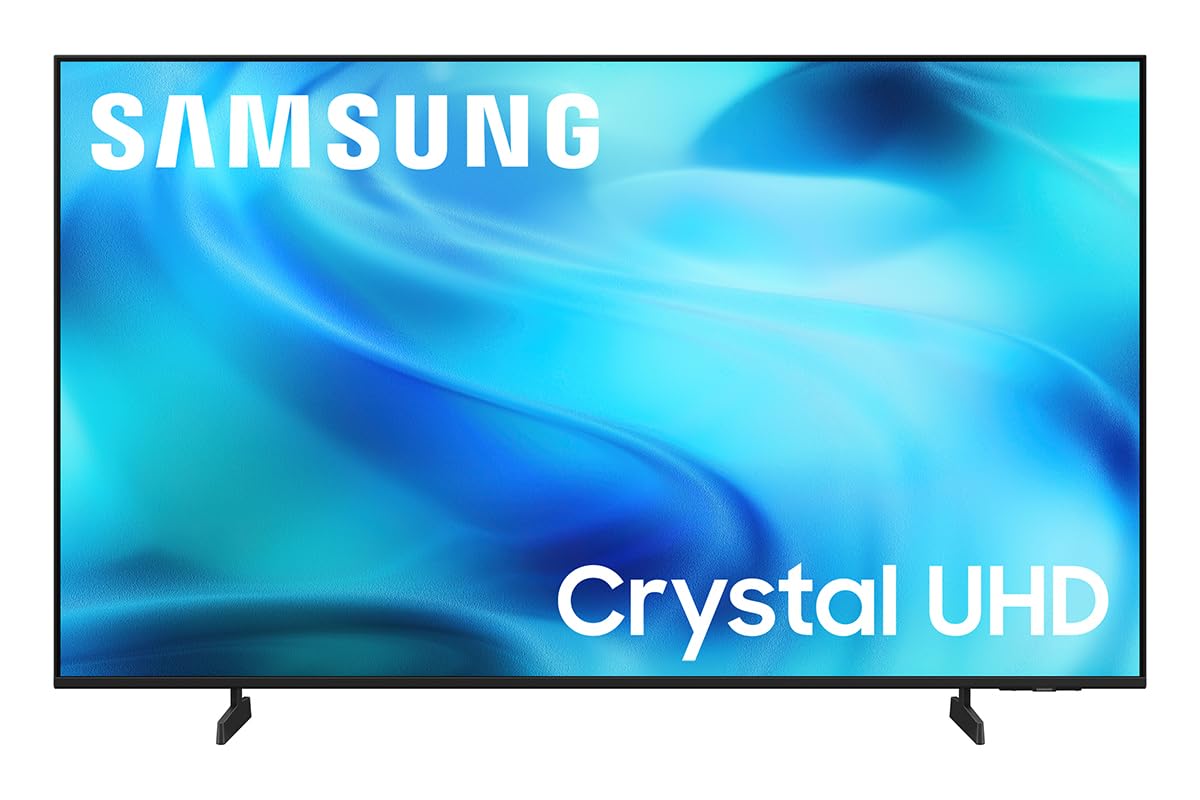
The Samsung Crystal UHD U800H is the quintessential entry-level 65-inch TV, designed for buyers who want a huge screen for the absolute lowest possible cost. It is not a high-performance display, but it is a very competent one. The Crystal Processor 4K handles the basics well, providing a decent 4K upscaling that cleans up standard HD content effectively. The Motion Xcelerator helps smooth out fast-moving scenes, making sports more watchable.
The Color Booster feature does a good job of making colors look more vivid than a standard entry-level LED panel would normally produce. Samsung TV Plus provides a massive library of free channels, which is a huge bonus for cord-cutters. Setup is generally straightforward, and the Tizen OS is reliable, if not the fastest. At this price point, the value proposition is simply unmatched for getting a 65-inch screen into your home.
The key compromises are clear: it’s a 60Hz panel with standard LED backlighting, so you won’t get the deep blacks of Mini-LED or the motion clarity of 120Hz. The remote is minimalistic and can be difficult for some to use, lacking dedicated number or input buttons. If your needs are limited to streaming Netflix, watching broadcast TV, and having a giant screen for movies in a bright room, this Samsung is an incredibly smart buy.
Why it’s great
- Lowest cost entry to a massive 65-inch 4K screen
- Reliable performance with decent upscaling for the price
- Samsung TV Plus offers tons of free content
Good to know
- 60Hz panel with no VRR — not for serious gaming
- Standard LED backlight means average black levels and contrast
- Minimalist remote lacks basic input and volume controls
FAQ
Is it worth paying more for a 120Hz panel on a budget TV?
Do I really need Mini-LED backlighting?
Which smart TV platform is the fastest and least bloated?
Will a budget 65-inch TV work well with a PS5 or Xbox Series X?
Final Thoughts: The Verdict
For most users, the best affordable 65 inch tv is the TCL T7 Series because it perfectly balances a high-refresh 144Hz panel for gaming with QLED color vibrancy for movies and shows. If you want the absolute best in AI-driven picture processing and have a PS5, grab the Sony BRAVIA 3 II. And for the best all-around value with fantastic Mini-LED contrast and a built-in subwoofer, nothing beats the Hisense U6 Pro.