
Our readers keep the lights on and my morning glass full of iced black tea. As an Amazon Associate, I earn from qualifying purchases.
Specs are compiled from manufacturer listings and verified buyer reviews and can change over time — please confirm the key details on the product page before buying.
Before you buy, know this: a bag rated 0°F can weigh nearly 6 pounds, and that weight will punish your back on the trail long before you zip up. The real trade-off you face is ounces versus degrees, and the right balance depends on where and when you sleep outside.
I’m Min — the founder and writer behind Gadgets Feed. This guide is built by comparing the manufacturers’ published specifications and the patterns across verified customer reviews, so you get each pick’s real strengths and trade-offs instead of marketing spin.
Whether you’re a weekend warrior or a thru-hiker counting grams, matching the right insulation and pack size to your trips makes all the difference. Find the affordable backpacking sleeping bag that fits your comfort needs and your pack.
Our Picks at a Glance

How To Choose The Best Affordable Backpacking Sleeping Bag
For backpacking, the tag’s number is only half the story. You need a bag that keeps you warm enough without turning your pack into a beast of burden. The rest is understanding how warmth and weight actually balance.
Temperature Ratings Are Not All Equal
Most bags list two numbers: a comfort rating (what a typical sleeper finds cozy) and a lower limit (the coldest you can survive). A bag rated to 50°F is a summer quilt, while a 20°F rating is a true 3-season workhorse. Know your coldest expected night, then buy for that, not the marketing headline.
Down vs. Synthetic Insulation
Down (feathers) packs smaller and weighs less for the same warmth, but it loses insulation when wet. Synthetic fill keeps working in damp conditions and costs less, but it’s bulkier in your pack. For backpacking, down is usually the pick for its compressibility; synthetic wins if you expect rain or moisture.
Packability and Compression
A bag that weighs 3.5 pounds at home feels like 10 after a day of hiking. Look for a compression sack (a sack with straps that squeezes the bag small) and check the packed size. A bag that stuffs to the size of a football is easy to clip to your pack; one that needs its own duffel is a car-camping bag in disguise.
Quick Comparison
| Model | Best For | Weight | Fill Type | Temp Rating | Amazon |
|---|---|---|---|---|---|
| Teton LEEF★ Best Overall | All-round cold weather | 3.5 lbs | Micro Fibre | 20°F (model) | Amazon |
| Kelty Rambler 50Best Value | Summer campers | 2 lbs 12 oz | Cloudloft Synthetic | 50°F | Amazon |
| ZOOOBELIVES T400Premium Pick | Ultralight hikers | 1.7 lbs | 650 Fill Down | 50°F / 32°F | Amazon |
| Naturehike CW295 | Gram-counting backers | 1.3 lbs | 650 Fill RDS Down | 52°F / 42°F | Amazon |
| Coleman North Rim 0°F | Extreme cold, car camping | 2.87 kg | Coletherm Polyester | 0°F | Amazon |
| QEZER 0° Down | 3-season hikers | 1.9 lbs | 600 Fill Down | 46°F / 36°F | Amazon |
| ZOOOBELIVES D1500 | Cold-weather comfort | 1.75 kg | 550+ Fill Down | 32°F / 10°F | Amazon |
| TETON ALTOS | Roomy mummy fit | 3.5 lbs | Synthetic | 20°F / 0°F | Amazon |
| Kelty Cosmic 20 | Proven 3-season down | 3 lbs | 550 Fill DriDown | 20°F | Amazon |
In‑Depth Reviews
1. Teton LEEF Lightweight Mummy Sleeping Bag
Our pick — over 4.5★ from 550+ verified ratings; the strongest balance of quality and price.
The durable workhorse that has proven itself over hundreds of cold nights.
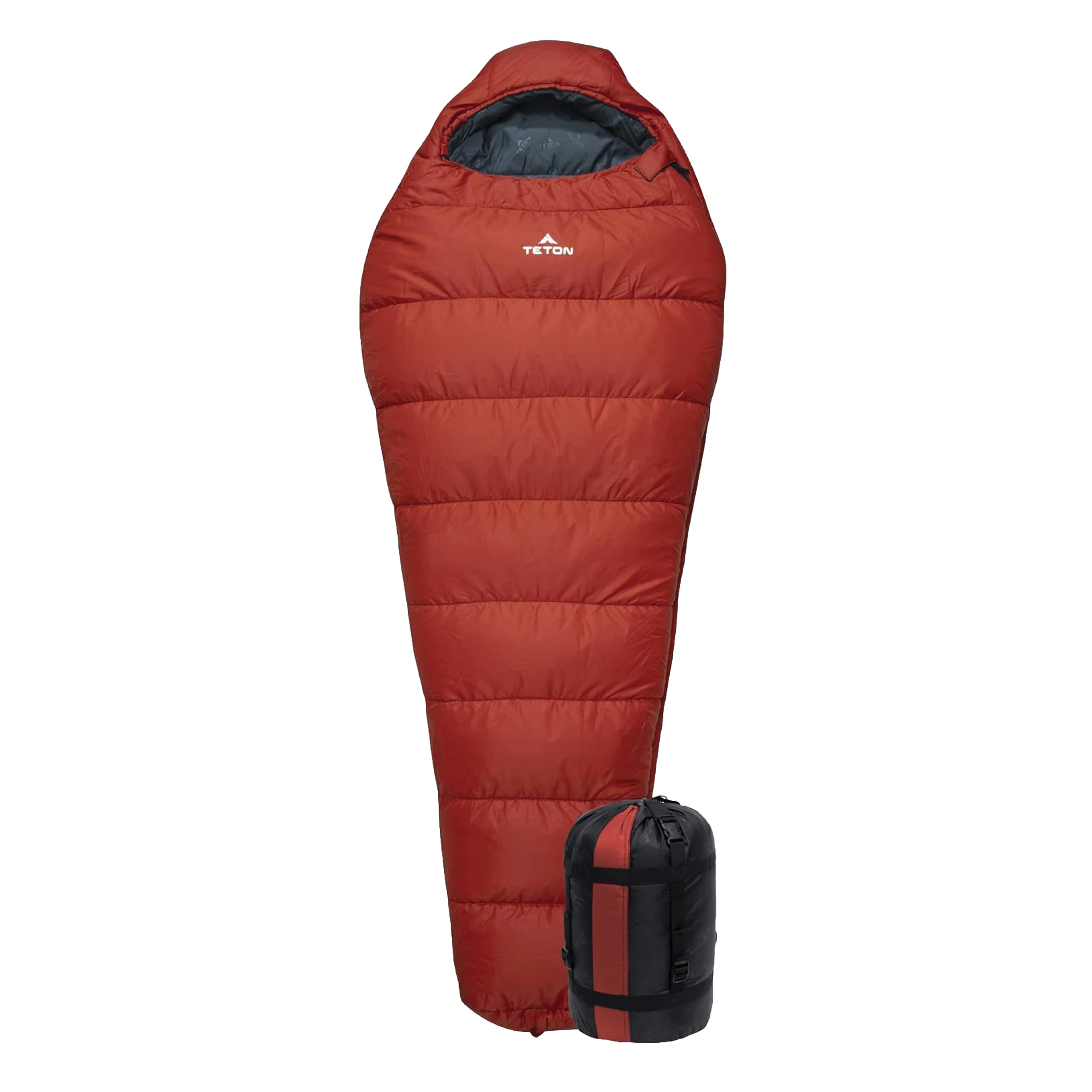
The Teton LEEF is the pick for backpackers who want one bag that handles a wide range of trips without complaint. It weighs 3.5 pounds, which is heavier than the ultralight down options below, but that weight buys you a polyester ripstop shell that shrugs off abuse. Buyers report surviving 60-70 nights with no deformation., and One buyer even tested it down to 10°F and stayed warm.
You get a roomier mummy cut than most, which side sleepers and stomach sleepers appreciate. At 81 inches long and 21 inches wide, it fits taller users comfortably, with one buyer noting it accommodates a 6’5″ frame with room to spare. The included compression sack squeezes it down, though the recurring gripe is that repacking takes effort — several owners mention the struggle of getting it back to its original size.
The warmth-to-weight story is what wins people over here. It’s warm in the 30s with minimal clothing, and the semi-water-repellent shell keeps you dry through heavy condensation. For the price, this is the most versatile bag on this list — a true do-it-all for anyone who camps across seasons.
Why It Works
- Proven durability across 60-70 nights of use
- Roomier mummy cut for side and stomach sleepers
- Compression sack included for packability
Where It Bites
- Repacking into the compression sack takes effort
- At 3.5 lbs, it’s heavier than down alternatives
- Not machine washable — plan for hand washing
The crowd favorite: if you want one bag for everything from 10°F nights to mild fall camping, this is the safest bet on the list.
Think twice if: you’re a gram-counter — the 3.5-pound weight will nag at you on long uphills.
2. Kelty Rambler 50 Degree Synthetic Sleeping Bag
The summer sleeper that turns into a two-person blanket by the fire.
The Kelty Rambler 50 is built for warm nights, not winter chills. It’s rated to 50°F, making it the go-to for summer camping, and it weighs just 2 pounds 12 ounces — light enough that it packs smaller than a standard bag. Owners mention it was perfect for trips where nighttime lows sat at 45-50 degrees, keeping them comfortable all night without waking up sweating.
What sets this bag apart is its versatility. The semi-rectangular shape gives you more room than a mummy bag, and the J-shaped zipper lets you stick a foot out to regulate temperature. Unzip it completely and it becomes a two-person blanket, which is ideal for cowboy camping under the stars or sharing warmth at a bonfire.
The trade-off is the warmth. Owners give mixed feedback on how toasty it runs, and some note it’s too warm for the summer nights it’s designed for. The fit is also narrower than expected — a few buyers found it tight even for kids. But for the price, you get a durable, washable synthetic bag that handles warm-weather trips with ease.
The summer specialist: this is the bag for car camping, festival trips, and any night above 50°F where you want light weight and easy washing.
Reach for this if: you camp in summer and want a bag that doubles as a blanket for two.
Look elsewhere if: your trips dip below 50°F — this won’t keep you warm in shoulder season.
3. ZOOOBELIVES Ultralight Down Sleeping Bag
The ultralight down bag that vanishes in your pack at just 27 ounces.
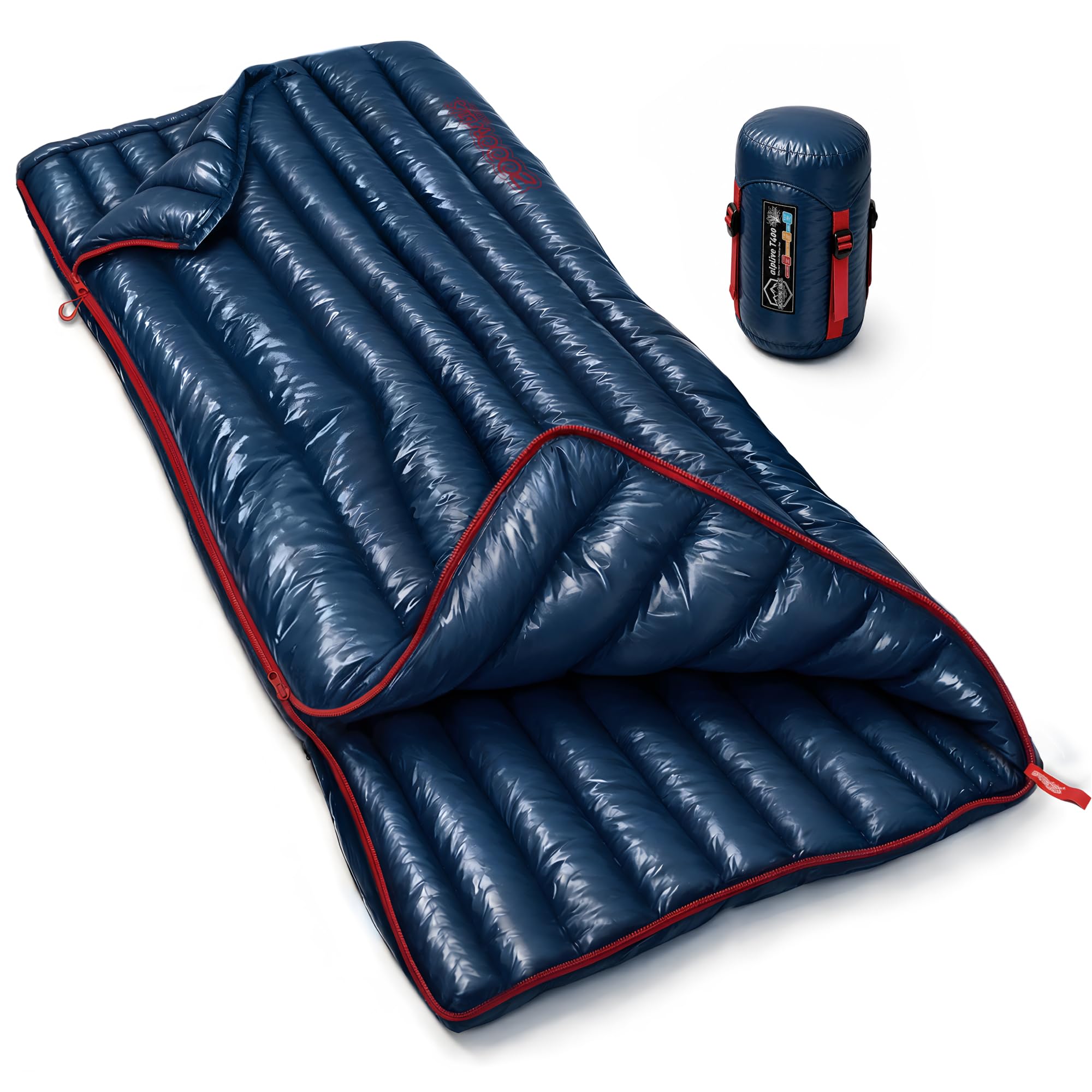
At 27 ounces (1.7 pounds), the ZOOOBELIVES AlpliveT400 is a true ultralight contender. It compresses down to 11.8 x 6.7 inches — about the size of a paper towel roll, according to owners — freeing up serious pack space for everything else on the trail. The 650 fill power down delivers lofty warmth with a 50°F comfort rating and a 32°F lower limit, making it a solid choice for mild 3-season use.
This bag is more than just light; it’s adaptable. The full-length YKK zipper and separate footbox zipper let you vent heat when you’re too warm, or you can unzip it flat to use as a camping quilt. Two bags can also zip together for couples, a feature that buyers who camp with partners love. The 79-inch length with a 63-inch shoulder circumference fits users up to 6’2″.
The main caveat is warmth in truly cold conditions. Owners note it’s not suitable below 40°F, and the 20D nylon fabric feels plasticky and rustles against skin. But for summer backpacking and mild shoulder-season trips, the weight savings are transformative — the kind of bag that makes you wonder why you ever carried anything heavier.
As owners put it: this bag “packs to the size of a paper towel roll” when compressed — the defining a neat extra of the whole list.
The Weight Wins
- 27 oz packs to 11.8 x 6.7 inches
- 650 fill down for reliable loft
- Converts to a quilt or double bag
Warmth Limits
- Not suitable below 40°F
- Plasticky fabric feel on skin
- Needs a liner to avoid sweat
Best for: ultralight hikers and summer backpackers who count every ounce and want a bag that practically disappears in their pack.
Not for: cold sleepers or anyone camping below 40°F — this is a warm-weather specialist.
4. Naturehike Ultralight RDS Down Sleeping Bag

The featherweight that keeps you toasty through spring and summer nights.
The Naturehike CW295 is the lightest bag here at just 1.3 pounds — roughly the weight of a bottle of water. Packed, it stows to Φ4.7″ x 10.2″, small enough that owners say you can pull it out of your backpack with one hand. The 650 fill power duck down with RDS certification (a label ensuring responsible down sourcing) delivers a comfortable 52°F rating and a 42°F limit.
It’s earned a loyal following among long-distance hikers. One owner took it on the Camino Frances pilgrimage and called it one of the top five items they carried., praising how warm it stayed and how light it packed. The 20D400T nylon fabric is wear-resistant and soft, and the YKK two-way zipper prevents snagging while letting two bags zip together for couples.
The honest trade-offs: it’s a warm-weather bag, with owners finding it toasty in the low 40s when used as a comforter but noting it feels too thin and cling-wrap-like for colder nights. A few buyers also reported loose stitching on the drawstring closure, so check that seam before your first trip. For summer backpacking and spring shoulder-season hikes, the weight savings are class-leading.
Gram-saver supreme: this is the bag for thru-hikers and anyone who wants the lightest possible load for warm-weather trails.
Choose this if: you’re hiking long distances in summer and want maximum pack space.
skip it if: you plan to camp below 42°F — grab a warmer bag like the Teton LEEF instead.
5. Coleman North Rim 0°F Sleeping Bag

The deep-winter shield that shrugs off sub-zero conditions.
When the mercury drops to 0°F, the Coleman North Rim is the bag to grab. Its Coletherm hollow polyester insulation delivers serious heat retention, and the Thermolock draft tube keeps warmth from escaping through the zipper. One owner swapped it into their Freightliner sleeper and survived -27°C windchill in just underwear.
The big and tall design fits campers up to 6’2″, with an adjustable hood that balances warmth and ventilation. At 82 x 32 inches, it’s a spacious mummy, and it’s machine washable for easy cleaning. The PFAS-free version earned praise from buyers who care about avoiding those chemicals, and the 5-year limited warranty adds confidence.
The weight is the catch: at 2.87 kg, this is a heavy bag. Owners note it’s bulky and hard to repack, making it better for car camping or base camps than long trails. The zipper also drew complaints, with a few buyers reporting snags. If you’re driving to a winter campsite, this is excellent value; if you’re backpacking, look to the lighter options above.
Arctic Ready
- 0°F rating for deep winter camping
- Fits campers up to 6’2″
- Machine washable with 5-year warranty
The Heavy Load
- 2.87 kg is too heavy for backpacking
- Zipper durability drew complaints
- Bulky when packed
Best for: car campers and truck sleepers who need serious cold-weather warmth without the hike.
Look elsewhere if: you’re carrying this on your back — the weight will punish you on the trail.
6. QEZER 0 Degree Down Sleeping Bag
The 1.9-pound down bag that’s surprisingly warm for its size.
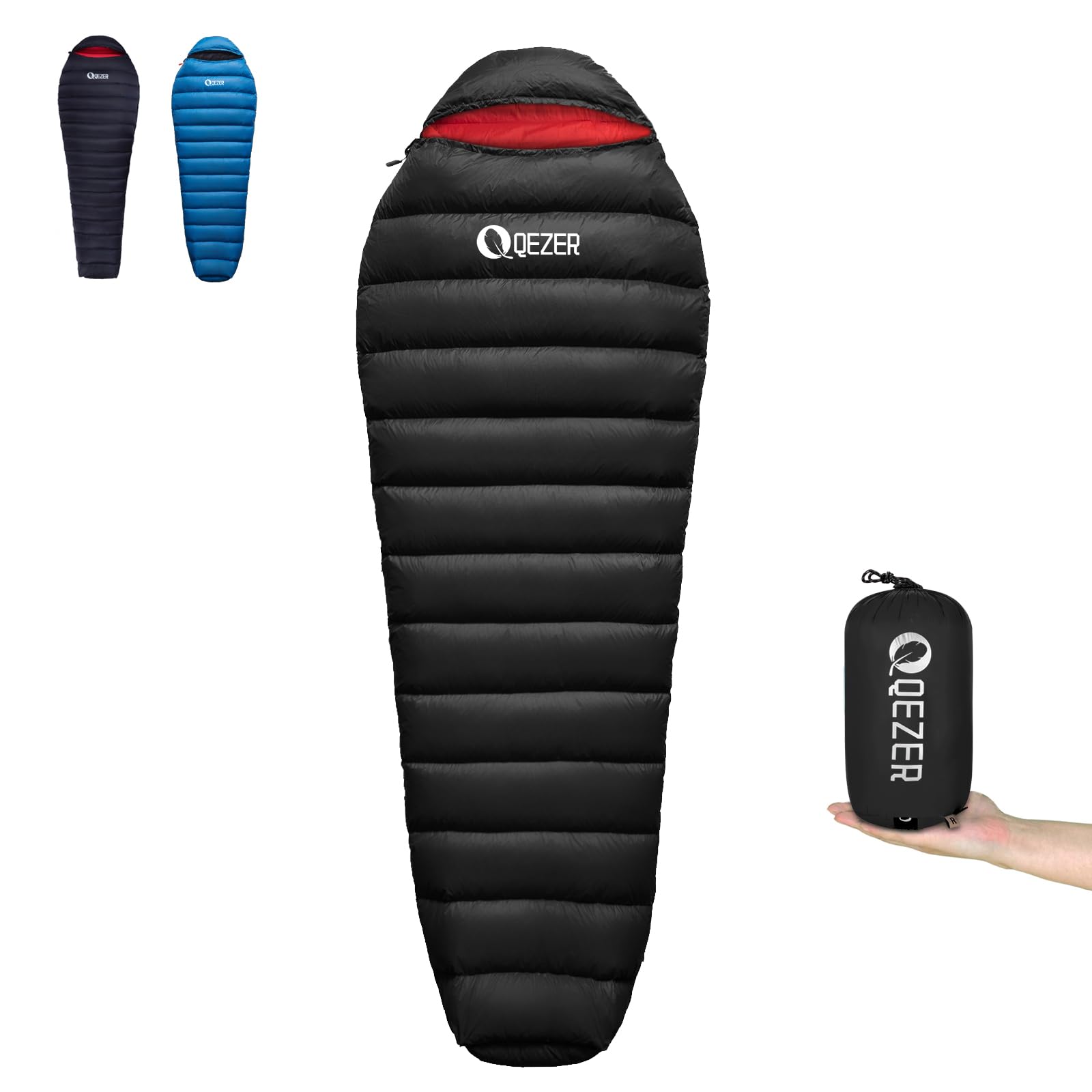
The QEZER packs 600 fill power down into just 1.9 pounds, compressing to 10.63 x 6.69 inches. At 46°F comfort and 36°F limit, it’s positioned for mild-weather backpacking, but customers note it handles much colder conditions. One buyer tested it in a rooftop tent across the country in winter, reporting temps in the low teens didn’t matter.
The trapezoidal foot box gives your feet natural movement room, while the snug upper body retains heat efficiently. The 400T ripstop nylon resists tears and moisture, and an interior pocket keeps your phone or headlamp secure. Left and right zippers let two bags connect into a double, which couples and families appreciate.
The warm, comfortable fit is what buyers rave about — one noted it’s the warmest and most comfortable bag they’ve tried, with no plasticky feel that triggers their sensitive skin. The downside is the zipper: several owners found it difficult to fully zip themselves in, and durability got mixed feedback. For the price, this is genuine down warmth without the premium markup.
Warmth per dollar: this delivers real down performance at a fraction of big-brand prices, with minor zipper quirks as the trade-off.
Reach for this if: you want down warmth and compression without spending top dollar.
Be aware: the zipper can be finicky — test it fully before a cold trip.
7. ZOOOBELIVES 10 Degree Down Mummy Bag

With 35 ounces of down, this mummy bag brings real cold-weather credibility.
The ZOOOBELIVES AlpliveD1500 is the cold-weather specialist of the lineup, filled with 35oz of 550+ fill power down. Its comfort rating of 32°F and lower limit of 10°F make it a true winter option, and owners confirm the warmth — One owner tested it in 20°F with 40 mph winds and stayed toasty, while another used it for 14 days of cowboy camping..
The roomy fit is a standout. At 83 x 31 x 20 inches, it gives you full-size mummy coverage without the restrictive squeeze, and the anatomic 3D foot box keeps cold feet warm. The adjustable hood, face draft collar, and separate drawcords let you seal out drafts, while the YKK anti-snag zipper makes entry and exit smooth. It packs down to 10 x 7 x 15 inches with compression straps.
The weight is where this bag shows its limits. At 1.75 kg, it’s fine for canoe camping and short hikes but too heavy for thru-hiking — owners explicitly say it’s not meant for the Pacific Crest Trail. A noticeable chemical smell also drew a few complaints. But for car camping, scout campouts, and hunting weekends in cold weather, this is exceptional value.
Cold Weather Cred
- 32°F comfort / 10°F limit rating
- 35oz of 550+ fill down
- Roomy mummy fit with 3D foot box
Not for Thru-Hikes
- 1.75 kg is heavy for trail use
- Chemical smell on arrival
- Bulky in stuff sack
Best for: cold-weather car camping, canoe trips, and hunters who want real down warmth at a great price.
Think twice if: you’re planning a long-distance backpacking trip — the weight is a dealbreaker for that use.
8. TETON Sports ALTOS Sleeping Bag

The bright orange mummy that offers more shoulder room without sacrificing warmth.
The TETON ALTOS is built for comfort-first backpackers. Its roomy design provides extra shoulder and leg room, and the built-out footbox gives your feet space to move. Available in 20°F and 0°F versions, it’s a versatile pick for 3-season use — though owners found the 20°F version comfortable down to that rating, with some pushing it further with extra layers.
The water-resistant shell handles drizzle and condensation, which One owner proved its water resistance by surviving a soaking on Mt. Fuji and drying well.. It packs to about 2/3 the size of similar bags, and the compression sack stuffs from the bottom for easier packing. At 3.5 pounds, it’s lighter than many comparable mummy bags, and the beefy zipper earned praise for durability.
The warmth story is mixed. Some owners found it plenty warm down to 20°F, while others noted heat escapes if you move around — one buyer suggested a hot water bottle for temps below 32°F. The bright orange color is a love-it-or-hate-it detail, but it doubles as a safety feature for visibility. For budget-conscious backpackers who want a roomier mummy, this is a solid pick.
Comfort-first mummy: this is the bag for side sleepers and toss-and-turners who find standard mummies too restrictive.
Choose this if: you want a roomy, water-resistant mummy that handles spring and fall trips well.
Be cautious: cold sleepers should treat the rating as a minimum and bring extra layers.
9. Kelty Cosmic 20 Down Mummy Sleeping Bag

The proven down bag that’s been a campsite staple since 1952.
The Kelty Cosmic 20 is the legacy pick — a down bag refined over years of real-world use. Its 550 fill Kelty treated DriDown insulation (down treated to resist moisture) keeps you warm to 20°F, and owners confirm it performs well beyond expectations. One buyer’s daughter stayed warm in 16°F weather on an April backpacking trip to Virginia.
The trapezoidal baffle construction is designed for heat retention. Dual sliding, locking zippers with an anti-snag draft tube let you unzip from the bottom to vent heat, and an internal stash pocket keeps your phone or headlamp close. The recycled shell and liner fabrics with PFAS-free DWR (a water-repellent coating without the harmful chemicals) appeal to eco-conscious buyers, and the stuff sack makes packing straightforward.
Weighing 3 pounds, it’s not the lightest down bag here, but the warmth-to-weight ratio is excellent for the price. Owners praise the heavyweight zippers, soft feel, and quality construction, though some note it’s heavier than expected and the fit runs snug. This is a do-it-all backpacker’s companion that’s earned its reputation.
Proven Performer
- 20°F rating with real-world warmth to 16°F
- 550 fill DriDown resists moisture
- Recycled fabrics with PFAS-free DWR
The Trade-Offs
- 3 lbs is heavier than ultralight options
- Fit runs snug for broader sleepers
- Hand wash only — no machine washing
The safe bet: if you want a proven down bag from a trusted brand that handles 3-season trips with confidence, this is it.
The catch: at 3 pounds, ultralight hikers will feel the weight next to the 1.7-pound ZOOOBELIVES above.
Understanding the Specs
Temperature Ratings Explained
Every bag lists two numbers: comfort (what a typical sleeper finds warm) and lower limit (the coldest you can survive without hypothermia risk). A 50°F comfort bag is summer-only, while a 20°F comfort bag handles 3-season trips. For backpacking, buy for the coldest night you realistically expect — not the marketing headline.
Fill Power: What It Really Means
Fill power measures down loft — how many cubic inches one ounce of down occupies. Higher numbers (650, 700) mean more warmth per ounce and better compressibility. A 550 fill bag will be warmer per ounce than a 650 fill bag at the same weight, but the 650 pack smaller for the same warmth. It’s the key spec for ultralight backpackers.
Down vs. Synthetic Fill
Down packs smaller and weighs less for the same warmth, but loses insulation when wet. Synthetic fill (like Cloudloft or Coletherm) keeps working in damp conditions, costs less, and is easier to wash — but it’s bulkier in your pack. For backpacking, down wins on weight; synthetic wins on moisture resistance and budget.
Mummy vs. Semi-Rectangular Shape
Mummy bags taper at the feet and hug your body, saving weight and trapping heat efficiently — but they feel restrictive to side sleepers. Semi-rectangular bags offer more room and feel more like a bed at home, but they weigh more and lose heat faster. Your sleeping style determines which shape keeps you comfortable all night.
FAQ
What temperature rating do I need for backpacking?
How much should a backpacking sleeping bag weigh?
Is down or synthetic fill better for backpacking?
How small should a sleeping bag pack down?
Can two sleeping bags zip together?
How do I wash a down sleeping bag?
What is the difference between comfort and lower limit ratings?
Will a 50-degree bag work for summer camping?
What size sleeping bag do I need for my height?
Final Thoughts: The Verdict
The affordable backpacking sleeping bag winner is the Teton LEEF because it delivers proven durability, real cold-weather warmth, and a roomy fit at a price that undercuts the competition. If you want summer-specific lightness, the ZOOOBELIVES T400 at 27 ounces is the ultralight choice. For 3-season down warmth with brand trust, the Kelty Cosmic 20 is the reliable veteran. And if your winters are serious, the Coleman North Rim handles 0°F conditions — just drive to the campsite.
How We Picked
We do not accept paid placement. Every pick is matched to a real buyer and a real use-case; we do not hands-on test units.
Sources & Methodology
Specifications: manufacturer listings and product documentation. Review insights: verified customer reviews, as of August 2026. Pricing: not shown on this page (it changes often); check the current price via the retailer link.
As an Amazon Associate, Gadgets Feed earns from qualifying purchases. This does not affect which products we feature.