
The single biggest mistake new cyclists make is buying a speedometer that only measures wheel rotation, then realizing they have zero data on elevation, route mapping, or heart rate. A proper GPS bike computer changes how you train, navigate, and review your performance — but the price tag on a Garmin can feel absurd for casual riders.
I’m Min — the co-founder and writer behind Gadgets Feed. I’ve spent countless hours cross-referencing chipset specs, battery runtimes, sensor compatibility lists, and real ride data from hundreds of verified buyers to figure out which affordable units actually deliver dependable performance without the premium markup.
Whether you need turn-by-turn navigation, ANT+ power meter pairing, or a display that remains readable under direct summer sun, this guide will help you find the best affordable bike computers that match your riding style and budget.
How To Choose The Best Affordable Bike Computers
Before you click “add to cart,” you need to match the unit’s core specs to the type of riding you actually do. A commuter needs different features than a weekend century rider, and a gravel explorer needs navigation tools a road sprinter can skip. Here are the three most important filters.
Satellite Positioning and Lock Speed
A bike computer that takes three minutes to find GPS signal at the trailhead is a frustration you don’t want. Look for units that support at least three satellite constellations (GPS, GLONASS, and Galileo) plus AGNSS-assisted positioning. The best budget-friendly models lock in five seconds flat, which means you roll out immediately instead of standing around waiting for bars.
Sensor Compatibility and Data Fields
If you ever plan to pair a heart rate strap, cadence sensor, or power meter, the computer must support ANT+ protocol — Bluetooth-only units are limited to phone sync and basic speed sensors. Mid-range models offer dual ANT+ and Bluetooth, letting you connect up to nine devices simultaneously, including smart trainers for indoor winter workouts. Also check how many data fields per page you can configure; serious trainers want 10+ fields on a single screen.
Battery Life and Water Resistance
Battery life ratings vary wildly depending on whether you run backlight, navigation, and constant sensor polling. A 40-hour claim usually assumes a static display with no backlight and no navigation. If you ride with turn-by-turn directions for six hours every weekend, look for a unit that guarantees at least 20 hours of active navigation runtime. Water resistance matters: IPX7 means you can ride through a thunderstorm, while IP54 handles light drizzle but fails in sustained downpours.
Quick Comparison
On smaller screens, swipe sideways to see the full table.
| Model | Category | Best For | Key Spec | Amazon |
|---|---|---|---|---|
| iGPSPORT BSC300T | Premium | Navigation + Radar | 20h battery with touchscreen | Amazon |
| Magene C506 | Premium | Touchscreen Navigation | 24h endurance mode | Amazon |
| iGPSPORT BSC100S | Mid-Range | Battery Life + Sensors | 40h runtime + cadence sensor | Amazon |
| Magene C506SE | Mid-Range | WiFi Sync + Navigation | 5s GPS lock via AGNSS | Amazon |
| CYCPLUS M1 | Mid-Range | Complete Sensor Bundle | 60h battery + speed sensor | Amazon |
| GEOID CC700 | Value | Color Navigation | 2.8″ color screen + re-routing | Amazon |
| COOSPO BC107 | Budget | Basic GPS Data | IP67 waterproof | Amazon |
In‑Depth Reviews
1. iGPSPORT BSC300T

The BSC300T is the most feature-dense unit under because it packs a responsive 2.4-inch touchscreen, offline map navigation with turn prompts, and an off-course warning buzzer that auto-reroutes you back on track. It supports five satellite constellations (GPS, Beidou, GLONASS, Galileo, QZSS), so the lock is rock-solid even in dense forest cover or between city skyscrapers. Riders praised its compatibility with the CYCPLUS L7 radar system, displaying car count and distance without lag.
The dual-input interface — touchscreen plus six physical buttons — means you can operate it with sweaty or gloved fingers without frustration. It offers 130+ data fields, real-time teammate tracking for group rides, and full e-bike support including power level display. The battery life is rated at 20 hours, which holds up well when navigation and backlight are active, and USB-C charging refills the unit quickly.
Note that the Type-C cable is not included in the box, and the navigation recalculation algorithm can be slow if you repeatedly deviate from the route. But for the price, the BSC300T delivers a Garmin-equivalent navigation experience at a fraction of the cost, making it the top pick for riders who want turn-by-turn guidance without the premium tax.
Why it’s great
- Touchscreen + physical button redundancy for wet or gloved hands
- Offline map download and off-course warnings
- Supports real-time tracking and radar tail light display
Good to know
- Type-C charging cable not included
- Navigation route recalculation is not instant
- 20-hour battery is adequate but not class-leading
2. Magene C506
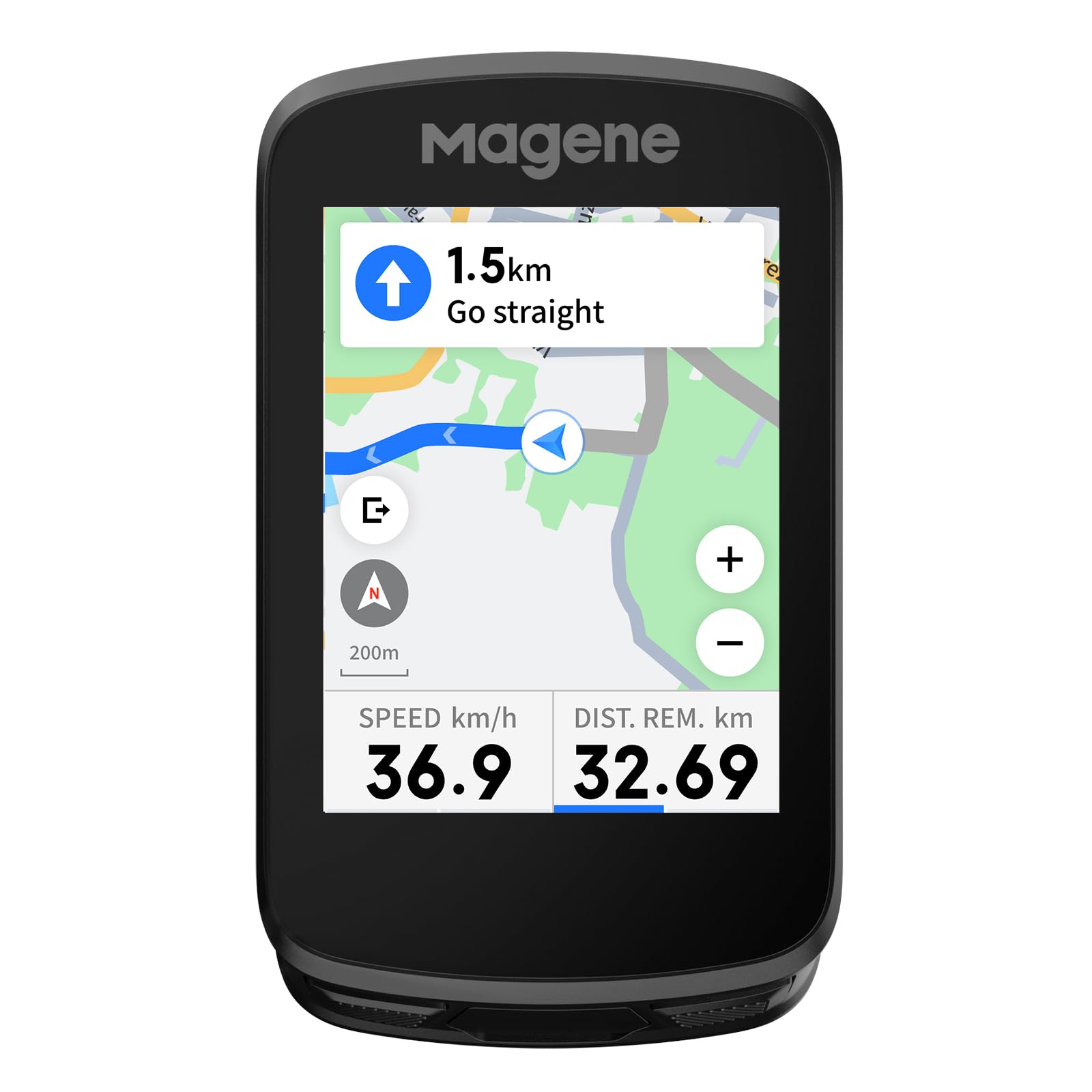
The Magene C506 stands out in the affordable segment because it combines a 2.4-inch color touchscreen with a three-button backup system, making menu navigation intuitive and glove-friendly. It uses the Airoha chipset with AGNSS support for a five-second satellite lock, and the offline map download capability (free global maps via WiFi) provides reliable turn-by-turn navigation with street names and zoomed turn prompts.
What truly differentiates the C506 is the Smart Riding Assistant feature: it controls Magene L508 and L308 tail lights directly from the computer, automatically activating the front light when speed hits 10 km/h. It also pushes hydration and energy reminders, plus a return-time alert that tells you when to head back to avoid riding in the dark. The unit supports nine device connections simultaneously — speed, cadence, HR, power meter, smart trainer, radar, and electronic shifting groupsets like SRAM eTap and Shimano Di2.
The touchscreen sometimes requires a firmer press than expected, and the OnelapFit app can feel sluggish when downloading maps, but the battery holds steady at 24 hours in endurance mode. For riders who want a modern touch-driven experience with smart accessory integration, the C506 is a compelling choice.
Why it’s great
- Color touchscreen with physical button fallback
- Smart tail light control without needing a phone
- Supports 9 sensor types including Di2/eTap
Good to know
- App is slow and poorly translated
- Map download process is unintuitive
- Touchscreen can require multiple presses
3. iGPSPORT BSC100S
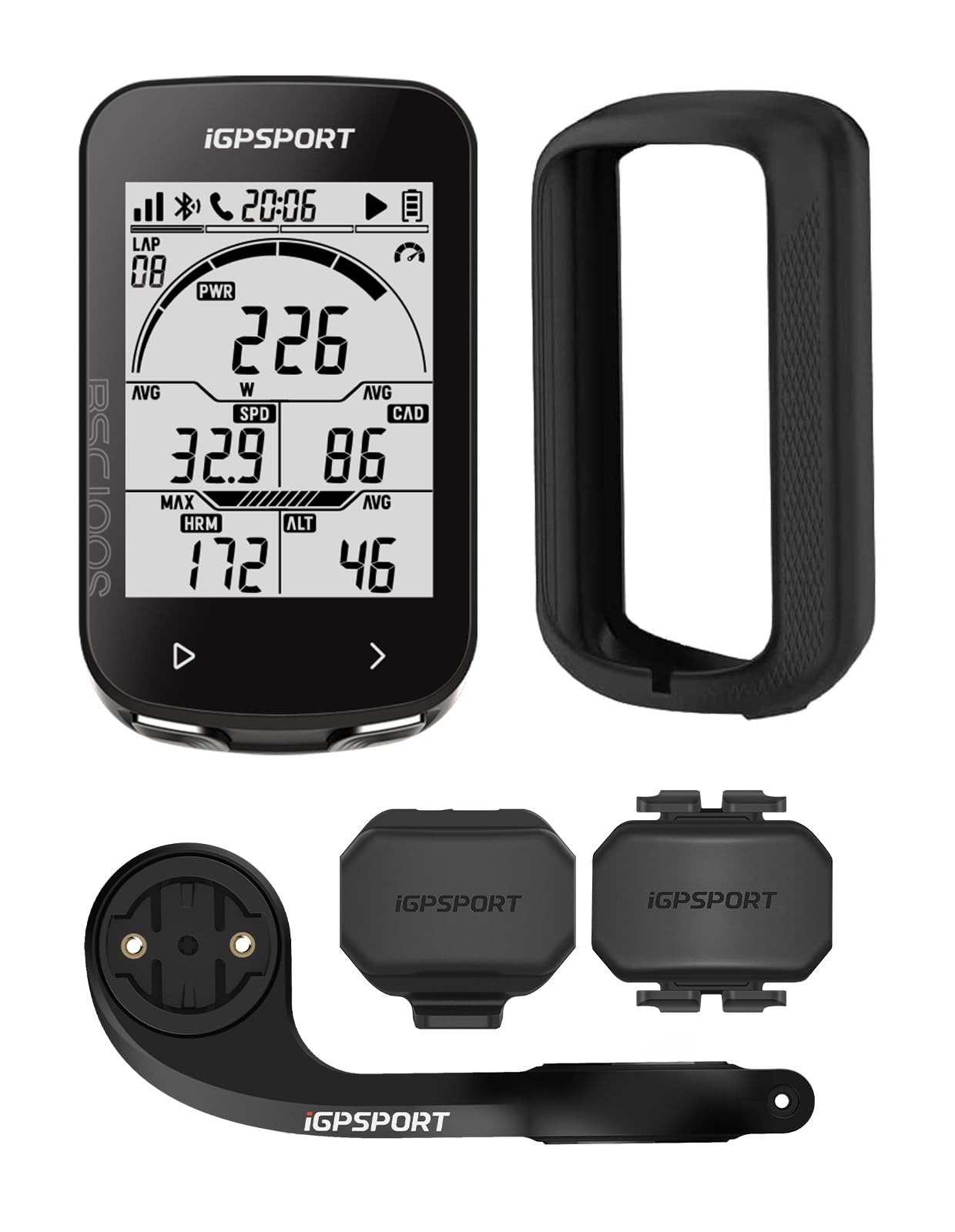
The BSC100S is the endurance champion of this list, offering a 600 mAh battery that delivers a genuine 40 hours of runtime when backlight and navigation are not constantly active. That means you can ride a full week of two-hour commutes or tackle a 200-kilometer brevet without charging. It supports five-satellite positioning (GPS, Beidou, GLONASS, Galileo, QZSS) and pairs with ANT+ and Bluetooth 5.0 sensors, including power meters.
The package includes both a CAD70 cadence sensor and an SPD70 speed sensor, which makes it a complete out-of-box solution for riders who want pedal efficiency data without buying extra accessories. The 2.6-inch anti-glare LCD uses FSTN technology, so it remains crisp and readable even with polarized sunglasses on a bright summer day. The IPX7 waterproof rating means you can ride through a thunderstorm without worrying about moisture damage.
A few users reported the battery icon drops faster than expected during the first few rides, but the unit holds up over longer distances. The two-button interface is simple but limits data page customization (no route navigation or color mapping). Still, the BSC100S is the best pick for ultra-distance riders who prioritize battery life and sensor inclusion over flashy navigation features.
Why it’s great
- 40-hour battery life in standard data-logging mode
- Includes cadence and speed sensor in the box
- IPX7 waterproof for all-weather riding
Good to know
- No map navigation or turn-by-turn directions
- Manual is poorly translated; find online version via QR code
- Limited data page customization
4. Magene C506SE

The Magene C506SE is the more affordable sibling of the C506, retaining the 2.4-inch color display, WiFi sync, and AGNSS-assisted five-second positioning, but dropping the touchscreen in favor of three physical buttons. WiFi transfer is 28 times faster than Bluetooth, meaning route uploads and ride file syncs complete in seconds rather than minutes. It supports 108 data items across 14 categories, displayed as circular dials, line graphs, or bar charts.
The unit supports nine device types via ANT+ and Bluetooth, including speed, cadence, HR, power meter, smart trainer, radar tail lights, and electronic shifting. The indoor training mode connects to a smart trainer and allows you to customize power targets, resistance levels, and gradients — perfect for structured winter workouts. The IP54 rating handles light rain, but you should avoid sustained downpours.
A notable weakness reported by some buyers is that the unit can unpair from sensors after the second use and refuse to reconnect, which requires factory resetting. Magene’s customer support has been inconsistent in resolving this issue. If you get a properly functioning unit, the C506SE offers excellent value for riders who want WiFi-speed syncing and color navigation without the touchscreen premium.
Why it’s great
- WiFi data sync is dramatically faster than Bluetooth-only units
- Supports 9 device types including smart trainers
- 5-second GPS lock via AGNSS calibration
Good to know
- Some units suffer from persistent sensor unpairing issues
- IP54 rating is not heavy-rain proof
- Customer support responsiveness is hit-or-miss
5. CYCPLUS M1

The CYCPLUS M1 is the most generous bundle on this list, shipping with both a speed sensor and a cadence sensor so you can start tracking pedal efficiency and wheel speed immediately. The 2.9-inch FSTN LCD screen is the largest among the budget-friendly units, and it uses an automatic backlight that adjusts based on local sunrise and sunset times — no manual toggling. The Swiss-import navigation chip provides reliable GPS locking and route recording.
Battery life is rated at 60 hours, which is the highest in this comparison, and the IPX6 waterproof rating protects against heavy spray. The unit syncs via the CYCPLUSFit app and supports Strava uploads. The included handlebar mount installs in about 60 seconds with the provided screwdriver, though it only fits 31.8 mm handlebars — check your bike before buying.
Several long-term users confirmed the unit still works reliably after two years. The main compromises are the lack of map navigation, the need for a separate sensor for odometer tracking (GPS provides speed but not total mileage), and the app only displaying data in metric with Celsius temperature, which can be off by as much as 15 degrees. For riders who want a durable, huge-screen computer with all the necessary sensors included, the M1 is a fantastic entry point.
Why it’s great
- Large 2.9-inch anti-glare display with auto backlight
- Speed and cadence sensor included
- 60-hour battery life for multi-day touring
Good to know
- No map navigation or route guidance
- App displays data in metric only, temperature reading inaccurate
- Handlebar mount only fits 31.8 mm bars
6. GEOID CC700
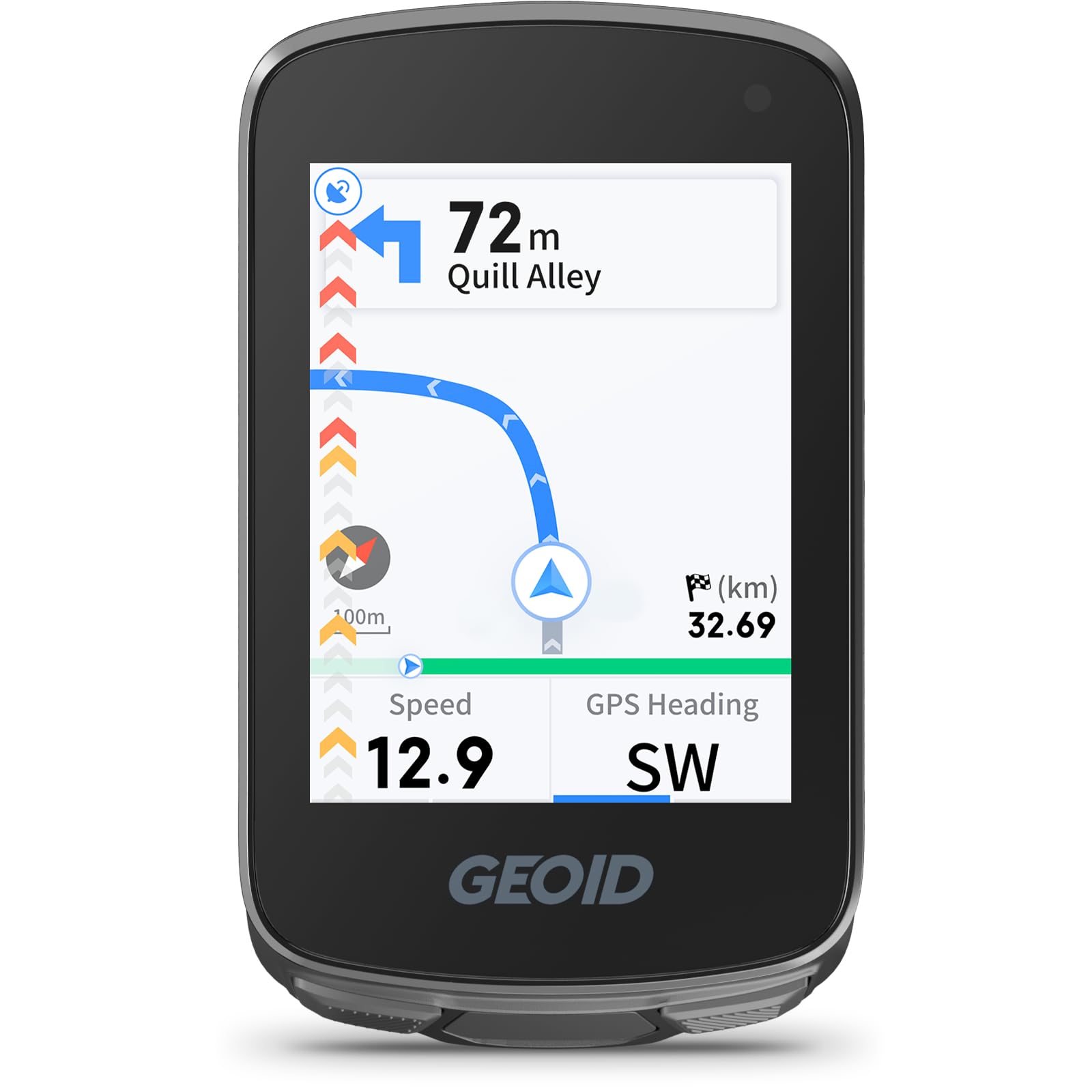
The GEOID CC700 brings a 2.8-inch color screen and genuine auto re-routing to the affordable market — a feature usually reserved for units costing twice as much. When you stray from your uploaded GPX route, the CC700 automatically recalculates and guides you back, zooming in at turns and popping up colorful notifications. It supports five satellite systems (GPS, Beidou, GLONASS, QZSS, Galileo) plus AGNSS for a 5-second cold lock.
The WiFi and Bluetooth dual-protocol transmission automatically syncs AGNSS updates and ride files, and the AGNSS data remains valid for 14 days between WiFi syncs. The unit offers 108 data items across 10 pages and 29 display layouts, including circular dials and bar charts. It supports ANT+ and Bluetooth connections for up to nine devices, including power meters, HR straps, and smart trainers. The IPX7 rating means it can handle any weather.
The re-routing algorithm is not as refined as Garmin’s — a few users noted it can be slow to recalculate. The three-button interface takes a ride or two to memorize, but the screen clarity and navigation performance for the price are exceptional. If you primarily ride pre-planned routes and want automatic re-routing without spending Garmin-level money, the CC700 is the best option available.
Why it’s great
- Auto re-routing and GPX file import at a budget-friendly price
- 2.8-inch color screen with customizable display layouts
- IPX7 waterproof and 25-hour battery life
Good to know
- Re-routing algorithm is slower than premium brands
- Button interface takes practice to learn
- AGNSS must be refreshed via WiFi every 14 days
7. COOSPO BC107

The COOSPO BC107 is the ultimate entry-level GPS computer for riders who want to log rides, track heart rate, and sync to Strava without spending more than . The 2.4-inch LCD display is compact but readable, and the glass-filled ABS and TPU chassis weighs just 140 grams. It uses GPS and Beidou dual-mode positioning, providing accurate global location data that automatically calibrates the time on boot.
It supports ANT+ connectivity for heart rate monitors, speed and cadence sensors, and power meters — a rare feature at this price point. Bluetooth is used exclusively for pairing with the CoospoRide app, where you can set up the device, view GPS track route maps, analyze ride records, and sync .fit files to Strava. The IP67 rating is the highest water and dust protection in this roundup, meaning you can submerge it briefly without damage.
The BC107 does not support Bluetooth sensors (ANT+ only), so older Bluetooth-only HR straps will not work. The CoospoRide app has had occasional auto-sync issues with Strava, requiring manual logout/login to re-establish the connection. But for pure value — a waterproof GPS computer with power meter compatibility under — the BC107 is unmatched. It is perfect for first-time buyers testing whether a GPS computer fits their riding style.
Why it’s great
- ANT+ power meter support at an entry-level price
- IP67 waterproof rating — best in class for protection
- GPS + Beidou dual-mode positioning for accurate tracks
Good to know
- No Bluetooth sensor support — ANT+ only for accessories
- App occasionally loses Strava sync; requires manual fix
- GPS-only navigation, no turn-by-turn or map display
FAQ
Can an affordable bike computer connect to a power meter?
Does the battery last as long as advertised with navigation running?
Can I upload GPX routes to these budget bike computers?
What does IP54 vs IPX7 mean for riding in the rain?
Do I need a separate sensor for speed data?
Final Thoughts: The Verdict
For most riders, the best affordable bike computers winner is the iGPSPORT BSC300T because it delivers touchscreen navigation, offline maps, and radar compatibility at a price that undercuts Garmin by hundreds of dollars. If you want the longest battery life and a complete sensor bundle, grab the iGPSPORT BSC100S with its 40-hour runtime and included cadence/speed sensors. And for the absolute entry-level price with ANT+ power meter support, nothing beats the COOSPO BC107 under .