
The search for an affordable bike often ends in a frustrating trade-off: a frame that feels brittle on the first real hill or brakes that demand constant coaxing. The difference between a smart buy and a regretful one comes down to frame material, drivetrain quality, and how honestly the bike handles real-world abuse.
I’m Min — the co-founder and writer behind Gadgets Feed. I have spent hundreds of hours cross-referencing frame geometries, drivetrain configurations, and real owner feedback to separate the genuinely capable affordable bikes from the ones that only look good on a listing page.
This guide walks through nine distinct models spanning road, mountain, hybrid, and electric categories so you can confidently pick the right affordable bikes for your specific riding style and terrain.
How To Choose The Best Affordable Bikes
Buying a budget-friendly bike forces a clear-eyed look at where manufacturers cut corners and where they invest. Understanding a few core specs will prevent buyer’s remorse and ensure the bike matches the rider’s weight, height, and terrain intentions.
Frame Material: Aluminum vs. Carbon Steel
Aluminum frames dominate the best affordable bikes because they resist rust and weigh noticeably less than carbon steel. A typical entry-level aluminum frame adds about 4–6 pounds of savings compared to steel, which is felt immediately when lifting the bike onto a rack or carrying it up stairs. Steel absorbs road vibration better but corrodes faster if the paint chips. For riders who store bikes outdoors or near salt air, aluminum is the safer long-term choice.
Drivetrain Speeds: How Many Gears Do You Need?
A 7-speed drivetrain with a single front chainring offers simplicity and lower maintenance for flat urban roads and gentle hills. A 21-speed system with front and rear derailleurs provides the low-end grunt needed for steeper climbs or off-road work. The trade-off is complexity — more cables and derailleur adjustments mean more potential tuning. Riders tackling mixed terrain should prioritize a 21-speed setup, while casual cruisers can save weight and hassle with 7 speeds.
Brake Selection: Disc, Linear Pull, or Caliper
Disc brakes deliver the most consistent stopping power in wet or muddy conditions and are essential for mountain bikes and e-bikes. Linear pull brakes (V-brakes) are lighter, easier to maintain, and perfectly adequate for dry paved riding. Caliper brakes, often found on road bikes, offer the lightest setup but require more hand strength to modulate. For hybrid and commuter use, linear pull brakes strike the best balance of stopping force and low maintenance.
Quick Comparison
On smaller screens, swipe sideways to see the full table.
| Model | Category | Best For | Key Spec | Amazon |
|---|---|---|---|---|
| Heybike Cityscape 2.0 | Electric | Long commutes, hills | 468Wh battery, 50 mi range | Amazon |
| Vivi Folding E-Bike | Electric | Hills, compact storage | 500W motor, dual suspension | Amazon |
| Schwinn Network 3.5 | Hybrid | Pavement & light trails | Aluminum frame, 21-speed | Amazon |
| Schwinn Suburban | Hybrid | Comfort cruises | Steel frame, 7-speed, fenders | Amazon |
| Mongoose Flatrock | Mountain | Trails, youth riders | Aluminum frame, suspension fork | Amazon |
| HILAND 700C | Road | Fitness & commuting | Aluminum frame, 14-speed | Amazon |
| EUROBIKE EURXC550 | Road | Triathlon training | Carbon steel frame, 21-speed | Amazon |
| AVASTA Earth 26/27.5 | Mountain | Trail & light off-road | Aluminum frame, disc brakes | Amazon |
| AVASTA Populus 700C | Road | Step-through commuting | 6061 aluminum, 7-speed | Amazon |
In‑Depth Reviews
1. Heybike Cityscape 2.0
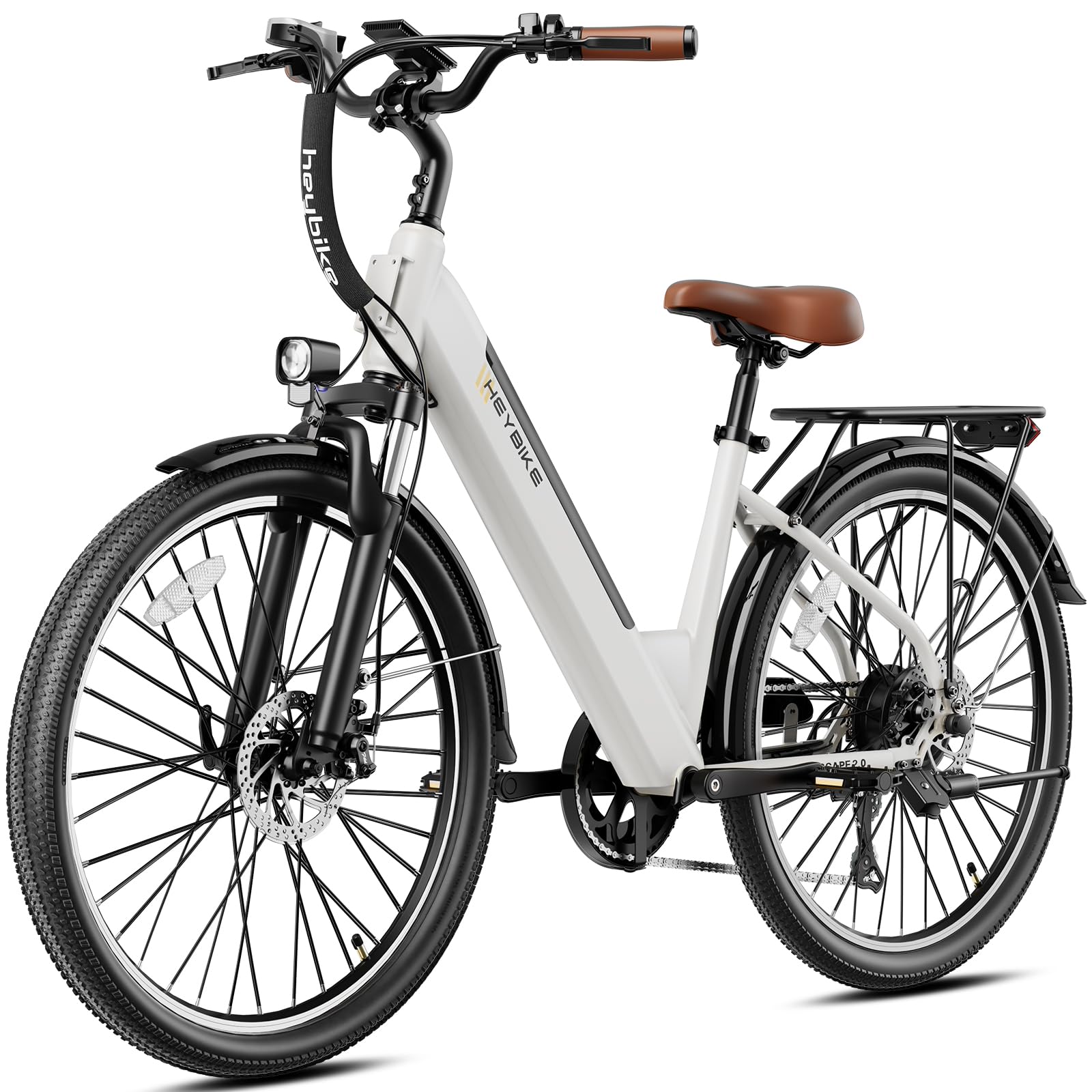
The Cityscape 2.0 brings a 468Wh UL-certified battery and a peak 1200W motor to the affordable e-bike segment, delivering a genuine 50-mile range in pedal-assist mode. Riders moving at the 20 mph throttle limit feel the dual-disc brakes provide predictable stopping force, though some owners note the pads can be noisy until bedded in. The IPX6 waterproof rating on the battery means rain-soaked commutes won’t brick the electronics — a critical detail for daily riders.
The 26-inch puncture-resistant tires and front suspension fork absorb broken pavement and gravel with composure, making this a viable option for riders who split time between roads and light trails. Assembly requires about 30 minutes with the included tools and a YouTube guide, though the instructions between the printed manual and video can contradict each other. The removable battery design allows charging at a desk or apartment, which removes the pain of hauling the full 62-pound bike indoors.
Customer feedback consistently highlights the motor’s hill-climbing confidence — a 500W continuous rating that translates to effortless 6–8% grade ascents with mild pedaling effort. The thumb throttle mode is particularly useful for stop-and-go city traffic, letting riders launch from a standstill without digging into the 7-speed cassette. Some riders report the included basket accessory feels heavy and disrupts steering balance, so consider removing it if maneuverability is a priority.
Why it’s great
- UL-certified battery ensures safety and longevity
- 50-mile range covers even long commutes
- Three working modes suit varied energy levels
Good to know
- Printed assembly instructions can be confusing
- Brakes may need adjustment or bedding in
- Heavy frame at 62 pounds without battery
2. Vivi Folding Electric Bike
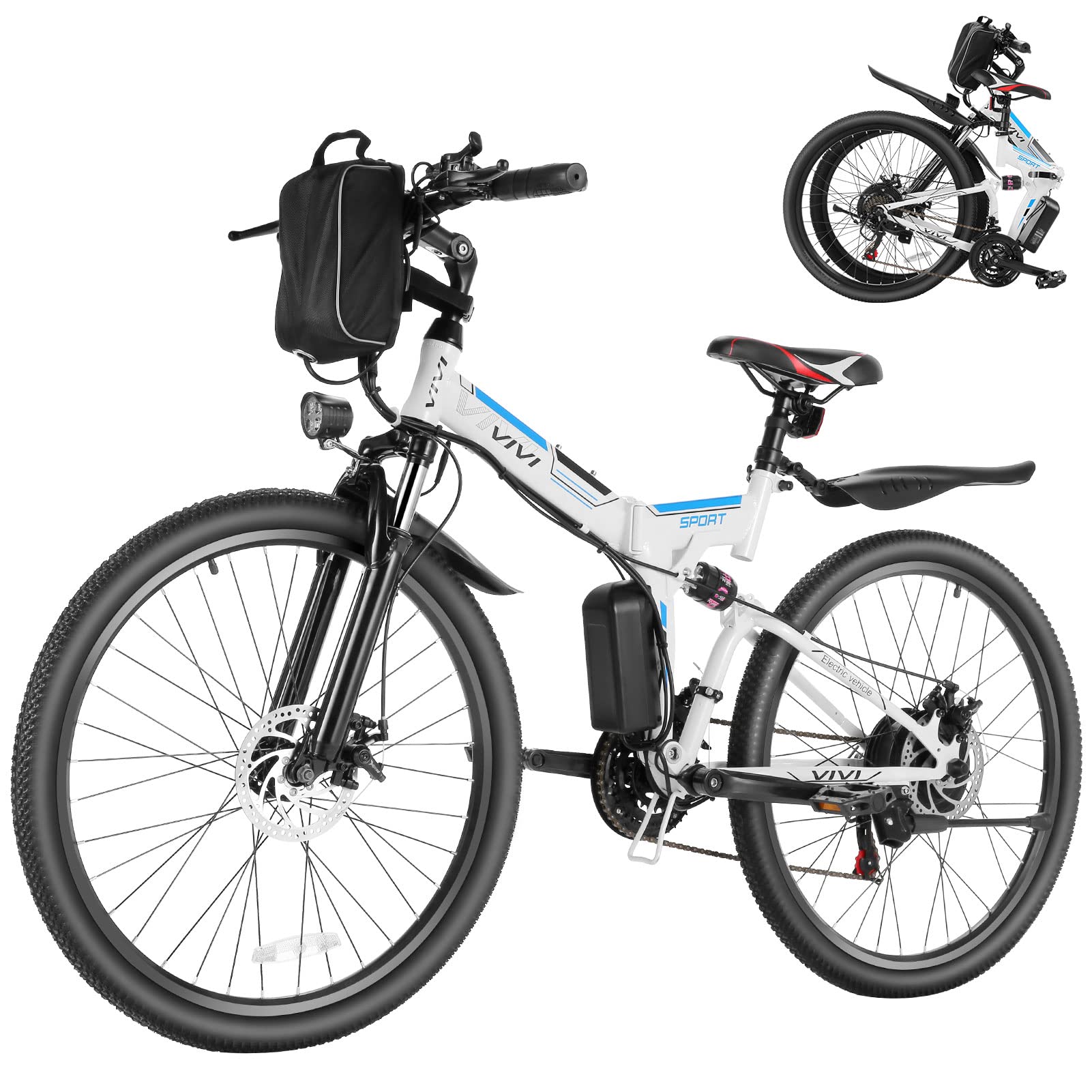
The Vivi folding e-bike packs a 48V 500W nominal motor (750W peak) into a foldable aluminum frame that fits in a sedan trunk or apartment closet. The 374.4Wh removable battery claims 22–25 miles in full throttle mode and up to 50 miles in pedal assist — real-world tests from owners confirm 30+ miles on assist level 4. The dual shock absorber system (front suspension fork plus seat-post spring) smooths out urban potholes and gravel paths effectively.
Shifting through the 21-speed transmission feels crisp for the price point, and the front and rear disc brakes provide confident modulation on wet pavement. The thumb throttle is intuitive — twist and go without fumbling for buttons. Owners report the motor climbs steep Smoky Mountain grades on pedal assist without struggling, a testament to the torque curve tuning. The SGS certification to UL2849 adds a layer of fire-safety reassurance that many sub- e-bikes lack.
Assembly is straightforward for those with basic mechanical aptitude, though the included instructions and tools are minimal — expect to tighten bolts and adjust the handlebar alignment. Some buyers experienced delayed customer service responses when requesting brake replacement parts, but the general consensus is that the bike’s performance at this entry-level price is hard to beat. For riders who need compact storage or a short commute boost, the Vivi is a genuine value leader.
Why it’s great
- Folding design fits small spaces
- 21-speed drivetrain for varied terrain
- SGS certified to UL2849 safety standard
Good to know
- Customer support response can be slow
- Assembly instructions are basic
- Heavy at over 60 pounds
3. Schwinn Network 3.5

The Schwinn Network 3.5 hybrid rides on a lightweight aluminum frame with a suspension fork and swept-back handlebars that position the rider upright, reducing lower back strain on longer journeys. The 21-speed twist shifters paired with a rear derailleur deliver smooth transitions across pavement, crushed gravel, and shallow dirt paths. Alloy linear pull brakes provide reliable, easy-to-modulate stopping power — ideal for riders who prefer predictable modulation over the grabby feel of cheaper disc brakes.
The 700c wheels with medium-width tires roll efficiently on roads while offering enough grip for the occasional unpaved shortcut. Owners at 6’2″ and over 200 pounds report the bike holds up well after years of daily use, reinforcing the frame’s build integrity. Assembly requires about an hour for a beginner, with experienced riders finishing in under 30 minutes. The included kickstand and reflectors are appreciated touches, though the seat is often the first upgrade — many riders swap it for a wider gel saddle.
Some units arrive with the front brake rubbing or the rear derailleur slightly out of alignment, but these are easily corrected with a 5mm hex key and a touch of cable tension adjustment. The most common complaint involves slipping in 4th or 5th gear, which is usually fixed by indexing the derailleur. For riders seeking a do-it-all hybrid that won’t break the bank, the Network 3.5 represents a solid investment in long-term reliability.
Why it’s great
- Upright riding position reduces back fatigue
- Aluminum frame is corrosion-resistant and lightweight
- 21 speeds handle varied terrain well
Good to know
- Assembly instructions could be clearer
- Seat may need upgrading for longer rides
- Gear indexing may require adjustment out of box
4. Schwinn Suburban

The Schwinn Suburban evokes a classic cruiser silhouette with a steel step-over frame, retro fenders, and a large cushioned seat that makes it a relaxing choice for neighborhood loops and boardwalk rolls. The 7-speed twist shifter keeps gear changes simple — no need to think about front derailleurs or trim adjustments. Linear pull brakes offer adequate stopping power for the flat, paved environments this bike is designed for.
The 26-inch wheels with balloon-style tires soak up sidewalk cracks and gravel with noticeable compliance, and the upright geometry lets riders scan the scenery without craning their necks. Some owners report that the assembly manual is borderline useless and recommend using the product photo as a reference instead. Missing axle nuts and inconsistent fender alignment have been flagged in reviews, so a pre-ride inspection and a second set of hands during assembly are wise.
The cushioned seat is genuinely comfortable for hour-long rides, though the saddle springs can squeak after a few weeks — a drop of lubricant on the pivot points solves this. Riders between 5’5″ and 6’3″ will find the frame fits well, but the steel construction adds noticeable heft compared to aluminum alternatives. This is not the bike for speed or climbs; it is the ideal affordable bike for laid-back weekend cruising where comfort reigns supreme.
Why it’s great
- Highly comfortable padded seat for long rides
- Retro fenders keep road spray off clothes
- 7-speed drivetrain is simple and low-maintenance
Good to know
- Steel frame is heavier than aluminum alternatives
- Assembly instructions are poorly written
- Not suited for steep hills or aggressive riding
5. Mongoose Flatrock
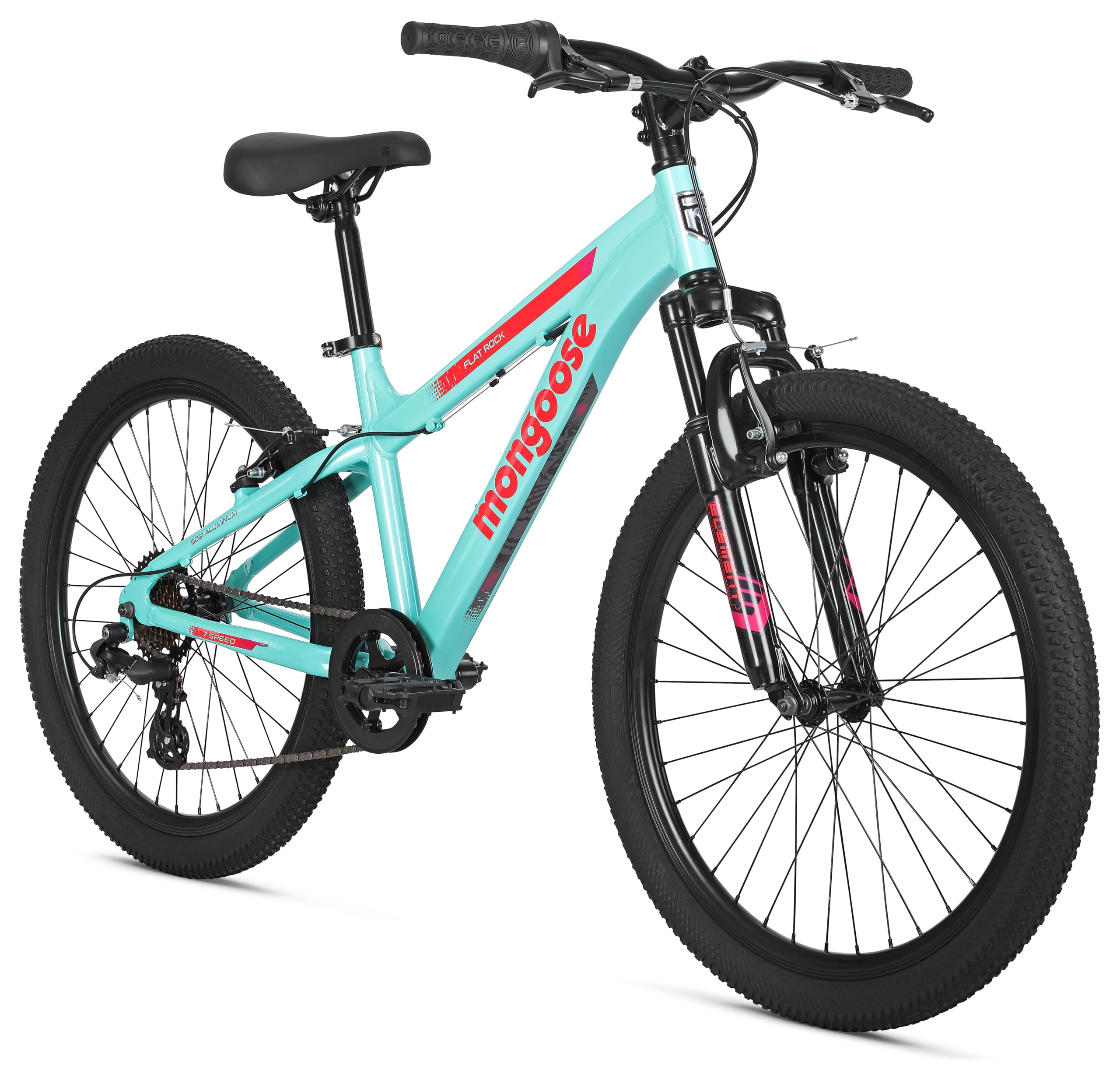
The Mongoose Flatrock is a budget-friendly mountain bike built around an aluminum frame with a suspension fork and 24-, 26-, or 29-inch wheel options to accommodate riders from 4’4″ to 6’0″. The 7-speed twist shifters operate the rear derailleur smoothly enough for green and blue trails, and the linear pull brakes provide enough bite to control speed on moderate descents. Knobby tires offer genuine traction on loose dirt and gravel.
Owners consistently praise the bike’s looks and the fun factor, but several note that the hardware feels mediocre under hard use — the suspension fork bottoms out easily on drop-offs and rock gardens. The handlebar grips are narrow and place the twist shifter too close to the grip, occasionally causing accidental shifts for riders with larger hands. Assembly is doable with standard tools, though the brakes almost always require centering and the derailleur needs indexing out of the box.
The pedal crank has been reported to develop lateral play after a couple of months, and the kickstand bends under minimal pressure. For riders who stick to smooth singletrack, crushed gravel paths, and commuting, the Flatrock delivers respectable value. Anyone planning aggressive trail riding should strengthen the budget or look at bikes with a thru-axle fork and sealed cartridge bearings.
Why it’s great
- Lightweight aluminum frame for easy handling
- Multiple wheel sizes fit a wide height range
- Knobby tires provide good off-road grip
Good to know
- Suspension fork bottoms out on rough terrain
- Handlebar grips may cause accidental shifts
- Brakes and derailleur need tuning after assembly
6. HILAND 700C Road Bike

The HILAND 700C road bike uses a lightweight aluminum frame and a 14-speed derailleur drivetrain to give entry-level road riders a capable platform for fitness loops and daily commuting. The caliper brakes are lighter than disc alternatives and are easy to maintain, though they demand firm hand pressure in wet conditions. The 700c wheels with narrower tires deliver low rolling resistance, helping riders sustain higher speeds with less energy expenditure.
Owners who have put over 2,000 miles on this bike report that it outperforms several pricier models on mixed terrain after basic adjustments — replacing the stock saddle and plastic pedals is the most common upgrade path. The trigger shifters are stiff out of the box but loosen up after a few rides. Some units arrive with the front fork installed backward from the factory, so double-check orientation during assembly. The included toolkit covers the basics, but a torque wrench is recommended for the stem bolts.
The frame geometry leans slightly aggressive for a budget bike, putting the rider in a moderately bent position that suits speed over comfort. Riders between 5’6″ and 6’4″ can find a fitting size among the S, M, and L options. The HILAND’s main drawback is the inconsistent factory quality control — some frames arrive with misaligned derailleurs or brake pads that rub. Once properly tuned, however, this is one of the best affordable bikes for someone serious about road riding without serious investment.
Why it’s great
- Lightweight aluminum frame aids acceleration
- Low rolling resistance 700c wheels
- Multiple frame sizes for good fit
Good to know
- Factory assembly quality is inconsistent
- Stock saddle and pedals feel cheap
- Stiff trigger shifters need breaking in
7. EUROBIKE EURXC550

The EUROBIKE EURXC550 brings a Shimano 21-speed drivetrain and dual disc brakes to an affordable road bike package with a carbon steel frame. At 36.5 pounds, it is heavier than its aluminum counterparts, but the steel construction absorbs road vibration noticeably better, making it a comfortable choice for long straight miles on asphalt. The 700c wheels with 28c tires strike a balance between speed and stability on varying pavement qualities.
Competitive triathletes have reported using the EURXC550 on trainer setups and even in actual triathlons after adding clip-on aero bars and a computer — a testament to the frame’s basic stiffness. The disc brakes provide confident stopping power in wet conditions, a clear advantage over caliper brakes at this price tier. Assembly is straightforward for an experienced rider, though the left pedal threading mismatch issue appears in a small number of units, so careful initial installation is critical.
The stock saddle is universally described as narrow and uncomfortable for rides over 30 minutes, and the decals are stickers that can be peeled off for a cleaner look. One long-term owner upgraded tires, saddle, shifters, gearing, and handlebars over three years, noting that the steel frame remained durable through all mods. For a rider who enjoys tinkering and wants a solid foundation for gradual upgrades, the EURXC550 is a blank canvas with real potential.
Why it’s great
- Shimano 21-speed drivetrain shifts reliably
- Disc brakes perform well in wet conditions
- Durable carbon steel frame absorbs road buzz
Good to know
- Heavy at 36.5 pounds
- Stock saddle is uncomfortable for long rides
- Some units arrive with pedal threading issues
8. AVASTA Earth 26/27.5

The AVASTA Earth mountain bike pairs an aluminum alloy frame and rims with a switchable suspension fork and disc brakes, giving riders a versatile off-road platform at a compelling entry point. The 21-speed derailleur system provides enough range for moderate climbs, and the disc brakes deliver consistent stopping power on dusty or wet trails. Riders can choose between 26-inch or 27.5-inch wheel options, both equipped with quick-release axles for easy removal and transport.
Assembly is rated at 75% pre-assembled, and most owners complete the build in about 30 minutes with the included video guide. The switchable suspension fork is a standout feature at this price — locking it out on pavement improves pedaling efficiency, while unlocking it for trail work smooths out rocks and roots. Some testers note that the fork bottoms out on aggressive drops, so riders over 200 pounds should consider a firmer spring upgrade.
Customer service responsiveness is a mixed bag — one user received a damaged sprocket cover and encountered a return shipping quote, while another had a missing bearing dust cover replaced within a week. The frame geometry fits riders from 5’5″ to 6’2″ comfortably, with a sloping top tube that makes mounting and dismounting easier. For casual trail riders who want disc brakes and a suspension fork on a budget, the AVASTA Earth is a strong contender.
Why it’s great
- Switchable suspension fork for trail and road
- Disc brakes provide reliable stopping power
- Aluminum frame is lightweight and durable
Good to know
- Fork bottoms out on heavier riders
- Customer service response is inconsistent
- Return shipping can be expensive for defects
9. AVASTA Populus 700C
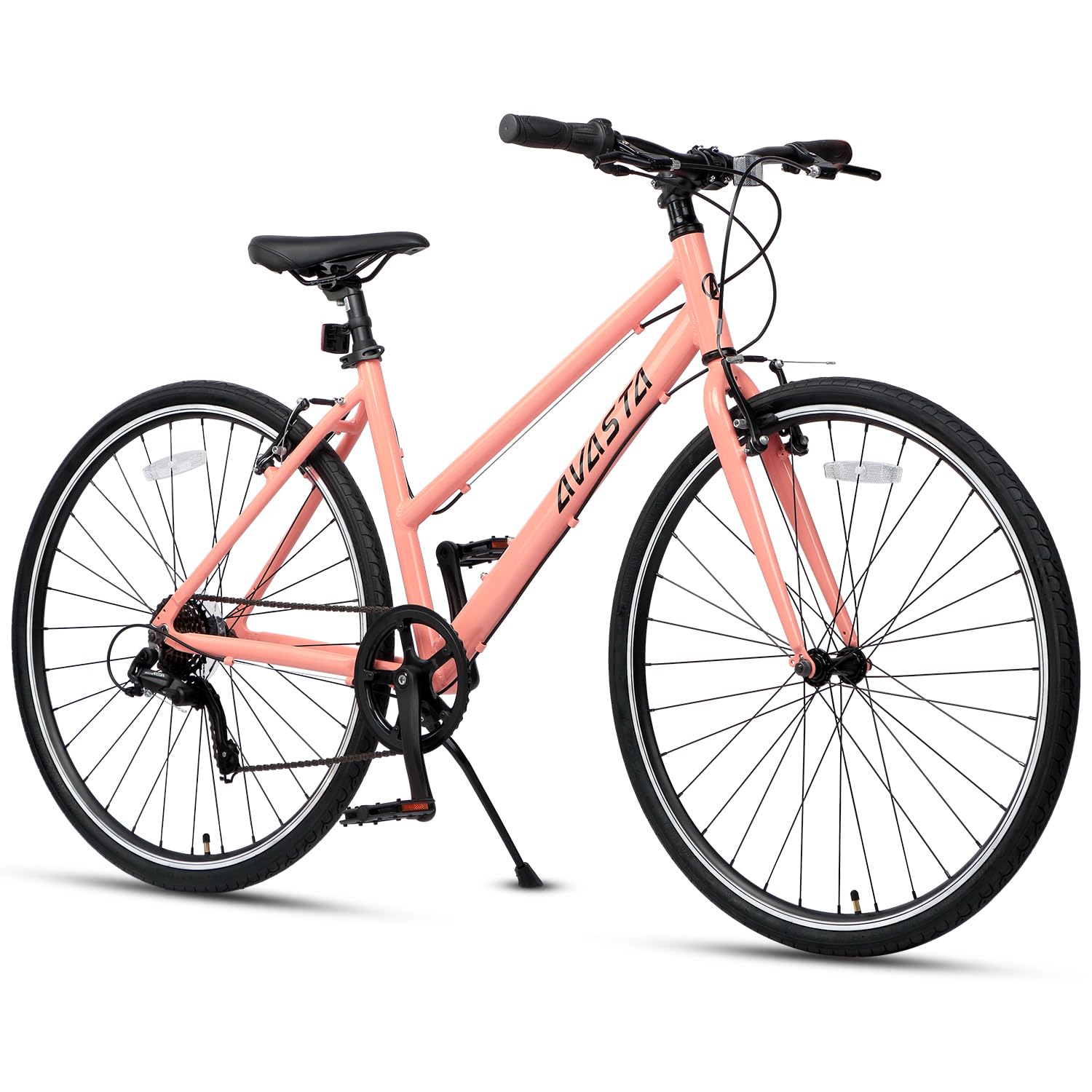
The AVASTA Populus is a step-through road bike built with a 6061 aluminum frame that supports up to 300 pounds while keeping the total weight at 34 pounds — easy to lift onto a bus rack or up apartment stairs. The 7-speed micro shift derailleur and linear pull brakes form a simple, reliable drivetrain appropriate for flat urban terrain and gentle hills. The 700c aluminum wheels with 35c tires offer a stable, comfortable ride that absorbs sidewalk cracks and asphalt seams.
Size M fits riders between 5’5″ and 6’5″, and the low step-through design is genuinely convenient for riders with limited hip mobility or those who often stop and start in city traffic. Assembly takes about 25 minutes with the included tools, and multiple owners report that the vendor reimbursed repair costs for minor factory issues like wobbly tires or misaligned brake pads. Response time on warranty claims has been praised as quick and helpful.
The single front chainring means the bike effectively uses 2–7 of its rear cassette for hill climbing — the single gear up front limits the lowest climbing ratio. Riders in truly hilly cities may miss a double or triple chainring. The mount holes at the seat tube only fit thin water bottle cages, so plan accordingly. For the rider who prioritizes easy mounting, a good-looking design, and a solid commuter platform, the Populus is a smart choice.
Why it’s great
- Lightweight 6061 aluminum frame is easy to carry
- Step-through design simplifies mounting
- Vendor support is responsive and helpful
Good to know
- Single chainring limits low-end climbing gears
- Water bottle mount only fits narrow cages
- Initial wheel truing may be needed
FAQ
Is an aluminum frame always better than carbon steel on an affordable bike?
How much assembly is required for these bikes and can a beginner do it?
Which brake type should I choose for commuting in a rainy city?
Can an affordable electric bike handle a steep hill without pedaling hard?
Final Thoughts: The Verdict
For most users, the affordable bikes winner is the Heybike Cityscape 2.0 because its 468Wh battery, 500W motor, and 50-mile range deliver the most real-world utility at an accessible price point. If you want a lighter, pedal-only hybrid with an upright riding position, grab the Schwinn Network 3.5. And for compact electric storage and hill-climbing confidence, nothing beats the Vivi Folding E-Bike.