
Sports photography demands a camera that locks focus in a split second, tracks erratic motion across the frame, and delivers sharp, usable frames even under stadium lights or grey skies. A slow shutter or hunting autofocus turns a game-winning goal into a smudge of pixels—so choosing the right body matters more than lens wizardry or megapixel bragging rights.
I’m Min — the co-founder and writer behind Gadgets Feed. I’ve spent countless hours digging into sensor readout speeds, autofocus point layouts, continuous shooting buffers, and real-world high-ISO noise performance to separate the true sports performers from the marketing noise.
This guide walks through eleven models that earn their keep when the action starts, helping you match burst rate, AF coverage, and lens ecosystem to your specific sport and budget. This is the definitive list of the best affordable camera for sports photography built from raw spec analysis and verified owner feedback.
How To Choose The Best Affordable Camera For Sports Photography
Picking the right body for sports means prioritizing speed, focus, and ruggedness over raw resolution. A 24-megapixel camera that nails focus at 10 frames per second will outshoot a 45-megapixel camera that misses every third frame. Here are the three non-negotiable specs to evaluate.
Autofocus System Coverage and Tracking Intelligence
A camera with 50+ phase-detection points spread across the frame lets you compose off-center action without recomposing. Look for dedicated subject-tracking algorithms that recognize human faces, eyes, and body shapes—not just contrast areas. For sports like soccer or basketball where players overlap, a deep AF buffer that keeps tracking through occlusions is critical.
Burst Rate and Buffer Depth
Shooting at 8 fps is the bare minimum for fast team sports; 10–15 fps is the sweet spot for capturing peak action. The buffer depth determines how many consecutive RAW frames you can fire before the camera stutters. A shallow buffer (15–20 RAW shots) will choke during a long sprint or a multi-shot sequence. Pair a deep buffer with a fast UHS-II memory card to keep the burst alive.
High-ISO Performance and Shutter Speed Ceiling
Indoor arenas and evening games push ISO up to 6400 or 12800. A sensor that maintains acceptable noise levels at those sensitivities determines whether your keeper rate is 90% or 50%. A maximum mechanical shutter speed of 1/4000th or 1/8000th lets you freeze sprinting athletes, while an electronic shutter that reads out quickly (under 1/30th of a second) avoids rolling shutter distortion on fast panning shots.
Quick Comparison
On smaller screens, swipe sideways to see the full table.
| Model | Category | Best For | Key Spec | Amazon |
|---|---|---|---|---|
| Canon EOS R7 | Mirrorless | High-speed action with IBIS | 15 fps mech / 30 fps elec | Amazon |
| Canon EOS R10 | Mirrorless | Beginner sports on a budget | 15 fps mech, 651 AF points | Amazon |
| Nikon D7500 Bundle | DSLR | Telephoto reach with kit lenses | 8 fps, 51-point AF | Amazon |
| Nikon D7100 | DSLR | Durable body, 1.3x crop reach | 6 fps, 51-point AF | Amazon |
| Sony a7 III | Mirrorless | Full-frame low-light sports | 10 fps, 693 AF points | Amazon |
| Sony Alpha 7 V | Mirrorless | Pro-grade hybrid sports | 30 fps, 759 AI AF points | Amazon |
| Canon EOS 5D Mark IV | DSLR | Professional DSLR workhorse | 7 fps, 61-point AF | Amazon |
| Insta360 Luna Ultra | Gimbal Camera | Vlog-style player tracking | 12x lossless zoom, 3-axis stab | Amazon |
| XbotGo Falcon | Action Camera | Hands-free auto-tracking | 4K, 6 TOPS AI tracking | Amazon |
| GoPro Mission 1 PRO | Action Camera | POV sports with slow-mo | 8K60, 1-inch sensor | Amazon |
| Veo Cam 3 | Sports Cam | Team game recording & review | 1080HD, AI auto-tracking | Amazon |
In‑Depth Reviews
1. Canon EOS R7

The Canon EOS R7 delivers a rare combination of speed and stabilization that directly addresses the core pain of sports shooters: missed focus during rapid sequences. Its 32.5-megapixel APS-C sensor fires at 15 fps with the mechanical shutter and 30 fps electronically, while the 5-axis in-body image stabilization (IBIS) keeps framing steady even when you’re hand-holding a telephoto lens. The 651 AF zones from the Dual Pixel CMOS AF II system cover nearly 100% of the frame, and real-world reviews confirm the eye detection locks onto athletes through motion blur and overlapping bodies.
The buffer depth is the standout here—RAW Burst Mode with a pre-capture function that records the half-second before you fully press the shutter means you never miss the peak of a jump or a tackle. Owners report comfortable handling with the deep grip and durable build. Paired with an RF-S or adapted EF telephoto lens, this body becomes a dedicated sports machine that rivals full-frame cameras costing twice as much.
What holds it back is the RF-S lens selection—Canon’s crop-sensor lens lineup is still maturing, so you may need the EF-EOS R adapter to access affordable telephoto options. The LP-E6NH battery is rated for about 380 shots, which is adequate but not class-leading, so a spare is recommended for a full day of tournament shooting. For the price and feature density, the R7 is the most capable dedicated sports body at this tier.
Why it’s great
- 30 fps electronic shutter with pre-capture allows you to catch every frame of a sprint.
- 5-axis IBIS stabilizes long glass that is common in field sports.
- Weather-sealed magnesium alloy body handles sideline dust and light rain.
Good to know
- RF-S telephoto lenses are scarce; plan on adapting EF glass.
- Battery life sits around 380 shots per charge; carry a spare for long events.
2. Sony Alpha 7 V
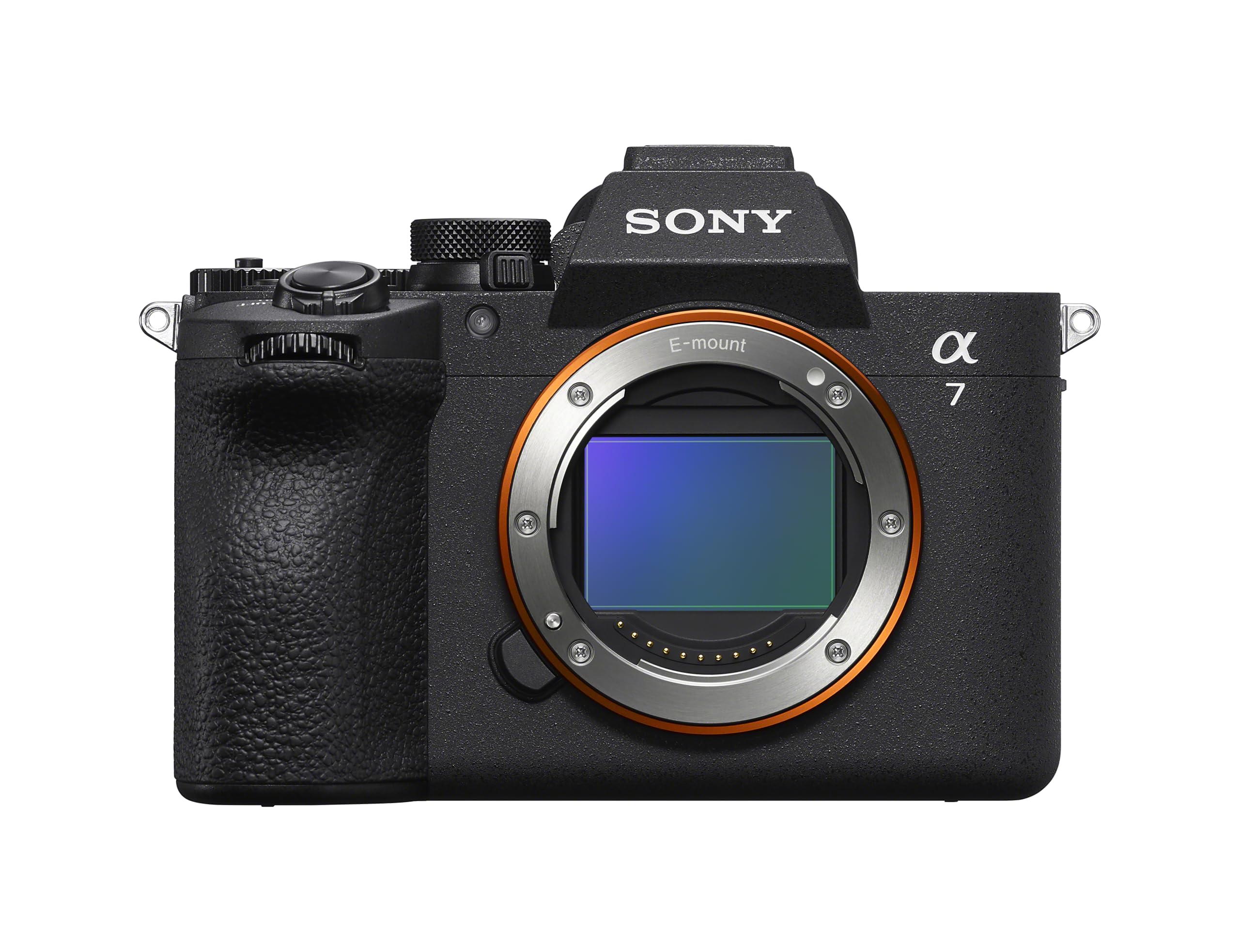
The Sony Alpha 7 V pushes the envelope for hybrid sports shooting with a partially stacked 33-megapixel sensor that reads out roughly 4.5 times faster than the a7 IV. This translates into blackout-free bursts at 30 fps with full AF/AE tracking—meaning you can track a wide receiver running a slant route without the viewfinder going dark. The AI-based Real-time Recognition AF uses pose estimation to track human eyes, head, and body, even when the subject turns away or is partially obscured by other players.
Dynamic range hits 16 stops, which is a significant advantage when recovering shadow detail from harsh stadium contrasts. The 759-point phase-detection array covers the majority of the frame, and real-world tests show the sticky tracking rarely loses a runner during lateral cuts. The 5-axis IBIS provides up to 7.5 stops of central stabilization, making handheld panning with a 70-200mm lens remarkably smooth for video clips.
The main trade-off is that 4K 120p video uses an APS-C crop, which reduces the effective field of view. The learning curve for Sony’s menu system remains a point of friction for migrating Canon or Nikon users, though the custom button mapping helps. Battery life is improved over the a7 IV, but intensive video and burst shooting still demands a spare NP-FZ100.
Why it’s great
- 30 fps blackout-free electronic shutter with AI tracking is the gold standard for capturing peak action.
- 16 stops of dynamic range give you enormous latitude for recovering shadow and highlight detail.
- Human pose estimation AF locks onto subjects even during occlusions and rapid direction changes.
Good to know
- 4K 120p video is cropped to Super 35mm; not a true full-frame high-frame-rate option.
- Sony menu complexity may require time to set up for sports-specific workflows.
3. Canon EOS R10

The Canon EOS R10 brings the core sports-shooting features of the R7—subject-detection AF, 15 fps mechanical burst, and the DIGIC X processor—into a lighter, more affordable body that is ideal for parents shooting weekend games or beginners building their first sports kit. The 24.2-megapixel APS-C sensor offers a 1.6x crop factor that effectively extends telephoto reach, making a 200mm lens behave like a 320mm lens on the long end. The 651 AF points cover a dense grid, and the touch-and-drag AF allows you to shift focus point with your thumb while looking through the EVF.
Reviewers consistently praise the speed of the autofocus lock-on, especially for tracking moving subjects like runners and cyclists. The fully articulating touchscreen helps when shooting low-angle sports or over-the-crowd shots. The kit lens (RF-S 18-45mm) is fine for general use, but you will want an RF-S telephoto or adapted EF telephoto for field sports to get the reach you need.
The small buffer—around 21 RAW frames before slowdown—is the main limitation for sustained bursts. If you shoot long sequences of a cross-country runner or a full basketball possession, the R10 will hiccup while the card clears. The LP-E17 battery offers about 210 shots per charge, so a spare is essential for any session longer than an hour. Consider this a capable entry point that leaves room to upgrade to the R7 if your needs grow.
Why it’s great
- 15 fps mechanical burst with subject-detection AF is rare at this price tier.
- Lightweight body (429g with battery and card) reduces fatigue during hours on the sideline.
- 1.6x crop factor turns modest telephoto lenses into effective long glass for field sports.
Good to know
- Small RAW buffer (around 21 shots) limits sustained high-speed sequences.
- LP-E17 battery provides only about 210 shots; carry spares for all-day events.
4. Sony a7 III

The Sony a7 III remains a benchmark for full-frame sports photography at a mid-range price, largely because of its 693 phase-detection points covering 93% of the frame combined with 10 fps blackout-free shooting. The 24.2-megapixel BSI sensor delivers excellent dynamic range (15 stops) and clean files up to ISO 6400, which is where most indoor and evening games live. The 425 contrast-detect points back up the phase-detection grid, so the AF rarely hunts even in challenging mixed lighting.
The real-world feedback is consistent: the AF sticks to moving subjects like a magnet, and the 10 fps burst can sustain a healthy number of RAW frames before the buffer fills. The NP-FZ100 battery is rated for 610 shots, which is exceptional for a mirrorless body and easily covers a full game day. The in-body stabilization works well with adapted telephoto lenses, making this a versatile body for both field and court sports.
At this point in its life cycle, the a7 III lacks the newer AI-driven tracking features found in the a7 V, so it may occasionally lose lock on subjects that turn abruptly or get blocked by another player. The kit lens (28-70mm f/3.5-5.6) is usable for sideline work but not telephoto enough for field events. Budget for a dedicated 70-200mm or 100-400mm lens to unlock the full sports potential of this body.
Why it’s great
- 693-point phase-detection AF covers nearly the entire frame, keeping fast subjects in focus.
- 610-shot battery life eliminates the need for mid-game battery swaps.
- 15-stop dynamic range from the BSI sensor recovers excellent shadow detail from harsh stadium lighting.
Good to know
- Lacks the latest AI subject recognition; can lose tracking on fast, erratic movements.
- Kit lens is not telephoto; you will need a dedicated long lens for most field sports.
5. Nikon D7500 Bundle

The Nikon D7500 is the sports shooter’s DSLR workhorse, offering 8 fps continuous shooting and a 51-point Multi-CAM 3500FX II AF system that handles fast lateral movement with accuracy. The 20.9-megapixel DX sensor delivers a native ISO range up to 51200 (expandable to 1.6 million), so you can push the ISO in dim conditions without the noise becoming unusable. The EXPEED 5 processor keeps the camera responsive even during prolonged bursts, and the 3.2-inch tilting touchscreen is handy for ground-level shots.
This bundle includes the AF-P DX NIKKOR 18-55mm VR lens and the AF-P DX NIKKOR 70-300mm f/4.5-6.3G ED lens, giving you a telephoto range up to 300mm (450mm full-frame equivalent on DX) out of the box. The 70-300mm lens is the real value for parents capturing soccer or baseball from the bleachers. The SnapBridge Bluetooth and Wi-Fi connectivity allow quick image transfer to your phone for sharing during halftime.
The main drawback is the lack of in-body image stabilization—you rely on VR in the lens, which the 70-300mm has, but the 18-55mm’s VR may not be enough for low-light handheld shots. The bundle accessories (bag, tripod, filters) are functional but basic; you will want to upgrade the tripod for stability during video recording. It is a complete kit that gets you shooting sports immediately.
Why it’s great
- 72-300mm VR lens in the kit gives 450mm full-frame equivalent reach for field sports.
- 8 fps burst with 51-point AF tracks players reliably during running plays.
- Native ISO 51200 provides usable high-ISO files for indoor and evening games.
Good to know
- No in-body stabilization; relies on lens VR, which may not be sufficient for long exposures.
- Bundle tripod and bag are basic; expect to replace them for serious use.
6. Canon EOS 5D Mark IV

The Canon EOS 5D Mark IV is a professional-grade DSLR that has been the sideline standard for sports photojournalists for years. Its 30.4-megapixel full-frame sensor and DIGIC 6+ processor deliver excellent dynamic range and high-ISO performance up to ISO 32000, producing clean files that hold up well in post-production. The 61-point AF system with 41 cross-type points provides reliable tracking for players moving across the frame, and the Dual Pixel CMOS AF makes live-view shooting snappy for ground-level or tripod-mounted shots.
The 7 fps burst rate is modest compared to mirrorless competitors, but the buffer depth is generous—up to 21 RAW frames at full speed—so you can capture extended sequences of a play without choking. The optical viewfinder offers zero lag, which some veteran sports shooters still prefer for tracking fast action. The 4K Motion JPEG video at 30 fps provides sharp footage for post-game analysis, though file sizes are large.
The EF lens ecosystem is the deepest of any system for sports photography, with affordable telephoto options from Tamron and Sigma alongside Canon’s own L-series glass. The lack of a fully articulating touchscreen is a missed opportunity, and the 7 fps burst rate puts it at a disadvantage against the 15 fps+ mirrorless options in this guide. It is a durable, proven body best suited for photographers who prioritize reliability and lens selection over raw frame rate.
Why it’s great
- 61-point AF with 41 cross-type sensors tracks players accurately in low light.
- Massive EF lens ecosystem offers affordable telephoto and fast prime options.
- 30.4MP full-frame sensor produces files with excellent dynamic range for shadow recovery.
Good to know
- 7 fps burst rate is slow relative to modern mirrorless sports cameras at this price.
- Fixed 3.2-inch screen limits low-angle and overhead shooting flexibility.
7. Nikon D7100

The Nikon D7100 is a rugged, weather-sealed DSLR that offers a fantastic value for budget-conscious sports shooters. The 24.1-megapixel sensor lacks an optical low-pass filter, which delivers sharper, more detailed images than typical crop-sensor cameras from its era. The 51-point AF system with 15 cross-type sensors is responsive and accurate, providing confident tracking for moderate-speed sports like baseball, track and field, and youth soccer. The 6 fps burst rate is modest but sufficient for capturing key moments in these disciplines.
What makes the D7100 stand out for sports is its 1.3x crop mode, which effectively boosts telephoto reach by an additional 1.3x on top of the 1.5x DX crop, giving you a 2x full-frame equivalent crop that can turn a 300mm lens into a 600mm reach. This is especially useful for field sports where you are far from the action. The weather sealing means you can shoot in light rain or dusty conditions without worry, and the magnesium alloy body is exceptionally durable—verified by multiple owner reports of surviving drops onto concrete.
The buffer is the limiting factor: about 6–7 RAW frames before the camera slows down, which will frustrate shooters trying to capture long sequences of a sprint or a rally. Battery life is also average at around 200 shots per charge. Video quality is acceptable but not class-leading. This is a camera for the shooter who values durability and telephoto reach over frame rate—perfect for getting started in sports photography on a tight budget.
Why it’s great
- 1.3x additional crop mode gives massive telephoto reach for distant field sports.
- Weather-sealed magnesium alloy body is built to survive drops and bad weather.
- Lack of AA filter produces noticeably sharper images than many crop-sensor cameras.
Good to know
- Small RAW buffer (around 6-7 frames) limits sustained high-speed burst shooting.
- Battery life is short; expect to carry multiple spare batteries for a full day of shooting.
8. XbotGo Falcon
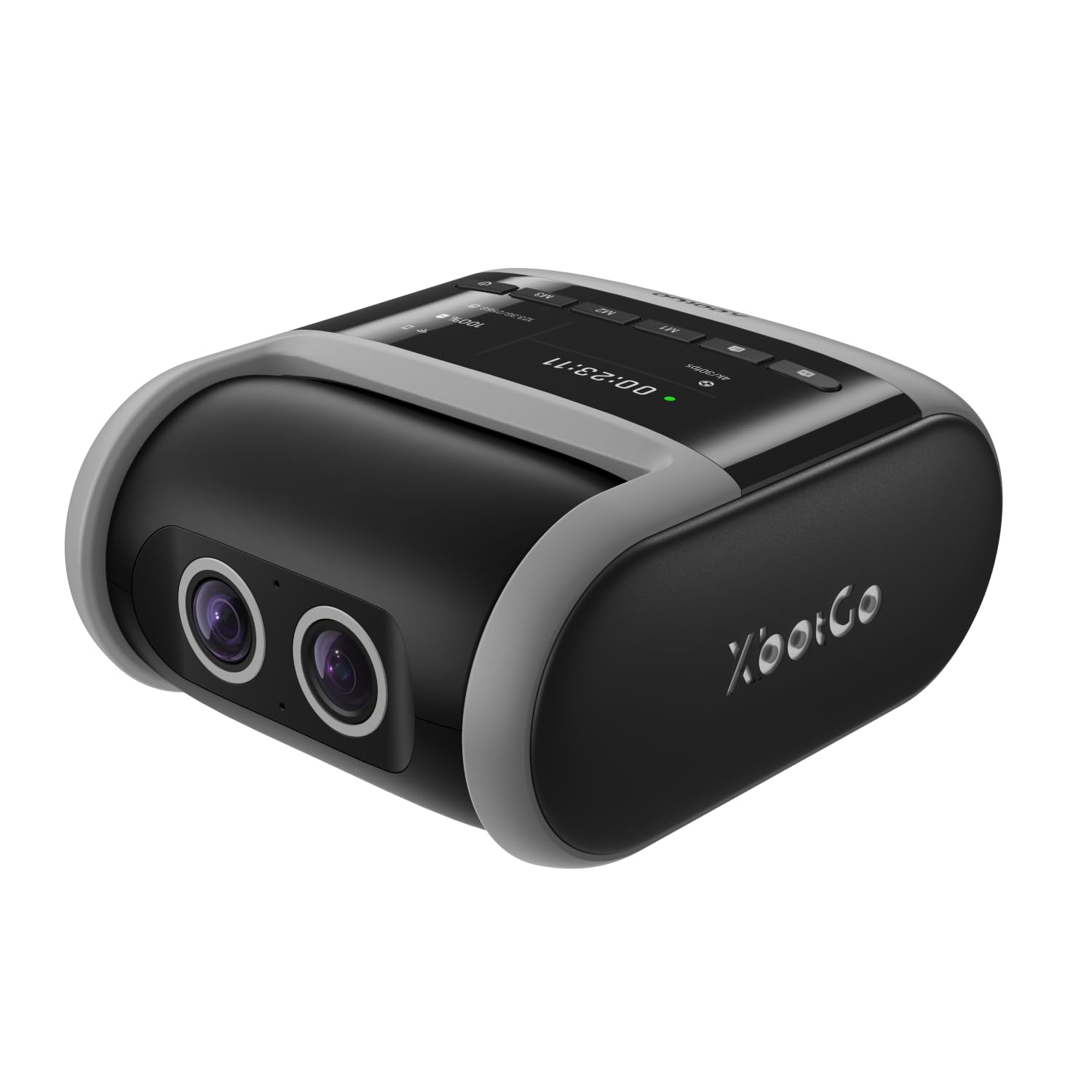
The XbotGo Falcon rethinks sports recording by offloading the tracking responsibility from a human operator to an onboard AI. With 6 TOPS of AI processing power and an 8-core CPU, the Falcon automatically tracks players and the ball in soccer, basketball, and football using its dual-lens system—a 4K recording lens and an AI-assisted lens dedicated to motion analysis. This all-in-one design eliminates the need for a separate gimbal or tripod head, making it incredibly efficient for coaches and parents who want to focus on the game rather than panning a camera.
The 4K video output is crisp enough for game review, player development, and highlight reels. The IPX5 water resistance means it can handle sideline drizzle, and the standard 1/4-inch mount works with any tripod you already own. The Wi-Fi connectivity allows instant live streaming to platforms like Facebook, which is a major plus for sharing games with remote family or fans.
The primary caveats are that the camera relies on a sturdy tripod (ideally 10 feet or taller) for optimal field coverage, and some users have reported glitchy live streaming and the camera shutting down mid-game during extended use. The AI tracking is excellent for ball-following but does not offer individual player selection in the same way a manned camera would. It is a specialized tool best suited for team sports recording rather than creative sports photography.
Why it’s great
- AI auto-tracking with 6 TOPS processing completely removes the need for a dedicated camera operator.
- 4K dual-lens system provides sharp footage for game review and highlight creation.
- IPX5 weather resistance allows recording in light rain and sideline conditions.
Good to know
- Requires a tall, heavy-duty tripod for full field coverage, which adds to the setup weight.
- Some users report intermittent reliability issues with live streaming and battery shutoffs.
9. GoPro Mission 1 PRO
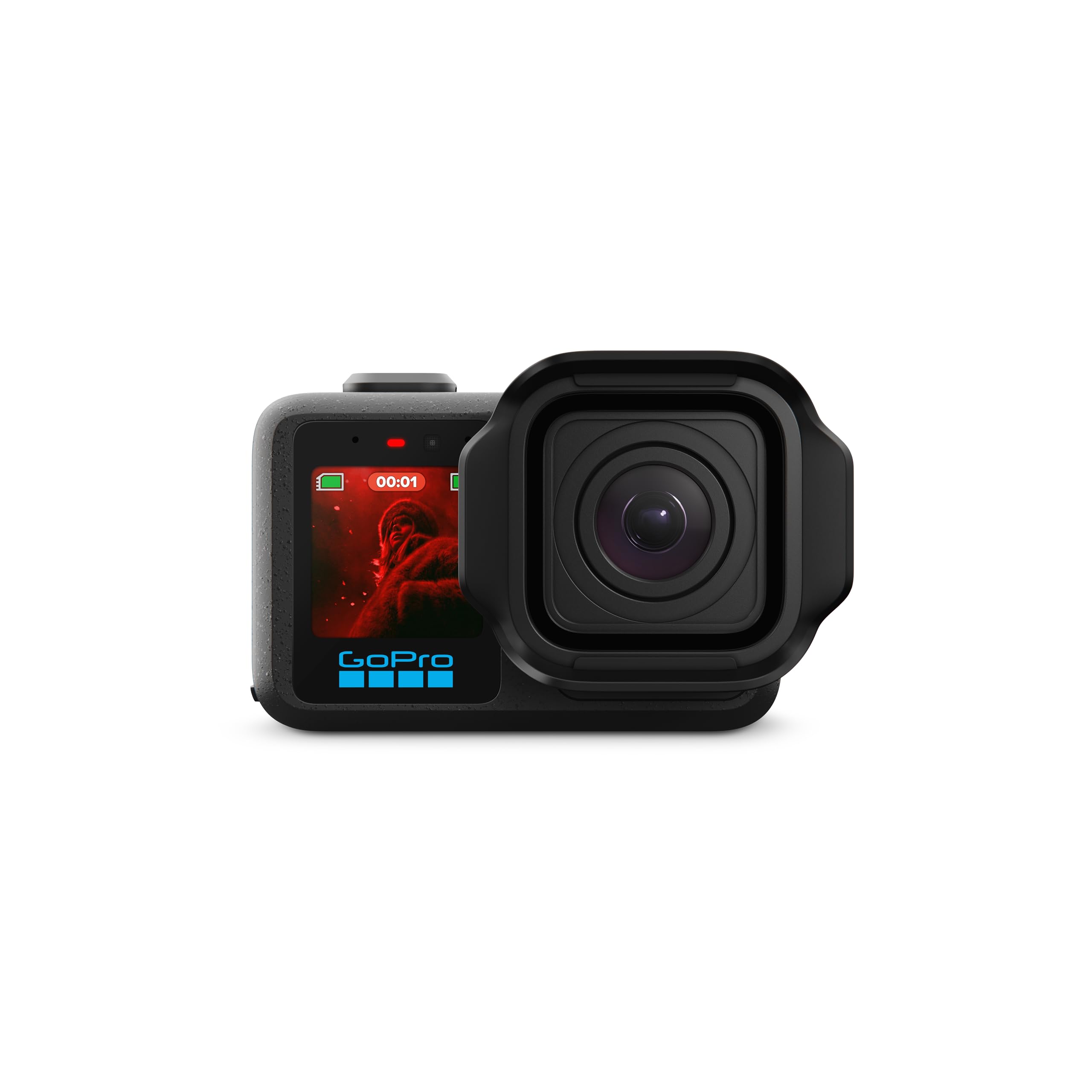
The GoPro Mission 1 PRO is an action camera that breaks into semi-professional territory with its 1-inch sensor, enabling significantly better low-light performance than the standard 1/1.9-inch sensors found in most action cams. This makes it viable for shooting POV clips during indoor sports, dusk games, or even night matches. The 8K60 Open Gate capture uses the full sensor area, giving you massive flexibility to crop and reframe in post without losing resolution.
The 960fps slow-motion at HD resolution is a game-changer for analyzing swing mechanics, ball spin, and impact moments in sports like baseball, golf, and tennis. The HyperSmooth stabilization ensures handheld footage stays watchable even during running or quick lateral movements. The Enduro 2 battery delivers over 3 hours of 4K30 recording, which covers most game sessions without a recharge.
The main trade-off is file size—8K and high-frame-rate clips chew through storage quickly, requiring fast, large-capacity microSD cards (V30 A2 or better). The high price also places it in competition with entry-level mirrorless cameras that offer interchangeable lenses. It is best considered a specialized tool for immersive first-person sports footage rather than a primary sideline camera.
Why it’s great
- 1-inch sensor delivers superior low-light performance and dynamic range for an action camera.
- 960fps slow-motion at HD resolution is invaluable for detailed motion analysis.
- 3+ hours of 4K30 battery life covers an entire game session on one charge.
Good to know
- 8K and high-frame-rate video create extremely large file sizes requiring fast, high-capacity cards.
- Price point overlaps with entry-level interchangeable lens cameras that offer more shooting flexibility.
10. Insta360 Luna Ultra
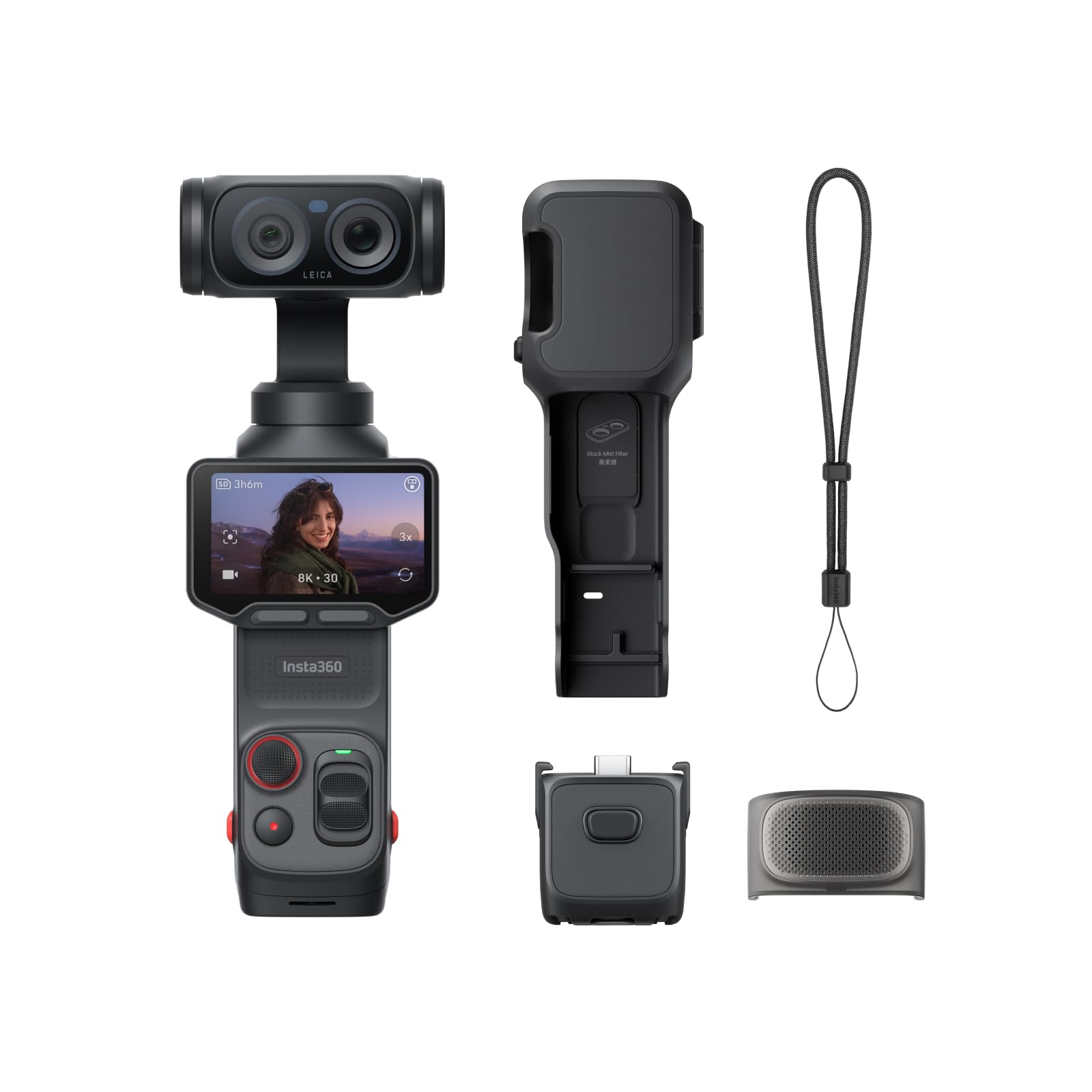
The Insta360 Luna Ultra is a compact gimbal camera built around dual Leica lenses—a 1-inch main sensor for wide shots and a 1/1.3-inch telephoto lens for up to 12x lossless zoom. This optical zoom capability is rare in a pocket-sized camera and makes it interesting for sports vloggers who need to alternate between wide team shots and close-ups of individual players. The 8K30 HDR video with Dolby Vision delivers stunning color and contrast for cinematic game recaps.
The detachable 2-inch OLED touchscreen can be used as a remote monitor up to 20 meters away, which is extremely practical for solo shooters setting up near the sideline. The 3-axis mechanical stabilization keeps footage smooth even when walking along the field. The 14-stop dynamic range and AI noise reduction produce clean images in challenging stadium lighting, and the Leica color profiles give footage a polished look straight out of camera.
The battery life of up to 4 hours with fast charging (80% in 23 minutes) is excellent for long events. However, the Luna Ultra is primarily a video tool—its 50-megapixel photo mode exists but lacks the burst rate and phase-detection AF of a dedicated sports camera. Some early units have reported touchscreen glitches and contact pin issues, so buying from a retailer with a solid return policy is advisable. It is a niche but powerful option for content creators who prioritize video over stills.
Why it’s great
- 12x lossless zoom range covers wide team shots and tight close-ups without changing lenses.
- Detachable 2-inch touchscreen remote up to 20m away is ideal for solo sideline recording.
- 14 stops of dynamic range and Leica color science deliver cinema-grade footage in tricky lighting.
Good to know
- Photo burst and autofocus systems are not optimized for fast-moving sports stills.
- Early units have reported touchscreen and hardware reliability issues; purchase from a trusted retailer.
11. Veo Cam 3
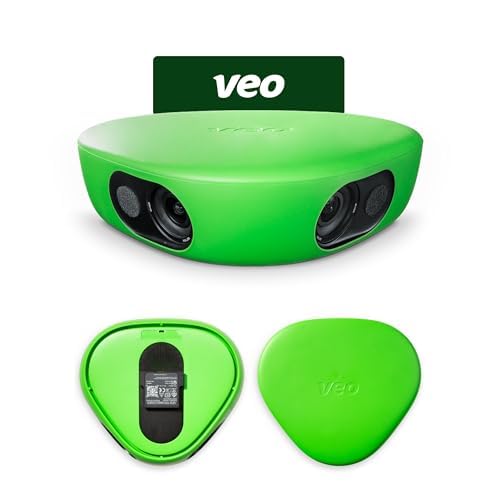
The Veo Cam 3 is purpose-built for team sports recording, designed to be set up on a tripod and left to capture an entire game with no manual intervention. The AI-powered auto-tracking automatically follows the ball and players, ensuring that the key plays are captured even when the action moves outside the initial framing. The 1080HD resolution is sufficient for game review, scouting, and highlight creation, though it cannot match the detail of higher-resolution cameras for cropping into fine action.
The camera is weather-proof, operating between -10°C and 45°C, so it can handle rain and snow on the sideline. It is lightweight and portable, coming with a carrying case, and supports Wi-Fi connectivity for live streaming. The cloud storage integration is a strong feature for coaches who need to share footage with team members and parents seamlessly. The Veo ecosystem is well-supported in numerous countries, making it a reliable choice for organized sports clubs.
However, the Veo Cam 3 operates on a subscription model—the camera itself is a significant investment, and you will need a Veo subscription to access the cloud storage and most advanced features. Some users have reported missing mount parts in the box, and fine print regarding subscription credits can be confusing. It is not a general-purpose camera; it is a specialized tool for teams and coaches who want a hands-off recording solution for regular game analysis.
Why it’s great
- AI auto-tracking captures the full flow of the game without a camera operator.
- Weather-proof design allows recording in rain, snow, and extreme temperatures.
- Cloud storage integration simplifies sharing and reviewing game footage with the team.
Good to know
- Requires a recurring subscription for cloud storage and advanced features.
- 1080HD resolution limits the ability to zoom in on fine action details after recording.
FAQ
How many frames per second do I need for professional sports photography?
Is a full-frame camera necessary for indoor or low-light sports?
What does the 1.5x or 1.6x crop factor mean for sports shooting?
Final Thoughts: The Verdict
For most users, the best affordable camera for sports photography winner is the Canon EOS R7 because it combines a high burst rate, industry-leading autofocus, and IBIS in a weather-sealed body at a price that undercuts full-frame competition while delivering true sports-worthy performance. If you want something more compact for a hybrid video/stills workflow, the Sony Alpha 7 V offers the highest frame rate and AI tracking in a full-frame package. And for the purest value-to-performance ratio, the Canon EOS R10 gives you 15 fps and subject-detection AF at its most budget-friendly, making it a no-brainer for parents and beginner sports shooters.