
Our readers keep the lights on and my morning glass full of iced black tea. As an Amazon Associate, I earn from qualifying purchases.
Specs are compiled from manufacturer listings and verified buyer reviews and can change over time — please confirm the key details on the product page before buying.
Forget the megapixel race for a second. The real challenge with an affordable camera isn’t finding one that takes a picture — it’s finding one that takes the *kind* of picture you actually want, without a frustrating learning curve or a hidden cost in lenses and accessories. This guide cuts through the specs to match you with the camera that fits your actual life, from a compact pocket zoom to a full DSLR kit.
I’m Min — the founder and writer behind Gadgets Feed. This guide is built by comparing the manufacturers’ published specifications and the patterns across verified customer reviews, so you get each pick’s real strengths and trade-offs instead of marketing spin.
The best deal on a camera isn’t the cheapest price tag — it’s the one that brings home the shots you are proud of. Whether you are a beginner or a seasoned shooter on a budget, this roundup of the affordable camera market is built to help you make that call with confidence.
Our Picks at a Glance

How To Choose The Best Affordable Camera
the balance for an affordable camera sits between features you will actually use and image quality that outpaces a smartphone. Your decision boils down to a few key trade-offs.
Sensor Size vs. Megapixels
A larger sensor, like an APS-C sensor, captures more light, which directly gives you better low-light performance and more natural background blur. A high megapixel count (like 24MP) is great for cropping, but a 20MP camera with a larger sensor will usually beat a 24MP camera with a tiny sensor in dim conditions. For most people, sensor size should be your priority over raw megapixels.
Interchangeable Lenses vs. Built-in Zoom
DSLR and mirrorless cameras let you swap lenses, giving you flexibility for portraits, sports, or macro photography, but you will often need to buy additional lenses. A compact camera with a built-in high-zoom lens (like a 24-720mm Leica lens) is a complete package — you can shoot a wide landscape and zoom in on a concert stage without carrying extra gear. Your choice depends on if you want a system to grow into or a single carry-everywhere solution.
Autofocus Performance
The number and type of autofocus points dictate how well a camera tracks moving subjects. A camera with 11 autofocus points can handle slow-moving subjects, while models with 31 or more points (especially hybrid phase-detection systems) lock onto fast-moving kids or pets far more reliably. For video, Dual Pixel CMOS AF (found on many Canon mirrorless models) provides smooth, continuous focus that looks professional.
Quick Comparison
| Model | Best For | Sensor / Megapixels | Video Resolution | Autofocus Points | Amazon |
|---|---|---|---|---|---|
| Nikon D3200★ Best Overall | Budget Starter DSLR | APS-C / 24.2MP | Full HD 1080p | 11 | Amazon |
| Panasonic LUMIX ZS99 | Travel & Concerts | 1/2.3″ / 20.3MP | 4K 30p | 171 | Amazon |
| Panasonic LUMIX ZS99 (Version 2) | Compact Travel Zoom | 1/2.3″ / 20.3MP | 4K 30p | 121 | Amazon |
| Canon EOS 2000D / Rebel T7 | Wi-Fi Sharing | APS-C / 18MP | Full HD 1080p | 9 | Amazon |
| Nikon D3400 | Budget Nikon DSLR | APS-C / 24.2MP | Full HD 1080p | 11 | Amazon |
In‑Depth Reviews
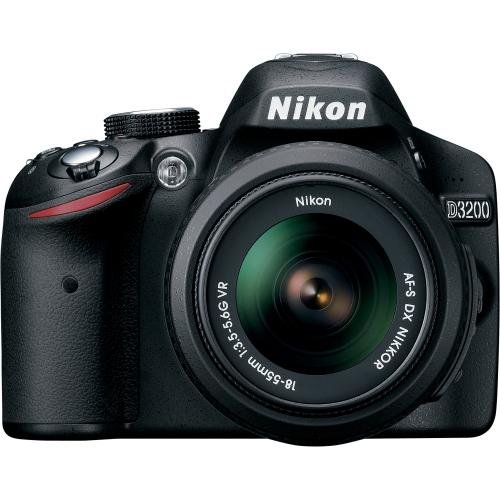
1. Nikon D3200 (Renewed)
A 24.2MP APS-C sensor in a renewed body that costs little
The Nikon D3200 is the most affordable path to a 24.2-megapixel APS-C sensor. It uses the older EXPEED 3 processor but still delivers the same resolution as the newer D3400, giving you plenty of pixels to crop. The 11 autofocus points are the same count as the D3400, so tracking performance is similar. The 3-inch LCD screen offers a 921k-dot resolution, which is sharper than the lower-resolution screens on some other budget models.
Being a certified refurbished model, it comes with a 90-day warranty and shows limited or no wear. The 18-55mm f/3.5-5.6 AF-S DX NIKKOR zoom lens is included, and it shoots Full HD 1080p video. The 12-bit bit depth limits color grading compared to the 14-bit Canon cameras, but for the price, you are getting a lot of sensor for very little. A buyer noted that the camera “feels solid and the menus are easy to navigate,” though they added that the lack of built-in Wi-Fi means you need a separate adapter for wireless transfers.
What Stands Out
- 24.2MP APS-C sensor at the lowest entry price
- Sharp 921k-dot 3-inch LCD
- EXPEED 3 processor handles Full HD video smoothly
What You Give Up
- No built-in Wi-Fi or Bluetooth — manual file transfer only
- Refurbished unit with 90-day warranty only
Reach for it if: Your budget is tight and you want the highest megapixel count possible for the lowest cash outlay.
Look elsewhere if: You need wireless sharing or are uncomfortable buying refurbished electronics.
2. Canon EOS M
A starter bundle that hands you a telephoto lens for backyard wildlife
This is the most complete starter box on the list. The Canon EOS Rebel T7 sits at the center with a 24.1-megapixel APS-C sensor and DIGIC 4+ processor, and the bundle includes a 500mm preset telephoto lens, a 0.43x wide-angle adapter, and a 2.2x telephoto adapter — giving you the reach to shoot birds or sports from a distance without buying separate glass. The camera itself has a 9-point AF system and shoots at up to 3.0 fps, which is modest but adequate for still subjects and slow movement.
The bundle also ships with a 64GB SDXC memory card, a camera bag, a tabletop tripod, and a filter kit. Unlike the Nikon D3400 which has 11 autofocus points, the T7 uses 9, so tracking fast-moving kids will be a bit more hit-and-miss. The 500mm lens is a preset f/8, meaning you cannot adjust the aperture, which forces you to shoot in brighter conditions. Reviewers on Amazon value the “grab-and-go” nature of the kit — everything you need for a first year of photography is in the box.
Everything-But-The-Kitchen-Sink Kit: Ideal for a beginner who wants to try wildlife and portrait lenses without separate purchases.
Lens Quality Trade-off: The included telephoto and adapter lenses are accessory-grade, not sharp like a dedicated Canon L-series lens.
Best for: The absolute beginner who wants one box to start shooting landscapes and distant subjects immediately.
Consider the R50 instead if: You prioritize video quality and modern autofocus over having a pile of accessories.
3. Panasonic LUMIX TZ/ZS99

A 24-720mm Leica lens that fits in your jeans pocket
The single best reason to buy this camera is the Leica 30x optical zoom — a lens that goes from a wide 24mm landscape to a 720mm super-telephoto without you swapping any glass. That reach is perfect for concert seats or mountain vistas where you cannot move closer. The 20.3-megapixel 1/2.3-inch sensor is smaller than the APS-C sensors in the DSLRs on this list, so low-light performance will be grainier, but the sheer zoom reach is something a standard kit lens cannot touch. The 171 autofocus points cover the frame extensively, making it easy to lock onto a performer on a distant stage.
The 1,840k-dot tiltable touchscreen is clear and bright, and Bluetooth v5.0 with a dedicated Send Image button makes transferring photos to your phone painless. At 4K 30p video, the footage is detailed, but the small sensor means you want good light for the best results. The USB Type-C charging is a modern convenience that the older DSLRs lack. This camera is a dedicated travel companion, not a system you can grow with — what you buy is what you get.
Zoom Champion: No other camera at this level gives you an equivalent 720mm reach in a pocketable body.
Small Sensor Reality: In dim concert lighting, expect more noise (grain) compared to the Canon R50 or Rebel T7 with an APS-C sensor.
Buy this if: You travel frequently and need one camera for wide landscapes and stadium zoom shots.
pass on it if: You shoot indoors often or want to swap lenses for creative flexibility.
4. Panasonic LUMIX ZS99 (Version 2)

The same 30x zoom with added 5-axis stabilization for steady shooting
This version of the ZS99 shares the same core — the 20.3-megapixel sensor and 24-720mm Leica lens — but adds 5-Axis HYBRID O.I.S.+ (optical image stabilization). That extra stability is noticeable when you are zoomed all the way to 720mm, where hand shake is magnified. It also uses 121 autofocus points (compared to the 171 points on the first version), but in practice, the difference on a compact camera is subtle for most users. The 1,840k-dot tiltable touchscreen and Bluetooth v5.0 connectivity carry over.
The same caveat applies: the 1/2.3-inch sensor means images at high ISO will show grain, so keep the camera steady or use a higher shutter speed in low light. Unlike the Nikon D3400, which has an optical viewfinder, this camera relies entirely on the rear screen, which can wash out in direct sun. A buyer review noted the USB-C charging is a “standout for travel” since it eliminates a proprietary charger from your bag.
Stabilization Edge: The 5-axis O.I.S. makes handheld telephoto shots more usable than the ZS99 version without it.
Still the Same Sensor: The small sensor size remains the main limit on image quality in dim conditions.
Reach for it if: You value steady telephoto shots at a distance and need a single USB-C cable to charge.
Pass if: You want the highest autofocus point count available in a compact zoom — the other ZS99 variant beats it with 171.
5. Canon EOS Rebel T7 (Basic Bundle)

DSLR quality with built-in Wi-Fi for instant phone sharing
Being able to wirelessly transfer images directly to your smartphone for social posting is the main draw here. The built-in Wi-Fi with NFC pairs quickly to the Canon Camera Connect app, and you can also remotely control the camera from your phone — useful for group shots where you want to be in the frame. The 18-megapixel APS-C sensor delivers DSLR-quality images, though the 24.1MP of the Rebel T7 kit above gives you more cropping room.
The 9 autofocus points are the same budget array as the Rebel T7, and the 3:2 aspect ratio is standard for printing. The 20-piece bundle includes a 32GB SD card, a tripod, a case, wide-angle and telephoto lenses, and a flash. Unlike the DJI Osmo Pocket 3 with its mechanical stabilization, this is a traditional DSLR — you will rely on lens-based image stabilization for sharper handheld shots. A buyer pointed out that the included accessory lenses are fun to experiment with but not optically on par with the camera’s native Canon glass.
Instant Sharing Edge: The Wi-Fi and remote control make this a strong choice for social media users who want to post on the go.
Megapixel Reality: At 18MP, you have less cropping flexibility than the 24.2MP Nikon D3400.
Buy this if: You prioritize wireless transfer to your phone and want a full accessory bundle to experiment with.
Choose the Rebel T7 kit above if: You want more megapixels for larger prints or more aggressive cropping.
6. Nikon D3400

Nikon’s 24.2MP workhorse with Bluetooth for background transfers
The D3400 packs a 24.2-megapixel DX-format CMOS sensor — the same resolution as the Nikon D3200 but with the newer EXPEED 4 processor. That processing boost gives you slightly better battery life and faster image handling. The sensor has no optical low-pass filter, which means sharper, more detailed images straight out of the camera, though you are more likely to see moire patterns on fine repeating textures. The 11 autofocus points give you a 22% edge over the 9-point Canon EOS 2000D.
SnapBridge Bluetooth connectivity lets the camera automatically transfer 2MP images to your phone for sharing, without draining your battery as fast as constant Wi-Fi. The 18-55mm VR lens includes vibration reduction to cut down hand shake. Reviewers consistently praise the image quality for the price, but note that the 11-point AF system is not the best for fast-moving subjects — it trails the 31-point Canon EOS M in tracking ability. The 8-bit bit depth also means less color grading headroom than the 14-bit Canon cameras.
Sharp Sensor Advantage: The lack of an optical low-pass filter makes this one of the sharpest images you can get at this tier.
Autofocus Limitation: The 11-point system is only a modest step up from entry DSLRs and still struggles with erratic movement.
Pick this if: You want the highest resolution sensor in the budget tier with Bluetooth for low-hassle phone transfers.
Stick with the Canon Rebel T7 if: You prefer Canon’s menu layout and want access to the larger Canon EF lens ecosystem.
Understanding the Specs
Sensor Size & Megapixels
The sensor is the heart of the camera. An APS-C sensor (found in the Canon and Nikon DSLRs) is physically larger than the 1/2.3-inch sensor in the Panasonic ZS99. A larger sensor captures more light, which means less grain in dark scenes and more natural background blur. Megapixels determine how much you can enlarge or crop a photo. A 24.1-megapixel sensor is more than enough for large prints, while 18 megapixels (like the Canon Rebel T100) is still fine for social media and standard prints.
Autofocus Points & Video Frame Rates
The number of autofocus points and how they work (phase detection vs. contrast detection) decides how quickly and accurately the camera locks onto a moving subject. More points (like 171 on the Panasonic ZS99) cover more of the frame. The 9-point systems on budget DSLRs work fine for still subjects. For video, 4K at 30fps (frames per second) gives you detailed footage, while 1080p HD is standard definition by today’s standards. The DJI Osmo Pocket 3 shoots 4K at 120fps, which lets you create smooth slow-motion video.
FAQ
Is a 24.1-megapixel camera better than an 18-megapixel camera?
Can I use the Nikon D3200 lens on the Canon EOS R50?
How does the 3-axis stabilization in the DJI Osmo Pocket 3 compare to lens-based stabilization?
What does “renewed” mean for the Nikon D3200 on this list?
Does the Panasonic LUMIX ZS99 have a flash?
Which camera on this list is best for shooting sports or fast-moving kids?
Can I use the Canon EOS M with modern Canon RF lenses?
What is the battery life of the Canon EOS Rebel T7?
How do I transfer photos from the Nikon D3400 to my phone?
Which affordable camera on this list is the easiest for a complete beginner?
Final Thoughts: The Verdict
If you want a pocket-sized travel companion with incredible zoom range, grab the Panasonic LUMIX ZS99. And for the vlogger who needs gimbal-smooth footage without carrying a separate stabilizer, the standout is the DJI Osmo Pocket 3.
How We Picked
We do not accept paid placement. Every pick is matched to a real buyer and a real use-case; we do not hands-on test units.
Sources & Methodology
Specifications: manufacturer listings and product documentation. Review insights: verified customer reviews, as of July 2026. Pricing: not shown on this page (it changes often); check the current price via the retailer link.
As an Amazon Associate, Gadgets Feed earns from qualifying purchases. This does not affect which products we feature.