
Our readers keep the lights on and my morning glass full of iced black tea. As an Amazon Associate, I earn from qualifying purchases.
Specs are compiled from manufacturer listings and verified buyer reviews and can change over time — please confirm the key details on the product page before buying.
Finding a camera that actually works for YouTube without draining your savings feels harder than filming the video itself. You need good-looking video, reliable autofocus so you stay sharp while talking, and enough low-light performance to shoot indoors without a pro lighting kit. The list below cuts through the spec overload to the handful of affordable cameras that deliver real results for creators.
I’m Min — the founder and writer behind Gadgets Feed. This guide is built by comparing the manufacturers’ published specifications and the patterns across verified customer reviews, so you get each pick’s real strengths and trade-offs instead of marketing spin.
Whether you are filming sit-down tutorials, run-and-gun vlogs, or cinematic B-roll, this roundup of the affordable cameras for youtube videos weighs everything from sensor size and stabilisation to battery life and mic quality to help you pick the right tool for your channel.
Our Picks at a Glance

How To Choose The Best Affordable Cameras For YouTube Videos
Three specs separate a great YouTube camera from a frustrating one: stability, autofocus, and sensor size. You want a camera that keeps you in focus while moving, holds steady footage without constant re-shooting, and captures clean images even in less-than-perfect light. Here is what actually matters on a budget.
Why Stabilisation Is Non-Negotiable
Handheld footage that bounces every step looks amateur fast. The best affordable picks bundle either a built-in 3-axis gimbal (like the DJI Osmo Pocket 3) or effective digital stabilisation (like the Canon PowerShot V10). Without it, you will either carry a separate gimbal or live with shaky clips.
Sensor Size vs Price
A larger sensor, such as a 1-inch CMOS or an APS-C sensor, lets in more light and produces a softer background blur (bokeh) that separates you from the background. The trade-off is cost and body size. A compact 1-inch sensor from Canon or Sony keeps the price low and the camera pocketable, while APS-C cameras like the Sony ZV-E10 trade portability for bigger, sharper images.
Autofocus You Can Rely On
For solo creators, reliable autofocus (AF) that locks onto your face and stays there saves entire takes. Look for cameras with face or eye detection AF and plenty of focus points covering the frame. The Sony ZV-1F and Canon EOS R100 both offer excellent tracking, while older DSLRs with only 9 AF points (like the EOS Rebel T7) require more manual attention.
Quick Comparison
| Model | Best For | Sensor | Stabilisation | Max Video | Amazon |
|---|---|---|---|---|---|
| Canon EOS Rebel T7 (Renewed)★ Best Overall | Budget entry-level DSLR | APS-C (24.1 MP) | Digital | 1080p/30fps | Amazon |
| DJI Osmo Pocket 3Top Performer | Premium pocket vlogging | 1-inch CMOS | 3-axis mechanical gimbal | 4K/120fps | Amazon |
| Insta360 Luna UltraPremium Pick | High-end 8K hybrid vlogging | 1-inch + 1/1.3″ dual Leica | 3-axis mechanical gimbal | 8K/30fps | Amazon |
| Sony ZV-1F | Creator-focused point-and-shoot | 1-inch (20.1 MP) | Digital (active mode) | 4K/30fps | Amazon |
| Sony Alpha ZV-E10 | Interchangeable-lens APS-C vlogging | APS-C (24.2 MP) | Digital (OSS lens) | 4K/30fps | Amazon |
| Canon EOS RP | Full-frame entry-level video | Full-frame (26.2 MP) | Digital (5-stop OIS lens) | 4K/24fps | Amazon |
| Xtra Muse | Pocket gimbal on a budget | 1-inch CMOS | 3-axis gimbal stabilizer | 4K/120fps | Amazon |
| Canon PowerShot V10 | Ultra-compact vlogging | 1-inch (15.2 MP) | Digital (3 modes) | 4K/30fps | Amazon |
In‑Depth Reviews
1. Canon EOS Rebel T7 (Renewed)
A classic entry-level DSLR that still delivers solid 24MP photos and a very low sticker price.
The Canon EOS Rebel T7 is the most affordable way to get a large APS-C sensor into your hands. It uses a 24.1 Megapixel CMOS sensor and an ISO range of 100 to 6400 (expandable to 12800), so it shoots clean images in mixed light. The 9-point autofocus system (with AI Servo AF for moving subjects) is basic compared to the 425 points on the Sony ZV-1F. However, for static interviews or tripod-based YouTube videos, it works fine.
The 3-inch LCD screen and Scene Intelligent Auto mode make it simple for beginners. Built-in Wi-Fi and NFC let you share images quickly. One reviewer noted, “The batter life is great so far,” which is typical for DSLRs that get far more runtime than mirrorless cameras. The video is limited to 1080p — there is no 4K — so for YouTube creators who upload in 4K, this will feel dated. The bundle includes an 18-55mm lens, making it a complete starter set at a budget-friendly price.
Lowest Price, Large Sensor: For the money, the APS-C sensor in the T7 delivers better image quality than any smartphone at this price point.
Video is 1080p Only: With no 4K and a basic 9-point AF system, it is not suited for modern YouTube standards if you want sharp, trackable video.
Best for: the absolute tightest budgets, and if you are learning photography with occasional 1080p YouTube videos, this is a fine entry point.
Skip it when: you need 4K footage, reliable face-tracking autofocus for moving shots, or a lightweight body for travel.
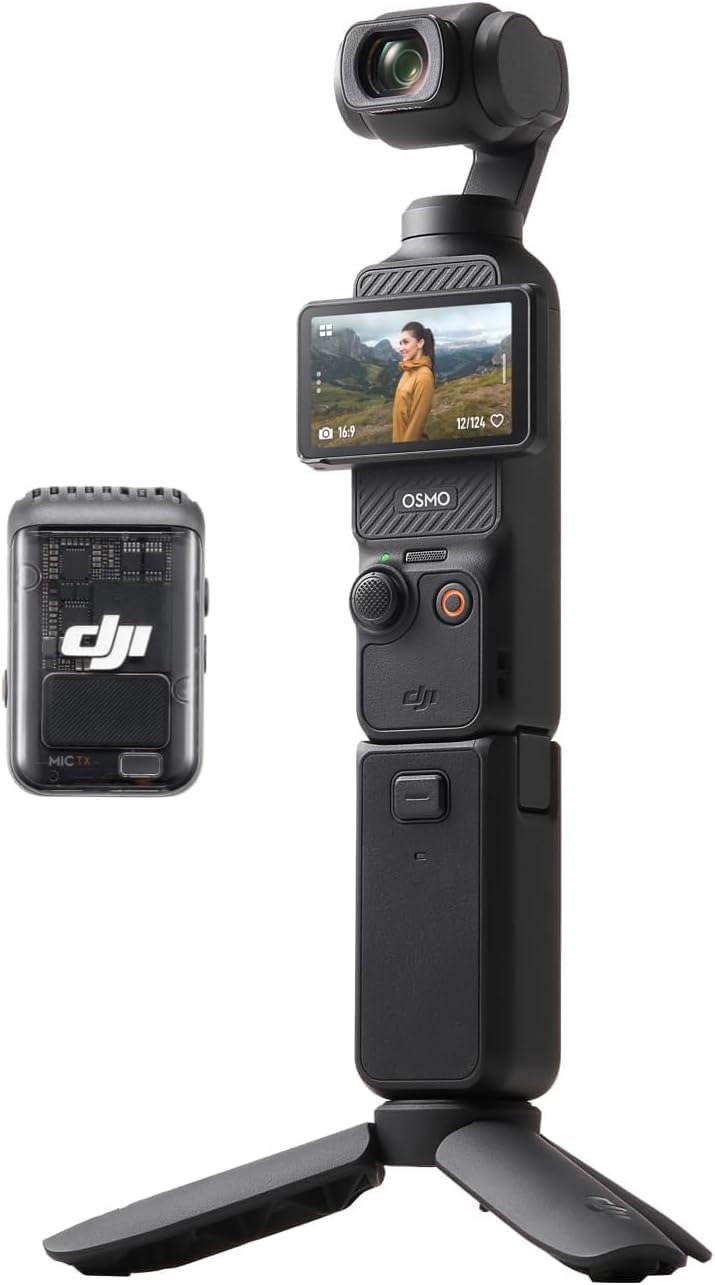
2. DJI Osmo Pocket 3 Creator Combo
The pocket-sized gimbal that makes every clip look like you own a stabiliser rig.
The DJI Osmo Pocket 3 is the benchmark for smooth handheld footage at this level. Its 1-inch CMOS sensor records in 4K resolution at 120fps, so you get slow-motion flexibility and crisp detail in good light. The built-in 3-axis mechanical stabilisation is the real star — it eliminates the bounce and wobble that ruins walking vlogs, and it does it without needing an extra gimbal in your bag.
The 2-inch rotatable touch screen flips between horizontal and vertical shooting easily, and ActiveTrack 6.0 locks onto your face or an object, keeping you centre-frame even as you move around. The Creator Combo bundle adds the DJI Mic 2 transmitter, a wide-angle lens, and a battery handle, giving a significant boost to audio and runtime (the battery average life is 166 minutes, and buyers confirm long shooting sessions).
Reviewers are consistent — this camera “upped my video quality instantly” and they praise the sharp 4K quality and stabilisation. The single limitation here is that you cannot swap lenses; the fixed wide-angle lens is fine for vlogging but limits reach for distant subjects.
Smooth Operator: The combination of a 1-inch sensor, 3-axis gimbal, and ActiveTrack 6.0 makes this the most complete pocket vlogging package under many premium setups.
One Constraint: No lens interchangeability means you are locked into the wide-angle view — great for talking-head videos, less flexible for detailed close-ups.
Grab this for: the creator who wants pro-level stabilisation and sharp 4K video in a coat-pocket size without needing accessories.
Pass it by when: you need interchangeable lenses for variety, or you shoot mostly from a tripod where a mirrorless camera offers more resolution per pound.
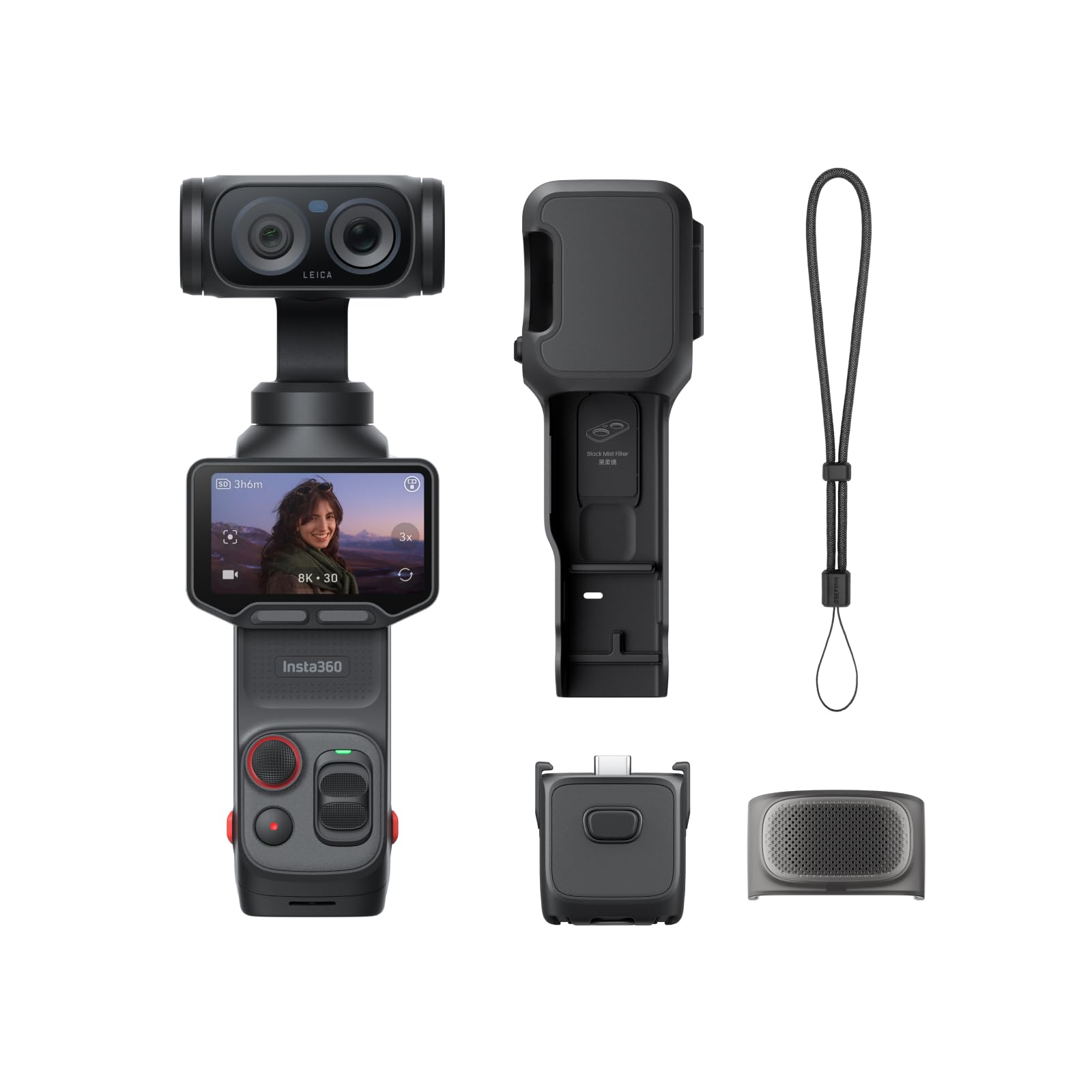
3. Insta360 Luna Ultra
A pocket gimbal camera that pushes video quality to 8K with dual Leica glass.
The Insta360 Luna Ultra shoots in up to 8K30fps with Dolby Vision, and that extra resolution gives you room to crop in post without losing sharpness. It uses a dual Leica lens system — a 1-inch main sensor for wide shots and a telephoto lens with a 1/1.3-inch sensor and F2.0 aperture for natural background blur. The optical zoom range goes up to 12×, with 6× lossless zoom, a clear advantage over the fixed-lens DJI Osmo Pocket 3 if you need reach.
The detachable 2-inch OLED touchscreen can stay in your hand while the camera sits on a tripod up to 20 metres away — a real solo-creator advantage. Battery typical life is up to 4 hours, with fast charging to 80% in just 23 minutes. Buyers report the Luna Ultra excels in automotive interior vlogs and low-light scenarios, calling it an “outstanding camera for content creators.” The trade-off is size and weight — it is front-heavy, and not rugged or weatherproof.
Resolution Leader: 8K Dolby Vision video and dual Leica sensors beat every other pocket camera on raw detail and telephoto reach.
The Cost of Power: Slightly bulkier than the DJI Osmo Pocket 3, and the detachable screen adds a point of complexity; not ideal if you just want a grab-and-go camera.
Ideal partner for: YouTubers who shoot cinematic vlogs, car interiors, or content that benefits from 8K cropping and a wireless preview screen.
Skip for: pure portability above all else, or if you rarely need more than 4K and want the smaller, lighter Osmo Pocket 3 instead.
4. Sony ZV-1F Vlog Camera

A compact point-and-shoot designed specifically for the way YouTubers actually film.
The Sony ZV-1F is built around a 20mm ultra-wide lens (fits everything at arm’s length) and a large 1-inch sensor with an F2 lens for low-light performance and defocused backgrounds. For a solo creator, the side-articulating touchscreen LCD makes selfie framing natural, and Eye-AF with autofocus tracking technology keeps you sharp as you move. It packs 425 autofocus points, a massive jump from older DSLRs that rely on 9 or fewer points.
Sony fitted a directional 3-capsule mic and a windscreen accessory, which owners mention delivers clear audio from the start. Reviewers call it a “GOAT vlogging camera” and a “perfect camera for content creators,” though they acknowledge it is not the best for real cinematography due to limited manual controls. The internal stabiliser is digital and less effective than a true gimbal, so walking footage still shows some sway.
Ultra-Wide Reach: The 20mm lens at arm’s length captures your face and a full background without needing a selfie stick; the 425-point AF system locks on reliably.
Where It Wobbles: Digital stabilisation works for static talking heads but not for active walk-and-talk vlogging, and there is no flash or shoe for an external monitor.
Reach for this if: you film sit-down videos, product reviews, or desk content and want excellent autofocus plus a wide frame without carrying extra gear.
Look elsewhere if: you need a built-in gimbal for steady walking shots, or you want interchangeable lenses to vary your focal length.
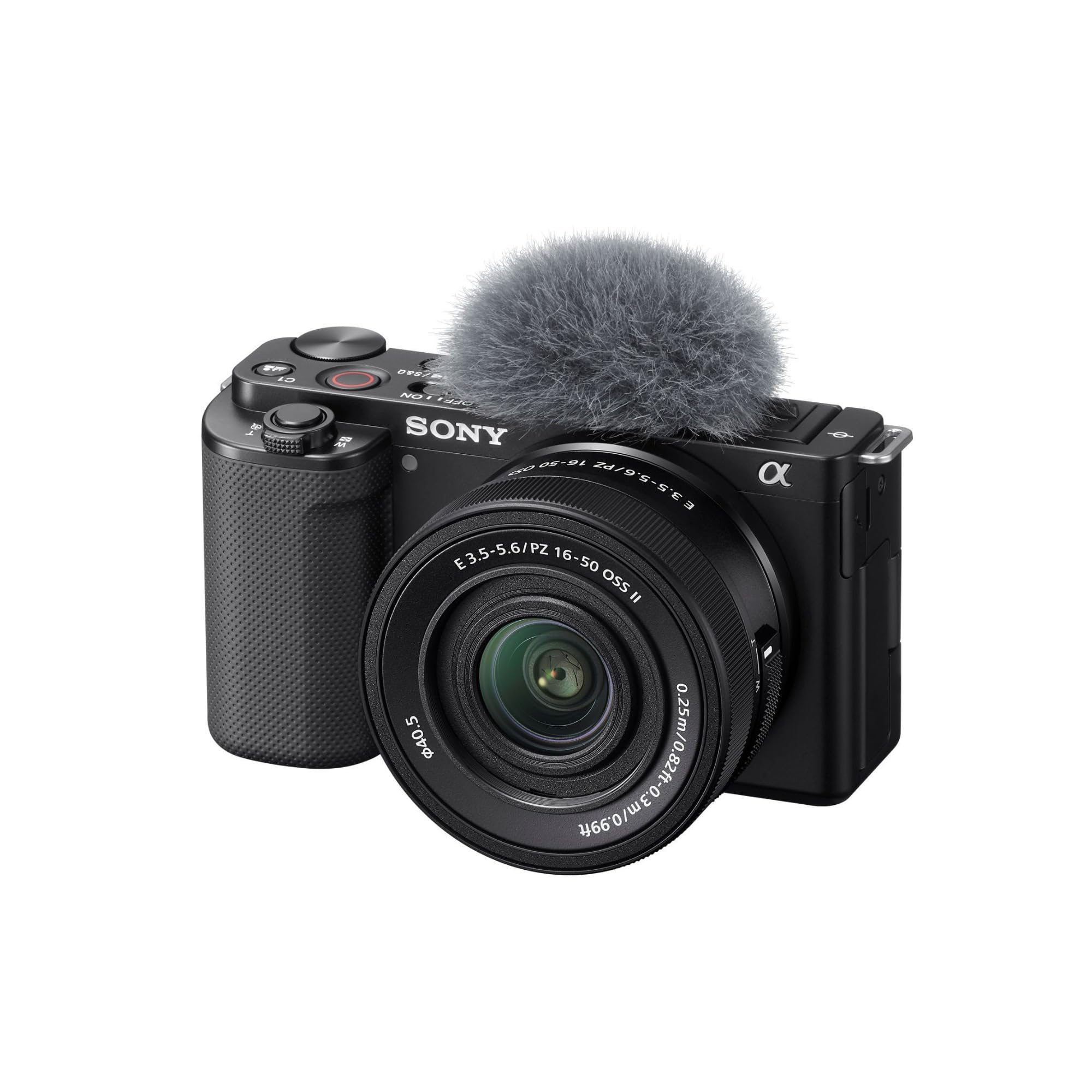
5. Sony Alpha ZV-E10 Kit
An interchangeable-lens mirrorless that packs a much larger APS-C sensor for noticeably richer video.
The Sony ZV-E10 is a step up from the ZV-1F — it uses a 24.2MP APS-C Exmor CMOS sensor. It records 4K Movie oversampled from 6K with full pixel readout and no pixel binning, which means sharper, more detailed footage than the 1-inch-sensor cameras above. It also includes 425 autofocus points with Hybrid AF, Eye Detection, and Face Detection, so it tracks a moving subject accurately.
Special features like Product Showcase Setting (which transitions focus from your face to an object held up to the lens) and a Background Defocus button make solo shooting faster. USB streaming over a single cable eliminates extra hardware. The kit includes the Sony E PZ 16-50mm F3.5-5.6 OSS II power zoom lens. One weak point: the built-in microphone picks up handling noise easily, so adding an external mic is recommended. Reviewers describe it as a “great versatile camera” with loads to learn.
APS-C Advantage: The larger sensor and oversampled 4K produce visibly better detail and low-light performance than any 1-inch compact in this list.
Audio Catch: The internal mic picks up finger taps and lens movement; you will want a small external mic for clean YouTube audio.
Perfect for: creators who want to grow into interchangeable lenses and need APS-C image quality without the full-frame bulk or price.
Not ideal for: vloggers who prioritise pocket portability — the ZV-E10 with a lens is bigger and needs a bag.
6. Canon EOS RP + RF24-105mm Lens

Full-frame mirrorless that trades ultimate portability for a noticeably bigger, more detailed image.
The Canon EOS RP brings a full-frame sensor into the affordable camera conversation, and that larger sensor gives you cleaner high-ISO footage and a shallower depth of field than any APS-C or 1-inch model here. The RF24-105mm F4-7.1 IS STM lens provides optical image stabilisation at up to 5 stops of shake correction, which helps smooth handheld footage significantly.
The 4K capture is limited to 24fps (not 30fps or 60fps), which is a real limitation for action-heavy vlogs, and it crops the sensor slightly. But the 1080p video quality is excellent, and face-detecting autofocus works well for talking heads. The compact and lightweight body (for a full-frame) makes it travel-friendly. The kit lens is versatile for general YouTube use, and EOS Utility Webcam Beta Software lets it double as a high-quality webcam. Buyers upgrading from older DSLRs say “a strong balance of beautiful video and beautiful photos.”
Full-Frame Look: The RP delivers noticeably better low-light performance and background separation than any smaller-sensor camera in this guide.
4K Limit: Only 24fps with a crop — if you need smooth 4K/60fps for fast-moving content, this is not the one.
Ideal for: creators who shoot mostly 1080p talking-head content and want the best possible image quality and low-light performance for the money.
Pass if: you plan to shoot 4K regularly, especially at higher frame rates, or need a compact pocket camera for run-and-gun vlogging.
7. Xtra Muse Vlogging Camera

A pocket gimbal camera that matches the big DJI feature set at a noticeably lower price.
The Xtra Muse is a direct alternative to the DJI Osmo Pocket 3 for creators on a tighter budget. It uses a 1-inch CMOS sensor and records 4K resolution at 120fps with its 3-axis gimbal stabiliser, giving you smooth walking footage and slow-motion options. The 2-inch touch screen flips between horizontal and vertical, and the Face/Object Tracking keeps you in frame.
It records in 10-bit X-Log colour for flexible post-production editing. The battery average life is 161 minutes — close to the DJI’s 166 minutes — but shoppers say: “The battery could be a little better, lasting a little over two hours but that’s nothing a usb cable connected to an external battery can’t fix.” The same reviewer appreciated the automatic subject tracking and smoothness. The main trade-off is that the Xtra Muse’s app and software ecosystem are not as polished as DJI’s, and there is no detachable screen like the Insta360 Luna Ultra’s. However, for the price, the hardware is genuinely strong.
Gimbal Smoothness on a Budget: The 3-axis stabilisation and 4K/120fps recording deliver footage that rivals cameras costing considerably more.
Software Trade-Off: The companion app is less refined than DJI’s, so live streaming and quick edits are not as smooth.
Ideal for: the budget-conscious creator who wants pocket-friendly gimbal footage and is comfortable with a smaller app ecosystem.
Look at other options if: you need polished software, a wireless detachable screen, or plan to rely heavily on the mobile editing app.
