
Our readers keep the lights on and my morning glass full of iced black tea. As an Amazon Associate, I earn from qualifying purchases.
Specs are compiled from manufacturer listings and verified buyer reviews and can change over time — please confirm the key details on the product page before buying.
The biggest mistake new climbers make is buying shoes that crush their feet, following outdated “pain means performance” advice. A comfortable, well-fitted shoe will help you climb better and longer than any aggressively downturned model. This guide cuts through sizing chaos and marketing jargon to highlight affordable shoes that deliver grip, durability, and all-day comfort.
I’m Min — the founder and writer behind Gadgets Feed. This guide is built by comparing the manufacturers’ published specifications and the patterns across verified customer reviews, so you get each pick’s real strengths and trade-offs instead of marketing spin.
If you are ready to step off the rental wall and onto your own pair, these are the best affordable climbing shoes that balance price with genuine performance.
Our Picks at a Glance


How To Choose The Best Affordable Climbing Shoes
Buying your first pair of climbing shoes is notable, but the variety of shapes, rubbers, and sizing advice can feel overwhelming. Before you buy, understand three core concepts that determine whether your new shoes feel great or terrible.
Profile and Downturn Shape
The profile of a shoe dictates its primary strength. A flat or neutral profile keeps your foot in a relaxed, natural position, making it ideal for beginners and all-day gym sessions. A moderately downturned shoe, where the toe curves downward like a claw, helps you hook onto small holds and pull on steep overhangs, which is why intermediates often prefer them. Even within our affordable picks, you will see this spectrum, from the flat comfort of the SCARPA Origin to the slight downturn of the EVOLV Kronos.
Rubber Thickness and Compound
The rubber on the sole grips the wall, so its quality and thickness matter hugely. Thicker rubber, like the 5mm Vibram XS Edge on the La Sportiva Finale, offers better durability and a solid platform for edging on small footholds. Thinner, softer rubbers provide more sensitivity (feeling the rock) but wear out quicker. For your first pair, prioritize durability so you are not resoling within a few months.
The Reality of Sizing
Ignore the myth that you must buy shoes two sizes too small. Climbing shoes should be snug with no dead space, but a painful fit is counterproductive and can cause injury. Sizing varies wildly between brands and even models within the same brand, which is why checking reviews for specific fit notes, like whether a shoe runs narrow or long, is essential before you order.
Quick Comparison
| Model | Best For | Closure | Profile | Sole Rubber | Amazon |
|---|---|---|---|---|---|
| La Sportiva Tarantulace★ Best Overall | Comfort-First Beginners | Laces | Flat | 5mm FriXion RS | Amazon |
| La Sportiva FinaleProgression Pick | Intermediate Progression | Laces | Flat | 4mm Vibram XS Edge | Amazon |
| EVOLV DefyBudget Stealth | Downturned Toe Hooking | Laces | Downturned | Evolv Rubber | Amazon |
| Mad Rock Rover | Wide-Footed Climbers | Hook-and-Loop | Performance/Comfort | Science Friction 3.0 | Amazon |
| Ocun Striker QC | Snug Fit & Value | Velcro (Hook-and-Loop) | Flat/Neutral | CAT rubber 1.1, 4mm | Amazon |
| Black Diamond Momentum | Gym & Beginner Progression | Straps | Flat | 4.3mm Rubber | Amazon |
| SCARPA Helix | All-Day Multipitch Comfort | Laces | Flat | Vibram XS Edge (3.5mm) | Amazon |
| SCARPA Origin | Budget-Conscious Beginners | Velcro Straps | Flat | Vision (5mm) | Amazon |
| EVOLV Kronos | Versatile Steep & Slab Climbs | Dual-Strap | Slight Downturn | TRAX SAS | Amazon |
In-Depth Reviews
1. La Sportiva Men’s Tarantulace Rock Climbing Shoe
Our pick — over 4★ from 350+ verified ratings; the strongest balance of quality and price.
The crowd-pleasing beginner lace-up that prioritizes all-day comfort without sacrificing grip.
You want a shoe that disappears on your foot so you can focus on learning to trust your feet, and this is exactly what the Tarantulace delivers. It is built on a flat, rounded last with low asymmetry (RL 45), meaning your toes stay in a relaxed, natural position rather than being forced into a pointed cramp. The unlined construction and forgiving volume make it a fantastic first shoe for people with medium to medium-wide feet who find aggressive options painful.
Sizing is where this shoe earns its reputation, with the consistent advice being to size down a full size from your street shoe. A size 14 buyer comfortably wears a 13, and a size 10 buyer found the 9 to be snug but perfect, confirming that this fit runs large. The full lace closure lets you dial in the tightness across your whole foot, which is a feature many owners prefer over simple Velcro straps for a more secure, customizable hold.
The defining trade-off here is durability versus comfort. The 5mm FriXion RS sole offers good, reliable grip on indoor walls and moderate rock, with many owners reporting they helped push their climbing from 5.10s to 11+ grades. However, the materials are not indestructible, and the review pages highlight a recurring concern about the toe seam; one detailed account noted it split into a noticeable hole after 2 months of exclusive mat use. This is a shoe best suited for those who value a comfortable, supportive learning platform over hardcore edging performance.
Comfort-Driven Wins
- Flat, rounded profile keeps toes relaxed for long gym sessions.
- High-quality leather and rubber build praised by owners for solid construction.
- Full lace system offers a precise, customizable fit across the foot.
- Proven to help beginners progress, with reports of climbing ability jumping from 5.10 to 11+.
Honest Considerations
- The toe seam has shown premature wear for some, with one report of a split after 2 months.
- Soles are on the stiffer side for walking, so they are not great for approach hikes.
- Grip can feel slicker on smooth indoor plastic compared to rough outdoor rock.
Your best starting point: If you want a comfortable, proven shoe to take you from rental-wall newbie to confident gym climber, this is the choice.
Think twice if: You are a heavier or higher-volume climber who will punish the toe seam daily, as durability is the main weak point reported.
2. La Sportiva Men’s Finale Rock Climbing Shoes
A progressive lace-up that grows with you, from first outdoor climbs to confident intermediate sends.
The Finale is the smarter, more technical sibling to the Tarantulace, designed for climbers who have caught the bug and want a shoe that keeps up as their footwork improves. Its defining feature is the 4mm Vibram XS Edge sole, a harder compound that excels at edging, meaning you can stand securely on tiny, chippy footholds without your foot aching. This makes it a superior choice for outdoor sport climbing where precision matters more than pure smearing comfort.
It is a slightly asymmetrical, pointed shoe (PN 45) without downturn, offering a balance of comfort and performance. The unlined leather upper is the star here, as owners highlight how it molds to the shape of your foot over time, creating a truly custom fit. This leather also means the shoe will stretch, so while some recommend sizing down a full size for a tight, performance-oriented fit initially, others find their true street size perfect after a break-in period.
Durability is a standout strength, with multiple reports of the shoe lasting close to a year of consistent climbing before needing a resole. One intermediate climber noted it’s a great shoe until they push past V6/V7 bouldering, at which point they might look for something more aggressive. The leather also stretches to accommodate wide feet better than synthetic rivals, making it a versatile option for a broad range of foot shapes, though the initial stiffness requires a few sessions to soften up.
Edging power open up: The Vibram XS Edge rubber provides a stiff, secure platform for tiny holds, giving you the confidence to trust your feet on outdoor rock.
The growth factor: The leather molds to your foot and lasts for years with proper care, making it a value-packed choice for the beginner-to-intermediate journey, though it stays snug for the first few wears.
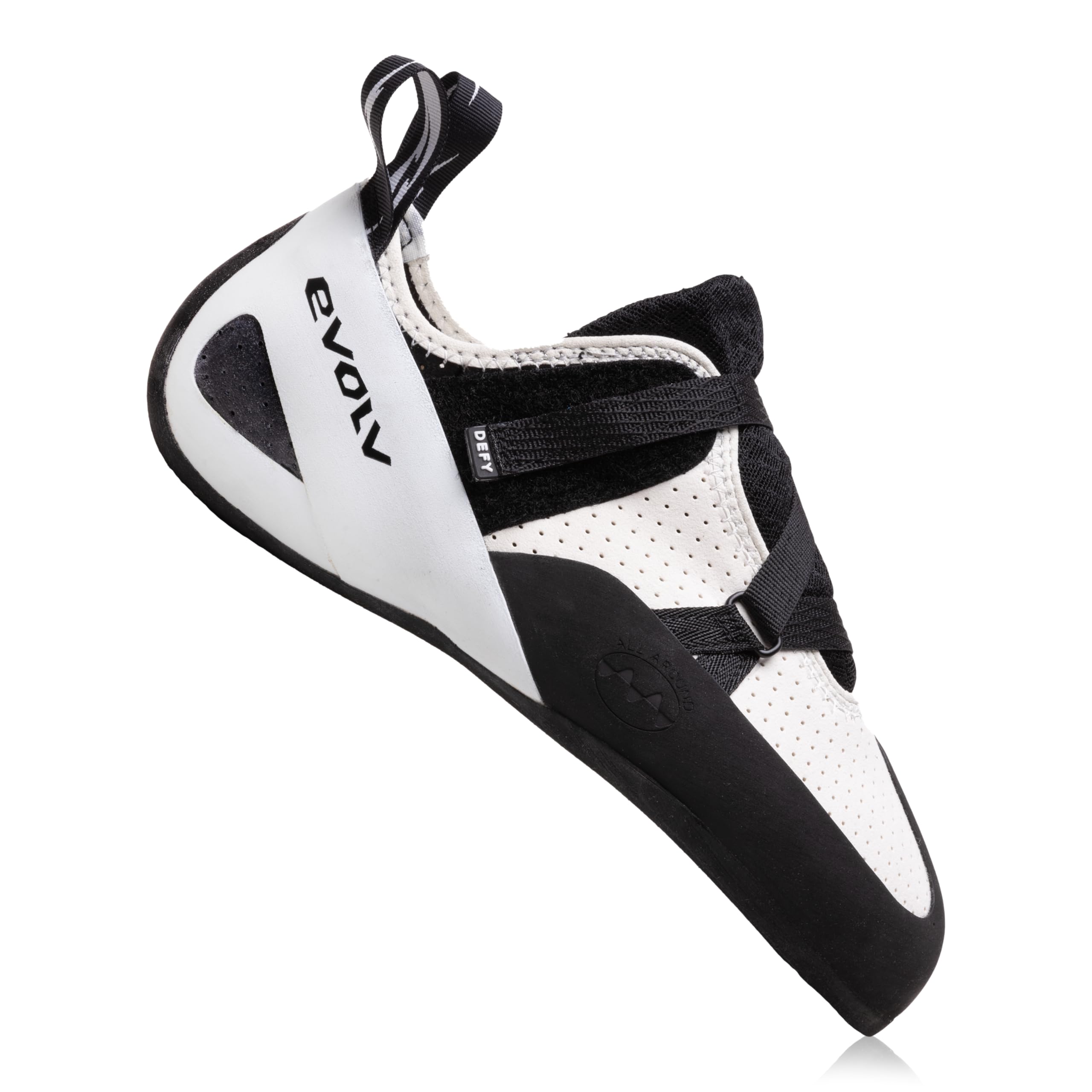
3. EVOLV Defy Rock Climbing Shoes
Forget the tight-shoe myth; this downturned performer offers a comfortable toe box for powerful hooking.
If your goal is to start pulling on overhangs and learning to hook your toe, the Defy brings a performance-oriented feature usually reserved for pricier shoes: a downturned toe for power transfer. This curved shape helps you get your foot into the optimal position to pull on steep terrain. Despite this aggressive shape, the reviews consistently praise its comfort, making it a rare hybrid that works for both gym sessions and beginning outdoor climbs.
The most critical advice here is to disregard your street size entirely. This shoe runs significantly short and narrow, with owner after owner confirming you need to size up dramatically; a common tip is to order two full sizes larger than your normal shoe. Wide-footed climbers find it accommodates them far better than most brands, but they caution that even then, the length runs short, so those with wider feet should expect to size up substantially.
It offers a great balance of price and quality, feeling more durable than shoes that cost less. The main caveat is that the length runs short, so those with wide feet should size up to avoid cramped toes. While it is a fantastic all-day shoe for those it fits, it is not ideal for everyone, as some with wide feet report needing to go up 2.5 sizes and still finding it tight, making it less forgiving for those with particularly wide or high-volume feet.
Power when you need it: The downturned toe profile gives you extra leverage for hooking and pulling on steep overhangs, a rare feature at this price point.
Sizing is the wildcard: It runs drastically small, so you must buy two sizes up from your street shoe, and even then, it’s a snug, performance-oriented fit that won’t stretch.
4. SCARPA Men’s Helix Lace Rock Climbing Shoes

The multi-pitch specialist that stays comfortable on your feet from the first pitch to the last.
Planning a long day of outdoor sport or multi-pitch climbing where you wear your shoes for hours on end? The Helix is engineered for exactly that. It is a flat, slightly asymmetric lace-up designed for comfort and all-day wear, allowing you to focus on the route rather than the pain in your toes. It performs admirably as a beginner-to-intermediate gym shoe, but its true calling is on long rock routes where a snugger performance shoe would be unbearable.
The shoe is built on a flat profile with a Vibram XS Edge (3.5mm) outsole. This slightly thinner rubber offers a good balance of sensitivity and durability, though the rubber is not the stickiest available. One experienced climber reported handling 8 pitches (40-50m) of 10-11b climbing comfortably, but noted the rubber needed a resole sooner than expected. It handled the demands of the route well, but sticky, high-friction rubber is not its forte.
Fit is the biggest variable here, running narrow, especially in the toe box. A climber with wide EEE feet found the toe box tight initially, though the leather stretches over time to accommodate. Lacing is the preferred closure for many who find it offers a more secure fit than the Velcro alternatives on other models. If you have narrow feet and a high pain tolerance for a performance fit, you might even consider sizing down, but if you value comfort, stick close to your street size.
Why Owners Love It
- Excellent comfort for extended wear, praised as a top choice for multipitch and long trad routes.
- Sturdy, solid rubber sole provides reliable edging capability on small holds.
- Leather upper stretches to conform to your foot, improving fit over time.
- Quality construction that holds up well, with many using it for over a year.
Fit Notes to Know
- The toe box is narrow, making it uncomfortable for climbers with wide feet.
- Rubber isn’t the stickiest, so it may need a resole sooner on abrasive rock.
- Runs small for some; ordering at least a half size up from your street shoe is often necessary.
Reach for this when: You’re heading out for a long day of multi-pitch climbing where comfort over many hours beats a razor-sharp performance fit.
Look elsewhere if: You have wide feet and want an aggressive shoe for steep gym bouldering, as this flat, narrow profile won’t suit either need.
5. EVOLV Kronos Rock Climbing Shoes

An intermediate-friendly shoe that handles steep sport routes and delicate slab climbs with equal poise.
For the climber who is moving past the basics and wants one versatile shoe for everything the gym can throw at them, the Kronos is an outstanding intermediary-friendly option. It features a slight camber design with a downturned toe (PSR 4), giving you a performance advantage on steeper sport routes and boulder problems. Yet the design stays comfortable enough for tackling long slab routes, making it a true all-rounder that owners consistently praise for its performance on vertical terrain.
The synthetic upper is a key feature, as it is designed not to stretch much, maintaining a snug fit for the life of the shoe. The dual-strap closure system ensures that consistent fit across your foot. Buyers report the TRAX SAS sole is wonderfully grippy on slabs and provides a tactile toe that aids precision footwork, making it a great step up from rental shoes or basic entry-level models.
Sizing is generally true to size, with most finding their street size (or a half-size up for pure comfort) works well, contradicting the painful downsizing advice often given. It is a great all-day shoe for vertical and slab climbing, but it is not aggressive enough for hardcore bouldering on steep overhangs, where performance will suffer. One owner noted it lasted about a year of bi-weekly gym use, marking it as their longest-lasting shoe.
Versatility winner: The slight downturn and sticky TRAX SAS sole let you confidently climb slabs and vertical walls while having enough power for moderate overhangs.
Fit is forgiving: Unlike many climbing shoes, it fits close to your street size, so you don’t have to endure a painful break-in period to get a solid performance.
6. Ocun Striker QC Bouldering Shoe

A snug, secure Velcro shoe that fits wide forefeet and narrow heels without pressure points.
The Striker QC shines for those with a specific foot shape: a wide forefoot paired with a narrow heel. This combination is notoriously hard to fit, but owners with this shape rave about the secure Velcro closure and the lack of pressure points. The shoe is offered as a vegan-friendly option with a microfiber upper, providing a comfortable, glove-like fit that many find to be the most comfortable they have worn in years of climbing.
This is a flat, non-aggressive shoe designed for moderate performance, weighing a light 418 g. The 4mm CAT rubber 1.1 sole provides good, grippy performance that holds up well to regular use. It is a solid, moderate shoe that performs well without being overly aggressive, making it a great choice for gym sessions and general-purpose climbing where you want a comfortable, solid-performing shoe.
Sizing requires careful attention, as the shoe runs small. While some find their standard size works, the majority advise sizing up a full size or more; one US 8.5 wearer sized up 1.5 sizes to get a perfect fit, while another regular 5.5W needed a 7W. The shoe is a soft, comfortable performance option that can stretch a bit, so it’s better to size up than to risk a painful squeeze. Durability appears solid, though occasional reports of seams pulling apart after a few months are worth noting.
Built for a Specific Foot
- Excellent for wide forefeet and narrow heels, offering rare comfort for this foot shape.
- Secure Velcro closure with no pressure points, even during long sessions.
- Grippy CAT rubber outsole provides solid smearing and edging performance.
- Vegan-friendly microfiber upper.
Before You Buy
- Runs small; most buyers must size up at least a full size from their street shoe.
- Soft, flat profile isn’t the best for hard edging on tiny footholds.
- Some isolated reports of seams pulling apart after a couple months of hard use.
A dedicated fit: If you’ve struggled to find shoes because of your wide forefoot and narrow heel, the Striker QC is a comfortable, budget-friendly answer.
Not for you if: You wear a standard-width foot or want a stiff shoe for aggressive edging, where this softer profile won’t excel.
7. SCARPA Men’s Origin Rock Climbing Shoes

A flat, forgiving Velcro shoe that proves you don’t need to spend a fortune to get a quality starter shoe.
If you are just starting to climb regularly, the Origin offers a strong balance of price and quality to get you through the beginner stage. This is a flat, slightly asymmetric shoe built for pure comfort, allowing your foot to sit naturally. The review pages show this is a durable, well-built shoe that feels far more premium than others in its price bracket, with owners noting it doesn’t feel like a cheap option. It is a fantastic upgrade from smelly, worn-out rental shoes.
The defining feature here is the thick 5mm Vision rubber outsole. This generous rubber gives you a very grippy, durable platform for smearing on volumes and rough rock. The two Velcro straps make it quick and easy to get on and off between climbs, a convenience that is very welcome during a long gym session. The flat profile is comfortable for beginners or even big-wall climbers who value all-day comfort over raw edging power.
It is a comfortable, non-aggressive shoe that helps you build a solid foundation for your climbing technique. However, it has limitations as you progress; the flat, neutral shape and soft rubber will struggle to hold precise edges on tiny footholds. While it’s a fantastic pair for the gym, it won’t take you past intermediate bouldering grades, and sizing can run small, with many recommending going up half a size for the perfect fit.
Gentle introduction: The flat profile and grippy 5mm rubber give you all-day comfort and reliable smearing to build technique, especially on slabs and gym walls.
Known limit: The soft, flat shape can’t hold precise edges on tiny holds, so you’ll eventually outgrow it as you progress to harder bouldering.
8. Black Diamond Women’s Momentum Strap Climbing Shoes

A breathable, beginner-focused strap shoe that provides instant comfort for first-time gym climbers.
Designed explicitly for the first-time buyer, the Momentum is engineered with an Engineered Knit Upper to provide breathable, all-day comfort inside the gym. This stretchy, sock-like upper helps the shoe adapt to your foot and prevents the hot, sweaty feeling you get with full-leather or synthetic shoes. The simple strap closure makes it incredibly easy to slip on and off between sets, and the padded heel makes it comfortable straight from the start, with no painful break-in period required.
It is built for the gym, helping beginners learn the basics on slabs and vertical walls. The 4.3mm rubber outsole is a good middle ground, providing enough grip for reliable smearing while being durable enough to withstand regular gym abuse. The flat profile is forgiving and helps you build good footwork habits without relying on an aggressive shoe to do the work for you.
Fit is the main point of discussion, and it’s crucial to note that they run tight and narrow. While some owners recommend sizing down, most find that ordering your normal street shoe size (or even half a size up for wider feet) avoids an uncomfortable squeeze. The consensus is that these are a great beginner upgrade; however, some have found the material too hard, causing foot pain, and several buyers have flagged sizing inconsistencies. They are best for indoor gym use and light outdoor climbs on easier terrain, as the softer rubber isn’t meant for harsh, aggressive edging.
Made for the Gym Floor
- Breathable Engineered Knit Upper keeps feet cool during long sessions.
- Easy strap closure makes them quick to take on and off.
- Comfortable for beginners, providing better grip and support than rentals.
- Good value and quality construction, with durable rubber for gym use.
What to Watch For
- Fit runs tight and narrow; those with wide feet should size up considerably.
- Not a performance shoe for hard edging; the rubber is better suited to gym smearing.
- Comfort is subjective, with some finding the material too hard and stiff.
Ideal if: You’re a beginner heading to the gym a few times a week and want an easy-on, breathable, comfortable shoe to learn the ropes.
Not the one if: You have wide feet, as this narrow fit will be uncomfortable and your options for sizing are limited.
9. Mad Rock Rover Climbing Shoe

A performance-grade shoe with an entry-level fit designed to hug wide feet comfortably.
Wide-footed climbers often feel left out of the sport, but the Rover is explicitly designed to welcome them. It features a Syn Flex upper that is vegan-friendly, comfortable for all-day wear, and hugs your foot shape without creating painful pressure points on the sides. While the profile is “Performance/Comfort” with moderate asymmetrical curvature, the compression-molded toe box creates a roomier fit in the forefoot, catering to those who need extra width without sacrificing performance.
Performance-wise, the Rover punches above its class, using the newer Science Friction 3.0 rubber compound. This formula offers high friction and is more durable than previous Mad Rock batches, giving you reliable grip. The 3D Hooking Heel and 3D Concave Sole are designed to enable you to catch edges with a wider variety of angles, making it a surprisingly capable shoe for gym bouldering and sport climbing, especially for those who like to use their heels.
While it performs well for its price, it’s best understood as a durable gym shoe rather than a precision edging tool. The fit is the biggest wildcard; while some with wide feet find their usual size perfect, others report the sizing is wildly inconsistent, with one gym-goer stating they usually wear a 9.5 but found the Rover too small even in a 9.5. It is a more comfortable, softer shoe than aggressive options like the Solution, but it lacks some precision on tiny footholds.
Reasons to Choose It
- Compression-molded toe box offers a comfortable fit for wide feet.
- Sticky Science Friction 3.0 rubber provides great grip and durability for the price.
- Improved heel design with added ridges helps catch edges at various angles.
- Vegan-friendly Syn Flex upper is comfortable for all-day wear.
Watch Out For
- Sizing is inconsistent; some owners need to size up two full sizes to get a comfortable fit.
- Not the best choice for hard, precise edging on very small footholds.
- Awkward to walk in and the hook-and-loop closure can be difficult to get on and off quickly.
Reach for these if: You’ve struggled with narrow shoes and want a comfortable, sticky, do-it-all shoe for the gym that won’t pinch your wide forefoot.
Keep looking if: You plan to climb on tiny edges outdoors, as this softer, comfort-oriented shoe won’t give you the precise platform you need.
Understanding the Specs
Closure System
The closure is how you tighten the shoe, and each has trade-offs. Laces, like on the La Sportiva Tarantulace and SCARPA Helix, offer the most precise, customizable fit across the entire foot, which is great if you have a high instep or want to adjust pressure mid-session. Velcro or straps, like on the Ocun Striker QC and EVOLV Kronos, use one or two bands for a quick, secure fit that is easy to take on and off between climbs, making them a favorite for gym bouldering.
Profile and Downturn
This describes the shape of the shoe’s last, or foot form. A flat profile keeps your foot in a neutral, relaxed position, providing all-day comfort and making it the standard for beginners (think SCARPA Origin or Black Diamond Momentum). A downturned shoe curves your foot into a claw shape, which tune power for hooking and pulling on steep overhangs and boulders, as seen on the EVOLV Defy. The more downturn, the more specialized the shoe, and typically the less comfortable it is for long, vertical routes.
Rubber Type and Thickness
The outsole rubber is your point of contact with the rock. Thickness, often measured in millimeters, directly impacts durability; thicker rubber like the 5mm Vision on the SCARPA Origin or the 5mm Vibram XS Edge on the La Sportiva Finale lasts longer and provides a stiffer, more stable platform for edging on small holds. Thinner rubber offers more sensitivity and feel for the rock. The compound matters too; brands use proprietary blends, like EVOLV’s TRAX SAS or Mad Rock’s Science Friction 3.0, to balance stickiness with durability.
Upper Material
The upper material affects both fit evolution and breathability. Leather uppers, like the Suede on the SCARPA Helix and Finale, will stretch significantly over time to mold to your foot’s shape, offering a custom fit as they break in, so you may size down slightly. Synthetic or knit uppers, like the Engineered Knit Upper on the Black Diamond Momentum or the microfiber on the Ocun, stretch very little, maintaining their original fit for the lifespan of the shoe.
FAQ
How should my climbing shoes fit for the first time?
Should I size down a full size in climbing shoes?
Do leather climbing shoes stretch?
What is the difference between flat and downturned climbing shoes?
Is the La Sportiva Tarantulace good for wide feet?
Are expensive climbing shoes necessary for beginners?
What is edging and smearing in climbing?
How long should affordable climbing shoes last?
Are climbing shoes supposed to be painful?
Can I use cheap climbing shoes for outdoor rock climbing?
Final Thoughts: The Verdict
For the vast majority of new climbers, the affordable climbing shoes winner is the La Sportiva Tarantulace because it offers the best combination of proven all-day comfort and reliable grip at a friendly price. If you want a shoe that will still be hitting its stride as your technique improves and you start eyeing outdoor routes, grab the La Sportiva Finale. And for the widest-footed climbers who need extra room in the toe box, the Mad Rock Rover
How We Picked
We do not accept paid placement. Every pick is matched to a real buyer and a real use-case; we do not hands-on test units.
Sources & Methodology
Specifications: manufacturer listings and product documentation. Review insights: verified customer reviews, as of September 2026. Pricing: not shown on this page (it changes often); check the current price via the retailer link.
As an Amazon Associate, Gadgets Feed earns from qualifying purchases. This does not affect which products we feature.