
Our readers keep the lights on and my morning glass full of iced black tea. As an Amazon Associate, I earn from qualifying purchases.
Choosing the right processor for a new build or an upgrade often feels like a minefield of confusing model numbers and marketing claims. The difference between a chip that barely handles multitasking and one that powers through demanding workloads can come down to a few hundred megahertz or a handful of cores — but that doesn’t mean you have to drain your wallet to get a capable CPU.
I’m Min — the co-founder and writer behind Gadgets Feed. My analysis of benchmark data, architectural differences, and platform compatibility across dozens of current and last-generation models allows me to pinpoint exactly where your money delivers real-world returns versus wasted spend.
Whether you’re assembling a budget gaming rig, a productivity workstation, or a general-use PC, finding the right affordable cpu requires understanding which core count, clock speed, and platform features actually matter for your specific tasks.
How To Choose The Best Affordable CPU
An affordable CPU isn’t just about the lowest sticker price — it’s about extracting the maximum usable performance for your specific applications without overspending on cores or features you’ll never utilize. Understanding a few key specifications will help you make a confident choice.
Core Count and Thread Count: Matching Workload to Silicon
More cores don’t always mean better performance. For pure gaming, six cores is the current sweet spot, with most titles still relying heavily on single-threaded performance. For productivity tasks like video editing, 3D rendering, or running virtual machines, higher core and thread counts become far more beneficial. The key is balancing your primary workload against the price premium for additional cores.
Platform and Socket Compatibility: The Hidden Cost of Upgrading
The processor socket and chipset determine your motherboard choice and future upgrade options. Modern platforms like Intel’s LGA1700 and AMD’s AM5 support both DDR4 and DDR5 memory in certain configurations, allowing for flexibility. Older platforms can offer incredible value on the used market, but limit you to older memory standards and PCIe generations. Ensure you factor in the total platform cost, not just the CPU itself.
Cache Memory and Clock Speed: The Performance Multipliers
L3 cache size has a significant impact on gaming performance, especially in AMD’s X3D series chips. Higher boost clock speeds directly improve responsiveness in lightly-threaded applications. Look at the real-world boost clock rather than just the base clock, as modern CPUs dynamically adjust frequency based on workload and thermal headroom.
Quick Comparison
On smaller screens, swipe sideways to see the full table.
| Model | Category | Best For | Key Spec | Amazon |
|---|---|---|---|---|
| AMD Ryzen 5 7600X3D | Mid-Range | Gaming Performance | 96MB L3 Cache | Amazon |
| Intel Core i5-14600KF | Mid-Range | Gaming & Multi-Tasking | 14 Cores / 20 Threads | Amazon |
| Intel Core Ultra 7 265KF | Mid-Range | Efficient Productivity | 20 Cores / 20 Threads | Amazon |
| Intel Core i7-14700KF | Premium | Demanding Workloads | 28 Threads | Amazon |
| Intel Core Ultra 9 285K | Premium | Extreme Multitasking | 24 Cores / 24 Threads | Amazon |
| AMD Ryzen 5 3600 | Budget-Friendly | Entry-Level Gaming | 6 Cores / 12 Threads | Amazon |
| Intel Core i3-12100F | Budget-Friendly | Budget Gaming Builds | Single-Core Performance | Amazon |
| Intel Core i7-6700 | Budget-Friendly | Used/Refurbished Builds | 4 Cores / 8 Threads | Amazon |
| Intel Core i7-3770 | Budget-Friendly | Basic Productivity Upgrades | 3.40 GHz Base Clock | Amazon |
In‑Depth Reviews
1. AMD RYZEN 5 7600X3D Raphael AM5 4.1GHZ 6-CORE Boxed Processor – HEATSINK NOT Included

The AMD Ryzen 5 7600X3D is arguably the most compelling gaming processor in its segment, leveraging the massive 96MB L3 cache that has become synonymous with AMD’s X3D lineup. This cache architecture dramatically reduces memory latency and improves 1% low frame rates, resulting in smoother gameplay without the stutter often seen on standard cache chips. With 6 cores and 12 threads based on the Zen 4 architecture, it delivers IPC gains that keep it competitive even against more expensive options.
At just 65W TDP, the 7600X3D is remarkably power-efficient, running significantly cooler than its predecessor the 5600X while delivering notably higher performance. This low power draw means a budget-friendly air cooler is entirely sufficient for maintaining optimal temperatures, saving you money on the overall build. It supports the AM5 platform, giving you access to DDR5 memory and a clear upgrade path to future Ryzen processors.
User reports indicate massive performance uplifts in demanding titles like Cyberpunk 2077 at 1080p and 1440p resolutions, with many noting it essentially matches the 7800X3D in gaming scenarios while costing hundreds less. The only real caveat is the lack of an included cooler, so factor that into your total budget. For pure gaming value on the AM5 platform, this chip is a standout.
Why it’s great
- 96MB L3 cache provides exceptional gaming performance and consistent 1% lows
- 65W TDP allows for quiet, low-cost cooling solutions
- AM5 platform support offers future upgradeability with DDR5 memory
Good to know
- No cooler included in the box
- Limited core count may not be ideal for heavy multi-threaded workstation tasks
- Requires an AM5 motherboard and DDR5 RAM, increasing platform cost
2. Intel® Core™ i5-14600KF New Gaming Desktop Processor 14 cores (6 P-cores + 8 E-cores) – Unlocked

The Intel Core i5-14600KF represents a powerful hybrid architecture with 6 Performance-cores and 8 Efficient-cores, totaling 20 threads that can handle both demanding single-threaded gaming and multi-threaded productivity tasks with ease. Its unlocked multiplier allows for overclocking, and the up-to-5.3 GHz boost clock ensures snappy responsiveness in any application. The compatibility with both DDR4 and DDR5 memory on 600 and 700 series motherboards offers budget flexibility.
Gamers pairing this chip with a high-end GPU like an RTX 3080 or 4080 Super report zero bottlenecks at 1440p, with smooth frame times and excellent multi-tasking capability even with streaming software and background apps running. The 125W base power draw does necessitate a capable cooler — a 240mm AIO is recommended for sustained loads — but the performance per dollar remains strong compared to the i7 and i9 parts.
Users consistently highlight the need for a BIOS update on 600-series boards and recommend a contact frame for optimal thermal performance. Some note the stock experience can run warm without proper cooling. For those building a new gaming rig who need both high frame rates and the ability to handle occasional video editing or compiling, the 14600KF is a very balanced choice.
Why it’s great
- Hybrid 14-core architecture excels in both gaming and productivity
- DDR4 and DDR5 compatibility provides platform cost flexibility
- High single-core boost clock of 5.3 GHz for demanding games
Good to know
- Requires a discrete graphics card (no iGPU)
- BIOS update may be required for full stability on older chipset motherboards
- Can run hot under heavy loads; a good cooler is essential
3. Intel Core Ultra 7 Desktop Processor 265KF – 20 cores (8 P-cores + 12 E-cores) up to 5.5 GHz

The Intel Core Ultra 7 265KF marks a significant architectural shift for Intel, utilizing the new performance hybrid design with 8 P-cores and 12 E-cores. This processor is designed to balance raw compute power with system-level efficiency, making it a strong candidate for users who run both gaming sessions and intensive productivity tasks like video encoding or compilation. The 5.5 GHz max boost clock ensures single-threaded tasks remain snappy.
One of the most compelling aspects of this chip is its thermal performance. Early user reports indicate it runs considerably cooler than its 12th, 13th, and 14th generation counterparts, with many users praising its stability with mid-range air coolers. It supports the Intel 800 series chipset, bringing PCIe 5.0 and robust DDR5 support, ensuring your build remains relevant for years to come.
Users upgrading from older Ryzen chips note the stable memory handling and snappy system boot times. While its extreme gaming performance doesn’t always match the top-tier AMD X3D parts, its value proposition for mixed-use workloads is strong. Some users reported initial BIOS stability issues with specific motherboards, highlighting the importance of selecting a well-supported board for this platform.
Why it’s great
- Improved thermal efficiency over previous Intel generations
- High core count for heavy multitasking and productivity
- Modern Intel 800 series platform with PCIe 5.0 support
Good to know
- Requires an Intel 800 series motherboard, a new platform investment
- Gaming performance is very good but not class-leading versus AMD X3D chips
- Motherboard compatibility and BIOS maturity are important to research
4. Intel® Core™ i7-14700KF New Gaming Desktop Processor 20 cores (8 P-cores + 12 E-cores) – Unlocked

The Intel Core i7-14700KF is a multi-threading powerhouse, packing 20 cores (8 P-cores + 12 E-cores) and 28 threads with a boost clock of up to 5.6 GHz. This configuration makes it an exceptional choice for users running demanding applications like video rendering, AI generation, complex database management, and software compilation, while still delivering top-tier gaming frame rates. It supports both DDR4 and DDR5 memory, offering budget flexibility on LGA1700 motherboards.
Real-world user reports from professionals running business databases and AI workloads highlight its ability to handle massive parallel tasks without stutter or lag. The P-core/E-core architecture efficiently allocates background tasks to the E-cores, keeping the P-cores free for high-priority work. A significant number of users emphasize the critical need for a BIOS update to the latest microcode to ensure stability and avoid known voltage issues with the 13th/14th gen series.
Paired with a high-end GPU like an RTX 4080 Super, the 14700KF excels in CPU-intensive titles and creative suites. However, its 125W base power draw can spike higher under heavy load, necessitating a robust cooling solution like a 360mm AIO or a high-end air cooler. For users whose workload scales with core count, this chip offers some of the best multi-threaded performance at its tier.
Why it’s great
- 28 threads deliver excellent multi-core performance for productivity
- High 5.6 GHz boost clock for demanding games and single-threaded apps
- DDR4 and DDR5 compatibility offers flexible system pricing
Good to know
- BIOS update is mandatory to ensure stability and longevity
- Requires a high-end cooler (360mm AIO recommended)
- No integrated graphics; a discrete GPU is necessary
5. Intel Core Ultra 9 Desktop Processor 285K – 24 cores (8 P-cores + 16 E-cores) and 24 threads – Up to 5.7 GHz unlocked – 40 MB Cache

The Intel Core Ultra 9 285K is Intel’s flagship for the new Arrow Lake architecture, featuring 24 cores (8 P-cores + 16 E-cores) and a robust 40 MB of cache. It is designed for users who need uncompromising performance from a desktop processor, excelling in heavy workloads like 3D modeling in SolidWorks, 4K video editing, and software compilation. The 5.7 GHz boost clock ensures it handles single-threaded tasks efficiently as well.
Users who have deployed these chips in professional workstation builds praise their stability compared to previous generations, noting no overheating or crashing issues even under sustained load. The chip supports the new LGA1851 socket and Intel 800 series chipset, bringing PCIe 5.0 and advanced memory support. Its integrated graphics are a handy fallback, though a discrete GPU is recommended for most demanding tasks.
While the 285K can run hot under peak loads like rendering or shader compilation, a 360mm AIO is generally sufficient to keep temperatures in check. The platform upgrade to LGA1851 is a necessary consideration. For professionals and enthusiasts who need absolute multi-threaded performance and platform longevity, the Ultra 9 285K is the most capable mainstream Intel chip available.
Why it’s great
- 24 cores provide immense multi-threaded compute power for professional workloads
- Stable and reliable architecture, praised in workstation environments
- High 5.7 GHz boost clock for responsive single-threaded performance
Good to know
- Requires a new LGA1851 motherboard and DDR5 RAM
- Can draw significant power (up to 250W) under peak load
- No cooler included; a high-end cooler is necessary for sustained performance
6. AMD Ryzen 5 3600 6-Core, 12-Thread Unlocked Desktop Processor with Wraith Stealth Cooler

The AMD Ryzen 5 3600 has long been considered a gold standard for budget-minded builders, combining 6 Zen 2 cores and 12 threads with 32 MB of L3 cache. Its 4.2 GHz max boost clock is competitive for gaming, and the unlocked multiplier allows for overclocking on B450 and B550 motherboards. The included Wraith Stealth cooler is adequate for stock operation, making it a true plug-and-play upgrade for existing AM4 systems.
For users building a mid-range gaming PC or an entry-level workstation, the 3600 delivers smooth 100+ FPS performance in popular titles and handles applications like Adobe Lightroom and DaVinci Resolve comfortably. Its 65W TDP keeps power draw and heat low, making it a great fit for compact builds. The strong used market for this chip also makes it an excellent value for system builders on a tight budget.
While it’s older technology now, the Ryzen 5 3600 still holds up well, especially when paired with fast DDR4-3200 memory and a mid-range GPU. It was one of the best value CPUs in its heyday, and it remains a very capable chip for those who don’t need the absolute latest features like PCIe 5.0. Its value proposition is strongest on the used market.
Why it’s great
- Excellent price-to-performance ratio on the AM4 platform
- Included Wraith Stealth cooler reduces initial build cost
- Unlocked for overclocking, allowing for future performance gains
Good to know
- Older Zen 2 architecture is outclassed by modern chips in single-threaded tasks
- Does not support PCIe 5.0 or DDR5 memory
- The stock cooler can be loud under heavy, sustained loads
7. Intel® Core™ i3-12100F 12th Generation Desktop Processor

The Intel Core i3-12100F is a shining example of how much performance you can get for very little money. Based on the Alder Lake architecture, its 4 Golden Cove P-cores deliver single-threaded performance that rivals or beats many older 6-core processors. It supports both DDR4 and DDR5 memory on LGA1700 motherboards, and is compatible with affordable B660 and H610 boards, making it a fantastic starting point for a budget gaming build.
Users consistently report it as a “budget powerhouse” for gaming, easily handling titles like Fallout, VR games, and modern esports titles with a modest GPU. Its 58W base power consumption is very low, meaning a basic stock cooler or an inexpensive tower cooler is more than enough to keep it quiet and cool. For those on a very tight budget, the i3-12100F offers a modern platform with excellent upgrade potential.
Some users noted that the included stock cooler is not great and recommend budgeting for an aftermarket cooler for quieter operation. Its 4-core limitation will show in heavily multi-threaded workloads like 4K video rendering, but for gaming and general use, it remains one of the best entry-level CPUs available. It requires a discrete GPU as the ‘F’ suffix indicates no integrated graphics.
Why it’s great
- Excellent single-threaded performance for gaming at an entry-level price
- Low power draw allows for quiet and cost-effective cooling
- Modern LGA1700 platform supports DDR4 and DDR5, offering an upgrade path
Good to know
- 4 cores limit performance in heavy multi-threaded tasks
- Stock cooler is loud and not great; an aftermarket cooler is recommended
- No integrated graphics; a discrete GPU is mandatory
8. Intel Boxed Core I7-6700 FC-LGA14C 3.40 GHz 8 M Processor Cache 4 LGA 1155 BX80662I76700
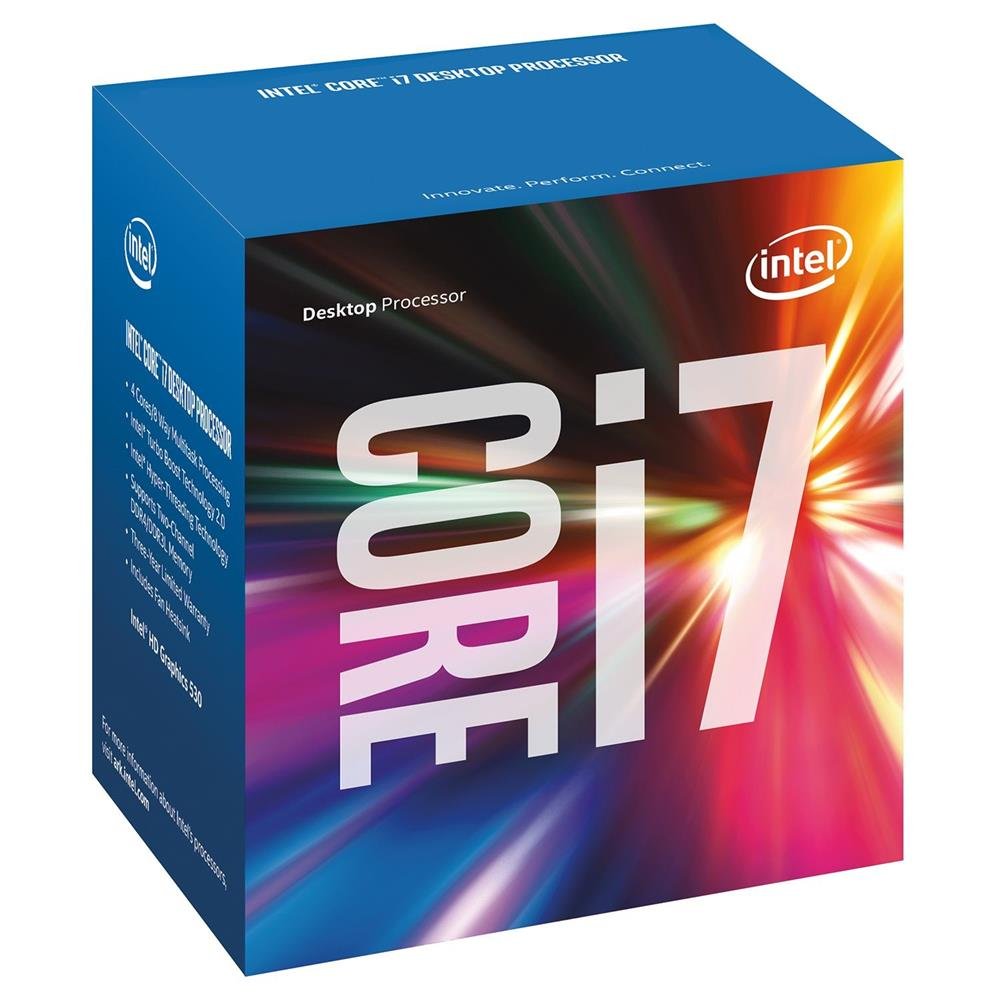
The Intel Core i7-6700 is a 6th generation Skylake processor that, for its time, was the mainstream top-end offering. With 4 cores and 8 threads, a 3.4 GHz base clock, and 4.0 GHz turbo boost, it was a very capable chip. Its primary value today lies in upgrading older pre-built systems or budget-oriented builds where a new motherboard is not in the budget. It supports both DDR4 and DDR3L memory, offering flexibility for salvaged parts.
Users who have bought this chip for retro builds or to revive older systems praise its stability and low power draw at 65W. Many use it for basic productivity, music production, or as a Linux workstation. The included stock cooler is sufficient for standard operation, though it can become audible under more demanding loads. Its integrated HD Graphics 530 is useful for systems without a discrete GPU.
Given its age, the i7-6700 is severely outclassed by modern entry-level CPUs like the i3-12100F in both single and multi-threaded tasks. It’s only recommended for those who already own a compatible LGA 1151 motherboard and want a drop-in upgrade. For anyone building a new system, the performance per dollar of modern budget chips is far superior.
Why it’s great
- Low-cost drop-in upgrade for existing LGA 1151 systems
- Low power draw and good thermal characteristics
- Includes a stock cooler and integrated graphics
Good to know
- Architecture is many generations old; performance is well below modern budget chips
- Poor value compared to modern entry-level i3 or Ryzen 5 processors
- Stock cooler is loud under heavy load
9. Intel BX80637I73770 Core i7-3770 3.40 GHz Cache 8MB Processor

With 4 cores and 8 threads at a 3.4 GHz base clock, it was a flagship in its era. Its primary use case today is upgrading older LGA 1155 systems that still use a Core i3 or Pentium, providing a noticeable multi-tasking boost thanks to hyperthreading, especially in older productivity applications and virtualization.
Users who have purchased this chip report it works well for basic office work, photo editing, and as a home server. While it can handle light gaming, its performance is far behind any modern processor. A key concern with this old architecture is thermal performance, with some users reporting idle temperatures of 40-45°C and load temperatures pushing close to 80°C with the stock cooler, requiring good case airflow.
This chip is a last-resort option for those with a specific compatible motherboard and a very tight budget. It uses DDR3 memory, which is slower and has less capacity than modern standards. Its value is almost entirely in its compatibility with legacy hardware, not in any raw performance metric. For any new build, a modern entry-level chip will offer dramatically better performance and efficiency.
Why it’s great
- Can breathe new life into an old LGA 1155 office or home server PC
- Hyperthreading improves multi-tasking over older dual-core chips
- Very low cost option for legacy upgrades
Good to know
- Architecture is over a decade old; severely limited for modern gaming
- Runs hot and requires good case airflow even with the stock cooler
- Uses obsolete DDR3 memory, limiting performance and upgrade potential
FAQ
Is it worth buying an older generation high-end CPU over a new budget CPU?
What does the ‘F’ suffix mean in Intel processors?
Do I need an aftermarket cooler for my new CPU?
Final Thoughts: The Verdict
For most users, the best affordable cpu winner is the AMD Ryzen 5 7600X3D because it offers the best gaming performance per dollar on the modern AM5 platform with incredible cache and efficiency. If you want excellent multi-threaded performance for gaming and productivity, grab the Intel Core i5-14600KF. And for a true budget build where price is the highest priority, nothing beats the value of the Intel Core i3-12100F.