
Our readers keep the lights on and my morning glass full of iced black tea. As an Amazon Associate, I earn from qualifying purchases.
Specs are compiled from manufacturer listings and verified buyer reviews and can change over time — please confirm the key details on the product page before buying.
If you want to track your daily steps, heart rate, and sleep without spending a fortune—or committing to a monthly subscription—you have hit the right corner of the internet. An affordable fitness tracker should give you the core health data you actually need (steps, calories, heart rate, sleep stages) without the price tag of a full smartwatch. The catch is that not all budget trackers are built the same: battery life varies wildly, screen quality differs, and some lock useful features behind a paywall.
I’m Min — the founder and writer behind Gadgets Feed. This guide is built by comparing the manufacturers’ published specifications and the patterns across verified customer reviews, so you get each pick’s real strengths and trade-offs instead of marketing spin.
Whether you are looking for your first wearable or upgrading from a basic pedometer, this roundup of the best affordable fitness tracker options will help you decide which one fits your wrist and your routine without guesswork.
Quick Picks
- Xiaomi Mi Smart Band 10 (2025) Global Version — Best Overall
- Fitbit Charge 6 — Premium Pick
- Samsung Galaxy Fit 3 (2024) — Best Display
- Fitbit Inspire 3 — Stress & Sleep Specialist
- Bestinn P900 Smart Watch Fitness Tracker — Most Versatile
- MorePro Fitness Tracker — Women’s Health Focus
- RLQA D26E Fitness Tracker — Budget Champion
How To Choose The Best Affordable Fitness Tracker
Before you click “add to cart,” there are three practical things you should know about budget fitness trackers. Unlike premium smartwatches, these devices make trade-offs—and the right trade-off for you depends on what you want the tracker to do every single day.
Battery life is the real dealbreaker
You can have all the sensors in the world, but if your tracker dies every night, it becomes useless. Look closely at the battery average life listed in the specs: you will see numbers ranging from 7 days to 21 days. The difference matters because some models with smaller batteries (like the 200 Milliamp Hours) may only last about a week, while others with a 208 Milliamp Hours battery can push past two weeks. Reviewers report that real-world battery life is often less than the claim—for instance, one Samsung model was expected to last 14 days, but buyers report it lasted 8 days. Prioritize models that can survive a full work week without needing a charge.
Screen quality vs. battery drain
You will find two main screen types on affordable trackers: AMOLED and TFT. AMOLED (like the 1.6-inch display on the Samsung Galaxy Fit 3) offers richer colors and deeper blacks, and it uses less power when showing dark content. TFT screens (like the 1.47-inch display on the RLQA tracker) are cheaper and work well in sunlight, but they consume more battery because the entire backlight stays on. If you want a bright, always-on display, you might need to charge more often. Choose the trade-off that matches your daily routine.
No hidden subscription fees
Some premium trackers require a monthly subscription to unlock detailed sleep scores, stress management, or advanced workouts. Affordable fitness trackers generally do not have this requirement, but there are exceptions—the Fitbit Inspire 3, for example, comes with a limited-time premium membership, after which you would need to pay to keep the full features. For zero ongoing costs, pick a tracker with free full app access.
Quick Comparison
On smaller screens, swipe sideways to see the full table.
| Model | Best For | Battery Life | Screen Size | Water Rating | Amazon |
|---|---|---|---|---|---|
| Xiaomi Mi Smart Band 10 | Best overall battery | 21 days | 1.72″ AMOLED | Waterproof | $47.00$49.59Amazon |
| Fitbit Charge 6 | Google integration | 7 days | — | Water resistant | $85.45$159.95Amazon |
| Samsung Galaxy Fit 3 | AMOLED display | 13 days | 1.6″ AMOLED | 5ATM / IP68 | $41.98Amazon |
| Fitbit Inspire 3 | Stress management | 10 days | — | Water resistant | $66.45$99.95Amazon |
| Bestinn P900 | 120+ sports modes | ~7 days | 1.58″ | IP68 | $44.99$89.99Limited time dealAmazon |
| MorePro Fitness Tracker | Women’s health tracking | 7 days | — | IP68 | $37.99$49.99Limited time dealAmazon |
| RLQA D26E | Budget-friendly entry | 7 days | 1.47″ TFT | IP68 | $39.99$99.99Limited time dealAmazon |
In‑Depth Reviews
1. Xiaomi Mi Smart Band 10 (2025) Global Version
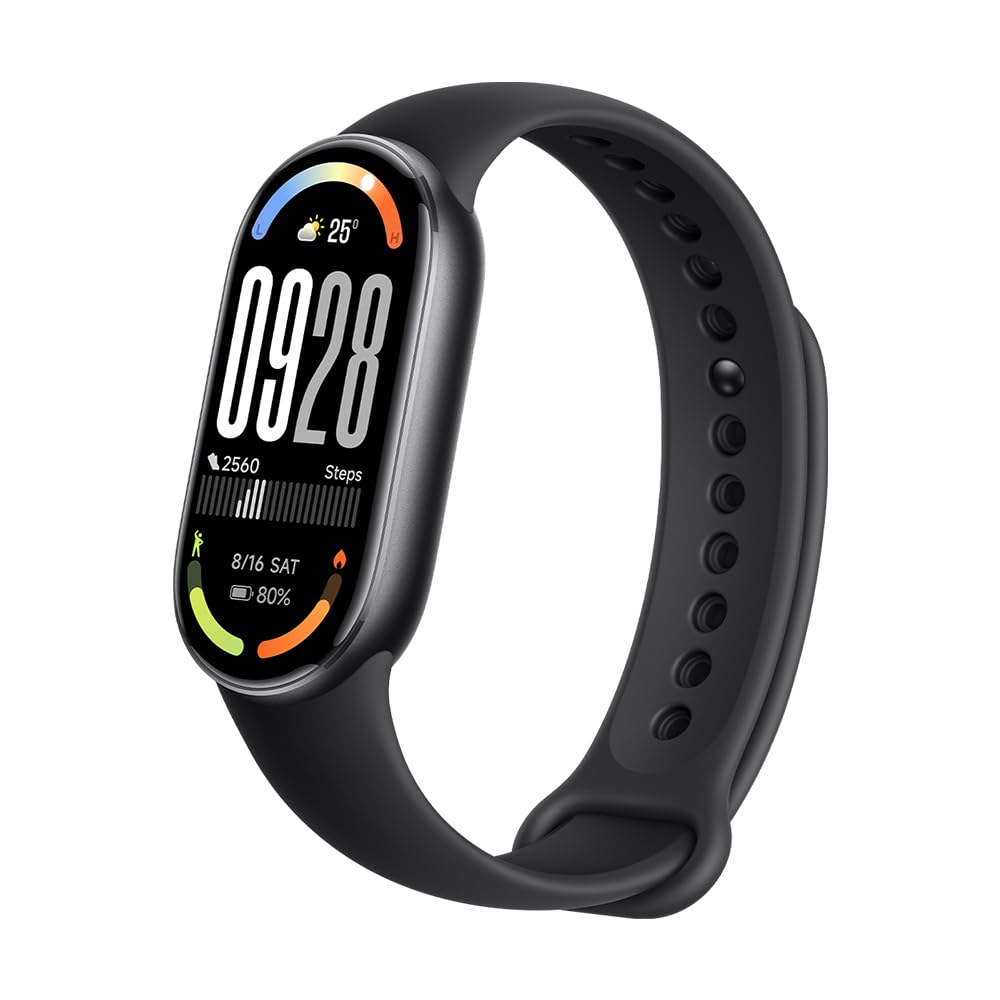
Charge this tracker once every three weeks and forget about it.
The biggest headache with budget fitness trackers is plugging them in every few days—this one solves that. The Xiaomi Mi Smart Band 10 offers an exceptional 21 days of battery life on a single charge, which is more than double what most competitors give you. When you do need power, it takes just one hour to fully recharge, so you are not stuck waiting around. The 1.72-inch AMOLED display is the largest in this roundup, and with 1500 nits HBM brightness, you can read messages even in direct sunlight without squinting. Unlike the Samsung Galaxy Fit 3’s 13-day battery, this gives you a full extra week of wear.
Owners mention that the step counter can be inaccurate—one reviewer noted 4,500 steps compared to 6,000 on a Fitbit—but they overwhelmingly praise the bright screen, the flashlight feature, and the comfortable fluoroelastomer band. It offers comprehensive sleep tracking, SpO2 (blood oxygen), heart rate, stress monitoring, and 150+ workout modes. The downside is that the Xiaomi Fit app only supports the metric system for body measurements, though you can sync with Google Fit to see imperial units.
This tracker also has a high-precision electronic compass for tracking swimming direction, which is rare at this price point. It uses HyperOS 2 for a smooth, connected interface. If you are looking for a tracker that gives you the longest battery life, the brightest screen, and no subscription fees, this is the one to beat.
Real strengths
- 21-day battery life—charge-free for weeks
- 1.72-inch AMOLED with 1500 nits brightness, readable in sunlight
- Fast 1-hour charge time
- No subscription, full features free
Real limitations
- Step counter can be inaccurate vs. Fitbit
- App uses metric system only for body measurements
- GPS can glitch at the start of a workout
- Scratches easily—buy a screen protector
Reach for this if: you want the best battery life and a bright, large AMOLED screen without any subscription.
Look elsewhere if: you need a highly accurate step counter or prefer imperial units in the app.
2. Fitbit Charge 6

This tracker brings Google Maps and Wallet to your wrist affordably.
You get turn-by-turn directions on your wrist and pay with a tap, all without pulling out your phone, thanks to the Fitbit Charge 6. It is the only tracker here with built-in GPS (satellite tracking for runs and rides without your phone), plus it works with Google Maps and Google Wallet for contactless payments. It also connects to compatible gym equipment so your real-time heart rate shows on the treadmill or elliptical display—a feature cheaper models lack.
The 7-day battery life is about average for this category, but customers note it can drop to 6-7 days depending on usage. One buyer mentioned that the distance tracking can be severely inaccurate—0.3 miles reported vs 1 mile on an elliptical—so it may not be the best for serious runners. However, the tracker is praised for its slim profile, comfortable silicone band, and the home button that lets you triple-tap to enlarge text. It comes with a 3-month trial of Google Health Premium, after which you would need to pay to keep advanced coaching.
It includes 40+ exercise modes, automatic exercise tracking, a stress management score, and a smart wake alarm. The stainless steel case gives it a more durable feel than the all-resin Fitbit Inspire 3. If you already use Google services and want those conveniences on your wrist, this is the pick.
Smart upgrades
- Built-in GPS for phone-free runs
- Google Maps and Google Wallet on your wrist
- Links to gym equipment for real-time HR
- Slim design with stainless steel case
Honest trade-offs
- Distance tracking can be inaccurate
- Premium features require subscription after trial
- GPS drains battery faster
- Limited watch faces
Perfect for: Google ecosystem users who want built-in GPS and contactless payments.
Not ideal if: you want free advanced health analytics or need highly accurate distance tracking.
3. Samsung Galaxy Fit 3 (2024)
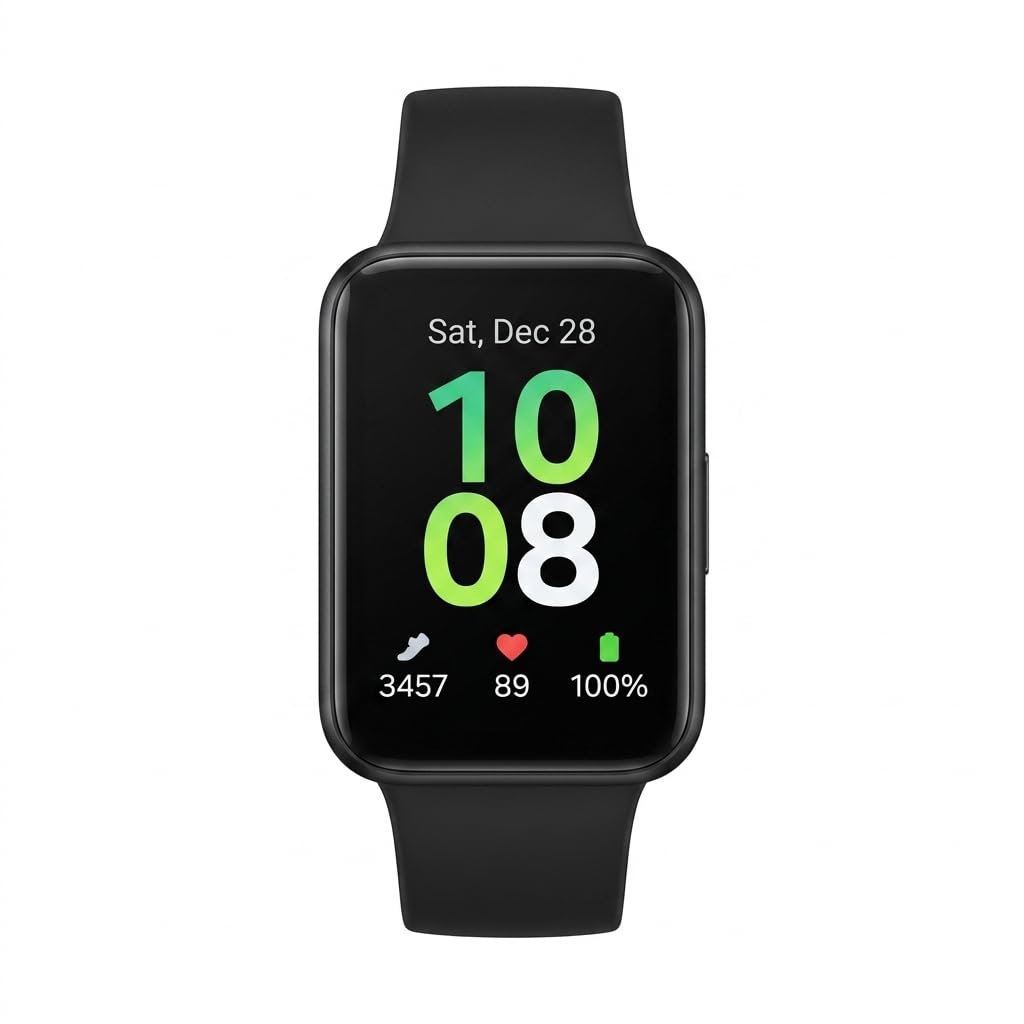
This tracker offers the most vibrant screen at this price, designed for Samsung phone owners.
If screen quality matters most to you, the Samsung Galaxy Fit 3 delivers with a 1.6-inch AMOLED display that is noticeably sharper and more colorful than the 1.47-inch TFT on the RLQA tracker. Samsung claims a 14-day battery life, but reviewers point out a more realistic 8 days, which still beats the 7-day average of most competitors. The 208 Milliamp Hours battery is slightly larger than the 200 Milliamp Hours found in several other models, giving it a slight endurance edge.
One reviewer who switched from a Fitbit Sense 2 said the Galaxy Fit 3 offers the same features “without the paywall,” praising the smooth sync with Samsung Galaxy S22 via the Samsung Health app. The sleep tracking is insightful, and it includes snore detection, which is rare in this price bracket. It is also swim-ready with a 5ATM (water resistant to 50 meters depth) and IP68 (dust and water protection) rating, so you can take it swimming. The international model comes without a US warranty, but shoppers say it arrives new and sealed.
It supports 101+ workout modes with auto-detection for common exercises, and offers over 100 watch faces. However, it does not support Samsung Pay or contactless payments, and there is no built-in speaker or microphone for calls—you can only accept or decline calls. The aluminum case material gives it a premium feel compared to plastic-bodied trackers.
What stands out
- Vibrant 1.6-inch AMOLED display—best in class for color
- 5ATM and IP68 water resistant, swim-ready
- Snore detection and sleep coaching
- No subscription required for full features
What to know
- Battery closer to 8 days than the advertised 14 days
- No mic or speaker—cannot take calls on wrist
- International model, no US warranty
- No contactless payments (Samsung Pay not supported)
Choose this for: the best AMOLED screen quality and smooth Samsung Health integration.
Skip if: you need a US warranty or want to pay for items from your wrist.
4. Fitbit Inspire 3
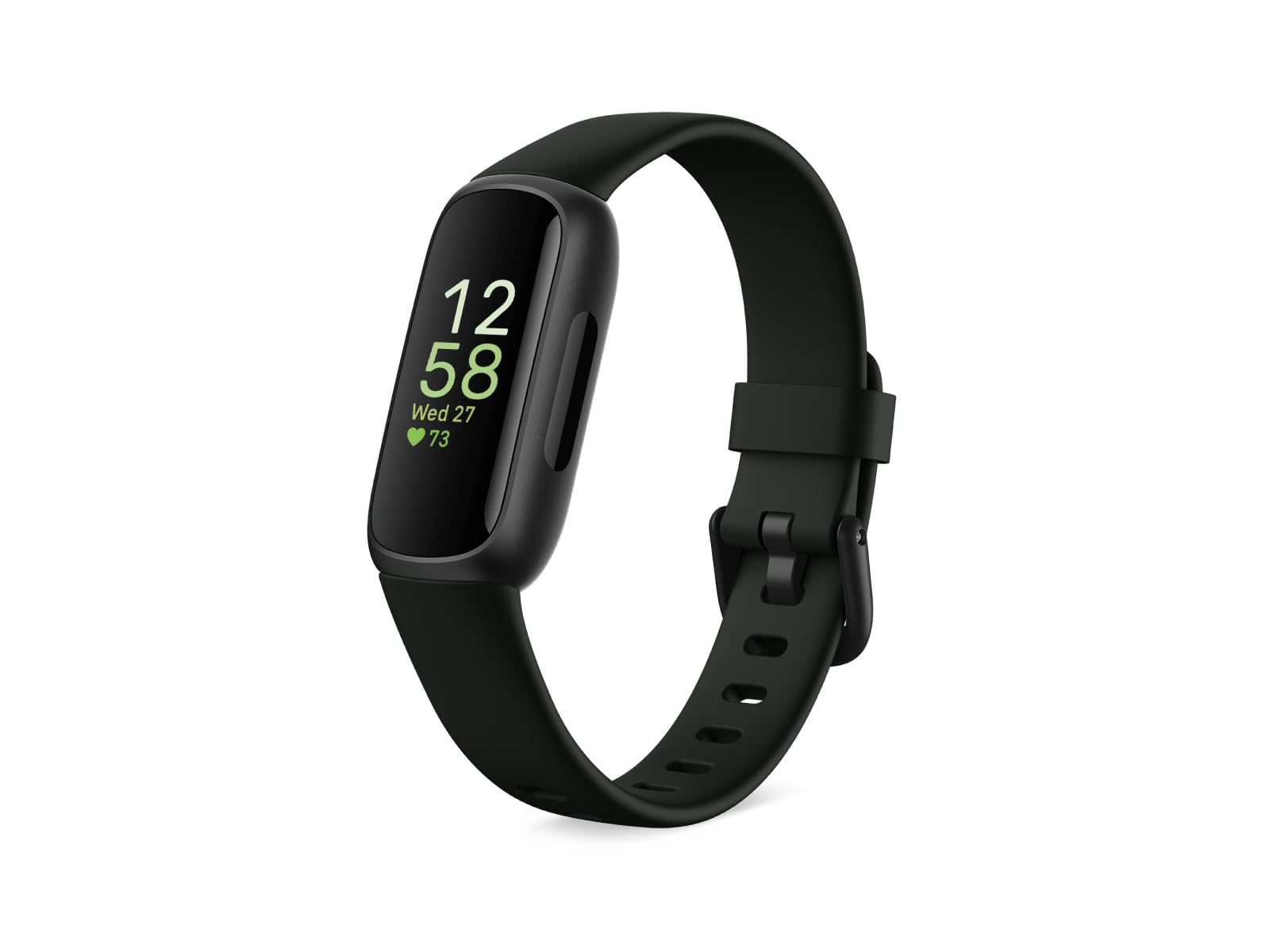
This lightweight band helps manage stress without data overload.
Not everyone wants a big screen with dozens of apps. The Fitbit Inspire 3 is a small, discreet tracker that focuses on what matters most: stress management, sleep quality, and daily activity. It offers a daily Stress Management Score, mindfulness and relax breathing sessions, and automatic sleep tracking with a daily Sleep Score. The active zone minutes system motivates you to reach a target heart rate zone during workouts, which is more useful than just counting steps.
With a 10-day battery life, it lasts longer than the 7-day average of the Fitbit Charge 6 and the RLQA tracker. Reviewers love how lightweight and comfortable it is—one owner reported it fits on the 4th smallest notch, making it ideal for smaller wrists. The screen is legible, and the silicone band feels durable. However, buyers report that the SpO2 (blood oxygen) sensor can be inaccurate; one nurse-verified owner found the O2 sat reading was off compared to a medical device. The proprietary charging cable is a common concern for long-term durability.
It includes a 6-month Google Health Premium membership with AI coach and meal photo logging. After that, you would need to subscribe to keep the premium features. The Inspire 3 is compatible with iOS 16.4+ and Android 11.0+, and it syncs with Google Health. If you want a tiny, distraction-free tracker that helps you breathe and sleep better, this is the pick.
Why it wins
- Excellent 10-day battery life
- Lightweight and comfortable for small wrists
- Stress management scores and guided breathing
- Automatic sleep tracking with smart wake alarm
Why consider the alternative
- SpO2 sensor can be inaccurate
- Premium features require subscription after 6 months
- Plastic strap hinge can break after <1 year (per reviews)
- Proprietary charging cable, not USB-C
Great for: minimalists who prioritize stress and sleep tracking with a tiny, comfortable band.
Not for you if: you want accurate SpO2 readings or refuse to pay for a subscription later.
5. Bestinn P900 Smart Watch Fitness Tracker
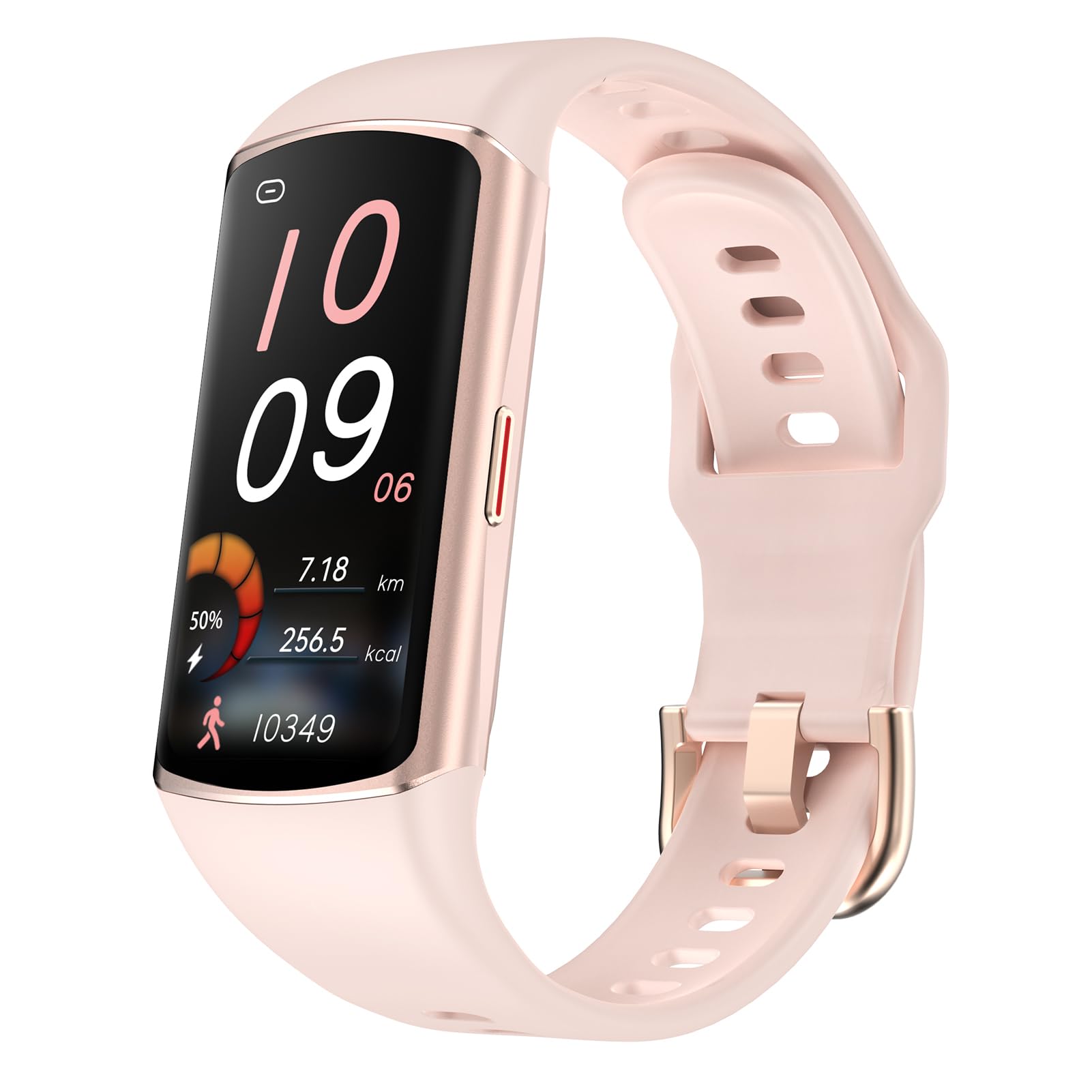
This tracker includes more sports modes than you’ll need and a built-in flashlight.
If you want a tracker that can handle virtually any activity you throw at it, the Bestinn P900 offers 120+ sports modes—from running and swimming to basketball and football. It has a 1.58-inch high-resolution display with an always-on clock option, so you can see the time without tapping the screen. The 24/7 health monitoring includes heart rate, blood pressure, and blood oxygen, all accessible with a few taps on the intuitive interface.
Reviewers consistently praise the fast magnetic charging—one customer observed it charges in under 1.5 hours and lasts about a week, which matches the 7-day battery average. They also love the flashlight feature (a favorite), the customizable watch faces (250+ options), and the improved app with Apple Health integration. The side button makes navigation easier than trackers with only touch controls. However, the Da Fit app can be buggy, and some users report that the GPS connectivity (via phone GPS) is not always reliable for mapping outdoor routes.
It is IP68 waterproof, meaning it can handle sweat, rain, and hand-washing, though reviewers have not tested it for swimming. The 22mm silicone band is washable and replaceable. If you want the widest variety of workout modes and a feature-packed app, this is a strong contender.
Loaded features
- 120+ sports modes cover almost every activity
- Fast magnetic charging (~1.5 hours)
- 250+ customizable watch faces
- Built-in flashlight is a real-life favorite
Small downsides
- App can be buggy and hard to navigate
- GPS connectivity via phone not always reliable
- Blood pressure sensor may not be medical-grade accurate
- Magnetic charger cable can be finicky
Ideal for: fitness enthusiasts who want to track a huge variety of workouts and enjoy customization.
Better options exist if: you need reliable GPS mapping or prefer a simpler, more polished app.
6. MorePro Fitness Tracker
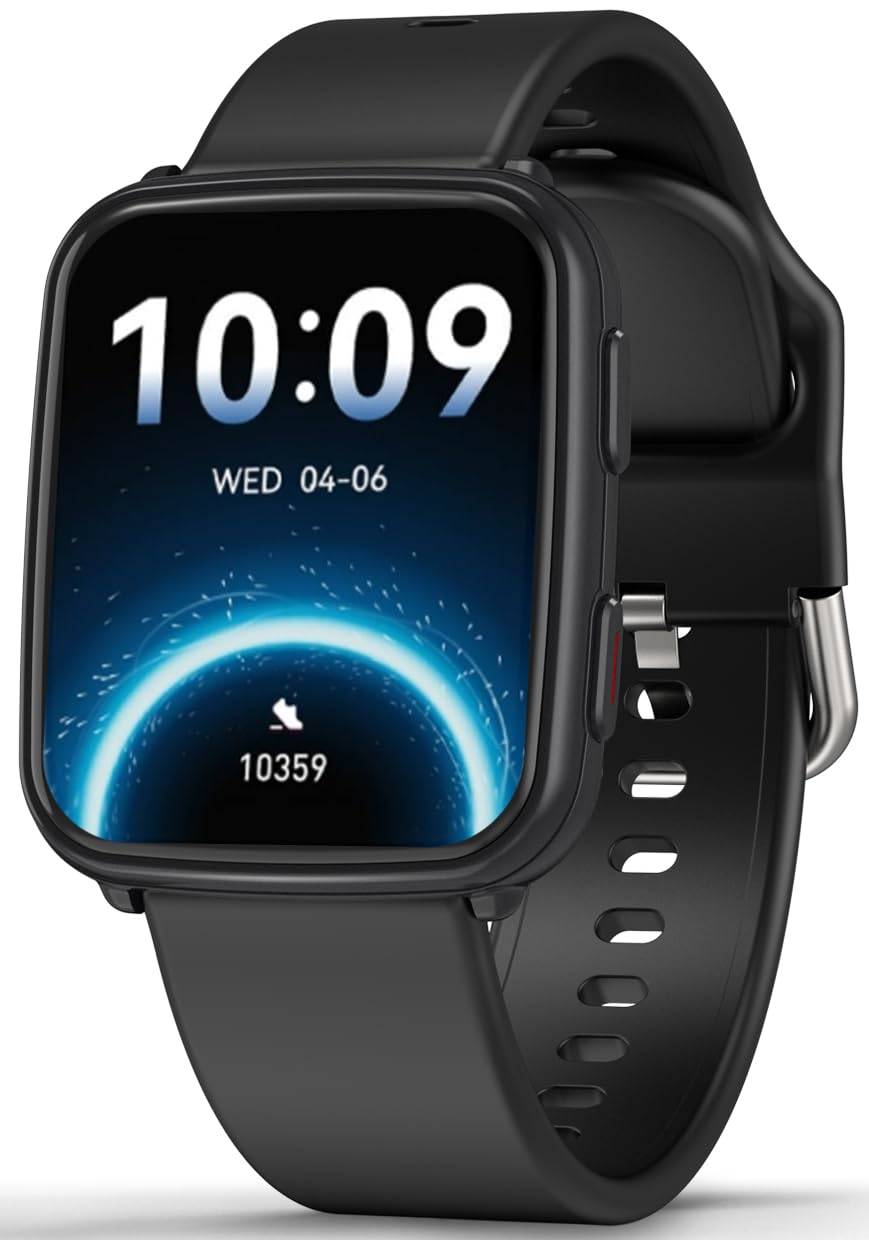
This tracker prioritizes period and ovulation tracking without requiring an extra app.
Women looking for a tracker that truly supports menstrual cycle tracking will appreciate the MorePro Fitness Tracker. It offers intuitive period logging, safe days, ovulation window, and even modes for trying-to-conceive and pregnancy, all directly accessible from the wrist. The 230 Milliamp Hours battery is the largest capacity in this roundup, giving you up to 7 days of normal use or 15 days on standby—outlasting the 200mAh RLQA and Bestinn models.
It includes 120+ sport modes, 24/7 heart rate and blood pressure monitoring, and SpO2 (blood oxygen) checks. The IP68 waterproof rating means you can wear it in the shower or rain without worry. Reviewers mention the screen is clear and comfortable to use, and many were surprised by how complete the features are for the price. However, one user highlighted that the health monitor can be inaccurate—specifically the blood pressure and sleep tracking were off by about 1 hour 20 minutes. The silicone band is 20mm wide and replaceable, and it comes in a stylish “Urban Bronze” color.
It charges in about 2 hours and works with Android 7.0+ and iOS 13.0+. The “find my phone” feature and drink reminders are useful daily extras. If menstrual cycle tracking is a priority for you, this tracker has more built-in support than any other in this list.
Health-first features
- Built-in period tracker with ovulation and pregnancy modes
- Largest battery (230mAh) for longer life
- 120+ sport modes and IP68 waterproof
- Over 200 customizable watch faces
Accuracy notes
- Blood pressure and sleep tracking can be inaccurate (per reviews)
- Health sensors are not medical-grade
- Phone GPS required for route mapping
- No built-in GPS for phone-free runs
Best suited for: women who want detailed cycle tracking and a larger battery in a stylish band.
Consider another if: you need medical-grade accuracy on blood pressure or sleep tracking.
7. RLQA D26E Fitness Tracker

The entry-level tracker that does the basics right without cutting corners on waterproofing.
If you are new to fitness trackers or just want a no-fuss device that tracks steps, sleep, and heart rate without any bells and whistles, the RLQA D26E is a solid starting point. It has a 1.47-inch high-definition TFT touch screen—smaller than the 1.6-inch AMOLED on the Samsung, but bright and colorful enough for daily use. The 200 Milliamp Hours battery delivers about 7 days of use, and owners mention that it can last at least two days on a single charge even with heavy usage.
The IP68 waterproof rating means you can wear it while washing dishes or in the rain, which is a rare find at this budget-friendly level. It offers 24/7 heart rate and blood oxygen monitoring, sleep tracking with REM/light/deep sleep stages, and menstrual cycle tracking. The GloryFit app lets you choose from over 200 free watch faces. One shopper added it is “very easy to connect with my iPhone” and that the step tracking and blood pressure features work well. The detachable 16mm silicone band allows you to swap styles easily.
Unlike the Fitbit models, there is no subscription required to access any features. The main trade-off is the lower-resolution TFT screen (which is less power-efficient than AMOLED) and the lack of built-in GPS for outdoor route tracking. If you just need a reliable, waterproof tracker that tells time and counts steps, this is your cheapest ticket in.
Solid basics
- IP68 waterproof at a budget price
- 200+ customizable watch faces
- No subscription, full features included
- Easy iPhone connection, per reviewers
Where it cuts corners
- TFT screen is less vibrant and power-efficient than AMOLED
- No built-in GPS—requires phone for routes
- Battery lasts 7 days, not as long as Xiaomi’s 21
- Health sensors are not medical-grade accurate
Perfect first tracker: for anyone who wants basic health tracking, waterproofing, and zero ongoing costs.
Upgrade if: you want a sharper AMOLED screen, longer battery, or built-in GPS.
Understanding the Specs
Battery Life (the real-world number)
This is the spec that makes or breaks a tracker. Battery average life tells you how many days the device lasts on a single charge under typical use. The numbers range from 7 days (most common) to 21 days (Xiaomi Mi Smart Band 10). But be aware: real-world use often falls short of the claim. For example, the Samsung Galaxy Fit 3 is advertised at 14 days, but customers note 8 days. If you enable always-on display or constant heart rate monitoring, battery life drops further. Look for models that can at least survive a full work week without charging.
Screen Size and Type (AMOLED vs TFT)
The screen size is measured diagonally in inches. A larger screen (like 1.72 inches) is easier to read messages and stats on, but it also consumes more battery. AMOLED screens (as found on the Samsung Galaxy Fit 3 and Xiaomi Mi Smart Band 10) offer deeper blacks and richer colors because each pixel lights up individually. TFT screens (like the 1.47-inch on the RLQA tracker) are cheaper and work fine in sunlight, but they drain more battery because the backlight is always on. If you exercise outdoors a lot, a bright AMOLED with high nits (like 1500 nits on the Xiaomi) is a huge advantage.
Water Resistance (IP68 vs 5ATM)
This tells you how much water the tracker can handle. IP68 means the device is dust-tight and can be submerged in up to 1.5 meters of fresh water for 30 minutes—good for rain, hand-washing, and showering. 5ATM is a higher standard, meaning the tracker is water-resistant to 50 meters depth, making it swim-ready. If you plan to swim laps or shower with the tracker on, look for 5ATM (like the Samsung Galaxy Fit 3). If you just need splash protection, IP68 is sufficient.
GPS: Built-in vs Connected
Some trackers have built-in GPS (like the Fitbit Charge 6), which means they can track your outdoor running or cycling route without needing your phone nearby. Other trackers use “connected GPS,” which relies on your phone’s GPS to map the route—you must bring your phone with you. Built-in GPS is more convenient but uses more battery. For most budget buyers, connected GPS is fine as long as you already carry your phone during workouts.
FAQ
Can an affordable fitness tracker accurately measure blood pressure?
How long does a typical budget fitness tracker battery last?
Do I need a subscription to use an affordable fitness tracker?
Can I swim with an IP68 rated fitness tracker?
Will a fitness tracker work with my iPhone?
How accurate is the step count on budget trackers?
Can I read text messages and reply from an affordable tracker?
What is the difference between a fitness tracker and a smartwatch?
Can I track my sleep without wearing the tracker to bed?
Which affordable tracker has the best battery life?
Final Thoughts: The Verdict
For most buyers, the best affordable fitness tracker winner is the Xiaomi Mi Smart Band 10 because it combines a 21-day battery life with a bright 1.72-inch AMOLED screen and zero subscription fees. If you want the best display and Samsung Health integration, grab the Samsung Galaxy Fit 3. And for women who need detailed cycle tracking with a large battery, the MorePro Fitness Tracker is the right fit.
How We Picked
We do not accept paid placement, and we did not hands-on test every unit. Instead, we match each pick to a real buyer and use-case by comparing the manufacturers’ published specifications against the patterns in verified customer reviews — so you get each pick’s real strengths and trade-offs instead of marketing copy.
Sources & Methodology
Specifications: manufacturer listings and product documentation. Review insights: verified customer reviews, as of July 2026. Pricing: not shown on this page (it changes often); check the current price via the retailer link.
As an Amazon Associate, Gadgets Feed earns from qualifying purchases. This does not affect which products we feature.
Product prices and availability are accurate as of the date/time indicated and are subject to change. Any price and availability information displayed on Amazon at the time of purchase will apply to the purchase of this product. As an Amazon Associate I earn from qualifying purchases.
CERTAIN CONTENT THAT APPEARS ON THIS SITE COMES FROM AMAZON. THIS CONTENT IS PROVIDED "AS IS" AND IS SUBJECT TO CHANGE OR REMOVAL AT ANY TIME.
Amazon and the Amazon logo are trademarks of Amazon.com, Inc. or its affiliates.