
Our readers keep the lights on and my morning glass full of iced black tea. As an Amazon Associate, I earn from qualifying purchases.
Specs are compiled from manufacturer listings and verified buyer reviews and can change over time — please confirm the key details on the product page before buying.
You want a crisp, clean line between your flower bed and your lawn — but the last plastic border you bought cracked after one summer. The problem with bargain-priced garden edging isn’t the look; it’s that the material and stakes often fail within months, leaving you with a wavy, broken mess you have to rip out. This guide compares the top affordable options so you can pick the one that actually stays put through rain, frost, and a wayward string trimmer.
I’m Min — the founder and writer behind Gadgets Feed. This guide is built by comparing the manufacturers’ published specifications and the patterns across verified customer reviews, so you get each pick’s real strengths and trade-offs instead of marketing spin.
Whether you are defining a flower bed, keeping mulch off the grass, or creating a raised border around a tree, choosing the right affordable garden edging means matching the material and installation method to your specific soil and design needs.
Quick Picks
- Land Guard Corrugated Garden Edging Border — Top Performer
- Corrugated Garden Edging 6″×40Ft Pre-Rusted — Best Look
- MASTER MARK Terrace Board Landscape Coiled Edging — Best Value
- EasyFlex Pound‑In Landscape Edging 20-Foot — Compact Choice
- Landscape Edging 33FT Garden Edging Borders (shsyue) — Generous Kit
- Vashly No-Dig 20Ft Landscape Edging — Decorative Pick
- AGTEK Garden Edging 49FT Landscape Edging Kit — Entry Level
How To Choose The Best Affordable Garden Edging
A cheap garden border that looks good on day one but splits by spring is no bargain. The core trade-off in this category is plastic versus metal, and within plastic, the grade of polyethylene (a durable type of plastic) and the quality of the anchoring stakes. Here is the short list of what separates a one-season border from one that lasts several years.
Plastic vs. Metal — The Real-World Difference
Plastic edging (typically HDPE or recycled polyethylene) is lighter and easier to bend around tight curves, but it is vulnerable to UV brittleness — several buyers report that some white plastic borders “deteriorate, become brittle and break easy after only a few months” in direct sun. Metal edging (galvanized steel or pre-rusted corrugated steel) is heavier and much more puncture-resistant, but it requires more effort to install: you often need to dig a narrow trench or use a mallet with a block of wood to avoid damaging the top edge. For straight lines and high-traffic areas where a string trimmer will hit the border, metal is the more durable choice. For curved beds and soft soil you want to install in minutes, a flexible plastic border with quality stakes works fine.
Stakes Matter More Than You Think
The anchoring stakes are the weakest link in most kits. Budget edging often includes thin nylon or brittle plastic stakes that snap when you hammer them into hard clay or rocky ground — multiple owners mention breaking stakes on installation. Look for kits that either include metal stakes or provide enough extra plastic stakes that losing a few to breakage still leaves you with a secure border. If you are working with compacted soil, many experienced buyers recommend pre-drilling a pilot hole with a narrower metal stake first, then driving the plastic stake in to avoid snapping it.
Height and Length — Matching the Job
A 4-inch height is enough to keep mulch and soil off the grass on level ground, but if you are holding back a thick layer of bark or gravel on a slope, a 6-inch or taller edging is worth the upgrade. Length is about coverage per dollar: a 40-foot roll covers a standard garden bed, while a 20-foot roll is better for a single tree ring or a small border project. Longer rolls typically cost less per foot, but they are heavier to maneuver during installation — a 50-foot metal roll weighs around 10.5 pounds, which is manageable for one person but awkward in strong wind.
Quick Comparison
| Model | Best For | Material | Length | Height | Amazon |
|---|---|---|---|---|---|
| Land Guard Corrugated Garden Edging | Long straight borders with high durability | Galvanized Metal | 50 ft | 6 in | $25.99$29.99Amazon |
| Corrugated Garden Edging 6″×40Ft Pre-Rusted | Rustic look with strong root barrier | Corrugated Metal | 40 ft | 6 in | $23.99$39.99Amazon |
| Master Mark Terrace Board | No-dig plastic with wood-grain texture | HDPE Plastic | 40 ft | 5 in | $26.55Amazon |
| EasyFlex Pound-In Edging | Budget-friendly curved borders | Recycled Plastic | 20 ft | 4.5 in | $17.21$22.14Limited time dealAmazon |
| shsyue Landscape Edging 33FT | Large-area coverage with abundant stakes | HDPE Plastic | 33 ft | 4 in | $25.49$29.99Limited time dealAmazon |
| Vashly No-Dig 20Ft Landscape Edging | Decorative interlocking white border | Plastic | 20 ft | 6 in | $22.99$29.59Amazon |
| AGTEK Garden Edging 49FT | Entry-level flexible border for straight paths | Plastic | 49 ft | 3 in | $31.99$34.19Amazon |
In‑Depth Reviews
1. Land Guard Corrugated Garden Edging Border
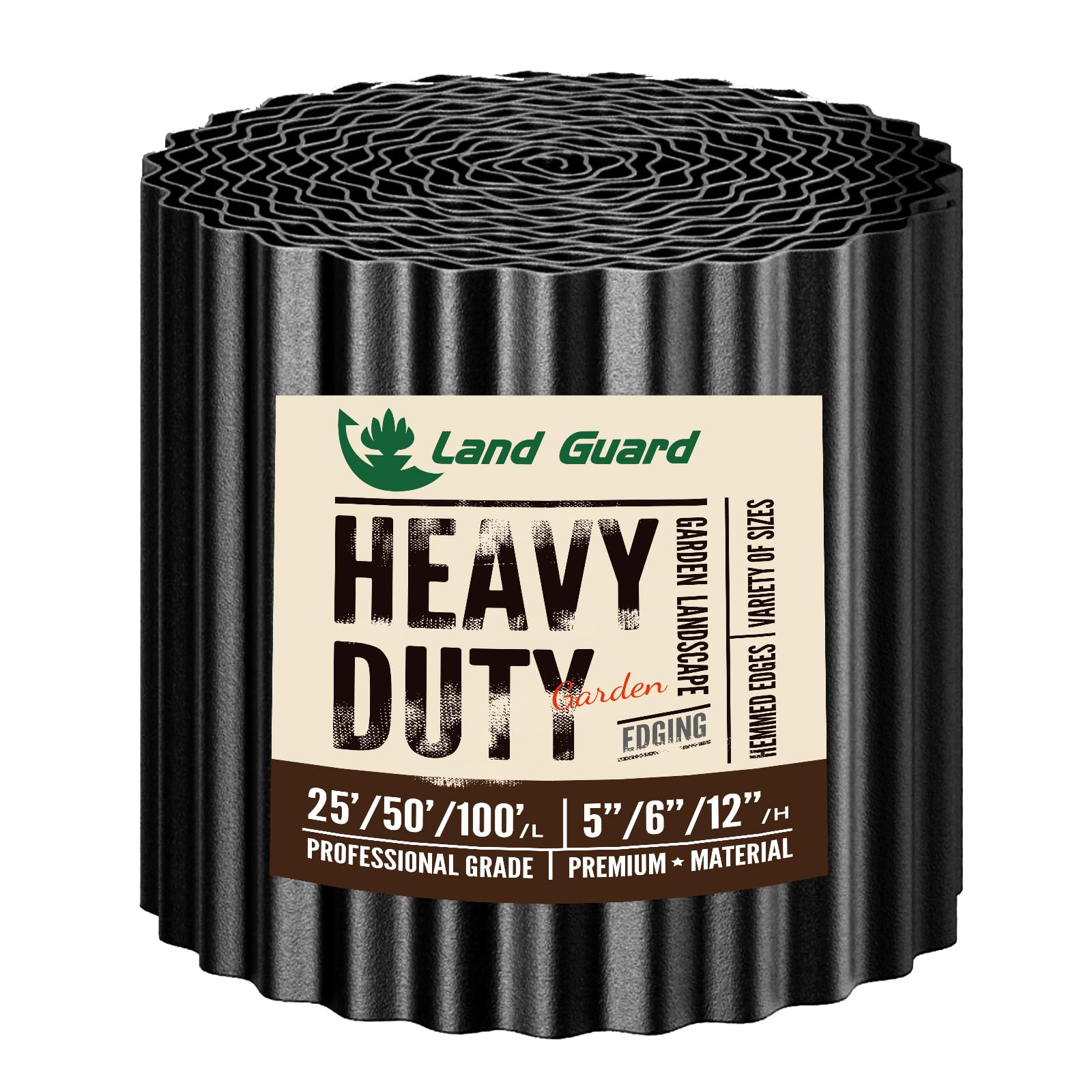
The steel border that shrugs off string trimmers and stays ruler-straight for years.
If you need a long, uninterrupted border that looks clean and holds fast even in heavy clay, this Land Guard roll is the strongest option here. It covers 50 feet at a 6-inch height — enough to define a large flower bed or a vegetable garden — using galvanized metal that resists rust and holds its shape when you bend it around curves. Customers note it goes in easily: “I used a piece of wood and a rubber hammer to install. Looks great and really defines the area.” The 3D ripple design adds stiffness, so the edge stays upright without warping, which is a common problem with thinner plastic rolls.
It is noticeably heavier than the plastic picks — 4.78 kilograms (10.5 pounds) — but that extra heft means you do not need as many stakes to keep it anchored. It is also flexible enough to form gentle curves without kinking, unlike some rigid metal edging. For tight-radius shapes like a tree ring, you will want a narrower plastic strip instead.
One buyer summed it up as “Function Over Flair—It Does the Job… aesthetic is utilitarian, not decorative.” That is the honest trade-off: this is built to hold mulch and block roots, not to look rustic or ornate. If you want a utilitarian barrier that does not budge, this is it.
Where it excels
- Galvanized metal resists rust and handles weather extremes without warping
- 50-foot length covers large beds with fewer joins than 20-foot rolls
- Sturdy enough to keep chickens and roots out — one reviewer uses it for that exact purpose
Where it falls short
- Utilitarian look — not a decorative garden accent
- Heavier than plastic; awkward to handle alone in wind
Reach for this if: you want a long, rigid border that survives lawn tools and keeps mulch or gravel fully contained year after year.
Look elsewhere if: you need an ornate, decorative border for a small front-yard flower bed — this is strictly workhorse edging.
2. Corrugated Garden Edging 6″×40Ft Pre-Rusted
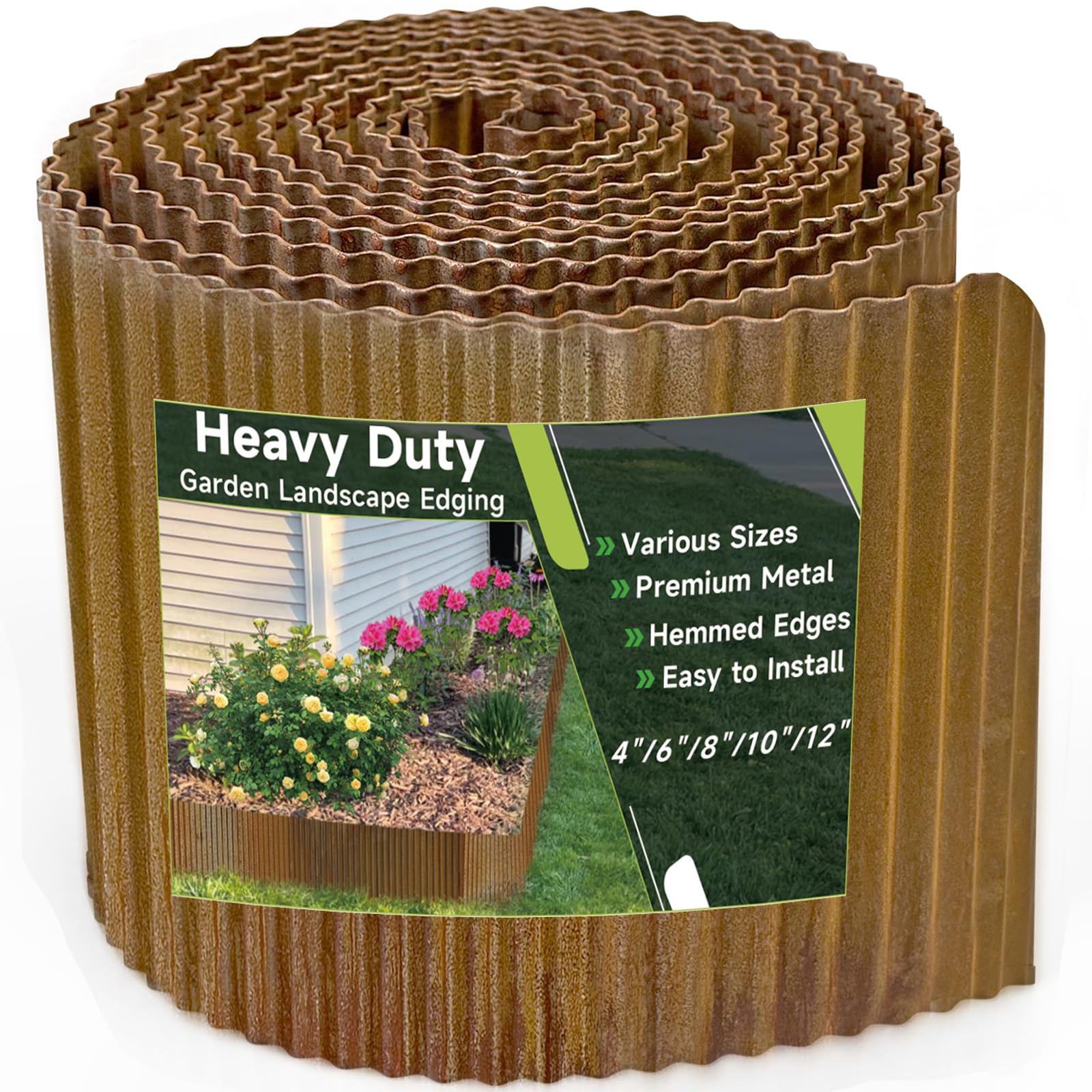
The rustic metal edge that develops a natural patina while locking out aggressive grass roots.
This pre-rusted corrugated steel edging gives you the character of aged metal from day one, so you do not have to wait for the patina to develop. The 6-inch height and 40-foot length (480 inches total) are ideal for medium-to-large flower beds, and the rolled top edge leaves no sharp metal exposed — a real safety upgrade over straight-cut steel edging. Buyers confirm it is “easy to install by just cutting into the ground with a flat shovel then align the edging and pound down using a mallet and small piece of 2×4.”
At 5.39 kilograms, it is heavier than the Land Guard roll at 4.78 kilograms despite being 10 feet shorter, so it holds well in loose soil without extra staking. It is also stiff enough to keep out invasive bermudagrass roots, which is a problem that flexible plastic borders often fail to stop. The pre-rusted finish is intentional — the rust layer acts as a protective barrier against deeper corrosion — so the look ages gracefully rather than peeling or flaking.
The main downside is that the corrugated shape makes tight-radius curves difficult without crimping. For a sweeping border with gentle arcs, it is perfect; for a small spiral or tight tree ring, pick a flexible plastic strip instead.
Why it stands out
- Pre-rusted patina looks rustic immediately and protects the steel underneath
- Rolled edges — no sharp metal contact during installation or maintenance
- One buyer reports it holds back bermudagrass roots effectively when kept weed-eaten on the outside
What to consider
- Not flexible enough for tight curves — best for broad, sweeping borders
- Heavier than plastic; needs a flat shovel or trench for hard ground
Ideal for: gardeners who want a rustic, durable barrier that stops invasive roots and looks intentional rather than industrial.
Not ideal for: anyone needing a flexible border for intricate, tight-radius shapes or a completely modern, sharp-edged look.
3. MASTER MARK Terrace Board Landscape Coiled Edging

The flexible plastic border with a wood-grain texture that is tough enough to outlast cheaper alternatives.
Master Mark has been making HDPE plastic products since 1966, and this Terrace Board shows why manufacturing experience counts. The 5-inch height and 40-foot length give you a lot of coverage, and the textured wood-grain surface looks more natural than plain black flat edging. It is made from high-density polyethylene that resists UV cracking — the main failure point of cheaper plastic borders — and buyers confirm it holds up for years: one reviewer notes “the original order from 7+ years ago was a thicker material, as with everything else they have made them thinner,” but still considers it a worthy purchase.
Installation is straightforward: the material is thin and flexible enough to shape around curves, and the instructions suggest warming it in the sun for a couple of days to reduce waviness. Buyers do recommend ordering extra stakes for longer runs, since the 10 included stakes work for a 40-foot section only if the ground is firm. If your soil is loose or you are creating tight curves, plan on picking up additional stakes separately.
It is lighter than the metal options — 3.59 kilograms — which makes it easier to handle solo, but that also means it is easier to dislodge with a hoe or string trimmer. Keep the border 1.5 inches below soil level for stable, straight edges.
What works well
- Wood-grain texture blends into the garden better than plain plastic or metal
- HDPE material resists fading, rotting, and UV damage better than recycled plastic blends
- Lightweight and flexible enough for curves and right angles
What to know
- Only 10 stakes included — you will likely need more for a full 40-foot installation
- Can set wavy if not laid flat in the sun before installation
Best suited for: the DIY gardener who wants an easy-to-bend, good-looking plastic border that lasts longer than the bargain bin options.
skip it if: you need a heavy-duty barrier that resists string-trimmer hits or you want a no-dig solution for rocky ground.
4. EasyFlex Pound‑In Landscape Edging 20-Foot

The budget-friendly plastic coil that works well in soft soil but struggles in hard clay.
If you need a quick, cheap border for a small flower bed or tree ring, the EasyFlex 20-foot roll is about as low-fuss as it gets. It comes with 6 anchoring stakes — triple what most 20-foot kits include — so the edge stays put without extra hardware. The 4.5-inch height is tall enough to keep mulch and gravel off the grass, and the recycled plastic bends easily into tight curves or straight runs. One buyer says “thick, sturdy edging” and appreciates the price for 20 feet.
However, the “pound-in” name is a bit optimistic in real-world soil. Multiple reviewers report that light pounding distorts the plastic, especially in hard clay — one buyer notes “the ‘pound-in’ is misleading; light pounding distorts plastic, especially in hard clay.” Scoring the soil first with a shovel or trowel helps, and warming the plastic in the sun before installation reduces the risk of cracking. At 2.58 kilograms, it is the lightest full-length option here, which makes it easy to carry but means it can shift in loose soil if not staked every 2-3 feet.
It is also note that one buyer received the roll without the promised bonus stakes. While the manufacturer appears to handle missing-component claims through the return system, it is worth checking the box immediately upon delivery.
What it does well
- Triple the stakes of typical 20-foot kits for better hold in soft ground
- Flexible recycled plastic conforms to tight curves without kinking
- Very budget-friendly for small, quick projects
What holds it back
- Plastic distorts under light pounding in clay or rocky soil
- Shorter length means more joints across a large bed
Good for: a small, curved border in soft, well-prepared soil where you are not in a rush to install.
Not for: clay-heavy or compacted ground where you need a hammer to drive stakes — look at the metal options instead.
5. Landscape Edging 33FT Garden Edging Borders (shsyue)
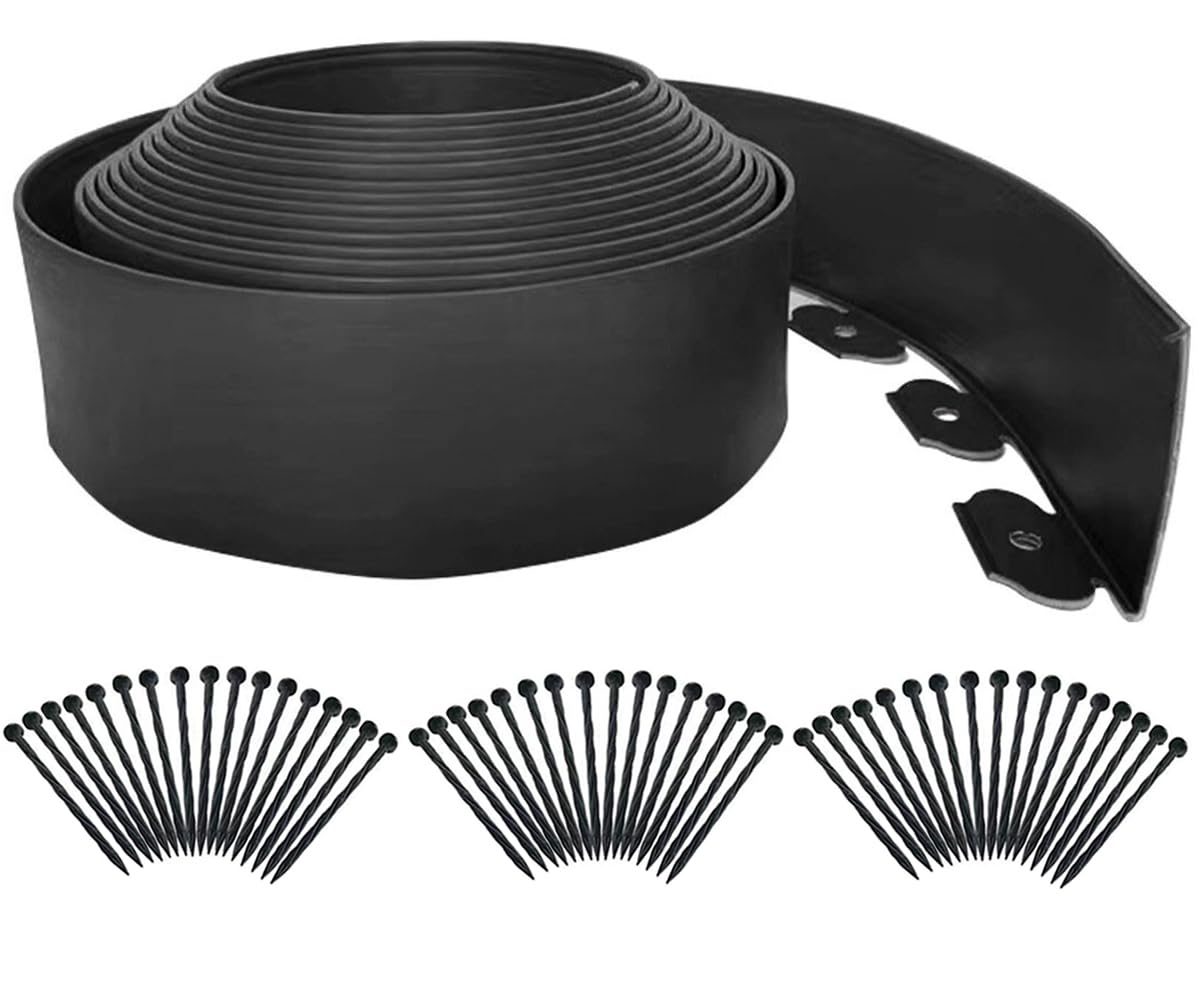
The 33-foot kit that bundles a staggering 50 stakes so you can secure every inch of border.
Most plastic edging kits skimp on stakes, leaving you to buy more. This shsyue set includes 50 spiral spikes for a 33-foot border — roughly one stake every 8 inches — which is overkill for straight runs but invaluable for curves and sloping ground where you need every section pinned tight. At 4 inches tall, the border is shorter than the 6-inch metal options, but that height is plenty for defining a path edge or keeping a thin layer of mulch in place. Reviewers point out it “made a huge difference in how everything looks” and that the black HDPE material “has held up well and hasn’t shifted or warped” through rain and regular watering.
The 3.26-kilogram roll is heavy enough that it does not flop around during installation, yet it is still easy to cut with scissors or snips. The stakes are nylon — tough and reusable — but a few shoppers say they break if hammered directly into hard ground. One experienced reviewer recommends “driving a metal stake first that was slightly smaller diameter, pull it out and then drive the plastic stake” to avoid losing any. With 50 stakes in the box, breaking a few is not a disaster, but it is a step you should plan for.
At 33 feet, it covers a long border for the price, and the included stakes mean you are not making an extra trip to the hardware store.
Strong points
- 50 stakes included — far more than any other kit in this price range
- Flexible HDPE works well on uneven or sloping ground
- Buyers confirm it holds up through rain and irrigation without warping
Weak points
- 4-inch height is short for deep mulch beds or sloped ground
- Plastic stakes can snap in hard soil without a pilot hole
Best for: large borders on uneven ground where you need a stake at every turn — the 50-piece set gives you the freedom to pin every few inches.
Consider alternatives if: you want a taller 6-inch border for holding back bark or gravel on a slope.
6. Vashly No-Dig 20Ft Landscape Edging
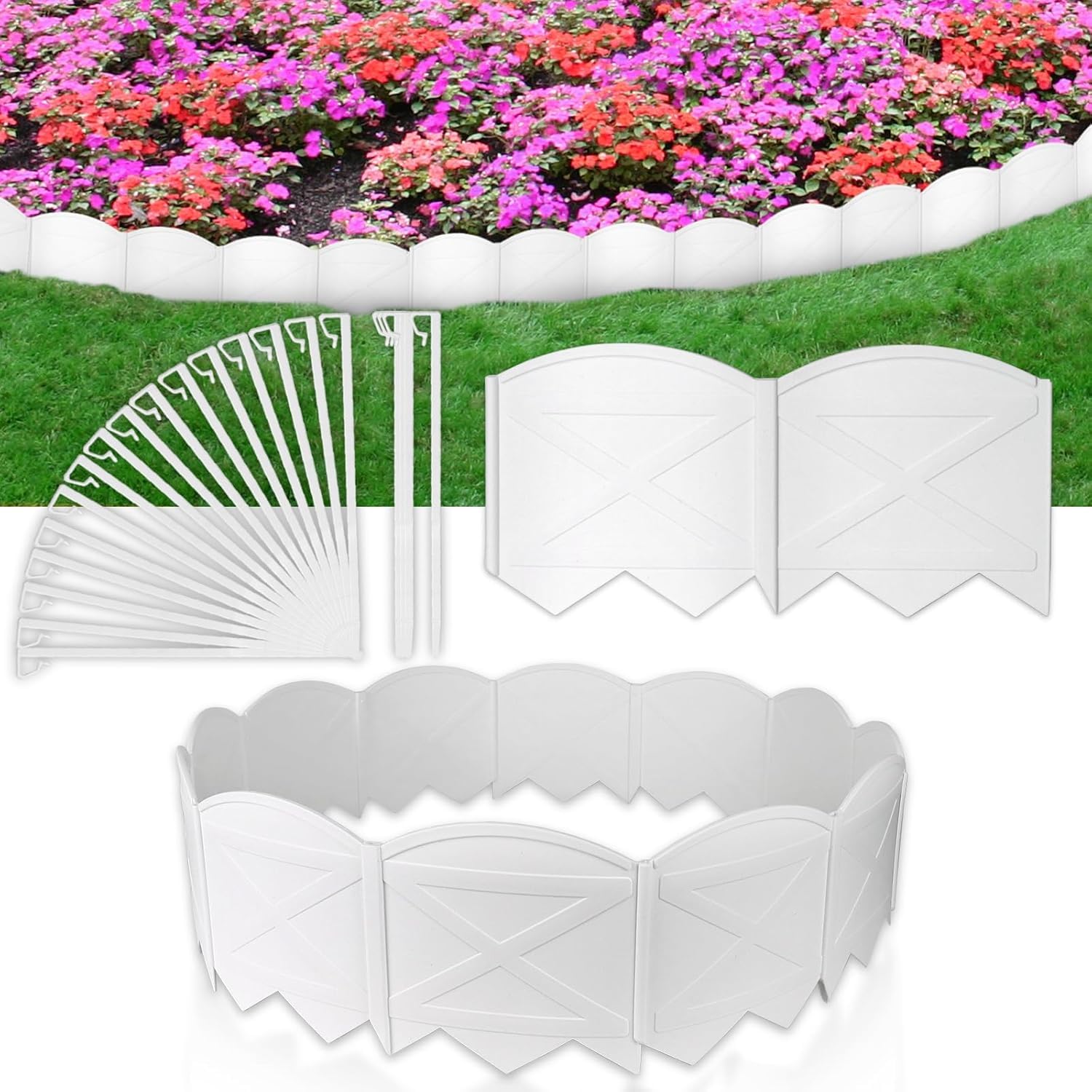
The interlocking white border that looks elegant on day one but may not survive a full season.
The Vashly system takes a different approach from rolled edging: it comes as 20 individual 12.2-inch pieces that interlock, plus 20 stakes, so you can create a precise, segmented border that looks like a miniature white fence. At 2.27 kilograms, it is the lightest option here — compared to the Corrugated Garden Edging at 5.39 kilograms. Buyers rave about the look: “This fence is EXACTLY what I was hoping it’d be!! Perfect height, easy to snap together, and equally easy to secure into place!” It is also no-dig — you can tap the pieces into soft ground with a mallet.
The real concern is long-term durability. Multiple buyers report that the white plastic “deteriorates, becomes brittle and breaks easy after only a few months outside bordering a flower bed.” The interlocking design is convenient for assembly, but the plastic itself appears to be less UV-stable than the HDPE used in Master Mark or shsyue. If you are in a region with intense sun or freeze-thaw cycles, expect the pieces to become brittle within a year. One reviewer also notes they “withstood Florida downpours” initially, so the failure is UV-related, not rain.
For a short-term decorative project — a single-season border around annuals — the look is tough to top at this price. For a permanent border you want to install and forget, the metal or HDPE options are a safer bet.
What stands out
- White interlocking pieces look like a neat fence — prettier than any rolled edging
- No-dig installation works on soft ground in minutes
- Each piece includes an area to hang garden lights, per one buyer
What worries buyers
- Plastic becomes brittle and breaks after a few months in direct sun
- Lightweight — 2.27 kg — so it can be knocked loose by pets or mowers
Best for: a temporary or decorative border where aesthetics matter more than longevity — think a flower bed for annuals.
Not for: a permanent installation or any area with full sun exposure year-round; the plastic will not hold up.
7. AGTEK Garden Edging 49FT Landscape Edging Kit
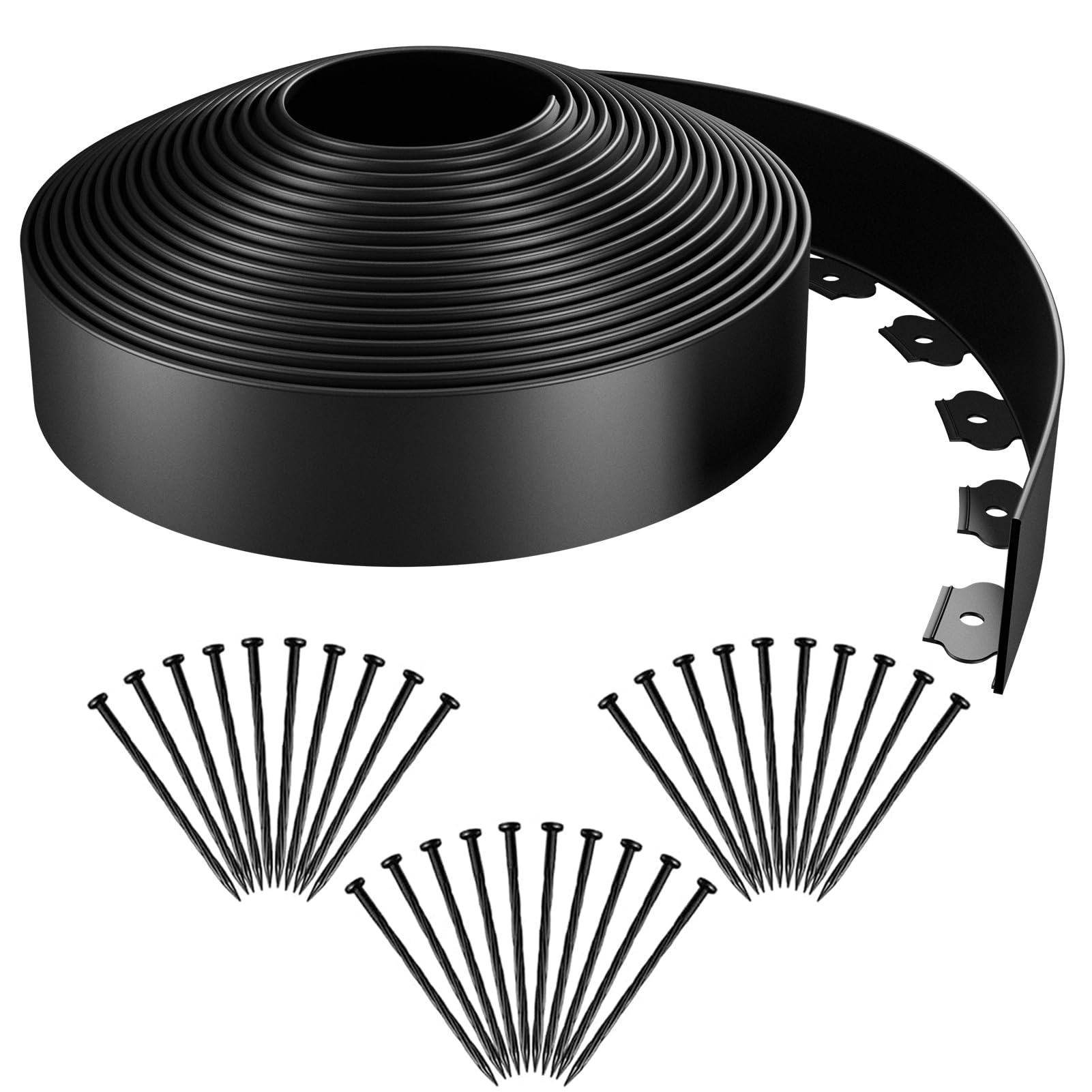
The long, low plastic border that covers a lot of ground at an entry-level price.
With 49 feet of edging and 30 stakes, the AGTEK kit gives you the most length per dollar in this lineup — enough to run along a long driveway border or a sizable vegetable patch. The 3-inch height is noticeably shorter than every other option here, so it works best as a subtle lawn-to-bed separator rather than a barrier that holds back mulch or gravel. Buyers confirm it is “easy to install” and “flexible,” working well for straight lines and gentle curves.
At 3 inches tall, it is too short for many common uses: if you are laying 2 inches of bark mulch, the edging only sticks up 1 inch above it, which means mulch will spill over the top onto the grass. It is better suited for defining a path edge or stopping grass from creeping into a shallow flower bed. One buyer notes “the 3″ height works well with 2″ of mulch on slopes; gives about 1.5″ for level paths,” so the geometry is tight. The 30 stakes are adequate for a 49-foot run, but you will want every one of them — do not skip any, or the border will shift.
The plastic itself is flexible but does not have the UV stabilizers of higher-end HDPE; its long-term performance in direct sun is unproven. For a season or two on a budget project, it gets the job done.
What it offers
- 49 feet of coverage — the most length per dollar here
- Flexible material works for straight and curved borders
- 30 stakes included — enough to secure the full length
What limits it
- Only 3 inches tall — too short for deep mulch, gravel, or sloped beds
- Plastic UV durability is unverified; may become brittle over time
Choose this if: you need a cheap, low-profile border for a long straight path or a shallow garden bed where height does not matter.
Avoid this if: you need to hold back more than a thin layer of mulch or you want a border that will stand up to a string trimmer.
Understanding the Specs
Material — HDPE vs. Recycled Plastic vs. Galvanized Steel
The plastic used for garden edging is not all the same. High-density polyethylene (HDPE) — found in the Master Mark and shsyue kits — is denser and more UV-resistant than standard recycled plastic blends, so it is less likely to become brittle after a year of sun exposure. Recycled plastic (like the EasyFlex) is cheaper and more environmentally friendly, but it can distort under light pounding and may crack sooner in extreme temperatures. Galvanized or pre-rusted steel is the most puncture-resistant choice and stands up to string trimmers, but it is heavier and harder to bend into tight curves. For permanent borders, steel or HDPE is the safe bet; for a quick seasonal project, recycled plastic works fine.
Stake Count and Material
The anchoring stakes are the most common point of failure. Thin nylon or plastic stakes can snap when hammered into hard clay or rocky soil — several product reviews mention broken stakes as a top complaint. Kits with 20 to 30 stakes are typical for a 20- to 40-foot length, but the shsyue set includes 50 stakes for 33 feet, giving you extra flexibility for curves and uneven ground. If your soil is dense, buy a kit with either metal stakes or enough extras that breaking a few does not leave you short. A helpful trick from buyers: drive a slightly narrower metal rod into the ground first, pull it out, then insert the plastic stake — this prevents snapping and saves frustration.
FAQ
How long does plastic garden edging last outdoors?
Can I install garden edging without digging a trench?
Is 3-inch tall edging tall enough for a flower bed?
Will metal garden edging rust through quickly?
How many stakes do I really need for a 40-foot border?
Can I cut metal garden edging to a custom length?
Which is better for holding back aggressive grass roots — plastic or metal?
Will my garden edging heave out of the ground during winter freezing?
Why does my white plastic edging turn yellow and crack?
Can I use landscape edging on a slope?
Final Thoughts: The Verdict
For most buyers, the affordable garden edging winner is the Land Guard Corrugated Garden Edging because its galvanized metal construction and 50-foot length give you a long-lasting, weed-blocking barrier that does not degrade in the sun. If you want a decorative, easy-to-assemble border for a smaller project, grab the Vashly No-Dig 20Ft Landscape Edging. And for the best mix of plastic durability and coverage, the standout is the Master Mark Terrace Board — it is flexible, UV-resistant, and backed by a manufacturer with decades of HDPE experience.
How We Picked
We do not accept paid placement. Every pick is matched to a real buyer and a real use-case; we do not hands-on test units.
Sources & Methodology
Specifications: manufacturer listings and product documentation. Review insights: verified customer reviews, as of July 2026. Pricing: not shown on this page (it changes often); check the current price via the retailer link.
As an Amazon Associate, Gadgets Feed earns from qualifying purchases. This does not affect which products we feature.
Related Guides
Product prices and availability are accurate as of the date/time indicated and are subject to change. Any price and availability information displayed on Amazon at the time of purchase will apply to the purchase of this product. As an Amazon Associate I earn from qualifying purchases.
CERTAIN CONTENT THAT APPEARS ON THIS SITE COMES FROM AMAZON. THIS CONTENT IS PROVIDED "AS IS" AND IS SUBJECT TO CHANGE OR REMOVAL AT ANY TIME.
Amazon and the Amazon logo are trademarks of Amazon.com, Inc. or its affiliates.