
Our readers keep the lights on and my morning glass full of iced black tea. As an Amazon Associate, I earn from qualifying purchases.
Specs are compiled from manufacturer listings and verified buyer reviews and can change over time — please confirm the key details on the product page before buying.
Switching from a smartphone to a real camera can feel like learning a new language — megapixels, sensors, stabilization systems. But the truth is simple: The right affordable mirrorless camera delivers sharp, deliberate photos., without the heavy bulk of a traditional DSLR. This guide breaks down five options, from an everyday all-rounder to a video-first vlogging camera, so you can pick the tool that fits your creative goals.
I’m Min — the founder and writer behind Gadgets Feed. This guide is built by comparing the manufacturers’ published specifications and the patterns across verified customer reviews, so you get each pick’s real strengths and trade-offs instead of marketing spin.
If you are a first-time buyer leaving your phone behind, or a creative upgrading to a more capable system, the real-world differences in autofocus speed, stabilization, and lens support will determine which affordable mirrorless camera suits you best.
Our Picks at a Glance


How To Choose The Best Affordable Mirrorless Camera
Buying a mirrorless camera means committing to a system of lenses and accessories, not just a single box. The “affordable” bracket is full of capable options, but the best one depends on whether you prioritize still photography, vlogging, or a mix of both. Focus on these three areas to narrow it down fast.
Sensor Size: APS-C vs. Micro Four Thirds
The sensor is the heart of the camera. Most affordable mirrorless cameras use one of two sizes. An APS-C sensor (like the ones in the Sony cameras on this list) is larger and generally gives you better low-light performance and more background blur. A Micro Four Thirds sensor (used in the OM SYSTEM and Panasonic picks) is smaller, which keeps the camera body and lenses more compact and lightweight. Neither is strictly better — your choice depends on if you want the best image quality in dim light or a kit that is easier to carry all day.
Autofocus System: Points and Tracking
A camera with more autofocus points across the frame will lock onto your subject faster and keep it sharp, whether it is a child running or a pet moving. Look for systems with “Eye AF” (autofocus that tracks a person’s or animal’s eye) — this makes portrait shooting far more forgiving. The autofocus point count is a key spec to compare. For example, the Sony cameras here have 425 autofocus points, which is over three times the number on some other models, giving you more precise tracking across the frame.
Image Stabilization: Why You Want In-Body Stabilization
Shaky hands or moving subjects cause blur. Image stabilization counters that. The best type is In-Body Image Stabilization (IBIS), which is built into the camera body and works with any lens you attach. It lets you shoot handheld at slower shutter speeds and is a IBIS is a standout for smooth handheld video.. Some cameras rely only on lens-based stabilization (OIS, or Optical Image Stabilization). For video shooters or anyone who hates lugging a tripod, IBIS is the feature to prioritize.
Quick Comparison
| Model | Best For | Megapixels | Autofocus Points | Stabilization | Amazon |
|---|---|---|---|---|---|
| Sony Alpha A6100★ Best Overall | Stills / All-Rounder | 24.2MP | 425 | None (Lens Only) | Amazon |
| OM SYSTEM E-M10 Mark IVCompact & Capable | Portable / Beginner | 20.3MP | 121 | 5-Axis IBIS | Amazon |
| Sony ZV-E10 | Video / Vlogging | 24.2MP | 425 | None (Lens Only) | Amazon |
| Nikon Z 30 | Streaming / Creators | 20.9MP | 209 | None (Lens Only) | Amazon |
| Panasonic LUMIX G85 | Value / Hybrid Use | 16MP | 49 | 5-Axis IBIS | Amazon |
In‑Depth Reviews
1. Sony Alpha A6100 Mirrorless Camera
Our pick — over 4.5★ from 400+ verified ratings; the strongest balance of quality and price.
Its 425 autofocus points lock onto faces and animals faster than any other camera in this price bracket.
You get a 24.2MP APS-C sensor with Sony’s “world’s fastest AF at 0.02 sec” technology, according to the brand. The 425 autofocus points cover 84% of the sensor, so the camera can grab focus nearly anywhere in the frame without you micro-adjusting. Real-time Eye AF (which tracks human and animal eyes) means your portraits of people or pets come out sharp almost every time, even if they are moving.
It shoots up to 11fps (frames per second) continuous shooting at full 24.2MP RAW resolution with autofocus and auto-exposure tracking, which is impressive at this price. The 180-degree tiltable 3-inch LCD helps for selfies and vlogging, though buyers report the electronic viewfinder (EVF — a tiny screen you hold to your eye) is small and not the sharpest in its class. The menu system is also a known hurdle, but you can assign your most-used functions to custom buttons to get around it.
What Wins People Over
- Exceptional 425-point autofocus system is fast and reliable, making it a top pick for capturing sharp shots of fast-moving kids or pets.
- Excellent 24.2MP image quality with great detail and a solid ISO range up to 51,200 (the sensitivity setting that works in dim light) for low-light flexibility.
- Compact body and lens combination is easy to take anywhere, and the 11fps burst rate is fantastic for action shots.
The Real Trade-Offs
- No In-Body Image Stabilization (IBIS — built-in sensor shifting that steadies your hand shake), so you rely on the lens for steady shots, which is a real limitation for smooth handheld video.
- The electronic viewfinder is not the best in class — some find it small and hard to use in fast-paced situations.
- The menu system is notoriously complex and takes time to learn, though customization helps.
The go-to for: Sharp stills of people and pets where autofocus speed matters most, and you want access to Sony’s huge lens library.
skip it if: You need smooth handheld video — the lack of IBIS makes this a weak choice for vlogging without a gimbal (a handheld stabilizer).
2. OM SYSTEM Olympus E-M10 Mark IV
The 5-Axis In-Body Image Stabilization keeps your handheld shots sharp at shutter speeds the Sony A6100 cannot match.
If portability is your number one concern, the OM SYSTEM E-M10 Mark IV is tough to top. The Micro Four Thirds system allows for a much smaller body and lens, and at 20.3MP, the sensor still delivers excellent image quality. The standout feature here is the 5-Axis In-Body Image Stabilization, capable of 4.5 shutter speed steps of compensation. This means you can take sharp, blur-free photos at slower shutter speeds without a tripod, and handheld video footage comes out remarkably smooth.
The 121-point contrast-detection autofocus (it finds focus by looking for the edge of maximum contrast) is not as fast as Sony’s 425-point phase-detection system, but it is perfectly capable for everyday shooting and portraits. The flip-down monitor with a dedicated selfie mode is a nice touch for travel self-portraits. Many owners call it a “fun camera” that delivers excellent results without the complexity of a full-frame DSLR, praising the creative art filters and the fact that the whole package often fits in a coat pocket. Just know that the included kit lens is decent, but its sharpness does not match higher-end OM System PRO lenses.
The Small-System Advantage: The 5-Axis IBIS is the star here — it lets you shoot handheld at surprisingly slow shutter speeds and makes casual video look much more polished than any comparable camera at this price.
Best suited for: Travelers and beginners who want a lightweight, feature-packed camera that takes fantastic photos without needing a big bag.
Think twice if: You want the absolute fastest autofocus for action photography — Sony’s phase-detection systems are quicker. The app and WiFi connection are also reported to be slow.
3. Sony Alpha ZV-E10
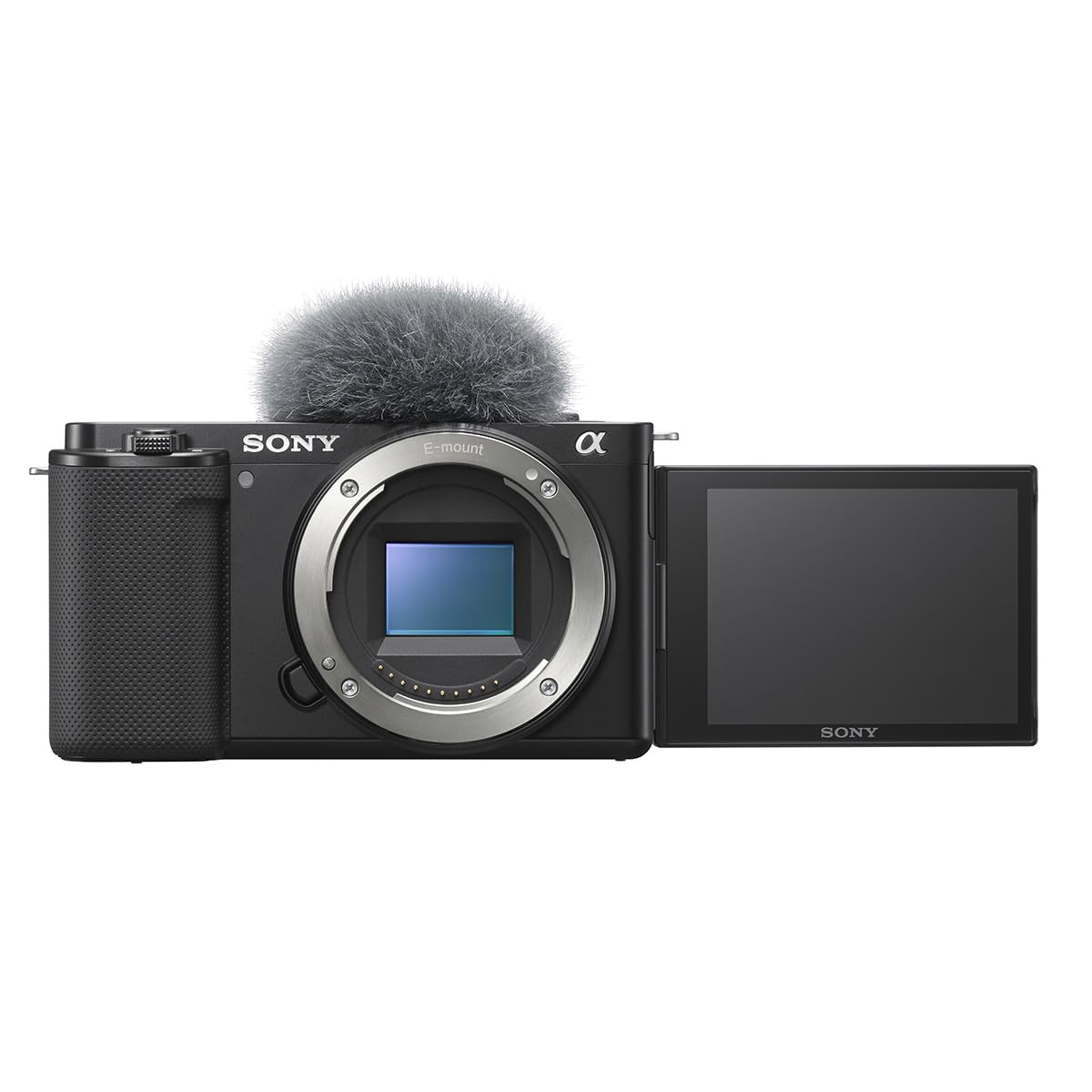
Its 4K video is oversampled from 6K for extra-sharp footage, but the rolling shutter is worse than the Nikon Z 30.
Built specifically for content creators, the ZV-E10 takes the same excellent 24.2MP sensor and 425-point autofocus as the A6100 and wraps it in a body designed for video. It shoots 4K video oversampled from 6K, meaning you get exceptionally sharp footage with fine detail. The Product Showcase Setting is a clever feature that transitions focus from your face to an object you hold up, which is perfect for unboxing or review videos. The Background Defocus button lets you instantly blur the background with a single press, emulating a classic portrait-lens look without needing to change settings.
However, as the crowd-consensus states, this camera has some significant caveats for serious videographers. It suffers from a severe rolling shutter effect (where fast pans make vertical lines look wobbly), which is worse than on the Nikon Z 30. The small LCD screen often leads people to say it needs an external monitor for critical focus, and it lacks In-Body Image Stabilization. Battery life is also short — one owner reported roughly 25 minutes of 4K recording. It is best understood as a capable starter video camera, not a professional cinema tool.
The Video-First Design: The Product Showcase mode and background-defocus button are genuinely useful for specific content, making it the best tool in this lineup for unboxing, podcast, or product-review filming.
Choose this for: Dedicated video content creation, especially for YouTube and podcasting, where the built-in directional mic and easy live streaming via USB are huge wins.
Avoid for: Serious stills photography or smooth cinematic video — the rolling shutter is a known issue, and the lack of IBIS means you will need a tripod or gimbal for stable footage.
4. Nikon Z 30

A 20.9MP DX sensor that shoots crisp 4K without overheating, plus plug-and-play USB-C streaming.
The Nikon Z 30 is designed specifically for vloggers and streamers, and it is the most compact mirrorless Nikon makes. It uses a 20.9MP DX sensor (Nikon’s term for APS-C) and shoots crisp 4K video without overheating, which is a major plus for long streaming sessions or recording events. The flip-out touchscreen selfie monitor, built-in stereo microphone with adjustable sensitivity, and a red REC light that glows when you are recording are all thoughtful touches for solo creators. It also offers plug-and-play UVC/UAC webcam operation over USB-C (a standard for high-quality video streaming), so you can jump into a Zoom call or Twitch stream without extra software.
The 209-point hybrid autofocus system with eye-tracking for people and pets works very well, and the kit lens delivers image quality that many owners consider above its price point. The big trade-off, which many owner accounts confirm, is the lack of a viewfinder. You must compose all shots using the rear LCD, which can be difficult in very bright sunlight. While the controls are praised as intuitive and the ergonomics are strong for its size, the poor battery life — roughly 2 hours of video — means you will need spare batteries for a full day out.
The Streaming Advantage: The Z 30 is essentially a purpose-built webcam that also shoots high-quality photos. If 4K streaming is your main use, it is the easiest camera in this list to set up for that task.
Ideal for: Streamers, vloggers, and first-time creators who want a simple, lightweight setup that prioritizes video and ease of use over photography features.
Not for you if: You need a viewfinder for composing photos in bright conditions, or you require long battery life for all-day travel photography.
5. Panasonic LUMIX G85

Its Dual I.S. 2 stabilization combines 5-axis IBIS and lens-based OIS for the steadiest handheld shots in this lineup.
The Panasonic LUMIX G85 is a perennial favorite for a reason — it offers a class-leading dual image stabilization system that combines a 5-axis in-body stabilizer with lens-based Optical Image Stabilization (O.I.S.) to deliver incredibly steady handheld shots. The 16MP Micro Four Thirds sensor has no low-pass filter (a filter that softens images to prevent moiré patterns), which one owner says gives a “near 10 percent boost in fine detail resolving power” compared to older 16MP sensors. This, combined with a magnesium alloy body that is weather-sealed (protected against dust and light rain), gives the G85 a premium feel that many cameras at this price point lack.
The built-in 2.36m-dot OLED (organic light-emitting diode) live viewfinder and a 3-inch tilt-and-touch LCD make framing shots easy in any light, and the Lumix 4K Photo mode lets you extract 8MP stills from 4K video at 30fps — a useful trick for capturing the perfect moment. The catch, however, is the autofocus. While it is fine for general photography, several owners note that the contrast-detect autofocus system can be sluggish, particularly in low light or when filming 4K video. It is also a heavier camera than the OM SYSTEM E-M10 Mark IV, which some users found surprising.
Why It Is a Fan Favorite
- Exceptional 5-Axis Dual I.S. 2 stabilization makes handheld shots incredibly smooth and sharp, easily the best in this lineup.
- Weather-sealed magnesium alloy body offers durability and confidence in light rain or dusty environments.
- The 4K Photo and Post Focus features are genuinely useful tools for capturing fleeting moments that are hard to get with a normal shutter.
The Honest Caveats
- The contrast-detect autofocus is slower and less reliable than Sony’s phase-detect systems, especially in low light.
- The 16MP sensor is lower resolution than the 20-24MP rivals, which is a limiting factor for heavy cropping of still photos.
- It is heavier than many competitors, and the kit lens has been noted for some image softness compared to higher-end glass.
Best for: Buyers who prioritize image stabilization and build quality above all else, and who shoot a mix of photos and video in varied conditions.
pass on it if: Fast and reliable autofocus is your top requirement, or if you need a very lightweight camera for daily carry.
Understanding the Specs
Sensor Size: APS-C vs. Micro Four Thirds
This is the single most important spec for image quality. An APS-C sensor is physically larger than a Micro Four Thirds sensor. A larger sensor generally captures more light, giving you better performance in dim conditions and more control over background blur. A Micro Four Thirds sensor allows for smaller camera bodies and lenses, making the system significantly more portable. The Sony cameras (A6100, ZV-E10) and the Nikon Z 30 use APS-C sensors, while the OM SYSTEM E-M10 Mark IV and the Panasonic LUMIX G85 use Micro Four Thirds.
Image Stabilization: IBIS vs. OIS
Image stabilization reduces blur from shaky hands. In-Body Image Stabilization (IBIS) is built into the camera body and works with any lens you attach. Lens-based Stabilization (OIS) only works with specific stabilized lenses. IBIS is far more valuable because it stabilizes every shot and every lens you own. The OM SYSTEM E-M10 Mark IV and Panasonic LUMIX G85 both offer 5-axis IBIS, making them excellent choices for handheld video and low-light photography. The Sony cameras and the Nikon Z 30 lack IBIS, relying solely on lens stabilization or nothing at all.
FAQ
Is an affordable mirrorless camera better than my smartphone?
How many megapixels do I really need?
What is IBIS and why does it matter for me?
What does “kit lens” mean?
Are these cameras good for YouTube and streaming?
What is the difference between phase-detect and contrast-detect autofocus?
Do I need to buy a separate lens right away?
Can these cameras shoot good photos in the dark?
What is the “rolling shutter” issue and why is it bad?
Which camera has the longest battery life?
Final Thoughts: The Verdict
For most users starting their mirrorless journey, the winner is the affordable mirrorless camera Sony Alpha A6100 because it combines the best autofocus system in its class with a high-quality 24.2MP sensor and a large, affordable lens ecosystem. If your main focus is creating video content for streaming and YouTube, the Sony ZV-E10 is the most purpose-built tool for that job. And for portability and smooth handheld footage, the OM SYSTEM E-M10 Mark IV delivers superior stabilization in a package that truly slips into a jacket pocket. Pick the one that matches your priority, and you will be set for years of creative growth.
How We Picked
We do not accept paid placement. Every pick is matched to a real buyer and a real use-case; we do not hands-on test units.
Sources & Methodology
Specifications: manufacturer listings and product documentation. Review insights: verified customer reviews, as of July 2026. Pricing: not shown on this page (it changes often); check the current price via the retailer link.
As an Amazon Associate, Gadgets Feed earns from qualifying purchases. This does not affect which products we feature.