
Our readers keep the lights on and my morning glass full of iced black tea. As an Amazon Associate, I earn from qualifying purchases.
Specs are compiled from manufacturer listings and verified buyer reviews and can change over time — please confirm the key details on the product page before buying.
If your current screen makes fast turns look like a smear, the fix is not a new console — it is a monitor with a high enough refresh rate. That number (how many times per second the screen redraws) is the single biggest difference between losing a firefight and winning it. Every pick below runs at 120Hz or higher, and each one earns its place for a different reason.
I’m Min — the founder and writer behind Gadgets Feed. This guide is built by comparing the manufacturers’ published specifications and the patterns across verified customer reviews, so you get each pick’s real strengths and trade-offs instead of marketing spin.
A quick note before the list: this roundup uses flexible, human-like matching, so not every pick is the exact model number you typed into the search bar — the nearest same-type size or spec serves the same job on your desk. Every entry here clears the bar of a true gaming panel, which is what makes it a genuinely useful set of affordable monitor for gaming options to weigh up.
Our Picks at a Glance
How To Choose The Best Affordable Monitor For Gaming
You do not need to spend big to get a screen that keeps up with your reactions. What you need is a panel whose three core numbers line up with the games you actually play. Here is what to check, in the order that matters.
Start with refresh rate, not screen size
Refresh rate is how many times per second the display draws a new image, measured in hertz (Hz). A 144Hz panel redraws 144 times a second, which is why motion looks smoother than on an ordinary 60Hz office screen. For competitive shooters, anything from 144Hz upward is the baseline, and 240Hz or more is where fast flicks start to feel instant.
Match the panel type to your room and your games
IPS panels give you wide viewing angles and accurate color, so two people can watch the same screen without the picture washing out. VA panels trade some of that angle tolerance for deeper blacks and higher contrast, which makes dark scenes look richer. Fast IPS sits between the two, trading a sliver of color depth for quicker pixel transitions.
Check the resolution against your graphics card
Full HD (1920 x 1080) is easier to drive, so you hit high frame rates with a modest graphics card. Quad HD (2560 x 1440) packs in more detail but asks more of your card. If you cannot hold a high frame rate at the higher resolution, the extra sharpness is wasted on a stuttery picture.
Do not overlook adaptive sync and the stand
Adaptive sync (sold as AMD FreeSync or G-Sync compatible) syncs the monitor to your graphics card so the picture stops tearing when frame rates dip. A height-adjustable stand matters more than most buyers expect, because a screen locked at one height forces you to crane your neck through a long session.
Quick Comparison
| Model | Best For | Resolution | Refresh Rate | Panel | Amazon |
|---|---|---|---|---|---|
| Samsung 27″ Odyssey G5 (G51F)★ Best Overall | All-round value | 2560 x 1440 | 180Hz | VA | Amazon |
| ASUS TUF Gaming VG249QE5ABest Value | Small-desk esports | 1920 x 1080 | 146Hz (OC) | IPS | Amazon |
| Dell SE2726HGFastest Motion | Fastest motion | 1920 x 1080 | 240Hz | Fast IPS | Amazon |
| ASUS TUF VG259QMR5A | Highest refresh ceiling | 1920 x 1080 | 310Hz (OC) | Fast IPS | Amazon |
| AOC Q27G41ZE | Sharper esports panel | 2560 x 1440 | 260Hz (OC) | IPS | Amazon |
| LG 27GS50F-B | First-time buyers | 1920 x 1080 | 180Hz | LCD | Amazon |
| Samsung 25″ Odyssey G4 | Best all-round pick | 1920 x 1080 | 240Hz | IPS | Amazon |
| Acer Nitro XV272U W2bmiiprx | Detail-first gaming | 2560 x 1440 | 240Hz | IPS | Amazon |
| Acer Nitro XZ270 Zbmiiphx | rich curved play | 1920 x 1080 | 280Hz | VA | Amazon |
In‑Depth Reviews
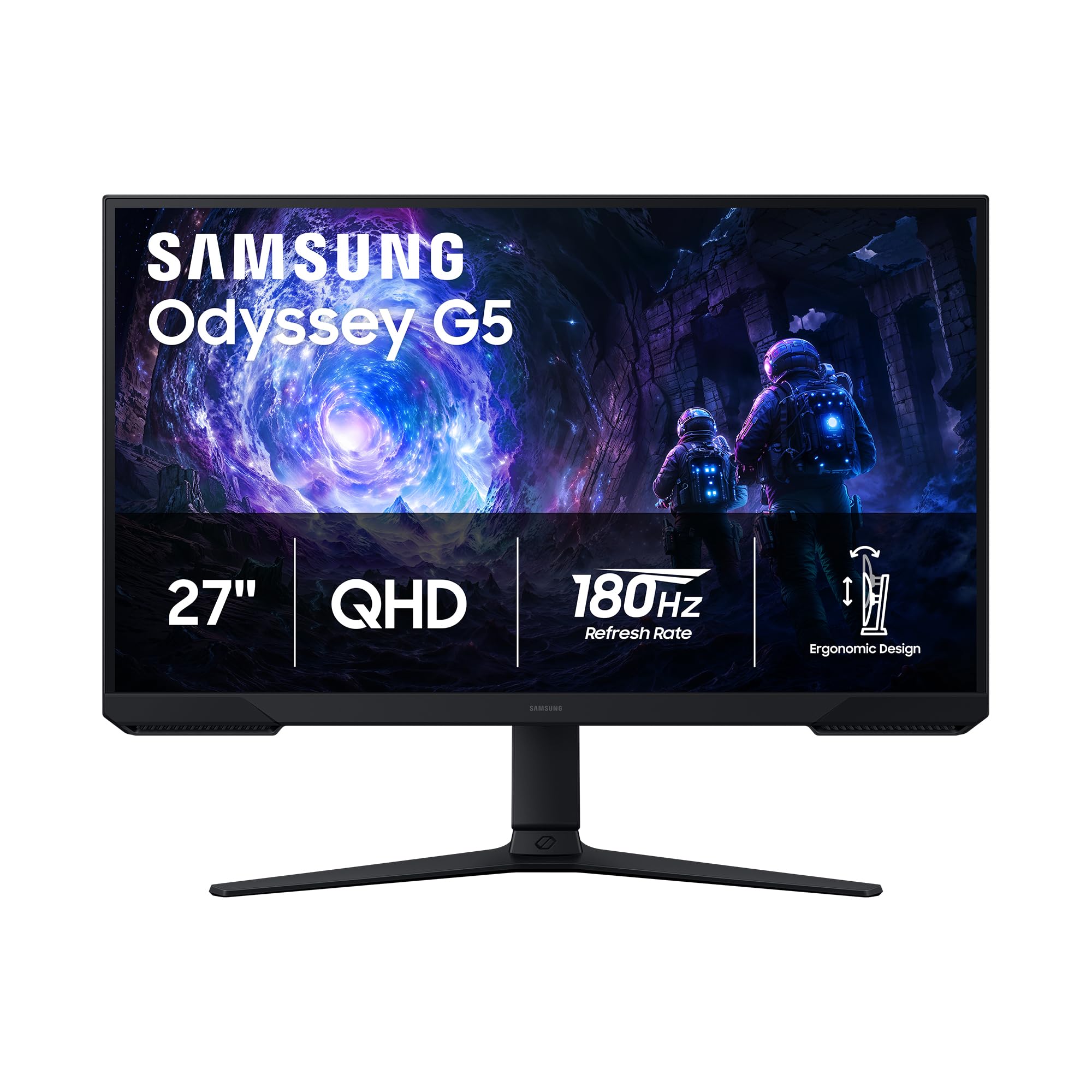
1. Samsung 27″ Odyssey G5 (G51F) Series QHD (1440P) Gaming Monitor
Our pick — over 4.5★ from 550+ verified ratings; the strongest balance of quality and price.
Sharper than most screens its size, and still fast enough for ranked play.
Buy this if you want more detail per inch without giving up speed. The 2560 x 1440 resolution (QHD, meaning roughly twice the pixels of a standard Full HD panel) keeps distant targets and small text crisp. The 180Hz refresh rate redraws the screen 180 times a second, so panning across a map stays smooth instead of smeared. At 3000:1, its contrast ratio — the gap between its brightest white and darkest black — is triple that of the ASUS TUF VG249QE5A and its 1000:1, which is why dark corners in games actually read as dark here.
The VA panel is the reason for that deep contrast. It also brings HDR10 support, which brightens highlights and adds depth to shadows for a more dimensional picture, plus a Black Equalizer tool that lifts the dark areas of a game so you can spot someone hiding in a shadowed corner. AMD FreeSync handles the sync side, cutting choppiness and tearing when your frame rate moves around. The stand tilts, pivots and adjusts in height, so you can sit it where your neck actually wants it.
The trade-off is color accuracy straight from the start. Several owners found they had to spend a few minutes in the settings menu before the picture looked right, and the color quality and brightness readings both come back mixed rather than unanimous. A very bright standby light is the other small annoyance buyers flag. None of it undermines the panel itself, and one owner’s setup sums up how flexible this screen is: “Used with Samsung Galaxy Tab S11 via hub as a computer; handles Call of Duty Mobile at max 120fps perfectly.”
What it delivers
- 2560 x 1440 QHD resolution with 1.7 times the pixel density of Full HD
- 180Hz refresh paired with a 1ms response time for quick reactions
- 3000:1 contrast against the ASUS VG249QE5A’s 1000:1 for deeper blacks
- Tool-free assembly and a stand that tilts, pivots and height-adjusts
Where it asks for patience
- Color needs a quick tune-up before it looks its best
- A bright standby light is noticeable in a dark room
- VA viewing angles are narrower than an IPS panel’s
Reach for this if: you want the most screen detail per pound of budget and mostly play from straight on.
Look elsewhere if: you regularly game from an angle beside the screen or want perfect color with zero setup tweaking.
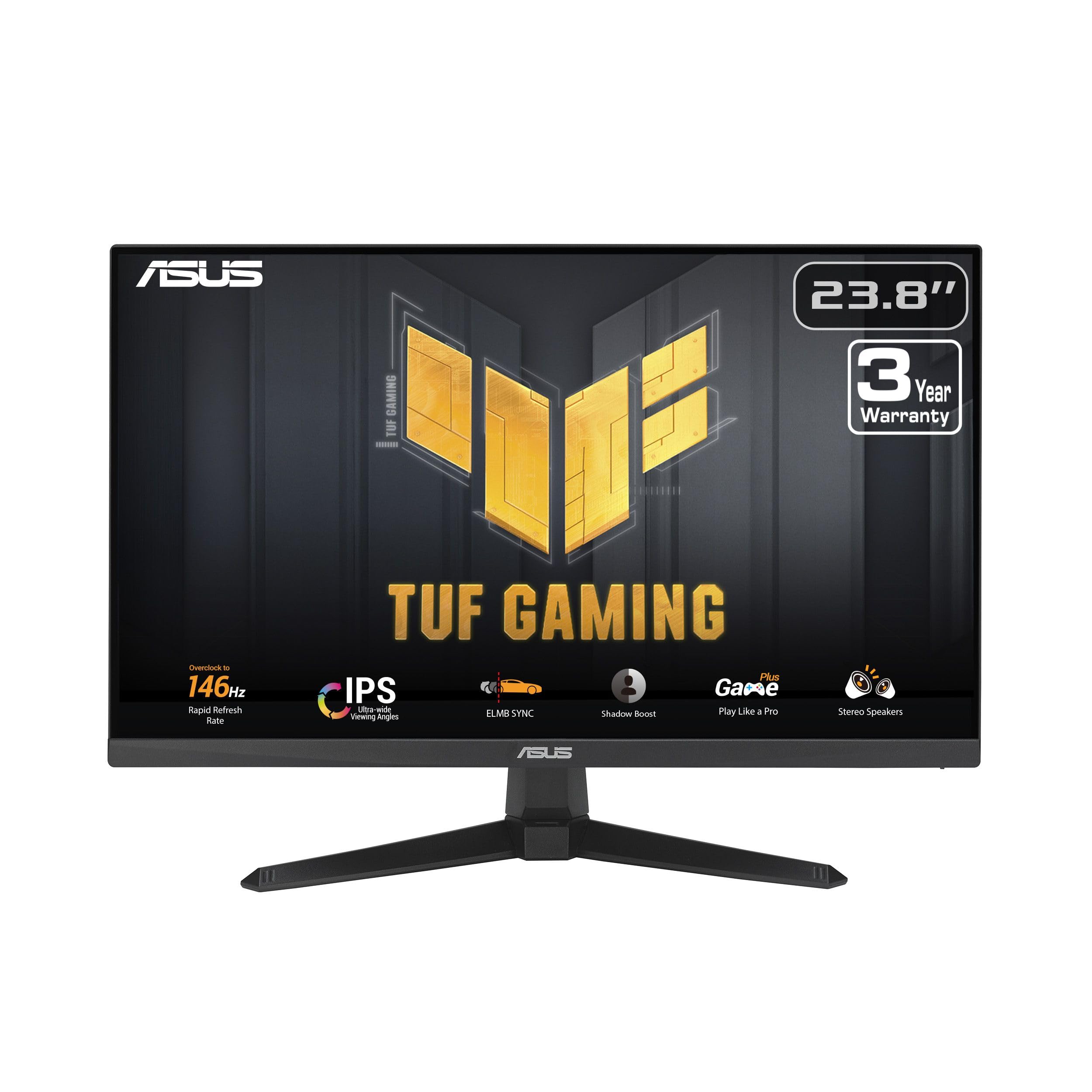
2. ASUS TUF Gaming 24″ (23.8″ viewable) 1080P Monitor (VG249QE5A)
The tightest desk-space esports screen on the list, and the fastest at its price.
A 23.8-inch viewable picture is the balance if your desk is small but your reaction time is not. The full panel runs a 1920 x 1080 (Full HD) resolution, which keeps the frame rate high without straining a modest graphics card. from the start it runs at 144Hz, and you can overclock it to 146Hz for a slightly smoother refresh. A 1ms response time means the pixels change fast enough that fast turns do not leave a trail — and that is quicker than the Dell SE2726HG in the other direction, where the Dell’s 0.5ms wins, so this is the budget pick where response speed is the headline.
The IPS panel gives you wide, accurate viewing angles, and ASUS pairs it with its Extreme Low Motion Blur Sync technology, which runs motion-blur reduction and variable refresh rate at the same time — most panels make you pick one. Shadow Boost lifts the detail in dark corners without blowing out the bright parts of the image. There are built-in speakers, so you have sound the moment you plug in, and you get a three-year warranty with a dedicated settings app that lets you tweak the monitor with your mouse instead of hunting through on-screen menus.
The stand is where this one shows its budget roots. It tilts but does not adjust in height, and adjustability is the one spec that comes back split among buyers. Owners who play on PC with an Nvidia card tend to be happiest with it, largely because of the G-Sync support. As one fan of the screen put it: “I really like this monitor especially because it has NVIDIA G-SYNC functionality which is great to have for excellent graphics and works great with my NVIDIA GeForce RTX 5060 graphics board.” Console and Mac owners have hit a snag where some of the gaming menu options grey out, so check that before you commit if you game that way.
Compact-desk hero: at 23.8 inches viewable it fits where a 27-inch panel would crowd your mouse arm, and the 146Hz ceiling outruns the 120Hz-plus bar comfortably.
Best for the tight setup: PC gamers on Nvidia cards who need a small, quick, cheap panel.
Know before you buy: the stand only tilts, so you may want a raised desk or a monitor arm.
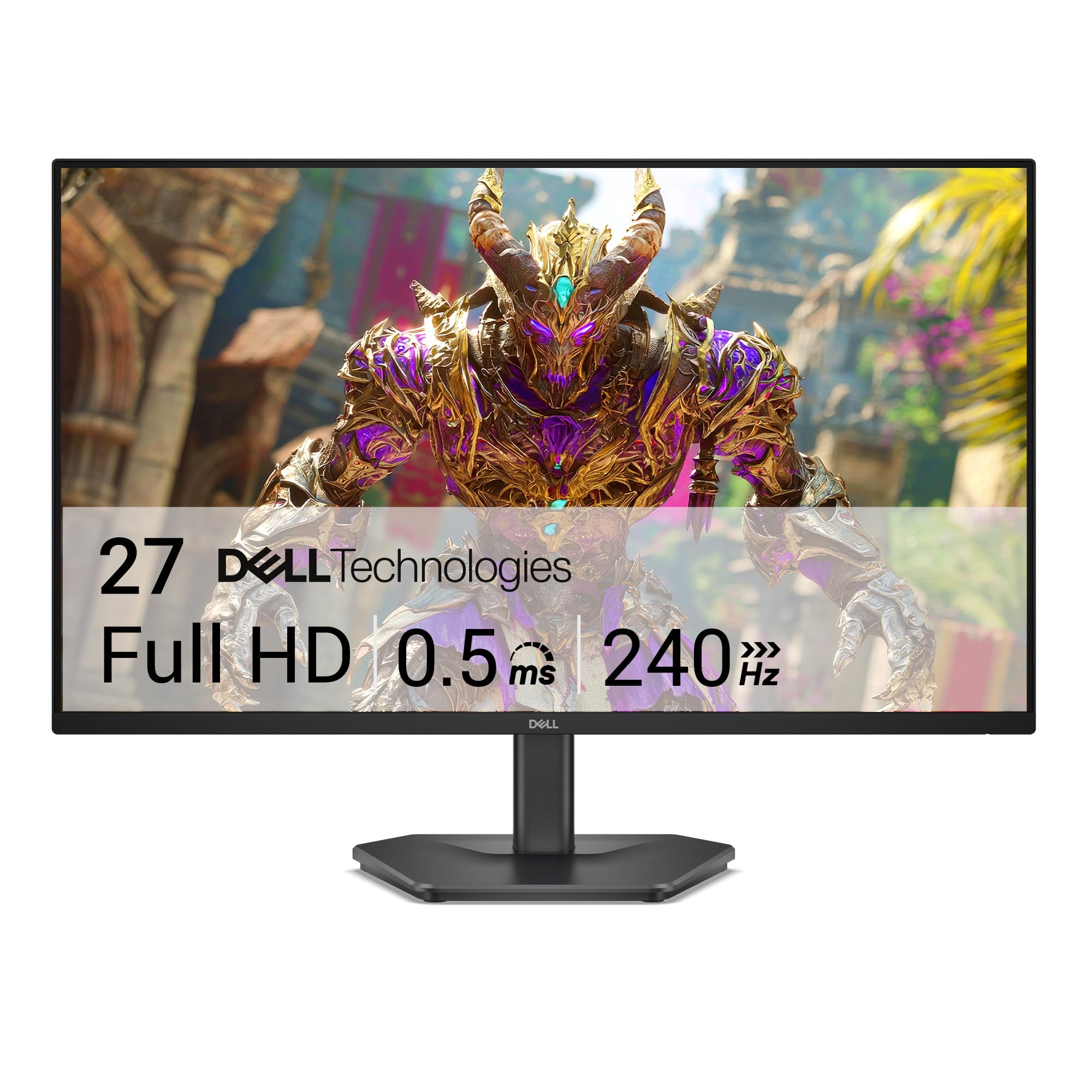
3. Dell 27 240Hz Gaming Monitor – SE2726HG
Twice the response speed of the value pick, and 240Hz of it on a big 27-inch screen.
If you play anything where the first frame decides the exchange, this is the panel that keeps up. It runs 240Hz on a 27-inch 1920 x 1080 screen, and its 0.5ms response time is the quickest here — faster than the ASUS VG249QE5A’s 1ms, which is a real gap when you are tracking a fast-moving target. That speed is only useful if the card can feed it, so a 240Hz display belongs with a graphics card that can push high frame rates at Full HD.
The Fast IPS panel keeps the color and wide viewing angles of a normal IPS screen while cutting the blur that usually comes with them, and it covers 99% sRGB, so the reds, greens and blues a game intends are the ones you actually see. FreeSync Premium and HDMI VRR handle the sync for both PC and console, so tearing stays off when the frame rate dips. Dell also earned a three-star TÜV Rheinland low blue light rating, which trims eye strain on long sessions without shifting the picture’s color. You get two HDMI ports, a DisplayPort 1.4 and a 3.5mm audio out — though no built-in speakers.
The honest catch is the body around the panel. The display itself is the strongest part of the package — display quality is what earns the most praise by far — but the build gets read as flimsy by a segment of buyers, and that is the trade-off here. The good news is the picture and the value stay a step ahead of the price tag, and video quality gets called “phenomenal” in the reviews for a reason.
Why it earns its spot
- 240Hz refresh beats the ASUS VG249QE5A’s 146Hz outright
- 0.5ms response is the fastest on this list
- 99% sRGB coverage for accurate color
- Two HDMI ports plus DisplayPort 1.4 for PC and console in one setup
What you give up
- No built-in speakers, so budget for a headset or speakers
- The stand tilts only — no height adjustment
- The casing feels lighter than the panel deserves
Made for twitch shooters: high-refresh gamers who value motion clarity above every other trait.
Skip the cable clutter by: buying an audio solution at the same time, since there is no speaker built in.
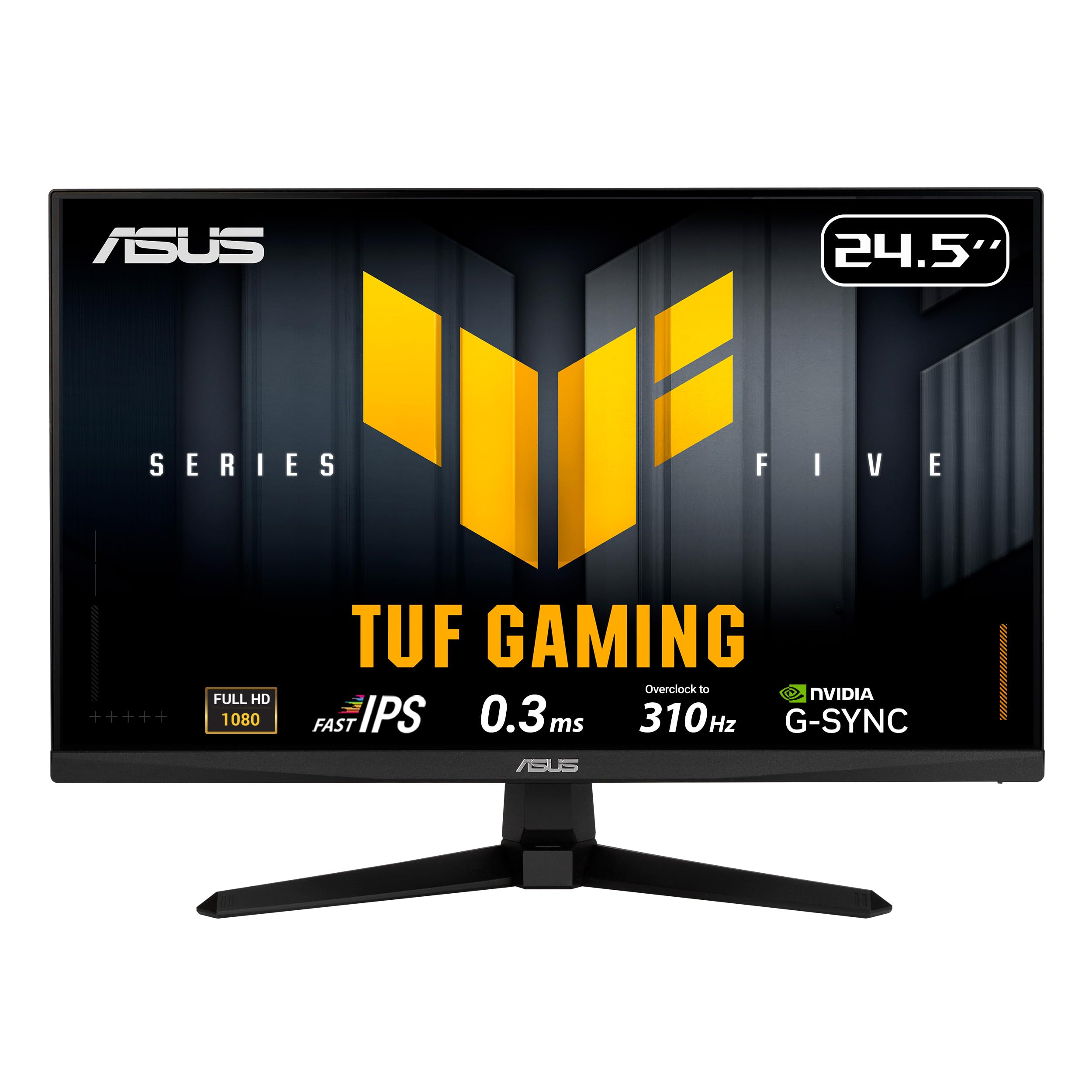
4. ASUS TUF Gaming VG259QMR5A 25 Inch 1080p 310Hz G-SYNC Gaming Monitor
The refresh ceiling here is higher than just about anything else on a desk.
Nothing else on this list clocks in where this one does. The 24.5-inch 1920 x 1080 panel overclocks to 310Hz, which is the fastest refresh rate in the whole roundup — more than double the 146Hz of the value pick above. Pulling that kind of frame rate needs a serious graphics card, but if you have one, the payoff is motion so smooth that fast camera whips stop blurring. The 0.3ms (GTG, or grey-to-grey) response time is right at the sharp end of the pack, and the Fast IPS technology keeps the colors accurate while it does it.
It uses the same motion-blur sync trick as its ASUS sibling — running blur reduction and variable refresh at the same time — and it carries both FreeSync Premium and G-Sync compatible support, so it plays nice with either AMD or Nvidia cards. The 99% sRGB coverage means the picture stays faithful whether you game or edit. TUF’s AI features add a dynamic crosshair and a shadow boost that brightens dark areas without washing out the rest. You also get a three-year warranty and a complimentary three-month Adobe Creative Cloud subscription with the purchase.
What owners push back on is the stand. It installs easily but is limited, and it does not adjust in height — the picture quality gets mixed marks too, since the look from the start takes fiddling to get right. Most agree the value for the refresh rate you are getting is hard to argue with, and the panel itself is consistently rated well.
Built for the frame-rate obsessive: 310Hz is more headroom than nearly any setup can even feed, so this is the pick if you plan to grow into it.
Pick it if: you run a high-end card and want the highest refresh rate money can buy you here.
Think twice if: your graphics card tops out well under 240fps — the extra headroom goes unused.
5. AOC 27″ Gaming Monitor QHD 260Hz Overclocked IPS NVIDIA G-SYNC Q27G41ZE
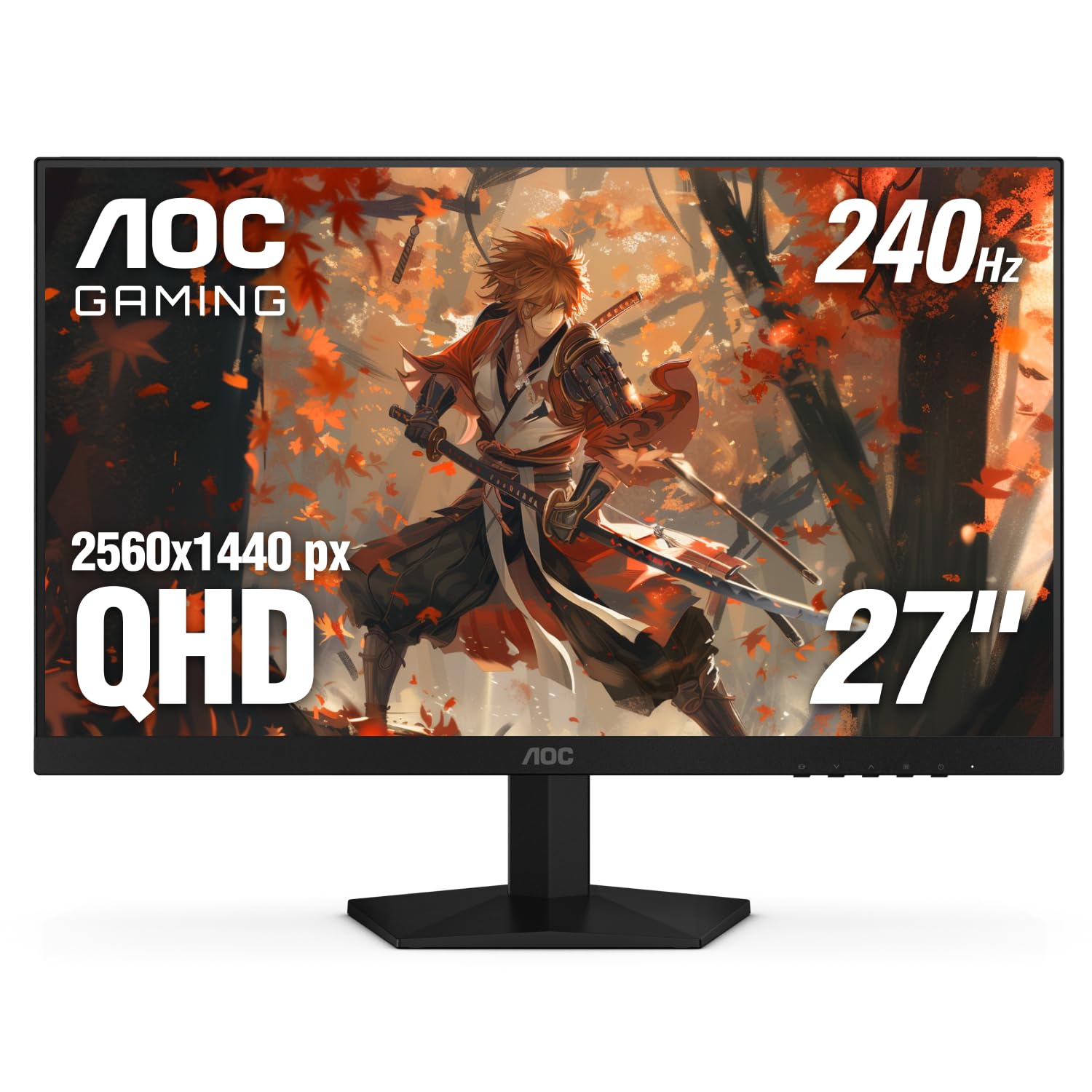
QHD detail and a 260Hz ceiling in the same panel, which few screens manage.
A 2560 x 1440 IPS panel running at this kind of speed is the rare combination this screen is built around. Quad HD gives you the finer detail that makes foliage, textures and distant enemies read clearly, and the refresh rate climbs from 240Hz up to 260Hz when overclocked for extra smoothness in fast scenes. The 0.3ms MPRT response time keeps motion crisp, and because it is an IPS panel you get wide viewing angles rather than the narrow cone you get on a VA screen. Brightness sits at 300 nits with a 1000:1 contrast ratio, which is bright enough for a lit room.
It supports adaptive sync with both AMD and Nvidia cards, so tearing stays away whichever GPU you run. The extras are genuinely useful for competitive play: a Shadow Control setting to lift dark corners, browser-style game mode presets, and a graphical on-screen menu that is quick to navigate once you learn it. Behind it all sit one DisplayPort 1.4 and two HDMI 2.0 ports plus an audio out, and the three-sided frameless design keeps the bezels thin if you plan to run a second screen alongside it.
The picture quality and brightness are where opinions split most. Some owners call it a massive upgrade over their old panel; others find the colors flat or the corners dimmer and want to sit centered rather than off to the side. The stand is the other weak spot — it tilts but does not adjust in height, and a few buyers swap it for their own arm mount. The screen clearly holds up on quality and performance, which is what keeps it near the top of the pile.
Detail meets speed: most high-refresh panels force you to choose between QHD sharpness and a 240Hz-plus ceiling — this one gives you both.
A strong fit for: players who want sharper 1440p visuals and a high refresh rate in one screen.
A note on the mount: the included stand barely moves, so plan on a VESA arm if you like a raised screen.
6. LG 27GS50F-B 27-inch FHD Ultragear Gaming Monitor with 180Hz
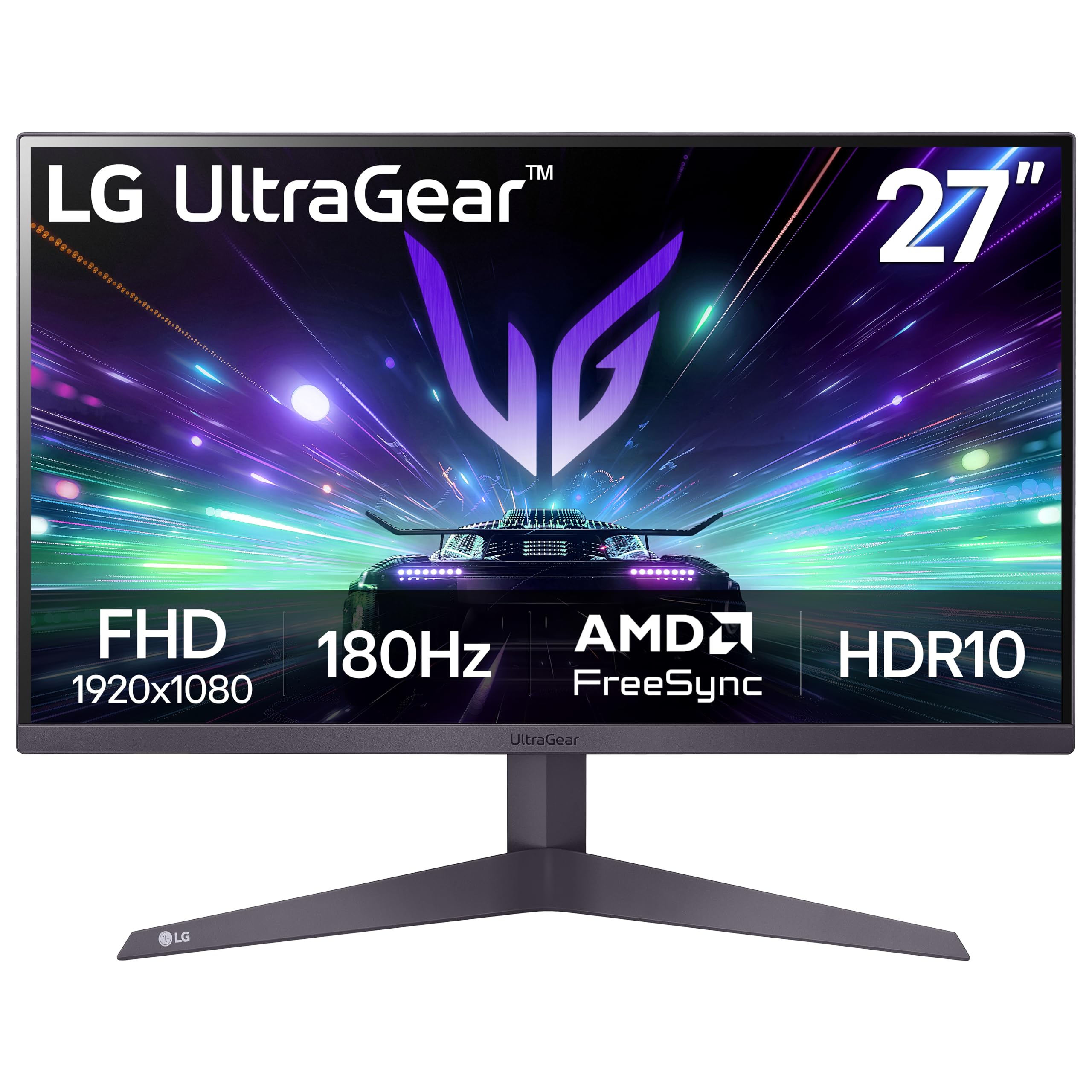
A soothing first step into high-refresh gaming, priced to keep the change.
For someone leaving an old TV or a 60Hz office screen behind, this is the gentlest landing. The 27-inch 1920 x 1080 screen runs at 180Hz and refreshes fast enough that the jump in smoothness is obvious from the first match. Its 1ms MBR response (motion blur reduction — a setting that dims the blur of moving pixels) keeps fast action legible. AMD FreeSync pairs the screen to your card so you do not get tearing when the frame rate wobbles, and HDR10 support widens the contrast for a richer picture. At 3000:1, the contrast ratio gives you deeper blacks than the lower-contrast value panels on this list.
LG packs in a stack of gamer-focused tools without making you pay more for them. Dynamic Action Sync trims input lag so your inputs land closer to when you press them, Black Stabilizer lifts dark scenes so hiding opponents stand out, an FPS counter shows your frame rate in real time, and a crosshair overlay gives you a fixed aiming point. The gaming GUI lets you switch between Gamer, FPS and RTS modes to tune the look to the game, and the three-side borderless design keeps the frame thin. The stand tilts, and there are two HDMI ports alongside DisplayPort.
The catch is that this is a 1080p panel, so you are trading some sharpness for that higher frame rate. Color accuracy is the aspect owners disagree on most, and the stand’s limited adjustment is a repeated note. Still, this is the screen that reviewers point beginners toward again and again — owners describe it as the ideal first gaming monitor, crisp and easy to live with.
The easy wins
- 180Hz on a 27-inch screen is a big jump from 60Hz
- 3000:1 contrast for deeper black levels
- Black Stabilizer and crosshair tools built in for shooters
- Three-side borderless design with two HDMI ports and DisplayPort
The honest limits
- Only 1080p, so fine detail is softer than a QHD screen
- Color accuracy draws mixed notes from owners
- The stand tilts but does not adjust in height
Ideal first buy: newcomers moving up from a TV or a 60Hz screen on a modest budget.
Better to look up the range if: you already game on 1440p and would miss the extra sharpness.
7. SAMSUNG 25″ Odyssey G4 Series FHD Gaming Monitor

The 240Hz all-rounder that owners keep recommending two years on.
This is the screen that does a little of everything well, which is why it sits so high on the list. The 25-inch IPS panel runs 1920 x 1080 at 240Hz, and that pairing eliminates the lag that makes you feel a step behind in fast games. A 1ms GTG response keeps the frames blur-free, and the IPS panel gives you the wide 178-degree viewing angles and clear color that the curved VA panels cannot match. It is compatible with both Nvidia G-Sync and AMD FreeSync Premium, so whichever card you run, the sync works.
The stand is the real standout versus the budget picks. It swivels, tilts and adjusts in height, so you can raise it to eye level instead of sitting it on a stack of books, and that adjustability is one of the traits owners single out. Ultrawide Game View lets you stretch the picture to a 21:9 shape for a wider view of the action, which helps in racing and sports titles. Auto Source Switch+ detects when a device turns on and jumps to it without you cycling through inputs. There are no built-in speakers, but a 1/8-inch audio out lets you plug in a headset or a set of desktop speakers.
Two points to weigh honestly. This is a 1080p panel, so pixels are visible if you sit very close, and the base of the stand is wide enough to want a reasonably deep desk. G-Sync compatibility is the one spec owners disagree over, so if perfect sync is your priority, confirm it works with your card before you commit. Everything else lines up — image quality and value are where this screen wins people over.
The safe recommendation: a full-height swivel stand, 240Hz speed and dual-brand adaptive sync make this the hardest one to regret.
The default pick for most players: anyone who wants 240Hz and a genuinely adjustable stand in one screen.
One check first: if you rely on G-Sync specifically, verify it plays nicely with your graphics card.
8. Acer Nitro 27in QHD 2560×1440 IPS 240Hz Gaming XV272U W2bmiiprx

Sharp QHD detail and 240Hz speed on an ergonomic stand that does the most here.
If you want your games to look genuinely detailed as well as fast, this is a strong place to start. The 27-inch panel runs 2560 x 1440 (QHD) at 240Hz, and its 1ms grey-to-grey response can dip to 0.5ms, so motion stays clean at high frame rates. Because QHD packs in more pixels than Full HD, textures and distant objects carry noticeably more definition. The IPS panel keeps colors accurate across wide viewing angles, and FreeSync Premium matches the refresh to your card to kill tearing. Two built-in 2-watt speakers mean you get usable sound without buying anything extra.
The stand is where this screen outclasses almost everything else nearby. It tilts from minus five to fifteen degrees, adjusts in height by 4.7 inches, swivels a full 360 degrees and pivots ninety degrees into portrait — the kind of range that usually costs more. VESA mounting is supported, and two HDMI 2.0 ports plus a DisplayPort 1.4 and an audio-out round out the connections. Brightness sits at 400 nits, high enough to stay punchy in a bright room.
The buying note here is a real one: the spec sheet advertises HDMI 2.1, but the port is actually HDMI 2.0. That means console players will not get the higher-bandwidth features they expected, and CQC reports of unit-to-unit variation with backlight bleed and pixel issues do come up. The panel itself is the thing owners rave about — the image quality, color and speed all land — so this is the pick to weigh carefully if you game on a console, and to enjoy if you game on PC.
Standout traits
- 2560 x 1440 QHD at 240Hz for detail and speed together
- Full ergonomic stand with height, tilt, swivel and pivot range
- 240Hz over DisplayPort and 144Hz over HDMI
- Built-in speakers and VESA mounting support
Worth checking
- HDMI port is 2.0, not the 2.1 the listing advertises
- Occasional reports of backlight bleed or pixel issues
- Brightness and color draw mixed reactions from owners
Strong for PC grinders: 240Hz plus QHD detail and the most adjustable stand on this list.
Buy with a caveat on consoles: the HDMI limitation means console owners get less than the listing promises.
9. Acer Nitro 27in FHD 1920×1080 Curved 280Hz Gaming Monitor XZ270 Zbmiiphx

A 1500R curve that wraps the action around you, running up to 280Hz.
If you want the game to fill your peripheral vision rather than sit in a flat slab in front of you, the 1500R curve (a gentle, 1500mm-radius bend that mimics the way your eyes curve around a scene) is the whole point. The 27-inch 1920 x 1080 panel drives frames up to 280Hz, which shortens the time the screen needs to draw each frame, and a 1ms VRB response keeps quick transitions free of smearing and ghosting. Because it is a VA panel, you get deep contrast, and with FreeSync Premium the picture stays tear-free as your frame rate moves.
Acer builds in the ergonomics that flat budget screens often skip. The stand tilts from minus five to twenty degrees, swivels plus or minus fifteen and adjusts in height by 3.93 inches, and a quick-release design lets you pop the panel off for VESA wall mounting. The ZeroFrame, near-bezel-less design keeps the borders thin, so running two of these side by side looks almost continuous. You get built-in speakers, one DisplayPort 1.4 and two HDMI 2.0 ports, and both a DisplayPort and an HDMI cable come in the box.
The honest caveats are sound and the bundled cable. The built-in speakers are weak — owners quickly suggest a headset or a set of desktop speakers — and the included display cable caused flicker for some buyers, so swapping in a better cable is worth doing. Picture quality is the spec owners disagree on most, with a few noting ghosting at the top of the panel. Everything else leans positive, and the value and build quality are what keeps this screen on the shortlist.
The rich choice: the 1500R curve and 280Hz refresh create a more cinematic feel than the flat panels at this size.
Choose the curve if: you want a wrapped, cinema-style feel and a fast 280Hz panel for everyday gaming.
Budget for one extra: a set of speakers or a headset, since the built-in sound is thin.
Understanding the Specs
Refresh Rate in Hz
Refresh rate is how many times per second the screen draws a fresh image. A higher number makes motion look smoother and can cut the lag between you pressing a button and seeing it happen. Every pick here starts at 144Hz and climbs, and the practical ceiling is your graphics card — a screen that refreshes faster than your card can feed it just leaves headroom unused.
Response Time in ms
Response time is how fast a pixel changes from one shade to another, measured in milliseconds. A lower number means less blur behind fast-moving objects, so a target does not leave a ghost trail when you swing the camera. The pick here range from 1ms down to 0.3ms, and the difference shows most in fast shooters.
Panel Type: IPS, VA and Fast IPS
IPS panels give accurate color and wide viewing angles, so the picture holds up when you sit off-center. VA panels trade some of that angle tolerance for deeper blacks and higher contrast. Fast IPS combines IPS color with a quicker pixel response, which is why several esports screens here use it.
Resolution and Brightness
Resolution is the pixel count, written as width by height — 1920 x 1080 is Full HD and 2560 x 1440 is Quad HD, the sharper of the two. Brightness is measured in nits or candelas per square meter, and a higher figure means the picture stays punchy in a bright room. More resolution means more detail but also more work for your graphics card.
FAQ
What refresh rate should I aim for on an affordable gaming monitor?
Do I need FreeSync, G-Sync, or both?
Is 1080p still worth it, or should I go 1440p?
How much does response time really matter?
Will a curved gaming monitor help my aim?
Can these monitors run games from a PlayStation or Xbox console?
Do I need a high-end graphics card to benefit from these refresh rates?
Why do some of these monitors have no speakers?
Is a height-adjustable stand worth paying more for?
Is a VA panel worse than an IPS panel for gaming?
How long should an affordable gaming monitor last?
Final Thoughts: The Verdict
For most people, the affordable monitor for gaming winner is the Samsung 27″ Odyssey G5, because it pairs 2560 x 1440 QHD sharpness with a 180Hz refresh and 3000:1 contrast that no other pick at this level matches. If you want the highest refresh rate your money can reach, the ASUS TUF VG259QMR5A climbs to 310Hz with a 0.3ms response. And if you want the safest all-rounder with a genuinely adjustable stand, the Samsung 25″ Odyssey G4 is the one to reach for. Whichever you pick, the one move that matters most is matching the refresh rate to what your graphics card can feed — that is where the value lives.
How We Picked
We do not accept paid placement. Every pick is matched to a real buyer and a real use-case; we do not hands-on test units.
Sources & Methodology
Specifications: manufacturer listings and product documentation. Review insights: verified customer reviews, as of September 2026. Pricing: not shown on this page (it changes often); check the current price via the retailer link.
As an Amazon Associate, Gadgets Feed earns from qualifying purchases. This does not affect which products we feature.