
Our readers keep the lights on and my morning glass full of iced black tea. As an Amazon Associate, I earn from qualifying purchases.
Specs are compiled from manufacturer listings and verified buyer reviews and can change over time — please confirm the key details on the product page before buying.
A prime lens is the fastest way to make your camera feel like a much more expensive one. It locks you to a single focal length, which forces you to move your feet, and its wide aperture lets in enough light to blur backgrounds into creamy distraction and shoot indoors without a flash. You get this image-quality leap without emptying your wallet. This guide ranks genuinely affordable fixed-focal-length lenses, separating sharp budget heroes from paper tigers.
I’m Min — the founder and writer behind Gadgets Feed. This guide is built by comparing the manufacturers’ published specifications and the patterns across verified customer reviews, so you get each pick’s real strengths and trade-offs instead of marketing spin.
Choosing the wrong mount or autofocus type is the easiest way to waste money, so we focus on compatibility first. This is our curated list of the best affordable prime lenses for Canon, Sony, Nikon, and Fuji shooters, ranked by real-world value.
Our Picks at a Glance


How To Choose The Best Affordable Prime Lenses
Before you look at glass, you have to look at your camera body. A lens only works if its mount matches your camera, so your brand (Canon, Sony, Nikon, Fuji) and your sensor size (full-frame vs APS-C) will narrow your choices instantly. Once that is settled, the two numbers that define a prime are the focal length and the maximum aperture.
Focal Length: What Do You Want to Shoot?
A 50mm lens is the classic “nifty fifty” because it feels natural and works for portraits, street, and general walkaround shooting. A 35mm lens gives you a slightly wider view, making it easier to capture environmental shots and indoor scenes. An 85mm lens is a dedicated portrait tool, compressing faces flatteringly and isolating subjects from busy backgrounds. Remember that on APS-C cameras, a 50mm lens acts like a short telephoto, so think about the final look you want.
Aperture: The Key to Low Light and Blur
The “f” number (like f/1.8) tells you how wide the lens opens. A lower number means a wider opening, which lets in more light for dim scenes and creates a shallower depth of field for that blurred-background “bokeh” effect. Affordable primes almost always center on f/1.8, which is a fantastic balance; some go slightly wider to f/1.7. A lens with an autofocus motor will cost more but save your sanity, while a manual-focus lens forces you to turn a ring by hand.
Autofocus Versus Manual: The Hidden Cost
Some budget lenses cut costs by removing the electronic autofocus entirely. That means you must rotate the focus ring yourself every single shot, which is slow and difficult for moving subjects. If you are patient and shoot still scenes, a manual lens can save you a lot of money. If you photograph kids, pets, or anything that moves, an autofocus (AF) lens is worth the extra cash. Also check the build quality in reviews, as some cheap lenses feel plasticky and have flimsy focus rings.
Quick Comparison
| Model | Best For | Focal Length | Aperture | Mount | Amazon |
|---|---|---|---|---|---|
| Canon EF 50mm f/1.8 STM★ Best Overall | Best Overall Value | 50mm | f/1.8 | Canon EF | Amazon |
| BENOISON 85mm f/1.8 MFBudget Champion | Cheapest Portrait Look | 85mm | f/1.8 | Canon EF/EF-S | Amazon |
| YONGNUO YN50mm F1.8Autofocus Bargain | Budget Canon Autofocus | 50mm | f/1.8 | Canon EF | Amazon |
| TTArtisan AF 50mm F1.8 Neo | Full-Frame Sony Autofocus | 50mm | f/1.8 | Sony E | Amazon |
| YONGNUO YN35mm F2N | Nikon Walkaround | 35mm | f/2.0 | Nikon F | Amazon |
| TTArtisan AF 35mm F1.8 II | Fuji Street & Travel | 35mm | f/1.8 | Fujifilm X | Amazon |
| Meike 50mm F1.8 AF | Sony Full-Frame Portraits | 50mm | f/1.8 | Sony E | Amazon |
| VILTROX 35mm F1.7 Air | Sharpest APS-C Walkaround | 35mm | f/1.7 | Sony E | Amazon |
| Canon RF50mm F1.8 STM | Mirrorless Canon Shooters | 50mm | f/1.8 | Canon RF | Amazon |
In‑Depth Reviews
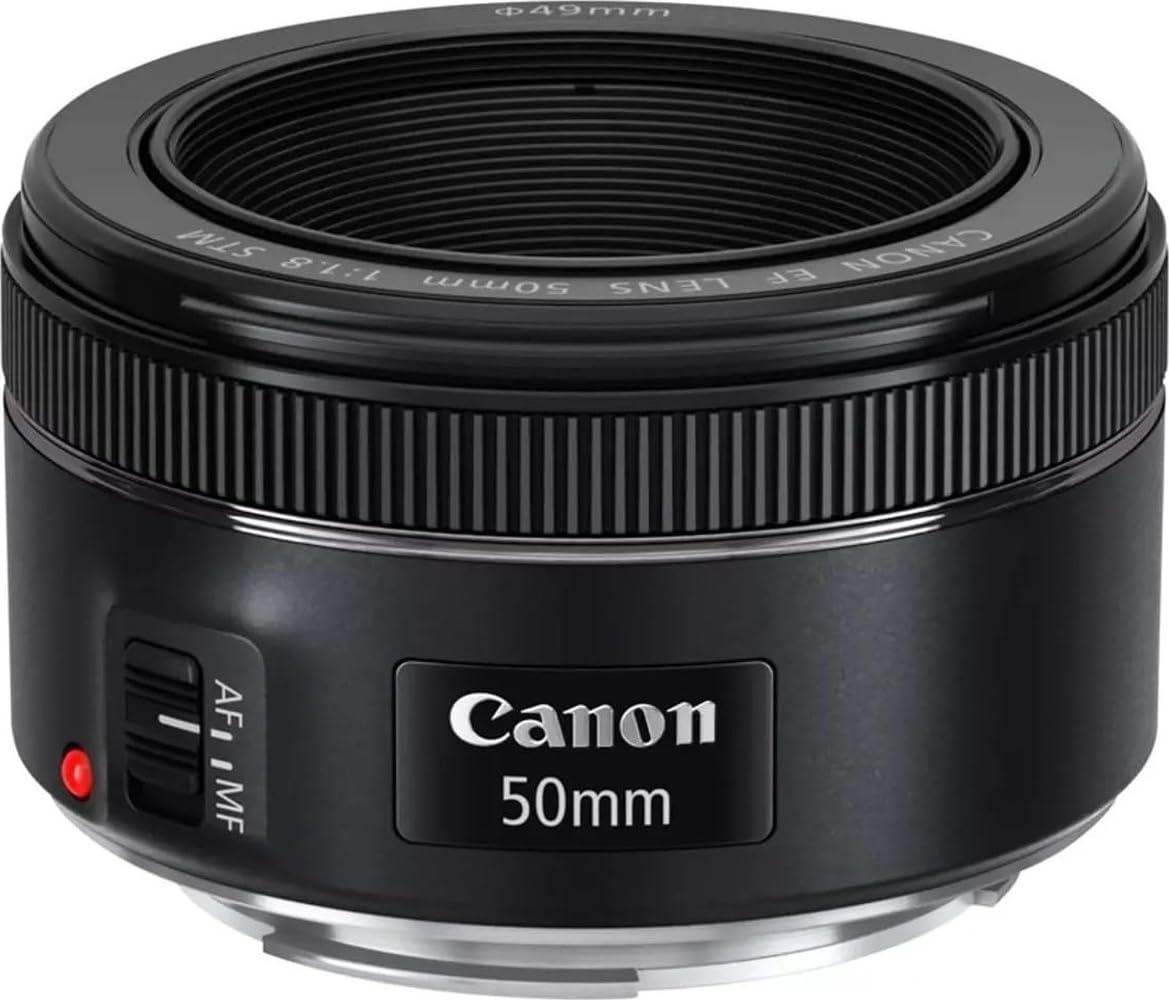
1. Canon EF 50mm f/1.8 STM
Our pick — over 4.5★ from 18,500+ verified ratings; the strongest balance of quality and price.
The nifty fifty that makes a Rebel shoot like a pro.
The 7-blade aperture delivers smooth, creamy bokeh that owners consistently praise as the lens’s standout trait. Owners talk about the “beautiful bokeh” and how the 7-blade aperture creates smooth, soft circles of light behind your subject. It is also sharp, with many noting it stays crisp wide open and improves nicely by f/2.8.
The 50mm focal length on a crop sensor acts like an 80mm lens, making it a fantastic portrait perspective. The stepping motor (STM) autofocus is near-silent and smooth, which matters a lot if you shoot video or want to avoid scaring your subject with a loud whir. At just over a foot of minimum focus distance (0.35 meters), you can get in reasonably close for detail shots, and the metal mount feels reassuringly solid for the price.
Buyers report this glass makes their kit zoom feel obsolete, transforming beginner photos. There are a couple of honest limits: the autofocus speed gets mixed feedback, and there is no image stabilization, so you will want a steady hand in dim light. Owners mention it is “sharp at f/2.8, low CA/vignetting,” which is a technical way of saying the edges stay clean with minimal color fringing.
What Owners Rave About
- Creamy bokeh and beautiful background blur
- Silent, smooth STM autofocus for video
- Feels sturdy with a metal mount
The Trade-Offs
- No image stabilization built in
- Autofocus speed gets mixed feedback
Reach for this if: you own any Canon EF-mount DSLR and want the single biggest image-quality upgrade per dollar.
Look elsewhere if: you need image stabilization or you shoot wildlife where fast focusing is critical.
2. BENOISON 85mm f/1.8 Portrait Lens (Manual Focus)
The cheapest way to get that dreamy 85mm portrait compression.
This is the lens for the patient photographer who wants an 85mm portrait look without paying 85mm prices. The defining spec is the f/1.8 aperture on a telephoto prime, which delivers the soft, blurred backgrounds and flattering face compression that portrait shooters chase. For a beginner, the “quality” is what owners single out most — the optics genuinely impress for the money.
The huge catch, and it is printed right in the product name, is that this is a full manual lens. There are no electronic contacts, so your camera will not detect it and you must set the mode dial to Manual (M) before shooting. You rotate the focus ring and adjust the aperture ring by hand for every shot. Customers note it produced “sharp photos on Canon EOS X7 first try,” which shows the glass is capable, but you are trading autofocus convenience for that sub- price.
It works on a massive list of Canon DSLRs — from the Rebel T8i down to the 4000D, plus full-frame bodies like the 5D Mark IV and 6D Mark II — but it is not for EF-M or RF mount cameras. Compatibility gets mixed feedback because some owners tried mounting it on a Canon M50 Mark II, which is the wrong mount entirely. If you have a compatible DSLR and enjoy the slow, deliberate process of manual focus, this is a fantastic value.
The Verdict: A genuine bargain for the bokeh it produces, but only if you understand that there is no autofocus and no electronic communication with your camera.
3. YONGNUO YN50mm F1.8
A real autofocus nifty fifty for less than the name-brand version.
If the Canon 50mm above is just out of reach, the Yongnuo version gets you most of the same features with autofocus for a fraction of the price. It is a 50mm f/1.8 prime for Canon EF mount, and the “lens quality” is the top praise in owner feedback — it produces wonderfully sharp pictures with good edge-to-edge clarity for a budget optic.
What makes this a genuinely smart pick is the AF/MF switch, so you can flip between autofocus and manual focus as the situation demands. It is also a great companion to the kit 18-55mm zoom, giving you that fast f/1.8 aperture for low light. The whole thing weighs just 120 grams, so you will forget it is in your bag.
The trade-offs are in the details. The autofocus works but is noticeably slow and noisy, which is the most common negative theme in the reviews. The build feels cheap — owners describe the focus ring as loose and the body as less durable than the Canon equivalent. If you want a cheap way to practice with a fast prime before committing to a pricier lens, this delivers, but the autofocus noise will turn up in your video recording.
The Catch: You save real money but accept a plasticky build and a loud, slow autofocus motor that is not ideal for video.
4. TTArtisan AF 50mm F1.8 Neo
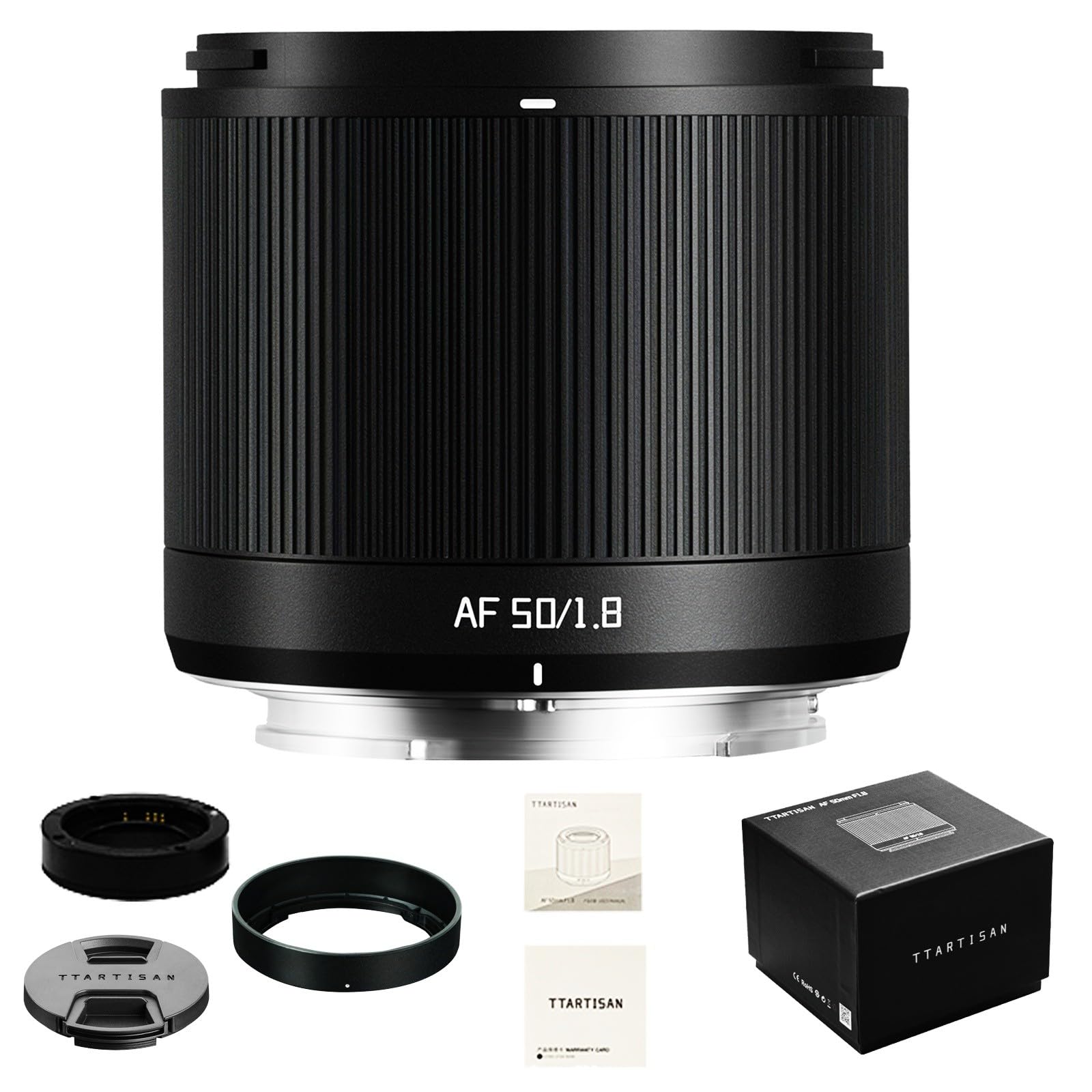
A full-frame Sony autofocus prime that punches way above its price.
This is the lens for Sony E-mount shooters who want a proper full-frame autofocus prime without paying Sony’s premium. The bright f/1.8 aperture creates smooth subject separation and lets you shoot indoors and at dusk handheld. The optical design uses 12 elements in 8 groups, including high-index and ED (extra-low dispersion) elements, which work to keep images sharp and cut down on color fringing.
What makes this a joy to carry is the weight — just 0.33 kg — and the streamlined barrel. It works with Sony’s eye and face detection autofocus systems, so it locks onto subjects’ eyes reliably for portraits. The minimum focusing distance of 0.48 meters lets you get close enough for food and flower shots, and the STM (stepping motor) autofocus is smooth for both stills and video.
Owners uniformly praise it as “crisp” with “bokeh like butter” and a light metal build. There is a minor note that it “struggles focus sometimes,” which is par for the course at this price point. If you have a Sony full-frame body or even an APS-C like the NEX-6, this is a shockingly good value that quickly becomes your go-to street lens.
Reach for this if: you shoot Sony and want a compact, metal-built 50mm with reliable autofocus for street and portraits.
Look elsewhere if: you need lightning-fast tracking for sports, where occasional focus hunting will frustrate you.
5. YONGNUO YN35mm F2N

A wide-angle 35mm for Nikon shooters who want fun backgrounds.
Nikon DSLR owners get their own budget prime here, a 35mm f/2.0 wide-angle that doubles as a walkaround lens. The value is the headline — it is the most-praised aspect of this lens, with owners calling it a “super bargain” that performs close to their Nikon-brand 35mm at about half the cost. The f/2.0 aperture is a touch slower than the f/1.8 lenses on this list, but it still blurs backgrounds nicely.
The 7-blade aperture is the fun spec, because it produces near-circular out-of-focus highlights (the “bokeh balls”) and can even create a 14-point star effect when you stop down. It supports both autofocus and manual focus, and it works with Live View focusing, which is handy for shooting from low or high angles using the screen. The metal bayonet mount adds durability confidence.
This is where you hit the honest trade-off that Yongnuo is known for: the autofocus is the weak link. It gets a lot of negative feedback for being noisy and sometimes producing soft focus even at low f-numbers. The image quality also gets mixed reviews, with some saying it rivals Nikon zooms and a few reporting blurry results. This is a lens for patient shooters who value the price and are fine letting the AF hunt a bit.
The Reality: Phenomenal value for the optics, but the noisy autofocus and occasional soft focus mean you will want to shoot in good light or use manual focus.
6. TTArtisan AF 35mm F1.8 II
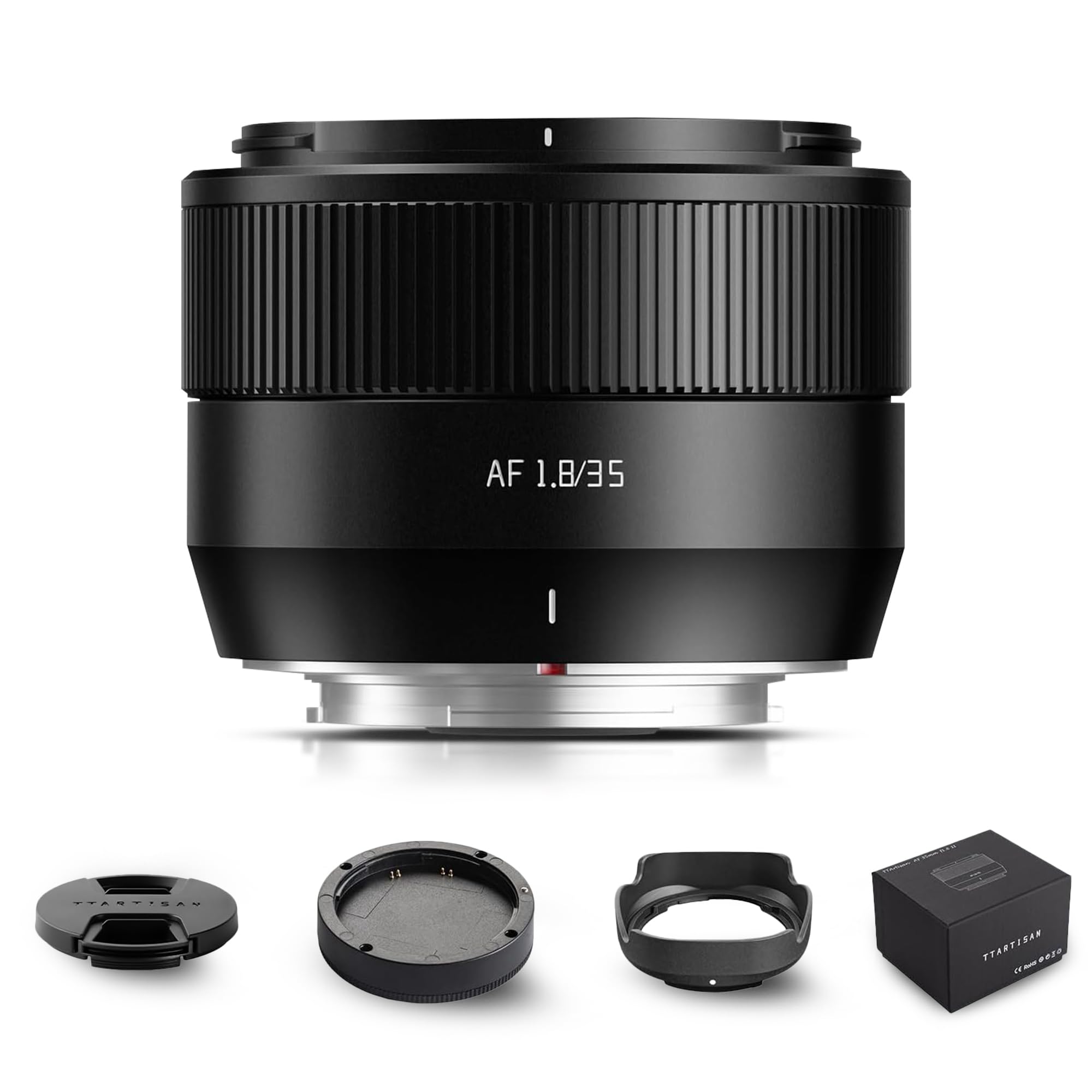
A featherlight X-mount prime with eye-tracking autofocus.
Fujifilm X-mount shooters looking for a compact everyday prime will love this one. It is the second version of TTArtisan’s 35mm, and the headline upgrade is weight — dropped from 199g to 176g so you can shoot all day without your camera feeling heavy. The 35mm focal length gives an equivalent of about 53mm on full-frame, which is very close to the natural human eye’s field of view.
The autofocus is genuinely modern here, using an STM and lead screw-type stepping motor that supports eye, animal, and car recognition on compatible Fuji bodies. It is smooth and quiet, which is exactly what you want for street photography where you need to be unobtrusive. The minimum focusing distance was also improved from 0.6m down to 0.4m, so you can get nice and close for food and craft shots.
There is a real split in owner opinions on this one. The value is praised as “insanely good” with “great image quality,” but a couple of owners found it a downgrade from their kit zoom, complaining about crunchy autofocus and softness. That stark divide suggests you should temper expectations — this is a fun, compact prime, not a lens that will outresolve Fuji’s expensive options.
Reach for this if: you want a light, cheap, everyday Fuji prime with modern eye-detection autofocus.
Look elsewhere if: you demand tack-sharp corners at every aperture and expect it to beat your kit zoom.
7. Meike 50mm F1.8 AF
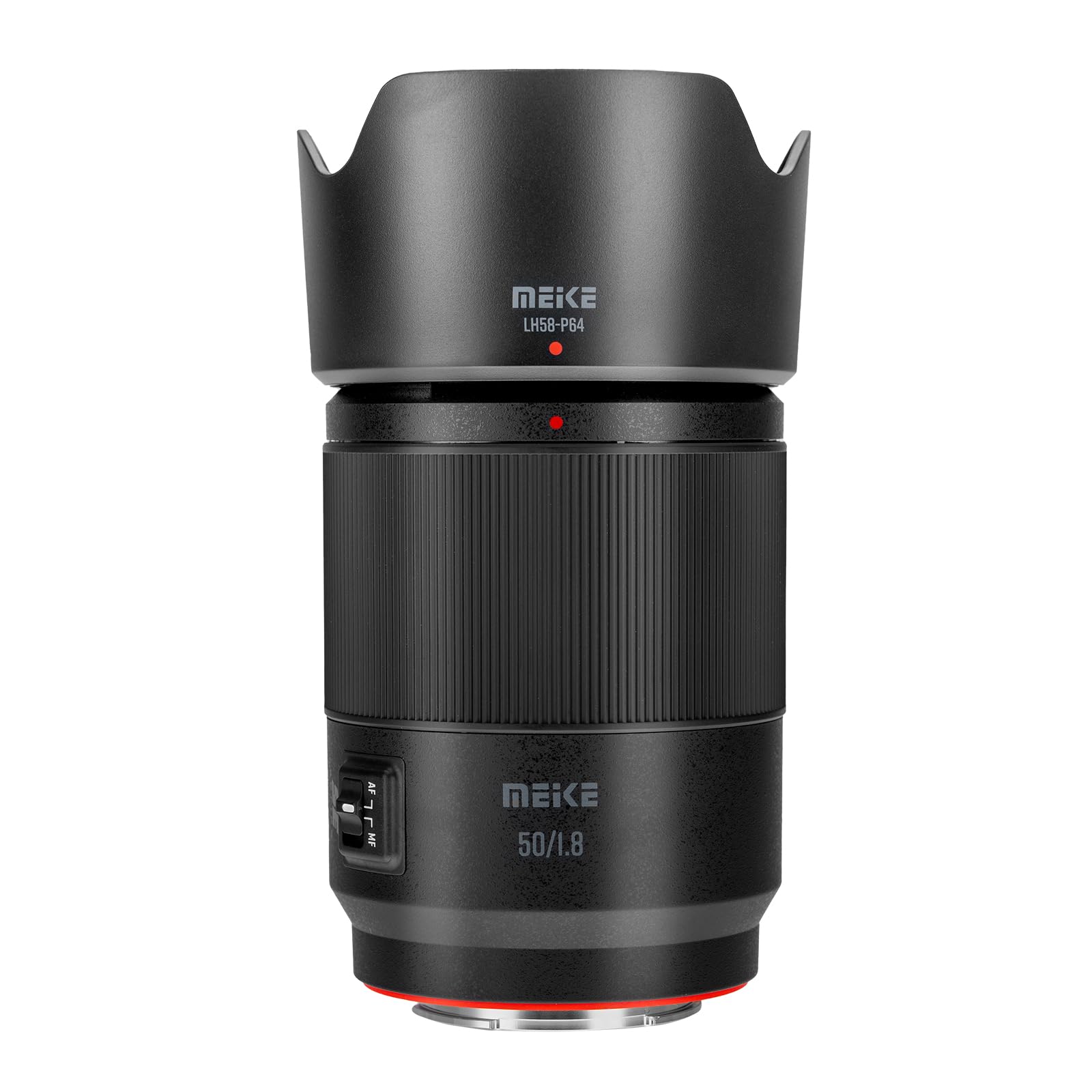
A Sony full-frame prime that shocks owners with its sharpness.
This is the lens for Sony full-frame shooters on a budget who refuse to compromise on portrait quality. It is a classic 50mm f/1.8 that works with bodies like the A7iii, A7R3, and A7R4, and it also drops onto APS-C cameras like the A6000 series. The autofocus is the top praised feature, using an STM stepping motor that helps reduce camera shake and keeps noise low.
Owners are genuinely shocked by this lens, with the review pages full of “best purchase so far” and praise for its sharpness and creamy bokeh. The 11-group, 7-element construction delivers sharp images, and the multi-layer coating helps control flare. It is a solid, lightweight option at 300 grams, and the manual focus ring is smooth for when you want to take control.
There are two honest quirks to know. One owner found the minimum focus distance to be poor, and the front ring is plastic. Also, if you ever hit autofocus failure, the firmware upgrade path only works on Android devices via a Type-C interface, not on Mac. But at this price, the sharpness, speed, and bokeh make it an incredible value that owners say may even surpass Sony’s own lenses.
The Takeaway: Surprising optical quality and fast AF for Sony shooters who have always assumed cheap glass means soft glass.
8. VILTROX 35mm F1.7 Air E

The sharpest budget glass on this list, ready for Sony APS-C.
This lens rewrites affordable-prime expectations with incredible sharpness even wide open at f/1.7. It is the standout performance pick for Sony APS-C shooters, and the “lens quality” is the most-praised aspect by a wide margin. The slightly wider-than-usual f/1.7 aperture gives you a bit more light and blur than the standard f/1.8 crowd.
The optical design is seriously impressive for the price: 11 elements in 9 groups, including 2 high-refractive (HR) elements, 1 extra-low dispersion (ED) element, and 1 aspherical element. That combination minimizes chromatic aberration, distortion, and flare. At just 170 grams with a durable metal body, it is incredibly portable, and the new STM motor delivers fast, near-silent autofocus with minimal focus breathing for video.
Owner reviews are glowing, describing it as “tack sharp” with colors and contrast that rival lenses costing multiple times more. Some owners even say its image quality exceeds Fuji’s 35mm f/2 and matches the 33mm f/1.4 at a fraction of the cost and weight. The 0.48m minimum focusing distance and the included extended lens hood round out a package that is hard to argue with.
Why It Wins
- Exceptional sharpness even at f/1.7
- Weighs only 170 grams with a metal body
- Fast, quiet autofocus with minimal focus breathing
Keep In Mind
- No image stabilization built in
- The shallow depth of field can be tricky to master
Reach for this if: you shoot Sony APS-C and want the sharpest, most portable walkaround prime for the money.
Look elsewhere if: you need a stabilized lens or you prefer a longer focal length for portraits.
9. Canon RF50mm F1.8 STM

The compact native 50mm for Canon mirrorless shooters.
If you have moved to Canon’s RF mount — an EOS R, RP, R5, or R6 — this is the affordable prime you want. It is a compact, lightweight fixed 50mm with a large f/1.8 aperture for low-light shooting and creative background blur. The gear-type STM (stepping motor) provides smooth, quiet continuous autofocus, which is especially important for video recording where noisy AF motors ruin clips.
The standout design feature is the control ring on the barrel, which lets you make direct setting changes like adjusting exposure compensation without taking your eye from the viewfinder. The lens construction uses tune placement and coatings to deliver good color balance while minimizing ghosting and flare, so you get clean, contrasty images even shooting into the light.
Owners love this as their go-to prime, with one calling it “worth every penny” and praising its quality in low-light settings. It weighs only 5.6 ounces, making it an incredibly compact addition to your kit. The one caveat is that this listing is a Renewed (refurbished) unit, and some owners note it is not dramatically better than the older EF version with an adapter — but for a native RF prime, it is a smart, affordable choice.
The Verdict: A compact, quiet, native prime that gives Canon mirrorless users the classic 50mm look with a handy control ring.
Understanding the Specs
Aperture and Bokeh
The aperture, written as f/1.8 or f/1.7, controls how wide the lens opens to let in light. A lower number means a wider opening, which allows more light for shooting in dim conditions without a flash. It also creates a shallower depth of field, meaning the background falls into a soft blur — that blur is called bokeh. A 7-blade aperture like the ones on many budget primes makes those out-of-focus highlights rounder and more pleasing. For portrait work, a wide aperture like f/1.8 is the whole point of buying a prime lens.
Focal Length and Sensor Crop
The focal length, measured in millimeters, determines how zoomed-in your view is. A 35mm lens shows a wider scene, a 50mm feels natural, and an 85mm magnifies faces for portraits. On an APS-C camera (a crop sensor), the field of view is narrower than on full-frame — a 50mm lens acts like an 80mm on a crop body. This means the same lens looks different depending on your camera, so think about your sensor type when choosing between 35mm and 50mm.
FAQ
What does a prime lens do differently from a kit zoom lens?
Will a Canon EF lens work on my Canon RF mirrorless camera?
Why is the BENOISON 85mm lens so cheap?
Is a 50mm f/1.8 lens good for portraits on an APS-C camera?
What is the difference between 35mm and 50mm for everyday shooting?
Why does the autofocus on budget lenses sometimes fail or hunt?
Is image stabilization important on a prime lens?
Can I do video recording with these affordable prime lenses?
Should I buy the cheap manual focus lens or the cheaper autofocus lens?
What is bokeh and why does everyone talk about it?
Final Thoughts: The Verdict
The best affordable prime lenses pick is the Canon EF 50mm f/1.8 STM because it delivers gorgeous bokeh, silent autofocus, and a metal mount for a price that makes it the crowd favorite among thousands of owners. If you shoot Sony APS-C and want the sharpest glass for the cash, grab the VILTROX 35mm F1.7 Air. And for patient beginners on a strict budget who love the classic 85mm portrait look, the BENOISON 85mm f/1.8 manual lens is a fantastic first step. Whichever mount your camera uses, one of these lenses will transform your photos more than any other affordable upgrade.
How We Picked
We do not accept paid placement. Every pick is matched to a real buyer and a real use-case; we do not hands-on test units.
Sources & Methodology
Specifications: manufacturer listings and product documentation. Review insights: verified customer reviews, as of August 2026. Pricing: not shown on this page (it changes often); check the current price via the retailer link.
As an Amazon Associate, Gadgets Feed earns from qualifying purchases. This does not affect which products we feature.