
Our readers keep the lights on and my morning glass full of iced black tea. As an Amazon Associate, I earn from qualifying purchases.
You want a robot mower that does the job while staying affordable or leaving your lawn looking like a checkerboard. The problem is that “affordable” in this category often means flimsy navigation, dead batteries after one session, or a tangled mess of perimeter wire you have to bury yourself. This guide cuts through the noise to show you which wire-free robot mowers actually deliver a clean, consistent cut for small to medium yards without the premium price tag or the setup headaches.
I’m Min — the co-founder and writer behind Gadgets Feed. This guide is built by comparing the manufacturers’ published specifications and the patterns across verified customer reviews, so you get each pick’s real strengths and trade-offs instead of marketing spin.
From a sub- model that you can literally drop-and-mow to premium units with LiDAR vision, these picks are the best affordable robot lawn mower options for keeping your grass short while you stay inside.
How To Choose The Best Affordable Robot Lawn Mower
Picking the right mower is about matching the tech to your yard’s size and shape. The biggest mistake is buying a model that doesn’t match your lawn’s square footage or slope, which leads to constant recharging or a mower that gets stuck every ten minutes. Here are the three specs that matter most.
Navigation System: Wire-Free vs. Perimeter Wire
The navigation system is the brain of the mower. Basic wire-free models use optical sensors or a camera to figure out where the grass is, while more advanced units use RTK (a GPS-based technology that works with a reference station for centimeter-level accuracy) or LiDAR (a laser-based system that fires pulses to build a 3D map) to create precise maps. For an affordable robot mower, RTK + Vision is the sweet spot — it gives you wire-free setup and reliable tracking, even under trees, without the cost of a LiDAR system.
Lawn Size and Battery Runtime
Your lawn’s square footage determines how long the mower needs to run. Most affordable models are designed for a quarter-acre or less. Check the battery runtime in minutes — a 60-minute battery covers a small yard in a single charge, while a 45-minute runtime might require a recharge mid-mow. A 24V 8.0Ah battery (like the one in the LawnMaster OcuMow) can last around 4 to 6 hours, which is a solid benchmark for this price range.
Cutting Height and Slope Handling
The minimum cutting height (as low as 0.8 inches on some models) lets you cut grass as short as you like for a tidy look, while the maximum height (up to 3.6 inches) lets you leave it longer in hot weather to protect the roots. Slope handling is measured in degrees or percentages — a mower that handles a 20-degree slope is fine for most flat or gently sloped yards, but you need a 45% slope rating if you have a hilly property. Look for a wide adjustment range so you can adapt to seasonal grass growth.
Quick Comparison
On smaller screens, swipe sideways to see the full table.
| Model | Category | Best For | Key Spec | Amazon |
|---|---|---|---|---|
| ANTHBOT M5 | Mid-Range | Small yards with slopes | 7.9-inch cutting width | Amazon |
| Segway Navimow i110N | Mid-Range | Complex lawns with trees | 60-minute battery | Amazon |
| LawnMaster OcuMow MAX | Budget | Entry-level drop-and-mow | 10.7 pounds weight | Amazon |
| YARDCARE N1600 PRO | Mid-Range | Edge-to-edge cutting | 0.8-inch min cut height | Amazon |
| Segway Navimow i206 AWD | Premium | Hilly, uneven terrain | 7.1-inch cutting width | Amazon |
| Sunseeker X3 Plus | Mid-Range | Suburban yards up to 0.3 acre | 8-inch cutting width | Amazon |
| ANTHBOT Genie 3000 | Premium | Large, complex yards | 46 pounds weight | Amazon |
| WORX Landroid Vision Cloud | Premium | Tech enthusiasts | 8.7-inch cutting width | Amazon |
| eufy Robot Lawn Mower E15 | Premium | Pure Vision navigation fans | 8-inch cutting width | Amazon |
| ECOVACS Goat O1000 LiDAR PRO | Premium | Shaded, narrow yards | 8.66-inch cutting width | Amazon |
In‑Depth Reviews
1. ANTHBOT M5
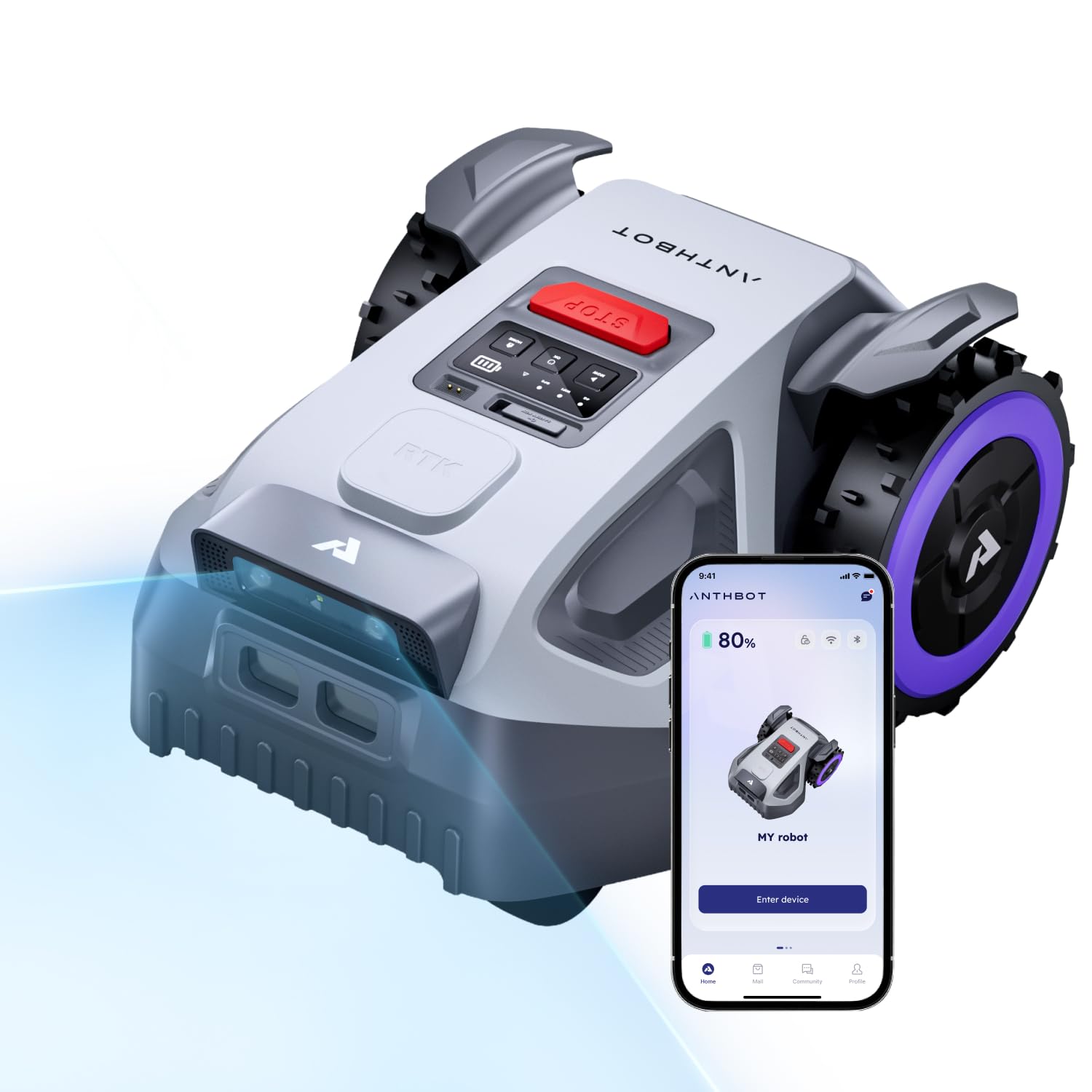
The ANTHBOT M5 earns its spot at the top because it gives you two things most affordable mowers don’t: a dual-camera vision system and RTK (a GPS-based positioning technology that works alongside satellites) together, at a price that still feels fair for a homeowner. It handles slopes up to 45% (the manufacturer says that covers over 99% of residential properties) so you can trust it on a steep hill that would stop the Segway Navimow i110N.
You get a 7.9-inch cutting width that can mow a 50×50 foot yard completely in about 2.5 hours with a crosshatch pattern, buyers report. The adjustable cutting height ranges from 1.2 to 2.7 inches — a 50% higher minimum cut than the YARDCARE N1600 PRO (1.2 inches vs 0.8 inches), which means it leaves the grass a bit longer if you prefer a taller lawn in hot weather. Owners mention the app-controlled multi-zone management (up to 20 zones) and auto-mapping that takes only 10 minutes make setup simple, though one reviewer noted the app can be a bit inconsistent for fine-tuning no-go zones.
This is the one to buy if you want a balanced package: solid navigation, real slope handling, and a price that doesn’t make you flinch. skip it if you need the absolute shortest cut — the 1.2-inch minimum won’t scalp a lawn like the YARDCARE can.
Why it’s great
- Wire-free setup with dual AI vision cameras
- Handles 45% slopes and obstacles effectively
- 7.9-inch cutting width covers small yards fast
Good to know
- Limited to 0.15 acre per charge
- App interface can be inconsistent for zone adjustments
2. Segway Navimow i110N

The Segway Navimow i110N beats the ANTHBOT M5 on battery runtime (60 minutes vs not specified for the M5) but falls short on slope handling — it tops out at an unlisted spec that reviewers imply is well below the ANTHBOT’s 45%. Its EFLS 2.0 navigation system (a Segway-developed combination of RTK and vision sensors) is the standout feature here, delivering centimeter-level accuracy even under 95% tree cover, according to one reviewer with a shaded yard.
The real strength of the Navimow i110N is its AI-assisted mapping that automatically detects lawn edges as you guide it through the app, so you don’t have to manually drive it around. A 4-inch maximum cutting height (the highest in this mid-range group) means you can keep grass longer during drought, and the 140-degree field-of-view camera detects over 150 object types. One buyer mentioned it saves about 4 hours of manual mowing per month.
Choose the Navimow i110N over the ANTHBOT M5 if your yard has heavy tree cover or narrow passages where GPS usually fails, and you want a mower that’s more established on the market with a 3-year warranty. Just know it does get stuck in divots on damp grass, and its 60-minute runtime means a quarter-acre yard requires multiple charging trips.
Where it shines
- Excellent RTK+Vision works under heavy tree cover
- AI-assisted auto mapping for quick setup
- 60-minute battery covers most small yards
Worth noting
- Gets stuck in holes and on damp grass
- GPS signal can drift near tall buildings
3. LawnMaster OcuMow VBRM601YCM MAX
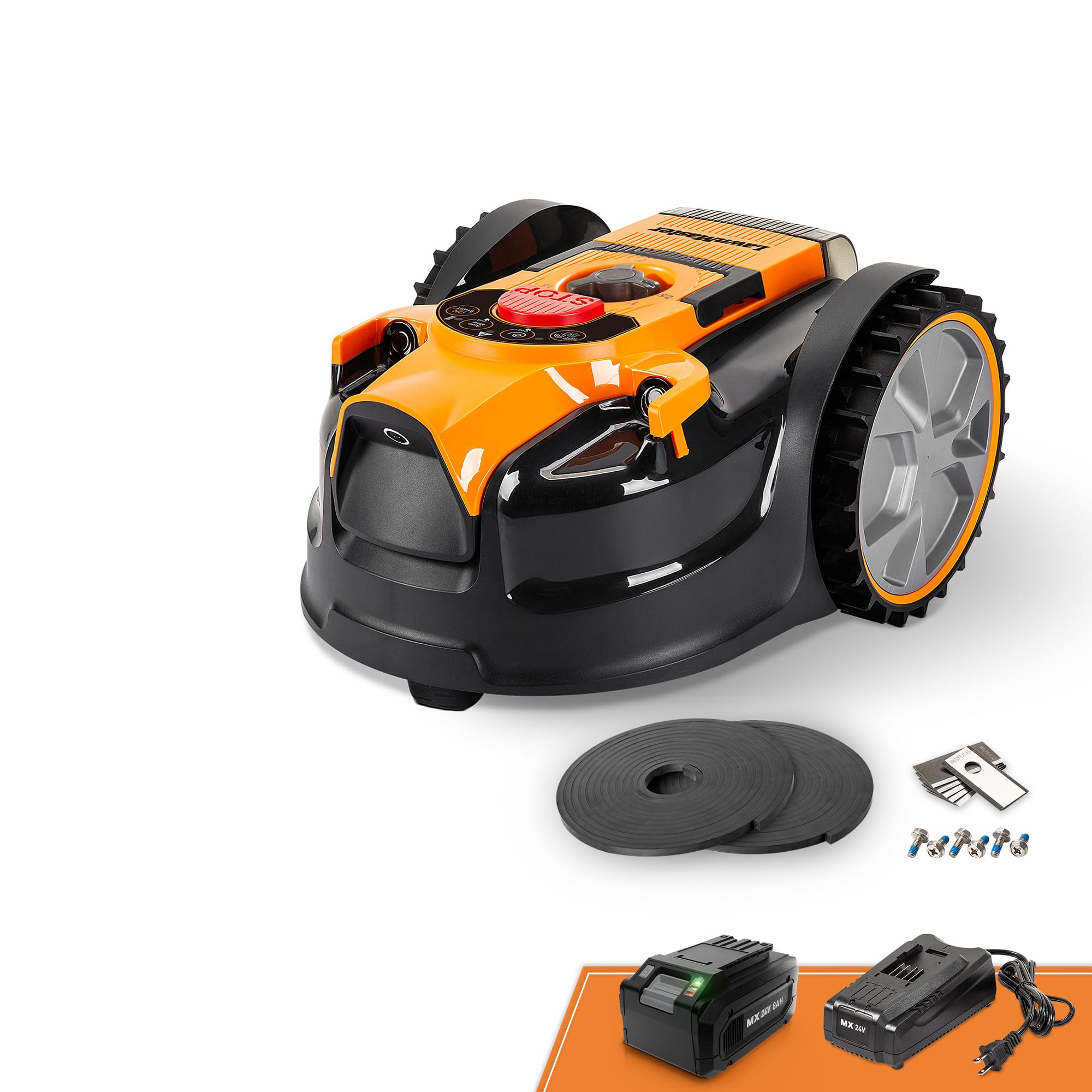
If you just want to drop a mower on a flat patch of grass and watch it go without ever opening an app or installing a base station, the LawnMaster OcuMow VBRM601YCM MAX is your machine. At only 10.7 pounds, it is a full 3.7 times lighter than the YARDCARE N1600 PRO (39.5 pounds), so you can easily carry it out to the yard and pick it up to move it to a new area. It’s for the buyer who wants a no-app, no-base-station robot mower that simply cuts grass on a small lawn (2,000 to 3,500 square feet).
Customers note a single charge lasts around 6 hours on a 24V 8.0Ah battery, covering that whole area in one session. The optical navigation uses a wide-angle camera and ultrasonic sensors to detect grass and avoid obstacles as small as 6 inches, and magnetic strip strips (included) create virtual no-go zones. Reviewers love the simplicity — “plug and play, couldn’t be easier” is a common sentiment — but note it avoids tall weeds, and the random zigzag pattern can leave your lawn looking uneven if you have complex beds or irregular edges.
The big trade-off is that there’s no app, no dock, and no automatic schedule, so you have to remember to turn it on. But if you have a simple, flat yard and want a sub- robot mower that just works, this is the one. At 10.7 pounds with a 6-hour runtime and no app required, it’s the lightest, longest-running drop-and-mow robot in this guide.
What stands out
- Ultra-light at 10.7 pounds — easily portable
- No app, no base station needed — just press start
- 6+ hour battery life on a single charge
The trade-offs
- Random mowing pattern leaves uneven look
- No automatic scheduling or docking
4. YARDCARE N1600 PRO
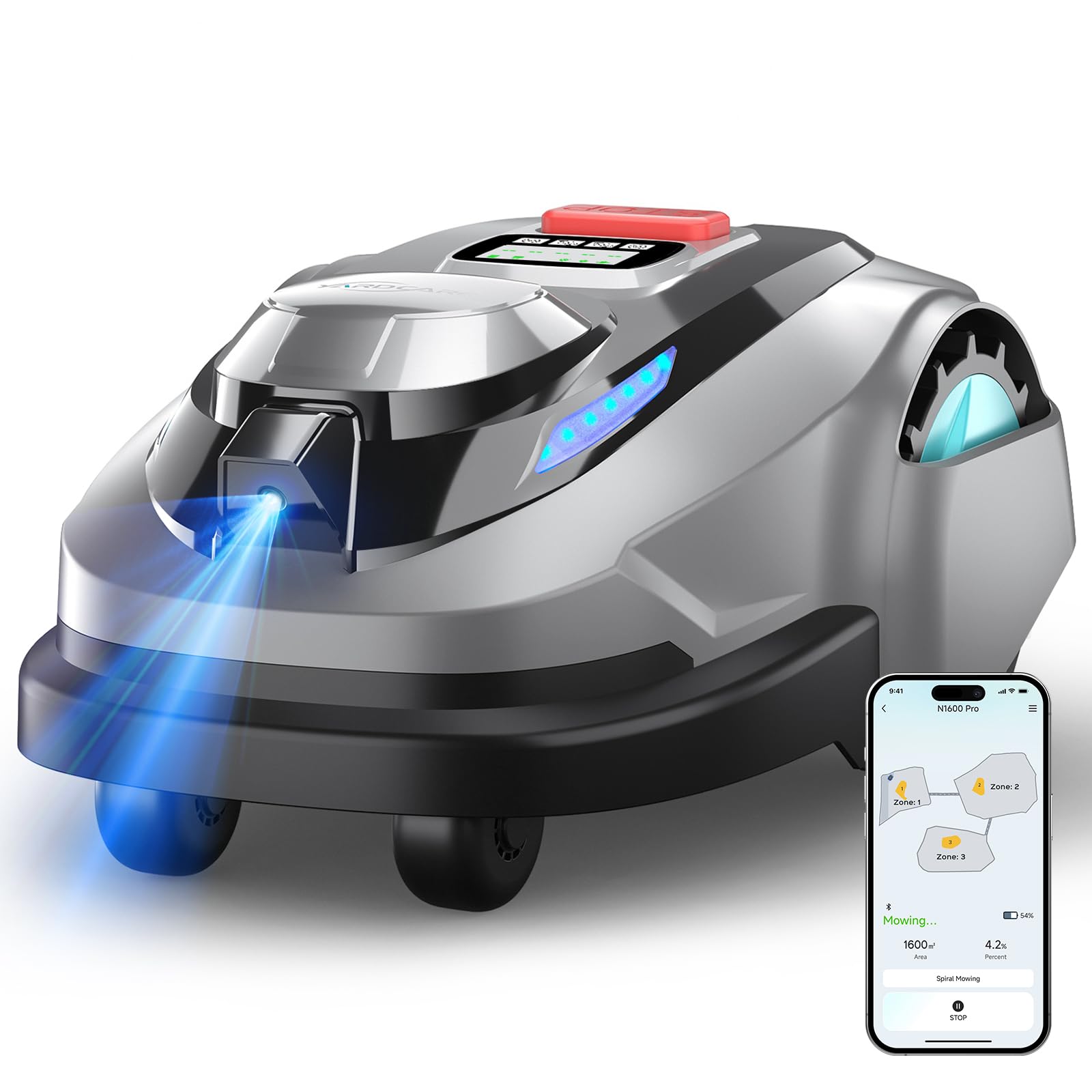
The single number that matters most in the wire-free robot mower category is the minimum cutting height, because it determines how short you can get your grass. The YARDCARE N1600 PRO hits a low of 0.8 inches — 50% lower than the ANTHBOT M5’s 1.2-inch minimum — which means you can scalp a lawn for a spring clean-up or keep Bermuda grass perfectly short. It also covers up to 0.4 acres, making it one of the higher-capacity models in the mid-range group.
The catch is weight: at 39.5 pounds, this mower is a full 3.7 times heavier than the LawnMaster OcuMow (10.7 pounds), so lifting it over a garden bed or carrying it to a backyard shed is a two-hand job. The RTK and vision navigation delivers systematic mowing with professional stripes, according to reviewers, and the app lets you manage multiple zones without boundary wires. Battery life is rated at 45 minutes, which is enough for a smaller area but means it will need to recharge for larger yards.
If you’re willing to sacrifice portability for a lower cut and a larger coverage area, this is a solid mid-range workhorse. pass on it if you need to move the mower around often — the 39.5-pound heft makes that a chore, which gives it a price-to-value read that favors performance over convenience.
The upsides
- Cuts as low as 0.8 inches — excellent for Bermuda grass
- RTK + Vision navigation delivers systematic stripes
- Covers up to 0.4 acres per charge cycle
Keep in mind
- Heavy at 39.5 pounds — not portable
- 45-minute battery may need recharging for larger lawns
5. Segway Navimow i206 AWD
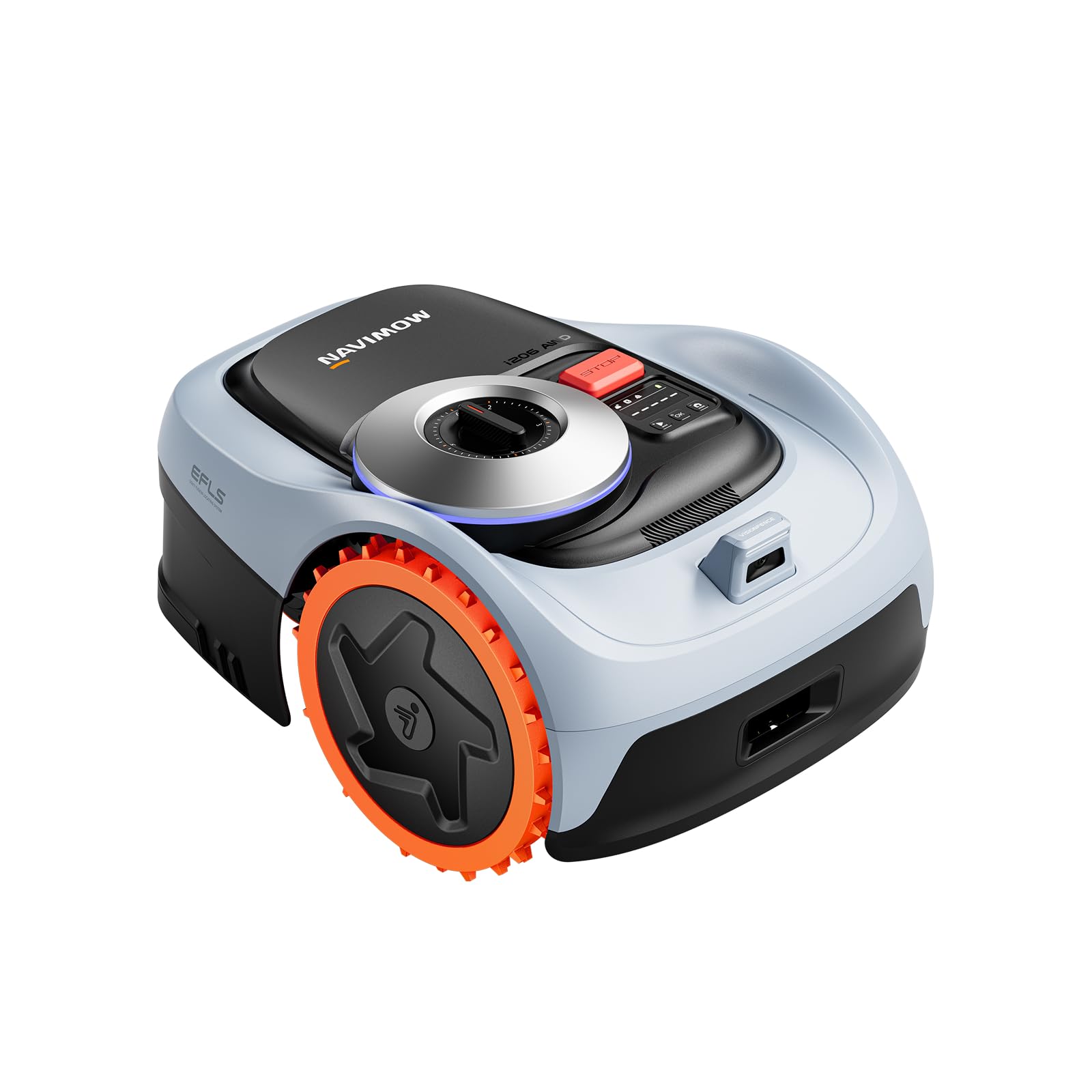
At a slightly higher investment than the ANTHBOT M5, the Segway Navimow i206 AWD is built for one thing: handling slopes and uneven terrain that would stop other mowers in their tracks. Its all-wheel drive system with automotive-grade electronic stability control can handle a 45% grade — the same rating as the ANTHBOT M5, but with the added traction of four powered wheels instead of two.
You also get zero-turn steering (a third wheel design that pivots without scraping the grass), an adjustable cutting height from 2 to 3.6 inches, and a 7.1-inch cutting width. One reviewer called it “smart, quiet, handles slopes and obstacles well” — though a different owner reported theirs stopped working after two months. The on-demand drive system saves battery by only engaging the extra wheels when needed, giving you a 2.5Ah battery that covers up to 1,350 square feet per charge.
This mower is the right choice if your yard has steep hills, drainage ditches, or uneven patches that a two-wheel-drive mower would struggle with. Just be aware the setup requires careful attention to the app’s configuration, and the smaller battery means it’s best for lawns of about 0.15 acres or less — making it the perfect budget buy for a small, sloped yard that needs four-wheel traction.
Why we’d pick it
- All-wheel drive handles steep 45% slopes with ease
- Zero-turn steering protects grass from scuffing
- On-demand drive saves battery power on flat ground
A few caveats
- 2.5Ah battery only covers about 0.15 acres
- Setup is technical and can be frustrating
6. Sunseeker X3 Plus
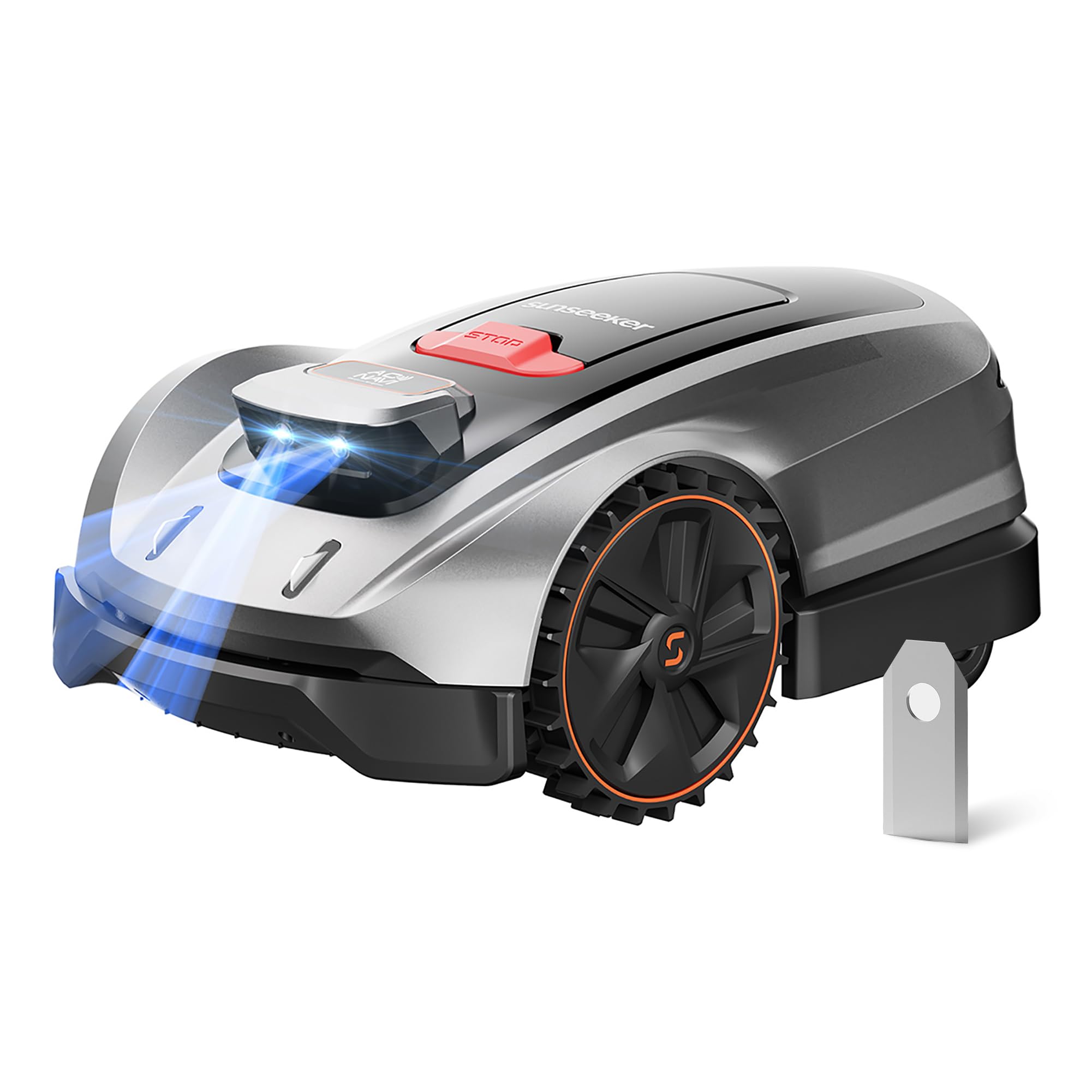
The Sunseeker X3 Plus is built for the suburban homeowner who has a front yard, a backyard, and maybe a side strip, and wants one mower that handles all three without needing extra hardware.
The ride-on-edge cutting design (an offset blade that lets the mower get closer to fences and flower beds) reduces the amount of string trimming you’ll need to do by hand. The cutting height adjusts between 1.6 and 3.2 inches across 7 positions, and the 8-inch cutting width is 11% wider than the YARDCARE N1600 PRO’s 7.09-inch cut. Reviewers praise its ability to climb slopes and recover from tricky spots — one noted it excels where a previous mower failed — but some experienced signal dropouts in areas with poor GPS reception.
If you have a multi-area suburban lot and want a reliable mower that edges closer to borders than most, the Sunseeker X3 Plus is a solid middle-ground pick between the budget models and the premium LiDAR units, though its reliance on GPS means it may struggle in spots with weak satellite reception.
Strong points
- Ride-on-edge cutting reduces manual trimming
- Covers up to 0.3 acre — more than most mid-range mowers
- 8-inch cutting width for faster coverage
Before you buy
- GPS signal can drop in areas with poor satellite view
- App setup may need a bit of patience for connection
7. ANTHBOT Genie 3000
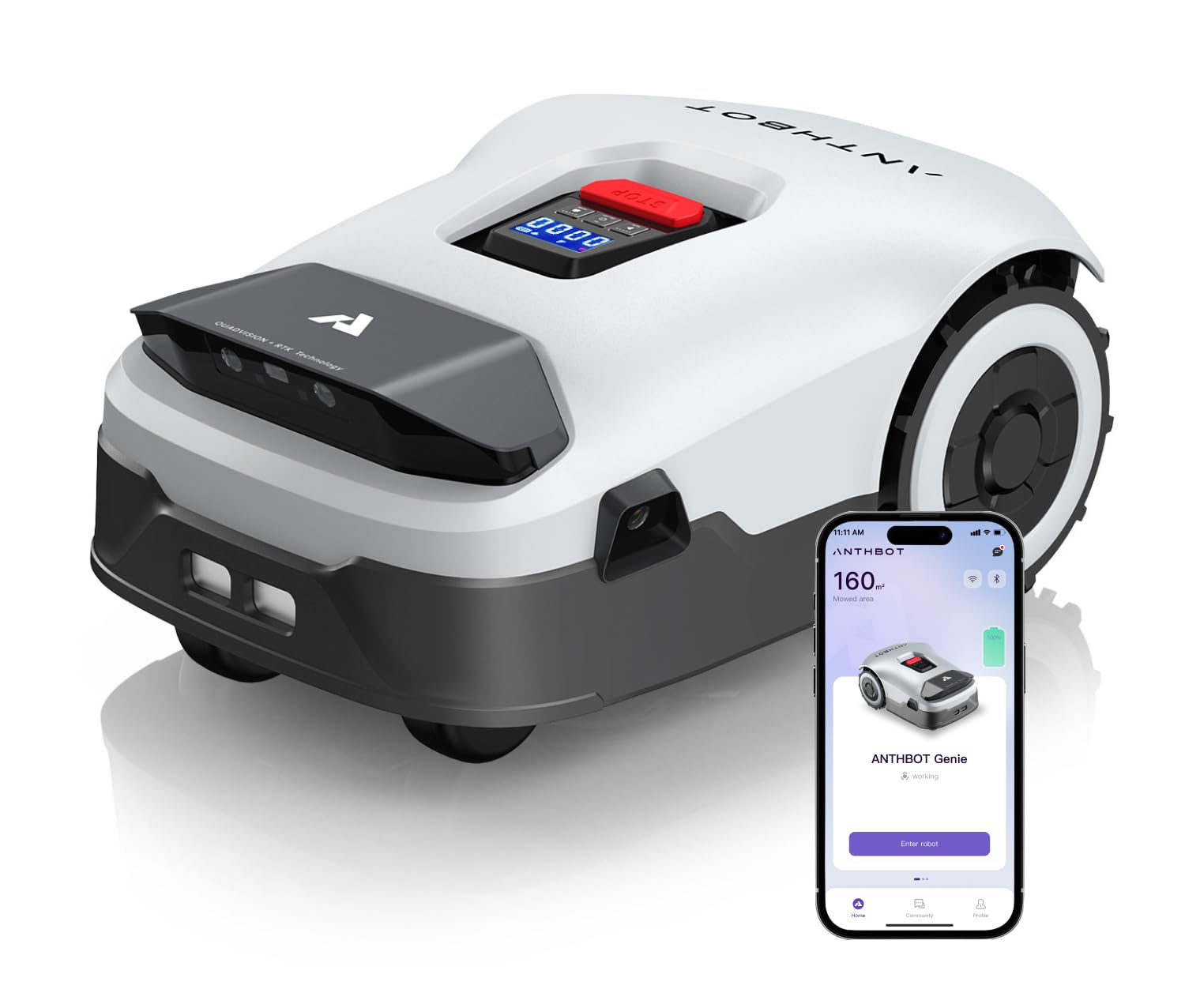
At its price point, the ANTHBOT Genie 3000 offers a vision-based obstacle detection system that far exceeds what comparably priced competitors provide, making it a strong value for buyers who prioritize smart navigation over raw cutting power.
For that money, you get a 46-pound aluminum and plastic mower that handles up to 30 zones with customizable no-go areas, a cutting height from 1.18 to 2.76 inches, and a 7.9-inch cutting width. Reviewers point out the setup is straightforward in about an hour, and after five weeks of use, one noted the lawn had a “golf course look” with no dandelions. The downside is it gets stuck in bushes if you don’t set no-go zones properly, and some shoppers say firmware updates are needed to iron out edge mowing behavior.
If you have a larger yard and want a mower that can handle convoluted perimeters and steep terrain while learning from AI updates, the Genie 3000 is a compelling step up from the mid-range — but you’ll need to put in some setup time for the best results. The one clear reason to choose it is its 4-Eye Vision system, which detects over 1,000 object types — more than five times what the Navimow i110N can identify — giving you the most advanced obstacle avoidance in this price bracket.
What we like
- Covers up to 0.9 acre — largest area in this list
- 4-camera AI detects over 1,000 object types
- 30-zone management for complex lawn layouts
The downsides
- Heavy at 46 pounds — not easily portable
- Firmware updates are needed to improve edge behavior
8. WORX Landroid Vision Cloud WR320
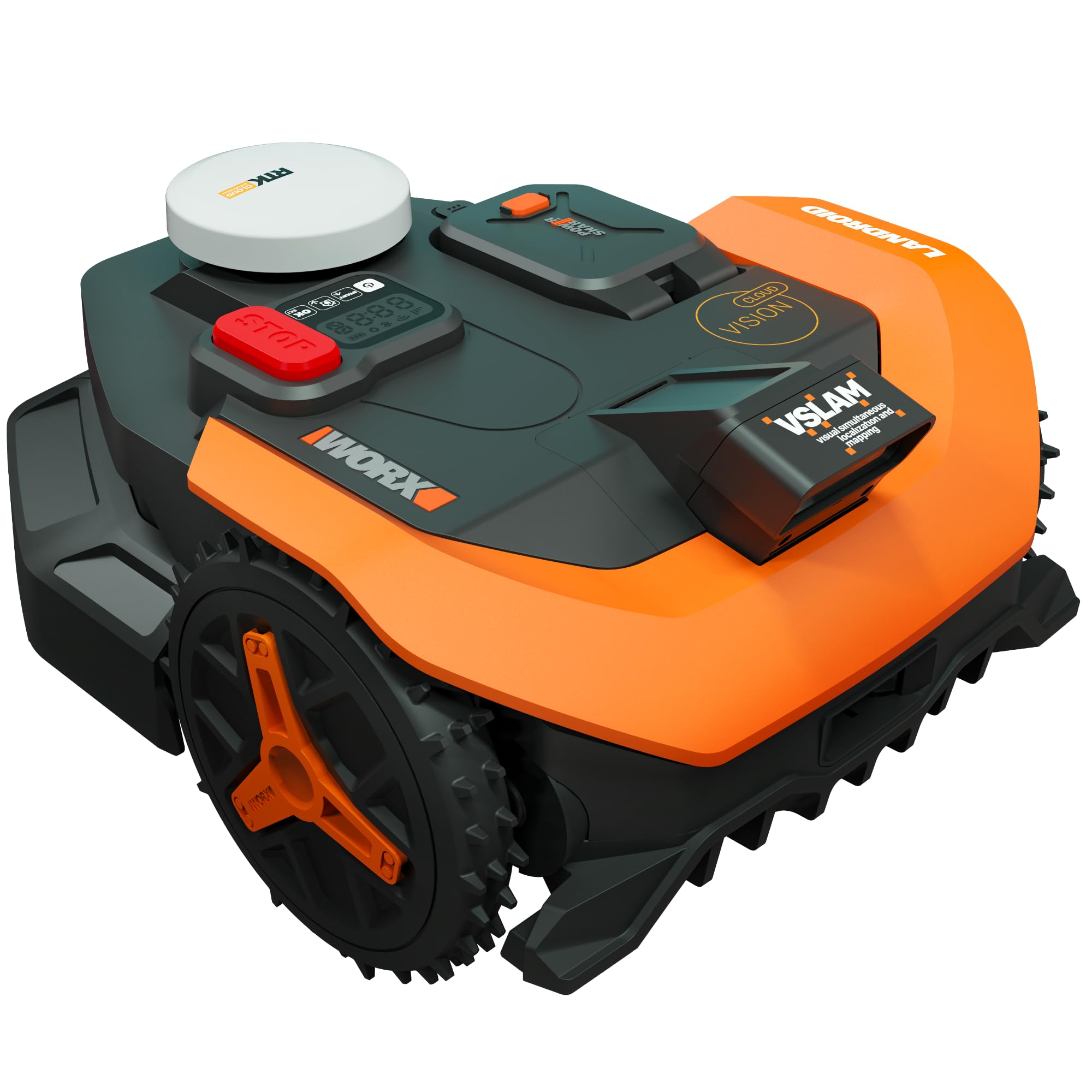
The WORX Landroid Vision Cloud WR320 uses cloud-based RTK navigation — no local GPS antenna needed — and is for homeowners who want the most advanced boundary detection and stripe-pattern mowing in an affordable robot mower.
This mower has the widest cutting width in the list at 8.7 inches and the highest maximum cutting height at 3.54 inches, making it ideal for fescue or tall fescue lawns. The RadioLink connectivity extends Bluetooth and Wi-Fi range across larger properties, and battery life is 60 minutes with a recharge time of 30-45 minutes, according to one reviewer. A few owners hit a wall with the setup: it requires a dedicated 2.4GHz Wi-Fi network, and some reported lockups when the base station was more than 50 feet away.
If you want the most advanced navigation system in the pack and appreciate the ability to change mowing patterns on the fly from your phone, this is your mower — but be ready to troubleshoot the connectivity if your Wi-Fi isn’t perfectly placed.
Why it’s great
- Widest cutting width at 8.7 inches
- Cloud RTK with multiple mowing patterns
- Highest max cut height at 3.54 inches
Good to know
- Requires dedicated 2.4GHz Wi-Fi — no 5GHz support
- Software issues reported with connectivity and lockups
9. eufy Robot Lawn Mower E15
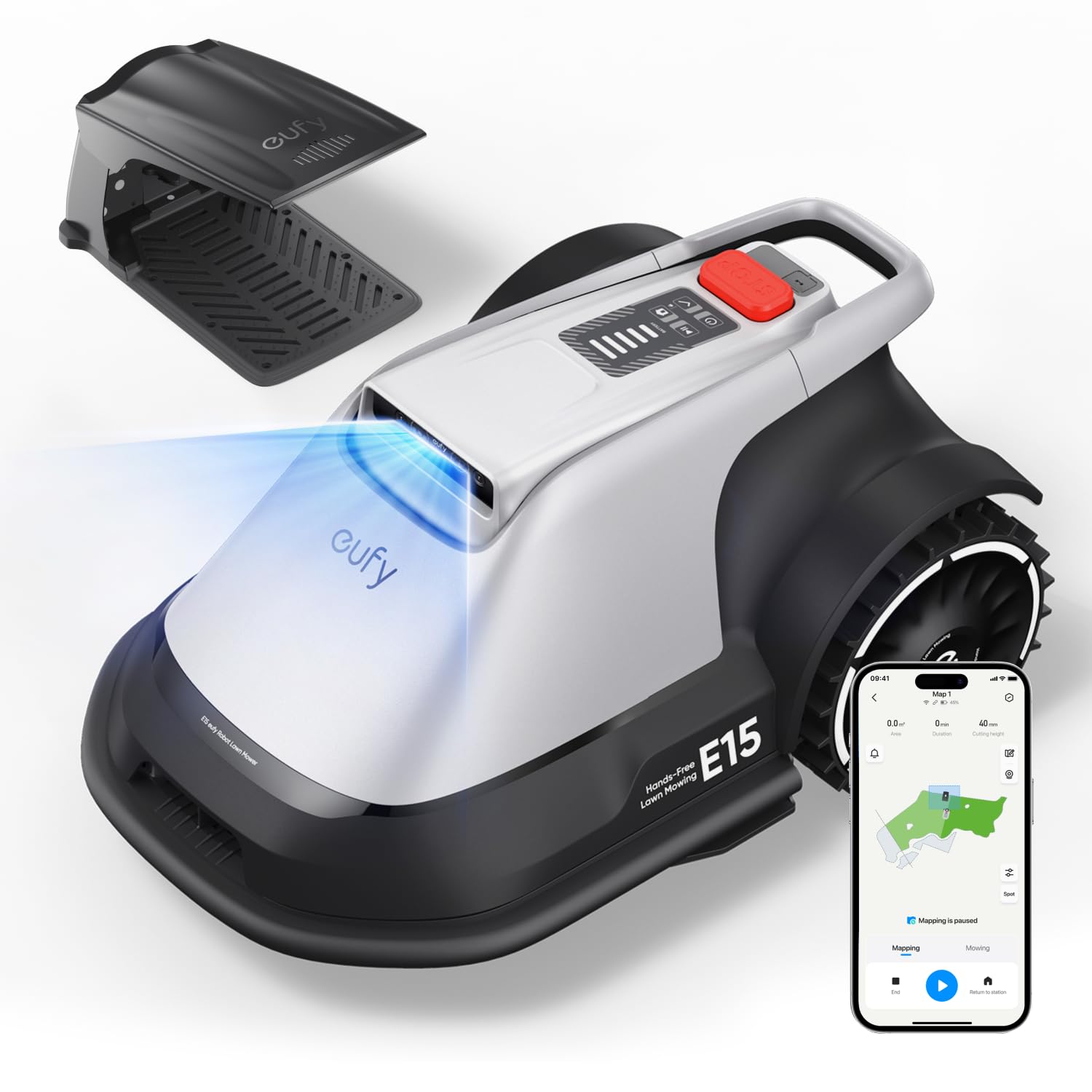
Compared to the top pick’s boundary-wire setup, the eufy E15 uses “Pure Vision Navigation” — meaning it relies entirely on its stereo cameras and AI algorithms without needing an RTK antenna or boundary wire. For a premium model, that simplicity is a big selling point: you just place the base, open the app, and let it map your yard completely on its own in about 15 minutes, according to reviewers. It’s designed for lawns up to 0.2 acres with slopes of 18 degrees or less, and cutting height adjusts from 1 to 3 inches.
Reviewers love how quiet it is — they say the dog ignores it — and the AI 3D obstacle detection (using stereo cameras plus VSLAM) accurately identifies low obstacles like rocks and toys. The ride-on edge technology and rain/light detection (it returns to the base when the weather turns) are smart touches. The trade-off is that the mapping struggles on sandy or patchy lawns, and one owner reported the mower gets stuck in soft sand. There’s also a note that it only mows in daylight and supports just one map at a time.
For a small, fenced yard with good turf and a budget that can stretch a bit higher, the eufy E15 is one of the quietest and most hands-off mowers here. Choose this over the top pick if you want zero wire installation and a mower that maps itself in about 15 minutes, provided your lawn is firm, lush, and under 0.2 acres.
Where it shines
- True wire-free setup — no antenna or GPS needed
- Very quiet operation — pets don’t notice it
- Excellent AI obstacle detection for toys and rocks
Worth noting
- Mapping fails on sandy or patchy lawns
- Only works during daylight hours
10. ECOVACS Goat O1000 LiDAR PRO
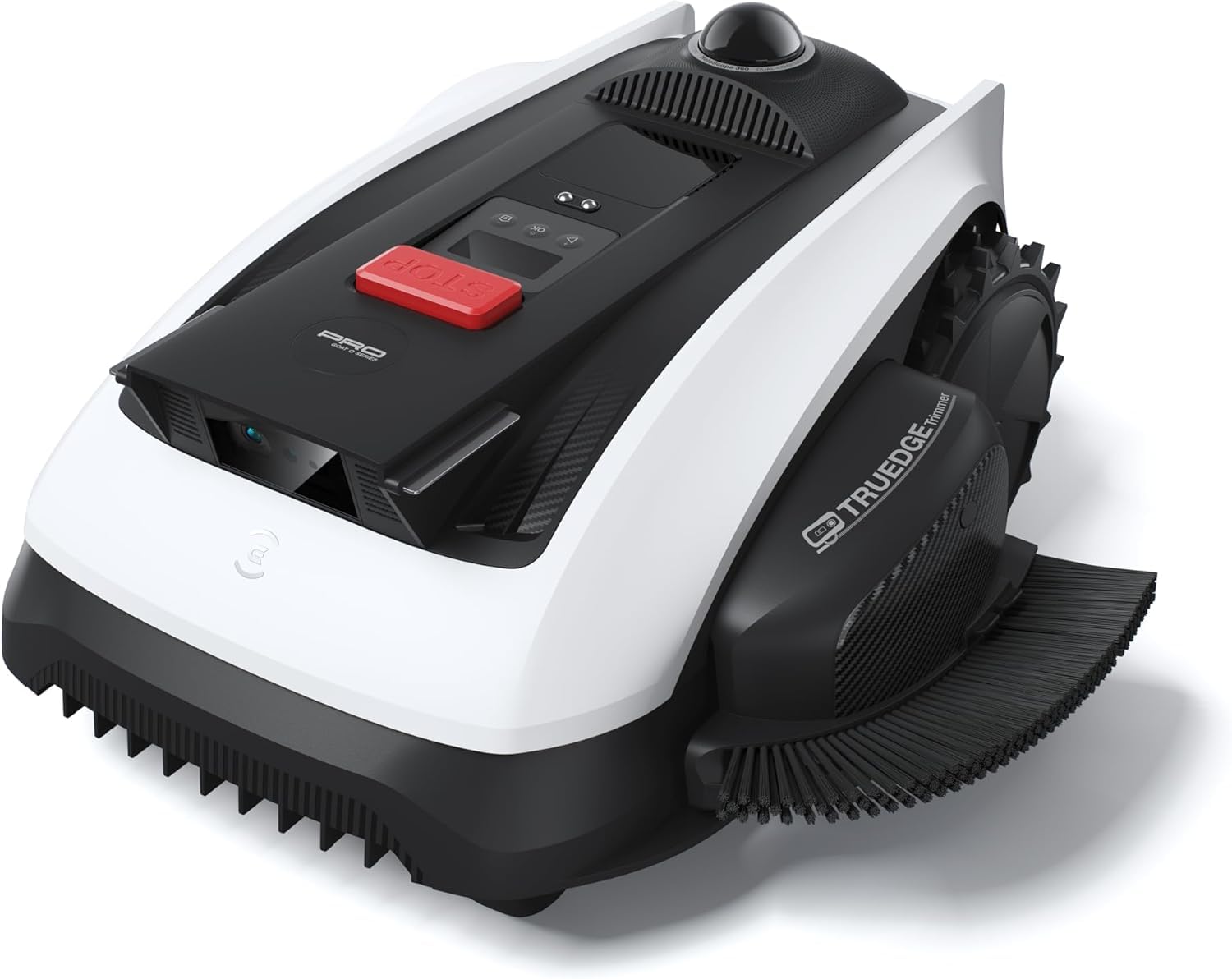
If your yard is a maze of dense trees, narrow side passages, and shaded fence lines where RTK mowers constantly lose signal, the ECOVACS Goat O1000 LiDAR PRO is the only wire-free mower in this guide built to handle it. Its 360-degree dual-LiDAR system maps with laser pulses, requiring no sky view or RTK antenna, and the built-in TruEdge trimmer line lets it cut flush along driveways and flower beds, slashing the manual trim work you’d otherwise face.
At 47.7 pounds with an 8.66-inch cutting width and a 1.2-to-3.6-inch height range, it packs AI obstacle detection that recognizes over 200 object types down to 5 centimeters depth. One reviewer called it “a solid LiDAR robot mower” and noted the trimmer line enables edge work close to borders, cutting manual trim time. Its narrow body clears 0.8-meter gaps, a unique advantage for tight side passages.
Some buyers report the battery falls short for a full quarter-acre—one customer observed it took about 22 hours to mow 0.25 acres at one point—and the drive logic can get stuck in the same spots repeatedly. This is the mower for buyers under a tree canopy with narrow walkways who value LiDAR’s reliability over raw speed or coverage area: the only model here that navigates by laser, not sky.
What stands out
- LiDAR navigation works perfectly in shade and under trees
- Built-in TruEdge trimmer reduces manual touch-ups
- Narrow body fits through 0.8-meter tight gaps
The trade-offs
- Battery may struggle with a full 1/4 acre in one session
- Heavy at 47.7 pounds and can get stuck repeatedly
Understanding the Specs
RTK vs LiDAR vs Pure Vision
RTK (a GPS-based technology that uses a reference station to correct satellite signals) gives you centimeter-level accuracy but needs a clear sky view. LiDAR (a laser-based system that fires pulses to build a 3D map) works well in shade but adds cost. Pure Vision relies entirely on cameras and AI — it is cheaper but can struggle in low light or on patchy lawns. For most affordable robot mowers, RTK + Vision is the right mix of accuracy and price.
Cutting Width and Coverage Speed
Cutting width (measured in inches) determines how wide a strip the mower cuts per pass — a wider cut means fewer passes and faster coverage. An 8-inch cutting width is typical for mid-range models; a 6-inch cut is narrower and takes longer to cover the same area. If you have a 0.25-acre lawn, a mower with an 8.7-inch cutting width (like the WORX WR320) will finish faster than one with a 7.09-inch cut (like the YARDCARE N1600 PRO), assuming similar battery life.
Battery Voltage and Amp-Hours
Battery voltage (e.g., 24V) and amp-hour rating (e.g., 8.0Ah) together determine how long the mower can run. A 24V 8.0Ah battery like the LawnMaster’s is a good benchmark: it gives you around 4 to 6 hours of runtime for a small lawn. A 2.5Ah battery like the Navimow i206 AWD covers less ground per charge. For larger lawns, prioritize higher amp-hour batteries so the mower doesn’t stop mid-job.
Slope Rating in Percentages
Slope is usually given as a percentage (e.g., 45% slope). This is the rise over run of the hill: a 45% slope means the ground rises 45 feet for every 100 feet of horizontal distance, which is roughly 24 degrees. Mowers rated for 45% can handle most steep residential inclines, so your mower won’t slide or stall on a hill. A 20% slope rating is fine for gentle grades only.
FAQ
How long does it take to set up a wire-free robot lawn mower?
Can a robot mower handle St. Augustine or thick grass?
What happens when the battery runs out mid-mow?
Do I need a perimeter wire for any of these mowers?
Final Thoughts: The Verdict
If you want one dependable pick, the best affordable robot lawn mower winner is the ANTHBOT M5 because it combines dual-camera AI vision, RTK accuracy, and a 45% slope rating at a price that feels fair for what you get. If you want easier navigation under heavy tree cover, grab the Segway Navimow i110N. And for the simplest, cheapest way to automate a flat backyard, the standout is the LawnMaster OcuMow MAX.