
Our readers keep the lights on and my morning glass full of iced black tea. As an Amazon Associate, I earn from qualifying purchases.
Specs are compiled from manufacturer listings and verified buyer reviews and can change over time — please confirm the key details on the product page before buying.
The fastest way to wreck a ski trip is a boot that squeezes your calf until you quit at lunch. The good news: you do not need to spend big to fix that. Modern budget boots now carry the same fit tricks — wide lasts, adjustable instep volume, and soft-flap entry — that used to live only on pricey race shells. This guide walks you through five affordable ski boots that real skiers actually enjoy wearing, and it tells you which fit problem each one solves.
I’m Min — the founder and writer behind Gadgets Feed. This guide is built by comparing the manufacturers’ published specifications and the patterns across verified customer reviews, so you get each pick’s real strengths and trade-offs instead of marketing spin.
Fit beats flex every time, so we ranked these by who each boot actually fits — narrow feet, wide calves, cold mornings, big kids. You will finish knowing exactly which shell to clip into for your affordable ski boots.
Our Picks at a Glance


How To Choose The Best Affordable Ski Boots
You can ski all day in affordable ski boots without wrecking your feet — they are built for a different skier than a stiff race shell. Two numbers decide whether you will love a pair or dread it. The first is the last width (how wide the inside of the boot is, measured in millimeters). The second is the flex rating (how hard you have to push to bend the boot forward). Get those two right and everything else is detail.
The Last Width Decides Everything
A 104-mm last is a wide, relaxed shape, and it is the single most common spec on this list. That number means the boot has extra room across the forefoot and instep, so your toes are not stacked on top of each other. If you have wide feet or a high instep, a 104-mm boot is the difference between skiing all day and unbuckling on the lift. If your feet are narrow, a relaxed last will feel sloppy, and you should size down or look for a snugger shell.
Flex Rating And Who It Suits
Flex ratings run low for beginners and high for experts. A softer flex is easier to bend, which makes it forgiving on tired legs but less precise at speed. A stiffer boot transfers your energy straight into the ski edge, which experts love and beginners find exhausting. Affordable boots usually sit at the softer end on purpose — they are built for skiers who want comfort and control without fighting the shell.
Quick Comparison
| Model | Best For | Last Width | Weight | Flex / Fit Notes | Amazon |
|---|---|---|---|---|---|
| Nordica The Cruise★ Best Overall | Men, beginner to intermediate | 104 mm | 8 lb | Instep Volume Control ±4 mm | Amazon |
| Head Edge LYT RX W HVWomen’s Pick | Women, wider forefoot | High Volume (HV) | 8 lb | Relaxed high-volume fit | Amazon |
| Rossignol Kelia 50 | Women, wide calves | 104 mm | 8.2 lb | 3-buckle shell, female cuff shape | Amazon |
| Rossignol Evo 70 | Men, all-day comfort | 104 mm | — | Custom liner, GRIPWALK ready | Amazon |
| Nordica The Cruise 80 | Men, wider calves | 104 mm | 16 oz | Instep Volume Control ±4 mm | Amazon |
In‑Depth Reviews
1. Nordica Men’s The Cruise Boots
Our pick — over 4★ from 70+ verified ratings; the strongest balance of quality and price.
A 104-mm beginner boot that skips the break-in pain and lets you ski the whole day.
If you are chasing comfort rather than race-podium precision, start here. Nordica builds The Cruise around a 104-mm last, which is a wide, anatomical shape that gives your forefoot room to spread instead of squeezing. The dual soft-flap instep opens the throat of the boot unusually wide, so pulling these on in a cold parking lot is genuinely quick — no hopping, no cursing, no numb fingers.
What seals the deal is the fit adjustment. Nordica’s Instep Volume Control lets you raise or lower the boot board by plus or minus 4 mm, so a high instep or a slightly loose shell gets a real fix instead of a marketing bullet point. There is also infrared technology built in: you heat the spot along the shell, apply the suction cup to neutralize that pressure point, and put the liner back. Owners describe the feel as slipper-like, yet the shell still holds control. A 50-year skier rated it intermediate-to-expert and called it the most comfortable boot he had owned. Another long-term owner put it simply: “Had it for over two years now, works great and I expect it would last another two years if not longer.”
Where it lands is value — high quality that people trust, at a relaxed-fit price. It will not suit a hard-charging expert, because the whole design leans toward forgiveness over snap. Big-footed skiers, though, will find the extra room exactly the point: the wide last fits large feet without nasty rubbing or squeezing.
What earns it the top spot
- 104-mm last with extra width for wide feet and high insteps
- Instep Volume Control adjusts the boot board ±4 mm
- Soft-flap instep makes entry and exit genuinely easy
The trade-off to know about
- Soft, forgiving flex is not built for aggressive advanced skiing
- A narrow-footed skier may find the relaxed last too roomy
Reach for this if: you are a beginner or intermediate with wide feet who wants a boot that feels easy from the first run.
Look elsewhere if: you want a stiff, race-inspired shell for hard, fast carving.
2. Head Edge LYT RX W HV Women’s Alpine Boots
A high-volume women’s shell with extra forefoot and instep room for feet that normal boots pinch.
If you have ever pulled a boot off at the base lodge to relieve pressure across the top of your foot, the Head Edge LYT RX W HV is aimed at you. It is a high-volume boot, which is boot-speak for extra room through the forefoot and instep — the exact area where a tight women’s shell causes the most grief. The build uses a polyurethane shell and lands at a 26.5 size. It weighs in at 8 pounds, the same figure as the Nordica Cruise above, so on the carry-from-car test they are even.
Getting in is where this one shines. Women who tried it describe pulling it on easily and finding the padding generous all the way around, and the quality-to-value read holds up alongside the pricier shells on this list. The honest catch is the calf. A high-volume fit widens the foot but not always the shaft, and one 174-cm skier found it far too tight at the calf even at the widest setting and returned it for a different brand. If your calves run wide, that is the fit risk to weigh before you buy.
So the LYT RX W HV is a strong choice for a woman with a wider foot, a relaxed-fit preference, and average calves. Pick it for the roomy forefoot, size carefully, and treat it as an entry-to-intermediate boot rather than a hard-charging expert shell.
Made for: a woman chasing a roomier forefoot and an easy, cushioned step-in without premium pricing.
Think twice if: you have wide calves — that is the fit area this high-volume shape does not widen.
3. Rossignol Kelia 50 Ski Boots for Women
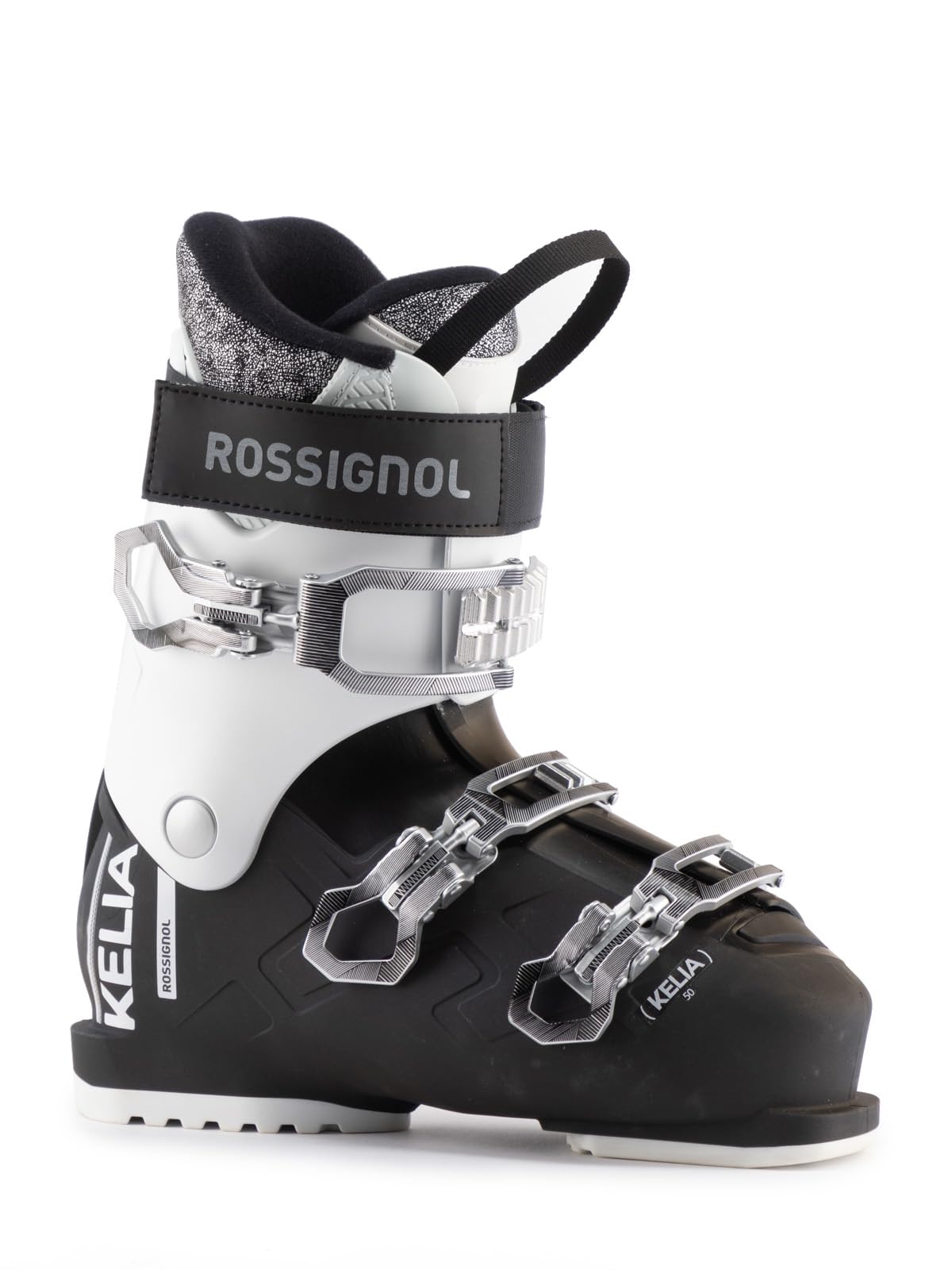
A women’s boot with a tulip-shaped cuff that fits wide calves without pinching.
Rossignol shapes the Kelia 50 around a tulip-shaped cuff that follows female anatomy, and that one design choice is why owners with wide calves keep coming back to it.
Comfort is what wins people over across the review pages — going all day with no pain, no rubbing at the ankle, and a fit that makes wider calves feel like a non-issue. One skier who normally quit after half an hour on the slopes described being able to finally stay out all day once her calves stopped getting pinched. The 3-buckle shell keeps tension easy to tune, soft plastic around the instep means you are not fighting the boot in the cold, and the liner is customizable so it conforms to your shape. Kids-size feet get looked after too: a 4’9″ skier with calves that sat entirely inside her old boots found the adjustable latches finally accommodated her shape.
The honest note is that a low flex favors comfort over hard-charging performance, though intermediate skiers still report it feeling responsive on the hill. If your legs are strong and your style is aggressive, you may want more shell stiffness.
Why wide-calf skiers keep it
- Tulip cuff shaped around the female calf and shin
- Adjustable latches that accommodate a wider calf comfortably
- Sensor Matrix shell trims weight while boosting power transfer
Where it gives ground
- Low, forgiving flex is not aimed at aggressive advanced skiing
- Customizable liners reward a heat-mold for the best fit
Your boot if: your calf has always pinched in standard women’s shells and you want comfort that lasts the whole day.
Skip if: you ski hard and want a stiff race-style flex.
4. Rossignol Evo 70 Ski Boots for Men
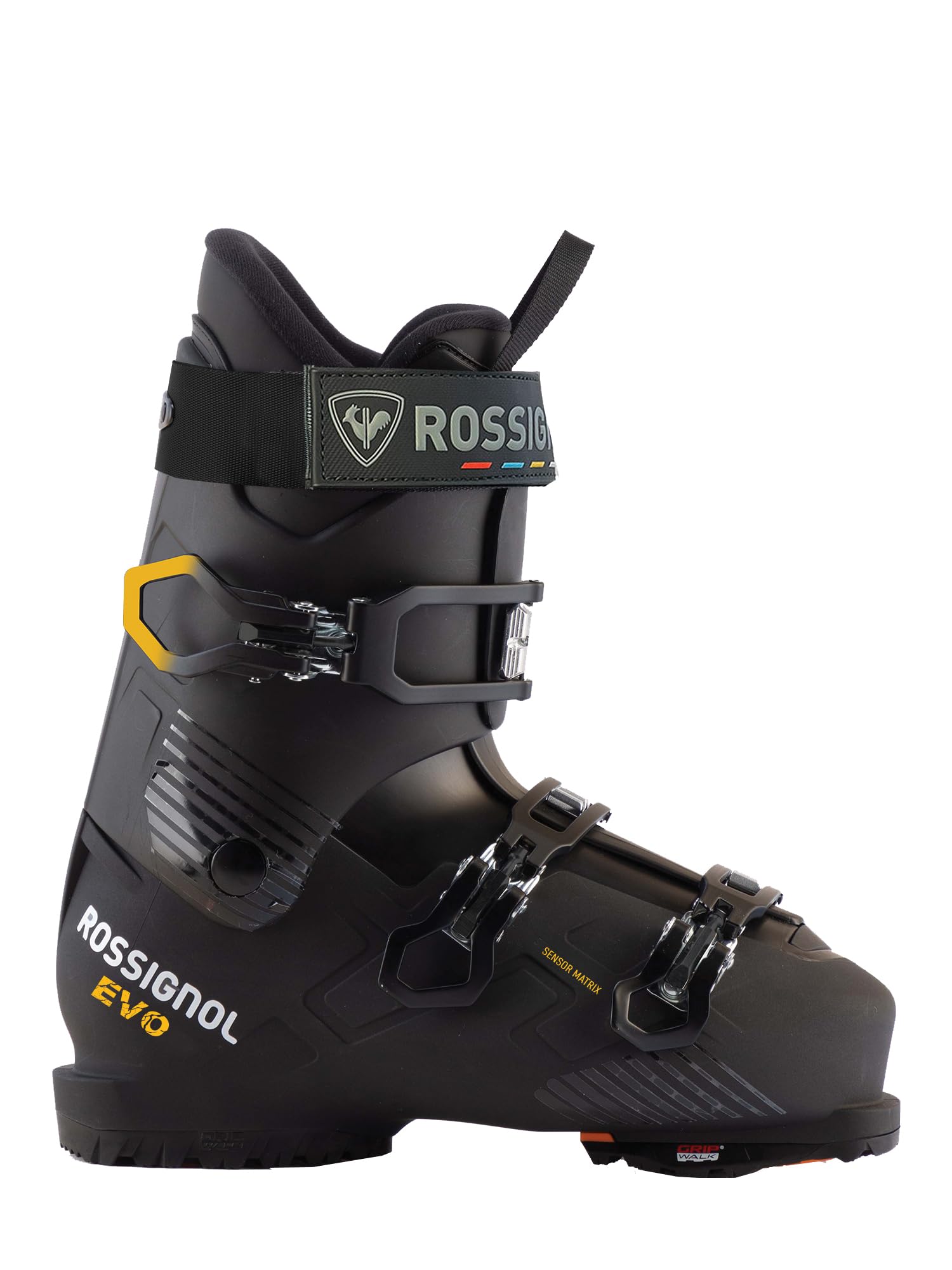
A 104-mm men’s boot with a wide toe box and soft instep padding that ends shin pain.
Men who gave up skiing for two decades because of boot pain keep singling out this shell as the reason they came back. The Evo 70 pairs a 104-mm relaxed last — that same wide, roomy shape as the Nordica Cruise — with a wider forefoot, toe box, and ankle area, so the whole foot breathes instead of griping. Padding is softer through the ankle and instep, with firm support kept where you actually need it around the heel.
The standout detail is the shin. Skiers describe finishing a full day with absolutely no shin pain and toes that feel nice and wide — the exact complaint that drives most people out of tighter shells. Rossignol’s Sensor Matrix design cuts weight while sending energy straight to the ski. The boot is GRIPWALK compatible (GRIPWALK soles sold separately), and those add a rubber tread and rockered toe so walking across the lodge lot is far less slippery than on hard plastic.
This is the pick for a man who wants an all-day, forgiving boot and values smooth entry over race stiffness. If you demand razor-sharp edge feel at speed, softer shells like this one will feel vague — that is the trade you make for comfort.
The shin-pain fix: firm heel support with softer padding across the instep is what keeps the front of your leg comfortable on long days.
Off-snow bonus: GRIPWALK compatibility (soles sold separately) swaps in rubber tread for safer lodge-lot walking.
Pick this for: all-day comfort with a wide toe box and no shin pinch, especially if stiff boots drove you off the slopes before.
Not for: experts who want a firm, fast shell with instant edge feedback.
5. Nordica The Cruise 80 Men’s Comfort Fit Boots

A 104-mm Nordica with a wide-opening soft flap that fits big calves without pinching.
This is the Nordica built around a roomy shell, and it puts its best foot forward for men with bigger calves. A 104-mm last gives the forefoot space, and the dual soft-flap instep opens the throat wide so stepping in and out stays easy even when everything is frozen. Instep Volume Control lets you lift or drop the boot board by plus or minus 4 mm — the same adjustability as the top pick, just applied to a softer-feeling all-mountain build.
Owners with large calves report the boot fitting without pinching, staying comfortable all day with solid support, and holding up as durable through repeated use. The honest split shows up in the tuning: a beginner-to-intermediate skier gets plenty of comfort here, but stronger skiers find the control a touch soft. One reviewer noted blisters and ankle pain and found the volume adjustment did not relieve it for him — a fit mismatch note if your ankles are fussy. It is a comfort-first boot, not a precision instrument.
Buy it if your priority is a wide, easy-entry shell that treats a big calf kindly and you ski casually. If you want to carve hard and feel every edge, look at the firmer shells above instead.
Why wide-calf skiers like it: the roomy 104-mm last plus the wide-opening soft flap make both the fit and the step-in forgiving.
One honest limit: the softer flex suits cruisers and beginners; expert skiers will want more control.
Suits you if: you want a wide, easy-on shell for casual cruising and you value big-calf comfort over edge precision.
Better to look on if: you ski aggressively and want a stiff, highly responsive boot.
Understanding the Specs
Last Width (In Millimeters)
The last is the internal width of the boot at its widest point, measured in millimeters. A 104-mm last is a wide, relaxed fit that gives your forefoot and instep room to spread — which is why it shows up on comfort boots. If your everyday shoes run wide, this is the number to check first. A narrower last holds your foot more firmly for precision, but can pinch if your feet run wide.
Instep Volume Control
This is a small mechanical adjuster that raises or lowers the boot board under your foot by roughly 4 mm either way. In plain terms, it changes how much room your foot has over the top, so you can tune a slightly loose shell or relieve pressure on a high instep without changing boots. It is a quick tweak you do with your hand, not a trip to a shop.
Soft-Flap Entry
Stepping in and out is genuinely easy, even in the cold when stiff plastic fights back. Soft plastic panels stitched into the throat of the boot let the opening stretch far wider than a standard shell. It is among the most useful comfort features on an affordable boot and one of the easiest to feel on day one.
Flex Rating
Flex is how much force it takes to bend the boot forward. Lower numbers flex easily and suit beginners and casual skiers; higher numbers feel rigid and suit experts who want instant edge response. A soft flex is more forgiving on tired legs, so most affordable boots deliberately sit at the lower end.
FAQ
Will a wide 104-mm last fit my wide feet?
How do I know if my calves will fit a boot?
What does flex rating mean for a beginner?
Are softer ski boots good enough for intermediate skiing?
How does Instep Volume Control actually work?
What is GRIPWALK and do I need it?
Do I need a custom or heat-moldable liner on a budget boot?
How long should affordable ski boots last?
Are affordable ski boots good for kids who outgrow gear fast?
Should I size up or down if my foot sits between sizes?
Final Thoughts: The Verdict
For most skiers shopping the affordable ski boots aisle, the Nordica Men’s The Cruise is the smartest place to start. It gives you a 104-mm comfort last, Instep Volume Control, and soft-flap entry at a mid-range price, and it is the honest pick for wide-footed beginners who want to stay on the hill all day. If your calves are the problem, reach for the Rossignol Kelia 50, whose tulip cuff and adjustable latches are shaped for exactly that. And if you simply want the most comfortable all-day shell with the least shin pain, the Rossignol Evo 70 is the one skiers keep coming back to. It is the highest-rated boot here, so grab your size while it is in stock.
How We Picked
We do not accept paid placement. Every pick is matched to a real buyer and a real use-case; we do not hands-on test units.
Sources & Methodology
Specifications: manufacturer listings and product documentation. Review insights: verified customer reviews, as of September 2026. Pricing: not shown on this page (it changes often); check the current price via the retailer link.
As an Amazon Associate, Gadgets Feed earns from qualifying purchases. This does not affect which products we feature.