
Our readers keep the lights on and my morning glass full of iced black tea. As an Amazon Associate, I earn from qualifying purchases.
Specs are compiled from manufacturer listings and verified buyer reviews and can change over time — please confirm the key details on the product page before buying.
The biggest mistake new skiers make is assuming clear, fog-free vision requires a premium price tag. Modern lens tech means budget goggles now match premium brands on anti-fog performance and eye protection. This guide highlights budget goggles that nail anti-fog coatings, wide field of view, and secure lens locks.
I’m Min — the founder and writer behind Gadgets Feed. This guide is built by comparing the manufacturers’ published specifications and the patterns across verified customer reviews, so you get each pick’s real strengths and trade-offs instead of marketing spin.
After breaking down the specs and owner experiences, you’ll know exactly what separates a great deal from a dud in the world of affordable ski goggles that truly perform on the mountain.
Our Picks at a Glance
How To Choose The Best Affordable Ski Goggles
Ignore the brand name on the frame. Focus your budget on the lens system and face seal. A great budget goggle offers a fast-swapping secure lens, anti-fog coating, and a wide field of view.
Lens Locking: Magnetic vs. Clips
This feature separates modern budget goggles from outdated models. Magnetic locks use rare-earth magnets to snap a lens into place, which makes changing lenses a two-second job even with gloves on. Some designs add a side clip as a backup, securing the lens during a crash. Choose magnetic locks over fiddly plastic tabs that are hard to handle in cold weather.
VLT: Understanding Light Transmission
VLT, or Visible Light Transmission, tells you how much light the lens lets through on a scale that matters to your eyes. Think of it as a percentage: a lower number (like 10-20%) suits bright, sunny days, while a higher number (60-90%) helps you see on overcast or night runs. Many budget goggles ship with one lens tuned for sun, and a smart buy is one that lets you swap in a clear or yellow lens for cloudy days.
Fit and OTG (Over-The-Glasses) Compatibility
Your goggles have one job: seal out wind and snow without crushing your nose or leaving a gap. If you wear prescription glasses, you absolutely need an OTG model that carves out extra interior volume for your frames. Without that extra space, your glasses will fog up or press against your face. Check the foam padding—triple-layer foam tends to conform to more face shapes comfortably.
Quick Comparison
| Model | Best For | Lens Lock | VLT (Main Lens) | Glasses Friendly | Amazon |
|---|---|---|---|---|---|
| VANRORA Ski Goggles★ Best Overall | Overall Value & Quality | Magnetic + Clip | 10-20% (Sun) | Yes (OTG) | Amazon |
| findway Ski Goggles OTGCrash Proof | Secure Lens in Crashes | Magnetic + Clip | 10% (Silver) | Yes (OTG) | Amazon |
| Giro Cruz Ski GogglesBeginner Pick | Beginner Friendly | PressFit | 39% (Amber) | Yes (OTG) | Amazon |
| Giro Roam Snow Goggle | Two Lenses Included | Clip System | Sun & Low-Light | Yes (OTG) | Amazon |
| ZIONOR X4 Ski Goggles | Four-Lens Versatility | 8 Magnets | 13.37% (S2) | No | Amazon |
| ZIONOR X11 Ski Goggles | Style & Clarity | Magnetic | 6-22% (S2-S4) | No | Amazon |
| Oakley O-Frame 2.0 PRO | Brand Reliability | Clip System | Variable (Prizm) | Yes (OTG) | Amazon |
| Wildhorn Roca Pro | Ultra-Wide Field of View | 8 N45 Magnets | Variable (Aurora) | Yes (Large) | Amazon |
| SMITH Squad | Optical Clarity | J-Hook Clip | ChromaPop (Variable) | No | Amazon |
In-Depth Reviews
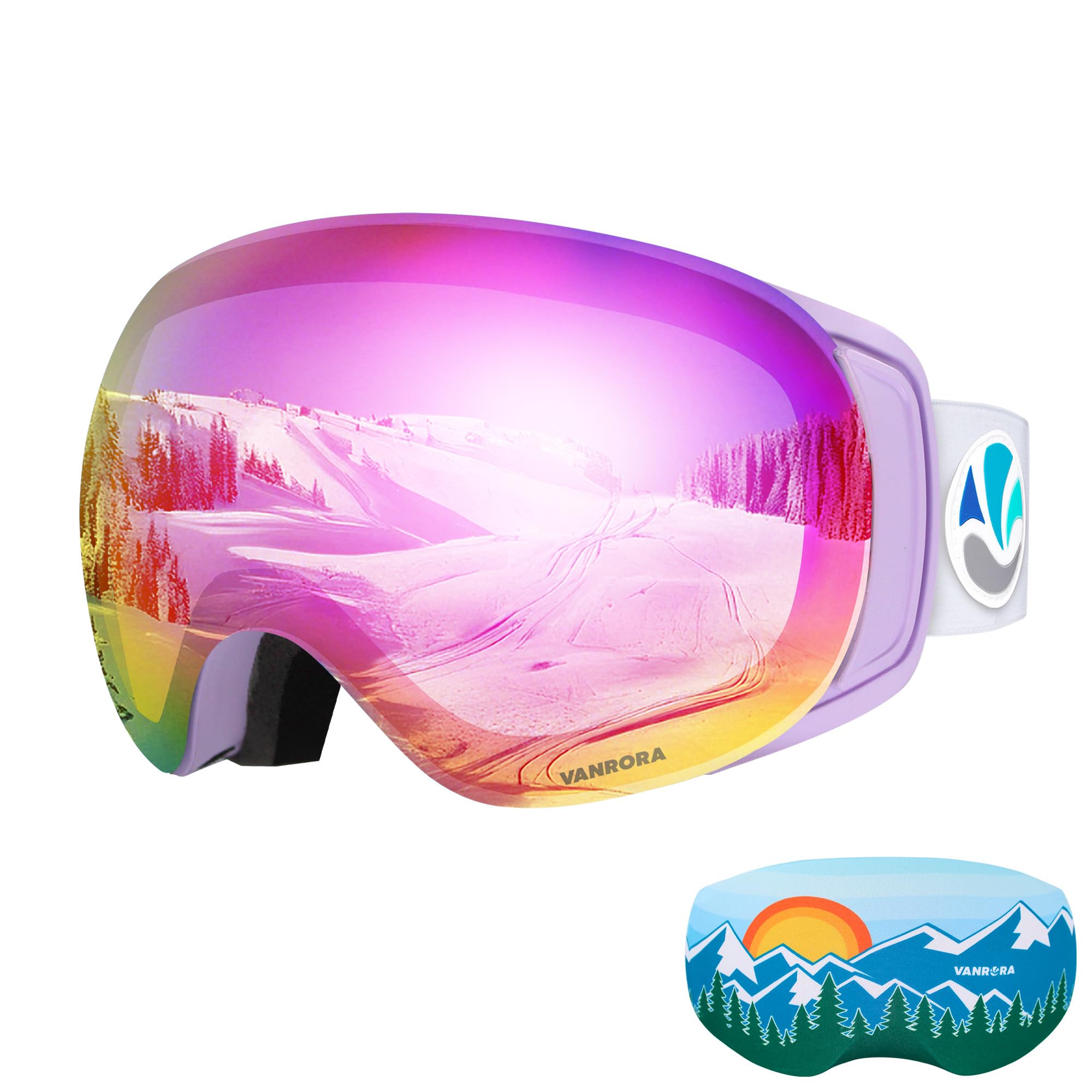
1. VANRORA Ski Goggles
Our pick — over 4.5★ from 600+ verified ratings; the strongest balance of quality and price.
The crowd-pleaser that makes you question why premium goggles cost five times more.
Buyers report this goggle genuinely feels comparable to + Oakleys, including the magnetic plus clip lock, anti-fog, and wide field of view, at. The dual locking system is the standout — strong magnets snap the lens in, and side clips keep it there even if you catch an edge.
What wins people over is sheer quality, with over 150 owners singling it out, followed closely by value for money. The X-Mag lens design offers interchangeable options, including a photochromic lens that automatically adjusts tint from 20-70% VLT as sunlight changes — so you’re not swapping lenses all day on mixed-condition runs.
The crowd favorite — 4.8 stars across 600+ owners — also fits over glasses and under helmets comfortably. The honest trade-off? A few owners mention the strap can loosen itself over time and the lens can scratch if you’re careless. Treat the lens gently and it’ll serve you for seasons.
The Lock That Earns Its Keep
- Magnetic + side clip keeps lens secure through crashes
- Wide field of vision with anti-fog slits for clean views
- Photochromic lens option adapts from 20-70% VLT automatically
- Comfortable fit over glasses and with helmets
Things to Handle With Care
- Strap can loosen itself during use per some owners
- Lens scratches more easily than premium glass — use the pouch
- Sun lens runs slightly dark in low light conditions
Reach for this if: you want the safest all-around bet for quality, secure lens locking, and comfort without crossing the line.
Consider the alternative if: you need a goggle that’s built for aggressive park riding where you expect to take hard falls regularly.
2. findway Ski Goggles OTG
Built to survive the falls, this OTG goggle reads as premium for nearly half the price.
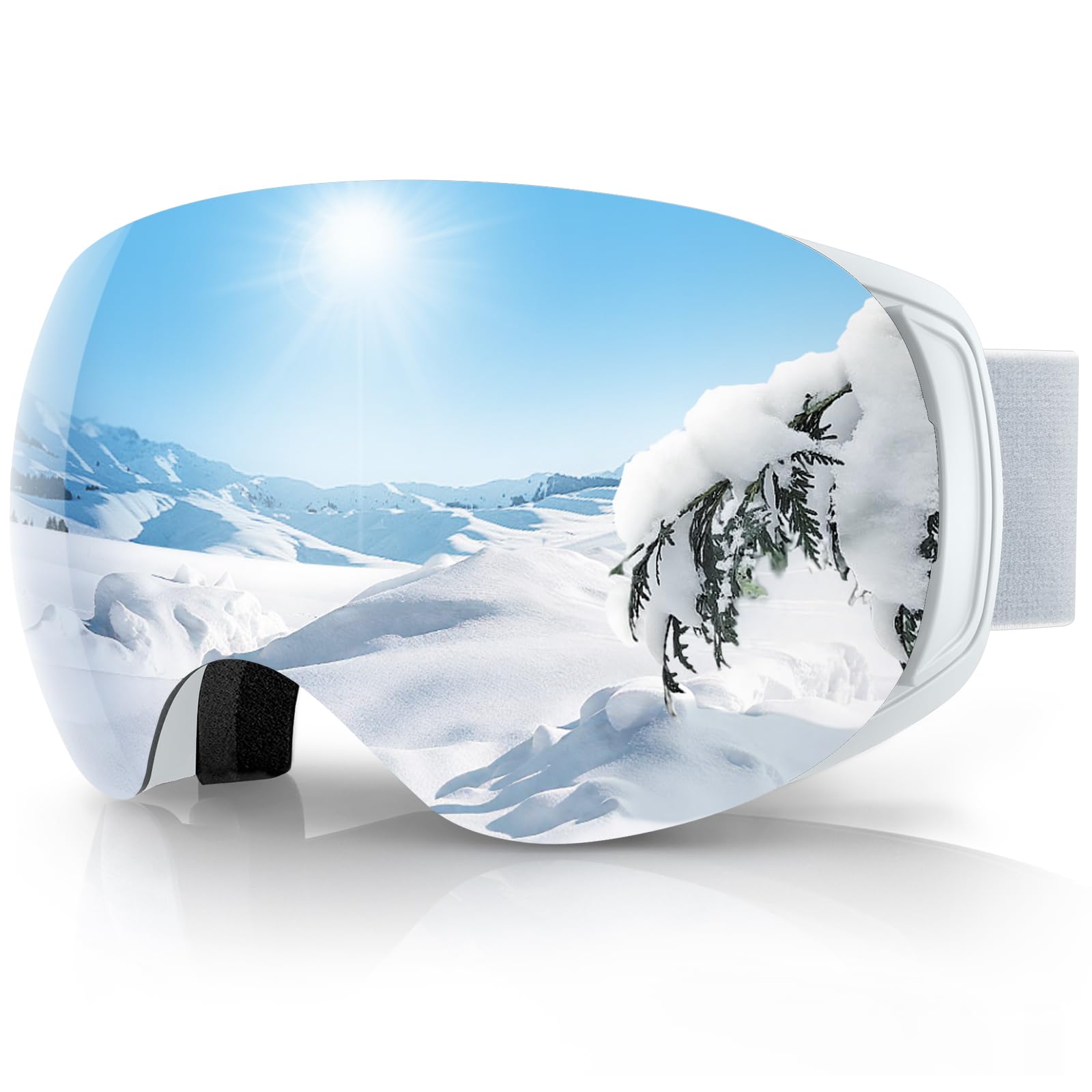
findway engineered this for the rider who tests their gear — the integrated clip locking system is designed to hold the lens in place through fierce crashes, falls, jumps, and spins. Six rare earth N45 magnets make lens swaps a sub-60-second job, so you can switch between a 10% VLT silver lens for sun and a clear lens for overcast without carrying a second pair.
Buyers confirm the anti-fog dual lens is effective in cold, humid conditions — the kind of weather that turns cheap goggles into blurry messes. The TPU (Thermoplastic Urethane Polymer) frame resists deformation, and the triple-layer foam padding fits a larger-than-average face comfortably, earning the top praise for fit.
The trade-off? Durability gets mixed feedback, with several owners reporting the lenses scratch over time. Also, the small side clips can fall off and get lost if you’re not careful with them. Keep the spare clips safe and this is a solid mid-range pick.
Built for contact: the locking system is the most crash-focused on this list — it’s tested for falls, jumps, and spinning.
The catch you should know: lens durability is the recurring complaint, so invest in a hard case for transport.
3. Giro Cruz Ski Goggles
A trusted name’s take on entry-level gear that actually fits helmets and faces well.
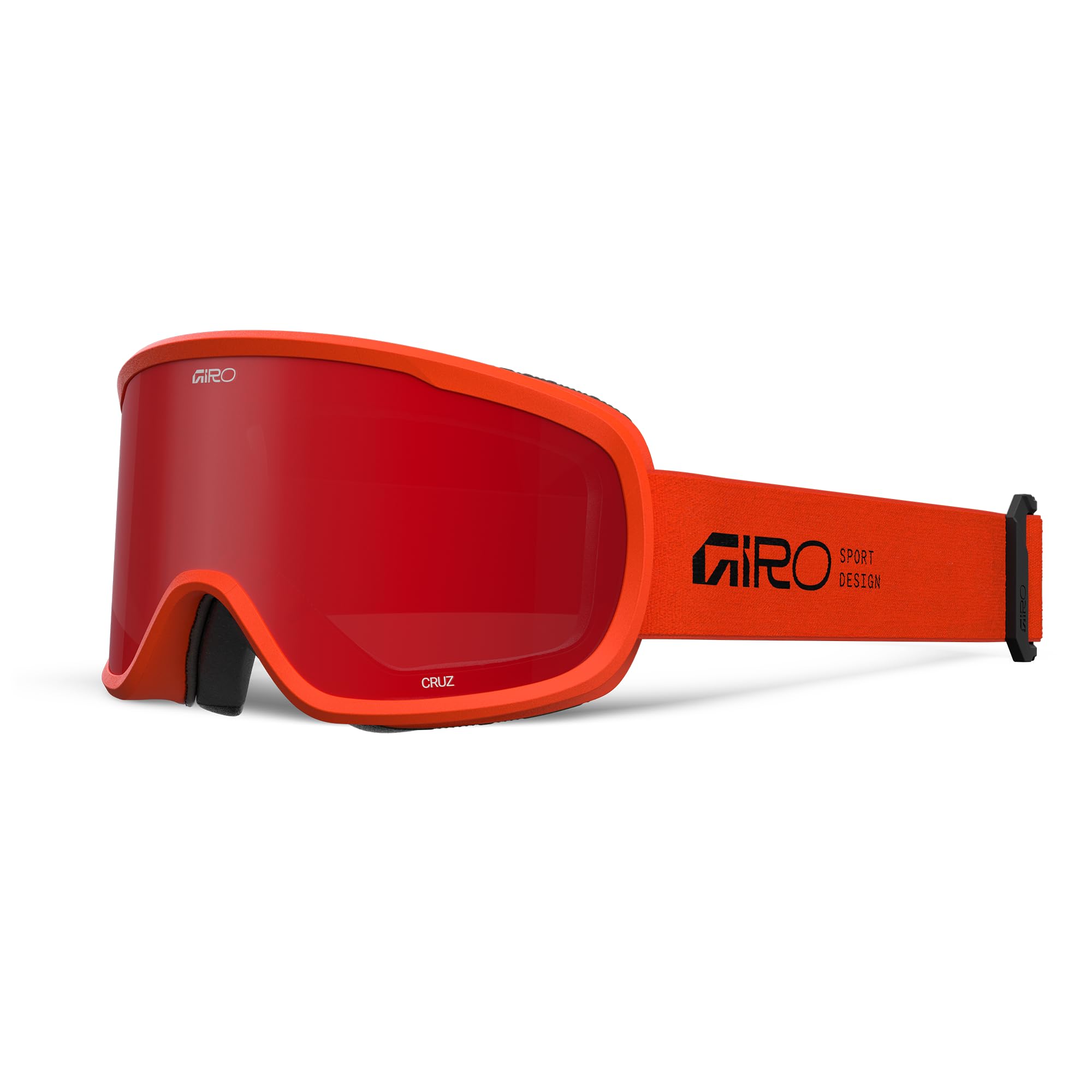
Giro brings its Expansion View (EXV) technology to the budget tier — frameless zones engineered to boost peripheral vision through a massive spherical lens. The included Amber Scarlet lens with 39% VLT is tuned for mixed clouds and sun, making it a forgiving choice for beginners who ski in changing light.
The OTG-friendly interior gives prescription glasses extra volume, while the double-layer face foam with microfleece facing keeps you warm against your skin. The silicone strip on the inside of the strap prevents slippage over your helmet or beanie.
One owner summed up the appeal: “Wore these on my ski trip to NC and they were amazing! Fit around my helmet perfect and super comfy!”
Set-and-forget optics: the 39% VLT amber lens handles mixed conditions, so you won’t be swapping lenses constantly.
Keep in mind: this ships with one lens only, unlike some rivals that include a low-light spare.
4. Giro Roam Snow Goggle
The two-lens bundle that saves you from carrying a second pair on variable days.
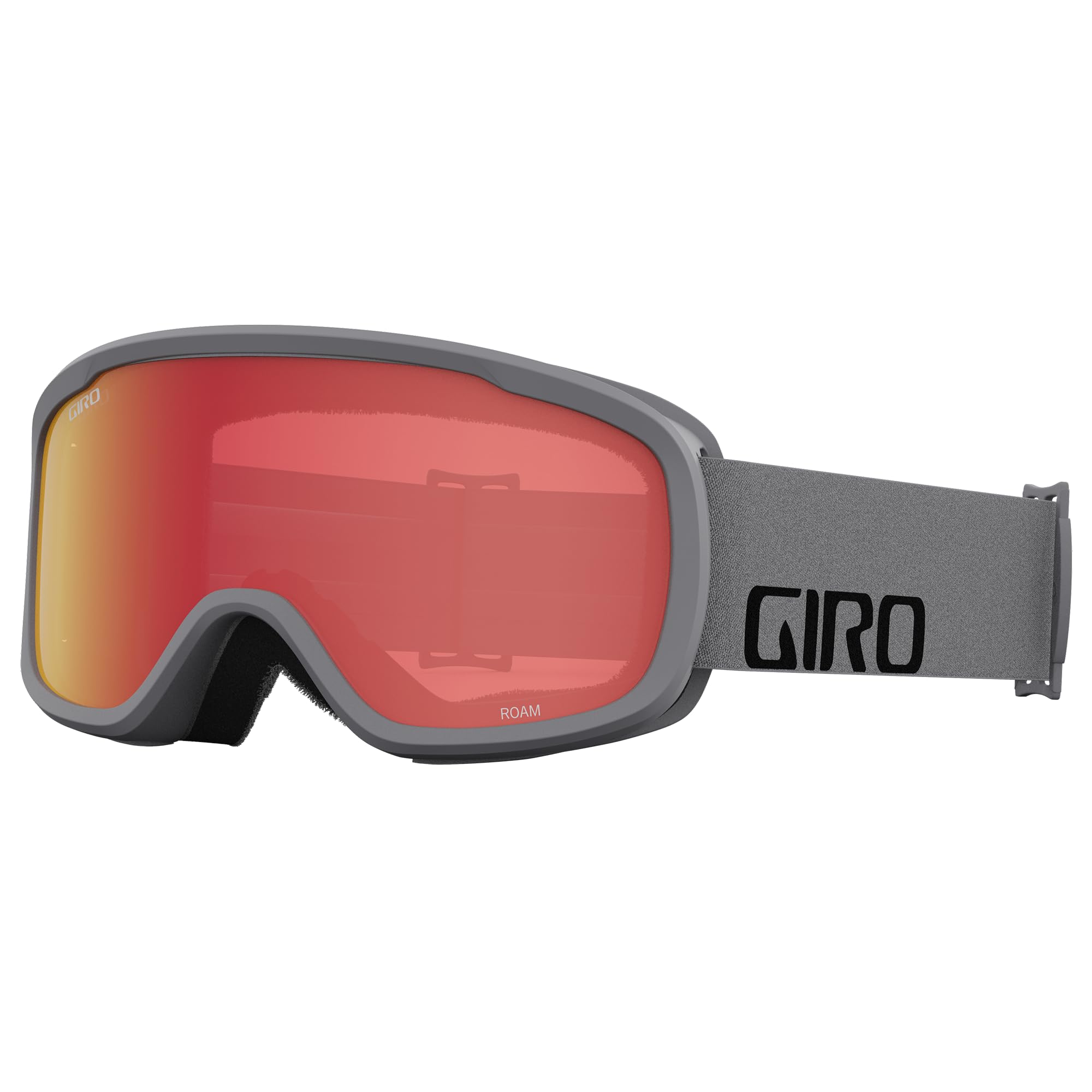
Giro’s Expansion View tech shines here — the rimless frame design shaves down the frame edge and adds frameless zones to push peripheral vision outward. That matters when you’re scanning for obstacles; buyers describe the view as open rather than boxed-in. The package includes both a sun/all-conditions lens and a low-light lens, so dawn patrol and bluebird days are both covered.
What wins people over is quality, with owners pairing it comfortably over prescription glasses under helmets. The silicone strap grips your helmet firmly, and the cylindrical thermoformed lens holds anti-fog coating well. One buyer summed it up: “The value for money is a 10/10.”
The catch is in the color — some listings show red/blue in photos, but the actual goggle leans purple/red. If you’re picky about matching your jacket, check the specific colorway before ordering.
Two conditions, one goggle: having the spare low-light lens included is the smartest value move in this price tier.
Worth a look first: the color in hand differs from the listing image, so confirm the exact shade before buying.
5. ZIONOR X4 Ski Goggles

A four-lens arsenal in the box for less than some brands charge for one.
The X4’s a neat extra is the kit: you get the goggle plus four lenses covering everything from 13.67% VLT bright-sun mirrored options to 78% VLT clear for night. Each lens uses eight strong magnets to snap in and out, and the dual-layer lens design creates a thermal barrier that resists fogging — the single most-praised feature, with over 50 owners highlighting it.
For the money, owners mention this delivers roughly 90% of a premium Anon M2’s quality. The triple-layer padding foam seals comfortably, the wider ventilation system disperses moist air, and the panoramic view keeps visibility clear. One pro ski resort worker praised the strong magnetic lens and clarity, calling it great quality for the price.
Be realistic about lens care — several customers note scratches after a couple of days. The included protective bag helps, but the lenses are not scratch-proof. This is a great occasional-use goggle rather than a season-long workhorse.
Every light, one box: four included lenses from 13.67% VLT sun to 78% VLT clear mean you’re covered from night skiing to bluebird days.
Know the limit: the lenses scratch easier than glass — budget for a hard case and gentle handling.
6. ZIONOR X11 Ski Goggles

Proof that solid optics and head-turning looks don’t have to cost Oakley money.
The X11 is the style pick of the lineup — the light pink mirror finish gets compliments, and the cylindrical lens shape keeps the view panoramic. Owners note it “looks legit” while costing a fraction of a premium brand, and the magnetic lens swaps between colors and clear options are easy.
On performance, the dual-layer lens design resists fogging, and one owner used it for three days straight (9am to 7:30pm) in varied conditions with a mask on and never lost clarity. The silicone strap reduces sliding on helmets, and the triple-layer padding foam keeps the fit snug for long days.
The honest caveat comes from frequent fallers: the magnetic lens can pop out on hard tumbles, and the plastic border on the lenses can break during their second season. This is best for groomed runs and reliable conditions rather than park laps.
Style with substance: the pink mirror finish looks premium, and the optics stay clear through long, varied days.
Not for the reckless: magnetic-only lock can pop on hard falls — aggressive riders should look for a goggle with side clips.
7. Oakley O-Frame 2.0 PRO

The brand-name insurance policy that still respects a sensible budget.
Oakley’s HDO (High Definition Optics) technology is the headline here — it eliminates distortion for sharper, clearer vision than conventional lenses. The anti-fog coating is permanent, applied to the inside of the lens so it won’t wear off after a season of use. For overcast days, reviewers point out the shading is great, with one calling it “excellent goggles for less than half the price of expensive ones.”
The O-Frame 2.0 PRO is OTG compatible, verified to fit safely over eyeglasses, and the wide adjustable strap with silicone lining grips helmets securely. Quality is the most-praised aspect among owners, and the fit works even for those with larger heads. It’s a simple, dependable design with no lens-swap gimmicks.
Two things to know: the anti-fogging gets mixed feedback — while many report zero fog, others experience it badly in humid conditions. And it ships with a microfiber case, not the soft goggle case shown in some photos.
low-maintenance: the permanent anti-fog coating and HDO clarity make this a low-maintenance workhorse.
Manage expectations: fog resistance varies by climate, and the protective case is a simple microfiber pouch.
8. Wildhorn Roca Pro
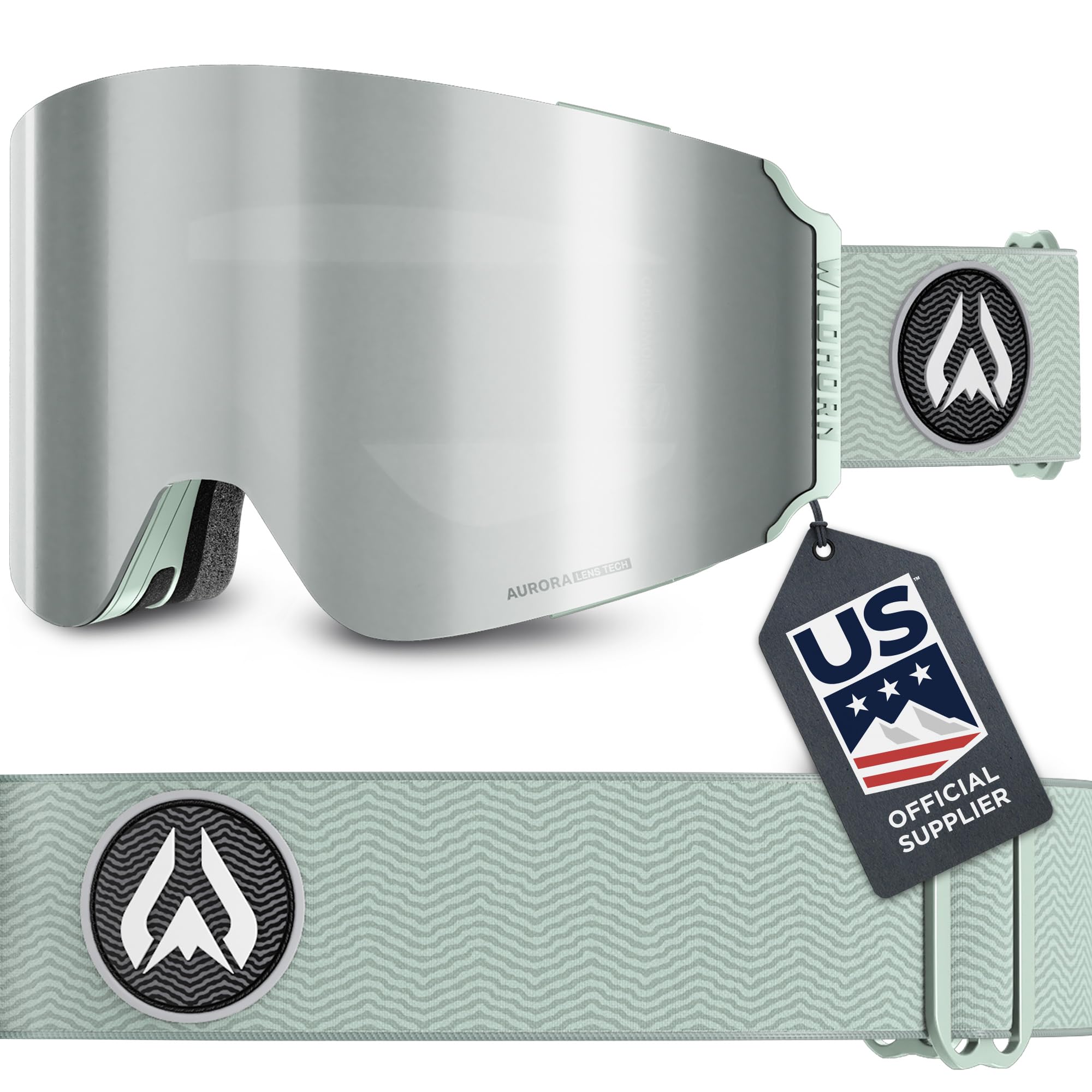
A 185-degree view that kills tunnel vision for riders used to feeling boxed in.
The Roca Pro’s defining spec is the field of view — a massive 185-degree width on large frames, which shoppers say erases that boxed-in feeling completely. The dual-lens construction is treated to 3x the standard for fog resistance, and the outer lens provides full UV protection, so you stay clear through mixed conditions. One owner used it for three days in Utah across direct sun and overcast with zero fogging.
Lens swaps are a literal snap — eight N45 rare earth magnets lock the Aurora lens into place in a second. The fully adjustable strap grips helmets well, and the large frame accommodates super-wide prescription glasses, a rare feature in this price range. Quality is the most-praised aspect, with owners noting it feels premium without the premium brand markup.
The occasional note: some air can blow in when you’re descending fast downhill. It’s a minor quirk for the massive view you gain.
See everything: the 185-degree FOV is the widest on this list — ideal for avoiding blind spots in trees and terrain parks.
Minor quirk: a slight airflow can tickle your eyes on fast descents, a fair trade for the panoramic view.
9. SMITH Squad with ChromaPop

Smith’s ChromaPop clarity that one owner called “unreal optical clarity” on the mountain.
The SMITH Squad’s ChromaPop lens technology boosts contrast and color clarity in a way that makes terrain features pop — buyers describe the optics as unreal and the field of view as wide with no blind spots. The package includes two lenses: a high-vis mirror option for sun and a low-vis yellow/red option for flat light, so you’re covered for changing conditions.
Fit is what owners praise most, with the goggle fitting normal heads well and adjusting for tight or loose preferences. For serious skiers, one owner took it through 48 miles and 9,000 vertical feet over three days of spring conditions and found it lightweight, durable, and fog-free. It’s the top performer for optical realism on this list.
The notable friction point is lens swapping — the J-hook system requires patience and force, with some owners risking scratches during the change. Also, it fits tight even on the loosest setting over small helmets, so try it with your helmet if possible.
Bring the clarity: ChromaPop lens technology is the standout for contrast and depth perception — the closest thing to high-end optics here.
Budget for patience: swapping lenses is fiddly and risks scratches, so treat lens changes as a careful chore.
Understanding the Specs
VLT (Visible Light Transmission)
This number tells you how much light reaches your eyes, shown as a percentage. Low VLT (6-20%) is for bright, sunny days — it blocks more glare. High VLT (60-90%) suits overcast, dusk, or night skiing. A great budget goggle either ships with a mid-range lens (like 39% VLT) or lets you swap lenses to match the day’s conditions.
Magnetic vs. Mechanical Lens Locks
This determines how fast you can change lenses and how securely they stay. Magnetic systems use rare-earth magnets (often 6-8 N45 magnets) to snap lenses in place — fast and easy with gloves on. Some add side clips for extra crash security. Mechanical systems like J-hooks are secure but require more effort and patience to swap. Pick based on how often you expect to change lenses on the mountain.
FAQ
What does OTG mean and do I need it for prescription glasses?
What VLT percentage is best for all-around skiing?
Will budget ski goggles fit under my helmet?
How do I clean ski goggle lenses without scratching them?
Why do my ski goggles fog up and how do anti-fog coatings work?
Are magnetic lenses better than clip-on lenses?
What is a cylindrical vs. spherical lens and which is better?
How long should budget ski goggles last with regular use?
Can I snowboard with ski goggles or do I need separate ones?
What is the difference between the ZIONOR X4 and X11 models?
Final Thoughts: The Verdict
For most skiers, the winner in the affordable ski goggles category is the VANRORA because it pairs a magnetic plus clip lock with quality and fit that owners compare to + goggles, all for under. If you want the widest possible view to avoid tunnel vision, grab the Wildhorn Roca Pro with its 185-degree field of view. And for pure optical clarity with a trusted name, the SMITH Squad with ChromaPop lenses is the one to reach for.
How We Picked
We do not accept paid placement. Every pick is matched to a real buyer and a real use-case; we do not hands-on test units.
Sources & Methodology
Specifications: manufacturer listings and product documentation. Review insights: verified customer reviews, as of August 2026. Pricing: not shown on this page (it changes often); check the current price via the retailer link.
As an Amazon Associate, Gadgets Feed earns from qualifying purchases. This does not affect which products we feature.