
The biggest myth in television shopping is that you have to sacrifice picture quality, motion handling, or smart features the moment you set a sensible budget. That simply isn’t true. The 2025–2026 lineup is packed with Mini-LED backlighting, Quantum Dot color, and native 144Hz panels at price points that would have been unthinkable just a few years ago. The real challenge isn’t finding an affordable screen — it’s cutting through the spec sheet noise to find the one that actually delivers for your living room, your gaming console, or your late-night movie habit.
I’m Min — the co-founder and writer behind Gadgets Feed. I’ve spent hundreds of hours analyzing panel technologies, processor benchmarks, and real-world user feedback across dozens of models to isolate the TVs that genuinely earn their value without hidden compromises.
For a category this competitive, picking the right set means matching your physical space and content habits to the specific tech stack inside the chassis, which is exactly what this guide to the best affordable smart tv aims to decode for you.
How To Choose The Best Affordable Smart TV
Nine models sit on this list, each targeting a different priority — raw brightness, gaming fluidity, operating system preference, or simple ease of use. Before you scroll, identify which spec matters most to your daily viewing, because one size absolutely does not fit all in this price tier.
Panel Technology and Backlighting
The base layer determines everything. Standard LED panels are the entry point, but QLED (Quantum Dot) layers boost color volume and brightness without raising power consumption. Mini-LED backlighting takes this further by packing hundreds of tiny dimming zones behind the screen, producing deeper blacks and higher contrast that approach OLED territory. For a budget buyer, a Mini-LED QLED set like the Hisense U6 Pro or the Roku Plus Series delivers the best overall picture per dollar.
Refresh Rate and Motion Processing
If your viewing diet is limited to news and talk shows, a 60Hz panel is fine. The moment you add live sports, action movies, or any console or PC gaming, a 120Hz or 144Hz native panel becomes a transformative upgrade. The TCL T7 Series and the Sony BRAVIA 2 II both use higher refresh rates with MEMC frame insertion to keep fast motion crisp. The Samsung Q8F even pushes VRR gaming up to 4K 144Hz, a feature normally reserved for flagships.
Smart Platform and Processor Power
The operating system is the interface you interact with every single day. Roku remains the gold standard for simplicity and speed, with a clean home screen and minimal bloat. Google TV offers deeper integration with Android apps and Chromecast, while Fire TV ties tightly into Amazon’s ecosystem with Alexa built in. A sluggish processor, like the one found in the Insignia F50, can make even a great panel feel frustrating. Pay attention to chipset reviews — the Samsung Crystal Processor and the TCL AIPQ Pro are the standouts here.
Quick Comparison
On smaller screens, swipe sideways to see the full table.
| Model | Category | Best For | Key Spec | Amazon |
|---|---|---|---|---|
| Hisense 55″ U6 Pro | Premium | Cinematic HDR & Gaming | Native 144Hz / Mini-LED | Amazon |
| Sony BRAVIA 55″ II | Premium | PS5 Gaming & Upscaling | 4K Processor X1 / 60Hz | Amazon |
| TCL 55″ T7 Series | Premium | High-Frame-Rate Gaming | 120Hz-144Hz / QLED | Amazon |
| Samsung 32″ Q8F QLED | Premium | Compact Room & Gaming | Quantum Dot / 144Hz | Amazon |
| Roku 55″ Plus Series | Mid-Range | Ease of Use & Value | Mini-LED / Dolby Vision | Amazon |
| Samsung 65″ U8000H | Mid-Range | Large Screen On A Budget | Crystal Processor / 60Hz | Amazon |
| Sony BRAVIA 43″ II | Mid-Range | PS5 & Compact Spaces | Motionflow XR / 60Hz | Amazon |
| Roku 55″ Select | Budget | Streaming Simplicity | QLED / 60Hz | Amazon |
| INSIGNIA 65″ F50 | Budget | Big Screen, Basic Use | Fire TV / 60Hz | Amazon |
In‑Depth Reviews
1. Hisense 55″ U6 Pro Series Mini-LED ULED 4K UHD Smart Fire TV
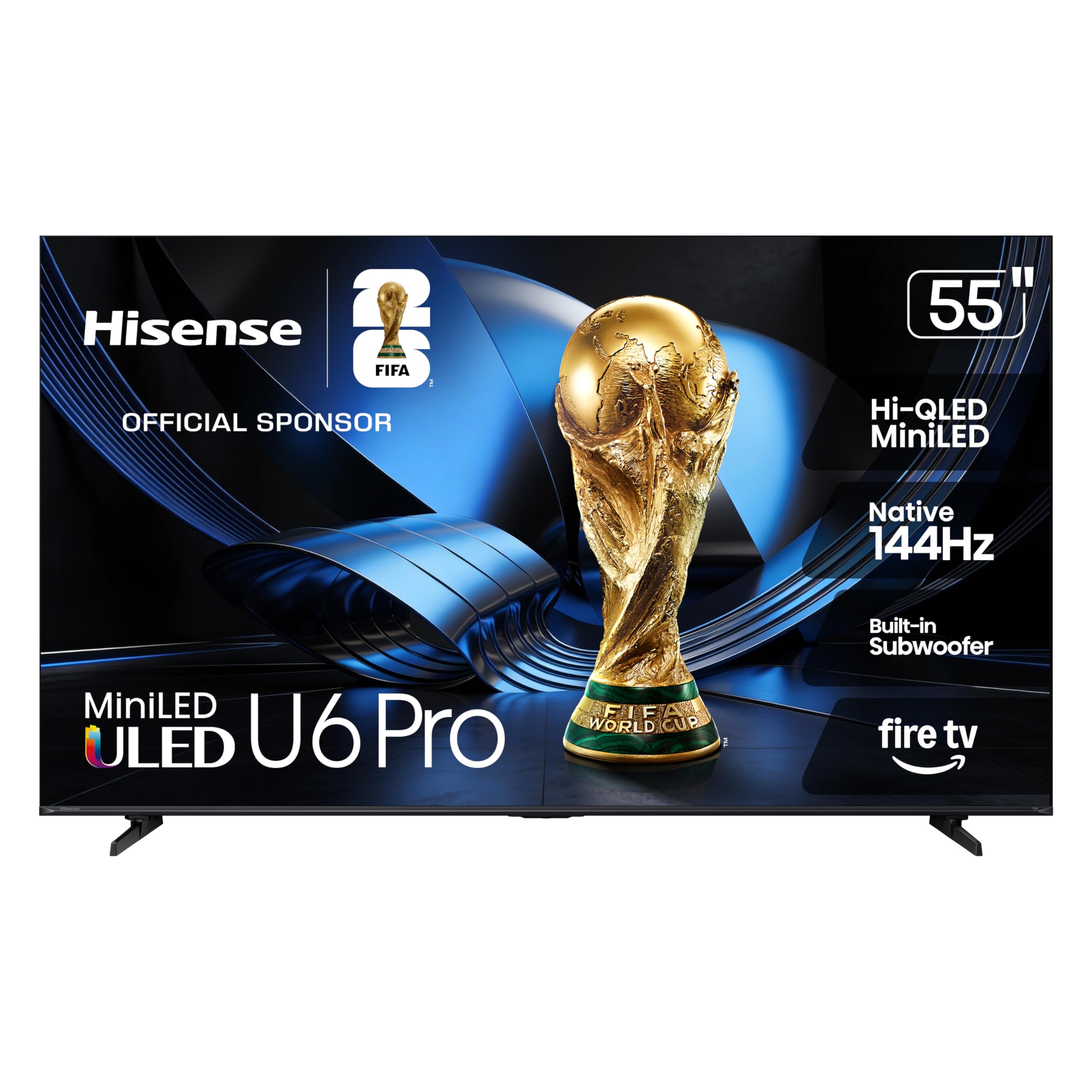
The Hisense U6 Pro is the single best value proposition in this entire category. The combination of a native 144Hz panel, hundreds of Mini-LED dimming zones, and Hi-QLED color that covers roughly 95% of the DCI-P3 gamut produces contrast and brightness — over 1,100 nits peak in a 10% window — that genuinely rivals entry-level OLEDs without the burn-in risk.
Gamers will appreciate the 144Hz Fluid Motion mode with Auto Low Latency Mode (ALLM) and FreeSync, which keeps competitive titles like Call of Duty and Forza Horizon butter-smooth. The anti-reflection coating is a practical bonus for bright living rooms, cutting glare significantly compared to glossy panels. The Fire TV OS is fast and responsive, though Amazon-centric households will get the most out of its Alexa integration and recommendation engine.
The only meaningful trade-off is that the upscaling engine struggles with heavily compressed 480p and 720p content — older cable feeds look soft. The remote feels cheap and the initial setup forces a network connection. But for streaming 4K HDR, gaming, and live sports, the U6 Pro delivers a picture that comfortably outperforms TVs costing twice as much.
Why it’s great
- Exceptional Mini-LED contrast with deep blacks and vibrant color
- Native 144Hz panel with ALLM and FreeSync for competitive gaming
- Built-in subwoofer delivers punchy bass without a soundbar
Good to know
- Upscaling of low-resolution content is mediocre
- Remote feels basic for the price tier
- Fire TV OS may not appeal to non-Amazon users
2. Sony BRAVIA 2 II 55 Inch 4K Ultra HD LED Smart TV

Sony’s 4K Processor X1 is the secret weapon here. While the panel itself is a standard 60Hz LED, the processor’s XR-Reality PRO upscaling pulls detail out of 1080p and even 720p streams with remarkable clarity — a definite advantage if you still watch cable or older streaming libraries. Colors are natural and well-balanced, avoiding the oversaturation that cheaper QLED panels sometimes exhibit. Motionflow XR keeps fast-paced scenes clear, though it can introduce soap-opera effect if left on max.
This is the TV for PlayStation 5 owners. Exclusive features like Auto HDR Tone Mapping and Auto Genre Picture Mode communicate directly with the console to optimize HDR brightness and switch into game-low-latency mode automatically. The Game Menu puts all gaming-related picture settings in one dedicated overlay, reducing menu diving during play. Google TV provides a clean interface with Apple AirPlay 2, Google Cast, and the Sony Pictures CORE app for movie credits.
The 55-inch version shares the same core as its smaller sibling but with a noticeably better soundstage. Build quality is solid, with a metal stand that feels more substantial than most competitors at this level. A small subset of users have reported WiFi dropouts and occasional freezing that requires a power cycle — this appears to be a unit-specific variance rather than a widespread defect, but it is worth noting if you have a particularly congested wireless network.
Why it’s great
- Industry-best upscaling cleans up lower-resolution content
- Deep PS5 integration with auto HDR and low-latency modes
- Natural color science with broad Dolby Vision and HDR10 support
Good to know
- Only a 60Hz panel — no high refresh rate for competitive gaming
- WiFi reliability varies; Ethernet is recommended for stability
- Sound is adequate but still benefits from an external system
3. TCL 55 Inch Class T7 Series 4K QLED HDR Smart Google TV
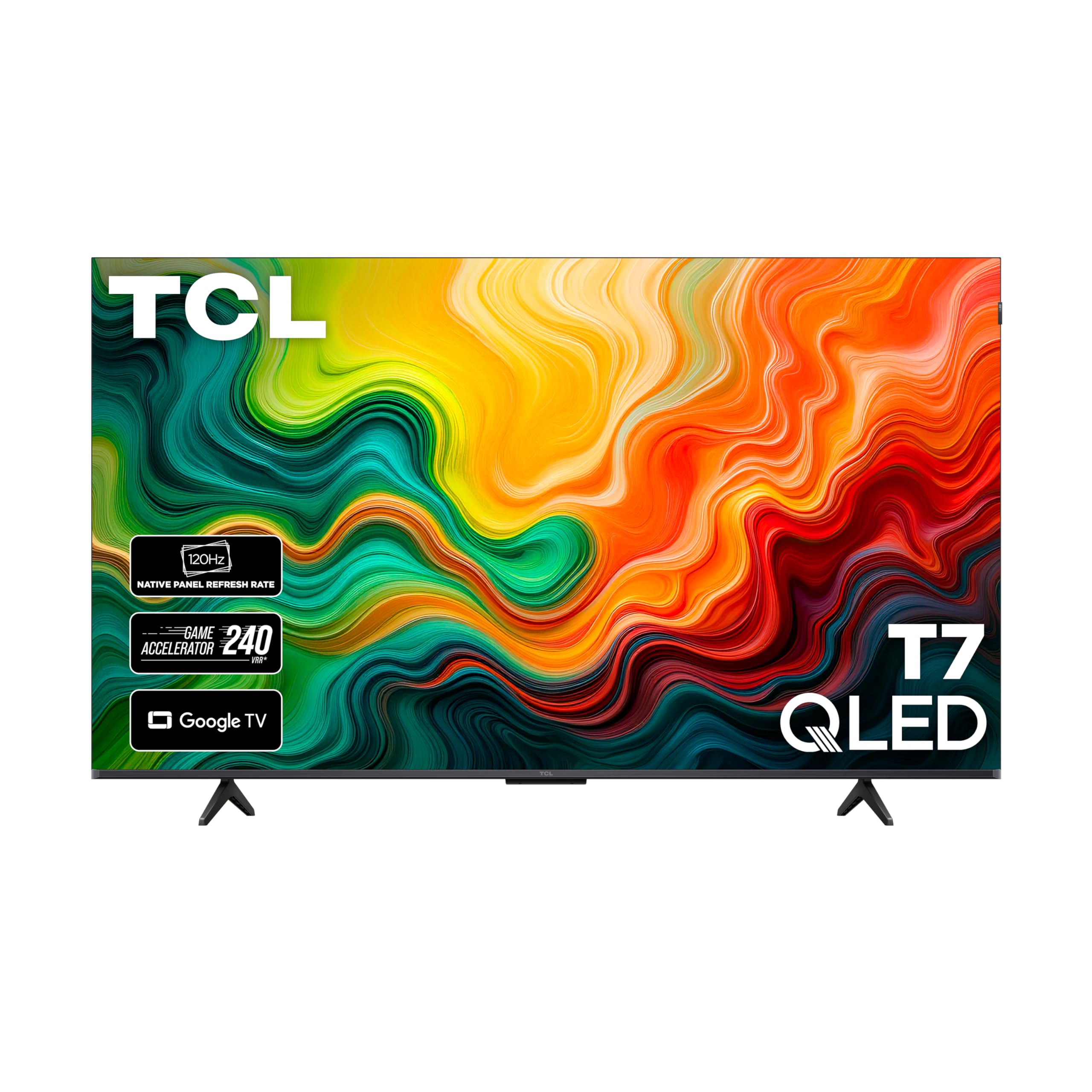
The TCL T7 Series is a gaming-first screen that doesn’t skimp on movie performance. The 120Hz panel can hit 144Hz for PC inputs, and the TCL AIPQ Pro processor handles MEMC frame insertion well, keeping motion blur minimal during fast camera pans and racing games. QLED color coverage approaches the DCI-P3 standard closely, producing rich, saturated tones without clipping. Dolby Vision and HDR10+ are both supported, so you get the best HDR format regardless of source.
The Google TV platform is snappy and integrates nicely with Chromecast built-in, hands-free Google Assistant, and Apple AirPlay 2. The bezel-less design looks modern on a stand or wall-mounted. Four HDMI inputs, including one with eARC, give you plenty of room for a soundbar, game console, and streaming box without juggling cables. Motion Rate 480 with MEMC frame insertion keeps sports and action movies fluid even at 60Hz input.
The built-in speakers are decent for casual viewing, but the sound lacks the low-end presence that the Hisense U6 Pro offers with its subwoofer. A few users have reported that using the T7 as a PC monitor via HDMI can cause a wake-from-sleep issue requiring a cable reseat — a niche annoyance, but worth noting for desktop users. For the price, the gaming and movie performance is genuinely difficult to beat.
Why it’s great
- True 120Hz-144Hz panel with VRR for lag-free gaming
- Excellent QLED color and Dolby Vision HDR support
- Four HDMI inputs with eARC for multi-device setups
Good to know
- PC monitor wake-from-sleep issue on some units
- Built-in sound lacks deep bass
- Requires internet for initial setup before any input works
4. Samsung 32-Inch Class QLED Q8F 4K UHD Smart TV

32-inch 4K TVs are rare, and the Q8F is the best of a very small class. Samsung’s Quantum Dot technology gives this set 100% Color Volume, meaning the colors don’t wash out even at high brightness. The Q4 AI Processor upscales 1080p content to 4K with surprisingly few artifacts, and the AirSlim design mounts nearly flush against the wall — a huge aesthetic win for bedrooms, dorms, or kitchens.
Gamers will be shocked by what this compact screen can do. The VRR support pushes up to 4K 144Hz, making it a legitimate secondary monitor for PC or console gaming. The Motion Xcelerator keeps fast gameplay fluid, and the Game Mode reduces input lag to a level competitive with dedicated gaming monitors. Samsung TV Plus offers 2,700+ free channels, so you can cancel cable and still have live news and sports.
The biggest catch is size: 32 inches is tiny for a living room. If you sit closer than five feet, it works; any farther and you’ll struggle to see 4K detail. The remote is also frustratingly sensitive — accidental button presses are common if it rests on a couch cushion. For a bedroom or desk setup, the Q8F is a powerhouse, but it is not a primary family room TV.
Why it’s great
- Only compact 4K TV with VRR gaming up to 144Hz
- Quantum Dot color stays vibrant at high brightness
- Slim profile and excellent wall-mount compatibility
Good to know
- 32-inch screen is too small for living room viewing distances
- Remote control is overly sensitive to accidental presses
- Limited to 60Hz for non-gaming content
5. Roku Smart TV 55-Inch Plus Series Mini-LED QLED
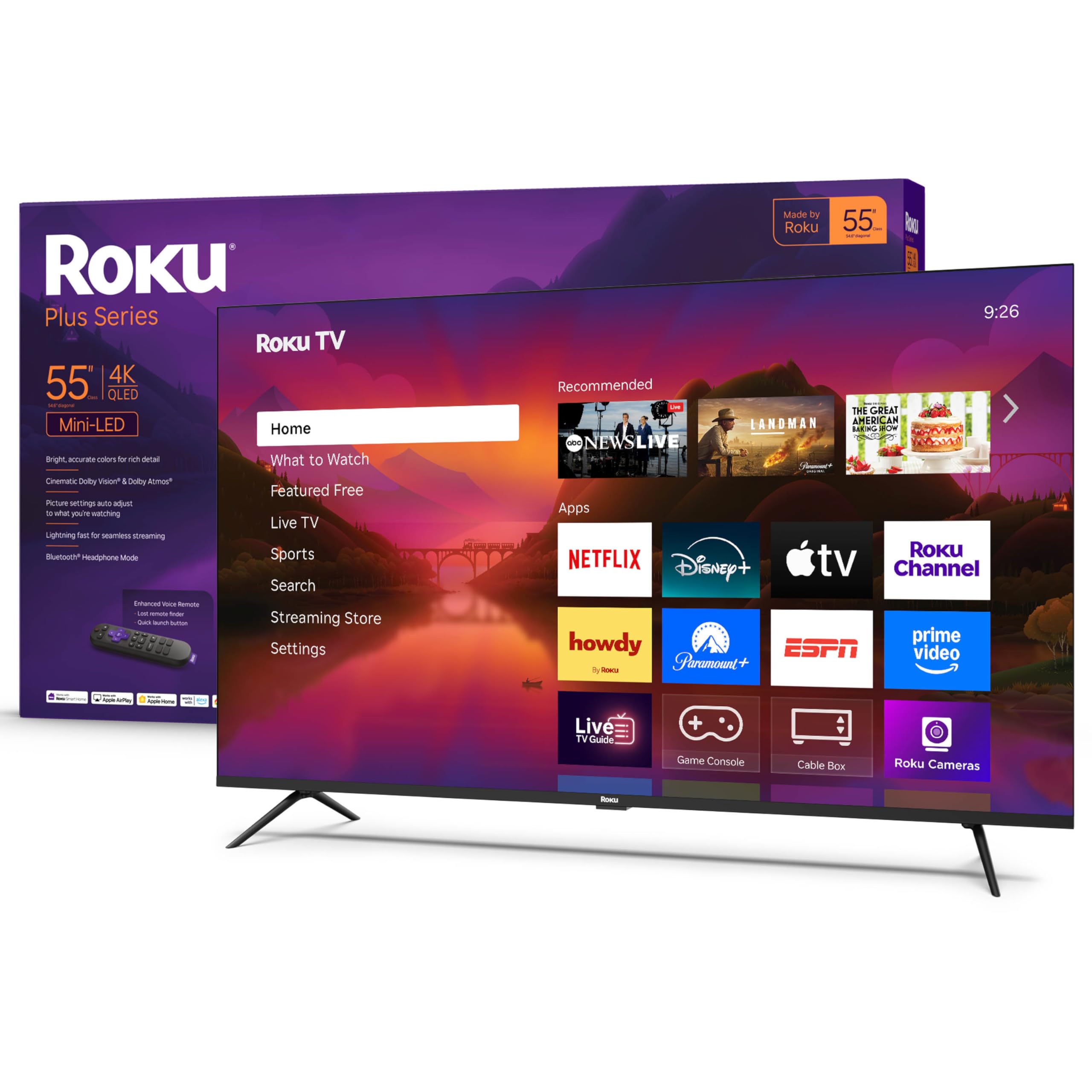
The Roku Plus Series delivers the best user experience of any smart TV platform, period. The Roku OS is famously fast, intuitive, and clutter-free, with no bloated menus or aggressive ad placement. The Mini-LED backlighting on this 4K QLED panel brings real contrast depth — blacks are deep without crushing shadow detail, and Dolby Vision highlights pop with intensity. The AI-powered Roku Smart Picture Max mode automatically tunes brightness and color per scene, which works impressively well for mixed content.
Sound quality is a genuine surprise. The built-in subwoofer gives movies and music a physical presence that most slim TVs lack entirely, and the Dolby Atmos processing creates a wider soundstage than the physical drivers should allow. Bluetooth Headphone Mode is a practical touch for late-night viewing — just pair wireless headphones and the TV audio routes privately. The Enhanced Voice Remote includes a lost remote finder and programmable shortcuts.
There is no USB port on this model — only USB-C, which limits compatibility with older external drives and media sticks. The 60Hz refresh rate is fine for streaming and casual sports, but competitive gamers who need 120Hz+ should look at the TCL T7 or Hisense U6 Pro. For everyone else — especially families and cord-cutters — this is the most friction-free TV on the list.
Why it’s great
- Best smart TV platform experience — fast, simple, ad-light
- Mini-LED contrast with Dolby Vision produces stunning HDR
- Built-in subwoofer and Dolby Atmos for room-filling sound
Good to know
- No standard USB port; USB-C only
- Limited to 60Hz refresh rate
- Settings menu is basic compared to LG or Sony menus
6. Samsung 65-Inch Class Crystal UHD U8000H Series Smart TV
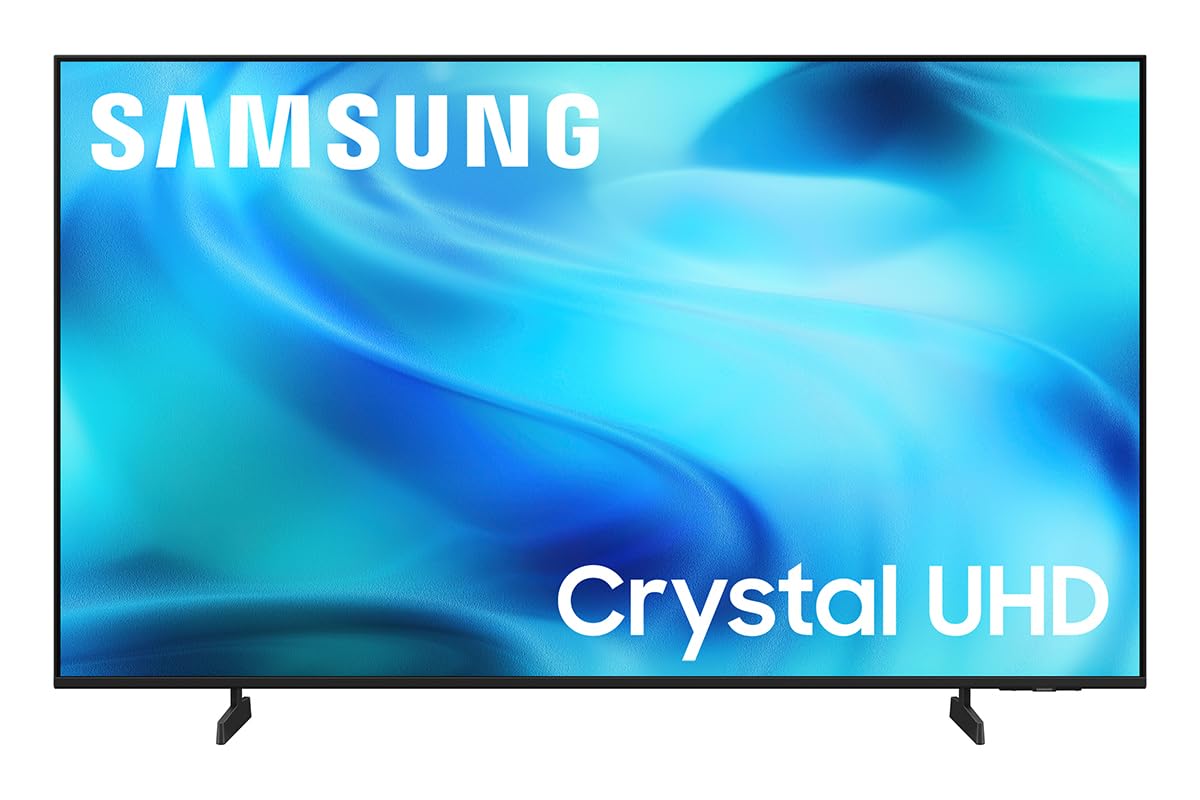
If sheer screen real estate is your priority, the Samsung 65-inch U8000H is the most direct path to a large 4K display without draining your wallet. The Crystal Processor 4K handles upscaling of 1080p content to 4K with reasonable sharpness, and the Color Booster feature saturates reds and blues noticeably without crushing skin tones. The 60Hz panel is standard for this class, but Motion Xcelerator smooths sports and action scenes better than the raw spec suggests.
Samsung TV Plus is a genuine asset here — 2,700+ free channels including live news, sports, and reality TV with zero subscription required. The Tizen OS has been streamlined in the 2026 model year, with quicker app launches and less lag than previous generations. Bluetooth 5.3 ensures stable connections for wireless headphones and game controllers. The HDR10+ support gives compatible content better dynamic range than standard HDR10.
The panel is LED backlit, not QLED or Mini-LED, so contrast is merely average — blacks look gray in a dark room. The remote is small and tricky for older users to navigate, and the initial setup process forces account creation and a lengthy update cycle. For a bright living room where you just want a giant screen for casual viewing, it works perfectly. For serious movie nights or gaming, spend a bit more on the Hisense or TCL.
Why it’s great
- 65-inch screen at an entry-level price point
- Thousands of free channels via Samsung TV Plus
- Color Booster improves vibrancy without artifacts
Good to know
- Standard LED panel lacks deep black levels
- Setup requires forced account login and internet
- Remote is too small and unclear for older viewers
7. Sony BRAVIA 2 II 43 Inch 4K Ultra HD LED Smart TV
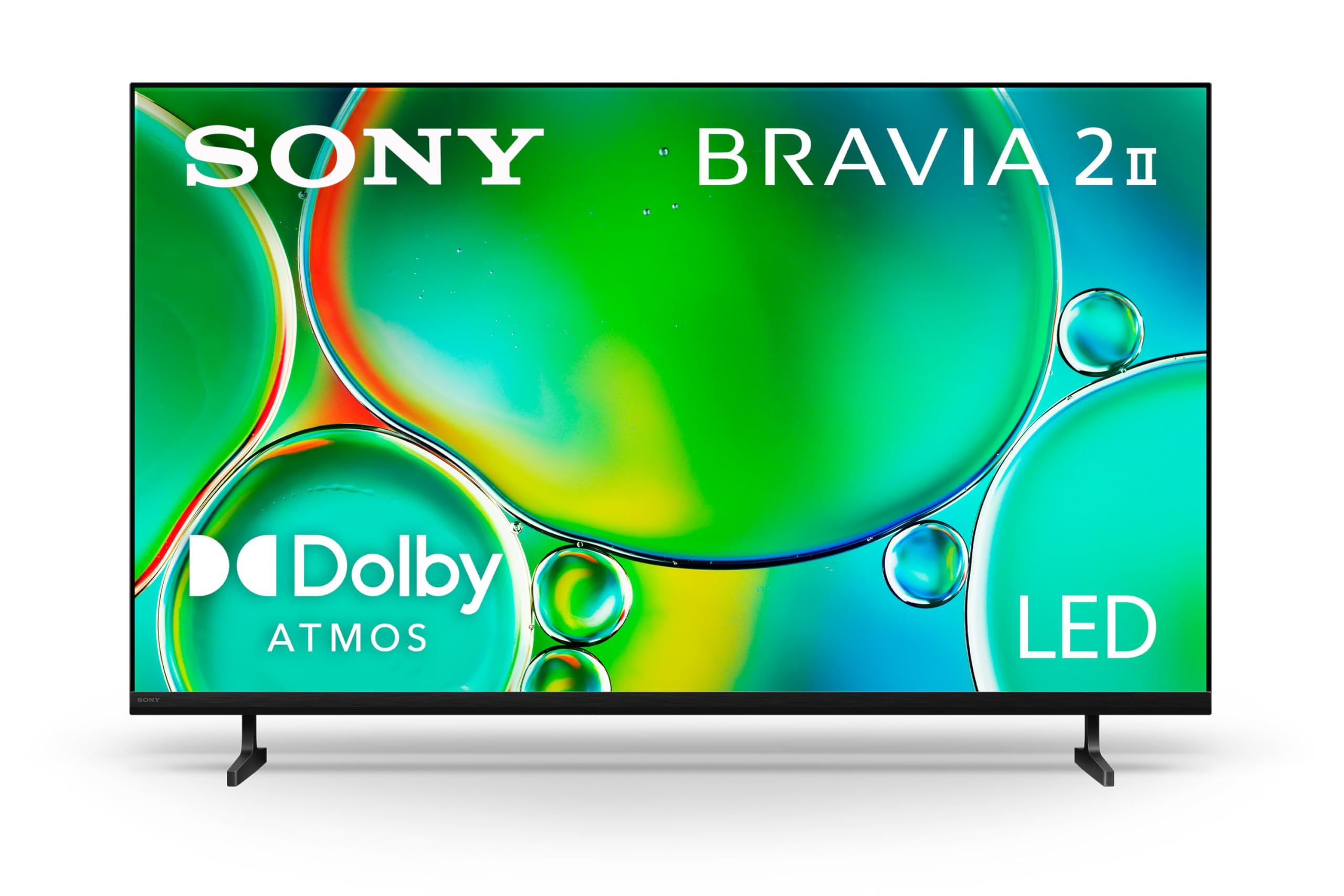
The 43-inch Sony BRAVIA 2 II is essentially a smaller version of its 55-inch sibling, retaining the 4K Processor X1 and the full suite of PS5-exclusive features — Auto HDR Tone Mapping and Auto Genre Picture Mode are both present. The Motionflow XR processing keeps action and sports blur-free, though the 60Hz panel means you won’t get the 120Hz benefit that PS5 can output. The 4K XR-Reality PRO upscaling is the highlight here, making even standard 1080p streams look crisp and detailed.
Google TV is smooth and well-integrated, with Apple AirPlay 2, Google Cast, and the Sony Pictures CORE app included. The Eco Dashboard puts all energy-saving settings in one menu, useful for bedrooms where the TV runs for hours. The DTS-X audio support gives the built-in speakers a wider soundstage than most 43-inch sets, though an external soundbar still improves dialogue clarity substantially.
The smaller size makes this ideal for a desk, dorm room, or secondary viewing space. The same WiFi dropout reports that appear on the 55-inch model have been noted here, so a wired Ethernet connection is recommended for stability. For the price, the Sony processor and PS5 compatibility make this a smarter buy than most 43-inch competitors that use generic chipsets.
Why it’s great
- Top-tier 4K upscaling from the X1 processor
- Full PS5 auto HDR and low-latency features
- Compact size fits desks, dorms, and bedrooms well
Good to know
- 60Hz panel limits PS5 120Hz gaming
- WiFi reliability is inconsistent; Ethernet is safer
- Speakers are adequate but not immersive without a soundbar
8. Roku Smart TV 2026 55-Inch Select Series 4K QLED
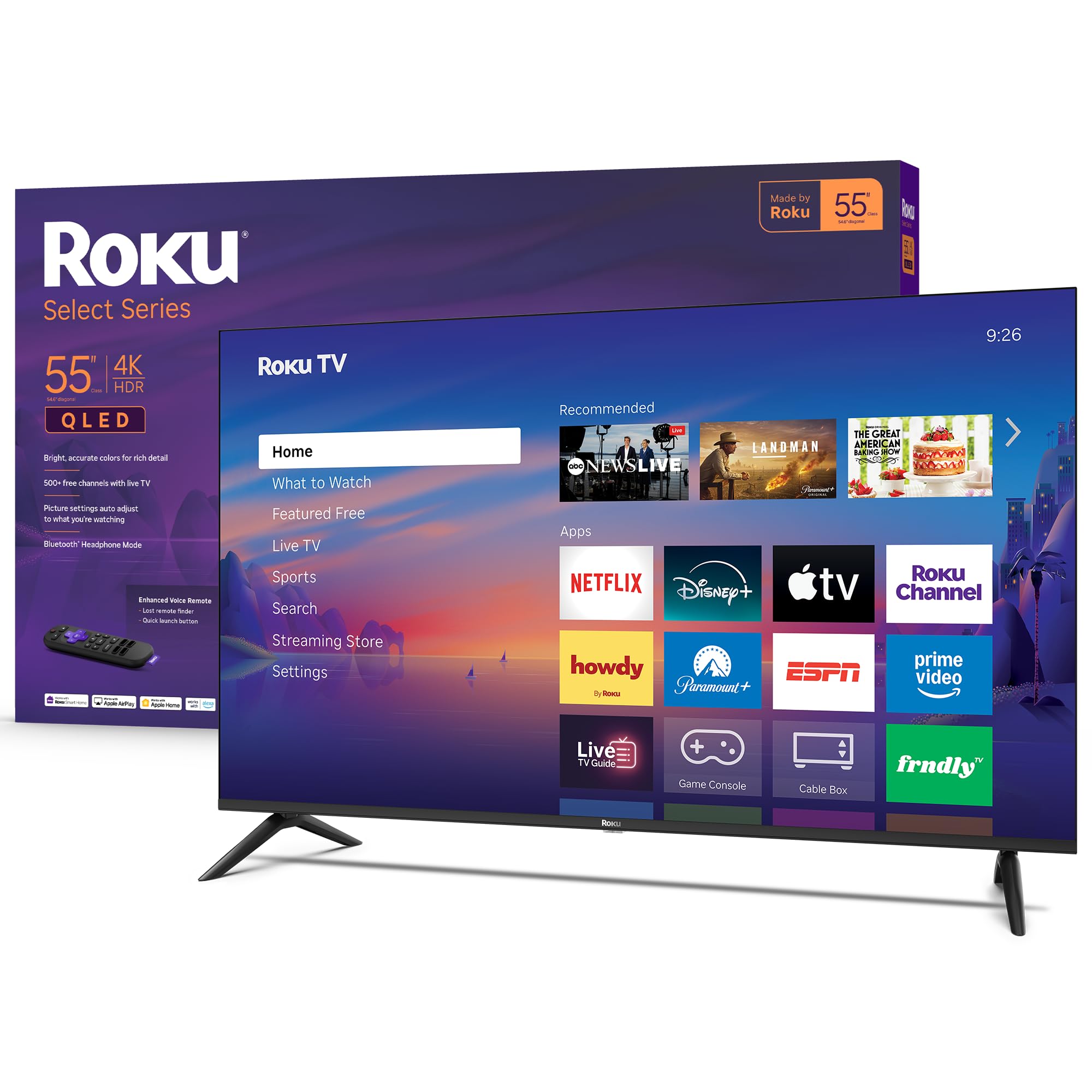
The Roku Select Series is the definition of a no-compromise budget TV. You get a 4K QLED panel with HDR10 support, so colors are vibrant and bright — not quite Mini-LED contrast, but far richer than a standard LED at this price. The 60Hz refresh rate is adequate for streaming and casual sports, and the Roku Smart Picture optimization cleans up broadcast signals and selects the right mode automatically. The frameless design looks surprisingly premium for the tier.
Roku OS is the star here. It launches apps in under two seconds, receives automatic updates, and gives you access to 500+ free TV channels through the Roku Channel. The voice remote includes a lost remote finder and programmable app shortcuts, both rare at this price. Bluetooth Headphone Mode lets you pair wireless headphones for private listening — a fantastic feature for shared living spaces.
The audio is acceptable but thin compared to the Plus Series — dialogue is clear, but there is no bass presence. The panel is QLED, not Mini-LED, so black levels in a dark room appear slightly gray. For a bright living room or as a secondary TV, the Select Series delivers a fantastic picture and the best software experience for the lowest entry price on this list.
Why it’s great
- Best software experience at the lowest price point
- QLED panel delivers surprisingly vibrant colors
- Bluetooth Headphone Mode for private listening
Good to know
- Sound lacks bass — a soundbar is a worthy upgrade
- 60Hz panel limits gaming and fast-motion clarity
- Standard LED backlight, not Mini-LED — blacks are gray in dark rooms
9. INSIGNIA 65-inch Class F50 Series LED 4K UHD Smart Fire TV

The Insignia F50 is the least expensive path to a 65-inch 4K screen, and for that alone it earns its place. The HDR10 support and 4K upscaling are functional but not impressive — the standard LED backlight has limited dimming, so contrast is flat and blacks lift visibly in dim environments. The Fire TV platform is responsive enough for basic app launching, though heavy users report occasional sluggishness and menu lag. DTS Virtual-X processing widens the soundstage a bit, but the built-in speakers lack clarity at higher volumes.
Setup is straightforward if you already have an Amazon account, and the Alexa voice remote handles searches and smart home controls reliably. The three HDMI ports are enough for a soundbar, game console, and streaming device, and the eARC support passes full-resolution audio to a receiver. For a guest room, basement, or any scenario where screen size matters more than picture fidelity, the F50 gets the job done.
Beware of reliability concerns. A significant number of user reports describe remote pairing failures, update loop crashes, and defective serial numbers. The interface is also noticeably slower than the Roku Select Series at a similar price. If you want a 65-inch TV for absolute minimum cost, this is it — but the extra investment in the Samsung U8000H or Roku Select Series will give you a much more satisfying long-term experience.
Why it’s great
- Largest screen size for the lowest cost on this list
- Fire TV with Alexa is convenient for Amazon households
- eARC support for high-quality audio passthrough
Good to know
- Interface can be sluggish with frequent lag
- Standard LED panel has poor contrast and black levels
- Multiple reported reliability issues with remote and software
FAQ
Is a 60Hz TV good enough for watching sports and movies?
Will a Mini-LED TV burn in like an OLED?
Do I need to buy a separate soundbar for an affordable TV?
How important is Dolby Vision compared to standard HDR10?
Final Thoughts: The Verdict
For most users, the best affordable smart tv winner is the Hisense 55″ U6 Pro because it combines Mini-LED contrast, a native 144Hz panel, and Dolby Vision HDR at a price that undercuts the competition by hundreds. If you want the simplest and most reliable smart TV experience with excellent Mini-LED picture quality, grab the Roku 55″ Plus Series. And for the biggest screen at the absolute lowest entry cost, nothing beats the sheer size-for-value of the Samsung 65″ U8000H.